Showing Posts From
Home improvement
PEOPLE ALSO READ...
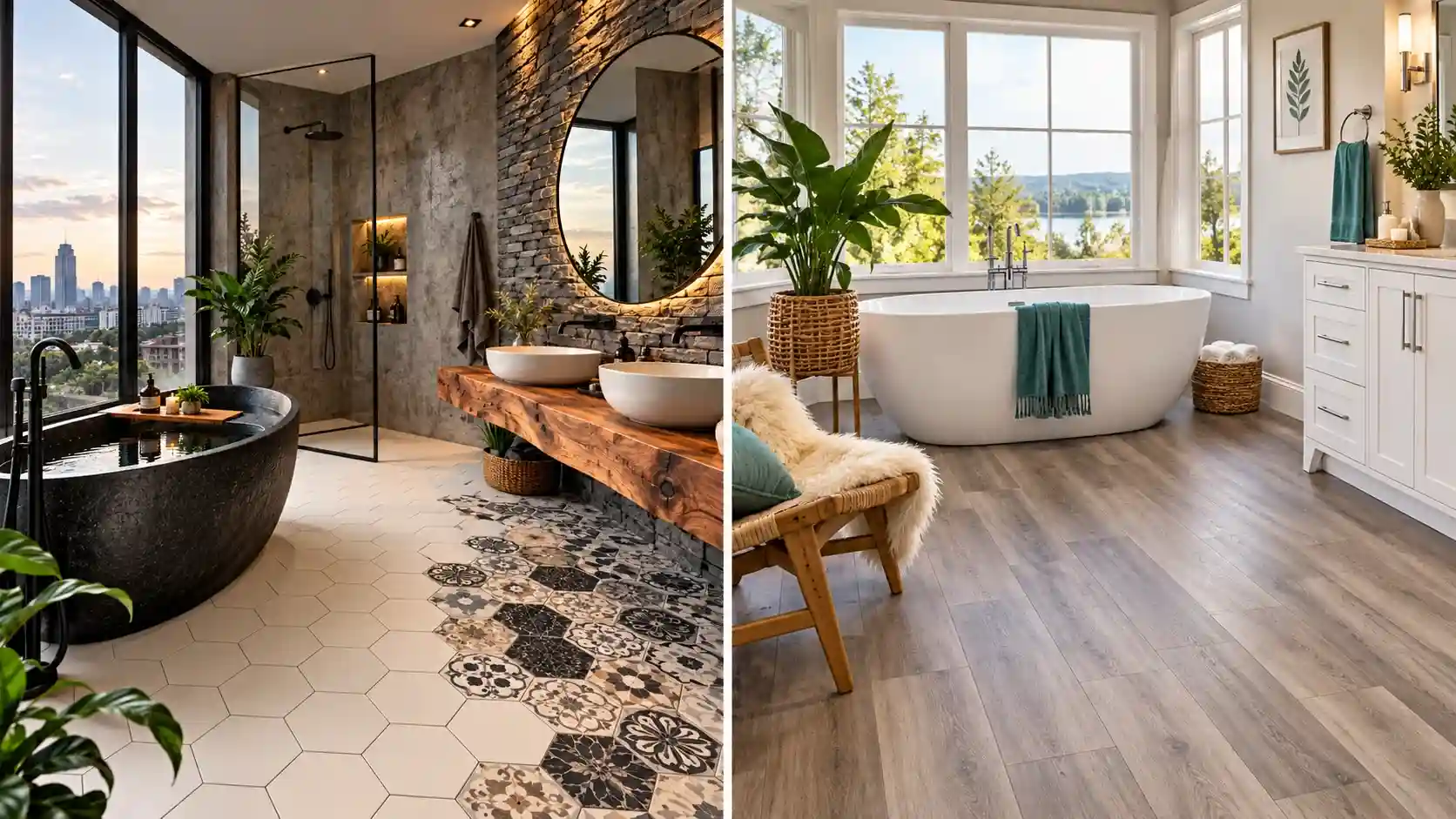
Best Flooring for Bathrooms: Waterproof Options Compared by Subfloor, Cost and Real-World Wear
Quick answer: For most bathrooms, porcelain tile is the most durable choice, and rigid-core (SPC) luxury vinyl plank is the best budget-friendly waterproof option. Both depend on the subfloor and sealed edges beneath them, so installation matters as much as the material. Most people shop for a bathroom floor by look and price. Then a contractor lifts the old one and the real question appears: what's underneath? Bathroom floors rarely fail on the surface. They fail from below, through a slow leak at the toilet, a seam that lets shower splash through, or a joist that flexes under rigid tile. This guide compares the options with that in mind. Quick takeaways"Waterproof" usually describes the surface layer, not the whole floor. Porcelain tile and sheet vinyl are the most forgiving in true wet zones. Click-lock vinyl plank suits dry-use bathrooms and powder rooms. Tile needs a stiff, flat subfloor. Vinyl tolerates imperfect floors better. New flooring raises the finished floor, which affects the toilet flange, doors and transitions. Removal, subfloor repair and levelling often cost more than the difference between materials.Waterproof Doesn't Mean the Floor Is Waterproof Here's the plain definition. A waterproof material doesn't absorb water or swell when wet. A waterproof floor is the material plus its seams, edges, fixture bases and the subfloor underneath. Most homeowners don't realize those are two different things. A rigid vinyl core won't swell, but water doesn't need to go through it. It goes around it: down a perimeter gap, along a seam, under the toilet base. Then it sits on plywood or chipboard where nobody can see it. Renovators often report finding soft subfloor under a spotless "waterproof" floor for exactly this reason. Proper waterproofing treats the whole assembly, not just the top layer.⚠️ Warning: A "waterproof" label usually covers the product, not the subfloor beneath it. Read the warranty for wet-area and standing-water exclusions before you buy. Some limit coverage in bathrooms or exclude areas around tubs and showers.Bathroom Flooring Options Compared Side by SideMaterial Waterproof as a material? Subfloor demands DIY difficulty VerdictPorcelain tile Yes; grout and edges still need care High: flat, stiff base Hard Best long-term choice for wet zonesCeramic tile Mostly; glaze chips and grout can admit water High Hard Good, usually less durable than porcelainNatural stone No, porous unless sealed Very high Hard Beautiful, high upkeepSheet vinyl Yes; few seams means a nearly waterproof floor Moderate: smooth, clean base Moderate Strong for tight budgets, rentals, small roomsRigid-core click vinyl (SPC/hybrid) Yes; seams and edges are the weak point Moderate: flat to manufacturer tolerance Easy to moderate Best DIY option for dry-use bathroomsGlue-down LVT Yes, if the bond is good Moderate to high Moderate Good where click-lock edges worry youSkip carpet, solid wood, engineered wood and most laminate. They swell, rot or trap moisture. Grout deserves a mention. Cement-based grout is porous and needs sealing, while epoxy grout resists stains and moisture but is less forgiving to install. On a tile floor, grout is usually the part that needs ongoing attention, not the tile.What Happens When Water Finds the Edge, the Seam, or the Toilet Base? Floating click-lock floors have an awkward built-in conflict. They need a perimeter gap to expand and contract, but that same gap is a route for water. The usual fix is a flexible sealant under the trim, where the manufacturer's installation guide allows it. That's why the guide matters more than the box. The toilet base is the other classic weak spot. Added flooring thickness lifts the finished level, and a flange that ends up below the new surface won't seal well.⚠️ Warning: If the toilet flange sits below the new floor, tightening bolts and stacking wax rings is not a safe fix. A poor seal leaks under the floor where you won't see it. Use a flange extender or have a plumber check it.A small smart water-leak sensor beside the toilet and tub is cheap insurance, especially with a new floor hiding what's underneath.What daily use feels like:Tile: cold and hard underfoot, though heating helps. Ages well if the grout is maintained. Sheet vinyl: warmer and softer, very easy to clean, but can dent or tear under sharp or heavy objects. Click-lock plank: warm and quiet, but dirt and water tend to collect at the edges.On slip safety, choose a matte or textured finish. US tile uses DCOF ratings (ANSI A326.3, commonly cited at 0.42 or higher for wet-walked interior floors, so verify with the supplier). The UK uses pendulum test values and Australia uses AS 4586 classifications. These labels don't compare across countries, and a showroom sample won't tell you how a floor feels with soapy feet.Which Floor Fits Which Bathroom?Tight budget, dry-use bathroom, sound subfloor: click-lock rigid-core vinyl with a sealed perimeter. Wet room, curbless shower or floor drain: tile on a proper waterproofing system, not a floating floor. Bouncy timber floor: fix the stiffness first, or choose sheet vinyl or glue-down LVT instead of tile. Young children, older adults or accessibility needs: matte, textured, slip-rated surfaces. Avoid polished tile. Rental or flip: sheet vinyl or glue-down LVT for durability and neutral appeal. Electric underfloor heating: tile is the most dependable fit. For vinyl, confirm the manufacturer's heated-floor rating and maximum surface temperature first. Want a wood look with real durability: wood-look porcelain tile. Sound existing tile and tight height: ask whether flooring can go over it, and check grout-line depth and manufacturer guidance.What Bathroom Flooring Costs Installed (and What Quotes Leave Out) These are estimated ranges in USD, installed, per square foot unless noted.Line item Low Typical HighRemoval of old floor $1 $2 $4Subfloor repair (affected area) $2 $5 $12Levelling compound $1 $2 $4Uncoupling or waterproofing membrane (tile) $2 $4 $8Sheet vinyl $3 $5 $9Click-lock rigid-core vinyl plank $4 $7 $12Glue-down LVT $5 $8 $13Porcelain or ceramic tile $10 $16 $28Natural stone $15 $25 $45Electric underfloor heating mat $8 $15 $25Toilet removal and reset (each) $100 $200 $350Trim, transitions, door undercut (per room) $30 $100 $300For a small 40 sq ft bathroom, vinyl options often land around $700 to $1,800 all-in and tile around $1,300 to $3,500. Small rooms usually cost more per square foot because installers apply minimum charges. Variance comes from access (stairs, upper floors), slab versus timber floor, your city, tile size and pattern, and the condition of the subfloor. Resale: Buyers generally read tile as a premium finish and decent vinyl as acceptable in most mid-market homes. A lifting or poorly sealed vinyl floor hurts perceived value more than the material choice does.Regional notes (verify locally):US: Priced per square foot. Metro labour rates vary widely, and electrical work such as underfloor heating may need a permit. UK: Priced per m² (about 10.76 sq ft). Labour is often lower than major US metros outside London. Underfloor heating wiring typically falls under Part P of the Building Regulations. Canada: Similar structure to the US but quoted in CAD, so nominal figures run higher. Provincial rules apply, and condo boards often set flooring and underlay rules. Australia: Labour is typically higher, and wet-area waterproofing rules under the NCC and AS standards are tightly enforced. Wet-area tiling generally needs licensed waterproofing.Check These Before You Pull Up the Old Floor Ten minutes of checking now can save a very expensive surprise later. Subfloor is dry, solid and free of soft spots, especially around the toilet and tub Floor is flat to the flooring manufacturer's tolerance Joist spacing and flex suit tile, or an uncoupling layer is planned Concrete slab moisture has been tested, not assumed Shower type (curbless, floor drain, tray) matches the floor system Toilet flange height is checked against the new finished floor Door clearance and doorway transitions are measured Underfloor heating, if any, suits the flooring and its temperature limit Wet-area warranty terms are read Permit and inspection needs are confirmed locallyA basic moisture meter makes the first and fourth checks far less of a guess.⚠️ Warning: In older homes, vinyl flooring and its adhesive may contain asbestos. Don't sand, dry-scrape or break it up until it has been tested, and follow your local authority's guidance.DIY or professional? Sheet vinyl and click-lock plank are realistic for a careful DIYer on a sound floor. Call a pro for tile in wet zones, any soft or rotted subfloor, flange or plumbing changes, and electrical work for heating.Frequently Asked Questions Is waterproof vinyl plank really OK for a bathroom with a shower? In most bathrooms, yes, if the room is dry-use or has a standard tray or curbed shower and the edges are sealed. The vinyl won't swell, but water can still pass through seams and perimeter gaps. Avoid floating click-lock floors in wet rooms or curbless showers, and read the manufacturer's wet-area terms before buying. Can I put vinyl plank over existing tile or vinyl? Sometimes. The old floor must be sound, dry and flat, and grout lines can show through if not filled. It also adds height, which affects doors, the flange and transitions. Check the installation guide, since some manufacturers require removal. If the old surface is cracked, damp or soft, remove it and fix the cause. Is tile or vinyl better for resale and long-term ownership? Tile reads as more premium and longer-lasting, but only with a stiff subfloor and maintained grout. Good sheet vinyl or rigid-core vinyl is perfectly acceptable in many mid-market homes and rentals. A neat, sealed vinyl floor usually helps resale more than cracked or stained tile. Match the choice to how long you'll own the house. What's the safest bathroom flooring for avoiding slips? Choose a matte or textured surface with a slip rating suited to wet use: DCOF in the US, pendulum test values in the UK, AS 4586 in Australia. Check ratings with the supplier. Small-format tile adds grout lines that increase grip, and textured sheet vinyl also works. Avoid polished or glossy surfaces, especially for children and older adults. Can I use waterproof laminate, engineered wood or solid wood in a bathroom? It's best avoided. "Waterproof" laminate often has a fibreboard core that can swell when water reaches the edges, and wood can warp, stain or rot with repeated humidity. For a wood look, use wood-look porcelain tile or rigid-core vinyl plank. In a powder room, expect higher risk and check the warranty first.
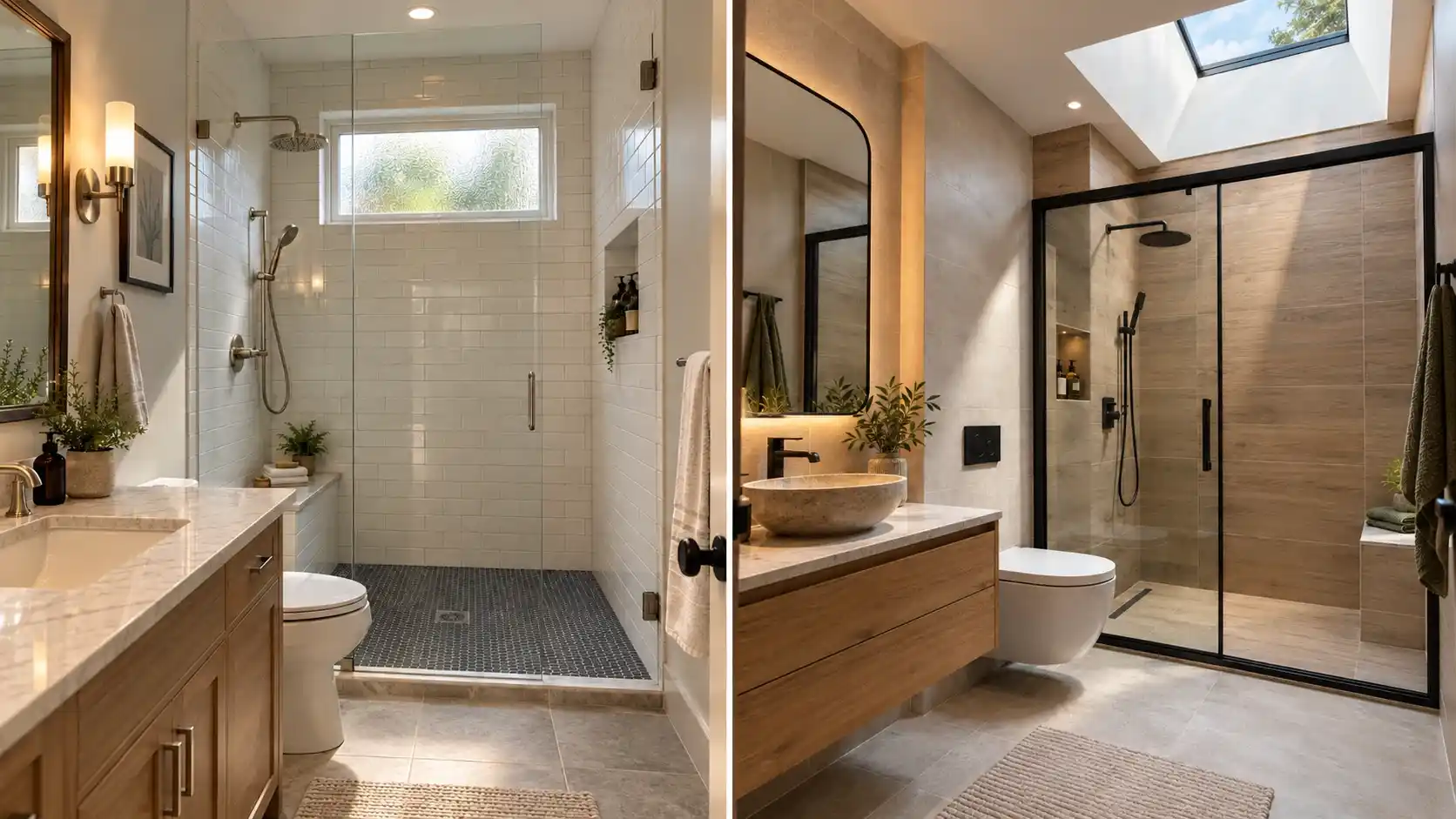
Bathroom Window Placement and Privacy: Where Windows Should Go (and How to Fix the Ones in the Wrong Spot)
Privacy or Daylight? The Trade-Off Every Bathroom Window Forces Short answer: Put the window on a wall that doesn't face a neighbor's windows or the street, set the sill around 5½–6 feet (1.7–1.8 m) above the floor, and use obscure glass or film. For night privacy, rely on glass or shades, not distance alone. Every bathroom window pulls two ways. You want daylight, and you don't want anyone watching you brush your teeth. Most homeowners solve it by frosting the whole pane, then wonder why the room feels like a cellar. The better approach is to treat privacy as a placement problem first and a glass problem second. Quick takeawaysWork out who can see the window, and from where, before you buy anything. A high sill keeps light and blocks ground-level views. It's a rule of thumb, not a code figure. Obscure glass works day and night. Reflective film often doesn't. Keep windows out of the shower's spray zone where you can. Moving a window is envelope work and costs far more than treating the glass. Safety glass, ventilation, and overlooking rules vary by country, so verify locally.Start With Sight Lines, Not Glass Stand at the window and look out. Then flip it: stand at the neighbor's kitchen window, on the sidewalk, in the upstairs bedroom next door. Whatever you can see from there can see you. That angle is the real privacy measurement, and a well-placed clear window can beat a badly placed frosted one. Eye height matters too. Sitting on the toilet, standing at the vanity, and standing in the shower expose different slices of the glass. Pick the sill height for whoever stands in front of that wall. Common positions, and what each one costs you:Above the toilet: Seated eye level is low, so a high window works well here. Over the vanity: Great light for grooming, but splashes and a street-facing wall make it the most overlooked spot. High on the tub wall: Strong privacy and good light. Keep it clear of the direct spray. Clerestory strip: The sweet spot in larger rooms. It needs an opener you can actually reach. Corner window: Lovely, but it doubles the sight lines you have to manage. Side wall facing a neighbor: The classic problem wall. It usually needs obscure glass at any height.What Happens When the Light Goes On at Night Most people test privacy in the afternoon. That's the wrong test. At dusk, with a lit room behind it, a clear or reflective window turns into a lantern. "One-way" reflective film is the usual culprit. It only hides you while the outside is brighter than the room, and at night that flips. Holds up after dark:Obscure or patterned glass Moisture-rated shades (if someone closes them) Frosted adhesive film (not the reflective kind)Often fails after dark:Reflective "one-way" film Clear glass behind a fence, when upstairs neighbors look down over itBefore you commit, stand outside after dark with the bathroom light on. Dimmable or smart bulbs help at night, but treat them as a backup, not the fix.Three Real Rooms, Three Different Answers A. Small 5 × 8 ft (1.5 × 2.4 m) tub-shower room, window on the short wall above the tub. A neighbor's kitchen window sits about 10 ft away across a fence. SIDE YARD (neighbor ~10 ft away) ┌──────[ W high ]──────┐ │ ┌────────────────┐ │ │ │ TUB / SHOWER │ │ │ └────────────────┘ │ │ [ TOILET ] │ │ [ VANITY ] │ └───────[ DOOR ]───────┘Works: A high hopper or awning window with obscure glass, sill above standing eye level. No curtain needed. Avoid: A low clear window in the shower. It gives a direct sight line, and the sill sits in the spray. Daily use: A window you can't reach stays shut. A crank or pole-operated hopper keeps it usable.B. Standard 8 × 10 ft (2.4 × 3 m) room, window over the vanity on the back wall. The view is a back garden with a 6 ft fence and a neighbor's upstairs bedroom beyond it. ┌────[ W over vanity ]───┐ │ [ VANITY ] │ │ │ │ [TOILET] [SHOWER] │ └──────── [ DOOR ] ──────┘Works: Obscure lower sash, clear upper pane. The fence handles ground-level views and the clear top catches light. Avoid: Trusting the fence alone. The upstairs bedroom looks right over it. Daily use: It sits behind the faucet, so choose a sill and finish that shrug off splashes.C. Larger 10 × 12 ft (3 × 3.7 m) ensuite, freestanding tub under a street-facing window. ┌──[ W ]──────[ W ]──┐ STREET │ ( FREESTANDING │ │ TUB ) │ │ [VANITY] [VANITY] │ │ [SHOWER] [TOILET] │ └───── [ DOOR ] ─────┘Works: A high clerestory strip, or obscure or patterned glass plus an evening shade. Avoid: Big clear glass beside the tub on a street wall, with privacy left to a curtain someone has to remember. Daily use: Two people, two habits. Privacy that depends on remembering will fail eventually.Fixes Ranked by Feasibility and Cost Start at the top of this table and work down. Most bathrooms never need the bottom rows.Fix Difficulty Who does it Estimated cost, USD (typical) What drives the pricePrivacy film Easy DIY $15–$60 ($30) Film type, window sizeMoisture-rated shade or blind Easy DIY $30–$300 ($100) Size, motorizationObscure glass in existing sash Moderate Glazier $150–$600 ($350) Window age, custom sizingWhole window, obscure unit Moderate Window installer $400–$1,500 ($800) Size, spec, trim work, accessGlass block insert Moderate to hard Installer $500–$1,800 ($1,000) Opening size, weatherproofingSolar tube Moderate to hard Roofer $400–$1,200 ($800) Roof pitch, attic accessSkylight Hard Roofer $1,500–$4,500+ ($2,800) Roof structure, flashingInfill an unwanted window Hard Builder $800–$3,500 ($2,000) Exterior finish match, interior patchingRaise, resize, or move a window Hard Builder, sometimes an engineer $1,500–$5,000+ ($3,000) Wall type, header, cladding match, floor levelEstimated ranges only. Confirm with local quotes. In the UK, Canada, and Australia, expect similar orders of magnitude in local currency. Brick and cavity walls, common in the UK and Australia, push up the cost of any new opening because of lintels and brick matching. Cold-climate window specs lift Canadian prices. Most homeowners don't realize that moving a window is mostly header, flashing, insulation, and matching the brick or siding. That often costs more than the window itself, which is why new glass in the existing opening is usually the smarter spend. Switchable "smart" privacy glass exists, but it's a premium product that needs wiring, so it only makes sense when nothing simpler will do.Safety Glass, Ventilation Credit, and Overlooking Rules by Country Principles only where figures vary. Verify with your local building authority before you order glass.Area US UK Canada AustraliaWindow counts as ventilation? IRC: about 3 sq ft of glazing, half openable, or a fan Usually not; extract fan expected (Approved Document F) Fan typically required in new homes NCC: openable area or exhaust fanSafety glass near tub or shower Hazardous-location rule (IRC) "Critical locations" (Approved Document K) Generally required (NBC and provincial codes) AS 1288Neighbor overlooking Local or HOA rules Side-facing upper windows often need obscure glass (planning) Municipal bylaws State and council rulesPermit to change the opening Usually, if structural or exterior Often building regs, sometimes planning Usually, if structural Usually, via council⚠️ Warning: A window in the shower's spray zone is a common hidden mold source. Check the sill slope and the sealed reveal before you trust it.⚠️ Warning: "One-way" film hides you only while the outside is brighter than the room. Test it after dark.⚠️ Warning: Swapping an openable window for a fixed obscure one can cost you ventilation credit, and you may need a bigger fan.Quick Decision Guide: If Your Window Is X, Do YA neighbor or the street sees it directly: Use obscure glass. Move the opening only if the wall is easy to rework. Low window over the shower or tub: Replace it with safety obscure glass or raise it. Don't rely on film alone. High window and you want light: Keep it clear or lightly obscure, and add a shade for nights. Privacy is only a problem at night: Choose patterned glass or a shade. Skip reflective film. Tight budget: Try film or a moisture-rated shade first, and live with it for a month. Replacing the window anyway: Order obscure glass now. Retrofitting later costs more. Load-bearing wall, or you want it bigger: Bring in a builder or structural engineer. The room would end up with no daylight: Keep a window with obscure glass. Buyers often react badly to windowless bathrooms.When to call a professional: Any change to the opening's size or position, work above the first floor, or signs of water damage around the existing window.FAQ Where is the best place for a window in a bathroom for privacy? High on a wall that doesn't face a neighbor's windows or the street. A clerestory or high awning window above the tub wall or toilet keeps daylight without giving views at eye level. If the wall does face a sight line, use obscure glass rather than trusting distance or a fence. How high should a bathroom window be for privacy? A common rule of thumb is a sill around standing eye level or higher, roughly 5½–6 feet (1.7–1.8 m) above the floor. It's a design guideline, not a code figure. Upper-floor neighbors can still look down into it, so add obscure glass if one overlooks you. Is frosted glass or privacy film better for a bathroom window? Obscure or patterned glass is permanent and works day and night. Film is cheaper and removable, but it can peel in steam, and reflective types fail at night. Replacing the window anyway? Choose glass. Keeping an existing window on a budget? A quality frosted adhesive film is a fair start. Can people see into my bathroom window at night with the light on? Yes, if the glass is clear or has reflective film. A lit room against a dark exterior turns the window into a display. Obscure glass, patterned glass, and shades keep working at night, while "one-way" film generally doesn't. Test after dark before you rely on any fix. Can I put a window in a shower or over a bathtub? Often yes, with extra care. Expect safety glazing, a sloped and waterproofed sill, and a plan for condensation. Many pros prefer a high window outside the direct spray. Check your local code for glazing near tubs and showers before you order. Do I need a permit to change or move a bathroom window? Swapping the glass or the unit in the same opening often doesn't need one, though local rules vary. Resizing or moving the opening usually does, since it touches the structure and the building envelope. In the UK and Australia, planning or council rules may apply too. Verify with your local building authority first. Layout, Space & Structural ConsiderationsMinimum Size for a Full Bathroom: The Real Numbers (and Why Code Minimum Isn't the Whole Story) How to Make a Small Bathroom Feel Bigger: Layout Fixes Ranked by Impact and Cost How Much Does It Cost to Move Plumbing in a Bathroom Remodel? (Estimated Ranges by Type of Move) Converting a Tub to a Shower: Does It Hurt Resale Value? How Much Does It Cost to Add a Bathroom to a House? Half Bath vs. 3/4 Bath: What's the Real Difference (and Does It Count as a Full Bathroom?) What Size Exhaust Fan Do I Need for My Bathroom? (CFM, L/s and Real-World Adjustments) ADA Bathroom Requirements: What the Rules Say and What Actually Applies to Your Home What Is a Wet Room? How It Differs From a Walk-In Shower (and Whether Your House Can Take One) Bathroom Window Placement and Privacy: Where Windows Should Go (and How to Fix the Ones in the Wrong Spot)
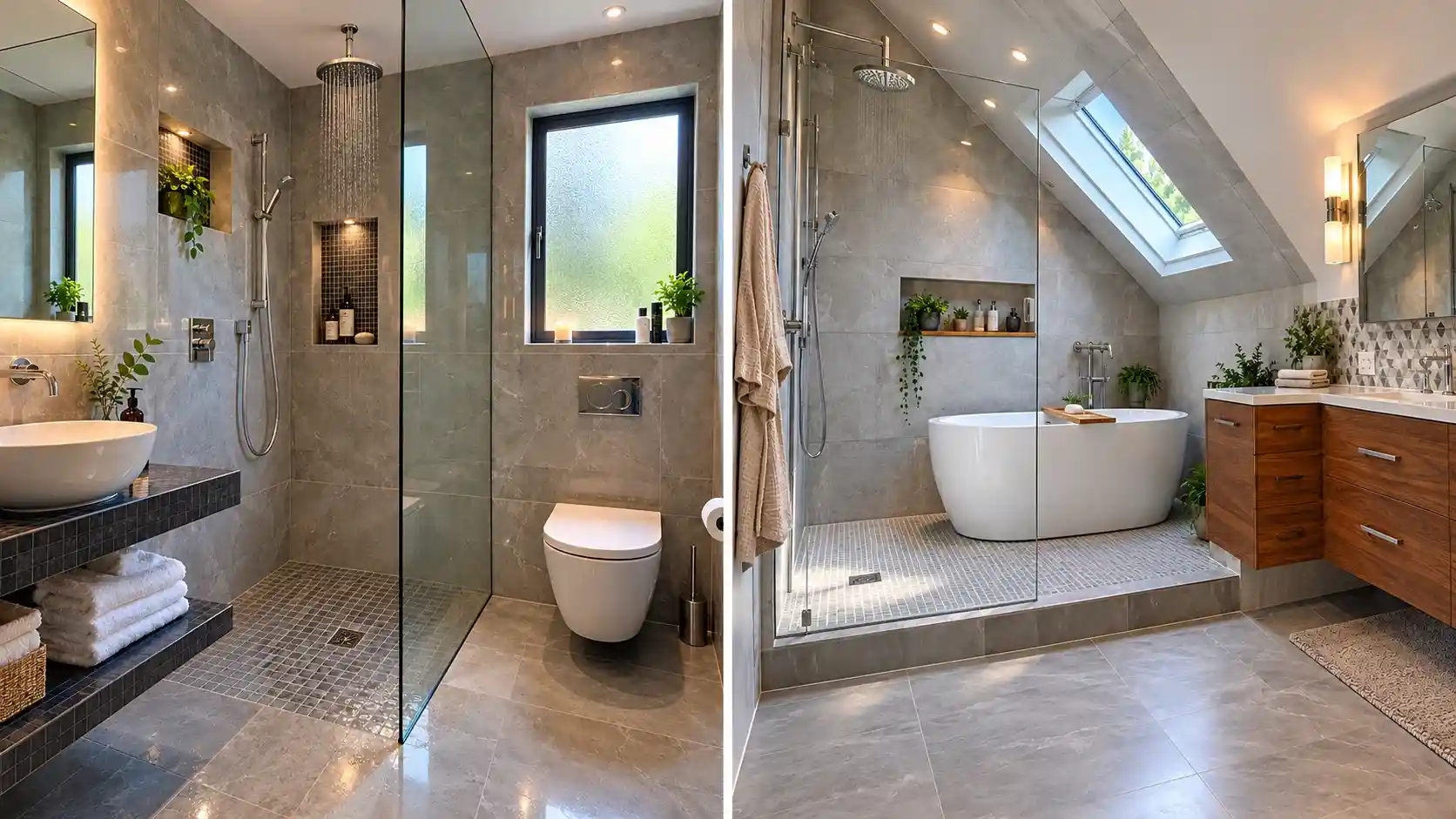
What Is a Wet Room? How It Differs From a Walk-In Shower (and Whether Your House Can Take One)
A wet room is a fully waterproofed bathroom where the floor slopes to a drain, so the whole room can get wet without damage. A walk-in shower waterproofs only the shower zone, and the rest of the bathroom stays dry. That's the short version. The longer version is where people get burned, because a wet room is defined by what's under the tile, not by how it looks in a photo. Plenty of rooms sold as "wet rooms" are really walk-in showers with a flush floor. And plenty of "walk-ins" quietly turn into partial wet rooms the first time someone uses the rain head. This guide covers the real difference, whether your floor can take one, what it costs, and the budget version that actually works. Quick TakeawaysA wet room is defined by waterproofing and drainage scope, not by whether there's a glass panel. A curbless walk-in is its closest relative. Judge by how much floor is waterproofed. Floor type (concrete slab vs timber joists) matters more than the style you want. Moving the drain often costs more than the tile, glass, and fixtures combined. The budget route is a partial wet room: reuse the drain, waterproof the shower zone, add one fixed screen. Never save on waterproofing or the drain. Save on tile and fixtures.Wet room design and layout in plain terms: where is the water allowed to go? In a wet room, the floor and the walls around the shower are waterproofed as one system. The floor falls toward a drain, usually a linear (channel) drain along a wall or a point drain near the middle. There's typically no tray and no full enclosure, so the toilet and basin sit on the same wet floor. In a walk-in shower, the waterproofing stops at the shower zone. The rest of the floor is an ordinary bathroom floor.Feature Wet room Walk-in showerWaterproofing Entire floor plus walls around the shower Shower zone onlyFloor Sloped to a drain across the room Normal floor, sloped inside the showerDrain Floor drain or linear drain Shower drain in the shower areaTray or curb Usually none Low tray, hob, or flush baseScreen Optional; most have one fixed panel Usually one fixed panelToilet and vanity Share the wet floor (wall-hung fixtures help) Stay dryFloor demands Slope, stiffness, and drainage over the full area Only the shower zoneVentilation load Higher NormalRegional note: In Australia, "wet area" is the regulatory term for any bathroom or laundry that needs waterproofing. It does not mean wet room. In the UK, "wet room" and "level-access shower" are used almost interchangeably in retail. In the US and Canada, people more often search "curbless shower."The spray test. Wherever the showerhead points, water lands past the screen. Most homeowners don't realize how far that is until the first month of use, when the toilet paper roll is damp and the door bottom is swelling. If spray reaches an area, that area needs waterproofing. A walk-in that ignores this becomes a partial wet room by accident, with nothing protecting the spot where the water actually lands.What happens when you want a wet room on a timber floor, a slab, or upstairs? This is the question most articles skip, and it decides almost everything. A wet room needs a fall toward the drain, and fall is simple arithmetic: slope × distance = height difference. As an illustration, a 1-in-80 fall over 2 metres is 25 mm of height change. The farther the drain is from the far corner, the more floor you have to build up or recess. Check the fall your drain or former manufacturer specifies.On a concrete slab, you can recess the floor (expensive, involves breaking concrete) or build it up (cheaper, but creates a step at the door). On a timber floor, you can't notch joists freely, and the floor flexes. Flex cracks tile and tears membranes, so the floor often needs stiffening and a manufacturer-approved wet room substrate. Joist direction matters too. Running a drain along the joists is far easier than across them.Change Rating What decides it Who does it Cost directionWalk-in with fixed screen, same drain position Easy Floor condition, shower size Plumber + tiler LowestPartial wet room (shower zone waterproofed, one floor drain) Moderate Substrate, drain type, spray zone Plumber + waterproofer + tiler Low–mediumCurbless shower on a slab, small step at door acceptable Moderate Threshold height, adjoining floors Plumber + waterproofer + tiler MediumCurbless on a slab that must be recessed, or drain moved Hard Slab thickness, trench, pipe path Plumber + builder, possibly engineer HighFull wet room on timber joists, drain stays put Hard Joist depth, spacing, stiffness Builder + waterproofer + plumber Medium–highWet room upstairs over living space Hard Leak consequences, joist stiffness Builder + qualified waterproofer HighMoving the drain across joists or cutting joists Structural Joist direction, load path, stack position Structural engineer + builder + plumber HighestRegional note: Slab floors are common on ground floors in Australia and parts of the US. Timber-framed upper floors are common in all four countries. Apartments, condos, and strata buildings often add rules on waterproofing and floor changes, so check building management first.Before you demolish anything: what to confirm in your actual house A floor plan can't show you what's under the floor. Before you commit (and before you plan your layout on paper in detail), walk through this: Floor type confirmed: slab, timber joists, or crawlspace or room below Joist direction, depth, and spacing checked from below or through an access hatch Existing drain, stack location, pipe size, and pipe material identified Floor bounce tested; check flatness and deflection with a straightedge Wet wall opened or scanned for old pipes, wiring, and ducts Door threshold and neighboring floor heights measured, so you know the step you'll create Exhaust route to the outside confirmed GFCI/RCD protection checked; fittings located away from the spray zone Permit and licensing rules confirmed for plumbing, waterproofing, and structure Older home: suspect tiles, adhesives, cement sheet, or old paint tested for asbestos or lead before disturbing them (rules vary by country)Stop and call a professional if joists sit in the drain path, the subfloor is soft or rotted, you'd have to modify cast-iron or old galvanized pipework, or there's any sign of a past leak. A moisture meter helps you spot trouble early, but it doesn't replace a builder's judgment.What does a wet room really cost, and where can a budget version give? The number jumps for one main reason: the drain. Every figure below is an estimated range in USD, not a quote.Line item Low Typical High What drives itDemolition and disposal $500 $1,000–$2,000 $3,000 Access, floor level, hazardous material testingFloor prep or substrate $300 $800–$2,000 $4,000+ Timber vs slab, existing conditionWaterproofing $500 $1,000–$2,500 $4,000 Area, system, licensingDrain and slope components $250 $500–$1,500 $2,500 Linear vs point drain, pre-sloped baseDrain relocation $0 (reuse) $800–$2,500 $6,000+ Slab trenching, pipe run, stack positionTile and labor $1,000 $2,500–$5,000 $9,000 Tile type, floor area, slip ratingFixed glass screen $400 $800–$1,800 $3,000 Glass thickness, custom sizingVentilation upgrade $150 $300–$900 $1,500+ Duct run, exterior routeRolled-up estimates: a walk-in shower with an existing drain runs about $3,000–$12,000. A partial wet room runs about $5,000–$16,000. A full wet room, with the floor rebuilt or the drain moved, runs about $8,000–$25,000 or more.Regional cost note: The UK is broadly similar in converted terms, and often lower outside London. Canada is similar to slightly higher, and winter access can add cost. Australia is often higher because of labor rates and licensed waterproofing. Get itemized local quotes.Cost of change works like this: deciding on the drain location on paper is free. Changing it before demolition costs a plumber's visit. Changing it after tile and waterproofing means paying for both again.Budget wet room ideas that actually hold up:Keep the drain where it is. Waterproof only the shower zone (a partial wet room). Use a pre-sloped base or former instead of hand-building the fall. Use one fixed glass panel. Spend on waterproofing and drain quality; save on tile and fixtures.A budget wet room isn't a smaller wet room. It's a different build.Rules and terms by region: US, UK, Canada, Australia There's usually no special "wet room" permit. General plumbing, building, and electrical rules apply, and they differ by country and often by city. This table shows principles only. Verify with your local building authority.Area US UK Canada AustraliaFramework IRC/IPC (or UPC/CPC in some states) Building Regulations (Scotland, Wales, NI differ) National Building Code of Canada, amended by provinces NCC, with AS 3740 (waterproofing) and AS/NZS 3500 (plumbing)Floor fall Slope to a drain; check local code Per drain and former manufacturer Per provincial code and manufacturer AS 3740 sets falls to the floor waste; check locallyElectrical GFCI (NEC) Part P, BS 7671 zones, IP ratings Canadian Electrical Code, GFCI AS/NZS 3000 zones, RCDVentilation Window or mechanical exhaust Part F extract ventilation NBC and provincial rules NCC provisionsWho waterproofs Check local licensing Tanking specialist or builder following system rules Varies by municipality Licensed waterproofer required in many statesWhich one fits your house? A decision guide, with three warningsSlab floor, drain in the right spot → a curbless walk-in or partial wet room is a strong candidate. Timber floor, upstairs → choose a partial wet room or a tray walk-in unless a builder confirms the floor can be stiffened. Drain must move across joists or through a slab → price it separately, and compare it with moving the shower instead. Tight budget, layout works → a low-profile tray and one fixed screen. Very small bathroom where a screen eats the space → a full wet room can work, with a wall-hung toilet, wall-hung vanity, and good ventilation. Mobility or balance concerns → level access, slip-resistant tile, and a fold-down seat. Only bathroom with the only tub, selling within a few years → keep the tub or choose a walk-in, and ask a local agent. Planning DIY waterproofing → check licensing, insurance, and warranty rules first. Most readers should hire a qualified waterproofer.⚠️ Warning: Waterproofing is the job. Tile is the finish. Failures cluster at corners, drain flanges, and pipe penetrations, and the damage often shows up months later on the ceiling below. Ask for a flood test and photograph each layer before it's covered.⚠️ Warning: A floor that slopes "a bit" is not a wet room. Ponding water means the fall is wrong. Don't fake the slope with thick mortar on a flexible timber floor. Use a manufacturer-approved former, and choose slip-rated tile.⚠️ Warning: Keep electrical fittings out of the spray path. Wet room zones restrict what can go where, and rules differ by country. Have a licensed electrician plan sockets, lighting, and heaters. A humidity-sensing exhaust fan also helps, since wet room floors dry slowly.Wet Room FAQ Q: Does a wet room need a shower screen? A: Not by requirement, but most wet rooms have one. A wet room is defined by its waterproofed, sloped floor and drain, not glass. In a larger room you can leave the shower open, but spray travels farther than most people expect and will reach the toilet, vanity, door, and electrical fittings. One fixed panel placed to catch the spray is the usual compromise. Check electrical zone rules for your country before positioning fittings. Q: Can I have a wet room on a timber floor or upstairs? A: Often yes, but it's harder and costlier than on a slab. Timber flexes, and flexing cracks tile and tears membranes. Joist direction, depth, and spacing decide whether the slope can be built and the floor stiffened. Upstairs, a leak damages the ceiling and rooms below. Have a builder or structural engineer assess the floor, and use a manufacturer-approved former or backer system. A partial wet room is usually safer. Q: How much does a wet room cost, and what's the cheapest way to get one? A: As rough estimates (USD, not quotes): a walk-in shower about $3,000–$12,000, a partial wet room about $5,000–$16,000, and a full wet room about $8,000–$25,000 or more. Floor type, drain relocation, and access drive the range. The cheapest route is to reuse the drain, waterproof only the shower zone, use a pre-sloped base, and add one fixed screen. UK, Canadian, and Australian costs differ, so get two or three itemized quotes. Q: Do I need a permit or a licensed professional for a wet room? A: Often, if plumbing, drainage, or structure changes, but rules vary by city, state, province, and country. There's usually no separate "wet room" permit. General plumbing, building, and electrical rules apply. In Australia, wet-area waterproofing typically needs a licensed waterproofer, depending on the state. In England, bathroom electrical work falls under Part P. Check with your local building authority. DIY waterproofing can also affect insurance and resale. Q: Will a wet room hurt my home's resale value? A: It depends on your market and bathroom count. A well-built wet room can appeal to buyers who want a modern look or accessibility. If it replaces the only bathtub in a family-oriented home, some buyers may see that as a loss. Documented waterproofing and a flood-test record ease buyer worries. If you may sell within a few years, a walk-in shower or keeping a tub is safer. Ask a local agent. Layout, Space & Structural ConsiderationsMinimum Size for a Full Bathroom: The Real Numbers (and Why Code Minimum Isn't the Whole Story) How to Make a Small Bathroom Feel Bigger: Layout Fixes Ranked by Impact and Cost How Much Does It Cost to Move Plumbing in a Bathroom Remodel? (Estimated Ranges by Type of Move) Converting a Tub to a Shower: Does It Hurt Resale Value? How Much Does It Cost to Add a Bathroom to a House? Half Bath vs. 3/4 Bath: What's the Real Difference (and Does It Count as a Full Bathroom?) What Size Exhaust Fan Do I Need for My Bathroom? (CFM, L/s and Real-World Adjustments) ADA Bathroom Requirements: What the Rules Say and What Actually Applies to Your Home What Is a Wet Room? How It Differs From a Walk-In Shower (and Whether Your House Can Take One) Bathroom Window Placement and Privacy: Where Windows Should Go (and How to Fix the Ones in the Wrong Spot)
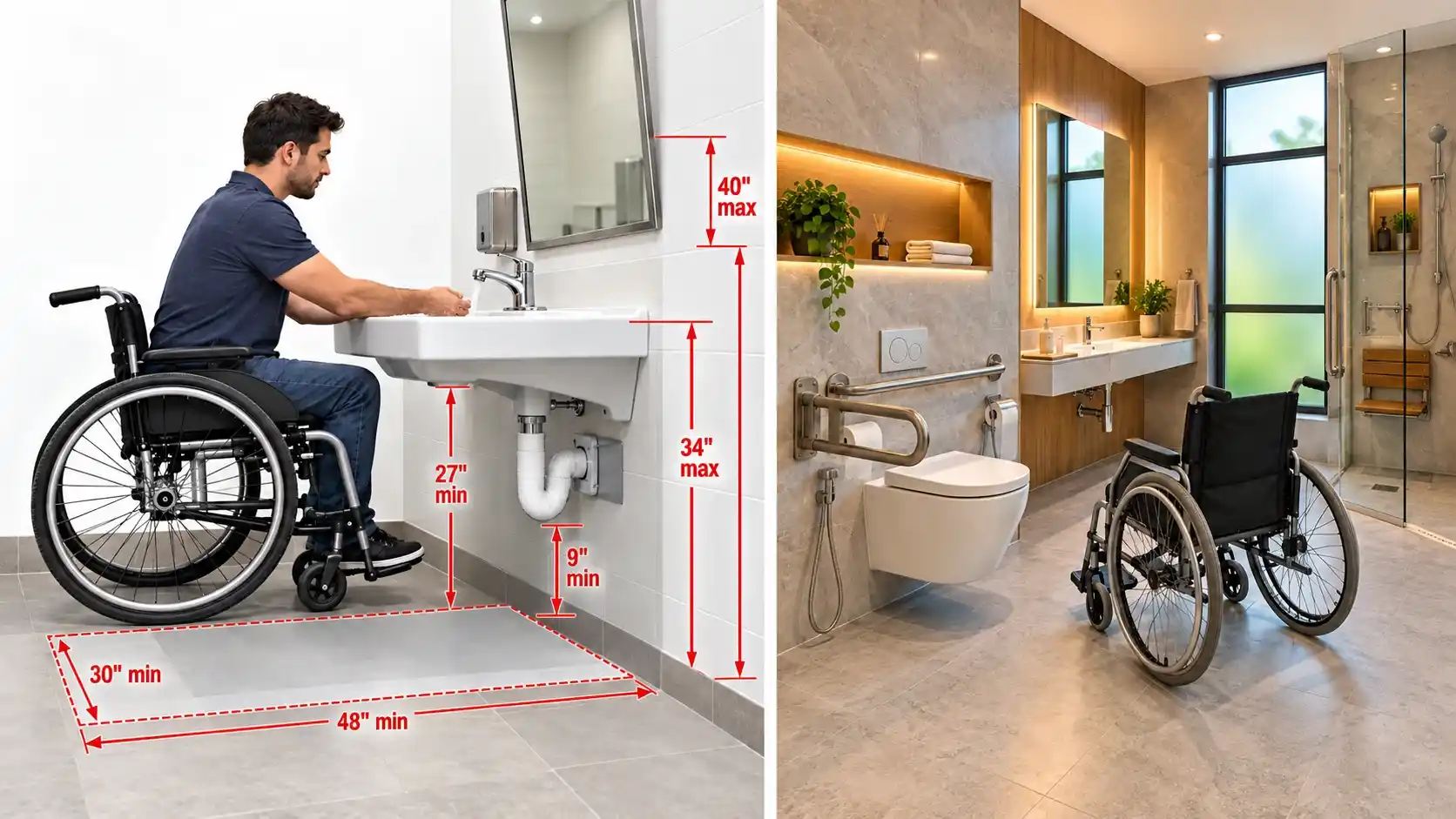
ADA Bathroom Requirements: What the Rules Say and What Actually Applies to Your Home
Quick answer: The ADA applies to public and commercial buildings, not private single-family homes. Homeowners can still borrow the standards: a 60-inch turning space, toilet centered 16–18 inches from the side wall, grab bars at 33–36 inches, and a 30×60-inch roll-in shower.Quick takeawaysThe ADA is a civil-rights law for public and commercial buildings. Your own house usually isn’t covered. Its numbers are still the most-used benchmark for a wheelchair-accessible home bathroom. Space is the real constraint. Turning space, toilet clearance and shower size all fight over the same footprint. Grab bar blocking is cheap before drywall and expensive after tile. The UK, Canada and Australia use different rulebooks (table below). The minimum works for a standard manual wheelchair. Power chairs and helpers need more room.Search “ADA bathroom requirements” and you land on pages written for restaurant owners. The dimensions are usually right. The context is usually wrong, and that context is what decides whether you spend $800 or $8,000.Does the ADA even apply to a bathroom in your house? Here is the part most guides bury. The ADA is a federal civil-rights law, and its design standards govern places the public uses: shops, offices, restaurants, clinics, hotels. A private single-family house isn’t on that list. Neither are the Fair Housing accessibility rules or most building codes. So why does every accessible-bathroom plan quote ADA numbers? Because they are the best-tested benchmark going. Builders, occupational therapists and inspectors all speak that language, and most places have nothing equivalent for houses. There are exceptions worth checking. Renting rooms to the public, running a business from the property, or building under a local planning condition can change the picture. Your local building authority has the final word. Treat the ADA as a design reference, not a legal checklist. That distinction saves money, because some commercial rules were written for strangers sharing a room, not one household with known needs.ADA, Part M, NBC or NCC: which rulebook governs your bathroom? What applies depends on the country, and often on the state or province too. This table gives principles rather than exact figures where they vary.Area US UK Canada AustraliaRules for private homes ADA, Fair Housing accessibility rules and most codes don’t cover single-family homes; local code and voluntary design govern Building Regulations, Approved Document M, optional M4(2) and M4(3) categories Provincial codes based on the National Building Code; accessibility rules focus on non-residential and multi-unit buildings (check locally) NCC, with the Livable Housing Design Standard adopted in many statesWheelchair-user standard ADA / ICC A117.1 for covered buildings Category 3 bathrooms provide a 1500mm turning circle free of low-level obstruction NBC barrier-free provisions and CSA standards for covered buildings AS 1428.1 for covered buildings; Livable Housing is a lower barStep-free shower Roll-in or transfer types in ADA section 608 M4(2) expects provision for a future level-access shower Varies; confirm locally At least one hobless shower on the entry level under Livable Housing; varies by stateWall reinforcement Recommended; required for covered multifamily Provision for future adaptations in M4(2) Recommended; confirm locally Reinforced walls so grabrails can be added laterCheck locally? State and local code Local authority; is M4(2) or M4(3) a planning condition? Provincial code State adoption variesOne line to remember: your building authority, not a blog post, decides what your project must meet.The ADA toilet room, measured: turning space, toilet, grab bars, sink and door These figures follow the 2010 ADA Standards for Accessible Design. They don’t legally bind a private home, but they are the benchmark most designers use. Verify with your local building authority.Element ADA minimum Comfortable NotesTurning space 60-inch circle (or T-shaped space) Extra room for power chairs and a helper Knee and toe space under fixtures can count toward it; floor must be levelToilet clearance, side 60 inches measured from the side wall More width on the transfer side Can overlap grab bars, dispensers and turning space; no other fixtures inside itToilet clearance, depth 56 inches from rear wall (wall-hung) or 59 inches (floor-mounted) Extra depth for a helper Wall-hung toilets need a proper in-wall carrierToilet centerline 16 to 18 inches from the side wall Middle of the range Mark it before the flange goes inSeat height 17 to 19 inches above finished floor Comfort-height seat Measure to the top of the seatToilet grab bars Side and rear walls, 33 to 36 inches above floor Placed after checking the user’s reach and transfer side Side bar commonly 42 inches or longer, rear bar 36 inches or longer (verify)Bar-to-wall gap 1.5 inches Same Keep dispensers and accessories clear of itLavatory clear floor space 30 by 48 inches A bit wider Knee clearance below; rim at 34 inches or lowerDoor 32 inches clear width (verify) Wider for power chairs and helpers See the swing rule belowThe overlap rule people miss. The toilet clearance can share space with grab bars, dispensers, other fixtures’ clear floor space and the turning circle. What it can’t share is a fixture. A vanity edge inside that 60-inch zone is the single most common failure, because it looks fine on a floor plan. The door-swing rule. Doors normally can’t swing into the clear space of any fixture. A single-user toilet or bathing room gets an exception if a compliant clear floor space exists beyond the door’s swing arc. And if the door opens straight at the toilet, the toilet clearance can’t overlap the door’s own maneuvering space. A pocket or outswing door often fixes this for far less than a bigger room would cost. Minimum is not comfortable. The numbers describe one person in a standard manual chair, with no helper. Power chairs and scooters are longer and wider. A caregiver assisting a transfer needs somewhere to stand. Most homeowners don’t realize the minimum quietly assumes the user does everything alone.Roll-in, transfer or alternate roll-in: what the shower type decides The shower is where a style choice turns into a structural one. Three compartment types exist, and each asks for a different footprint.Transfer shower: 36×36 inches inside, with a seat and a 36-inch entry. Suits someone who moves from a chair to the seat. Smallest footprint. Standard roll-in: at least 30 inches wide by 60 inches deep, with a 60-inch-wide entry on the open face and clear floor space beside it. Suits someone entering in a shower chair or with help. Alternate roll-in: 36 inches wide by 60 inches deep, with a 36-inch entry and a short wall that usually carries a seat.A few practical notes from how these get built:A hand-held shower on a slide bar and controls reachable from the seat matter more daily than the tile does. A fold-down seat costs little and helps both users and helpers, but it needs solid blocking behind it. Thresholds should be low and beveled. The ADA allows roughly half an inch at most (verify), and a true curbless entry is easier to roll over than any ramp. A linear drain lets the floor slope in one direction, which makes curbless entries simpler to tile and easier to keep drained.Here is what most guides skip: going curbless usually means recessing the floor. In a joist floor that is structural carpentry. On a slab it means cutting concrete. The shower base itself is rarely the expensive part.What happens when a bathroom “meets the numbers” but still fails An accessible bathroom can pass on paper and still be miserable to use. These are the failures that show up again and again.Vanity inside the toilet clearance. Fix: move it, or use a wall-hung unit outside the zone. Toilet centered by eye. The range is narrow. Fix: mark 16–18 inches from the side wall before setting the flange. Door swinging into the clearance. Fix: pocket door, outswing door, or confirm clear space beyond the swing arc. Grab bars into drywall alone. They loosen under load. Fix: blocking or solid backing behind every bar. Accessories inside the bar’s gap. Towel hooks and dispensers block the grip. Fix: keep the 1.5-inch space clear. Shower controls out of seated reach. Fix: put them near the seat and add a hand-held head. Slippery floor tile. Fix: slip-resistant finish with a slope that drains cleanly. Designing only for today. Fix: add blocking, wider doors and level thresholds now so a later conversion stays cheap.⚠️ Warning: A grab bar is a safety device, not a towel rail. Anchor it into solid blocking or backing, never drywall alone, and test it before the first real transfer. If you can’t confirm what’s behind the wall, have a professional open it up.⚠️ Warning: A curbless shower is a plumbing and waterproofing project, not a tile project. A badly sloped floor or missing waterstop can leak into the room or the floor below. Use a licensed pro for the drain, the falls and the membrane.⚠️ Warning: Hot water scalds quickly when you can’t step out of the stream. Fit pressure-balancing or thermostatic valves, and check the water heater setting with scald risk in mind.Can your house take it? Feasibility and the cost of changing your mind Before anyone falls in love with a layout, find out what the house allows. Stack and drain position, floor type and wall contents decide more than the fixtures do.Change Rating What decides it Who does it Cost directionGrab bar blocking (walls open) Easy Whether studs are exposed Builder or carpenter LowestGrab bars on finished walls Moderate Stud location, tile, wall type Handyman or accessibility installer Low to moderatePocket or outswing door Moderate Wall contents, framing, hallway side Builder or carpenter ModerateWall-hung accessible lavatory Moderate Plumbing in the wall, supply and drain positions Plumber ModerateTub to transfer or roll-in shower, same spot Hard Drain location, floor recess, waterproofing Plumber plus tile and waterproofing pro HighCurbless shower on a slab Hard Slab cutting, drain relocation, falls Plumber, concrete and tile pro HighEnlarge the room for a 60-inch turning space Structural Load-bearing wall? Space next door? Structural engineer, builder HighestThe real money question is timing. Here is the same project, a tub-shower converted to a roll-in or curbless shower with blocking for grab bars, priced by when you change your mind. Figures are estimated ranges in USD, not quotes.Stage What changing your mind looks like Estimated added cost What drives the varianceOn paper Revise the plan, pick a different shower type or door $0–$500 Whether a designer is involvedBefore demolition Reorder materials, shift fixtures $200–$1,500 Restocking, lead timesAfter rough-in and waterproofing Re-frame, move the drain, redo the membrane $1,500–$6,000+ Slab vs timber floor, pipe run length, accessAfter tile Remove tile, redo floor and waterproofing, relocate drain $4,000–$12,000+ Tile type, drain relocation, local labor ratesCosts in the UK, Canada and Australia follow local labor and materials rather than a simple currency conversion. UK costs are labor-led and climb sharply in London. Canada often lands in a similar range, with older cold-climate housing adding subfloor surprises. Australia’s licensed-trade and waterproofing requirements typically keep totals at or above the US range. Get local quotes. On resale: most buyers aren’t looking for a full roll-in conversion, but they notice wide doors, level thresholds and a bathroom that works for everyone. The cheap, convertible choices (blocking, a wider doorway, a low threshold) keep options open without committing the whole room.Where DIY ends Installing a shelf-height towel bar is DIY. Installing a load-bearing grab bar into verified blocking is a careful job that many handy homeowners can do, provided they can see what’s behind the wall. Past that point, call someone. Bring in a plumber for any drain move or shower-base change. Use a licensed waterproofing or tile professional for curbless showers. Ask a structural engineer before removing or notching anything load-bearing, including joists for a recessed floor. An occupational therapist can also tell you what the user actually needs, which beats any table in this article. And check permit rules locally before you start.FAQ Do I have to follow ADA rules in my own home? Generally no. The ADA, the Fair Housing Act’s accessibility provisions and most building codes don’t cover private single-family homes. Rules can still apply if you rent rooms to the public, run a business from the home, or your local planning conditions require accessible features. Many owners follow ADA dimensions anyway as a proven benchmark. Verify with your local building authority. What size does an ADA bathroom need to be? There is no single room size. The room has to hold a 60-inch turning space, the toilet clearance of 60 inches by 56 or 59 inches, and a lavatory with 30×48 inches of clear floor space. Because these can overlap, a well-planned single-user room can be compact, but it is usually much larger than a standard small bathroom. The practical route is often borrowing space from a closet or adjacent room. What’s the difference between a roll-in and a transfer shower? A transfer shower is 36×36 inches with a seat. A standard roll-in is at least 30 inches wide by 60 inches deep with a 60-inch entry, and an alternate roll-in is 36 by 60 inches. Transfer showers suit people who can move from a chair to a seat. Roll-in showers suit users who enter in a shower chair or with help. What replaces the ADA in the UK, Canada and Australia? The UK uses Building Regulations Approved Document M, with optional M4(2) accessible-and-adaptable and M4(3) wheelchair-user standards. Canada uses the National Building Code as adopted by each province, plus CSA standards. Australia uses the NCC, including the Livable Housing Design Standard, and AS 1428.1 for covered buildings. Adoption varies by region, so check with your local authority. Can I add grab bars later without opening the wall? Only if you can find solid backing. Bars fixed into hollow drywall can fail under load. If walls are open during a renovation, adding blocking costs far less than retrofitting later, even if you don’t install bars yet. For finished walls, have a professional locate studs or add backing from behind where possible. Layout, Space & Structural ConsiderationsMinimum Size for a Full Bathroom: The Real Numbers (and Why Code Minimum Isn't the Whole Story) How to Make a Small Bathroom Feel Bigger: Layout Fixes Ranked by Impact and Cost How Much Does It Cost to Move Plumbing in a Bathroom Remodel? (Estimated Ranges by Type of Move) Converting a Tub to a Shower: Does It Hurt Resale Value? How Much Does It Cost to Add a Bathroom to a House? Half Bath vs. 3/4 Bath: What's the Real Difference (and Does It Count as a Full Bathroom?) What Size Exhaust Fan Do I Need for My Bathroom? (CFM, L/s and Real-World Adjustments) ADA Bathroom Requirements: What the Rules Say and What Actually Applies to Your Home What Is a Wet Room? How It Differs From a Walk-In Shower (and Whether Your House Can Take One) Bathroom Window Placement and Privacy: Where Windows Should Go (and How to Fix the Ones in the Wrong Spot)
 (3).webp)
What Size Exhaust Fan Do I Need for My Bathroom? (CFM, L/s and Real-World Adjustments)
Here's the short version, then we'll get into why it isn't quite that simple. For a bathroom up to 100 square feet (9.3 m²) with a standard 8-foot (2.4 m) ceiling, aim for about 1 CFM per square foot of floor area, and never go below 50 CFM (24 L/s), even in a tiny powder room that technically needs less on paper. Formula: CFM needed = floor area (sq ft) × 1, rounded up, with a 50 CFM floor. Metric: L/s needed = floor area (m²) × 5.4, with a 24 L/s floor. That number will get you a fan that satisfies most codes. It won't guarantee the fan you buy actually moves that much air once it's connected to twelve feet of sagging flex duct and a couple of 90-degree bends. More on that in a minute, because it's the part almost every sizing guide skips. Quick TakeawaysSmall bathrooms: 1 CFM per sq ft, minimum 50 CFM (24 L/s) — round up to the next available fan size. Ceilings over 8 ft (2.4 m), or rooms over 100 sq ft (9.3 m²): switch to the volume or fixture-count method below. The number on the box is a best-case rating. Your actual duct length and bends cut into it. Buy on sones or dB(A), not just CFM. A fan nobody runs doesn't ventilate anything. Always discharge outdoors — never into an attic, loft or roof space. Confirm the required airflow and wiring rules with your local building authority before you buy.The 3-step sizing formula (and the room size where it stops working) Most advice stops at "1 CFM per square foot," which works fine until the room gets bigger, the ceiling gets taller, or you're dealing with an ensuite that has a separate toilet compartment. Here's the version that actually holds up. Step 1 — Measure first. Before you open a calculator, write down:Floor area (length × width) Ceiling height Room volume (floor area × height) Whether the toilet sits behind its own doorStep 2 — Pick the method that fits your room.Method Best for FormulaFloor-area rule Rooms ≤100 sq ft (9.3 m²), 8-ft (2.4 m) ceilings CFM = sq ft × 1, minimum 50 CFM (24 L/s)Volume / air-changes method Taller ceilings or odd-shaped rooms CFM = volume (cu ft) × 8 ÷ 60. Metric: L/s = volume (m³) × 8 ÷ 3.6Fixture-add method Rooms over 100 sq ft (9.3 m²) 50 CFM (24 L/s) each for toilet, shower and tub; a jetted tub is usually counted at 100 CFM (47 L/s)Step 3 — Round up, then sanity-check. Fans come in fixed sizes — 50, 80, 90, 110, 150 CFM and so on — so round up to the next size, then run a second method as a cross-check. If the two numbers disagree by much, go with the higher one. Here's what the "1 CFM per sq ft" shortcut quietly assumes: an 8-foot ceiling. Push that to 9 feet and you're moving roughly 12.5% more air for the same floor space, and the shortcut has no idea. Past about 100 sq ft, the floor-area rule and the fixture method also start disagreeing with each other, which is exactly why bigger bathrooms need the fixture-count approach instead of a single blanket number.Three bathrooms, worked through to a real fan size Numbers on a page are one thing. Here's how the math plays out in rooms you'd actually walk into. Scenario 1 — Small hall bathroom, tub/shower combo 5 × 8 ft (1.5 × 2.4 m), 40 sq ft (3.7 m²), 8-ft ceiling, 320 cu ft (9.1 m³) of volume. 5 ft (1.5 m) +--------------------+ | [FAN] tub/shower | 8 ft | toilet vanity | (2.4 m) +---------[door]-----+The area rule says 40 CFM; the volume method says about 43 CFM (20 L/s). Both land under the 50 CFM floor, so 50 CFM (24 L/s) is the real minimum. If the duct run is long or has more than one bend, jump to 80 CFM (38 L/s) and check the manufacturer's performance chart at your actual duct length — not just the headline number. Scenario 2 — Standard family bathroom 8 × 10 ft (2.4 × 3.0 m), 80 sq ft (7.4 m²), 8-ft ceiling, 640 cu ft (18.1 m³). 8 ft (2.4 m) +------------------------+ | tub/shower [FAN] | 10 ft | | (3.0 m) | toilet vanity | +-------------[door]-----+Area rule: 80 CFM. Volume method: about 85 CFM (40 L/s). Pick 90 CFM (42 L/s), or the nearest size above 85, and choose the quietest model available at that airflow. Keep the fan off the ceiling directly above the door — mounted there, it mostly pulls hallway air instead of bathroom air. Scenario 3 — Master bath with separate shower, tub and toilet room 10 × 14 ft (3.0 × 4.3 m), 140 sq ft (13.0 m²), 9-ft (2.7 m) ceiling, 1,260 cu ft (35.7 m³). 10 ft (3.0 m) +---------------------------+ | tub [FAN 110] shower | 14 ft | | (4.3 m) | vanity +-----------+ | | | WC [FAN50]| | +--------------[door]-------+Over 100 sq ft, so this one needs the fixture method: toilet 50 + shower 50 + tub 50 = 150 CFM (71 L/s). The volume method lands close, at around 168 CFM (79 L/s). Rather than one oversized unit, split the load — a quiet 110 CFM (52 L/s) fan over the shower/tub zone, plus a 50 CFM (24 L/s) fan in the closed toilet compartment, each on its own timer or humidity sensor. Why the CFM on the box isn't the CFM in your ceiling This is the part that trips people up, and it's worth more attention than most sizing guides give it. A fan's CFM rating comes from a lab test with a short, straight duct and almost no resistance. Your ceiling cavity is rarely that cooperative. A few things quietly eat into real-world airflow:Long duct runs. Every extra foot of flex duct adds resistance. Bends and elbows. Each 90-degree turn acts like several extra feet of straight duct. Undersized duct. A 110 CFM fan choked down to 4 in (100 mm) duct won't deliver its rated flow. Restrictive or blocked caps. A flap caked in dust or lint barely opens. Flex duct that sags. Sag creates low points where moisture pools and airflow drags.⚠️ Warning: Never let the duct terminate in the attic, loft or roof space. Warm, moist air dumped into a cold attic condenses on sheathing and insulation, feeding mould and rot you won't notice until it's expensive to fix. Always terminate through a proper roof or wall cap, vented outdoors.⚠️ Warning: Uninsulated or sagging flex duct running through a cold attic collects condensation that can run back down toward the fan housing. Use short, straight, insulated runs, and slope the duct toward the outlet — not back toward the room.Most homeowners don't realize this until the mirror still fogs six months after a "correctly sized" fan install. The box was right. The ductwork wasn't.What do the codes say in the US, UK, Canada and Australia? Code minimums are a floor, not a target — treat the figures below as a starting point, and confirm specifics with your local building authority before you buy or install anything.Requirement United States United Kingdom Canada AustraliaGoverning document IRC plus state/local amendments Building Regulations (Approved Document F in England) National Building Code plus provincial code NCC Volume 2, referencing AS 1668.2Fan or window Window ≥3 sq ft (0.28 m²), half openable, can substitute — many local codes still require a fan Extract ventilation generally expected for new/replacement work; confirm with building control Window-or-fan routes exist, tied to provincial code Openable window or mechanical exhaust, per state rulesCommonly published minimum 50 CFM (24 L/s) intermittent, or 20 CFM (9 L/s) continuous 15 L/s (≈32 CFM) intermittent Set by provincial code and home ventilation design Set by NCC / AS 1668.2 — check locallyDischarge Outdoors only Outdoors only Outdoors only; insulated duct common in cold climates Outdoors only; roof-space discharge is restrictedWet-zone electrical GFCI protection, location-rated fan RCD protection, IP-rated fixture in shower zones GFCI under the Canadian Electrical Code RCD under AS/NZS 3000Who wires it Licensed electrician (varies by state) Registered/competent electrician Licensed electrician Licensed electricianA fan that merely hits the published minimum, run through a long, bendy duct, can still leave you with a foggy mirror and a damp ceiling. Code minimum and "actually comfortable" are two different standards — size toward the second one.Master bathrooms: one big fan, two fans, or a smarter switch? A single large fan isn't automatically the right call for an ensuite. The question that matters more is where the moisture is actually generated, and whether a closed door stands between it and your fan.If the toilet sits in its own closed compartment — a fan over the shower does almost nothing there. Plan a second, smaller fan (often around 50 CFM / 24 L/s) for that zone. If the bathroom is one open space — a single, properly sized fan near the shower, paired with a decent gap under the door for make-up air, can be enough. If you have a soaking or jetted tub — count it separately in your fixture total; jetted tubs are commonly figured at 100 CFM (47 L/s) instead of 50. If running the fan is easy to forget — a humidity sensor or a simple overrun timer solves that better than a bigger CFM number ever will.Add up the full fixture-based total for the room first, then decide whether to deliver it as one fan or split across zones. Splitting usually wins in larger ensuites — it's quieter per zone, and each area gets ventilated on its own schedule.Getting it wrong costs more the later you find out The same fix — adding a correctly sized, properly ducted fan — costs wildly different amounts depending on when you do it.Stage What it involves Estimated cost (USD) Main cost driversOn paper Calculate CFM, pick a quiet model, plan a short duct route ~$0 labour; modest price gap for a quieter/higher-flow unit Fan model, planned duct lengthBefore the ceiling closes Install housing, run insulated duct, fit an exterior cap, wire it $350–$900 installed Duct length, roof vs. wall exit, new circuit, local labour ratesAfter tile, drywall and paint Cut into the finished ceiling, fish duct through, patch and repaint $700–$2,000+ Access, second-floor rooms, roof type, repair finishesLike-for-like swap New fan in the existing housing and duct $100–$350 Fan model, access, labourRegional note: UK, Canadian and Australian costs scale with local labour rates and access difficulty — cold-climate Canadian installs typically add insulated duct, and roof type shifts the price across all four countries. Treat these as a rough planning guide, not a quote. Most homeowners don't realize this timing gap exists until they're the ones paying to open a ceiling they just finished.Before you buy: what to check in the house, and who should do the work Pre-purchase checklist: Floor area and ceiling height measured and confirmed Existing fan's rating, cutout size and duct diameter noted Duct route traced from fan to outside, bends counted Termination point confirmed as a roof or wall cap — never an attic or roof space Attic/loft access or above-ceiling conditions checked Joist direction and spacing confirmed for fan placement Roof type confirmed for any new cap (tile, metal, membrane) Existing circuit and switch located; GFCI/RCD protection confirmed Fan's damp/wet rating checked against its position relative to the shower spray Door gap present for make-up air Open-vent combustion appliances (gas water heater, furnace) in the home noted Local building authority contacted on permit or notification requirementsDIY vs. professional: A like-for-like fan swap into an existing housing and duct is a reasonable DIY job for most homeowners comfortable with basic electrical work. New ductwork, a roof penetration, a new circuit, or a tight-access run through a finished ceiling is where it's worth paying a licensed electrician or HVAC contractor — the margin for a mistake (a leaking roof cap, a miswired circuit in a wet zone) is too costly to learn the hard way.⚠️ Warning: An oversized fan in an otherwise tight, well-sealed home can pull air back down the flue of an open-vent combustion appliance, such as some gas water heaters. Size to your calculation rather than guessing high, make sure there's a make-up air path, and keep working carbon monoxide alarms in the home regardless.FAQ Do I still need an exhaust fan if my bathroom has a window? Often yes. Under the US IRC, an openable window of at least 3 sq ft (0.28 m²), half of it operable, can technically substitute for a fan — but many local codes, energy programs and newer builds require a fan anyway. In England, Approved Document F generally expects extract ventilation in bathrooms for new work. A window also does little on a still or cold day. Canadian and Australian rules allow window-or-fan routes with conditions. Verify with your local building authority before skipping a fan. Is a bigger exhaust fan always better? No. Past the right size, you mostly gain noise, more conditioned air pulled out of the house, and — in a tight, well-sealed home — a risk of drawing air back down the flue of an open-vent combustion appliance. If you want margin, spend it on a quieter model and a short, clean duct run rather than raw CFM. Calculate your number, add a modest buffer for a long duct, then stop.Does a master bathroom need two exhaust fans? Not always, but zoning matters more than size. If the toilet sits behind its own door, a fan at the shower does little there, so a second, smaller fan (often around 50 CFM / 24 L/s) usually works better. In a large, open ensuite, one properly sized fan near the shower with a good door gap can be enough. Total up the fixture-based CFM for the whole room first, then decide how to split it. Why does my new fan still leave the mirror fogged? Usually, installed airflow is lower than the rating on the box. A long or kinked duct, undersized 4 in (100 mm) duct on a high-CFM fan, a crushed flex run, a blocked exterior cap, or no air path under the door can all cut real performance well below the label. Run time matters too — moisture keeps leaving walls and towels after you step out, so running the fan 15–20 minutes post-shower, ideally on a timer or humidity sensor, closes the gap. Can I vent a bathroom fan into the attic, loft or roof space? No. Every code system referenced here expects bathroom exhaust to discharge outdoors. Warm, moist air dumped into a cold attic condenses on sheathing and insulation and feeds mould and rot. Terminate through a roof or wall cap fitted with a backdraft damper, positioned clear of any soffit intake vents so the moisture doesn't get pulled straight back in. Rules on roof-space discharge are particularly strict in Australia, so check yours before finalizing a duct route. Layout, Space & Structural ConsiderationsMinimum Size for a Full Bathroom: The Real Numbers (and Why Code Minimum Isn't the Whole Story) How to Make a Small Bathroom Feel Bigger: Layout Fixes Ranked by Impact and Cost How Much Does It Cost to Move Plumbing in a Bathroom Remodel? (Estimated Ranges by Type of Move) Converting a Tub to a Shower: Does It Hurt Resale Value? How Much Does It Cost to Add a Bathroom to a House? Half Bath vs. 3/4 Bath: What's the Real Difference (and Does It Count as a Full Bathroom?) What Size Exhaust Fan Do I Need for My Bathroom? (CFM, L/s and Real-World Adjustments) ADA Bathroom Requirements: What the Rules Say and What Actually Applies to Your Home What Is a Wet Room? How It Differs From a Walk-In Shower (and Whether Your House Can Take One) Bathroom Window Placement and Privacy: Where Windows Should Go (and How to Fix the Ones in the Wrong Spot)
.webp)
Half Bath vs. 3/4 Bath: What's the Real Difference (and Does It Count as a Full Bathroom?)
If you've ever stood in a listing photo scratching your head over "3/4 bath" on the spec sheet, you're not alone. Most people can tell you what a half bath is — toilet, sink, done. But the line between a 3/4 bath and a full bath gets fuzzy fast, and that confusion costs people real money, either in a renovation budget they didn't plan for or a listing price they didn't negotiate for. Here's the short version: the difference isn't about square footage, paint color, or how fancy the tile is. It comes down to one thing — what bathing fixture is in the room, if any. The Quick Answer A half bath has exactly two fixtures: a toilet and a sink. No shower, no tub. That's it. You'll also hear it called a powder room, especially when it's tucked near a living or entertaining area for guests. A 3/4 bath adds a third fixture — a stand-alone shower — but stops short of a tub. Toilet, sink, shower. A full bath is the one with a bathtub. It may or may not have a separate shower stall too (a lot of full baths these days have both), but the tub is what earns it the "full" label. What surprises people is this: for most real estate purposes, a 3/4 bath is treated the same as a full bath. The reasoning is simple — appraisers and agents generally care whether a bathroom has a bathing fixture, not which kind. More on that below, because it genuinely changes how you should think about adding one.Fixture-by-Fixture: What Each Type Actually IncludesBathroom Type Toilet Sink Shower Tub Fixture CountHalf bath (powder room) ✓ ✓ — — 23/4 bath ✓ ✓ ✓ — 3Full bath ✓ ✓ Optional ✓ 3–4A detail that trips people up: a full bath doesn't require a separate shower. A tub with a shower-over-bath setup still counts as a full bath with 3 fixtures, just like a 3/4 bath does — the tub is simply standing in for the shower stall. The fixture count can be identical between a 3/4 bath and a full bath. The only structural difference is tub versus shower stall.How Much Space Does Each One Actually Need? This is where generic articles tend to just throw a number at you with no context. The honest answer is that code minimums and comfortable minimums are two very different things, and the gap between them is bigger than most people expect.Room Type Code-Minimum Planning Figure Comfortable Size What Drives the DifferenceHalf bath ~18 sq ft / 1.7 sq m 24–30 sq ft / 2.2–2.8 sq m Door swing and elbow room at the sink3/4 bath ~30 sq ft / 2.8 sq m 36–42 sq ft / 3.3–3.9 sq m Shower stall footprint plus clearance to turn and dry offFull bath (with tub) ~35 sq ft / 3.3 sq m 40–50 sq ft / 3.7–4.6 sq m Standard tub footprint, typically 60 x 30 in / 1524 x 762 mmThe shower is almost always the thing that decides whether a 3/4 bath conversion is realistic. A freestanding shower stall needs at least 32 x 32 in (813 x 813 mm) to meet most code minimums, but that's a tight fit for a lot of adult bodies — 36 x 36 in (914 x 914 mm) is where it starts to feel comfortable rather than cramped. If you've ever used a hotel shower that felt like showering inside a phone booth, that was probably built right at the minimum. Toilet clearance is the other number people underestimate. The widely published IRC minimum is 21 in (533 mm) of clearance in front of the toilet and 15 in (381 mm) from the toilet's centerline to a side wall or fixture. Those numbers will pass inspection, but they don't feel generous — most homeowners who've lived with a code-minimum toilet clearance will tell you they wish they'd pushed for a few more inches when they had the chance. UK, Canadian, and Australian minimums follow their own code systems (Building Regulations, the National Building Code of Canada, and NCC/AS standards respectively) and the exact figures differ, so treat any number here as a planning reference and verify with your local building authority before you finalize a layout.Does a 3/4 Bath Count as a Full Bathroom? (This Is the Part Most Articles Skip) Here's the thing most homeowners don't realize until they're mid-renovation or mid-listing: in most markets, a 3/4 bath is counted the same as a full bath for bathroom-count purposes. The logic appraisers and agents use is pretty straightforward — a bathroom either has a way to bathe in it, or it doesn't. Whether that's a shower stall or a tub usually doesn't change the count.⚠️ Note: Appraisal and listing practice varies by region and even by individual appraiser. Before you budget a renovation around the assumption that your new 3/4 bath will boost your listed bathroom count, confirm it with a local real estate agent or appraiser. This is common practice, not a universal rule — don't treat it as guaranteed.This matters because it flips the economics of a lot of renovation decisions. If your real goal is increasing your home's listed bathroom count rather than specifically wanting a tub, a 3/4 bath conversion can get you there without needing the extra footprint a tub-based full bath demands. That's a meaningfully different, and often cheaper, project.Converting a Half Bath Into a 3/4 Bath: What's Really Involved This is the project people most often underestimate, and almost always for the same reason: they think about the shower and forget about the drain. What actually decides the difficulty and cost isn't the shower itself — it's where your existing soil stack and drain lines sit relative to the new shower location. A shower close to the stack, with a short, well-sloped drain run, is a moderate project. A shower on the opposite side of the room from the stack can mean cutting into a slab floor or running new drain lines under a timber floor, and that's a different budget entirely.Change Feasibility What Decides It Who Does It Cost DirectionAdd a sink to an existing layout Easy Nearby water supply Plumber (minor job) LowAdd a shower, stack-adjacent wall Moderate Drain slope, trap arm length Licensed plumber ModerateAdd a shower, opposite wall from stack Hard New drain run, possible slab cutting Plumber, often plus a contractor HighAdd a tub where only a shower is plumbed Moderate–Hard Floor load capacity, waterproofing redo Plumber plus contractor Moderate–HighRelocate the stack entirely Structural Joist or slab layout, permit review Plumber plus structural engineer Very highIf you're on a slab foundation, that last point about cutting concrete isn't a scare tactic — it's genuinely one of the more disruptive parts of a bathroom addition, and it's exactly the kind of thing that turns a two-week project into a six-week one.Estimated Cost to Convert a Half Bath Into a 3/4 Bath (USD)Item Low Typical High What Drives the RangePlumbing (drain + supply) $1,500 $4,000 $9,000 Distance from stack, slab vs. joist floorShower stall + waterproofing $1,200 $3,500 $7,000 Prefab unit vs. custom tileVentilation upgrade $300 $600 $1,200 Duct run length, fan capacity (CFM/L/s) neededElectrical (GFCI/RCD outlets, lighting) $300 $700 $1,500 Existing panel capacityPermit and inspection $150 $500 $1,200 MunicipalityEstimated total $3,450 $9,300 $19,900These are general planning ranges, not quotes — get actual bids before you commit to a number. For homeowners outside the US: UK and Australian labor and material costs for an equivalent shower addition typically run somewhat higher than comparable US regional averages, largely due to minimum callout fees for licensed trades. Canadian costs tend to track closer to US figures in most regions, though material freight costs can push prices up noticeably in remote areas. Treat these as general patterns rather than fixed conversion rates — local quotes are the only real answer. DIY vs. Professional: Where to Draw the Line The finish work on a bathroom conversion — tile, paint, trim, even installing a prefab shower pan in some jurisdictions — is reasonably DIY-friendly if you've done tile work before. The plumbing is a different story. Adding a shower drain almost always needs a licensed plumber, both because drain slope and trap arm length genuinely matter for the fixture to work correctly, and because most municipalities require a permit once you're changing the fixture count in a room. Skipping the permit doesn't just risk a fine — it can come back to bite you at resale, when an inspector or appraiser finds unpermitted plumbing work. A few things worth confirming before you pick up a tool:Has a plumber confirmed the drain run is actually feasible from this location? Do you know whether you're on a slab or a joist floor, and what that means for the project? Has an electrician reviewed what the new humidity load means for your exhaust fan sizing? Do you have the permit in hand before demolition starts, not after?If you can answer yes to all four, the finish work is fair game for a confident DIYer. If any answer is "not yet," that's the signal to bring in a professional before you start swinging a hammer.Which One Is Right for Your Home?If you mainly need guest-accessible toilet access near a living or entertaining space — a half bath is almost always the right call. Don't overbuild it. If you have a bedroom without its own bathing fixture and limited floor space — a 3/4 bath often fits where a full bath simply won't. If your main goal is improving your listed bathroom count rather than specifically wanting a tub — a 3/4 bath typically satisfies "full bathroom" criteria in most markets, but confirm that with a local agent first. If your bathroom space sits directly next to the existing stack — converting to a 3/4 bath is usually a moderate-cost, moderate-disruption project. If your space is on a slab and far from the stack — budget and plan for this as a major plumbing project, not a weekend upgrade. If long-term accessibility is a priority for your household — a curbless 3/4 bath often outperforms a full bath with a step-over tub. If your budget is tight and the goal is purely resale value — a half bath generally delivers more value per dollar than a 3/4 bath, since it's a smaller, simpler project.Frequently Asked Questions Does a 3/4 bath count as a full bathroom? In most real estate listings, yes. Appraisers and agents typically define a full bathroom as one with a toilet, sink, and a bathing fixture — a shower qualifies just like a tub does. A 3/4 bath is usually counted the same as a full bath for bathroom-count purposes, though exact appraisal practice varies by region, so it's worth confirming with a local agent or appraiser before you budget or market around that assumption. Can I turn a half bath into a 3/4 bath myself? The sink and finish work are DIY-friendly, but adding a shower almost always requires a licensed plumber for the drain and supply lines, and often an electrician for GFCI/RCD-protected outlets and lighting. Most municipalities also require a permit once you're changing fixture count, so this isn't a weekend DIY project even if you handle the tile and trim yourself. How much smaller is a half bath than a 3/4 bath? A half bath can work in as little as about 18 sq ft (1.7 sq m) since it only needs a toilet and sink. A 3/4 bath typically needs 30 sq ft (2.8 sq m) or more, mainly to fit a shower stall with workable clearance. The shower, not the toilet or sink, is what drives the extra space requirement. What's the real difference between a 3/4 bath and a full bath? A full bath includes a bathtub, which a 3/4 bath does not. A full bath may also include a separate shower, but the bathtub is the defining fixture. Functionally, for daily use and resale purposes, the two are often treated similarly — the main practical difference is whether the household wants or needs a tub. Is it worth converting a half bath to a 3/4 bath for resale value? It can be, especially if your home currently has fewer full-equivalent bathrooms than comparable homes nearby. Because a 3/4 bath is typically counted the same as a full bathroom in listings, the conversion can improve your bathroom count without the larger footprint a tub-based full bath would need. The actual return depends heavily on local market norms and the cost of the specific plumbing work involved. Layout, Space & Structural ConsiderationsMinimum Size for a Full Bathroom: The Real Numbers (and Why Code Minimum Isn't the Whole Story) How to Make a Small Bathroom Feel Bigger: Layout Fixes Ranked by Impact and Cost How Much Does It Cost to Move Plumbing in a Bathroom Remodel? (Estimated Ranges by Type of Move) Converting a Tub to a Shower: Does It Hurt Resale Value? How Much Does It Cost to Add a Bathroom to a House? Half Bath vs. 3/4 Bath: What's the Real Difference (and Does It Count as a Full Bathroom?) What Size Exhaust Fan Do I Need for My Bathroom? (CFM, L/s and Real-World Adjustments) ADA Bathroom Requirements: What the Rules Say and What Actually Applies to Your Home What Is a Wet Room? How It Differs From a Walk-In Shower (and Whether Your House Can Take One) Bathroom Window Placement and Privacy: Where Windows Should Go (and How to Fix the Ones in the Wrong Spot)
.webp)
How Much Does It Cost to Add a Bathroom to a House?
Short answer: Adding a bathroom usually costs an estimated $10,000 to $50,000+ in the US. The distance from the new toilet to your existing drain stack, the type of floor (concrete slab or timber joists), and the size of the room move the price far more than the fixtures do. A half bath next to existing plumbing is the cheapest route.Quick takeawaysThe pipes set the price. A short drain run to the existing stack is your biggest saving. The toilet is the hard fixture. It needs the largest drain and proper venting, while basins and showers are easier to place. Slab floors cost more to plumb because the concrete has to be cut and trenched. A half bath is usually cheaper than a full one, unless the drain run erases the saving. Changing the layout after tile and waterproofing is where budgets multiply. Permits are almost always required, and plumbing, electrical, and often waterproofing are licensed work.Can you add a bathroom where there wasn't one? Usually yes, and the pipes set the price In most houses, yes. Closets, landings, and spare corners all get converted. What decides whether it's a tidy $12,000 job or a painful $40,000 one is rarely the shower or the tiles. It's where the waste has to go. Most homeowners start by picking fixtures and finishes, then ask a plumber what it will cost to connect everything. That's backwards. Start by finding the drain stack, measure how far your preferred spot sits from it, and let that distance steer the layout.What turns a $10,000 job into a $50,000 one Wastewater runs downhill. A toilet drain needs steady, continuous fall toward the stack, and it needs a vent so it flows properly. The farther the toilet is from the stack, the more floor the pipe has to pass through, and the more things it can collide with: joists, ducts, beams, a finished ceiling below. Basin and shower drains are more forgiving. The toilet is the fixture that dictates the plan. Floor construction changes the job just as much. On a timber floor, joist direction matters: pipes running parallel to joists are far simpler than pipes crossing them, because codes restrict how much you can notch or bore a joist. On a slab, the concrete has to be cut, a trench dug, and the floor patched, and the sewer line may not be where you assumed.How difficult is each type of addition?Change Rating What decides it Who does it Cost directionBasin only, near existing supply and drain Easy Distance to lines, vent availability Plumber LowestHalf bath in a closet against an existing wet wall Easy to Moderate Toilet clearance, shared stack, vent Plumber, electrician, carpenter LowFull bath on the same floor, near the stack, timber floor Moderate Stack distance, joist direction, waterproofing Plumber, electrician, tiler MediumUpstairs bath above existing plumbing Moderate Stack alignment, ceiling access below Plumber, builder MediumBath far from the stack, timber floor Hard Notching limits, drain fall, vent route Plumber, builder, possibly engineer HighBath on a slab, far from the stack Hard Slab cutting, trenching, sewer line position Plumber, concrete cutter HighUpflush (macerating) toilet as a workaround Moderate Local approval, maintenance, noise Plumber Lower upfront, with trade-offsAltering a load-bearing wall or enlarging a floor opening Structural Load path, beams Structural engineer, builder Highest⚠️ Warning: A toilet placed far from the drain stack is the "simple" move that most often multiplies a budget. Price the pipe route before you finalize any layout.Estimated cost to add a bathroom, line by line These are estimated planning ranges for a full bathroom of roughly 35 to 50 sq ft (3.3 to 4.6 m²) added within your existing footprint. They are in USD, and real quotes will vary.Line item Low Typical High What drives varianceDesign, drawings, permits $500 $1,000–$2,500 $4,000 Authority fees, drawings requiredFraming, door, carpentry $1,000 $2,500 $6,000 New walls, closet conversionPlumbing rough-in (drain, vent, supply) $2,000 $4,500 $10,000+ Distance to stack, accessSlab cutting and trenching (slab only) $1,500 $3,500 $8,000 Sewer line depth, concrete thicknessElectrical (GFCI/RCD circuit, lighting) $800 $1,800 $4,000 Panel capacity, wire routeVentilation and duct $300 $800 $2,000 Outside wall vs roof or soffit runWaterproofing and tile $2,500 $5,500 $12,000 Shower size, tile choiceFixtures (toilet, vanity, shower or tub, taps) $1,200 $3,000 $8,000 Product tierDrywall, paint, flooring, trim $800 $2,000 $4,500 Finish levelContingency 10–20% of the aboveHidden conditionsTotals before contingency come out around $9,000–$11,000 at the low end, $20,000–$28,000 typical, and $50,000+ at the high end. The slab row only applies to slab homes. Skip the contingency line and a mid-project surprise lands directly on you. Regional note: In the UK, Canada, and Australia, quotes come in GBP, CAD, and AUD, and converting the US figures above won't give you a reliable number. The pattern is the same everywhere: pipe distance, floor type, and local labour rates drive the price, and big cities and remote areas run higher. UK projects add Building Control fees, and Australian work involves licensed plumbers and waterproofers. Treat all figures as directional and get local quotes.What happens to the price if you change your mind after demolition? The cheapest time to change a layout is before anyone has cut a hole. Take one example: deciding to move the toilet about 6 ft (2 m) farther from the stack.Stage Estimated cost to change WhyOn paper $0–$300 Redraw the planFramed and roughed in, before tile $300–$1,500 Re-mark, adjust rough-in, amend permit if neededAfter tile and waterproofing $3,000–$10,000+ Open the floor, re-pipe, re-waterproof, retile, re-inspectFloor type, how far the drain must move, and whether the inspector needs to re-approve all push the number around. The pattern holds regardless: the money is spent when a decision turns out to be wrong, not when it's made. Sketching the room properly first, including door swings and clearances, costs nothing by comparison.Check the house before you pick tile Plumbers and builders find the same surprises over and over: a stack in the wrong wall, a duct where the vent should go, a floor that looks easy until someone lifts a board. A few hours of checking up front prevents most of them. Pre-demolition checklist Locate the drain stack and main waste line, and measure the distance to the proposed toilet. Identify the floor type: slab, crawlspace/subfloor void, or upper timber floor. Note joist direction and depth, and sketch a pipe path. Check what's below (a finished ceiling?) and above (attic or roof for the vent). Find an outside wall for the exhaust, or plan a roof or soffit route. Locate hot and cold supply lines, shut-off valves, and how far the water heater sits from the new room. Check electrical panel capacity and a route for a protected circuit. Confirm sewer vs septic. If septic, check capacity with your local authority. Open an inspection hole or scan existing walls for pipes, wires, and ducts. Verify toilet clearances, door swing, and shower footprint. In the US, the IRC/IPC commonly publishes 15 in from the toilet centreline to a side obstruction and 21 in of clear space in front. Other regions set their own figures, so verify with your local building authority. Contact the permit authority, and check HOA, strata, or heritage restrictions. If converting a bedroom, check the effect on bedroom count and egress rules.A few tools make this easier: a laser measure, a stud finder that detects pipes and live wire, and an inspection camera (borescope) for peeking into wall cavities and crawlspaces. Two details people overlook. First, an interior closet with no outside wall means a duct run to the roof or soffit, which can quietly add cost. Second, a long supply run from the water heater means a long wait for hot water. If the new bathroom is far from the heater, a hot-water recirculation pump or a small point-of-use heater is worth pricing now, since it's easy to forget until the first cold shower. If the house is older, also allow for hidden-cost items such as asbestos, old wiring, or rot.⚠️ Warning: Do not cut or notch floor joists to run a drain without guidance. Codes limit where and how much, and over-cutting can weaken the floor. A builder or structural engineer should make that call.Permits, DIY limits, and who to call Permits. Nearly every region requires one, because new plumbing, electrical circuits, and ventilation are involved. In the US and Canada, that usually means a municipal building permit, often with separate plumbing and electrical permits. In the UK, Building Regulations approval typically applies to new drainage and electrics, though planning permission is usually not needed for internal work. In Australia, approvals and licensing vary by state. Confirm with your local building authority before collecting quotes.⚠️ Warning: Unpermitted bathrooms can cause problems at sale, with insurance claims, and with mortgage valuations. New circuits near water should be GFCI/RCD protected and installed by a licensed electrician.What you can reasonably do yourself: demolition (once you've confirmed what's behind the walls), some framing, painting, fitting trim, and general site clean-up. Where licensing varies by region, check before doing more. What to hire out: drain and vent work, electrical, waterproofing (a licensed requirement in some regions), and anything structural. A good plumber will also tell you early if the drain run makes your preferred spot a bad idea.Is it worth it? A quick decision guide A bathroom can be possible and still not be sensible. Use these as starting points.If a closet or unused space backs onto an existing wet wall, then start with a half bath there. If you want a full bath on a slab with the stack far away, then get a plumber's slab-cut quote before choosing a design. If your budget sits near the low end of the table, then price a half bath, or upgrade the existing bathroom, instead. If the room comes from a bedroom, then compare local listings for bedroom and bathroom count first. If the only available spot has no outside wall, then price the duct route to roof or soffit before anything else. If the home is on septic, then confirm system capacity before designing. If you plan to age in place, then favour the main floor and leave door width and turning space for a future walk-in shower.On resale, a new bathroom helps most when your house has fewer bathrooms than local buyers expect, such as one bathroom in a four-bedroom home. It rarely pays itself back automatically, so compare recent local sales before you commit.Frequently Asked Questions Is it cheaper to add a half bathroom than a full bathroom? Usually, yes. A half bath (toilet and sink) skips the shower or tub, waterproofing, and much of the tile, and it needs less floor area. But the drain run to the stack can still dominate the budget, so a half bath far from existing plumbing can cost more than a full bath next to it. Have a plumber price the pipe route first, then compare both options in the same location. Can you add a bathroom to a house on a concrete slab? Often yes, but it costs more. The slab has to be cut, trenches dug for new drain lines, and the floor patched, and you need to confirm where the sewer line runs. Some homeowners avoid this by placing the bathroom near the existing stack, building a raised platform, or using an upflush (macerating) toilet where local rules allow it. Treat upflush systems as a compromise with maintenance trade-offs, and verify with your local building authority. Do I need a permit to add a bathroom? Almost always, because new plumbing, electrical circuits, and ventilation are involved. In the US and Canada that usually means a municipal building permit, often with separate plumbing and electrical permits. In the UK, Building Regulations approval typically applies, while planning permission usually isn't needed for internal work. In Australia, licensed trades and state-specific approvals apply. Rules vary, so confirm with your local building authority before getting quotes. What's the cheapest place to add a bathroom? Generally against, or directly above or below, an existing wet wall, ideally in a closet or unused corner near the main drain stack. Short drain runs, shared venting, and nearby supply lines cut labour. Check that the space also allows toilet clearance, door swing, and a route for an exhaust duct, because a spot with no outside wall can add duct costs. Does adding a bathroom increase home value? It can, mostly when the house has fewer bathrooms than local buyers expect, such as one bathroom in a four-bedroom home. It doesn't automatically recover its cost, and converting a bedroom can cancel out gains. Compare recent local sales of homes with different bathroom counts, and ask a local agent before committing. Layout, Space & Structural ConsiderationsMinimum Size for a Full Bathroom: The Real Numbers (and Why Code Minimum Isn't the Whole Story) How to Make a Small Bathroom Feel Bigger: Layout Fixes Ranked by Impact and Cost How Much Does It Cost to Move Plumbing in a Bathroom Remodel? (Estimated Ranges by Type of Move) Converting a Tub to a Shower: Does It Hurt Resale Value? How Much Does It Cost to Add a Bathroom to a House? Half Bath vs. 3/4 Bath: What's the Real Difference (and Does It Count as a Full Bathroom?) What Size Exhaust Fan Do I Need for My Bathroom? (CFM, L/s and Real-World Adjustments) ADA Bathroom Requirements: What the Rules Say and What Actually Applies to Your Home What Is a Wet Room? How It Differs From a Walk-In Shower (and Whether Your House Can Take One) Bathroom Window Placement and Privacy: Where Windows Should Go (and How to Fix the Ones in the Wrong Spot)
.webp)
Converting a Tub to a Shower: Does It Hurt Resale Value?
Will taking out the tub actually cost you at resale?Converting a tub to a shower can hurt resale when it removes the only bathtub in the home, because many family buyers want one. If another bathroom keeps a tub, the risk is generally low. Local buyer expectations decide the rest. That's the short version. The rest of this article covers what most "tub vs shower" posts skip: how to tell which side of that line you're on, and what the swap costs once the old tub is out and the floor is open. Most homeowners don't realize the real question isn't tub versus shower. It's whether you're about to remove the last tub in the house, and whether the pipes under that tub will allow what you've drawn on paper. The first question tends to come up when an agent mentions it. The second usually comes up mid-demolition, when changing course is expensive. Quick takeawaysCount your tubs first. One tub elsewhere in the house is the biggest resale safeguard. A same-footprint swap is often straightforward, but drain position and size decide the real cost. Slab floors, upper-floor joists and hidden rot are the usual budget-breakers. Full bath versus three-quarter bath labels vary by region, so confirm with a local agent. Waterproofing is the one part of a shower build where shortcuts show up years later. If you may sell soon, get an agent's view before demolition. This decision is hard to reverse.The last-tub test: who should convert and who should think twice Walk through the house and count the bathtubs. That number does most of the work. If the swap leaves you with none, you're taking on resale risk. Buyers with babies and toddlers often treat a tub as a requirement, and some will filter their searches for one. If at least one tub remains, a converted bathroom is usually a safe bet. In a primary bathroom it's often a real upgrade, since a shower is easier to step into and easier to keep clean. There's no reliable universal percentage for what a missing tub costs you, and anyone quoting one is guessing. Local sold listings are better evidence. Ask an agent which comparable homes with and without tubs sold nearby, and how quickly.Convert Think twiceAnother tub remains in the house This is the only tub in the houseYou're staying for years You may sell within a few yearsSomeone in the household struggles with the step-over Your likely buyers are families with young childrenThe tub hasn't been used in ages The property is a rental aimed at familiesUS and Canada: A bathroom with a toilet, sink and shower but no tub is typically called a three-quarter bath. Whether that changes the official bathroom count varies by market and appraiser, so confirm locally.UK: Terraces and smaller homes often have just one bathroom, so losing the only bath matters more than losing one of several. Listings may call the result a "shower room".Australia: Shower-only bathrooms are common in apartments, so buyers there are used to them. A family house with a single bath is a different conversation, so ask a local agent.What changes under the floor and inside the walls On paper, a 60-inch tub and a 60-inch shower base look like a clean swap. They aren't, because the tub drains at one end while many shower bases expect the drain somewhere else. Shower drains are also commonly specified larger than tub drains. So the plumber's first job is working out what happens at the trap. Four things decide how hard that is:Floor type. On a timber floor with access from below (a basement ceiling or crawlspace), moving a drain mostly comes down to joist direction and pipe run length. Joists can't be notched freely, and limits vary by code, so verify locally. On a concrete slab, moving a drain means cutting concrete, which is a different class of job. Wet wall contents. Valve height, supply lines, vents and sometimes wiring all sit in that wall. Nobody should open it without knowing what's inside. Hidden damage. Tubs hide slow leaks well. Subfloor rot often shows up only once the tub is out. Hot water (especially in the UK). A tub tolerates weak flow because you wait for it to fill. A shower doesn't. Whether you have a combi, tank-fed or unvented system changes how the new shower will actually feel, so check pressure and flow before you commit.Change type Rating What decides it Who does it Cost directionSame alcove, drain at same end, prefab base Easy to moderate Drain alignment and size, subfloor condition Plumber or qualified contractor LowestSame footprint, custom tiled base Moderate Waterproofing skill, curb detailing Tiler plus plumber (licensed waterproofer where required) MidDrain moved to centre of larger base, timber floor with access Moderate to hard Joist direction, notching limits, pipe run length Plumber, possibly a builder Mid to highDrain moved through a concrete slab Hard Slab cutting, repiping, reinstatement Plumber plus concrete cutter HighShower enlarged into a closet or neighbouring wall Hard Wall contents, framing, wet wall Builder plus plumber HighLoad-bearing wall altered or soil stack relocated Structural Structure and stack position Structural engineer plus licensed trades HighestRatings are general guidance. Verify with your local building authority and a qualified professional.What happens to the budget once the old tub is out Most quotes look reasonable until demolition day. That's when the line items nobody could see (rotted subfloor, a drain in the wrong spot) get added. The table below breaks the job into lines so you can see where the swing comes from. These are estimated ranges in USD for planning, not quotes.Line item Low Typical High Main variance driverDemolition, tub removal, disposal $300 $600 $1,200 Cast iron vs acrylic tub, stairs, disposal feesShower base $250 $700 $2,500 Prefab vs custom mortar bedDrain and plumbing adjustment $300 $1,000 $4,500+ Slab vs timber, pipe run length, accessShower valve and trim $200 $500 $1,500 Valve type, wall accessWalls and waterproofing $800 $2,500 $6,000 Prefab surround vs tile, membrane system, labour ratesSubfloor or framing repair $0 $400 $2,500 Hidden rot found at demolitionDoor or curtain $50 $400 $2,000 Curtain vs frameless glassPermit and inspection $0 $150 $600 Jurisdiction, and whether plumbing changesEstimated total ~$1,900 ~$6,250 ~$20,800+ All the highs rarely coincideThe cheapest version of this job keeps the drain roughly where it is and uses a prefab surround. The most expensive is a tiled shower with a drain relocated through concrete. Same room, same "tub to shower" label, wildly different invoice. A quote near the top of that range usually means a slab drain move, rot, or both. If a quote comes in far below the typical column, ask what it leaves out. UK, Canada and Australia: Once converted to local currency, costs broadly land in a similar range. Labour rates, city and access move the number more than the exchange rate does. Check whether quotes include VAT (UK), GST/HST (Canada) or GST (Australia). Budget a 10-20% contingency for hidden conditions. If a contractor's quote has none, that's worth a question.Before you book anyone: check these in your own house A handy DIYer can usually handle demolition and fitting a prefab surround. The drain, trap and waterproofing are where mistakes hide for years, and many regions require licensed trades for them. Do the homework below first, so any quote you get is based on what's actually in your walls and floor. Is there another bathtub in the house? If not, have you asked a local agent about resale impact? Floor type confirmed: concrete slab, or timber floor with crawlspace or ceiling access below? Tub drain position noted, and where the shower drain would need to go. Joist direction checked if the drain has to move on a timber floor. Wet wall contents identified (supply pipes, vents, wiring) before anyone opens it. Shut-off valves located and confirmed working, at the bathroom and at the main. Hot water flow checked, especially for UK tank-fed or combi systems. Permit and inspection requirements confirmed with your local building authority. Contingency set aside for subfloor repair. Waterproofing plan agreed: who does it, and what warranty applies.Two cheap tools earn their keep here. A pin-style moisture meter and a flashlight will tell you more about the ceiling or crawlspace under the tub than guessing will. After the job, a battery-powered leak sensor near the shower is a low-cost safeguard. If you're adding a new fan, light or heated mirror in the shower area, that's an electrician's job. Zone and GFCI/RCD requirements differ by country, so verify locally.⚠️ Warning: A 60-inch tub and a 60-inch shower base look like a perfect swap, but the drain is rarely in the right place. Confirm drain position and size with a plumber before ordering the base.⚠️ Warning: Don't remove the last tub in your house on the strength of a general article, including this one. Ask a local agent for recent sold listings first, because demolition is the point of no return.⚠️ Warning: A tub's rim doubles as a waterproof barrier. A shower needs a continuous, correctly detailed membrane, and shortcuts here tend to fail slowly and invisibly. Use a licensed or qualified installer where your region requires it.Middle paths if you're not ready to lose the tub The choice isn't always tub or shower. Three options sit in between.Keep a tub somewhere else. If a second bathroom or a hall bath still has one, convert the primary bathroom and leave the tub where family buyers will look for it. Install a tub-shower combo with a lower step-in. You keep the tub for resale and kids, and the shower gets used daily. The step-over remains, so this won't suit anyone with mobility concerns. Convert the secondary bathroom only. It's often the lower-risk place to experiment, and you can see how the shower works in daily life before touching your main bathroom.If you're leaning towards a larger walk-in design, plan for the plumbing and waterproofing work in the cost table above, since enlarging a shower is where budgets usually stretch. A standard prefab base in the old tub's footprint also tends to be easier to reverse later than a custom tiled one, though nothing about demolition is truly cheap to undo.Keep, convert, or split the difference: a quick decision guide Find the line that sounds like your house.If this is the only tub in the house and you may sell within a few years, keep the tub or talk to a local agent before converting. If another bathroom has a tub, converting the primary bathroom is generally low-risk. If you're ageing in place or have mobility concerns, a low-threshold shower is usually worth more to you than to hypothetical buyers. If you have a concrete slab and want the drain moved, get a plumber's quote before committing to the layout. If the drain can stay roughly where it is, a same-footprint swap is usually the cost-efficient route. If you're a landlord or investor, check local tenant and buyer expectations before removing a tub. If you have young kids, a tub-shower combo or a tub kept elsewhere is the safer choice. If your quote includes no contingency, ask for one. Subfloor surprises are common.Questions homeowners ask before swapping a tub for a shower Does converting a tub to a shower lower my home's value? It depends on what you remove and who buys in your area. Taking out the only tub is the situation agents most often warn about, because buyers with young children usually want one. If another bathroom keeps a tub, a well-built shower is generally a low-risk change, especially in a primary bathroom. There's no universal percentage, so ask a local agent to show recent sold listings before you commit. Does it turn a full bath into a three-quarter bath? In US and Canadian listing language, usually yes. A bathroom with a toilet, sink and shower but no tub is typically called a three-quarter bath. Whether that changes the official bathroom count or an appraisal varies by market and appraiser, so confirm locally. UK and Australian listings are less formal, but "bathroom" versus "shower room" can signal whether a bath exists. Can I convert without moving the plumbing? Sometimes. In a US or Canadian alcove, tubs are commonly 60 inches long and prefab shower bases come in that length, but the tub drain sits at one end while many bases expect it elsewhere. Shower drains are also commonly specified larger than tub drains. Expect a plumber to adjust the drain and trap at minimum. Slab floors make relocation much costlier. Verify requirements with your local building authority. Do I need a permit? Often yes if you alter drain or supply lines, and sometimes even for like-for-like work, depending on where you live. Rules differ across US jurisdictions, UK Building Regulations, Canadian provincial codes and Australian state rules. Licensed trades are commonly required for plumbing and waterproofing. Unpermitted work can surface during a sale or an insurance claim, so check with your local building authority first. Is it worth converting if I'm staying for years or ageing in place? Often yes. If you're living in the house, daily comfort and safety matter more than hypothetical buyers. Stepping over a tub wall is a real hazard for some people, and a low-threshold shower is easier to use. If you may sell later, choose a design that suits future buyers and keep a tub elsewhere if you can. Layout, Space & Structural ConsiderationsMinimum Size for a Full Bathroom: The Real Numbers (and Why Code Minimum Isn't the Whole Story) How to Make a Small Bathroom Feel Bigger: Layout Fixes Ranked by Impact and Cost How Much Does It Cost to Move Plumbing in a Bathroom Remodel? (Estimated Ranges by Type of Move) Converting a Tub to a Shower: Does It Hurt Resale Value? How Much Does It Cost to Add a Bathroom to a House? Half Bath vs. 3/4 Bath: What's the Real Difference (and Does It Count as a Full Bathroom?) What Size Exhaust Fan Do I Need for My Bathroom? (CFM, L/s and Real-World Adjustments) ADA Bathroom Requirements: What the Rules Say and What Actually Applies to Your Home What Is a Wet Room? How It Differs From a Walk-In Shower (and Whether Your House Can Take One) Bathroom Window Placement and Privacy: Where Windows Should Go (and How to Fix the Ones in the Wrong Spot)
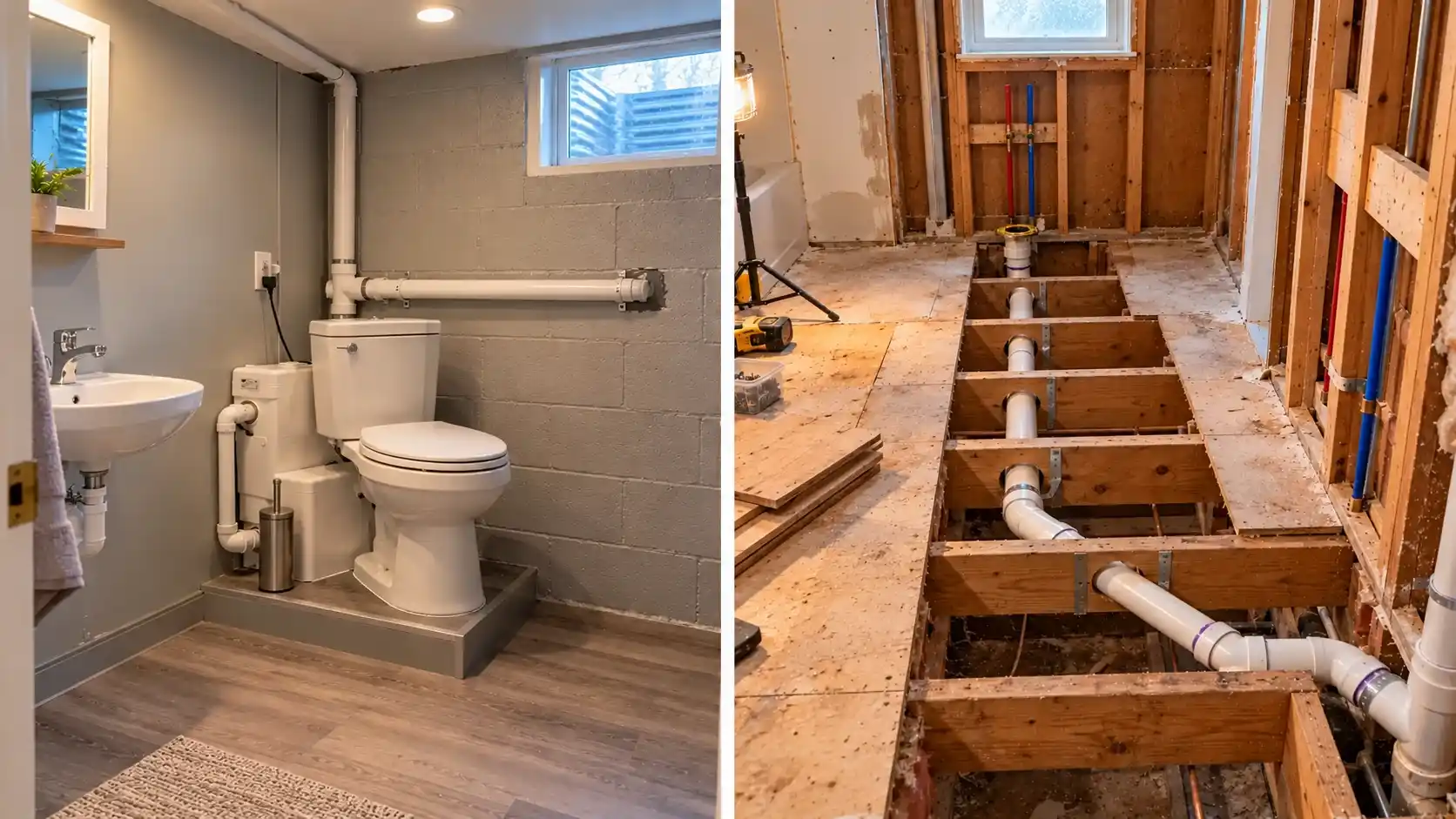
How Much Does It Cost to Move Plumbing in a Bathroom Remodel? (Estimated Ranges by Type of Move)
Short answer: Estimated cost to move bathroom plumbing: roughly $500–$1,500 for a short move over a timber floor, and $2,500–$8,000+ when a toilet drain must be relocated through a concrete slab. Drain distance, floor construction, and access drive the price. Almost any fixture can be moved. The better question is whether your house makes it cheap, painful, or not worth doing, and a floor plan can't answer that. It shows where you'd like the toilet. It doesn't show the stack, the joists, or the slab. This guide is built around what a plumber checks on site rather than what looks tidy on paper. Quick takeawaysDrain and stack position set the price more than the fixture does. A timber floor with access from below is the cheapest case. A concrete slab is the dearest. A few inches is cheap. Crossing joists or changing walls can add thousands. Changing your mind on paper costs almost nothing. After tiling, the same change can cost several times more. Ask for an itemised quote, because "plumbing only" figures usually leave out the repair work.Why the drain, not the fixture, sets the price Toilets are the fussy ones. They need the biggest drain in the room, a vent, and a pipe that falls steadily toward the stack. That fall is the catch: the farther you move, the lower the pipe sits in the floor, and a joist bay only has so much depth to give. Most homeowners don't realize that distance is a poor guide. Moving a toilet two feet across the joists can cost more than moving it six feet along a clear bay, because crossing joists means rerouting or notching. Sinks are far more forgiving. Shower drains sit in between: the pipe is smaller, but the slope has to hide inside the floor build-up, and the waterproofing and tile get disturbed. Moving a fixture also changes its vent path. Air admittance valves help in some jurisdictions and are restricted in others, so ask early.Change Rating What decides it Who Relative costSink along the same wall Easy Reach within the same stud bay Plumber LowSink to another wall Moderate New drain and vent path Licensed plumber Low to midToilet, short move near the stack Moderate Joist direction, vent access Licensed plumber Low to midToilet across the room or to another wall Hard Slope, joist crossings, venting Plumber, carpenter Mid to highToilet on a concrete slab Hard Cutting, trench, slab type Plumber, concrete crew HighShower drain, timber floor Moderate Joist depth, waterproofing Plumber, tiler Low to midShower drain, slab Hard Recess depth, trench, re-pour Plumber, concrete crew, tiler Mid to highStack or whole-bathroom relocation Structural Joists, framing, vent route Plumber, builder, maybe an engineer HighestRules differ by region. US codes (IRC/IPC) generally call for at least a 3-inch toilet drain and a steady fall, commonly 1/4 inch per foot on smaller drains. The UK (Approved Document H), Canada (National Building Code plus provincial codes), and Australia (NCC and AS/NZS 3500) cover the same ground in their own terms. Verify with your local building authority.What will each type of move actually cost? These are estimated ranges in USD, not quotes. Get at least two itemised local quotes before you trust any number, including these.Item Low Typical High What moves the numberSink along the same wall $300 $600 $1,200 Reach, wall accessSink to a different wall $600 $1,200 $2,500 New drain and vent pathToilet, short move (timber floor, access below) $500 $1,200 $2,500 Joist direction, flange positionToilet across the room (timber floor) $1,500 $2,800 $5,000 Run length, joist crossingsToilet on a concrete slab $2,000 $4,000 $8,000+ Cutting, trench, slab typeShower drain (timber floor) $500 $1,200 $2,500 Floor depth, waterproofing reworkShower drain (slab) $1,500 $3,000 $6,000 Recess, trench, re-pourSupply lines only (hot and cold) $300 $800 $1,800 Pipe material, wall accessStack or bathroom to another area $3,000 $6,000 $12,000+ Structure, vent route, floors affectedMake-good and permits $300 $1,000 $3,000+ Finished surfaces, local feesThe last row is the one people skip. Floor patching, the ceiling below, and inspection fees rarely appear in a plumber's number. The spread comes from access, slab versus timber, your city, and the length of the pipe run. Directionally, UK jobs are quoted in pounds and often land close to the dollar figure for small work. Canada varies by province. Australia tends toward the upper end because of licensed labour and the number of slab-on-ground homes. Treat all of that as a starting point, not a forecast.What happens when you change your mind after the tile is down? This is where budgets break. Say you decide to move the toilet to the opposite wall. The plumbing is identical at every stage. What changes is how much finished work sits on top of it.Stage What it involves Estimated cost WhyOn paper Redraw the plan, get a plumber's site visit $0–$200 Time and perhaps a call-out feeAt rough-in, before surfaces close Plumber runs new drain, vent, and supply $1,500–$4,000 Pipework is exposedAfter tile and waterproofing Open the floor, move pipes, re-tile, redo the membrane, re-inspect $4,000–$10,000+ You pay for the move plus the destructionEstimates for a timber floor. Drivers: access, tile and membrane cost, re-inspection fees. A pattern that comes up constantly in homeowner threads: the toilet "feels wrong" once the room is framed, and the fix is requested after the waterproofing is done. Walk the framed room with the plumber before anything gets closed. It's the cheapest hour of the project.What demolition reveals that a floor plan can't Old houses are full of surprises: cast-iron stacks that crumble when touched, galvanised supply lines clogged from the inside, open-web trusses nobody can cut, slabs with reinforcing you didn't know about. Two inexpensive checks often pay for themselves: a camera inspection of the main drain line, and a concrete scan before anyone cuts a slab. Some slabs contain post-tension cables, and cutting one is dangerous. Before you commit, confirm: Floor type, and what sits below it. Stack and main line location, plus pipe material and age. Joist direction, spacing, and type (solid timber, I-joist, truss). Access from below, or whether the ceiling underneath must be opened. Wet wall contents: stack, vents, supply, wiring, any flue. Vent route for the new position. Shut-off valves tested before demolition, since old ones can fail when turned. Slab details: as-built drawings if you have them, plus a scan. Permit and inspection hold points, so nothing is closed up too early. An itemised quote separating plumbing, carpentry, tile, waterproofing, and make-good.Where DIY ends and a licensed plumber starts DIY is realistic for the prep: choosing fixtures, clearing the room, and sometimes swapping a vanity onto existing connections. Drains, vents, and anything cut into a slab belong to a licensed plumber, and in most places they also need a permit. Check what applies to you:US: permit and licensing rules vary by state and city. UK: drainage changes may involve Building Control, and water-supply work should be done by a competent person. Canada: permits are generally required for drainage alterations, and licensing is set by province. Australia: sanitary plumbing must be done by a licensed plumber, and a compliance certificate is typically required. Wet-area waterproofing has its own standard (AS 3740).Verify all of this with your local authority.⚠️ Warning: Don't notch or drill joists to squeeze in a bigger drain without checking local rules and getting professional advice. It's a common shortcut, and it can weaken the floor. I-joists and trusses usually can't be cut at all.⚠️ Warning: A plumbing quote is not a renovation budget. If it doesn't mention floor repair, ceiling repair, tile, waterproofing, and permits, expect those costs to show up later.⚠️ Warning: Don't close the floor or wall until new pipework has been pressure-tested, flow-tested, and inspected where required. A slow drain found after tiling means tearing it out again.Move it or leave it? A quick decision guideTimber floor, access from below, new spot near the stack → usually reasonable. Get quotes. Slab, and you only want a few extra inches → don't move the toilet. Adjust the vanity size or door swing instead. Slab, and you want the toilet on the opposite wall → price the slab work, then compare it with moving the vanity or shower. Shower drain must move, shallow floor build-up → ask about a raised platform or a linear drain along the same wall. Stack on the wrong side, room below finished → budget for opening the ceiling, or keep the toilet and relocate other fixtures. Below the sewer line, as in a basement → consider an upflush system. Selling or investing → move plumbing only when it adds real function or a buyer-counted bathroom. Quote far above these ranges → ask which of slab, stack, structure, or make-good is driving it.Moving bathroom plumbing: questions homeowners ask Is it cheaper to move a toilet or a shower drain? Neither is always cheaper, because it depends on the floor and the distance. A toilet is driven by pipe size, venting, and stack distance. A shower drain needs slope inside the floor build-up and often triggers waterproofing and tile rework. On a timber floor with access from below, short moves for either can cost about the same. On a slab, both usually involve cutting concrete. Can I move a toilet to the other side of the room on a concrete slab? Usually yes, but it's one of the pricier moves. The plumber locates existing lines, cuts the slab, runs a new sloped drain and vent, backfills, and the concrete is re-poured. Scan first, because some slabs hide reinforcing or post-tension cables. Compare the price against keeping the toilet put and moving the vanity or shower. How far can you move a toilet from the stack? There's no single safe number. The limit depends on drain size, the slope you can achieve in the available floor depth, and local venting rules, such as trap-to-vent distances under the IRC/IPC or their UK, Canadian, and Australian (AS/NZS 3500) equivalents. A plumber or inspector should confirm the maximum for your house. Verify with your local building authority. Do I need a permit or a licensed plumber to move bathroom plumbing? In most places, altering drains and vents needs a permit and a licensed plumber, though rules vary. US requirements differ by state and city. In the UK, drainage alterations may involve Building Control. Canada generally requires permits, with licensing set by province. Australia requires a licensed plumber for sanitary plumbing. Verify locally. Is an upflush or macerating toilet a cheaper alternative to moving the drain? Sometimes. These units pump waste through a small-bore pipe to an existing drain, which helps where a gravity drain is impractical, such as a basement. The trade-offs are noise, maintenance, pump failure risk, and local code limits. They suit an extra toilet better than a main bathroom, so check your local rules. Layout, Space & Structural ConsiderationsMinimum Size for a Full Bathroom: The Real Numbers (and Why Code Minimum Isn't the Whole Story) How to Make a Small Bathroom Feel Bigger: Layout Fixes Ranked by Impact and Cost How Much Does It Cost to Move Plumbing in a Bathroom Remodel? (Estimated Ranges by Type of Move) Converting a Tub to a Shower: Does It Hurt Resale Value? How Much Does It Cost to Add a Bathroom to a House? Half Bath vs. 3/4 Bath: What's the Real Difference (and Does It Count as a Full Bathroom?) What Size Exhaust Fan Do I Need for My Bathroom? (CFM, L/s and Real-World Adjustments) ADA Bathroom Requirements: What the Rules Say and What Actually Applies to Your Home What Is a Wet Room? How It Differs From a Walk-In Shower (and Whether Your House Can Take One) Bathroom Window Placement and Privacy: Where Windows Should Go (and How to Fix the Ones in the Wrong Spot)
.webp)
How to Make a Small Bathroom Feel Bigger: Layout Fixes Ranked by Impact and Cost
The tape measure says the room passes. The plan looked fine. Yet you still turn sideways to get past the door, bump your knee on the vanity, and wonder why a room this size feels like a phone booth. Usually the problem isn't square footage. It's door swing, blocked sightlines, and clearances that technically pass but don't work for a real person with a towel in hand.Quick answer: Fix the layout before the decor. Swap the swinging door for a pocket or outswing door, choose a compact or wall-hung toilet, replace the shower curtain with clear glass, and keep sightlines open. Then add mirrors, lighting, and color.Quick takeawaysDoor swing is usually the cheapest big win. Start there. A clear glass panel opens the room more than any paint color. Compact and wall-hung fixtures help, but check wall depth and the existing drain position first. Moving a toilet or shower drain is possible but often poor value, especially on a concrete slab. Check pocket-door and niche walls for pipes and wires before you commit. Code minimum is not comfortable. Plan to the comfortable figure where you can.Why Does a Bathroom That Fits on Paper Still Feel Cramped? Three things drive the feeling far more than floor area: door arc, sightline, and elbow room. A door that swings in sweeps a quarter circle roughly as wide as the door itself, often 24 to 32 inches. That arc is dead floor, and it often lands right where you need to stand. Most homeowners don't see it until the door is hung and the vanity is installed. Sightline is the second factor. If you walk in and hit a solid wall, a shower curtain, and a bulky vanity, the room reads as a box. Open the view and the same room reads as larger. Elbow room is the third. A layout can pass every minimum and still make two people shuffle past each other every morning. When you plan the layout on paper first, draw the door arc as a shaded quarter circle. It shows the problem in seconds.Layout Fixes Ranked by Impact, Cost, and How Hard They Are to Undo This ranking weighs perceived space gained against cost and how hard the change is to reverse. Start at the top and stop when the room works.# Tactic Impact Est. cost (USD) Difficulty / who What decides it1 Reverse the hinge side or make the door outswing High $100–$600 Easy / DIYer or carpenter Hallway traffic, door frame2 Surface-mounted sliding door Moderate–high $200–$900 Easy–moderate / carpenter Clear wall beside the opening; privacy gaps3 Clear fixed glass panel instead of curtain or hinged door High $400–$2,000 Moderate / glazier Shower width, splash control, floor slope4 Compact or short-projection toilet Moderate $250–$900 Easy / plumber or capable DIYer Existing rough-in distance (wall to drain center)5 Wall-hung or shallower vanity Moderate $300–$1,500 Easy–moderate / carpenter, plumber Wall strength, plumbing position6 Recessed niche or mirror cabinet Moderate $300–$1,200 Moderate / carpenter, plumber Pipes or wires in the cavity; insulation; waterproofing in wet walls7 Pocket door retrofit High $1,200–$4,000 Hard / carpenter plus trades Wall contents, structure above8 Wall-hung toilet with in-wall carrier Moderate (visual) $1,200–$4,500 Hard / plumber and carpenter Wall depth, fixings, stack position9 Relocate toilet or shower drain Variable $1,500–$7,000+ Hard–structural / plumber; engineer if joists are cut Joist direction, slab, stack distance10 Borrow space from a closet or hall High $3,000–$12,000+ Moderate–structural / builder Wall type, permitEstimated ranges in USD, not quotes. UK, Canadian, and Australian pricing differs with local labor rates and materials, and London and major Australian cities often run higher on trade labor. Variance comes from access, slab vs. timber floor, city, and pipe run length. Get local quotes. Terminology shifts by region. What Americans call a vanity is a basin unit in the UK, and "rough-in" is "first fix" there. A shower door is a shower screen in the UK and Australia.⚠️ Warning: Don't commit to a pocket door until the wall has been opened or professionally scanned. A pocket needs a clear cavity, and bathroom walls often hold supply pipes, drain or vent lines, wiring, or structure. Any of these can turn a modest job into a rebuild. A pipe and cable detector or a borescope through a small inspection hole is cheap insurance.The Clearances Every Trick Has to Respect Every tactic above can backfire if it breaks these numbers.Fixture / zone Widely published US minimum (IRC/IPC) Comfortable target NotesToilet center to side wall or vanity 15 in (about 380 mm) 18 in or more Two-person homes feel the difference dailyClear space in front of toilet 21 in (about 530 mm) 24–30 in Don't let the door arc cut through this zoneClear space in front of vanity 21 in 30 in Shared use needs the larger figureShower interior About 30×30 in, able to contain a 30 in circle 36×36 in or larger Narrow showers may need a door instead of an open panelDoor arc vs. fixture zones No universal figure; local interpretation varies Arc clears toilet and shower approach, or use a pocket/outswing door The most common "fits on paper" failureCode systems differ: IRC/IPC in the US; UK Building Regulations (Approved Documents G, M, and P) plus manufacturer guidance; the National Building Code of Canada plus provincial plumbing codes; and the NCC with AS/NZS 3500 and AS 3740 in Australia. The UK and Australia often defer fixture spacing to manufacturer and accessibility guidance rather than one prescriptive figure. Verify with your local building authority. Code minimum means "legal to install," not "pleasant to use." Where you have the room, plan to the comfortable column.What Happens When You Move the Toilet to Win Space On a drawing, sliding the toilet 18 inches sideways looks trivial. In the house, it means rerouting a drain and vent, and the cost depends on what's under your floor.Stage What happens Est. cost (USD) DriversOn paper Measure, sketch, confirm stack location and floor type, get a plumber's opinion $0–$300 Plumber visit feeFloor open, no new tile Reroute drain and vent, adjust flange, patch floor $1,500–$4,500 on timber with a short run parallel to joists; $3,000–$7,000+ on a slab Slab saw-cutting, joists across the run, pipe run length, cityAfter tile and waterproofing Tear out finished surfaces, redo plumbing, re-waterproof, re-tile, possibly re-inspect Add $1,500–$5,000+ to the above Waterproofing redo, matching tile, delaysEstimated ranges only. The principle holds everywhere: the same move costs far more once tile and waterproofing are down. Stack position, joist direction, and floor type decide the price more than the toilet itself. A shower drain move is a different problem. The pipe is smaller, but it is tied to the waterproofed floor and pan. Stop and call a professional if:The route needs cutting through a concrete slab Joists run across the planned drain path The wall you want to open may be load-bearing Existing pipework is unknown, corroded, or very oldMoving plumbing generally triggers permits and inspections, so check with your local building authority, hire licensed trades, and keep a contingency for surprises once the floor is open.⚠️ Warning: A wall-hung toilet is only as good as its carrier and fixings. Hanging one on an ordinary stud wall without an engineered carrier, or burying the cistern with no access panel, invites failure and costly repairs. Confirm the carrier's weight rating, the wall depth required, and local inspection rules.Tricks That Look Great in Photos and Frustrate in Daily UseTrick On paper In daily use Better approachBarn-style surface slider Saves the swing arc Privacy gaps, noise, blocked wall beside the opening Add proper latches and edge seals, or use a pocket door if the wall allowsVery shallow vanity Gains floor space Splash zone shrinks, storage vanishes Keep usable basin width; add a niche or mirror cabinetClear glass panel Open, airy feel Shows water spots and clutter Keep shelves tidy; consider a protective coatingLarge mirror wall Doubles the light Doubles the mess; steam clouds it Pair with good ventilation and a correctly sized exhaust fanCorner or tiny basin Frees a corner No elbow room for shared use Reserve for powder roomsWall-hung toilet Visible floor, easy cleaning Cistern repair needs access Plan flush-plate access at design stageLighting makes the room feel larger, but it's also where the rules bite. Bright, even light at the vanity and a fixture over the shower both help. Pick fixtures with the right water-protection rating and avoid shadowy single-source lighting.⚠️ Warning: Lighting, mirrors with built-in sockets, and glass near water fall under electrical zone rules: IP zones in the UK and Australia, GFCI/RCD protection in the US and Canada. Use correctly rated fixtures and a licensed electrician. Shower glass should be safety glass (tempered or toughened). Verify local rules.Stacking Tactics: What to Combine at Three Room Sizes Roughly 5×8 ft (1.5×2.4 m): Fix the door first, then the glass panel. Add a compact toilet or slimmer vanity next. A pocket door is the best structural upgrade if the wall is clear. Skip plumbing moves and mirror walls. Roughly 5×10 ft: Door and glass are usually enough. Consider a wall-hung vanity for visible floor. Relocating a fixture only makes sense if the stack is close and the floor is timber. Larger rooms: Cramped feelings here usually come from poor circulation or two people sharing. Prioritize comfortable clearances over tricks, and borrow space only if nothing else works.Which Fix First? A Quick Decision GuideDoor opens into the toilet or vanity space and the hallway has room → reverse or outswing it first. Hallway can't take an outswing and the wall holds no services → pocket door. If unsure, use a surface slider as a stopgap. Toilet rough-in is fixed and clearance is tight → try a compact toilet before moving plumbing. House sits on a concrete slab → treat plumbing moves as a last resort and use above-floor tactics first. Timber floor and a short drain move parallel to joists → may be feasible. If it runs across joists, ask an engineer. Renting or unable to alter walls → focus on lighting and mirrors, and change glass only with landlord consent. Might need accessibility later → plan a pocket door, level-access shower, and wall blocking while walls are open. A change would remove your only bathtub → check local resale norms first.Small Bathroom Layout Questions Homeowners Actually Ask What is the cheapest way to make a small bathroom feel bigger? Start with whatever blocks movement. Reversing the door swing or fitting an outward-opening door often costs a few hundred dollars and frees more usable floor than any decor change. Then replace a shower curtain with a clear glass panel, swap a bulky vanity for a wall-hung or slimmer unit, and add layered lighting. Color and mirrors help, but they work best after clearances are fixed. Is a pocket door worth it in a small bathroom? Often, but only if the wall can take it. A pocket door removes the swing arc entirely, which matters most when the door hits the toilet or vanity. The catch is the wall: pipes, wiring, switches, or load-bearing framing can push an estimated $1,200–$4,000 job much higher. Check the wall contents first, and consider a surface-mounted slider if the wall is unsuitable. Does a wall-hung toilet make a bathroom feel bigger? It changes how the room looks more than how it measures. Wall-hung toilets show more floor and are easier to clean around, and they often project a little less than standard bowls. But the in-wall carrier needs a deeper or built-out wall, which can eat back that gain. Compare finished wall depth, not just the bowl, and confirm the carrier's weight rating and fixing method. Can I move the toilet in a small bathroom without a huge bill? Sometimes, but it is one of the least predictable changes. On a timber floor, a short move parallel to the joists is usually manageable. Crossing joists or working through a concrete slab raises cost sharply. Stack position, vent routing, and drain slope set the limits. Try compact fixtures or door changes first, and get a plumber to confirm the stack location before designing around a move. Do I need a permit to change the door, glass, or layout? Often not for cosmetic swaps like a door or vanity, but moving plumbing, altering walls, or changing structure usually triggers permits and inspections. Rules differ: US and Canadian requirements are local, UK work falls under Building Regulations (Part P covers electrics in England), and Australia applies the NCC plus state and council rules. Check with your local building authority first, because unpermitted work can complicate resale. Layout, Space & Structural ConsiderationsMinimum Size for a Full Bathroom: The Real Numbers (and Why Code Minimum Isn't the Whole Story) How to Make a Small Bathroom Feel Bigger: Layout Fixes Ranked by Impact and Cost How Much Does It Cost to Move Plumbing in a Bathroom Remodel? (Estimated Ranges by Type of Move) Converting a Tub to a Shower: Does It Hurt Resale Value? How Much Does It Cost to Add a Bathroom to a House? Half Bath vs. 3/4 Bath: What's the Real Difference (and Does It Count as a Full Bathroom?) What Size Exhaust Fan Do I Need for My Bathroom? (CFM, L/s and Real-World Adjustments) ADA Bathroom Requirements: What the Rules Say and What Actually Applies to Your Home What Is a Wet Room? How It Differs From a Walk-In Shower (and Whether Your House Can Take One) Bathroom Window Placement and Privacy: Where Windows Should Go (and How to Fix the Ones in the Wrong Spot)
_1_11zon.webp)
Minimum Size for a Full Bathroom: The Real Numbers (and Why Code Minimum Isn't the Whole Story)
Short answer: Roughly 40 square feet (5 × 8 ft) is the smallest practical full bathroom, fitting a 60 × 30 inch tub-shower, toilet and vanity. Codes set fixture clearances, not room area, so smaller layouts exist but are tight; verify locally. That's the number most people want. The rest of this guide shows where it comes from, so you can test your own room instead of trusting a rule of thumb. It's part of our bathroom layouts and space planning series.Quick numbers Imperial MetricPractical full bath (tub-shower) 5 × 8 ft, 40 sq ft about 1.5 × 2.4 mShower-only (¾) bath roughly 30–36 sq ft about 2.8–3.3 m²Standard alcove tub 60 × 30 in about 1,524 × 762 mmToilet clearance (US code) 21 in front, 15 in centerline to side about 533 mm and 381 mmQuick takeaways40 sq ft is a design convention, not a legal floor-area minimum. Code minimum often feels cramped. Aim for about 30 in in front of the toilet and 18 in each side where you can. Door swing and vanity depth are the usual reasons a plan that "fits on paper" fails. Your stack position, floor type and ceiling height can veto a layout that the tape measure approves.5 × 8 feet is the number. Here's why it works out that wayNobody legislated 40 square feet. It falls out of the fixtures. A standard tub-shower is 60 inches long, so one wall of the room has to be at least 60 in. Call that your width. Now the length: the tub takes 30 in of depth. Beside it you need a toilet zone about 30 in wide (15 in each side of the centerline, per the US IRC), then a vanity around 24 in wide. 30 in tub + 30 in toilet zone + 24 in vanity = 84 in. Give the toilet a more comfortable 18 in on each side and you're at about 90 in. Add a little for the door and framing tolerance and you land on 96 in, or 8 ft. Hence 5 × 8. There's a trap hiding in this sum. A typical toilet projects 28–30 in from the wall, and code wants 21 in in front of it. That's roughly 49–51 in, so a room only 48 in wide usually can't take a standard toilet on its long wall. And "5 feet" is measured between finished wall faces. Tile, backer board and out-of-square framing can quietly take an inch or more per wall, which is how a 60 in tub ends up not fitting a room that was framed at five feet. If you haven't already, plan your layout on paper before you buy anything. Code minimum vs. comfortable: what each fixture really needsMost homeowners don't realize that building codes mostly regulate the space around fixtures, not the size of the room. That's why you can find a legal bathroom at 30 sq ft and a miserable one at 45.Fixture / zone US minimum (IRC/IPC) Comfortable target NotesToilet, side clearance 15 in from centerline to wall or fixture (30 in zone), IRC R307.1 18–20 in each side A tub edge counts as an obstructionToilet, front clearance 21 in, IRC R307.1 About 30 in Add the 28–30 in projection when testing room widthVanity, front clearance 21 in 30–36 in Vanity depth of 16–24 in changes your walkwayWalkway No general requirement 36 in; 60 in turning circle if wheelchair use is possible Future-proofing, not required in most existing homesShower compartment Typically 30 in minimum dimension and about 900 sq in (some editions use 32 × 32 in) 36 × 36 in (about 900 × 900 mm) or larger Measure the interior, excluding valves and seatsTub-shower alcove No minimum tub size; standard is 60 × 30 in 60 × 32 in with about 30 in clear at the entry side Measure between finished wall facesBathroom door No universal minimum for a typical dwelling 28–32 in clear; pocket or out-swing door in tight rooms 32 in clear is the widely used accessible targetCeiling height About 6 ft 8 in at fixtures, IRC R305.1 7 ft+, with headroom over the showerhead Sloped ceilings over a tub are a common surpriseCode figures are widely published minimums, and each jurisdiction adopts editions differently. "Comfortable" figures are design practice, not code. NKBA planning guidelines are a common reference; confirm against the current edition.Regional notes. UK (England): The Building Regulations don't set a minimum bathroom size. Fixture sizing is practical (tubs commonly run 1,500–1,700 mm long, 700–750 mm wide; 800 × 800 mm is a common minimum shower tray), and the relevant Approved Documents cover ventilation (F), sanitation (G), accessibility (M) and electrical safety (P). Scotland, Wales and Northern Ireland have their own rules. Canada: Provincial and territorial codes build on the National Building Code of Canada, so rules vary by province. Australia: The NCC and AS/NZS 3500 (plumbing) apply, wet-area waterproofing follows AS 3740, and licensing is set by each state. Verify with your local building authority.Does a shower-only room count as a "full" bathroom?Not always, and this catches people out at resale. "Full bath" is a market label, not a code category.US: Agents and appraisers usually separate a full bath (toilet, sink, tub or shower) from a ¾ bath (shower, no tub). UK: Listings tend to say "bathroom" or "shower room." Half baths are cloakrooms. Canada: Listings often count pieces: 2-piece, 3-piece. Australia: "Bathroom," "ensuite" or "shower room," with a separate toilet often listed on its own.Here's the honest trade-off. A well-planned ¾ bath often serves a household better than a cramped full bath with a tub nobody can comfortably use. But if resale counts matter in your market, ask a local agent how it will be recorded before you give up the tub. For more on tub-free layouts, see our walk-in shower layouts and the half bath minimum size guide. Three real layouts, measured outThese cards use the fixture sizes above. Diagrams are not to scale. Card 1: Practical minimum full bath, 5 × 8 ft (60 × 96 in, 40 sq ft) +-----------------------+ far wall (60") | TUB-SHOWER 60x30 | +---+-------------------+ |WC | | left wall: WC, then vanity | | open floor | +---+ | |VAN| | +---+-------[DOOR]------+ near wall (pocket or out-swing)Layout: Tub across the far end. Toilet centerline about 18 in from the tub edge. A 24 in wide vanity (about 21 in deep) beside it, near the door. What works: About 32 in in front of the toilet (60 in minus about 28 in projection) and about 39 in in front of the vanity. Side clearance beats the 15 in minimum. What to avoid: An in-swing door landing on the vanity or toilet, a vanity wider than about 30 in unless the door is a pocket or out-swing, the wrong tub drain hand, and any finished width under 60 in.Card 2: Shower-only (¾) bath, 6 × 6 ft (36 sq ft), legal but tight +-------------+----------+ | WC | SHOWER | far wall (72") | | 36 x 36 | +-------------+----------+ | | | open floor ~23" | | [DOOR]| right wall +--[ VANITY 21" deep ]---+ near wallLayout: 36 × 36 in shower in the far corner, toilet on the far wall about 18 in from the side wall and from the shower, vanity on the near wall. What works: Side clearances beat 15 in. About 23 in between toilet front and vanity front is code-legal under the IRC but cramped day to day. What to avoid: An in-swing door (nowhere to go), a shower door swinging toward the toilet, and a deep vanity. A slim 16–18 in vanity buys back 3–5 in of walkway. And don't list it as a "full bath."Card 3: Comfortable full bath, 6 × 10 ft (72 × 120 in, 60 sq ft) +----------------------+--+ | TUB 60" x 30" |12| far wall (72"); 12" shelf/niche +---+------------------+--+ |WC | | left wall run: WC, then vanity +---+ | |VANITY 36"| walkway 44" | +---+----------[DOOR]-----+Layout: Tub across the far end with a 12 in shelf. Toilet and a 36 in vanity share the left wall. What works: About 44 in in front of the toilet and about 51 in in front of the vanity. The door can swing in if hinged against the open side. What to avoid: A second vanity or linen cabinet inside the toilet's clearance zone, and setting a heavy cast iron tub without checking the floor framing.If these still feel too cramped, small bathroom design ideas covers the tricks that make a tight room feel larger. What happens when the room is the right size but the house says no?This is where "fits on paper" plans die. The room can be big enough and the house can still refuse. The stack (the vertical soil pipe) and the drain slope decide how far a toilet can move. A concrete slab means saw-cutting and trenching to relocate a drain. A timber floor means notching and boring rules apply, and joist direction matters, sometimes enough to need an engineer. Moving a toilet and moving a shower are also different problems: the toilet is a slope-and-venting problem, while the shower is mostly waterproofing and a small drain. Headroom is the other quiet veto in attics and under stairs, over both the toilet zone and the showerhead. What a wrong plan costs, by stage (example: moving a toilet drain about 4 ft so a 60 in tub and clearances fit)Stage What happens Estimated cost (USD)1. On paper Redraw the plan, tape a full-size outline on the floor $0–$3002. Walls and floor open, before waterproofing and tile Plumber re-runs drain, vent and flange About $800–$2,500 over timber; $2,000–$5,000 through a slab3. After tile and waterproofing Same move plus demolition, new waterproofing and tile, re-inspection About $3,500–$9,000+Planning ranges, not quotes. Get itemized local quotes. UK figures in GBP often land in a similar numeric range (higher in London and the South East), Canadian quotes in CAD are broadly comparable after conversion, and Australian labor is typically at or above US levels. Everywhere, the biggest swing factor is whether the drain has to go through a concrete slab. See the cost of moving plumbing and hidden renovation costs. Before anyone swings a hammer☐ Locate the soil stack and vent. How far is the toilet from it? ☐ Confirm the floor type (slab, timber joists, or concrete over timber) and joist direction. ☐ Confirm access from below or the ceiling underneath for new pipe runs. ☐ Measure between finished wall faces, not stud faces. ☐ Check what's inside any wall you plan to move: pipes, wiring, ducts, load-bearing function. ☐ Make sure the main and local shut-offs actually work. ☐ Check ceiling height over the showerhead and clearance zones. ☐ Plan the exhaust duct route outdoors (see choosing a bathroom exhaust fan). ☐ Confirm the tub, base or vanity can physically pass through doorways and stairs. ☐ In pre-1980s houses, test suspect floor tile, pipe wrap and paint for asbestos and lead. ☐ Check whether you need a permit with your local building authority.DIY vs. professionalDIY: Measuring, drawing, cardboard or tape floor templates, and choosing fixtures. A laser measure and a cheap stud finder earn their keep here. Professional: Drain and vent changes, structural questions, electrical in wet zones (jurisdiction-dependent), waterproofing (licensed in parts of Australia), and permits. Not sure which side you're on? That's the point to hire a contractor or at least a plumber for a site visit.Whatever you decide, waterproofing before tile is the stage you don't want to redo. For the bigger picture, our complete bathroom renovation guide walks through the whole project. Eight layout mistakes that only show up after the tile is downMeasuring stud-to-stud, then ordering a 60 in tub. Finished walls take inches. Measure finished faces or confirm tub rough-in dimensions first. Putting a toilet on a 48 in-wide wall. Projection plus clearance is over 48 in. Use the end wall, or a compact or wall-hung toilet. A door swinging into the toilet or vanity. The arc eats your clearance. Go pocket or out-swing. Squeezing the toilet under 15 in each side. Shift it or narrow the neighbouring fixtures. Wrong tub drain hand. Stand facing the tub and confirm left or right before ordering. A shower door swinging toward the toilet. Use a sliding door or fixed panel. Judging a shower by square inches alone. 30 × 30 meets the area but you can't turn around. Go 36 × 36 in. A light or outlet in the wet zone. Follow GFCI (US) or RCD and IP zone (UK/AU) rules, and have a licensed electrician place and wire it.One more that never makes the plan: a small, damp room is where mould thrives, so ventilation is part of the layout. See preventing mould in small bathrooms, and review common layout mistakes before you commit.⚠️ Warning: Don't remove, notch or relocate a wall or joist to "find" extra inches until you know whether it's load-bearing and what's inside it. Stacks, ducts and wiring often hide in walls that look removable. Call a structural engineer or builder first.⚠️ Warning: In houses built before about 1980, test suspected flooring, pipe wrap and paint for asbestos and lead before demolition. In parts of Australia, wet-area waterproofing must be done by a licensed waterproofer, and elsewhere inspectors may require documented waterproofing. Verify locally.FAQ What is the smallest size a full bathroom can be? About 40 square feet (5 × 8 ft) is the practical minimum for a toilet, sink and 60-inch tub-shower. Replace the tub with a shower and you can drop to roughly 30–36 square feet, though that is usually called a three-quarter bath. Codes such as the IRC regulate clearances around fixtures, not room area, so smaller layouts work only if every clearance does. Verify with your local building authority. Is there a legal minimum size for a bathroom? Usually not as a single floor-area figure. Building rules focus on fixture clearances, ventilation, ceiling height, waterproofing and electrical safety. Examples include the IRC/IPC in the US, the Approved Documents in England, provincial codes based on the National Building Code of Canada, and the NCC with AS/NZS 3500 in Australia. Rental, new-build and accessibility rules can add requirements, so confirm locally. How much clear space do I need in front of a toilet? The US IRC requires at least 21 inches (about 533 mm) in front and 15 inches (about 381 mm) from the toilet centerline to a side wall or fixture. Daily use is easier with roughly 30 inches in front and 18 inches each side. Many toilets project 28–30 inches, so a 48-inch-wide room is usually too narrow for one on its long wall. Verify locally. Does a three-quarter bath count as a full bathroom when selling? It depends on who is counting. US appraisers and agents commonly separate a full bath from a three-quarter bath (shower, no tub), but conventions vary by market. Canadian listings often use piece counts, and UK or Australian listings may just say "bathroom" or "shower room." Ask a local agent or appraiser how it will be counted before assuming a shower-only room adds a full bath. Can I fit a full bathroom in a closet or under the stairs? Rarely. A tub-shower needs about 60 inches of wall length, and headroom, drain slope and vent routing all have to work. Under stairs, headroom over the toilet and showerhead is usually the limit; the IRC uses about 6 ft 8 in at fixtures, so verify locally. A half or three-quarter bath is more realistic. Have a plumber check the stack location before you design anything. If you're looking at a lower level, read up on basement bathroom plumbing first. Layout, Space & Structural ConsiderationsMinimum Size for a Full Bathroom: The Real Numbers (and Why Code Minimum Isn't the Whole Story) How to Make a Small Bathroom Feel Bigger: Layout Fixes Ranked by Impact and Cost How Much Does It Cost to Move Plumbing in a Bathroom Remodel? (Estimated Ranges by Type of Move) Converting a Tub to a Shower: Does It Hurt Resale Value? How Much Does It Cost to Add a Bathroom to a House? Half Bath vs. 3/4 Bath: What's the Real Difference (and Does It Count as a Full Bathroom?) What Size Exhaust Fan Do I Need for My Bathroom? (CFM, L/s and Real-World Adjustments) ADA Bathroom Requirements: What the Rules Say and What Actually Applies to Your Home What Is a Wet Room? How It Differs From a Walk-In Shower (and Whether Your House Can Take One) Bathroom Window Placement and Privacy: Where Windows Should Go (and How to Fix the Ones in the Wrong Spot)
.webp)
What Bathroom Trends Are Outdated in 2026? (And What to Do Instead)
In 2026, the most outdated bathroom trends are cold all-white or all-gray schemes, matte black fixtures everywhere, vessel sinks, tile countertops, faux wood-look tile, single accent walls, and overly matched sets. Designers now favor warm, textured, layered spaces that hold up to daily use. That's the short version. The longer version matters more, because "outdated" is one of those words that can talk you into spending $15,000 you didn't need to spend. A bathroom is not a living room. You can't swap the tile the way you swap a throw pillow, and a wrong call on a countertop will annoy you every single morning for years. So this guide does two things. It tells you which looks have actually aged badly, and it tells you which of those are worth fixing, which are fine to live with, and which cheap changes get you 80% of the way to a current-feeling bathroom. Quick takeawaysCold palettes are the biggest "dated" signal. All-white, all-gray, and icy blue rooms feel clinical. Warm neutrals, clay, cocoa, and soft greens are taking over. Matte black and vessel sinks look great in photos and cause the most complaints once you live with them. Water spots, splash, and cleaning around awkward bases are the usual culprits. A single feature wall and a perfectly matching fixture set now read as staged, not designed. Overhead-only lighting is out. Layered, dimmable, warm light is in, and it's the cheapest big upgrade you can make. Paint, bulbs, a mirror, hardware, and a vanity top can modernize a bathroom for a few hundred dollars. Tile and layout are the expensive, hard-to-reverse decisions. "Outdated" does not mean "rip it out." A clean, functional white bathroom is still a safe bathroom to own and to sell.Why bathroom trends date faster (and hurt more) than any other room Most homeowners don't realize how unusual the bathroom is as a design problem. In a bedroom, almost everything is swappable. Bedding, art, lamps, even the paint, all change over a weekend. In a bathroom, the most visible surfaces (tile, tub, vanity, countertop, floor) are glued, grouted, and plumbed in place. Changing them means demolition, waterproofing, and a week or more without a working shower. That's why a useful way to think about bathroom trends is by how hard each decision is to undo:Layout and plumbing (hardest) Tile and waterproofing Vanity and countertop Faucets and fixtures Lighting and mirror Paint, hardware, textiles, and accessories (easiest)Be cautious at the top of that list and experiment at the bottom. If you take only one idea from this article, take that one. A bold paint color that dates in two years costs you a Saturday. A bold tile that dates in two years costs you a renovation.The 12 outdated bathroom trends in 2026 Design publications have been remarkably consistent about what's fading. One 2026 trends report from Fixr.com, which surveyed roughly 100 designers and home stagers, ranked all-white and all-gray bathrooms as the most-cited look losing momentum, well ahead of vessel sinks, tile countertops, wood-look tile, and matte black hardware. It's a small sample, so treat it as one signal rather than gospel, but it lines up with what most design coverage is saying. Here's the list, with what actually happens when you live with each one. 1. All-white and all-gray color schemesThis is the big one. White tile, gray grout, chrome fixtures, a white vanity, and cool-white bulbs add up to a room that feels like a showroom or a clinic. The thing most articles miss: white and gray aren't the problem. The cold combination is. Cool-white light, gray grout, and zero texture make even good tile feel flat. What to do instead: If the tile and tub are in good shape, warm the room before you replace anything. Repaint the walls in a warm neutral, switch to 2700K–3000K bulbs, add wood or stone, and swap chrome for brushed brass or nickel. For new projects, look at warm stone-look porcelain, sand and clay tones, and soft greens. 2. Matte black everythingMatte black fixtures had a long run because they photograph beautifully. In a real bathroom, they ask a lot of you. In hard-water areas, matte black shows water spots and soap residue quickly. High-touch spots like handles can show wear over time, depending on the finish quality. And when the faucet, showerhead, towel bar, mirror frame, and cabinet pulls are all black, the room starts to look like a catalog. What to do instead: You don't have to give up black. Use it once or twice (a mirror frame, a pair of sconces) and choose a brushed nickel or brass for the faucet and shower, where water hits most. Brushed finishes hide spots far better than either polished chrome or matte black. 3. Vessel sinksA bowl sitting on the counter looked like design in 2015. Living with one is a different story.Water splashes onto the counter and the wall behind it. The rim sits high, which is awkward for kids and shorter adults. The base creates a crevice that collects grime. The faucet has to be tall or wall-mounted, which adds cost.What to do instead: An undermount or integrated sink is easier to wipe down and keeps the counter clear. If you already own a vessel sink and like it, a few things help: a faucet with enough reach, a countertop edge that's sealed well, and a regular wipe-down around the base. 4. Tile countertopsGrout is porous, and a vanity top is the busiest horizontal surface in the bathroom. Toothpaste, hair dye, and splashes all end up in those lines. What to do instead: Quartz, solid surface, or sealed natural stone. All of them give you fewer seams and an easier wipe-down. A new vanity top is often one of the most worthwhile upgrades you can make without touching the walls. 5. Wood-look tile in showersFaux wood tile had its moment, and a few designers still like it. But in shower walls it can read as an imitation, and the repeating pattern of printed planks is easy to spot. What to do instead: If you want warmth, use real wood where it can live, like a vanity, a shelf, or a stool, and let the shower be stone-look or glazed tile with gentle variation. 6. The single feature wallOne wall of expensive "hero" tile in an otherwise plain room used to be the standard way to add interest. It now looks like an afterthought. What to do instead: Carry the material across the room, or limit the pattern to a niche or the inside of the shower. A considered tile plan feels intentional. A lonely accent wall feels like a budget decision. 7. Overly matched setsEvery faucet, handle, hook, and light in exactly the same finish, from the same collection. It's tidy, but designers say it feels staged. What to do instead: Mix finishes on purpose, with one dominant metal and one supporting accent. The trick is repeating each finish at least twice so it looks chosen rather than accidental. 8. Icy blue and pastel palettesSoft pastels and pale spa blues looked fresh for a while, especially online. In person, in north-facing rooms or under cool bulbs, they can turn cold and gray. What to do instead: Warm greens, clay, blush, cocoa, and earthy neutrals. Test paint in your actual lighting at morning and evening before you commit. 9. Heavily textured 3D tileSculpted, wavy, and ribbed wall tile looks wonderful in a photo. In a shower, the grooves collect soap scum and take real scrubbing to clean. What to do instead: Choose a glazed tile with gentle surface variation, like a handmade-look finish, which gives you character without the crevices. 10. Overhead-only recessed lightingA grid of downlights is flat and unflattering. It throws shadows under your eyes and makes the room feel like a hallway. What to do instead: Layer the light. Use dimmable ceiling lights for general light, sconces at face height beside the mirror for tasks, and a soft accent source if you want ambiance. Choose warm bulbs with a high CRI so skin tones and finishes look natural. LED fixtures also keep running costs low, which is a nice side benefit. 11. Plain flat-front vanities and showroom stylingDesigners are leaning toward vanities with more visual interest, like fluted or reeded fronts and warmer wood tones. There's a catch we'll come back to: fluted fronts are the new overused look, and they're likely to date sooner than a simple shaker or slab door. What to do instead: Pick a vanity you'd still like in ten years, such as a simple door profile in a warm wood tone or muted paint color, and let the hardware and lighting carry the trend. 12. Tech that replaces usabilityBacklit mirrors, gadget-heavy showers, and anything that needs an app to wash your hands. Designers are noting a shift toward analog, low-tech spaces. In practice, tech that adds a point of failure is a cost you pay later. What to do instead: Keep the tech that earns its place: heated floors, a humidity-sensing extractor fan, an anti-fog mirror pad, a dimmer. Skip the features you'll stop using in a month.Not every "outdated" trend is a problem This is the part most trend articles skip. Design media and the real world don't always agree.Look What designers say What buyers and daily life say VerdictWhite tile Cold, builder-standard Clean, neutral, widely accepted Keep if in good shape; warm it up with light, paint, and hardwareMatte black accents Overused Fine in small doses Fine as an accent, risky as an everything finish in hard-water areasTub-shower combo Being replaced by walk-in showers Practical, space-efficient, expected in many family homes Keep it, especially if it's the home's only tubCement or patterned tile Needs a fresh take Still beloved when used with restraint Update the color or scale rather than abandoning pattern entirelyMixed metals Now the standard Many buyers like it if it looks deliberate Fine; use one dominant metal and repeat each finish twiceIf your bathroom is dated-looking but functional, you probably don't have a tile problem. You probably have a lighting, color, and hardware problem, and those are cheap to fix.What 2026 bathrooms look like instead (and what could date next) The common thread across the "new" looks is warmth, texture, and durability. Think honed or tumbled stone, handmade-look tile, wood tones, soft curves, and light that makes everything look better. Here's how the main styles compare:Style Defining features Cost tier Maintenance Best room size Resale appeal Trend longevityCold all-white / all-gray modern (fading) White or gray porcelain, chrome, cool light Low to mid Easy to clean; shows soap scum on dark grout Any; feels coldest in large rooms Safe, neutral ShortHigh-contrast black & white (fading) Black fixtures, graphic tile Mid High: water spots and grout stains Medium to large Polarizing Short to mediumWarm organic modern Warm neutrals, stone-look tile, wood vanity, soft curves Mid to high Moderate: stone sealing, grout upkeep Small to large Strong Medium to longTransitional / classic revival Shaker vanity, mixed metals, simple pattern, framed mirror Mid Moderate Small to large Very strong LongJapandi / spa minimal Pale wood, tonal walls, clean lines Mid to high Moderate: timber near water needs care Medium to large Good Medium to longWhat to choose, element by elementElement Best choice Common mistake Maintenance realityFloor tile Matte or lightly textured porcelain with a wet-area slip rating Polished tile that's slippery, or deep texture that holds dirt Low; seal grout, scrub textured surfacesWall tile Larger format with gentle variation, carried across more than one wall One feature wall, or strong 3D relief Glazed is easy; heavy texture traps soap scumGrout Mid-tone warm color close to the tile; epoxy in wet areas if budget allows Bright white on floors; stark contrast that makes pattern busy White discolors; epoxy resists stains but is harder to installVanity Real wood or quality veneer, or muted paint, simple door profile Chasing fluting or a glossy white box Wood needs sealed edges; painted doors show chipsFixtures Brushed nickel, brushed or champagne brass, or deliberate mixing All matte black; unlacquered brass without accepting patina Brushed hides spots; unlacquered brass changes color by designMirror Framed or arched; add an anti-fog pad if needed Large backlit mirror that depends on a powered part Frameless: wipe edges; backlit: electronics can failLighting Layered, dimmable, 2700K–3000K, high CRI Overhead-only; cool-white bulbs Low; check the IP rating near waterCountertop Quartz, solid surface, or sealed stone with undermount sink Tile top; vessel sink on a thin counter Quartz: low; stone: reseal periodicallyA small-room note: in a bathroom under about 40 square feet, scale matters more than color. Larger tile with fewer grout lines, a floating or slim vanity, and a framed mirror that reflects light will do more than any palette change. Skip bulky statement pieces. The warning nobody puts in a trend article The replacements will date too. Fluted vanities, microcement, terracotta, and zellige-style tile are everywhere on social media right now, which usually means they're near the top of their popularity curve. The safe approach is the same hierarchy we started with: keep the permanent surfaces (tile, layout, tub) simple and neutral, and put the trendy look into things you can change cheaply, like paint, mirrors, lighting, hardware, and accessories.Real-world design mistakes to avoid in a 2026 update Save this checklist before you shop. Putting matte black on every fixture because it looks sharp online. In hard-water areas it shows spots. Use black once or twice and choose a brushed finish for the faucet and shower. Installing a vessel sink on a standard-height counter. The rim ends up too high and water splashes out. Choose an undermount or integrated sink. Tiling the countertop. Grout lines stain. Use quartz, solid surface, or sealed stone. Doing one feature wall of expensive tile in a plain room. Carry the material through or confine it to a niche. Choosing heavily textured 3D tile for the shower. It traps soap scum. Pick glazed tile with gentle variation. Relying on overhead recessed lights only. Add sconces at face height and a dimmer. Using cool-white bulbs with white tile and gray grout. Switch to 2700K–3000K with high CRI. Matching every finish exactly. Mix deliberately, with one dominant metal. Choosing floor tile for looks without checking the slip rating. Smooth or polished tile is dangerous when wet. Check the standard used in your country. Replacing one trend with the next. Swapping gray for fluted wood and terracotta everywhere risks the same dated feeling in a few years.How much does it cost to update a dated bathroom? Here are typical planning ranges in USD for a roughly 5 ft × 8 ft bathroom. They're estimates, not quotes, and labor swings widely by region and by whether plumbing or electrics move. For the UK, Canada, and Australia, convert and check local labor rates.Cost category Budget ($) Mid ($$) Premium ($$$)Floor tile $150–$400 $400–$1,000 $1,000–$2,500Wall tile $400–$900 $900–$2,200 $2,500–$6,000Vanity $250–$600 $700–$1,800 $2,000–$5,000+Fixtures $200–$500 $600–$1,400 $1,500–$4,000Lighting $100–$250 $300–$700 $800–$2,000Mirror $60–$200 $200–$500 $500–$1,500Labor (tile + install) $3,000–$6,000 $6,000–$11,000 $12,000–$25,000Estimated total ~$4,200–$8,900 ~$9,100–$18,600 ~$20,300–$46,000+A few things worth knowing about these numbers:Labor is usually the biggest line. That's why swapping finishes without moving the layout is so much cheaper than a full gut. Surprises tend to show up behind the tile. Rotted subfloor, old waterproofing, or outdated plumbing can add cost once the walls are open. Keep a contingency. Premium isn't always better looking. Some of the best-feeling bathrooms use mid-priced materials with excellent lighting and careful layout.The refresh-first route (roughly $500–$1,500) Before you commit to demolition, try this. It addresses cold white, matte black overload, and a bare lighting plan without touching tile:Repaint in a warm neutral or soft green. Replace bulbs with 2700K–3000K, high-CRI LEDs and add a dimmer. Swap the mirror for a framed or arched one. Replace hardware and add towel hooks. Replace the vanity top or refinish the door fronts. Re-caulk the tub, shower, and sink joints.For many dated bathrooms, this is the whole job.DIY or designer? What you can safely do yourselfTask DIY-friendly? NotesPainting walls and ceiling Yes Use moisture-resistant paint and ventilate wellSwapping bulbs, adding a plug-in or switch-in dimmer Usually Turn the power off at the breaker; use a dimmer rated for your bulbsReplacing mirror, towel hooks, cabinet pulls Yes Use proper anchorsReplacing a faucet Often Shutoff valves and compatibility can complicate itRe-caulking Yes Remove old caulk fully and let surfaces dryReplacing a vanity top Sometimes Plumbing connections and weight make it harder than it looksRetiling a floor or shower Not recommended for beginners Waterproofing and flatness errors are expensive to fixMoving plumbing, adding circuits, heated floors No Licensed trades onlySafety callout: waterproofing, electrical work, and plumbing near water are compliance issues, not style choices. In the US and Canada, bathroom outlets and heated-floor systems need GFCI protection. In the UK and Australia, bathroom zones and IP ratings apply to lights and fittings. Hire a licensed electrician for anything beyond a like-for-like swap. When a designer is worth it: if you're changing layout, mixing several materials, or you keep second-guessing your palette. A few hours of design help costs far less than redoing tile.Maintenance reality of the 2026 look The warm, textured look is lovely, but it asks for different habits than gloss white tile.Task Frequency Difficulty NotesWipe fixtures and glass after showers Daily to weekly Easy A squeegee cuts water spots on black and brassClean shower tile and grout Weekly Easy to moderate Soft brush on textured tile; avoid harsh acids on stoneSeal natural stone and cementitious grout Every 1–2 years (follow the manufacturer) Moderate Skip it and stone stains and etches fasterCheck and re-caulk joints Every 1–3 years Moderate Failed caulk is a common leak starting pointClean extractor fan and check airflow Every 6–12 months Easy Poor ventilation hurts paint, wood, and grout in any styleCare for wood or veneer vanity Monthly wipe; check edges yearly Easy Seal edges and wipe up standing waterPolish or accept patina on brass As you like Easy Unlacquered brass changes color by designTest heated-floor thermostat and GFCI/RCD Yearly Moderate Call an electrician if the test button failsExpert warnings⚠️ Don't replace one trend with the next. Many 2026 alternatives are already everywhere online. Put permanent decisions in calm, simple materials and add the trend through swappable items.⚠️ Waterproofing and slip resistance aren't style choices. Textured or matte tile can be slippery or hard to clean depending on the product, and every tile project depends on properly installed waterproofing. Check the slip-rating standard in your country (DCOF in the US, pendulum test value in the UK, R or wet barefoot ratings in Australia) and use licensed trades for wet-area waterproofing and electrical work near water.⚠️ "Outdated" is not the same as "worth replacing." Spending thousands to remove a perfectly functional white-tile bathroom because a magazine called it dated is rarely good value. Warm it up first, then decide.Resale and longevity: does following (or ignoring) trends matter? It depends on how long you'll stay.Selling in 1–2 years: keep tile and layout neutral, fix obvious wear, and refresh lighting, hardware, and paint. Skip bold trend swaps. Buyers respond to clean, bright, and well-maintained far more than to a particular tile. Staying 8+ years: choose finishes you enjoy using, but keep permanent surfaces simple and let trends live in swappable items. Investing or renting out: durable, easy-clean materials beat fashionable ones. A tile countertop or vessel sink is a maintenance call waiting to happen.Be careful with advice that tells you to remove a tub. In many family markets, buyers expect at least one bathtub in the house. If yours is the only one, a walk-in shower conversion can narrow your buyer pool.Regional notes: US, UK, Canada, and AustraliaUnited States: tub-shower combos are still common and often expected. Wet-tile slip guidance usually references DCOF. GFCI protection applies to bathroom outlets and heated floors. United Kingdom: bathroom zones and IP ratings decide which lights and fittings you can use. Heated towel rails are common, and wet rooms are increasingly popular but depend on correct tanking. Canada: cold winters make heated floors a practical comfort feature, not just a luxury. Ventilation matters because of humidity in closed-up houses. Australia: waterproofing standards are strict and licensed work is typically required in wet areas. Slip ratings use R and wet barefoot classifications. Climate varies, so mold control and ventilation are the bigger design drivers in humid regions.In every market, check local building rules before you plan electrical or wet-area changes.Does this update make sense for you? Use this quick check:White and gray but in good condition? Warm it up with paint, bulbs, mirror, and hardware. Replace tile only if it's damaged. Selling within 1–2 years? Keep tile and layout neutral and refresh the visible, cheap items. Staying 8+ years? Choose what you'll enjoy, keep the permanent layer simple. Hard-water area? Avoid matte black on high-touch fixtures. Choose brushed nickel, PVD brass, or chrome. Under 40 sq ft? Use larger tile, a floating or slim vanity, reflective surfaces, and layered lighting. Young kids or shared use? Skip vessel sinks and slippery floor tile. Have a vessel sink or tile countertop now? Replace the countertop and sink before touching wall tile. Changing plumbing, electrics, waterproofing, or heated floors? Hire licensed professionals.Frequently asked questions What bathroom trends are outdated in 2026? The looks designers are moving away from include all-white and all-gray schemes, icy blue palettes, matte black fixtures used everywhere, vessel sinks, tile countertops, wood-look tile in showers, single feature walls, heavily textured 3D tile, and overly matched fixture sets. The common thread is cold, staged, or hard-to-maintain design. Warmer colors, natural textures, mixed finishes, and better lighting are replacing them. Not every item needs replacing, especially if it's in good condition. Is matte black still okay in a bathroom in 2026? Matte black isn't banned, but many designers see it as overused, and it can be harder to live with than expected. It tends to show water spots and soap residue, especially in hard-water areas, and some finishes show wear on frequently touched parts. If you like it, use it sparingly, such as a mirror frame or one accessory, or choose a high-quality brushed finish. For the main faucet and shower, brushed nickel or brass is more forgiving. Are white bathrooms outdated? White itself isn't the issue. Cold, all-white and all-gray rooms with cool lighting and no texture are what read as dated. A white bathroom in good condition can often be warmed up with paint, warmer bulbs, a wood or stone element, and brushed brass or nickel hardware. White tile remains a safe, neutral choice for resale. Replacing it purely because of trends is rarely good value. Why are vessel sinks going out of style? Vessel sinks sit on top of the counter, so water splashes onto the surface, the rim can be too high for children and shorter users, and the base is awkward to clean. The tall faucet they require also tends to feel less comfortable in daily use. Designers now prefer undermount or integrated sinks for easier cleaning and a simpler look. If you already have one and like it, that's fine; just keep the counter and faucet height practical. Will the new 2026 bathroom trends look dated in a few years too? Some might. Fluted vanities, microcement, terracotta, and zellige-style tile are everywhere right now, which usually means they're near the top of their popularity. The safest approach is to keep permanent surfaces, like tile, layout, and tub, simple and neutral, and add trend-driven elements through items you can change cheaply, like paint, mirrors, lighting, hardware, and accessories.The practical takeaway If your bathroom works, is clean, and just feels a little cold, you probably don't need a renovation. You need warmer light, a better mirror, finishes that suit how you live, and one or two swaps that take the room out of 2019. If you are renovating, put your effort where it's hardest to reverse: layout, waterproofing, and tile. Keep those calm and durable, and let the trends play out in paint, lighting, and hardware. For more on choosing styles that last, see our guide to bathroom design ideas, and when you're ready to plan budgets and timelines, our bathroom renovation guide walks through the whole process. Bathroom Design & Style :How to Choose a Tile Pattern That Makes a Small Bathroom Look Bigger How Many Lights Should a Bathroom Have? Layouts, Lumens & Lighting Design Ideas That Work Walk-In Shower vs Bathtub: Which Is Better? Plus Modern Walk-In Shower Design Ideas That Last Small Bathroom Design Ideas: How to Make a Compact Bathroom Look (and Feel) Bigger Farmhouse Bathroom Ideas: What the Style Actually Requires (and What Nobody Tells You About Living With It) What Colors Make a Bathroom Look Bigger and Brighter? What Makes a Bathroom Look Modern? (Everything That Actually Matters) 20 Luxury Bathroom Design Ideas: What Actually Defines a High-End Bathroom How to Achieve a Minimalist Bathroom Look (Without Making It Feel Empty) What Bathroom Trends Are Outdated in 2026? (And What to Do Instead)
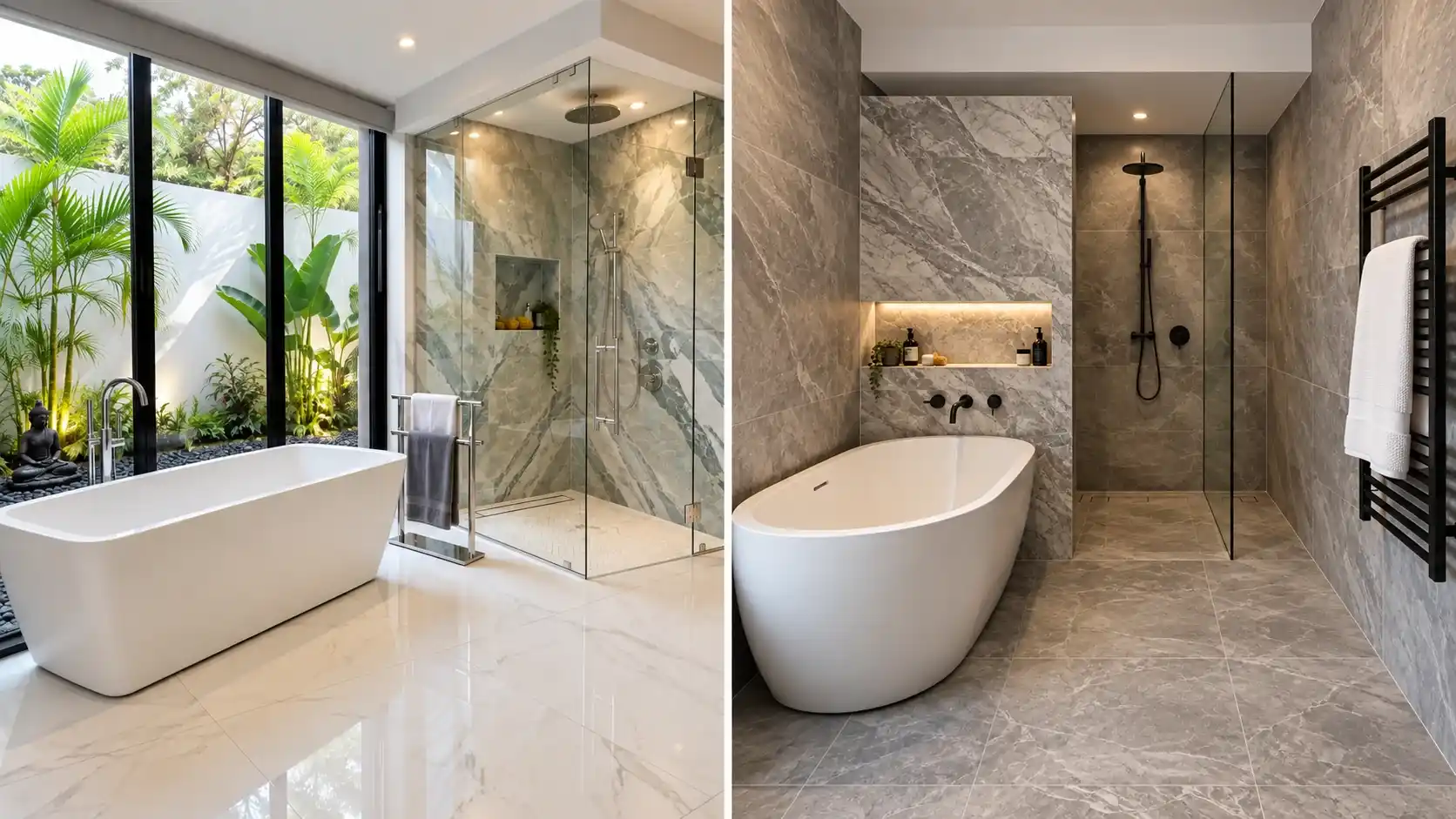
How to Achieve a Minimalist Bathroom Look (Without Making It Feel Empty)
Quick answer: A minimalist bathroom uses a restrained palette, clean-lined fixtures, concealed storage, and very few visible objects. The look depends on hiding clutter and choosing quality materials with simple shapes, so the room reads calm rather than unfinished. Quick TakeawaysLimit the palette to two or three related tones, and let texture carry the interest. Hide storage behind flat-front doors or in recessed niches so the counters stay clear. Choose large-format tile with narrow grout lines to reduce visible joints. Use wall-mounted or floating fixtures where possible, and budget for the blocking and plumbing they need. Layer your lighting. Ceiling downlights alone make most minimalist bathrooms feel flat. Plan for upkeep. A bare room shows every splash, smudge, and water mark.What Minimalism Actually Requires Most people picture a minimalist bathroom as a room with less stuff in it. That's true, but it leaves out the part that makes the look work. A minimalist bathroom takes more planning than a busy one, not less. When a bathroom looks effortless, it usually means three things happened behind the scenes. The storage was designed to disappear. The tile joins were laid out so they don't break up the surfaces. The fixtures were installed so their edges sit flush with the walls and tile. None of that happens by accident, and none of it is cheap. The discipline also has to continue after the renovation is finished. A toothbrush cup on the edge of the vanity, a rack of shampoo bottles in the shower, or a stack of folded towels on an open shelf can undo the whole effect in seconds. Many homeowners find that the first month looks exactly as planned, and then the everyday objects slowly return. Planning for those objects before construction is what separates a calm room from a cluttered one that happens to be white.⚠️ Warning: Plan the storage before you choose the finishes. The most common reason a minimalist bathroom fails is that the homeowner didn't allow enough hidden storage. Count the daily items each person uses, then design a recessed niche, a drawer, or a closed cabinet for each one. If you add storage after the tile is set, the options are limited and usually more expensive.Design Elements Breakdown The look comes from a handful of decisions that interact with each other. Tile affects grout, grout affects how big the tile field looks, and lighting changes how every color reads. It helps to think through the elements in the order they affect the room. Floor and Wall Tile Large-format porcelain is the workhorse of minimalist bathrooms. Fewer joints mean fewer visual breaks, and the surface reads as one continuous plane. Rectified tile, which has been ground so its edges are square, lets installers set very narrow joints. That is what gives a clean, seamless look. The trade-off is installation. Large tile needs a flat subfloor and a skilled setter. Small variations in the floor show up quickly on a large tile, and any lippage (one tile sitting higher than its neighbor) is much more visible than it would be with smaller tile. Expect the installer to spend more time on preparation, and expect the labor line to grow. Finish matters as much as size. Polished tile looks sharp when it's new, but it shows water spots, soap film, and footprints clearly, and it can be slippery when wet. A matte or lightly textured surface hides water marks better and gives better grip. Textured tile does collect grit, so it needs a quick vacuum before mopping. Slip ratings are not optional for a bathroom floor. In the United States, look for a dynamic coefficient of friction (DCOF) rating that meets the ANSI A326.3 standard for wet areas. In Australia and New Zealand, check the R-rating under AS/NZS 4586. In the UK, look for a pendulum test value from the BS 7976 method. Ask your installer to confirm the tile is suitable for barefoot use in wet areas before it's ordered.Grout Grout is the element most people underestimate. It is also the one that changes the room's visual size the most. When the grout contrasts sharply with the tile, the joints create a visible grid, and the room starts to look broken into pieces. When the grout matches the tile, or sits close to it in tone, the joints recede and the surface reads as larger and quieter. Stark white grout on dark tile is the classic mistake. It looks crisp in the showroom and then shows every line in daily use. Light grout also shows dirt faster than mid-tone grout, so it asks for more regular cleaning. Epoxy grout resists staining and doesn't need sealing, but it costs more and is harder to work with. Cementitious grout is cheaper and more forgiving to install, but it needs sealing and periodic care. For a minimalist look in a wet area, many installers recommend epoxy in high-use zones like showers, though the cost difference should be weighed against the rest of the budget.Vanity and Storage A floating vanity is the most recognizable piece of a minimalist bathroom. Mounted off the floor, it shows more of the wall and floor beneath, which makes the room feel bigger. It also makes cleaning easier, since you can wipe under the cabinet without moving anything. The vanity's finish should blend into the wall rather than draw the eye. Warm white, greige, soft oak veneer, and muted matte tones all work. Glossy lacquer, especially in dark colors, shows water rings, fingerprints, and the smudges that come from every morning routine. Plan to wipe the front after each use if you choose glossy finishes. Storage is where the look is won or lost. Flat-front drawers and doors with push-to-open or recessed pulls keep the front clean. Inside, dividers keep the everyday items organized so the drawer doesn't become a jumble. Recessed wall niches work well in showers and beside the mirror, but they must be framed and waterproofed correctly before tiling. A niche cut into a wall without proper membrane is a leak waiting to happen. Many homeowners underestimate how much storage a bathroom needs. Count the items for every person in the household, including the ones kept in the shower and the towels and cleaning supplies. If there isn't room for them behind closed doors, the minimalist look will not survive.Faucets, Valves, and Fixtures Minimalist fixtures tend to be simple in shape, with few decorative details and no visible hardware where possible. Wall-mounted faucets and concealed thermostatic valves let the wall or tile remain uninterrupted. They are more expensive and require the plumbing to be planned before the wall is closed. Finish type matters more than the color name. Painted matte black fixtures can look striking when new, but the paint can chip around handles and spouts over time. PVD (physical vapor deposition) finishes bond the metal color to the surface at a microscopic level and resist wear much better. Brushed nickel and brushed brass in a PVD finish are often more forgiving over the long run than painted black. Hard water changes the picture. Both matte and polished metals show mineral spotting, but in different ways. Matte surfaces can show spotting in a different pattern than chrome, which means a sample should be checked in your own bathroom's light before buying. Descaling every month or so keeps the spots under control in most hard-water homes.Toilets A wall-hung toilet is the most dramatic minimalist upgrade, and also the one that causes the most surprises. The bowl and cistern sit behind the wall, supported by a steel or reinforced carrier frame. That frame must be installed and blocked correctly before the wall is finished. The gains are real. Floor space opens up, the profile is clean, and cleaning under and behind the bowl is much easier. Repairs, though, require access through the wall or a service panel, and retrofitting into an existing wall is often difficult or impossible. Confirm the frame's load rating, the access plan, and the plumbing route with a licensed plumber before you commit. A close-coupled floor-mounted toilet with a simple, flush profile offers much of the look at lower cost and lower risk. For many households, that's the more practical choice.Lighting Lighting makes or breaks a minimalist room more than most people expect. Ceiling downlights are common in minimalist bathrooms because they keep the ceiling clean. The problem is that overhead light alone flattens faces, hides texture, and makes the room feel clinical. Layer the light instead. Wall sconces beside the mirror, or a backlit mirror, provide even light at face height. A dimmable setup lets you lower the output at night, which feels more relaxing and uses less energy. Color temperature is the other big factor. Warm white LEDs in the 2700K to 3000K range flatter pale tile, natural wood, and soft neutrals. Cool white around 4000K and above can make the same palette look sterile and harsh. Check the color temperature on the box before buying, because the same wattage can produce very different results.Mirror A frameless mirror suits a minimalist room, and a backlit version adds useful light without visible fixtures. Look for an LED mirror with a demister pad if you have a shower close to the mirror, since condensation otherwise clouds the glass. A plain large mirror with no lighting can make the room feel flat, so pair it with sconces or a backlight.Countertop Solid surface, honed stone, or a flush-mounted sealed top gives a continuous surface that is easy to wipe. Avoid thick edge profiles and bulky backsplashes, which create visual breaks. Natural stone needs regular sealing, and seams should be kept clear of standing water.Real-World Mistakes That Undermine a Minimalist Bathroom Most of the problems people run into with minimalist bathrooms don't show up in photos. They show up after six months of use. These are the ones that come up most often. A pale palette with no texture. A single-tone room can look unfinished rather than calm. Add one textured element, such as a lightly ribbed tile, a wood-look vanity, or a linen-look wall finish. Visible everyday objects. One toothbrush cup or bottle on the vanity breaks the look. Plan a recessed niche or drawer for these items before the wall is tiled. A wall-hung toilet with no carrier frame. A wall-hung toilet needs a frame and solid blocking inside the wall. Retrofitting later is expensive and sometimes impossible, so confirm the frame is in the plan before the wall closes. Polished tile on a wet floor. Glossy surfaces become slippery when wet. Check the slip rating for your region before ordering. Stark grout on dark tile. White grout around dark tile draws a grid across the floor and walls. Matching or near-matching the grout to the tile keeps the surface continuous. Ceiling downlights only. Overhead light alone flattens faces and hides texture. Add wall sconces or a backlit mirror at face height. Painted matte black fixtures in hard water. Paint chips over time, and mineral spotting shows clearly on dark finishes. A PVD finish and a monthly descaling routine will serve you better. Assuming minimalism is cheaper. The look depends on clean joins, precise tile layout, flush fittings, and concealed plumbing. Those take skilled labor, and the budget needs to reflect that.Many homeowners also say the same thing after a few months: the room looks wonderful, but it takes more daily attention than the old one. That's not a reason to avoid the style. It's a reason to plan for the maintenance before the renovation starts.Budget Tiers for a Minimalist Look Minimalism is often presented as the cheaper route, because it seems to involve fewer things. In practice, the look depends on more precise tile work, higher-quality finishes, and concealed plumbing and framing. Labor is usually the largest single cost in the project, often 50 to 65 percent of the total in a mid-range remodel. The figures below are approximate U.S. ranges for 2026. Published guides vary widely, and prices differ by region, so get at least three local quotes before budgeting.Cost Category Budget ($) Mid ($$) Premium ($$$)Floor tile (about 40–60 sq ft) $150–$400 $400–$900 $900–$2,000Wall tile $200–$500 $500–$1,200 $1,200–$3,000Vanity (floating, flat-front) $400–$800 $800–$1,800 $1,800–$4,000Fixtures (faucet, valve trim, toilet, accessories) $300–$700 $700–$1,500 $1,500–$4,000Lighting $100–$300 $300–$700 $700–$1,500Mirror $100–$250 $250–$600 $600–$1,500Labor (tile and install, plus fixture work) $2,500–$4,500 $4,500–$8,000 $8,000–$15,000Estimated total $3,750–$7,450 $7,450–$14,700 $14,700–$31,000These totals exclude demolition, permits, plumbing or electrical relocation, structural or waterproofing repairs, and a contingency of 10 to 15 percent. Wall-hung toilets, carrier frames, and linear shower drains add cost beyond the fixture line. Where the money goes in a minimalist build: Most of the difference between a good minimalist room and a poor one is in the installation, not the materials. A budget that puts all its money into fixtures and leaves little for a skilled tile setter often ends up with the look that was supposed to be the goal.DIY vs. Professional Work Some parts of a minimalist bathroom are well within reach of a careful homeowner. Others carry real risk, and a mistake can be expensive or dangerous. Good candidates for DIY:Painting walls and ceilings in warm, low-contrast tones Replacing cabinet hardware and adding flush-fit pulls Installing a simple floating shelf into proper wall anchors Adding a small, pre-fabricated recessed niche in a dry wall, where the framing is simple Regrouting an existing floor in good condition Adding accessories such as a mirror, a towel bar, or a bath mat in a warm toneBest left to licensed professionals:Wall-hung toilet frames, plumbing relocations, and concealed valves Large-format tile installation, which needs a flat subfloor and careful layout Electrical work for sconces, dimmers, and new circuits Waterproofing membranes behind tile and in shower niches Floating vanity installation in masonry, plaster over brick, or any wall with unknown construction Structural changes, including wall removal or new drain runsA useful rule: if a mistake could cause water damage, electrical hazard, or a structural problem, hire it out. Many people try to save money on tile and waterproofing, then pay more to repair damage behind the finished wall.Maintenance Reality A minimalist bathroom asks for more daily attention than a busy one. The surfaces are open, the edges are sharp, and every mark is visible. The schedule below is a realistic starting point.Task Frequency Difficulty NotesWipe vanity front and mirror Daily Easy Water spots and fingerprints are the main upkeepSqueegee or towel-dry shower walls After each use Easy Prevents soap film and limescale on glass and tileClear surfaces of clutter Weekly Easy Keeps the look intact and speeds up cleaningClean grout lines Monthly Moderate Use a pH-neutral cleaner; light grout shows dirt fasterDescale faucet and shower head Monthly in hard water Easy Both matte and polished finishes show mineral depositsCheck silicone at tub and shower edges Every 6 months Easy Cracked or grey silicone lets water behind the tileClean and test the exhaust fan Every 3 to 6 months Easy Humidity can cause mold on sealed surfaces and paintReseal natural stone Every 1 to 2 years Moderate Test with a drop of water; if it soaks in, resealInspect wall-mounted vanity and toilet fixings Yearly Moderate Check for looseness; a plumber should handle repairsCheck LED mirror and sconce connections Yearly Moderate Electrical work should be done by a licensed electricianVentilation, Energy, and Smart Controls Hard, sealed surfaces are a feature of minimalist design, and they are also a moisture problem. A bathroom with lots of tile and glass holds humidity, and that moisture has nowhere to go unless the room is ventilated properly. Condensation on the mirror and walls is the first sign. Left alone, it leads to mold on grout, paint, and sealant, and it can make a clean, minimal room look neglected in a year or two. Size the exhaust fan for the room, not for the fixture's marketing. Many U.S. guides point to at least 50 CFM for a small bathroom as a starting point, with sizing based on the room's volume. A fan that is too small runs constantly and still doesn't clear the air. Many homeowners find that a fan with a humidity sensor is worth the small extra cost. It runs when the air is damp and shuts off when it's dry, which saves energy and keeps the room drier without manual switching. Pair it with a timer or a run-on setting so the fan keeps working for 15 to 20 minutes after a shower. Lighting is another place where efficiency and design overlap. LED fixtures use far less electricity than older halogen or incandescent bulbs, and a dimmer lets you lower the light for evening use. Smart dimmers and scheduled lighting can help, but they should be compatible with the LED drivers in the fixtures. Mismatched dimmers cause flicker and buzzing, which is one of the more common complaints after a lighting upgrade. Heated floors are a popular addition to minimalist bathrooms because they add comfort without visible radiators. They do use electricity, and their running cost depends on how often they're on and how well the room is insulated. A thermostat with a schedule or an occupancy sensor limits the hours they run. They also need a licensed electrician for the connection in most places. Smart mirrors with demister pads and LED backlights are useful in a minimalist room, but check that the controls are simple and the touch panels don't clutter the surface. A basic wall switch is often the cleaner option.Resale and Longevity A well-made minimalist bathroom can age gracefully, but the way it ages depends on the choices behind it. Warm minimalism tends to hold its appeal. Neutral tones, a touch of natural texture, and layered lighting feel current without depending on a single trend. Stark black-and-white contrast, cool lighting, and very sharp edges can feel dated faster, especially when the trend that inspired them peaks. Materials make the difference over time. Porcelain tile, PVD fixtures, and well-installed sealed surfaces keep their appearance for years with routine care. Painted finishes, thin coatings, and poorly sealed stone show wear sooner and can make a room look tired. For resale, the safest approach is to keep the palette neutral and the layout practical. Buyers respond well to clean, bright bathrooms, and they can be put off by a space that looks too stark or hard to live with. A minimalist room that still has a shower curtain rail, enough storage, and good lighting usually reads as desirable, not severe. If you plan to sell within a few years, avoid bold accent colors tied to a single season, and make sure the storage is generous enough for a buyer to live with.Does Minimalism Work for Your Bathroom? Use these questions to test the idea before you commit.You have little storage and lots of daily items. Build in recessed or concealed storage before you choose finishes. Without it, the look will not last. The bathroom is shared by several people. Choose easy-clean surfaces, and give each person a closed storage space. You live in a hard-water area. Choose PVD fixtures over painted matte black, and plan regular descaling. The room is small and has no window. Use warm, layered lighting and a light, low-contrast palette so the room doesn't feel cold. You plan to sell within three to five years. Keep the palette neutral and add one warm texture. You're considering a wall-hung toilet or floating vanity in an older home. Check the wall construction and confirm the blocking and load capacity before buying. Your budget is limited. Spend on tile installation and fixtures rather than decorative accessories, which can be added later. You prefer warmth and natural materials. A Japandi or warm modern direction may suit you better than a stark minimal one.Frequently Asked Questions Q1: What makes a bathroom look minimalist rather than just empty? A: A minimalist bathroom is planned, not bare. It uses a limited palette, simple shapes, and hidden storage, and it keeps visible objects to a few intentional pieces. An empty room often looks unfinished because it lacks texture, layered light, and well-chosen materials. The difference comes from the quality of the surfaces and the precision of the installation. Good tile joins, flush fittings, and a warm light source make the room feel considered. If yours feels cold and empty, the fix is usually better lighting and one textured element, not more decoration. Q2: Will a minimalist bathroom look dated in a few years? A: It depends on how stark the design is. Warm minimalism, with neutral tones, natural texture, and soft lighting, tends to age well because it doesn't rely on one trend. Black-and-white schemes with cool light and very sharp contrast can feel dated faster. Choose finishes you'll still like in five years, avoid accent colors tied to a single season, and keep the layout simple. Materials matter too. Well-installed porcelain and PVD fixtures hold their appearance far longer than painted or thin-coated finishes. Q3: Can I achieve a minimalist bathroom on a DIY budget? A: Some parts, yes. Painting, replacing hardware, adding a simple recessed niche in a dry wall, installing a basic floating shelf, and regrouting can all be done by a careful homeowner. Large-format tile is harder than it looks, since it needs a flat subfloor and careful layout to avoid lippage. Plumbing relocation, wall-hung toilet frames, and electrical lighting changes should be done by licensed trades. A realistic approach is to hire out the tile and any fixed plumbing work, then handle storage, accessories, and paint yourself. Expect the professional share to be the largest line in the budget. Q4: Are matte black fixtures a good choice for a minimalist bathroom? A: They suit the look, but the finish type matters more than the color. Painted matte black can chip and wear through, especially around handles and spouts. PVD-coated finishes resist wear much better. In hard-water areas, both matte and polished metals show mineral spotting, so plan to descale regularly. Matte finishes also show fingerprints and water marks differently from polished chrome, so check a sample in your bathroom's actual light before you buy. If you're unsure, brushed nickel or brushed brass in a PVD finish is a more forgiving choice. Q5: Do floating vanities work in older homes or rentals? A: They can, but the wall construction decides whether they're safe and practical. Floating vanities need solid support, such as a stud wall with blocking, a masonry wall, or a reinforced frame. Plaster over brick or old lath can be fragile, and anchors may not hold the weight of a full vanity with a stone top. Before buying, check what the wall is made of, and have a plumber or carpenter confirm the load capacity. In a rental, a floating vanity usually needs landlord approval and may be hard to remove without damage. A freestanding or legged vanity can give a similar look with less risk.Figures in this article are approximate U.S. ranges for 2026 and will vary by region, labor market, and scope. Slip ratings and electrical or plumbing requirements differ by country and local code. Check with a licensed professional and your local building authority before starting work.

Bathroom Design & Style :How to Choose a Tile Pattern That Makes a Small Bathroom Look Bigger How Many Lights Should a Bathroom Have? Layouts, Lumens & Lighting Design Ideas That Work Walk-In Shower vs Bathtub: Which Is Better? Plus Modern Walk-In Shower Design Ideas That Last Small Bathroom Design Ideas: How to Make a Compact Bathroom Look (and Feel) Bigger Farmhouse Bathroom Ideas: What the Style Actually Requires (and What Nobody Tells You About Living With It) What Colors Make a Bathroom Look Bigger and Brighter? What Makes a Bathroom Look Modern? (Everything That Actually Matters) 20 Luxury Bathroom Design Ideas: What Actually Defines a High-End Bathroom How to Achieve a Minimalist Bathroom Look (Without Making It Feel Empty) What Bathroom Trends Are Outdated in 2026? (And What to Do Instead)
.webp)
20 Luxury Bathroom Design Ideas: What Actually Defines a High-End Bathroom (and What Just Photographs Well)
Walk into a hotel bathroom you remember fondly. Chances are it wasn't the size or the gold taps that stuck with you. It was the warm light, the shower that held its temperature, the lack of visual clutter, and the fact that nothing looked like it was about to fail. That's the real brief behind most luxury bathroom design ideas. People search for them wanting pictures. What they usually need is a way to decide what's worth paying for. What Makes a Bathroom Feel Luxurious? (Quick Answer)Short answer: A luxury bathroom is defined by quality materials, layered lighting, calm uncluttered space, and precise detailing, like large-format stone-look tile, frameless glass, a thermostatic shower, heated floors, and a generous vanity, not by price or size alone.A slightly fuller version: a luxury bathroom combines durable materials (stone or stone-look porcelain, quartz or solid-surface tops, quality brassware) with layered lighting, real storage, and comfort features like underfloor heating and a thermostatic shower. What separates it from merely expensive is execution: tight grout lines, flush tile edges, proper ventilation, and a restrained palette that stays cohesive. Quick takeawaysLuxury is execution plus restraint: fewer materials, better installed. Layered lighting (ambient, task, accent) does more for a high-end feel than any single fixture. Large-format tile with narrow, tone-matched grout reads as premium and is easier to keep clean. The comfort features owners keep appreciating are quiet ones: heated floor, thermostatic valve, silent extractor fan. Budget the labor and waterproofing, not just the tile. They often cost more than the materials. Choose a neutral core with personal accents to protect resale and avoid trend regret.Regional terms at a glance (US / UK / CA / AU)Vanity (US/CA) = vanity unit (UK) = vanity (AU) Countertop (US/CA) = worktop (UK) Exhaust fan (US/CA) = extractor fan (UK/AU) Waterproofing membrane (US/CA) = tanking (UK/AU) Towel warmer (US) = heated towel rail (UK/CA/AU) GFCI (US/CA) = RCD (UK/AU)Electrical and plumbing rules differ by country, state and municipality. Verify local code before you buy or build anything.Luxury Is a Set of Decisions, Not a Price Tag Here's something that surprises people: a $9,000 bathroom can feel more luxurious than a $45,000 one. It happens often. The expensive room has six tile types, three metal finishes, a statement pendant, and a vanity that fights the layout. The cheaper one has one calm material, good light, and a clean install. Luxury comes from five decisions, each of which you can make at nearly any budget.Materials. Few, durable, and consistent. Stone or convincing stone-look porcelain, quartz, solid surface, real wood veneer with proper moisture protection. Light. Layered, warm, dimmable. This changes how everything else looks. Space and calm. Clear surfaces, fewer visual breaks, concealed storage, generous clearances. Quiet technology. A thermostatic shower valve, heated floor, silent fan, humidity-sensing controls. Features that work without asking for attention. Detailing. Even grout, aligned tile joints, flush edges, consistent hardware. This is the one most people underinvest in.If you only remember one thing, remember this: restraint is what reads as expensive. Every extra material or finish needs a reason to be there.Luxury Bathroom Styles Compared Before choosing finishes, choose a direction. Styles differ less in how they look than in how they age, how much work they demand, and how widely they appeal when you sell. Each of these can look high-end. The real question is which set of trade-offs suits your home and the way you live.Style Defining Features Cost Tier Maintenance Best Room Size Resale Appeal Trend LongevityContemporary Spa Large-format stone-look porcelain, floating vanity, frameless glass, layered warm lighting, minimal grout, restrained neutral palette Mid–High Low–Medium Any; excellent in small rooms High (broad appeal) High (proportion-led, not fad-led)Classic / Transitional Luxury Honed or marble-look tile, furniture-style vanity, polished nickel or chrome, framed mirrors, brass accents, wainscot or panelling Mid–High Medium (higher with real marble) Medium to large High HighJapandi Light oak or ash, warm off-whites, textured plaster or microcement, low-profile tub, concealed storage, deliberate negative space Mid–High Medium (wood needs sealing and ventilation) Small to medium Medium–High HighArt Deco / Glam Geometric or fan tile, brass or gold finishes, dark stone, fluted glass, statement lighting High Medium–High (finishes show marks) Medium to large Medium (polarising) MediumOrganic Modern Honed stone, plaster-look walls, wood vanity, matte or brushed metals, plants, earth tones, soft-edged shapes Mid–High Medium Medium to large High Medium–HighA note on Japandi, since it's frequently misread: it isn't "wood plus beige." It depends on negative space, concealed storage, and a short palette. Open shelving packed with product bottles breaks it instantly.The Design Elements That Do the Heavy Lifting Each subsection below ends with a year-5 reality note: what the choice tends to look like after daily use, hard water, and a few hundred rounds of cleaning products. Tile, Grout and Layout Tile gets all the attention, but grout changes the look more than tile colour does. High-contrast grout turns a surface into a grid and highlights every small misalignment. Tone-matched, narrow grout (roughly 1.5–3 mm on rectified tile) creates the continuous surface that reads as premium. Scale matters too. In smaller rooms, fewer and larger tiles (600×1200 mm / 24×48 in is a common format) mean fewer lines and a calmer space. Running tile floor-to-ceiling in the wet zones looks deliberate. Stopping at an arbitrary mid-height rarely does. One thing most homeowners don't realize until the tile arrives: large-format tile is less forgiving. It exposes uneven substrates, and lippage (where adjacent tile edges sit at slightly different heights) shows up fast under side lighting. This is where installer skill matters more than tile price. Year-5 reality: Porcelain barely changes. Cement grout can stain and needs sealing and periodic checks. Epoxy grout costs more up front, but resists staining better, especially in showers.Lighting: The Layer Most People Get Wrong Lighting is where average bathrooms and high-end bathrooms separate most clearly. A single bright ceiling light is flat and shadowy. A well-planned scheme has three layers:Ambient: recessed or ceiling fittings, dimmable. Task: eye-level light beside or around the mirror, for shaving, makeup, and skin checks. Accent: a niche strip, toe-kick glow, or cove light that adds depth and works as a night light.Specs matter more than shape. Aim for 2700–3000K colour temperature and CRI 90+ so stone, wood, and skin tones look natural. Cool 4000–5000K "daylight" LEDs tend to make stone look grey and skin look tired. And one common trap: a backlit mirror is not task lighting. Halo lighting looks beautiful in photos, but it often leaves the face under-lit from the front. Add side or eye-level sconces if you groom at the mirror. Fittings must also be rated for their zone: damp or wet-location listed in the US and Canada, IP-rated in the UK and Australia. A small automation upgrade worth considering: motion-sensor night lighting at a low, warm level. It saves you from blasting your eyes at 3 a.m., and it quietly adds to the hotel-bathroom feel. Year-5 reality: LEDs are low-maintenance, but cheap drivers and mirror seals are the usual failure points. Moisture getting behind a mirror's edge shortens its life.Fixtures and Finishes (Including the Hard-Water Problem) Finishes are a durability decision disguised as a style decision.Finish Looks Hard-water behaviour WearPolished chrome Bright, classic Hides spotting reasonably well; wipes clean Very durableBrushed nickel Soft, warm-grey Forgiving; hides spotting and fingerprints DurablePVD brushed brass Warm, premium Fairly forgiving PVD generally outlasts platingMatte black Dramatic, graphic Limescale and spots show clearly Quality varies widely; cheap coatings can wear or flakeIf you love matte black, it can work. Choose a quality PVD or powder-coated finish and treat hard water with a softener or filtration. Pick one metal family for the room and stay disciplined. Mixing three finishes looks like indecision, not richness. Year-5 reality: In hard-water areas, aerators and showerheads clog with scale. A quick descale every one to three months keeps flow and appearance consistent.Vanity, Storage and Countertops Floating vanities look lighter and make floors easier to clean. They also have a classic failure mode: owners lose storage, clutter takes over the counter, and the clean look disappears within a month. Before committing, check drawer depth and plan concealed storage for the things you actually use daily. For tops, quartz, sintered stone, and solid surface handle toothpaste, makeup, and cleaners without drama. Honed marble is beautiful but etches and stains if you let spills sit. If you love it, accept the patina. If you don't, stone-look porcelain or sintered stone gets you most of the way there. Year-5 reality: Wood veneer needs moisture control, so ventilation matters here too. High-gloss dark lacquer shows every fingerprint and toothpaste speck.Mirrors A large frameless or slim-framed mirror reflects light and enlarges the room. Arched or curved shapes are popular right now, and they photograph well, but shape is the easiest element to swap later, so it's a safe place to experiment. Anti-fog mirrors are one of the more practical smart-bathroom upgrades, particularly in bathrooms shared by several people. Some include dimming or colour-temperature controls. Keep the sconce guidance above in mind regardless. Year-5 reality: Check the edge seal and the LED driver annually. Moisture ingress is the main enemy.The Shower and Tub Experience A thermostatic shower valve is the single most appreciated "quiet" upgrade. It holds a steady temperature when someone flushes a toilet or runs a tap elsewhere in the house. It's a comfort and a safety feature. Now the part that rarely makes it into inspiration galleries: rain showers and body jets are limited by your supply. Low-pressure or gravity-fed systems (common in some UK homes), regional flow-rate rules (US WaterSense labelling, Australian WELS ratings), and hot water capacity all decide whether a spa shower delivers or merely drizzles. Don't buy a large rainfall head and hope for the best. If pressure is low, plan a pump or choose a head designed for it. Digital shower controllers (programmable temperature and presets) are a nice touch, but they add electronics to a wet environment, so they need correct installation and rating. Freestanding tubs look dramatic and demand homework:Floor load: A typical tub holds roughly 50–80 gallons (190–300 litres). Water weighs about 8.3 lb per gallon, so add the tub and a bather and the load is substantial. Check joist capacity. Hot water: A big tub can exceed a small cylinder or tank. Usage: Be honest about whether you'll actually take baths. Cleaning: The space around a freestanding tub is awkward to wipe.Year-5 reality: Glass shows limescale quickly. A squeegee habit or a hydrophobic coating changes your cleaning life. Freestanding tubs that don't get used become expensive towel racks.Comfort Technology (Heated Floors, Smart Features, Ventilation) Heated floors are the feature owners most often say they'd choose again. Electric mat systems are common in retrofits; hydronic systems suit larger projects or new builds. Pair them with a programmable or smart thermostat with a floor sensor and a schedule. Heating the floor on a timer rather than all day keeps running costs reasonable, and insulation underneath makes the heat go up rather than down. Ventilation is the most underrated luxury feature. A quiet, correctly sized fan (rated in CFM or l/s) protects stone, grout, paint, and cabinetry. Condensation destroys high-end finishes faster than daily use does. A humidity-sensing fan with a run-on timer is a small upgrade with a big payoff, because it keeps working after you've left the room and forgotten about it. Other smart-home-adjacent upgrades, such as heated toilet seats, bidet or washlet seats, and smart mirrors, are comfort items. They're worth it if you'll use them, and they need GFCI/RCD-protected outlets planned during rough-in, not after. Year-5 reality: Fan grilles clog and fans lose airflow. Most owners never check. Heated floor controllers need an annual glance, and inconsistent temperatures are a call-a-pro situation.Design Element Decision Table (Contemporary Spa Style)Design Element Best Choice Why Common Mistake Maintenance RealityFlooring tile Large-format porcelain (600×1200 mm / 24×48 in) in honed or textured stone-look finish, with a wet-area slip rating Fewer grout lines, calm continuity, hard-wearing Polished porcelain on a bathroom floor Textured finishes hold soap film; clean regularly with a pH-neutral cleanerWall tile Floor-to-ceiling large-format in wet zones; one restrained accent wall or niche Premium look, fewer joints to clean Stopping tile at mid-height; mixing 3+ tile types Easy wipe-down; failure usually comes from poor waterproofing, not the tileGrout color Tone-matched, 1.5–3 mm on rectified tile; epoxy in the shower if budget allows Continuous surface, less visible staining White grout on a floor; high-contrast grout on dark tile Epoxy resists staining; cement grout needs sealing and re-checkingVanity finish Floating or furniture-style vanity in wood veneer or matte lacquer, soft-close, deep drawers Visual lightness, easy to clean under, warm texture High-gloss dark lacquer; losing all storage to a floating design Wood veneer needs moisture control; gloss shows fingerprints and toothpasteFaucet / fixture finish Brushed nickel, polished chrome, or PVD brushed brass; matte black only in soft-water areas Hides spotting and wear better Matte black in hard water; mixing 3+ metal finishes Descale regularly in hard-water areas; PVD usually outlasts platingMirror type Large frameless or slim-framed mirror with separate eye-level lighting; optional anti-fog Reflects light and enlarges space A backlit mirror as the only lighting Wipe monthly; check LED driver and edge sealLighting Layered: dimmable ambient, side or eye-level task, accent (niche, toe-kick); 2700–3000K, CRI 90+, IP / wet-location rated Flattering light, accurate tone and skin colour Cool daylight LEDs; a single central ceiling light LED fittings are low-maintenance; keep them dimmable and zone-ratedCountertop material Quartz, sintered stone, or solid-surface; honed marble only if you accept etching Stain and scratch resistance Unsealed natural stone beside toothpaste, makeup, and cleaners Quartz and sintered stone are low-maintenance; marble needs sealing and quick spill wipe-upsWhat Photographs Well vs What Lives Well Inspiration images are shot with styled products, perfect lighting, and an empty counter. Real bathrooms have a toothbrush holder, a bath mat, and a bottle of something blue.Photographs well Lives wellBacklit mirror as the hero light Eye-level sconces plus a dimmable ceiling layerPolished marble or glossy porcelain floors Honed or textured tile with a wet-area slip ratingMatte black fixtures everywhere Brushed nickel, chrome, or PVD finishesOpen shelving with a few styled items Concealed storage with deep drawersFreestanding tub as centrepiece A great shower, with a tub only if you'll use itHigh-contrast patterned tile Tone-on-tone large-format with one restrained accentCool, bright "clean" white light Warm 2700–3000K, CRI 90+, dimmableNeither column is "wrong." But many regrets come from choosing the left column for a bathroom that has to survive the right. One practical rule: test samples in the actual room, in the morning, in the evening, and under your artificial lighting. Showroom light and screens shift colour badly. Stone-look tile that looks warm in the shop can read cold and grey under your own lighting.Making Luxury Work in Small and Large Bathrooms Luxury isn't reserved for big rooms. Small bathrooms often benefit most from restraint, because there isn't space to hide mistakes.Room size What works What to avoidSmall (under ~40 sq ft / 3.7 m²) Large-format tile with minimal grout, frameless glass or a fixed panel, wall-hung toilet and vanity to show more floor, a single palette, one tactile upgrade (heated floor or a quality shower system) Busy patterns, bulky vanities, mixing multiple tile types, deep-framed shower screens that chop the room upMedium (~40–80 sq ft) A defined feature zone (vanity wall or niche), layered lighting, furniture-style vanity, a walk-in shower or a tub-and-shower combo done well Tub and oversized shower competing for the same space; too many accent featuresLarge (80+ sq ft / 7.4 m²+) Double vanity, separate zones for bathing and showering, freestanding tub (with floor checks), more warm accent lighting Treating the extra space as a place to add more materials; vast bare surfaces without lighting layersIn a small room, you're really spending your budget on continuity. In a large one, the risk is the opposite: filling space with features and losing coherence.Luxury Bathroom Mistakes People Regret If you save one checklist from this article, make it this one. Polished tile on the floor. Slippery when wet. Choose a wet-area-rated honed or textured finish. Backlit mirror as the only light source. Shadows on the face and poor grooming light. Add eye-level side lighting. Cool-white LEDs (4000–5000K). They make stone and skin look harsh. Use 2700–3000K, CRI 90+, dimmable. Matte black fixtures in hard-water areas. Spotting shows constantly. Choose brushed nickel, chrome, or a PVD finish. Too many materials. Stone, wood, glass, three tiles, and two metals read as busy, not rich. Limit to 3–4 materials and one metal family. Unsealed marble or travertine near toothpaste, makeup, and cleaners. Etching and staining follow. Seal it, or use stone-look porcelain. High-contrast grout lines. They turn large tile into a grid and highlight every misalignment. Match grout to tile. Floating vanity with no storage plan. Looks great, then clutter takes over. Check drawer depth and plan concealed storage. Skipping ventilation upgrades. Condensation damages finishes. Install a properly sized, quiet fan, ideally humidity-sensing. Choosing finishes from a screen or showroom only. Colour shifts under real light. Test samples at home at different times of day.What a Luxury Look Really Costs Cost is the question underneath most searches, and the honest answer is: it depends on scope, and labor is usually the largest line. Assumptions: roughly 60 sq ft (5.5 m²) bathroom, about 150 sq ft of wall tile, standard layout with no plumbing relocation, USD, 2026 planning estimates. Local quotes will vary. UK, Canadian, and Australian labor and material costs differ, so treat this as a guide to proportions, not a quote.Cost Category Budget Tier ($) Mid Tier ($$) Premium Tier ($$$)Floor tile (materials) $200–$450 $500–$1,000 $1,500–$4,000Wall tile (materials) $450–$900 $1,200–$2,500 $3,000–$7,500Vanity (with top) $400–$900 $1,200–$2,800 $3,500–$9,000Fixtures (taps, shower system, toilet, hardware) $600–$1,200 $1,800–$3,800 $5,000–$13,000Lighting (layered) $150–$400 $500–$1,400 $1,500–$4,500Mirror $80–$250 $300–$900 $1,000–$3,000Frameless shower glass $500–$900 $1,000–$2,000 $2,500–$5,000Labor (tile, plumbing hookup, electrical, install) $3,000–$5,000 $5,000–$9,000 $10,000–$20,000Estimated Total $5,400–$10,000 $11,500–$23,400 $28,000–$66,000Not included: demolition, extensive waterproofing and substrate prep, plumbing relocation, structural work, permits, freestanding tub, underfloor heating, and design fees. That exclusions list is where budgets quietly double. Most homeowners don't realize how often a "simple" remodel uncovers rotted subfloor, outdated wiring, or a fan duct that vents into the attic. Build in a contingency of 10–20%. Where to spendWaterproofing and substrate prep Tile installation quality Ventilation Lighting layers Thermostatic valveWhere to saveAccessories and trend-led decor Oversized statement fixtures Premium-brand taps (mid-range with a good warranty is often fine)Looks expensive, costs lessStone-look porcelain Tone-matched grout Wall-hung vanity in a standard size Layered dimmable lightingLooks cheap, costs moreCustom glass Built-in niches with intricate tiling Plumbing moves Slab or natural-stone feature walls Bespoke joineryDIY, Designer or Contractor: Who Should Do What Luxury gets lost in three places when DIY goes wrong: waterproofing, tile setting, and lighting layout. All three are invisible when done right and glaring when done wrong.Task DIY-friendly? Designer helps Licensed trade neededDemolition (non-structural) Yes, with carePossibly for asbestos/lead testing in older homesPainting, trim, accessories YesInstalling mirrors, towel bars, shelves Yes (locate studs and wiring first)Layout, lighting plan, material selection Possible Strongly recommendedWaterproofing / tanking RiskyQualified installer; follow local codeLarge-format tile setting Risky; unforgiving of uneven substratesExperienced tilerPlumbing changes, valve installation NoLicensed plumberElectrical (lighting, heated floor, fan, outlets) NoLicensed electricianFrameless glass measuring and install NoGlazier / specialistA reasonable middle path: hire a designer for a paid consultation or plan only, hire licensed trades for waterproofing, electrical, and plumbing, and handle painting, demolition, and accessory installation yourself. That can save real money without risking the parts that fail expensively.The Maintenance Reality of a Luxury Bathroom "Low maintenance" is relative. Porcelain and quartz are easy, but glass, brassware, and ventilation still need regular attention. The good news is that most tasks take minutes. The bad news is that skipping the boring ones (fan, silicone, grout checks) is how expensive damage starts.Task Frequency Difficulty NotesSqueegee shower glass after use Daily Easy Prevents limescale film and cuts cleaning timeClean tile and glass with pH-neutral cleaner Weekly Easy Avoid acids on natural stone and some metal finishesWipe taps and wet-zone fixtures Weekly Easy Dry-wipe hard-water spotting quicklyDescale showerhead and tap aerators Every 1–3 months (hard water) Easy–Medium White vinegar works on many finishes, but check manufacturer guidanceClean extractor fan grille / filter Every 3–6 months Easy Poor airflow means condensation damageInspect silicone / caulk and grout Every 6 months Easy Catch cracks early; water behind tile is costlyReseal natural stone and cement grout Per manufacturer; typically annually to every few years Medium Not needed for porcelain and epoxy groutReplace silicone sealant Typically every few years Medium Mould-stained or peeling silicone should be replacedCheck LED mirror seals and driver Annually Easy Moisture ingress shortens lifespanCheck thermostatic cartridge and heated floor controls Annually Medium Call a professional if temperature is inconsistentResale and Longevity: What Buyers Notice Buyers rarely pay back every dollar of a luxury remodel, but they do notice a bathroom that feels clean, bright, cohesive, and well built. They also notice the opposite: stained grout, a cheap-looking fan, a bold colour they'd have to rip out. A simple rule works well: neutral core, personal accents. Keep tile, tops, and fixtures timeless. Put personality into things that are cheap to change: towels, art, a mirror shape, paint on a non-wet wall. Designs that depend on one colour or finish applied everywhere (all-grey, all-matte-black, high-contrast patterned tile in every zone) tend to date fastest. Proportion and material quality last longer than any trend. What counts as "expected" also depends on your market and price bracket, so check local comparables before spending heavily. If you might sell within a few years, put your money into waterproofing, ventilation, lighting, and installation quality. Those are the things inspectors and observant buyers actually check.Does This Style Work for You? Use this as a quick filter before you commit.Your bathroom is under 40 sq ft → Go contemporary spa or Japandi: large-format tile, wall-hung fixtures, frameless glass, one material family. You rent or may move within 5 years → Neutral core, personal accents. Skip bespoke or polarising features. You live in a hard-water area → Choose brushed nickel, chrome, or PVD finishes and install a quality shower filter or softener. Avoid matte black. You can't tolerate regular wiping or squeegeeing → Choose porcelain, epoxy grout, quartz tops, and framed or fixed-panel glass. You love natural stone → Accept etching, sealing, and patina, or choose stone-look porcelain for similar looks with less upkeep. Your water pressure is low or gravity-fed → Fit a pump or a pressure-appropriate head. Don't buy a large rainfall head and hope. You want a freestanding tub → Check floor loading, hot water capacity, and whether you'll actually use it. You plan to DIY everything → Hire pros for waterproofing, electrical, and any plumbing changes. Consider DIY demolition, painting, and accessory installation.Materials and Products Worth Considering Rather than naming brands, here are the criteria worth checking in each category.Large-format porcelain: Look for rectified edges (tighter joints), a wet-area slip rating suitable for floors, consistent shading across boxes, and enough extra stock for cuts and future repairs. Quartz or sintered stone tops: Check thickness, edge profile, heat and stain resistance, and the fabricator's seam quality. Seams are where cheap installs show. Thermostatic valves: Look for a replaceable cartridge, accessible service access, stable temperature under pressure changes, and a decent warranty. PVD finishes: Ask for the manufacturer's finish warranty and cleaning guidance. Real PVD is durable; vague "gold-look" coatings are not the same. LED mirrors: Check CRI 90+, adjustable colour temperature if possible, dimming, an ingress-protection or wet-location rating suited to the zone, and driver access for replacement. Extractor fans: Check airflow (CFM or l/s) against room volume, noise rating (sones or dB), humidity sensing, and a run-on timer. Quiet fans get used. Loud ones get switched off. Heated floor systems: Look for a floor-temperature sensor, a programmable or smart thermostat, and a certified installer for electrical connection.Expert Warnings Competitors Skip⚠️ Waterproofing decides whether luxury lasts. The most expensive tile can fail within a few years if the membrane, slope, or junctions are done badly. Water damage behind tile is common in remodels where the money went into finishes rather than preparation. Spend on a documented waterproofing system and a qualified installer, and follow local building code.⚠️ Electrical safety isn't optional. Mirrors, heated floors, LED strips, and heated towel rails all involve electricity near water. Use correctly rated fittings (damp or wet-location listed in the US and Canada, IP-rated in the UK and Australia), RCD or GFCI protection, and a licensed electrician. DIY wiring here is a safety and insurance risk.⚠️ Slip risk grows with luxury finishes. Polished porcelain, glossy marble, and some glass mosaics look high-end and become dangerous when wet, particularly for children and older adults. Check the slip-resistance rating suitable for wet floors in your region (DCOF in the US and Canada, pendulum test value in the UK, P/R and wet-barefoot classes in Australia) and keep polished finishes for walls.Frequently Asked Questions How much does a luxury bathroom cost? It depends on size, location, and how much you change. For a mid-size bathroom with no plumbing relocation, a luxury look can start around $5,000–$10,000 with careful material choices and some DIY, and run to $28,000–$66,000 or more for high-end stone, custom joinery, and premium fixtures. Labor is often the largest cost, so get at least three local quotes. Costs vary significantly across the US, UK, Canada, and Australia, so treat any single figure as a planning range, not a quote. What features make a bathroom look luxurious on a budget? Focus on cohesion and execution. Use large-format stone-look porcelain with narrow tone-matched grout, a floating or furniture-style vanity, layered dimmable lighting at 2700–3000K, a frameless or minimal glass screen, and one consistent metal finish. These deliver a high-end look at a lower price than natural stone or custom work. Skip excessive decor and trend-led accents, which add cost without lasting value. Are matte black fixtures a good choice for a luxury bathroom? They can look striking, but they aren't ideal everywhere. In hard-water areas, limescale and water spots show clearly on matte black and need frequent wiping. Lower-quality coatings can also wear or flake. If you love the look, choose a quality PVD or powder-coated finish and consider water softening or filtration. Brushed nickel and polished chrome are more forgiving and age more gracefully in busy family bathrooms. Will a luxury bathroom increase my home's value? Often partly, rarely in full. Buyers tend to respond to clean, well-executed, neutral bathrooms with quality materials and good lighting, while highly personal or trend-driven designs can narrow appeal. The expected standard also depends on your local market and home price range. If you may sell within a few years, favour durable, neutral choices and spend on waterproofing, ventilation, and installation quality rather than statement features. Can I make a small bathroom feel luxurious? Yes, and restraint helps most. Use large-format tile with minimal grout lines, frameless glass, wall-hung fixtures to show more floor, a single palette, and layered lighting. Add one tactile feature, such as a good shower system, heated floor, or warm wood vanity. Avoid busy patterns, bulky vanities, and too many materials, which make small rooms feel crowded rather than refined. Your Next-Steps ChecklistPick your style direction from the comparison table and write down three words that describe the feel (for example: warm, quiet, uncluttered). Order tile and countertop samples and test them in the room at morning, evening, and night. Sketch a three-layer lighting plan before choosing any fixtures. Confirm water pressure, hot water capacity, and floor-loading if you want a rain shower or freestanding tub. Get at least three itemised quotes, with waterproofing, electrical, and ventilation listed separately. Set a contingency of 10–20% for what's behind the walls.Costs are planning estimates, not quotes. Always verify local building, electrical, and plumbing codes, and use licensed professionals for waterproofing, electrical, and plumbing work. Bathroom Design & Style :How to Choose a Tile Pattern That Makes a Small Bathroom Look Bigger How Many Lights Should a Bathroom Have? Layouts, Lumens & Lighting Design Ideas That Work Walk-In Shower vs Bathtub: Which Is Better? Plus Modern Walk-In Shower Design Ideas That Last Small Bathroom Design Ideas: How to Make a Compact Bathroom Look (and Feel) Bigger Farmhouse Bathroom Ideas: What the Style Actually Requires (and What Nobody Tells You About Living With It) What Colors Make a Bathroom Look Bigger and Brighter? What Makes a Bathroom Look Modern? (Everything That Actually Matters) 20 Luxury Bathroom Design Ideas: What Actually Defines a High-End Bathroom How to Achieve a Minimalist Bathroom Look (Without Making It Feel Empty) What Bathroom Trends Are Outdated in 2026? (And What to Do Instead)
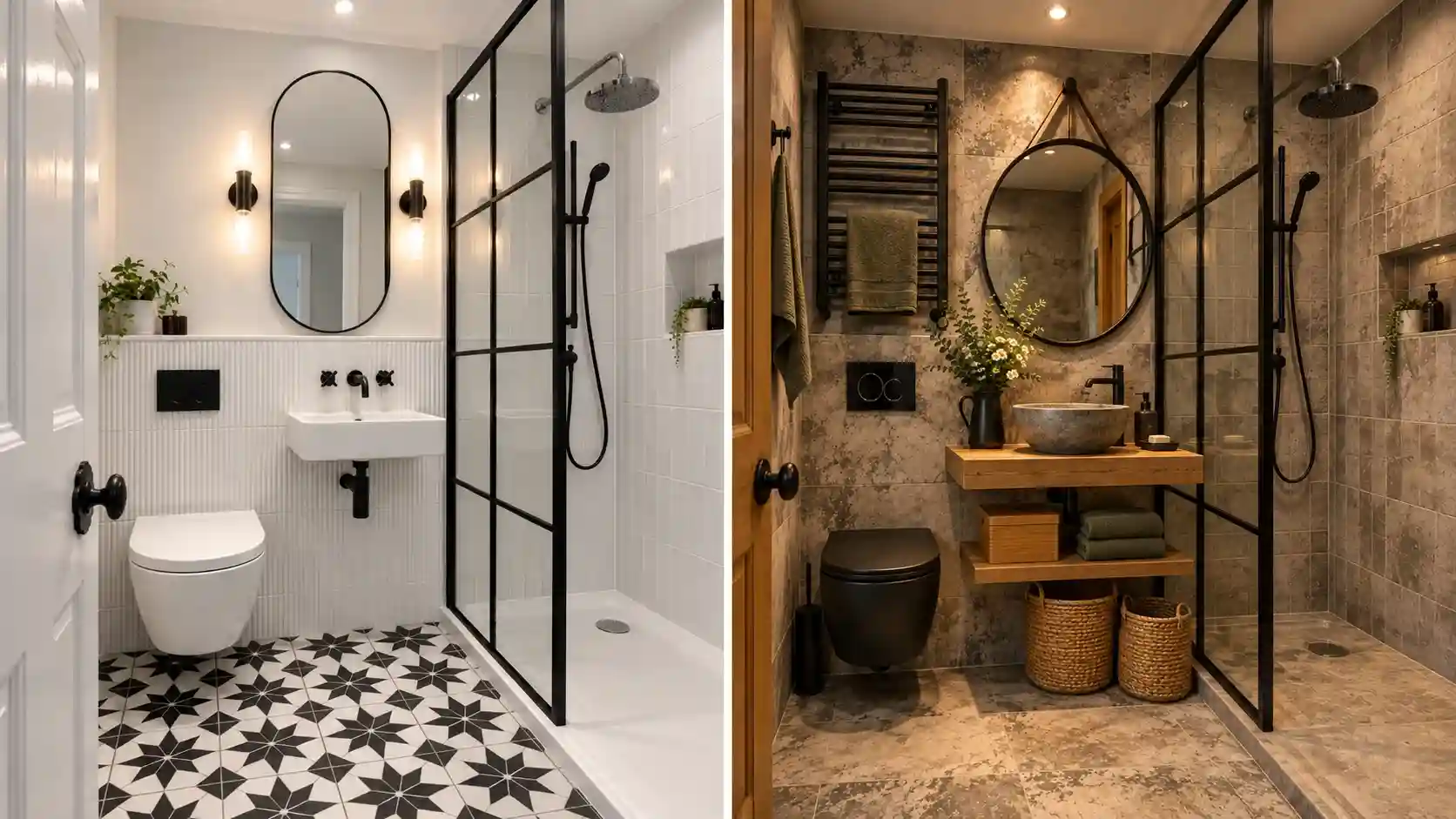
How to Choose a Tile Pattern That Makes a Small Bathroom Look Bigger
If you've spent any time scrolling renovation inspiration, you've probably noticed the same three words repeated endlessly: "go light, go large, go diagonal." It's not wrong advice, exactly — it's just incomplete. The truth is that tile pattern is one of the few design decisions in a small bathroom that does real, measurable optical work, and most of the advice out there skips the part that actually matters: why it works, and where it falls apart. Quick answer: Large-format tile (12"x24" or bigger) laid with minimal grout lines, a diagonal layout on the floor, or a single-tone herringbone pattern are the three approaches that genuinely make a small bathroom read as larger. The common thread isn't the pattern itself — it's the number of visual interruptions your eye has to process. Fewer grout lines and fewer color breaks mean your brain reads the surface as one continuous space instead of a patchwork of small ones. That's the one-sentence version. Here's everything underneath it — including the trade-offs nobody mentions until you're halfway through a renovation.Why Tile Pattern Actually Affects How Big a Room Feels This isn't decorating folklore — it's about how your eye processes visual boundaries. Every grout line is a tiny stop sign. Your brain uses those lines to measure the room, almost unconsciously, the same way you'd count floor tiles to estimate a room's size without a tape measure. The more stop signs there are, the more "measuring" your eye does, and the smaller the space registers. Large-format tile removes most of those stop signs. Diagonal layouts don't reduce grout lines, but they do something different — they stretch the visible line of the room from corner to corner instead of wall to wall, which is a longer line than the room's actual width. Herringbone works through a third mechanism: movement. It creates a rhythm that pulls the eye along the floor rather than letting it land and stop, which reads as flow rather than boundary. None of these patterns changes a single wall measurement. They all work by managing what your eye does, not what's physically there — which is exactly why pattern choice outperforms color choice in small bathrooms, even though color gets most of the attention in design content.The Best Patterns for Small Bathrooms, Compared Not every pattern that looks good in a 12x12 bathroom translates to a 5x7 one. Here's how the main options stack up specifically for small spaces.Pattern Defining Features Cost Tier Maintenance Best Room Size Resale Appeal Trend LongevityLarge-format straight lay Minimal grout lines, clean uninterrupted surface $$ Low — fewer grout lines to clean Any small bathroom, especially under 40 sq ft High — broadly neutral Very high, consistently safeDiagonal (45°) Square tile rotated, lengthens sightline corner to corner $$–$$$ Low–Medium 5×7 ft to 8×10 ft Medium–High High, long-standing techniqueHerringbone Zigzag interlocking rectangles, adds movement $$$ Medium — more grout lines Medium-small, not micro bathrooms Medium Medium — trend-sensitive if bold color usedVertical stack Tile stacked vertically on walls, raises sightline $$ Low Any, especially low-ceiling rooms Medium–High HighBasketweave Small tile woven pattern, textured look $$$ Medium–High Accent use only in small spaces Medium Medium — classic but can read busyIf you only take one thing from that table: large-format straight lay is the safest, lowest-risk, lowest-cost option, and it's the one most professionals quietly recommend when a homeowner asks "what won't I regret?"Large-Format Tile: The Safest Bet, and Why It Works So Well "Large-format" generally means anything 12"x24" or bigger, though many homeowners now go up to 24"x24" or even 24"x48" slabs in small bathrooms. The appeal isn't really the size of the tile — it's what the size does to the grout. A 12"x24" tile on a 5x7 floor needs roughly a third of the grout lines that a 12"x12" tile would, and less than a tenth of what a small mosaic tile requires. The trade-off most people don't expect: larger tile needs a flatter substrate to sit properly, and it's less forgiving of minor subfloor imperfections than smaller tile, which can flex into small dips. In an older home, that sometimes means a self-leveling compound gets added to the quote that wasn't in the original budget. It's a small cost relative to the visual payoff, but it's worth asking your tiler about upfront rather than finding out mid-project.Diagonal Layout: What It Really Costs You Diagonal tile is one of the oldest tricks for making a boxy room feel longer, and it still works because it's based on geometry, not trend. Rotating a square tile 45 degrees means the longest visible line across the floor runs corner to corner — which, in a small rectangular bathroom, is mathematically longer than either wall. What rarely gets mentioned: diagonal layouts waste more tile. Every edge tile along the perimeter needs an angled cut, and those offcuts usually can't be reused elsewhere in the room. Expect 10–15% more material than a straight lay from the same floor area, plus a modest labor upcharge for the extra cutting time. It's not a dealbreaker — it's just a cost that should be in the budget conversation from day one, not discovered when the tiler asks for more material halfway through.Herringbone and Chevron: When They Work (and When They Don't) Herringbone has a very specific job: it adds movement and texture without adding visual weight, but only when it's kept in a single, muted tone. The moment you introduce a bold color or a strong grout contrast into a herringbone layout, the pattern stops reading as "flowing" and starts reading as "busy" — and busy is the opposite of what a small bathroom needs. There's also a structural requirement competitors rarely bring up: herringbone and chevron are unforgiving of an uneven subfloor. Each tile sits at an angle against its neighbor, so any dip or hump in the floor shows up as lippage — a slightly raised or uneven edge — right at the points of the pattern, which is exactly where your eye naturally looks. In homes over 20–30 years old, it's common for a tiler to recommend floor leveling before a herringbone install, which adds cost but prevents a pattern that looks slightly "off" the moment the grout goes in.⚠️ Herringbone and chevron patterns are unforgiving of an uneven subfloor. Budget for floor leveling in older homes before committing to these layouts — skipping it is one of the most common sources of post-install regret tilers report.Used well — single tone, floor only, walls kept plain — herringbone is one of the more distinctive choices that still works in a small space. Used carelessly, it's the pattern most likely to backfire.Grout Color: The Variable Everyone Skips Here's the one most design articles leave out entirely, and it might matter more than the pattern itself: grout color can cancel out everything you just paid for. A large-format tile chosen specifically to reduce visual breaks will still look choppy and small if it's grouted in a sharply contrasting color. High-contrast grout essentially outlines every tile, turning a "seamless" tile choice back into a grid. The fix is simple — keep grout within one or two shades of the tile itself — but it's rarely stated outright, probably because it doesn't photograph as dramatically as a before-and-after tile swap.⚠️ Grout color is a structural part of the "bigger" effect, not a finishing touch. Match it within one to two shades of the tile, especially with large-format or diagonal layouts.The trade-off: lighter grout shows staining and discoloration faster than darker grout, particularly around high-moisture areas like the shower floor. It's a maintenance cost worth knowing about before you commit, not a reason to avoid light grout altogether.Tile Pattern Mistakes to Avoid in a Small Bathroom Using a bold or oversized pattern in a true micro-bathroom (under 30 sq ft) — the pattern dominates the room instead of expanding it. Choosing high-contrast grout for a "crisp" look — it emphasizes every tile edge and visually shrinks the floor. Mixing pattern direction between floor and walls without a plan — competing sightlines cancel out the elongating effect. Picking small mosaic tile for the entire floor — more grout lines overall, even when individual tiles are inexpensive. Skipping subfloor leveling before a herringbone or chevron install — uneven lippage breaks the clean lines the pattern depends on. Switching tile types at the shower threshold — creates a visual "stop" that undercuts the continuity effect. Choosing high-gloss tile under a single small window — glare and reflections add clutter rather than brightness. Underestimating diagonal or herringbone material waste and running short mid-install. Pairing a trend-driven dark color (deep green, navy) with a high-movement pattern like herringbone — it doubles down on visual weight in a space that needs the opposite. Hiring a general contractor for herringbone or chevron work instead of a tiler experienced specifically in pattern layouts — uneven points are difficult to fix after grouting sets.DIY vs. Professional: Where the Line Actually Is A straight lay or vertical wall stack is genuinely DIY-achievable for a patient homeowner with basic tiling experience — the layout math is simple and small errors are forgiving. Diagonal and herringbone are a different story. A few degrees of drift in a diagonal layout becomes visible across a small floor in a way it never would in a large open room, and herringbone has almost no tolerance for layout error once you're a few rows in.Pattern DIY Feasibility WhyLarge-format straight lay High Simple grid layout, forgiving of minor measurement errorVertical stack High Straightforward layout, minimal cuttingDiagonal Low–Medium Requires precise 45° layout; drift is highly visible in small roomsHerringbone/chevron Low Minimal tolerance for error; floor prep sensitivity adds riskIf you're DIY-renovating the rest of the bathroom, it's common practice to hire out just the tile work for these two patterns and handle the vanity, paint, and fixtures yourself.What It Actually Costs by Pattern Based on a roughly 35 sq ft small bathroom, here's where the budget typically lands in 2026.Cost Category Budget Tier ($) Mid Tier ($$) Premium Tier ($$$)Floor tile (material) $150–$350 $350–$700 $700–$1,500Wall tile (material) $200–$450 $450–$900 $900–$2,000Grout & setting materials $40–$80 $80–$150 $150–$250Labor — straight lay $600–$1,000 $1,000–$1,600 $1,600–$2,500Labor — diagonal/herringbone upcharge +$150–$300 +$300–$600 +$600–$1,200Waste factor (material overage) ~7–10% ~10–12% ~12–15%Estimated Total $1,100–$2,000 $2,200–$3,900 $4,000–$7,400The gap between a straight lay and a patterned layout is rarely about the tile itself — it's the combination of labor upcharge and waste factor that adds up.Maintenance Reality, By PatternTask Frequency Difficulty NotesReseal grout lines Every 12–18 months Easy More frequent with herringbone/basketweave due to grout volumeDeep-clean grout Monthly Easy–Moderate Light grout shows grime faster than dark groutCheck for lippage/wear at pattern edges Annually Easy Diagonal and herringbone edges see more foot traffic wearInspect shower threshold transition tile Every 6 months Easy Critical where continuous tile meets the shower panRe-caulk tile-to-tub/shower seams Annually Easy–Moderate More seams in patterned layouts near fixturesNone of this is a reason to avoid a pattern you love — it's just the honest version of what "low-maintenance" actually means in practice.Does This Pattern Work for My Bathroom?Bathroom under 30 sq ft → large-format straight lay, light grout; skip bold patterns entirely. 30–50 sq ft with good natural light → diagonal layout or vertical wall stacking. 30–50 sq ft with little natural light → large-format tile, matte finish; avoid dark or high-gloss patterns. Tight budget → large-format straight lay (lowest waste, lowest labor upcharge). Want visual interest without losing size perception → herringbone in a single muted tone, floor only. Older home with an uneven subfloor → budget for leveling before committing to herringbone/chevron. Selling within 3–5 years → prioritize large-format or diagonal in neutral tones. DIY renovation → straight lay or vertical stack; leave diagonal and herringbone to a professional.Frequently Asked Questions Does tile color matter more than tile pattern for making a small bathroom look bigger? Pattern and color work together, but pattern has the bigger structural effect. A light-colored tile in a busy mosaic layout can still look smaller than a mid-tone large-format tile with minimal grout lines. If you can only prioritize one, choose large-format tile with low-contrast grout over chasing the "right" color alone. Is diagonal tile still considered a current design choice, or is it outdated? Diagonal tile remains widely used because it's based on optical geometry rather than a passing trend. It pairs well with both modern and transitional bathrooms. It only reads as dated when combined with dated-era tile choices, like small beige ceramic squares from early-2000s builds. Can I install a diagonal or herringbone pattern myself, or do I need a professional? A straight or vertical layout is DIY-friendly for a confident homeowner. Diagonal and especially herringbone require precise cutting and layout planning — a few degrees of drift becomes visible across a small floor. Most tilers recommend hiring a professional for these two patterns specifically. Does a patterned tile layout cost more than a plain straight lay? Yes, in two ways: material waste (typically 10–15% more for diagonal or herringbone) and labor, which carries a $150–$1,200 upcharge depending on tile size and room complexity. A straight, large-format lay remains the most budget-efficient option. What's the single biggest tile pattern mistake in small bathrooms? Using a small, highly patterned tile — a busy mosaic or bold basketweave — across the entire floor. Even in a flattering color, the sheer number of grout lines creates visual noise that reads as "more surface," which shrinks the room rather than expanding it. Should the tile pattern be the same on the floor and the walls? Not necessarily the same pattern, but they should feel continuous. A common approach pairs a straight or diagonal floor with vertical-stack wall tile in a coordinating color. Abrupt pattern or color changes between floor and wall reintroduce the visual "stop" the pattern is meant to remove. Will a bold tile pattern hurt resale value? It can, depending on how bold and how small the bathroom is. Large-format or diagonal layouts in neutral tones carry low resale risk because they appeal broadly. Herringbone or basketweave in a strong color can be a selling point in some markets and a turn-off in others — neutral tones reduce that risk. Bathroom Design & StyleHow to Choose a Tile Pattern That Makes a Small Bathroom Look Bigger How Many Lights Should a Bathroom Have? Layouts, Lumens & Lighting Design Ideas That Work Walk-In Shower vs Bathtub: Which Is Better? Plus Modern Walk-In Shower Design Ideas That Last Small Bathroom Design Ideas: How to Make a Compact Bathroom Look (and Feel) Bigger Farmhouse Bathroom Ideas: What the Style Actually Requires (and What Nobody Tells You About Living With It) What Colors Make a Bathroom Look Bigger and Brighter? What Makes a Bathroom Look Modern? (Everything That Actually Matters) 20 Luxury Bathroom Design Ideas: What Actually Defines a High-End Bathroom How to Achieve a Minimalist Bathroom Look (Without Making It Feel Empty) What Bathroom Trends Are Outdated in 2026? (And What to Do Instead)
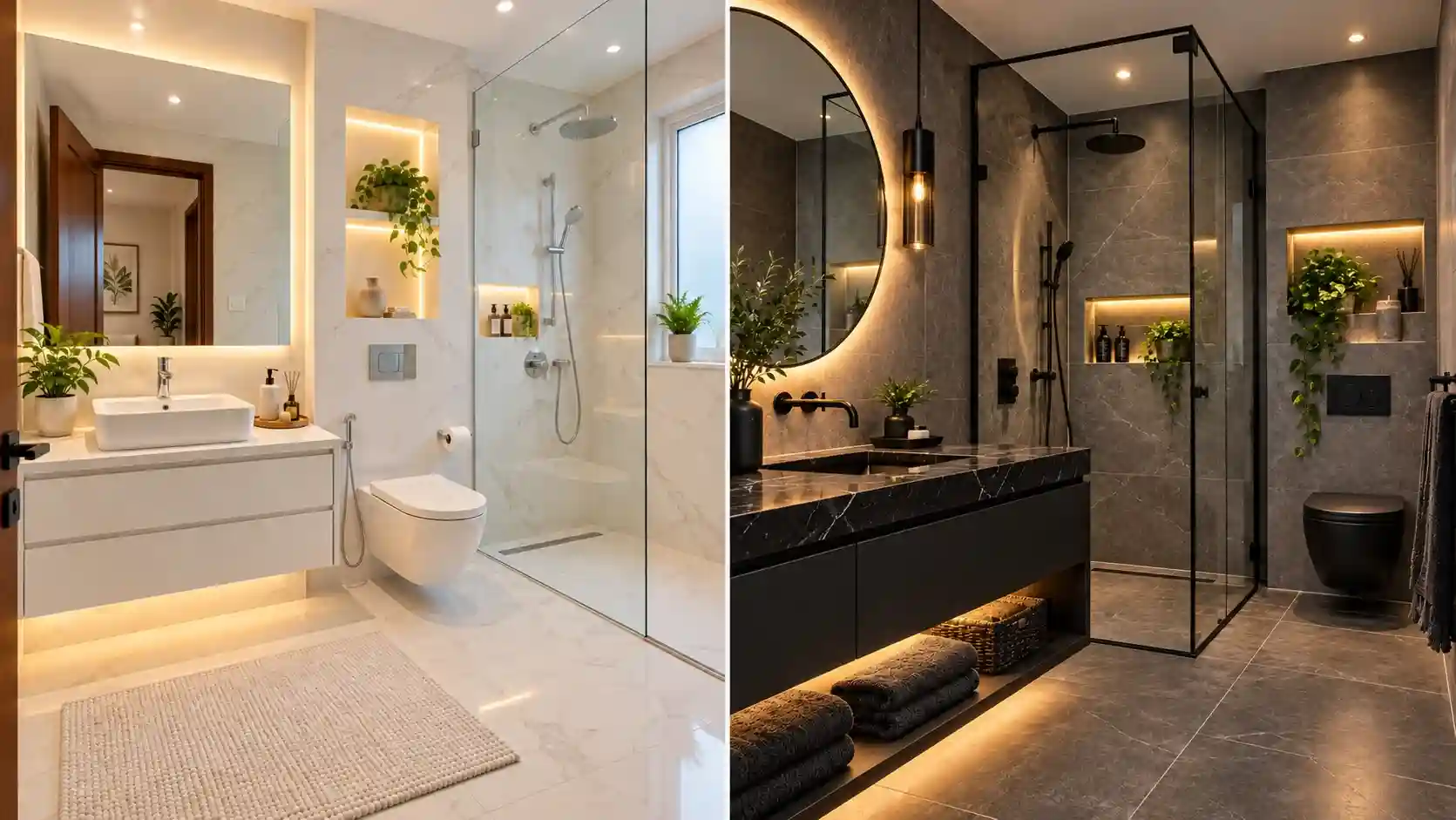
How Many Lights Should a Bathroom Have? Layouts, Lumens & Lighting Design Ideas That Work
Most bathrooms are lit by one ceiling fixture and a four-bulb bar over the mirror. It looks fine in the listing photos. Then you try to shave at 6:30am in January, or your partner needs to find the toilet at 2am, and the room turns out to be both dim and harsh. So how many lights does a bathroom actually need? The honest answer is that the count matters less than what each light is doing and where it sits. Here's the short version, then the detail.Quick answer: Most bathrooms need three to six light points arranged in layers: vanity task lighting on both sides of the mirror, one or two ceiling lights for general illumination, and a damp- or wet-rated light over the shower.Quick TakeawaysCount light points and lumens, not bulbs. A four-bulb bar is one fixture that lights your face from one direction only: above. Put vanity lights at face height, on both sides of the mirror. Overhead-only light casts shadows under the eyes and chin. Plan roughly 70–80 lumens per square foot (about 750–850 per m²) across the room. Dark tile, dark paint and windowless rooms sit at the top of that range. Use one color temperature (2700K–3000K suits most homes) and CRI 90+ in every fixture. Separate your switches or dimmers for vanity, ceiling, shower and night lighting. Check the rating for your country. Fixtures near tubs and showers have rules, and pendants or chandeliers over a tub are usually not allowed.For a typical 40–60 sq ft (3.7–5.6 m²) bathroom, that adds up to two vanity lights, two or three ceiling lights, and a shower light if the enclosure is dark. That's about four to six fittings. Stop Counting Bulbs: Light Points, Lumens and Layers "How many lights" sounds simple until you're standing in a lighting showroom holding a three-lamp bar, a pair of sconces and a lighted mirror, wondering which counts as what. Three terms clear it up:Light point: one fixture position. A three-lamp vanity bar is one light point with three bulbs. Lumens: how much light is actually produced. This is the number that decides whether a room feels bright, not the number of fixtures. Layers: the different jobs the light does.Most well-lit bathrooms use four layers:Layer Job Typical sourceTask Grooming, shaving, makeup Sconces beside the mirror, front-lit mirrorAmbient (general) Overall visibility, safe movement Ceiling downlights, flush mountAccent Mood, highlighting a niche or texture Niche lights, cove or toe-kick stripsNight Getting to the toilet without waking up Low, warm motion-sensor lightMost homeowners don't realize that two 800-lumen sconces at face height can beat six weak downlights at the mirror. Where the light lands on your face matters more than how many fittings are on the ceiling.Bathroom Light Count by Size and Layout This table is a starting point, not a rule. Ceiling height, windows and finishes will move the numbers.Bathroom type Typical size Minimum that works Recommended light pointsPowder room / half bath ≤25 sq ft (≤2.3 m²) 2 2–3: two sconces or one bar, plus an optional small ceiling lightSmall full bath 25–40 sq ft (2.3–3.7 m²) 2 3–5: two sconces or a bar, 1–2 ceiling lights, shower light if enclosed, night lightStandard full bath 40–60 sq ft (3.7–5.6 m²) 3 4–6: two sconces, 2–3 ceiling lights, shower light, night lightPrimary / ensuite 70–120 sq ft (6.5–11 m²) 5 7–12: light per basin, ceiling grid, separate shower and tub lights, toilet compartment light, accent, toe-kickDouble vanity any 3 sconces or 2 bars 3–4 sconces (or a bar per mirror) plus a ceiling layerWet room 40–70 sq ft 4 wet-rated 5–8 wet-rated in the spray zone, damp-rated elsewherePowder rooms and half baths A powder room can look better with less. Two sconces on a dimmer often beat a ceiling light, because you're mostly washing hands and glancing in a mirror. Skip recessed cans unless the room is windowless and gloomy. Small full bathrooms In a small bathroom, adding ceiling lights is the instinct. Improving the mirror-side lighting usually does more. If you have to choose, put your budget at the vanity first, then add a wet-rated light in an enclosed shower. Windowless bathrooms Without daylight, the room depends entirely on your fixtures. Aim for the upper end of the lumen range, choose high-CRI lamps, and think about tunable white so the room doesn't feel like a cellar on winter mornings. Double vanities For two basins with two mirrors, three sconces is a common layout: one between the mirrors and one at each end. If you'd rather use bars, one above each mirror works. Add a ceiling layer either way, or the space between the basins will look dim. Primary bathrooms Larger rooms fail differently. They don't lack light points, they lack control. A 100 sq ft ensuite with six lights on one switch is either glaring or dark. Break it into zones: vanity, ceiling, shower, tub, toilet compartment, and night.How Bright Should a Bathroom Be? A Five-Minute Lumen Calculation A commonly used planning benchmark is 70–80 lumens per square foot across the whole room. Treat it as a starting point and adjust. Worked example: a 5×8 ft bathroom (40 sq ft)40 sq ft × 70–80 = 2,800–3,200 lumens in total. Rough split:Zone Approx. lumensVanity (two sconces or bar) 1,200–1,600Ceiling (2 downlights at ~450–650 each) 900–1,300Shower light 300–500Night light A few dozen, kept lowMove toward the higher end if you have dark tile, dark paint, no window, or a mirror that faces away from any light. On energy use: a typical 800-lumen LED lamp draws roughly 8–10 watts. Even a well-lit bathroom uses little electricity, so lighting it properly isn't the energy problem most people fear. The bigger drains are usually heated floors, towel warmers and long exhaust fan runs. If you want to trim running costs, a vacancy sensor or a fan-timer switch helps more than under-lighting the room.Vanity Lighting: The Layer That Decides Whether the Room Works If you only get one thing right, get this right. Vanity lighting is where people judge the room, and where they notice mistakes daily. Why side lighting wins Light from above the face pushes shadows under your eyes and chin. Light from both sides at face height fills them in. That's the reason designers keep recommending sconces beside the mirror, and it's not just a style preference. Sconces vs vanity bar vs lighted mirrorOption Best for Trade-offsTwo sconces beside the mirror Most bathrooms; best face lighting Needs wall space and wiring on both sidesBar above the mirror Tight walls, replacing an old fixture Overhead-only light unless the mirror is wide and the bar is diffusedFront-lit LED mirror Modern, minimalist rooms Integrated LEDs are often not user-replaceable; check CRI and warrantyBacklit (halo) mirror Ambient glow, mood Doesn't replace task lightingMany buyers assume an "LED mirror" solves the vanity. A halo mirror mainly adds glow around the frame. For grooming you still want light on your face. Height and spacing These are common starting points, not universal rules:Height: center of the fixture at roughly face height, often 60–66 in (152–168 cm) from the floor. Spacing: about 30–40 in (75–100 cm) apart, adjusted to the mirror width and who's tallest in the house. Bars above a mirror: keep the bar no wider than the mirror, and diffused rather than bare-bulb.Pros and cons of the sconce approach ProsThe most flattering, even light on the face Works with almost any style Easy to swap decorative fixtures laterConsNeeds wiring on both sides of the mirror Retrofitting into a finished wall can mean patching drywall or tileCeiling, Shower and Night Lighting Recessed lights: where they go For general lighting, a common starting point is spacing recessed lights roughly half the ceiling height apart. On an 8 ft ceiling that's about 4 ft. The bigger mistake is location. Downlights directly above the vanity user's head cast shadows on the face. Place them in front of the vanity zone and let the sconces do the face lighting. If your ceiling is under about 8 ft (2.4 m), use slim wafer downlights or a low-profile flush mount. Avoid anything that hangs. The recessed-light problem nobody mentions Recessed housings that aren't sealed can leak warm, humid air into the ceiling cavity or attic. Over time, that can mean condensation and mold. Look for airtight housings, and where insulation touches the fixture, check the IC (insulation contact) rating. Then make sure your exhaust fan really vents outdoors. Shower lighting If your shower is enclosed with glass or a curtain and the general lights don't reach it, add a dedicated light. Anything inside or directly above the spray zone needs the correct wet-location or IP rating for your country. More on that in the safety section below. Night lighting Most people don't plan for this until after the renovation, and then regret it. A low, warm, motion-activated light on the toilet route (a toe-kick strip, or a light under a floating vanity) keeps you from turning on full-brightness light at 2am. It's also a genuine safety feature for children and older adults on hard, wet floors. If you already use smart switches or Matter-compatible devices at home, a motion-triggered night scene can be automated without a separate gadget. Fan-and-light combos Older bathrooms often rely on an exhaust fan with a built-in light as the "general" light. It's usually dim and low-CRI. If you're upgrading the fan, consider separating the fan and the lighting so you can choose each properly.Color Temperature, CRI and Why Your Tile Looks Different at Night Kelvin2700K–3000K: warm, flattering, spa-like. Suits most homes. 3500K–4000K: crisper, more neutral. 5000K and up: often reads clinical in a home bathroom, even if it's marketed as "daylight."The most important rule: use the same color temperature in every fixture. A 2700K downlight next to a 4000K mirror makes the room look patchy. CRI CRI (color rendering index) describes how accurately colors appear under a light. For a bathroom, aim for CRI 90 or higher. It changes how skin tones, makeup and tile look. Many budget lighted mirrors don't publish a CRI, and that's worth noticing. How light changes your finishesGloss reflects the light source. Polished dark floor tile, glossy vanities and polished counters can mirror your downlights as hot spots. Honed, matte or satin finishes diffuse them. Dark surfaces absorb light. The same fixtures feel dimmer over dark paint and tile. Paint with a high LRV (light reflectance value, around 70 or higher) bounces more light back. Sidelight exposes flaws. Sconces and wall-washing rake across surfaces, revealing uneven plaster, tile lippage and wavy handmade tile that flat overhead light hides. Kelvin shifts undertones. A greige or gray tile with white grout can look yellow at 2700K and blue-gray at 4000K. Test samples under the actual bulbs, at the times of day you use the room.Natural light matters too. A tile that looks perfect at noon can look flat at 6pm, and both are worth checking before you order.Design element decision table For a layered, warm-neutral, transitional-modern bathroom.Element Best choice Common mistake Upkeep realityFloor tile Mid-tone, honed or matte porcelain with a suitable wet slip rating (in the US, look for DCOF 0.42+) Polished dark tile that mirrors downlights Matte texture can hold soap film; use a soft brush and pH-neutral cleanerWall tile Light, satin or soft-gloss, large format Uneven glossy handmade tile under sconces Fewer grout lines means easier cleaningGrout Within one or two shades of the tile Bright white grout that yellows under warm light Light grout shows mildew; epoxy or stain-resistant grout helpsVanity finish Mid-tone wood veneer or matte lacquer High-gloss dark vanity that reflects sconces Gloss shows fingerprints and water spotsFixture finish Brushed nickel or PVD-coated brass Mixing four finishes; matte black in hard water Matte black spots as readily as chrome; descale as neededMirror Framed mirror with side sconces, or front-lit LED with published CRI Relying on a halo mirror alone Check anti-fog and warrantyLighting Three layers, separate control, 2700K–3000K, CRI 90+ One overhead fixture or single bar Drivers and dimmers usually fail before LEDs doCountertop Honed quartz or quartzite Polished dark granite; marble that etches Marble etches and stains; quartz is easierPaint Warm white, matte or eggshell, mold-resistant Dark paint with no extra lumens Repaint every few years in steamy roomsBathroom Lighting Design Ideas by Style Lighting choices often define a bathroom's style more than the tile does. Here's how five popular directions compare.Style Lighting approach Cost tier Upkeep LongevityModern minimalist Slim or trimless recessed, linear LED, front-lit mirror $$–$$$ Low–medium; integrated LEDs rarely user-replaceable High if well madeTransitional / classic Paired shaded or opal-glass sconces, framed mirror $$ Low–medium HighJapandi / spa Warm 2700K, soft diffusers, dimmers, toe-kick glow $$–$$$ Medium; diffusers and wood near moisture need care Medium–highFarmhouse / industrial Gooseneck or cage sconces, exposed-bulb bars $–$$ Medium; matte black spots, bulbs collect dust Lower; looks date fasterMoody powder room Dark paint, low-output sconces, dimmers $–$$ Medium; dark surfaces show splashes MediumFive scenes worth picturing A small windowless bath, done well. Two slim sconces flank a plain mirror. A single flush ceiling light sits in front of the vanity, and a wet-rated downlight covers the shower. Everything is 3000K, CRI 90+, on two dimmers. It's not dramatic, but it works at any hour. A transitional double vanity. Three opal-glass sconces sit between and beside two framed mirrors, with recessed lights in front of the vanity. The finishes match the faucets. It reads as timeless because nothing is trying too hard. A Japandi spa bath. Warm indirect light washes a textured wall, and a low glow runs under a floating vanity. A soft-diffused ceiling fixture sits on a dimmer. The success here depends on glare control, and one bare bulb ruins it. A farmhouse bath. Black gooseneck sconces above a shiplap-style wall. It photographs beautifully. Living with it means dusting exposed bulbs, wiping hard-water spots off matte black, and making sure open sockets aren't near the spray. A moody powder room. Black walls and two low-output sconces. Guests love it. But dark paint absorbs light, so it needs enough lumens and dimmer control to stay usable. Photos flatter. Real bathrooms get judged at dawn, at dusk and at midnight. Choose the lighting for the version of the room you'll live in, not the one you saved on Pinterest.Lighting Design Ideas 09 Plan Your Layout in Six StepsNote the conditions. Room size, ceiling height, windows, surface colors, who uses the room and when. Set a lumen target. Multiply square footage by 70–80, then adjust for dark finishes or no window. Design the vanity first. Side lighting at face height, or a front-lit mirror, sized to the mirror and number of basins. Add ceiling and shower layers. Place recessed lights in front of the face zone. Add a wet-rated shower light if needed. Zone the circuits. Separate switches or dimmers for vanity, ceiling, shower and night. Check ratings and code, then get quotes. Confirm zones and ratings for your country, and have an electrician review the plan.Safety and Code: Zones, Ratings and Regional Differences Bathrooms combine water and electricity, so rules exist for good reason. They also vary by country, and that's where online advice tends to go wrong.⚠️ A chandelier over the tub is a code problem, not just a style choice. In the US, NEC 410.10(D) restricts hanging fixtures within about 3 ft horizontally and 8 ft vertically of the tub rim or shower threshold, and other countries apply comparable zone rules. Moody chandelier photos are often taken in large bathrooms where the tub sits away from the fixture. Confirm clearances with your local code and an electrician before ordering.⚠️ "Damp-rated" does not mean "wet-rated." A damp-rated sconce is fine on a dry wall away from spray, but not inside a shower enclosure. Anything in or above the spray zone needs the correct wet-location or IP rating. If you're unsure, don't guess.What to check by countryCountry Terms to know What to checkUnited States Damp vs wet location, UL/ETL, GFCI, NEC Correct location rating; tub/shower clearances; GFCI protectionCanada CSA/cUL-certified, Canadian Electrical Code, GFCI Certified fixtures; permit rules vary by provinceUnited Kingdom Zones 0–2, IP ratings, BS 7671, RCD At least IP44 in zones 1 and 2; zone 0 needs a much higher rating on a low-voltage supply; UKCA/CE markingAustralia Zones, IP ratings, AS/NZS 3000, RCM, safety switch Correct zone ratings; RCM-marked fittings; licensed electricianOne more trap: if you're buying from a US retailer while living in the UK or Australia, remember those fixtures are usually made for 120V. UK and Australian supplies are 230V, so many US fixtures won't work and shouldn't be installed. Always switch off the breaker before touching any fixture, and confirm it's dead with a tester. Rules change, so verify with your local authority.Lighting Design Ideas 10 Bathroom Lighting Mistakes People Regret Relying on one overhead light or one bar. It shadows your eyes and chin. Add side lighting at face height, or choose a front-lit mirror. Sconces too high, too low or too far apart. Aim for roughly face height and about 30–40 in apart, adjusted to the mirror. Buying for looks before checking lumens. Many decorative sconces are dim. Check output per lamp and per fixture. Mixing color temperatures. Pick one Kelvin for the whole room. Putting a chandelier or pendant over the tub. It looked great online. Most codes restrict it. No dimmers, no separate switching. One switch means a full-brightness blast at 3am. Unsealed or wrongly rated recessed lights. They can leak humid air into the ceiling or create a fire-safety issue. Ignoring gloss reflections. Polished floors, gloss vanities and polished counters throw hot spots. Integrated-LED fixtures with no CRI or serviceability info. If the driver fails after the warranty, the whole unit goes. Downlights directly over the vanity user's head. They shadow the face. Place them in front instead.What Bathroom Lighting Costs: Three Budget Tiers These are planning ranges in USD for a typical 40–60 sq ft bathroom, based on US pricing. Convert at current rates, and expect electrician costs to vary by region. The budget tier assumes existing wiring and boxes.Cost category Budget ($) Mid ($$) Premium ($$$)Vanity lighting $60–$150 $150–$450 $450–$1,300+Ceiling lights (2–4) $40–$120 $120–$300 $300–$800Shower light (wet-rated) $15–$40 $40–$120 $120–$300Mirror $100–$250 $250–$700 $700–$2,000+Dimmers / controls $15–$40 $40–$150 $150–$500Night light / toe-kick strip $15–$40 $40–$120 $120–$350Electrician labor $300–$700 $700–$1,800 $1,800–$4,000+Patching and painting $0–$150 $150–$500 $500–$1,200Estimated total (rounded) $550–$1,500 $1,500–$4,100 $4,100–$10,500Lighting Design Ideas 11 Where the money is worth spendingWorth it: vanity lighting, CRI 90+ lamps, and separate dimmers. You use these every day. Often not worth it: an expensive decorative ceiling fixture nobody looks at, or a designer bar with weak output. Easy to swap later: decorative fixtures. Bad wiring layout is the expensive thing to fix afterward.The costs people don't expectPatching and repainting. Adding recessed lights or moving sconces can mean opening drywall or, worse, cutting into tile. Wiring for controls. Many smart dimmers need a neutral wire at the switch box. Older homes, and many UK lighting circuits, don't have one. Multi-gang boxes. Adding several dimmers may require a larger switch box.DIY or Electrician? What You Can (and Can't) DoTask Typical verdictSwap bulbs for high-CRI LEDs DIY-friendlyLike-for-like fixture swap Often DIY, but check local rulesAdd a new recessed light ElectricianNew circuit or wall opening ElectricianAny fixture in or above the wet zone ElectricianDimmer or smart switch Often DIY in the US and Canada; rules vary elsewhereRules differ by country, so check locally. In Australia, fixed wiring work generally needs a licensed electrician, and in most states that includes replacing a fitting. In the UK, some like-for-like work is allowed, but bathroom zones, BS 7671 and notification rules still apply, and new circuits should go to a registered electrician. In Canada, permit rules vary by province. In the US, local codes apply and some jurisdictions require permits for new circuits.Lighting Design Ideas 12 When to call an electricianYou're adding new light points or moving wiring Anything sits in or above the shower or tub zone Recessed lights are going into an insulated ceiling A breaker trips, a GFCI or RCD won't reset, or wires look damaged You're not sure about zonesWhen a designer earns their fee A designer or lighting specialist helps with large primary bathrooms, custom coves or niches, or when you're combining lots of decorative fixtures and want them to work together. For a standard bathroom, this guide plus an electrician is usually enough.Lighting Design Ideas 13 Maintenance and Long-Term Ownership Bathroom lighting lasts longer than most people expect and fails in less obvious ways. Usually it's the driver or the dimmer, not the LED chip.Task Frequency Difficulty NotesWipe fixtures, shades, lighted mirror Monthly Easy Microfiber; check the maker's guidance for coatingsClean diffusers and glass shades Quarterly Easy Dust and steam residue dim outputTest GFCI (US/CA) or RCD (UK/AU) Monthly to quarterly Easy Call an electrician if it won't trip or resetInspect caulk and trims around recessed and shower lights Twice a year Easy–medium Stops moisture creeping behind trimsDescale fixtures in hard water As needed Easy Non-abrasive; avoid harsh acids on lacquered or PVD finishesCheck the exhaust fan and vent Every 6 months Easy–medium Poor ventilation shortens the life of finishes and electronicsCheck dimmers for flicker, buzz or heat Annually Medium Match the dimmer to the LED driver and minimum loadReplace lamps or modules Per rated life Easy–medium Heat and humidity can shorten driver lifeLighting Design Ideas 14 TroubleshootingSymptom Likely cause What to try Call an electrician ifFlicker when dimmed Dimmer and driver mismatch Use an LED-rated dimmer matched to the load Flicker persists or fixtures feel hotBuzzing Incompatible dimmer or failing driver Swap the dimmer type Buzzing comes from the switch boxLight slowly dimming Dust, steam residue, aging driver Clean the diffuser; replace the lamp Several fixtures dim at onceYellowing or uneven color Mixed Kelvin or aging lamps Replace with matching lamps —Fogged mirror light Failed anti-fog pad or seal Check the warranty Water reaches wiringGFCI or RCD keeps tripping Moisture in a fixture or wiring Turn off the affected circuit AlwaysDoes This Plan Work for Your Bathroom?Under about 25 sq ft? Two sconces on a dimmer is plenty. No window? Plan for the upper end of the lumen range, with CRI 90+ and possibly tunable white. Dark tile, paint or vanity? Add lumens, and avoid polished surfaces that glare. Double vanity? Give each basin its own light, and add a ceiling layer. Ceiling under about 8 ft? Use slim or low-profile fixtures. Avoid hanging lights. Kids, older adults or frequent night use? Add a low, warm, motion-activated light on its own circuit. Renting or not touching wiring? Swap in high-CRI LED lamps, add a battery-powered motion night light rated for damp areas, and skip extension cords. Selling within two years? Symmetrical paired sconces, 3000K, clean finishes and working dimmers are a safe bet.Resale, Trends and What Ages Well No reliable data ties a specific bathroom fixture to a higher sale price. What buyers do notice is dim, yellowed, builder-grade lighting, and anything that looks dated or badly maintained. A few patterns tend to age well:Symmetrical, well-placed sconces Warm, consistent color temperature Working dimmers Simple finishes that match the hardwareSome trends carry more risk: cage lights, exposed-bulb bars, oversized statement fixtures, and very cool "daylight" bulbs. The layout is worth getting right, because it's expensive to change. The decorative fixtures are the part you can swap in an afternoon.Fixtures and Specs to Look For Before you fall for a fixture, check the spec sheet:Lumens per lamp and per fixture Color temperature (Kelvin) CRI, ideally 90+ Location rating: damp or wet in the US and Canada, IP rating in the UK and Australia Dimming compatibility with your dimmer type Replaceable lamps or driver, and a real warranty Certification marks for your country (UL/ETL, cUL/CSA, UKCA/CE, RCM) For recessed lights: IC and airtight ratings, and beam angle Finish: PVD or brushed finishes tend to be more forgiving in humidity and hard waterUpgrade categoriesBudget: LED wafer downlights, simple sconces or bars, basic dimmers. Mid-range: better diffusers, high-CRI lamps, smart dimmers, motion night lights. Premium: front-lit or anti-fog LED mirrors with published specs, multi-zone controls, tunable white.Tools that earn their placeA non-contact voltage tester, for safety A phone lux-meter app, useful for comparing rooms even though it's not lab-accurate Sample bulbs, to test color before committingFrequently Asked Questions How many lights should a small bathroom have? In a bathroom under about 40 sq ft (3.7 m²), plan for three to five light points: two vanity sconces or one bar over the mirror, one or two ceiling lights, and a damp- or wet-rated shower light if the enclosure is dark. A powder room can work with just two sconces on a dimmer. Count lumens rather than fixtures, and aim for roughly 70–80 lumens per square foot as a starting point. How many recessed lights does a bathroom need? A standard 5×8 ft bathroom typically needs two or three recessed lights for general lighting, plus a wet-rated one over the shower if it's enclosed. A common starting point is spacing them roughly half the ceiling height apart, placed in front of the vanity rather than directly above it. Choose airtight, correctly rated housings and check lumen output rather than counting fixtures alone. How many lumens does a bathroom need? A commonly used planning benchmark is about 70–80 lumens per square foot (roughly 750–850 per m²) across the whole room. A 40 sq ft bathroom therefore needs about 2,800–3,200 lumens in total, with a large share at the vanity. Dark tile, dark paint or no window push you to the upper end. Treat it as a starting point, then adjust to how the room actually feels. What color temperature and CRI are best for bathroom lighting? For most homes, 2700K–3000K feels warm and flattering, while 3500K–4000K is crisper if you prefer a brighter look. Use the same Kelvin across every fixture so the room doesn't look patchy. Choose CRI 90 or higher so skin tones and tile colors look accurate. Very cool light (5000K and up) often reads clinical in a home bathroom. Can I put a chandelier or pendant light in a bathroom? Sometimes, but not over the tub or shower. In the US, NEC 410.10(D) restricts hanging fixtures within about 3 ft horizontally and 8 ft vertically of the tub rim or shower threshold, and other countries apply similar zone rules. Pendants are generally fine away from the wet zone in a larger bathroom with adequate ceiling height. Check your local code and use a fixture with the right damp or wet rating. Do I need a separate light in the shower? If the shower is enclosed with glass or a curtain and your general lighting doesn't reach it, yes. Any fixture in or directly above the spray zone must be rated for wet locations (US), or carry the required IP rating for the relevant zone (UK and Australia). Fixtures outside the spray zone can be damp-rated. Have an electrician confirm ratings and installation. Are dimmers and separate switches worth it in a bathroom? Yes. Separate control for vanity, ceiling, shower and night lighting lets you use bright light for grooming and soft light at night. Dimmers typically cost about $15–$150 each, plus installation. Use a dimmer rated for LED and compatible with your fixtures' drivers, and check the minimum load, because mismatched dimmers cause flicker or buzzing. Your Bathroom Lighting Checklist Light points planned by layer: task, ambient, accent, night Roughly 70–80 lumens per sq ft, adjusted for dark finishes and windows Vanity lighting at face height on both sides of the mirror One color temperature, CRI 90+ throughout Separate dimmers or switches for each zone Correct wet or damp rating for every fixture near water Recessed lights sealed and correctly rated A night route light for the toilet Electrician consulted for anything new, moved or in the wet zoneLighting is one piece of a bigger picture. Tile, layout and overall style all change how your lighting plan works, so treat this as one step in your wider bathroom design and renovation planning. Bathroom Design & Style :How to Choose a Tile Pattern That Makes a Small Bathroom Look Bigger How Many Lights Should a Bathroom Have? Layouts, Lumens & Lighting Design Ideas That Work Walk-In Shower vs Bathtub: Which Is Better? Plus Modern Walk-In Shower Design Ideas That Last Small Bathroom Design Ideas: How to Make a Compact Bathroom Look (and Feel) Bigger Farmhouse Bathroom Ideas: What the Style Actually Requires (and What Nobody Tells You About Living With It) What Colors Make a Bathroom Look Bigger and Brighter? What Makes a Bathroom Look Modern? (Everything That Actually Matters) 20 Luxury Bathroom Design Ideas: What Actually Defines a High-End Bathroom How to Achieve a Minimalist Bathroom Look (Without Making It Feel Empty) What Bathroom Trends Are Outdated in 2026? (And What to Do Instead)
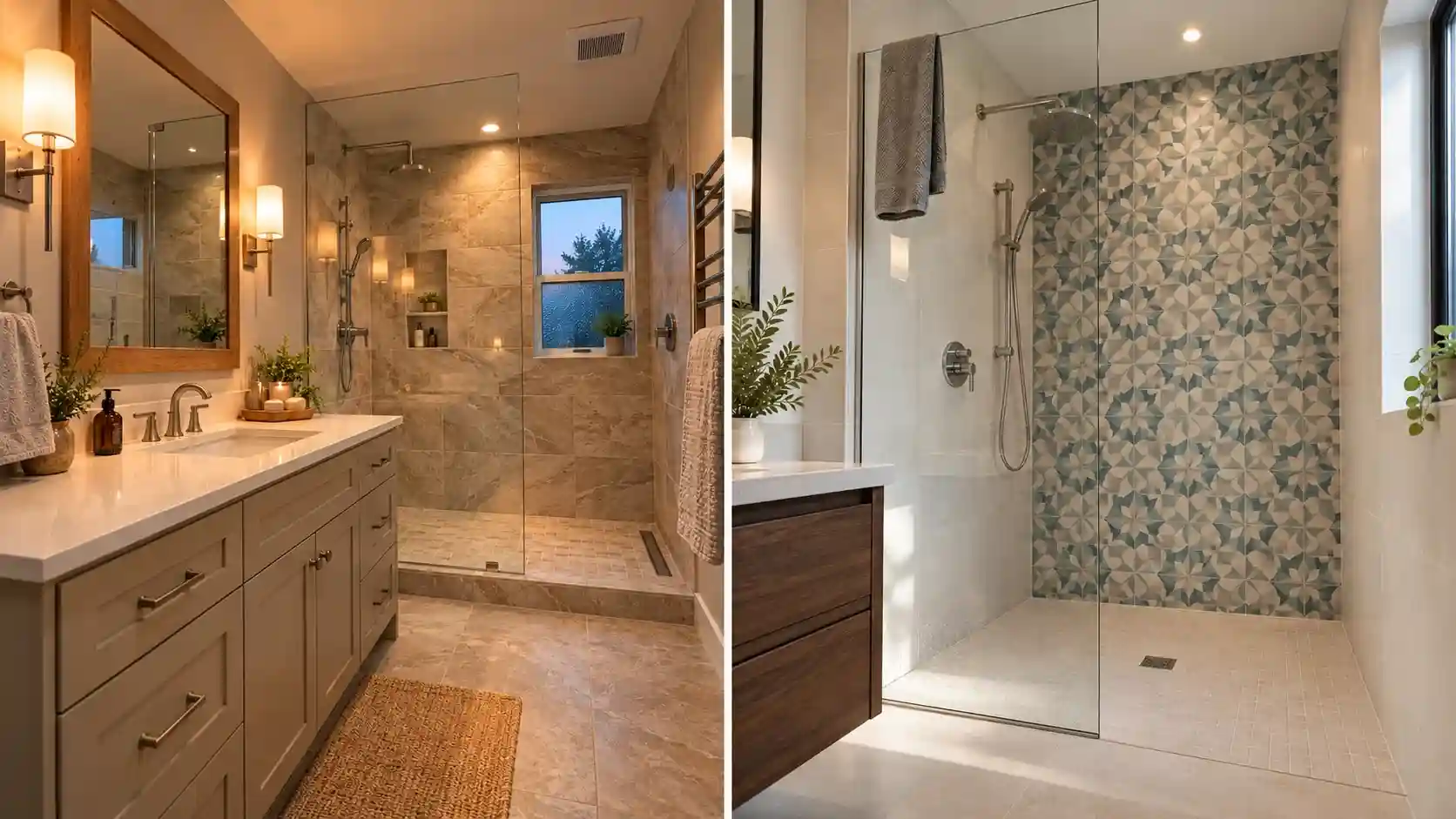
Walk-In Shower vs Bathtub: Which Is Better? Plus Modern Walk-In Shower Design Ideas That Last
Scroll through any bathroom inspiration feed and you'll notice something. Nobody's shampoo bottles are in the shot. The glass is dry, the niche holds one perfectly rolled towel, and the floor tile looks like it has never met a wet foot. Real showers don't work that way. This guide covers the honest version: whether a walk-in shower beats a bathtub, which modern walk-in shower ideas hold up after a few years of hard water and daily use, and what it all costs.Is a Walk-In Shower Better Than a Bathtub?Quick answer: For most households, yes. A walk-in shower is quicker, easier to make step-free, and fits where a bathtub sits. A bathtub still wins for bathing children and soaking, so keep one tub in the home if resale matters. The catch is that "better" depends less on design and more on who lives in the house. A walk-in shower is usually the smarter use of space in a primary bathroom or a second bathroom. If you have one bathroom and small children, the bath is doing a job a shower can't. Quick takeawaysA walk-in shower is usually the better daily-use choice, especially in a primary or second bathroom. Keep at least one bathtub in the home if you have young kids or expect to sell to families. The best-looking walk-in showers use fewer materials, one feature surface and matching floor tile. They don't put pattern on every wall. Slope, waterproofing and drain choice matter more than tile choice, and they're the costliest things to get wrong. Doorless designs need enough depth, a sensible showerhead position and a plan for warmth and ventilation. Dark matte finishes photograph beautifully but show water spots and soap film faster in hard-water areas.Walk-In Shower vs Bathtub at a GlanceFactor Walk-In Shower BathtubDaily use Fast and simple Slower, and the step over the side is awkward for some usersAccessibility Can be made step-free, with a bench and grab bars Harder to make accessible without conversionWater use Typically lower than filling a bath, unless showers run long Higher per use, but fewer usesBathing children and pets Harder without a handheld and a seat EasierRelaxation and soaking Limited (a bench and a steam-ready design help) The clear winnerDesign flexibility Very high (tile, glass, layout, niches) Moderate (a freestanding tub is a statement piece but takes space)Upfront cost Can be lower or higher depending on waterproofing, glass and tile Often lower for a standard tub, higher for freestanding or stoneCleaning Glass, grout and drain need regular care Fewer surfaces, but tub-shower combos need caulk careResale Strong in primary and second bathrooms Expected in at least one bathroom for many buyersComfort in cold rooms Doorless layouts can feel cold without heating Warm water and an enclosed space feel cosierTwo rows in that table cause most of the regret. One is cold-room comfort. The other is resale, which matters if you ever plan to remove your only bath. Both come up again below.What Actually Makes a Walk-In Shower "Modern"? "Modern" gets slapped on everything, so here's what it means in practice. A modern walk-in shower usually has these traits:A low or flush entry. No tall tub wall to step over. Glass doing the enclosing. A fixed panel, often frameless, instead of a curtain or sliding door. Continuous surfaces. Matching tile from bathroom floor into the shower, with as few visible joints as possible. Hardware that recedes. A slim wall-mounted head, concealed valve trim and a linear or tile-insert drain. Drainage designed in from the start. The floor is sloped to the drain rather than fitted around it later.A few terms get muddled, so it helps to separate them:Walk-in shower: an open entry with no swinging door, or a very simple one. It may still have a low curb. Curbless (or level-access) shower: the shower floor sits flush with the bathroom floor. This is a build method as much as a look. Wet room: the whole room is waterproofed and sloped, so water can go anywhere and still find the drain. Common in the UK and Australia.Most people searching for walk-in shower design ideas want the look of the first, sometimes the second, and occasionally the third. Knowing which you're after changes the price and the trade-offs.Walk-In Shower Styles ComparedStyle Defining Features Cost Tier Maintenance Best Room Size Resale Appeal Trend LongevityModern minimalist (curbless) Large-format tile, continuous floor, frameless fixed glass, hidden or linear drain, minimal hardware $$$ Low to moderate (few grout lines, but glass shows spots) Medium to large; works in small rooms if glass is clear High if executed cleanly Long, as it relies on restraintJapandi / warm spa Honed or stone-look tile in warm neutrals, wood-look accents, bench, soft lighting $$–$$$ Moderate (natural stone needs sealing, porcelain does not) Medium to large High, because neutrals appeal broadly LongModern farmhouse Wood-look floor, white or soft-colour wall tile, matte black or brass hardware, framed glass $$ Moderate (matte black shows spotting in hard-water areas) Small to medium Good in family markets Medium; some elements already feel familiarTransitional / classic subway Subway tile in stacked or vertical layouts, brushed nickel or chrome, small niche $–$$ Moderate (grout lines need care) Small to medium Very high, as it's easy to like Very longMoody / dark industrial Charcoal or black tile, dark grout, black fixtures, strong lighting $$–$$$ High (water spots and soap film show quickly) Medium to large with good lighting Mixed; love-it-or-leave-it MediumThe pattern is worth noticing. The styles that score highest on longevity and resale are the quiet ones. The styles that photograph best tend to be the ones asking the most of you on cleaning day.10 Modern Walk-In Shower Design Ideas (and How They Live in Real Life) Each look below comes with what it demands, not just what it looks like. 1. The Curbless MinimalistLarge-format porcelain on the walls, the same tile running from the bathroom floor straight into the shower, a linear drain and one fixed glass panel. A slim wall-mounted head finishes it. It looks calm and makes a room feel bigger. It's also demanding to build. The floor has to be sloped correctly, and the waterproofing has to be right. Best for: anyone planning to age in place. Watch for: the labour cost of the floor build. 2. The Warm Japandi SpaHoned, stone-look tile in warm greige, light wood-look accents, a bench, and a rainfall head paired with a handheld. Lighting sits around 2700K. Nothing shouts. This is one of the more forgiving looks in a hard-water home, because matte, mid-tone surfaces hide spotting far better than dark or glossy ones. Best for: primary bathrooms, calm-minded households. Watch for: natural stone needing regular sealing (porcelain doesn't). 3. Classic Subway With a Modern TwistStacked or vertical white subway tile, a mid-grey grout, brushed nickel fixtures and a small niche. It's the least dramatic option on this list, and possibly the one you'll still like in ten years. Budget-friendly, hard to date and easy for buyers to like. The grout lines are the maintenance, so choosing a mid-grey grout instead of bright white saves a lot of scrubbing. Best for: tight budgets and resale-minded owners. Watch for: grout staining if you skip sealing on cement grout. 4. One Feature Wall, Calm Everywhere ElseA patterned or textured tile on the back wall only, with plain tile on the sides and floor. You get the impact of a statement without the fatigue of a busy room. This is the safest way to use trend tile. If the pattern feels tired in five years, you're re-tiling one wall, not the whole shower. Best for: people who want personality without commitment. Watch for: texture holding soap scum. 5. The Moody Dark ShowerCharcoal matte tile, black fixtures and a careful lighting plan. It's dramatic and it photographs beautifully. Most homeowners don't realise how much dark surfaces show. Mineral spots and soap film stand out against charcoal in a way they never do on white or mid-tone tile. If you have hard water, you'll want a squeegee by the glass and a descaling habit. Best for: larger bathrooms with good lighting and soft water. Watch for: daily upkeep. 6. Marble-Look Porcelain LuxurySlab-look, large-format porcelain with veining, brushed brass or nickel, a bench and recessed lighting. It reads as premium. It usually costs less than real marble and doesn't need sealing. Installation is specialist work, though, because big slabs are heavy, fragile in transit and unforgiving to cut. Best for: getting a stone look without stone maintenance. Watch for: installer skill. 7. Modern Farmhouse Walk-InWood-look floor tile, white or sage wall tile, matte black or brushed brass hardware and a glass panel with a slim frame. It's friendly, warm and familiar. The look is already common, which is both a plus (buyers understand it) and a risk (it can feel of-its-moment). Keep the permanent surfaces neutral and let the hardware carry the style. Best for: family homes. Watch for: cheap matte black wearing through or spotting. 8. The Corner Walk-In for Small BathroomsTwo glass panels, or one panel plus a return, a small mosaic floor, light-toned tile and a narrow niche. It claws back floor space where a tub used to be. Small footprints splash more, so glass placement matters more than tile. Best for: compact bathrooms. Watch for: spray reaching the floor if the entry is wide. 9. The Wet RoomA fully waterproofed room with a sloped floor, one glass panel and no visible curb. It's the most open look on the list. It's also the least forgiving of poor waterproofing, because the whole room is now the shower. This is a job for a qualified tiler working to the local standard. Best for: accessible design and open-plan bathrooms. Watch for: hidden failures behind tile. 10. The Tub-to-Walk-In ConversionReplace a standard bath alcove with a walk-in shower using the same plumbing wall. It's often the best value on the list because the layout stays put and the plumbing doesn't move. Best for: budget-conscious upgrades. Watch for: losing your only bath (more on that below).The Design Decisions That Matter Most Inspiration is easy. Turning it into a spec sheet is where most projects go wrong. This table covers the choices that decide whether a modern walk-in shower looks good on day one and day 1,000.Design Element Best Choice Why Common Mistake Maintenance RealityFlooring tile Small-format porcelain mosaic (about 2 in / 50 mm) in the shower, matching larger tile outside, with a slip rating suited to wet floors Small tiles follow the slope to the drain and extra grout lines add grip Polished large tile on the shower floor, or a mosaic with a rating never checked More grout to keep clean; epoxy grout reduces stainingWall tile Large-format porcelain (rectified) with narrow joints, or classic subway in a mid tone Fewer joints means less grout to clean and a calmer look Pattern on every wall, or fluted tile in a hard-water area with no cleaning plan Flat tile wipes faster; textured or fluted tile holds soap scumGrout colour A tone close to the tile for calm; a mid-grey for subway tile that needs some definition Grout colour sets the visual grid and hides staining Bright white grout on the floor, or a stark contrast that turns tile into a grid Cement grout needs sealing; epoxy grout is more stain-resistant and costs more to installVanity finish Matte or satin painted, wood veneer or laminate with a moisture-resistant core Hides fingerprints and water marks better than high gloss Dark gloss that shows every splash Wipe daily; avoid abrasive cleanersFaucet / fixture finish Brushed nickel, chrome or a PVD-coated brass or black Chrome and brushed nickel hide spots; PVD finishes resist wear Cheap matte black that wears through or spots in hard water Wipe after use; check the manufacturer's cleaning advice before using acid cleanersMirror type Anti-fog LED mirror, or a framed mirror with side sconces Good light at face level and it copes with steam A mirror with no anti-fog in a bathroom with a doorless shower LED mirrors need a rated supply; clean glass only, no drips near edgesLighting Layered: wet-rated recessed light in the shower, vanity light at face height, a soft ambient source. 2700K–3000K, CRI 90 or higher Flatters stone and skin tones and avoids a clinical feel A single ceiling light, or non-rated fixtures inside the wet zone LED life is long; clean lenses occasionallyCountertop material Quartz or solid surface, or a sintered or porcelain top Non-porous and resistant to toothpaste, cosmetics and water marks Unsealed natural stone, or dark polished surfaces that show every splash Quartz needs only mild cleaner; natural stone needs regular sealingGrout does more work than the tile It's easy to spend weeks choosing tile and thirty seconds choosing grout. That's backwards. Grout sets the visual grid. A contrasting grout turns a plain subway tile into a pattern. A grout close to the tile colour makes the wall read as one calm surface, and it hides staining better. If you want a quiet, modern look, match the grout. If you want the tile to have definition, go a shade or two darker than the tile, not stark white or black. Lighting changes how tile looks The same stone-look tile can look warm and inviting under 2700K–3000K light and oddly clinical under cool white. A CRI of 90 or higher keeps colours honest, which matters for skin tone and for natural stone. A windowless bathroom also changes the colour game. Without daylight, everything sits under artificial light all day, so pick tile samples under the same lighting you'll be using, not in a shop or by a window. Fixtures inside or over the shower need the correct wet rating (an IP rating in the UK and Australia, a wet-location listing in the US and Canada). That's a safety requirement, not a style detail. What photographs well and what lives well A staged shower has bare shelves. A lived-in one needs somewhere for shampoo, a hook for the squeegee and a place to stand that isn't a wet mat. Plan a niche or shelf where the bottles will actually go, and make sure it's outside the direct spray.Layout, Size and Splash: Will a Doorless Walk-In Work in Your Bathroom?Doorless is a depth question more than a style question. Splash control comes down to three things: how deep the shower is, where the showerhead points, and how wide the glass is. Some rules of thumb, which you should confirm with your installer:Depth: around 60 inches (1.5 m) or more is a commonly suggested starting point for a truly open, doorless layout. Head position: put the showerhead on the wall opposite or beside the opening, not aimed at it. Glass: a fixed panel wide enough to shield the entry and the head end. Tight spaces: add a return panel, a slim hinged door or a lower-flow head. Minimum size: local codes often set minimum shower interiors around 30 inches (760 mm) each way, so check yours.In a small bathroom, clear glass and continuous tile make the room feel bigger, but a shallow doorless shower will splash. A corner layout, a return panel or a narrow door often solves it without giving up the open look. In a large bathroom, you can go properly open. The trade-off is heat. Big open showers lose warmth and steam faster, so plan underfloor heating, a quick-response thermostatic valve and a fan that can cope.Real-World Walk-In Shower Design Mistakes Most walk-in shower regrets come down to a short list. If you skim nothing else, skim this. Rainfall head only. It feels lovely but is awkward for rinsing the walls, cleaning or bathing kids and pets. Add a handheld on a slide bar. Showerhead aimed at the opening in a doorless design. Water reaches the floor and the cold air rushes in. Put the head on the wall opposite or beside the entry and use a fixed glass panel wide enough to shield the head end. Skipping the slope. A shower floor needs proper fall toward the drain, typically about ¼ in per foot (around 2%). Flat spots hold water and cause mould. Confirm the pan or mortar bed slope before tiling. Large tile on the shower floor. Big tile can't follow the slope without heavy cutting. Use small mosaics, or a linear drain with a single-plane slope and a tile size suited to it. Polished tile on the floor. It looks stunning dry and is slippery wet. Check the slip rating: in the US a wet DCOF of 0.42 or higher, in the UK a wet pendulum value of 36+, in Australia a wet barefoot rating suited to showers. Dark matte everywhere in a hard-water area. Water spots and soap film show quickly. Use a mid tone, or commit to a squeegee habit and expect to descale. Pattern on every wall. The look gets busy, costs more and dates faster. Confine pattern to one wall or the niche. A niche in the spray path, or sized against the tile grid. Bottles get blasted and the tile cuts look messy. Place the niche away from direct spray and size it to fit whole tiles. Non-rated lighting in or over the shower. Standard ceiling lights aren't designed for wet zones. Use fixtures with the correct wet rating and have an electrician install them. Ignoring ventilation. A warm, open shower and a weak fan means condensation and mould at the ceiling and corners. Upgrade the extractor fan and size it for the room.The slope and slip-rating mistakes are the sneakiest. Both look fine on the day the tiler leaves. Both show up months later, one as standing water and one as a near-fall.What a Walk-In Shower Costs at Three Budget Levels Cost is where most inspiration articles go quiet. Here are numbers, with the assumptions stated. Assumptions: a mid-sized bathroom with roughly 40 sq ft of floor tile and about 100 sq ft of shower wall tile. The layout stays largely in place, with no plumbing relocation, no structural changes and no permit costs. Demolition and disposal are excluded. These are planning ranges in USD for 2026, not quotes, and they vary by region. Convert for the UK, Canada and Australia using local labour rates.Cost Category Budget Tier ($) Mid Tier ($$) Premium Tier ($$$)Floor tile $120–$300 $300–$700 $800–$2,000Wall tile $300–$700 $700–$1,800 $2,000–$6,000+Vanity $300–$700 $800–$2,000 $2,500–$6,000+Fixtures (shower valve and head, faucet, hardware) $200–$500 $600–$1,500 $1,800–$5,000+Lighting $80–$250 $300–$800 $900–$2,500Mirror $50–$200 $250–$700 $800–$2,500Shower glass (fixed panel or door) $400–$900 $900–$2,000 $2,000–$4,500Waterproofing materials and shower base prep $150–$400 $400–$1,000 $1,000–$2,500Labor (tile, plumbing, install) $2,500–$5,000 $5,000–$10,000 $10,000–$20,000+Estimated Total $4,100–$9,000 $9,250–$20,500 $21,800–$51,000Where the money surprises peopleCosts climb quickly with a curbless floor, a linear drain, natural stone, custom glass or relocated plumbing. A tub-to-shower conversion that keeps the plumbing wall is usually the most cost-effective route. Large-format porcelain slab can deliver a stone look for less than real marble, but installation is specialist work. Some looks cost less than they appear. Classic subway with a good grout choice looks expensive and isn't. Some cost more than they appear. A "simple" curbless shower can quietly become a premium job once the floor needs re-sloping.If the budget is tight, put the money into waterproofing and glass first, and let the tile be ordinary. Ordinary tile with excellent waterproofing lasts. Beautiful tile over poor waterproofing doesn't.DIY or Hire a Pro? Where to Draw the Line Some of this is very doable for a competent DIYer. Some of it is the kind of work where a mistake stays hidden behind tile for years.You can reasonably DIY Hire a qualified professionalSwapping a showerhead or adding a handheld and slide bar Waterproofing a shower or wet roomFitting shelves, hooks and accessories (into solid backing, not just tile) Building the shower base and slope, especially curblessRegrouting and replacing silicone Measuring and installing glass panelsPainting the walls outside the wet zone Any electrical work, including lights, heated mirrors and warm floorsReplacing a non-electric mirror or vanity hardware Relocating a drain, valve or plumbingCleaning, descaling and sealing Installing large-format slabs or natural stone⚠️ Waterproofing failures hide. Water damage behind tile can go unnoticed for years and only shows as loose tiles, staining outside the shower or a soft floor. A walk-in or curbless shower depends on a correctly installed membrane and slope. Follow the manufacturer's system exactly, or hire a qualified tiler. This is the one place to spend money before you spend it on tile.⚠️ Removing your only bathtub can narrow your buyer pool. A well-built walk-in shower is often a selling point in a primary or second bathroom, but many families with young children look for at least one bath. If it's the only bath in the house, talk to a local agent before removing it.⚠️ Electrics near a shower are not a DIY style choice. Lights, heated mirrors and heated floors need the correct wet-zone rating and a qualified electrician, and local rules apply (for example IP zones in the UK and Australia, or wet-location listings and GFCI protection in the US and Canada). A beautiful fixture that isn't rated for the location is a hazard.The Maintenance Reality"Low maintenance" is the most overused phrase in shower marketing. A walk-in shower has fewer surfaces than a tub-shower combo with a curtain, but it isn't maintenance-free. It just moves the work.Glass needs a squeegee habit. Grout needs cleaning, and sometimes sealing. The drain needs hair removed. Silicone joints wear out. The fan needs to actually move air.Task Frequency Difficulty NotesSqueegee glass and wipe fixtures After each shower or daily Easy The single biggest thing that stops limescale building upClean the drain and hair trap Weekly Easy Slow drainage often means hair, not a plumbing faultWipe tile and niche with a pH-neutral cleaner Weekly Easy Avoid acidic or abrasive cleaners on natural stone and some finishesDeep-clean grout lines Monthly Moderate Mosaic floors and subway tile need more attention because of the extra groutDescale showerhead and fixtures Every 1–3 months in hard water Easy to moderate Check the manufacturer's advice first, since some finishes and stone don't tolerate vinegar or acidsReseal cement grout and natural stone About once a year, or as the product advises Moderate Epoxy grout and porcelain tile usually don't need sealingInspect silicone or caulk joints Every 6 months Easy Replace cracked, discoloured or mouldy silicone; typical life is a few yearsClean extractor fan grille and check airflow Every 6 months Easy A weak fan is a common cause of mouldCheck for warning signs of waterproofing failure Yearly Moderate Look for loose tiles, staining outside the shower, damp smells or soft floor edges; call a professional if foundReapply glass protective coating (if used) Per product instructions Easy Follow the product guidance and don't mix productsA five-minute weekly resetRun the fan and wipe the glass and fixtures with a squeegee or microfibre cloth. Lift the drain cover and clear the hair. Wipe the niche and floor edge with a pH-neutral cleaner. Glance at the silicone joints for cracks or dark spots. Leave the fan running for another 15–20 minutes.Most mould problems start at a failed silicone joint or a poorly ventilated corner, not on the tile face. If you catch those two, you avoid most of the ugly surprises.Resale, Longevity and Trend Fatigue Some looks age gracefully. Others have a shelf life. The difference is usually whether a surface is a backdrop or a statement. What tends to age wellNeutral, mid-tone large-format tile Classic subway in a stacked or vertical layout Warm, matte finishes in chrome, nickel or good-quality PVD Matching floor tile that carries through the room Layered, warm lighting One bold element (a feature wall or niche) instead of fiveWhat tends to date fasterPattern on every wall Trend tile used as the main surface rather than an accent Very high-contrast schemes that depend on staying spotless Finishes that wear through or spot quicklyThe safest approach is a neutral base with swappable accents. Hardware, lighting, mirrors and accessories are cheap to change. Tile isn't. On resale, a well-built walk-in shower is generally seen as a plus, especially in a primary or second bathroom, and especially for older buyers. The bath question is the one to think through before demolition. If your home has only one, ask a local agent how buyers in your market and price range feel about it.Does a Walk-In Shower Work for You? A Quick Self-CheckYou have only one bathroom and young children → Keep the bathtub, or choose a tub-shower combination. You have a second bathroom or a primary suite and want a spa look → A walk-in shower is usually the better choice. Your bathroom is small and you want it to feel bigger → Fixed glass panel, light tile and a continuous floor. Avoid dark pattern on every wall. You live in a cold climate and hate a chilly bathroom → Add underfloor heating and a glass panel at the head end. Consider a door. You have hard water and dislike wiping surfaces down → Choose mid-tone finishes, chrome or nickel fixtures, large-format tile and a squeegee routine. You're planning to sell within five years → Choose a neutral base, keep a bath elsewhere in the home, and keep bold choices to swappable items. You want a step-free or ageing-in-place shower → Curbless entry, bench, grab bars, slip-rated floor and a handheld head. Hire professionals for the floor build. You have a tight budget and want the best value → Convert tub to walk-in in the same footprint, use standard-format tile and put the money into waterproofing and glass.Materials and Products Worth Considering Categories and specs matter more than brand names here. This is what to look for.Porcelain tile: rectified edges for narrow joints, a stated slip rating for the floor, and a through-body or good-quality print. Large-format slabs need a specialist installer. Grout: epoxy grout resists staining and doesn't need sealing but is harder to install. Cement grout is easier to work with and needs sealing. Waterproofing: a membrane or tile-ready shower base from an established system, installed exactly to the manufacturer's instructions. Drain: a linear drain suits large tile and single-plane slopes. A centre drain or tile-insert drain suits mosaics. Shower valve: a thermostatic valve holds a steady temperature and reaches it quickly, which matters in an open shower. Digital shower controls add presets and are worth considering if you like precise temperatures. Glass: toughened safety glass with a fixed panel sized to protect the entry. A factory-applied protective coating can ease cleaning. Underfloor heating: an electric warm-floor mat under the tile with a programmable thermostat takes the edge off an open shower and helps floors dry. It needs a qualified electrician. Extractor fan: sized for the room, quiet enough that you'll actually use it, and ideally with a humidity sensor or timer so it keeps running after you leave. Mirror and lighting: an anti-fog LED mirror and wet-rated shower lighting, both on the correct supply.None of these needs to be top-of-the-range. A mid-priced fan that runs and a properly installed membrane beat an expensive mirror over a badly waterproofed floor.Frequently Asked Questions Is a walk-in shower better than a bathtub? For most households, yes. A walk-in shower is quicker to use, easier to make step-free, and usually uses less water than filling a bath unless your showers run long. A bathtub still wins for bathing small children, soaking and washing pets, and many buyers expect at least one tub in a home. If you have one bathroom and a family, keep the bath. If you have a second bathroom or a primary suite, a walk-in shower is usually the better use of the space. Do walk-in showers make a small bathroom look bigger? Often, yes, because clear glass and continuous tile let your eye travel across the room instead of stopping at a tub wall. The effect comes from the details: a frameless fixed panel, matching floor and shower tile, light tones and minimal hardware. But visual size isn't usable size. If the shower is shallow, a doorless layout will splash the floor, so a small bathroom may need a return panel or a narrow door to keep spray contained. How big does a doorless walk-in shower need to be? There's no universal number, but a depth of around 60 inches (1.5 m) or more is a commonly suggested starting point for a truly open, doorless layout, with the showerhead on the wall opposite or beside the opening and a fixed glass panel wide enough to shield the entry. Smaller footprints splash more. In tight spaces, add a return panel, a slim hinged door or a lower-flow head. Also check local minimum shower sizes, which are often around 30 inches (760 mm) each way. What is the best non-slip tile for a walk-in shower floor? Small-format tile, such as mosaics from about 2 inches (50 mm), is the safest choice. The extra grout lines add grip and small tiles follow the slope to the drain. Whatever you choose, check the slip rating: in the US look for a wet DCOF of 0.42 or higher, in the UK a wet pendulum value of 36 or more, and in Australia a wet barefoot rating suited to shower floors. Avoid polished finishes on the shower floor, and remember textured tile grips better but holds more soap scum. Will removing a bathtub for a walk-in shower hurt resale value? It depends on how many bathrooms you have. In a primary suite or second bathroom, a well-built walk-in shower is generally seen as a plus, especially by older buyers. Removing the only bathtub in the home can narrow your buyer pool, since families with young children often look for one. A common compromise is keeping one tub somewhere in the house. Ask a local agent before you commit, because expectations vary by market and price point. How much does a modern walk-in shower cost? As a rough 2026 planning range in USD, the shower zone alone (tile, waterproofing, glass, valve and head, and labor) runs about $3,000–$7,000 for a budget build, $6,000–$13,000 for mid-range, and $13,500 or more for premium finishes such as large-format slabs, natural stone and custom glass. Moving plumbing, building a curbless floor that needs structural changes, and hidden damage found during demolition can add thousands. These are planning ranges, not quotes, so get several local written quotes. Prices in the UK, Canada and Australia differ. How do you stop a walk-in shower feeling cold and getting mouldy? Doorless showers lose heat faster, so plan for it: an electric warm-floor mat under the tile, a thermostatic valve that reaches temperature quickly, and glass that encloses the head end. For moisture, fit an extractor fan sized for the room, run it for 15–20 minutes after showering, squeegee the glass and keep silicone joints in good repair. Mould usually starts at failed silicone and poorly ventilated corners rather than on the tile face.Final Verdict: Which Should You Choose? If you have a second bathroom or a primary suite, choose the walk-in shower. It's easier to use, easier to make accessible, and gives you far more room to design. If you have one bathroom and young children, keep the bath, or choose a tub-shower combination and put your design energy into tile, lighting and fixtures. Whichever you pick, spend first on what you can't see: slope, waterproofing and ventilation. Then keep the permanent surfaces calm and let hardware, lighting and accessories carry the personality. That's the combination that still looks good when the styled photo is long forgotten. Bathroom Design & Style :How to Choose a Tile Pattern That Makes a Small Bathroom Look Bigger How Many Lights Should a Bathroom Have? Layouts, Lumens & Lighting Design Ideas That Work Walk-In Shower vs Bathtub: Which Is Better? Plus Modern Walk-In Shower Design Ideas That Last Small Bathroom Design Ideas: How to Make a Compact Bathroom Look (and Feel) Bigger Farmhouse Bathroom Ideas: What the Style Actually Requires (and What Nobody Tells You About Living With It) What Colors Make a Bathroom Look Bigger and Brighter? What Makes a Bathroom Look Modern? (Everything That Actually Matters) 20 Luxury Bathroom Design Ideas: What Actually Defines a High-End Bathroom How to Achieve a Minimalist Bathroom Look (Without Making It Feel Empty) What Bathroom Trends Are Outdated in 2026? (And What to Do Instead)
_12_11zon.webp)
Small Bathroom Design Ideas: How to Make a Compact Bathroom Look (and Feel) Bigger
Short answer: Use one continuous floor tile, expose floor with pedestal or wall-hung fixtures, swap curtains for clear glass, recess storage into walls, and layer warm lighting. Light colours help, but controlled contrast can too. Here's the thing most small bathroom advice gets wrong. It treats size as a square-footage problem, so it hands you a list of tricks: paint it white, hang a big mirror, buy a smaller vanity. Sometimes that works. Often it gives you a small, bland bathroom. A room feels big or small based on what your eye can do when you walk in. Can it travel along the floor? Can it see through things? Is there clutter competing for attention? Fix those, and a bathroom of about 5 × 8 ft (1.5 × 2.4 m) can feel calm and roomy, even with a bath in it and even with deep green tile on the walls. Quick takeawaysShow the floor. Pedestal basins, wall-hung fixtures and an open base under a drawer unit read larger than a bulky cabinet. Recess before you add. Wall niches hold daily clutter without eating floor or visual space. Clear glass beats curtains and frames. One panel, not a boxed-in cubicle. Dark colour can work if you commit. Wrap one zone in deep tile. Splitting dark and light evenly reads as chopped up. Light in layers. Ceiling, mirror and niche lighting beat one central fitting. Keep the reversible layers cheap. Paint, mirror, towels and hardware are easy to change if your taste shifts.Why some small bathrooms feel spacious and others feel like a cupboard Four things do most of the work. None of them depends on how many square feet you have. 1. Sightlines. Think about what you see standing in the doorway. A long, uninterrupted floor pulls your eye through the room. A shower door frame, a vanity that juts out and a curtain rail all interrupt it. 2. Visible floor. This matters more than floor colour. A pedestal basin leaves the floor visible behind and beside it. A full vanity hides a large rectangle of it. Even when the footprint is similar, the room with more visible floor feels bigger. 3. Visual weight. Dark, busy or high-contrast surfaces feel heavy. Pale, plain or matte surfaces feel light. You can balance weight, so a single heavy zone can sit comfortably next to calm surroundings. 4. Light. Where it comes from, how warm it is, and what it bounces off. A bathroom with one bright ceiling light and dark corners feels smaller than one with three softer sources. Most homeowners don't realize how much clutter changes perceived size. Six bottles on a windowsill can shrink a room more than a slightly smaller bath would. That's why storage sits at the centre of everything below.Real example: a 1940s bathroom with a fixed toilet and no room to spare Take a real project. A two-bedroom 1948 home in New Zealand has a small original bathroom. Before the renovation, it had beige tiles laid diagonally with dark grout, an acrylic shower cubicle with a framed door, a corner vanity, a small window and a cream wall colour that made everything look a bit tired. The homeowner described it as feeling like a prison bathroom. The photos back that up. The brief was specific. The homeowner wanted a bath back in the room, did not want to move the toilet, and wanted something with personality for their partner. Moving a toilet means moving drainage, and in a small older house that can blow up both budget and schedule. So the toilet stayed put, and everything else was designed around it. The renovation was a DIY project spread over a year. The period pedestal basin, a 1952 piece, was picked up at an auction for very little, in near-perfect condition. The tile was chosen first because the couple fell for it. The rest of the design grew from there, keeping loosely in tune with the house. Here's what changed and why it worked:Before After Why it helps a small roomDiagonal beige floor tile with dark grout One warm wood-look porcelain plank, one material throughout Long planks and a continuous surface pull the eye through the roomFramed acrylic shower cubicle Flat-sided bath with a single fixed glass panel Sightlines stay open, and the bath gives a soak and a shower in the same footprintCorner vanity with laminate top Pedestal basin plus a small recessed drawer unit with an open base More visible floor, less bulk, and storage out of the roomBeige walls White upper walls, pale half-height tile, deep green in the wet zone Depth where you look, calm everywhere elseWall-mounted cabinet and surface clutter Storage sunk into the walls Daily items disappear without shrinking the roomOne ceiling light Downlight, warm LED strip in the recess, natural light from a frosted window Layers of light add depthCold tile underfoot Underfloor heating You don't see it, but it changes how you use the room. The cats approved.The homeowner also came into this with a bias against shower-over-bath setups and changed their mind. The straight-sided bath is roomy, easy to step into, and the glass panel keeps water where it belongs. That's worth remembering when a layout you dislike in theory turns out well in practice. Now let's break down the decisions so you can adapt them to your own room.Tile, fixtures, lighting, colour and layout: what to choose in a small room Floor: one material, laid long The floor in this project is a matte, warm grey-brown wood-look porcelain plank running the length of the room. There are no threshold changes and no border tile. That's deliberate. Planks laid along the longest wall stretch the room visually. Porcelain handles water, heat and the movement of underfloor heating well. Whichever tile you choose, check its slip rating for wet areas. The rating system differs by country (R-ratings in Australia and New Zealand, DCOF in the US, pendulum test values in the UK), and glossy polished tile with a low rating on a bathroom floor is an easy mistake to make. Walls: put the drama where you look The deep green tile wraps the bath zone. Everything else is white paint above pale half-height tile. The result is depth in one place and calm everywhere else. You can see this in the wide photo. Your eye lands on the green, then rests on the white. Handmade-look glazed ceramic in small squares has real character. It also has real quirks:Shade varies from tile to tile. That's the look. Edges aren't razor-straight, so joints are wider than with rectified tile. Small squares mean a lot of grout lines, which means more cleaning.Order 10–15% extra, mix boxes as you lay, and view a sample board in your own lighting before you commit.Grout: quieter than you'd expect Most people obsess over tile colour and forget that grout changes how the whole wall reads. High-contrast grout draws a net over small walls and makes them look busier. Tone-on-tone grout, or one step lighter than the tile, calms the grid. On floors, a mid-tone hides dirt better than pale grout. Basin and storage: pedestal plus a recess A pedestal basin shows floor and looks light. The trade-off is real: it has no cupboard, only a narrow ledge, and the plumbing is exposed. The fix in this project was a small drawer unit set into the wall, with an open base below holding a basket. It stores what you need without dominating the room. There's more on how that works in the storage section below. One honest note on separate hot and cold taps. They look great on a period basin. But you can't blend water at the spout, so you get scalding or freezing water in your hands until you fill the bowl. Some homeowners love that. Others switch to a mixer within a year. Check your local plumbing rules, and think about who uses the bathroom (children, older relatives) before you commit. Metal finishes: pick a family Brushed brass runs through the fixtures, drawer pulls, towel rails, mirror frame and hinges. A polished brass accent on the taps and a tiny brass snail on the basin add personality without breaking the rule. The point is that there's one dominant metal, not three. Brushed or PVD-coated finishes generally hide water spots better than polished ones. Ask the manufacturer for care instructions, because harsh or acidic cleaners can damage some finishes.Mirror: sized to the basin A rounded-rectangle framed mirror softens all the square lines from the tile. Keep it in proportion to the basin. An oversized mirror can reflect clutter and doubles whatever is behind you, including the toilet. Decision table for a heritage-style small bathroomDesign element Best choice Why Common mistake Maintenance realityFlooring tile Matte porcelain planks, one tile through the room, laid along the longest wall, slip-rated for wet areas Continuous surface and long lines pull the eye through Mixing floor materials at thresholds, or polished tile with a low slip rating Mid-tone grout hides dirt. Sweep and damp-mop weekly.Wall tile Small handmade-look glazed ceramic: deep colour in the bath zone, pale half-height tile elsewhere Depth where you look, calm where you don't Full-height dark tile on every wall More grout lines means more cleaning. Seal cement-based grout if the maker advises.Grout colour Tone-on-tone or one step lighter Softens the grid High-contrast grout that draws a net over small walls Very pale floor grout stains. Mid-tone hides it.Vanity finish Pedestal basin plus painted recessed drawers with an open base Shows floor, keeps storage out of the room A deep vanity that blocks the door swing Exposed plumbing needs wiping. Painted fronts need moisture-rated paint.Faucet/fixture finish One metal family, e.g. brushed brass, with one matching accent Reads as intentional Mixing polished brass, chrome and black without a plan Brushed or PVD usually hides spots better. Avoid abrasives.Mirror type Rounded-rectangle framed mirror sized to the basin Softens hard lines, adds depth Oversized mirror reflecting clutter Wipe splashes off the frame.Lighting Recessed downlight, LED strip in niches, warm 2700–3000K Layers create depth, and warm light flatters green and brass One central light only, or cool white that turns green tile grey IP-rated fittings. Have an electrician confirm zones.Countertop material Engineered stone or solid surface on the small drawer unit Non-porous, thin edge, easy to wipe Unsealed porous stone in a wet room Wipe daily. Let a fabricator cut it, since engineered stone dust is a health hazard.Recessed storage: the small-bathroom trick that actually works If you take one idea from this article, take this one. The storage in this bathroom lives inside the walls. There's a lit niche above the drawer unit with shelves for daily items. There's a mirror set into the recess. Toilet roll and tissues sit in small wall pockets by the door. There's a tiled shelf inside the bath alcove for shampoo. Why it works: a recess uses space that already exists, the cavity between wall studs. Nothing sticks out, so nothing shrinks the room. And because the items sit in a defined frame, everyday clutter looks styled rather than messy. The homeowner noted that this is what keeps the room feeling open even with daily clutter. A few things to know before you start.Depth is limited by the wall. A standard stud cavity is about 3.5 in (89 mm) in the US and roughly 90 mm in AU/NZ framing. That fits bottles and toothbrushes, not bulky items. Check what's inside the wall. Pipes, wires, ducts and structural members can all be in the cavity. Look first, and stop if you're unsure. Load-bearing walls are not a DIY guess. If a wall might be structural, get a builder or engineer to confirm. Wet zones need waterproofing. A niche inside a shower or bath area needs proper waterproofing and sealing before tile goes in. Moisture behind a niche is one of the most common hidden failures. Think about the base. An open shelf under the drawers, as here, shows more floor and holds a basket for towels or spares.⚠️ Recessing into walls isn't just carpentry. Before cutting a niche, confirm the wall isn't load-bearing and that the cavity holds no pipes, wires, ducts or fire-rated lining. Waterproof any niche inside a wet zone. If in doubt, stop and call a builder, plumber or electrician.Can you use dark green (or any bold colour) in a small bathroom? Everyone says no. The conventional wisdom is that dark colour shrinks a room. Here's the more accurate version: dark colour shrinks a room when it's everywhere. Used deliberately in one zone, it can add depth. In this bathroom, the deep green sits on the bath wall and wraps the alcove. The floor is mid-toned, the upper walls are white, the half-height tile is pale, and the window lets in light. The green becomes a focal point, and your eye gets rest everywhere else. When it worksColour is concentrated in one zone, such as the bath or basin wall Floor, ceiling and upper walls stay lighter Glossy or reflective glaze bounces light around Lighting is warm and layered You've seen samples in the room, day and nightWhen it failsDark tile covers every wall and the ceiling too Lighting is one cool-white fitting The tile is matte and light-absorbing with no other bright surfaces You picked it from a screen and never saw it in your roomMost homeowners don't realize how much the light changes green. The same tile looks different in morning daylight, under a warm 2700K strip and at night against a dark window. Put your sample on the wall, and look at it at breakfast and bedtime. The trade-off is maintenance. Glossy dark tile shows water spots, soap film and limescale more than pale matte tile. It wipes clean easily, but you'll be wiping. If you live in a hard-water area, that matters.Small bathroom lighting: three layers that change how big it feels Lighting is the cheapest way to make a room feel bigger, and the one most people skip. Ambient light is the general glow. In this room, that's a recessed downlight plus daylight through a frosted window. Frosted glass gives privacy without blocking light. Task light is where you need to see clearly, at the mirror and around the basin. Place it so it lights your face, not the top of your head. A single downlight directly above you casts shadows under your eyes. Accent light is the layer that makes people say "oh, nice." In this bathroom, a warm LED strip runs inside the recessed niche. It lights the shelves, glows on the mirror and adds depth to the wall. A few practical points:Warm white (2700–3000K) flatters green tile and brass. Cool white turns green grey and makes brass look flat. Use bathroom-rated fittings. Fittings near water carry an IP rating, and zone rules differ by country. Have a licensed electrician confirm what goes where. Think about switching. Put ambient and accent light on separate switches, or add a dimmer, so a midnight bathroom trip doesn't feel like an interrogation. Don't forget underfloor heating. It isn't lighting, but it belongs to the same "how the room feels" category. Electric underfloor heating in a small bathroom is easy to appreciate, and it should be installed by a licensed electrician.⚠️ Electrical work in a bathroom must be done to local rules. Underfloor heating, LED strips, downlights and switches near water all carry zone and rating requirements that differ by country. Use bathroom-rated fittings and a licensed electrician, and keep test readings and paperwork for warranty and insurance.10 mistakes that make small bathrooms feel smaller (or regrettable) Use this as a save-and-check list before you buy anything. Choosing a full vanity because everyone has one. It hides the floor and blocks movement. Consider a pedestal basin plus recessed drawers. Using cool-white bulbs with green or warm tile. The colour goes flat and grey. Test 2700–3000K in the actual room. Letting dark tile run onto every wall. The room closes in. Concentrate it in one zone. Buying tiny tile with high-contrast grout. The wall looks like a net. Use tone-on-tone joints. Ordering exactly enough handmade-look tile. Shade variation and breakage leave you short. Add 10–15% and mix boxes. Cutting a wall niche without checking what's inside. Pipes, wires and structure hide in cavities. Check first and hire a pro if unsure. Leaving a niche unwaterproofed in a wet zone. Moisture gets behind it. Waterproof and seal properly. Using a shower curtain or boxed frame in a small alcove. It chops the space visually. A single clear glass panel keeps sightlines open. Mixing three metal finishes with no rule. It looks accidental. Pick one main metal and one accent at most. Copying Pinterest lighting. A photographed room is lit by a photographer. Plan layers, switching and dimming for real life.Which style suits a small bathroom? Five options compared The bathroom above is heritage or period revival, but it isn't the only route. Here's how five styles compare when space is tight.Style Defining features Cost tier Maintenance Best room size Resale appeal Trend longevityHeritage / period revival Pedestal basin, cross-head or lever taps, handmade-look glazed tile, warm metal, timber accents Mid–High (salvage can lower it) Medium–High (gloss tile, brass, grout lines) Small to medium Strong in character homes, mixed elsewhere High if proportions stay classic, colour may dateModern minimalist Large-format tile, wall-hung vanity, frameless glass, few grout lines Mid–High Low–Medium Small to large Broad Medium–HighJapandi Warm timber, matte neutral tile, simple forms, hidden storage Mid–High Medium (timber needs sealing and ventilation) Small to medium Broad HighTransitional classic white White tile, chrome or brushed nickel, simple shaker or pedestal Low–Mid Low–Medium Any Very broad HighMoody / jewel-tone Deep colour tile or paint, brass or black metal, layered lighting Mid–High Medium–High (shows water marks) Small rooms when committed, to medium Divisive Medium (palette-dependent)If you want the lowest-maintenance, broadest-appeal choice, transitional white or modern minimalist is safer. If you want a room with character and you're fine with a bit more upkeep, heritage or moody can be brilliant.What this look costs: budget, mid and premium Let's be upfront: costs vary a lot by country, city and supplier. The figures below are indicative 2026 USD ranges for a bathroom of about 5 × 8 ft, with roughly 30 sq ft of floor tile and 100 sq ft of wall tile. They don't include demolition, plumbing, electrical, waterproofing, the bath, the glass panel, underfloor heating or permits. Those often add up to more than the finishes, so get local quotes.Cost category Budget tier ($) Mid tier ($$) Premium tier ($$$)Floor tile $60–$120 $150–$300 $360–$750Wall tile $200–$500 $800–$1,500 $2,500–$5,500Vanity (pedestal or drawer unit) $150–$350 $400–$900 $900–$2,000Fixtures $250–$600 $700–$1,500 $1,800–$4,000Lighting $60–$200 $200–$600 $600–$1,500Mirror $40–$120 $150–$400 $400–$1,200Labor (tile + install) $0 (DIY) to $1,800 $1,500–$3,000 $3,500–$7,000Estimated total ≈ $800–$3,700 ≈ $3,900–$8,200 ≈ $10,000–$22,000Where money makes the biggest difference: the tile in the wet zone and the lighting. Where to save: the mirror frame, accessories and paint. Two cost surprises worth knowing about. First, a salvaged period basin can cost far less than a new reproduction, but it needs a plumber to check tap holes, overflow and fitting compatibility. Second, handmade-look tile is often the single most expensive line in the whole room, and it's also the one that needs the most careful laying, so the labour bill rises with it.What you can DIY and what to hand to a licensed trade A capable DIYer can do a lot in a small bathroom. But some jobs carry safety, legal and warranty consequences.Reasonable to DIY (with skill and patience) Hand to a licensed professionalDemolition of non-structural finishes Anything structural or load-bearingPainting walls and ceiling with moisture-rated paint Plumbing changes, moving drainage or fixing supply linesBuilding shelves, painting and fitting drawer units Electrical work, including underfloor heating, lights and switchesTiling, if you're patient and prepared for irregular tile Waterproofing of wet areas (often required to be done or certified by a licensed trade)Installing towel rails and accessories Glass panel supply and fixingCutting and framing recessed niches (after checking the cavity) Engineered stone cutting, which should be done by a fabricatorThe homeowner in this project did the bulk of the build themselves and put a lot of effort into tile and drywall detail, but still, the safety-critical trades are the ones to protect. A poorly waterproofed wet area can fail years later, behind finished tile, and cost far more than the original job. If you're not sure whether something needs a licensed trade, ask your local building authority. Rules differ by country and region.What this bathroom is like to live with after a year Design photos never show maintenance. Here's a realistic routine for a bathroom with glossy handmade-look tile, brass fixtures and painted storage.Task Frequency Difficulty NotesWipe glossy wall tile and glass panel After showers (squeegee) or weekly Easy Prevents water spots and limescale build-upClean brass or metal fixtures Weekly Easy Soft cloth, mild soap. Avoid abrasives and acidic cleaners.Clean grout lines Fortnightly, deeper monthly Medium Small tile has more joints, so it takes longerCheck silicone and sealant at bath edge and glass Every 3–6 months Easy Reseal at the first sign of gaps or mouldDamp-mop floor Weekly Easy Slip-rated tiles need residue-free cleanersWipe painted drawer fronts and timber shelves Weekly Easy Wipe splashes promptly. Reseal timber if water stops beading.Descale taps and shower head Monthly in hard-water areas Easy Vinegar-based products can damage some finishes, so check the maker's guidanceCheck extractor fan or window ventilation Every 3 months Easy Ventilation protects paint, timber and groutInspect tile joints and niche edges Yearly Medium Catch hairline cracks before water tracks behind themVentilation deserves its own sentence. Timber shelves, painted drawers and grout all suffer in a damp room. An open window or a properly sized extractor fan does more for the long-term look of the bathroom than any cleaning product.⚠️ Handmade-look and glossy tile will not look like a catalogue swatch. Uneven glaze, shade variation and irregular edges are part of the look, but they also mean wider joints, more careful setting and more cleaning. Order a sample board and view it in your own lighting before committing.Will it date? Resale, reversibility and "Does this style work for me?" Nobody can promise a bathroom will never look dated. What you can do is decide which parts you're willing to risk. Think of the room in two layers:Permanent shell: tile, layout, waterproofing, plumbing positions, built-in storage. Expensive to change. Reversible layer: paint, mirror, towels, hardware, plants, accessories. Cheap to change.If you might sell within a few years, keep the shell calmer and put personality in the reversible layer. In a character or period home, a well-executed heritage bathroom often suits the house and helps buyers picture themselves in it. Preferences vary by market, so ask a local agent rather than guessing. Bold choices can divide buyers. That's not automatically bad if you plan to stay, but be honest with yourself about your timeline. Does this style work for me?Your toilet can't move and floor space is tight → Use wall-hung or pedestal fixtures and recess storage to keep the floor open. You want a bath but only have an alcove → A flat-sided bath with a single fixed glass panel can work. Check bath length, depth and access first. You love deep colour but fear a cave → Wrap one wet zone, keep the floor and upper walls pale, and add layered warm light. You dislike cleaning grout → Choose larger tile, or accept small tile with tone-on-tone grout and a regular routine. You're a renter, or might sell within 3 years → Keep the shell neutral and put personality in paint, mirror, towels and hardware. Your home is a character or period house → A period-revival approach with salvaged fixtures suits it. Match proportions, not necessarily every detail. You live in a hard-water area → Prefer brushed or PVD metal, plan for squeegeeing, and avoid glossy black surfaces everywhere. You're doing wet-area work yourself → Hire a licensed trade for waterproofing, plumbing and electrical, even if you tile and paint.Small bathroom design: your questions answered Q1: Can I use dark green tile in a small bathroom without making it feel smaller? A: Yes, if you use it deliberately. Concentrate deep colour in one zone, such as the bath wall, and keep the floor, ceiling and upper walls pale so the eye still has light to travel across. Add warm layered lighting so the tile glows rather than absorbs. Gloss glaze reflects light, but it also shows water spots, so plan on regular wiping. Order samples and check them in daytime and evening light before committing. Q2: What is the single best way to make a small bathroom look bigger? A: Show more floor and keep sightlines open. In practice that means a pedestal or wall-hung basin instead of a bulky vanity, one continuous floor tile, a clear glass shower panel instead of a curtain or frame, and storage recessed into the wall. These changes work regardless of style or colour. Layered lighting and a well-sized mirror then add depth. Colour matters, but layout and visibility usually do more. Q3: Is a shower-over-bath worth it in a small bathroom? A: It can be, especially if you want a bath but can't add floor area. A straight-sided bath gives more usable width than a tapered one, and a single fixed glass panel keeps water in without visually closing the space. Check the bath length, wall strength and access before buying. If you never bathe, a walk-in shower may make better use of the room. Consider who lives in the house and how you'll use it. Q4: Will bold tile and brass fixtures hurt resale? A: They can divide buyers. A bold shell (tile, fixtures) is permanent and costly to change, while paint, mirrors, towels and accessories are cheap to swap. If you might sell within a few years, keep permanent surfaces calmer and put personality in the reversible layers. In a character or period home, a well-executed heritage look often suits the house. Speak to a local agent about your market, since preferences vary. Q5: How do recessed wall niches work, and are they worth it? A: A recess uses the cavity between studs to hold shelves, so daily items stay off the floor and counters. The depth is limited by the framing, typically about 3.5 in (89–90 mm). Before cutting, check for pipes, wires, structure and fire-rated lining, and waterproof any niche inside a wet zone. They keep small bathrooms visually clear, but they need planning. Use a professional if you're unsure what's in the wall. Q6: Pedestal basin or vanity for a small bathroom? A: A pedestal basin shows more floor and feels lighter, but it has no built-in storage and a small ledge. A vanity adds storage but can dominate a small room. A middle path is a pedestal basin plus a shallow recessed drawer unit or wall niche. Check basin depth, tap positions and door swing, and confirm any salvaged basin can take modern fittings before you buy. Q7: How much does it cost to give a small bathroom a designer look? A: Costs vary widely. A budget refresh with DIY tiling can land under a few thousand dollars, while handmade-look tile, brass fixtures and professional labour can push a small bathroom well into five figures, before plumbing, electrical and waterproofing. The best value usually comes from spending on wet-zone tile and lighting and saving on mirrors and accessories. Get local quotes, since labour and materials differ by country and region. Bathroom Design & Style :How to Choose a Tile Pattern That Makes a Small Bathroom Look Bigger How Many Lights Should a Bathroom Have? Layouts, Lumens & Lighting Design Ideas That Work Walk-In Shower vs Bathtub: Which Is Better? Plus Modern Walk-In Shower Design Ideas That Last Small Bathroom Design Ideas: How to Make a Compact Bathroom Look (and Feel) Bigger Farmhouse Bathroom Ideas: What the Style Actually Requires (and What Nobody Tells You About Living With It) What Colors Make a Bathroom Look Bigger and Brighter? What Makes a Bathroom Look Modern? (Everything That Actually Matters) 20 Luxury Bathroom Design Ideas: What Actually Defines a High-End Bathroom How to Achieve a Minimalist Bathroom Look (Without Making It Feel Empty) What Bathroom Trends Are Outdated in 2026? (And What to Do Instead)
_16_11zon.webp)
Farmhouse Bathroom Ideas: What the Style Actually Requires (and What Nobody Tells You About Living With It)
Most farmhouse bathroom guides show you a photo and call it a day. What they don't tell you is why a $400 vanity update looks convincing while a $4,000 one sometimes doesn't — or why the exact fixture finish everyone's obsessed with right now might be a maintenance headache in your specific house. Quick answer: Farmhouse bathroom style is built on a handful of repeatable elements — shiplap or board-and-batten walls, an apron-front sink, matte black or oil-rubbed bronze fixtures, and a wood-tone vanity — set against a neutral palette. It's rustic material, applied with restraint. The moment it stops being restrained, it starts looking like a theme park bathroom instead of someone's actual home. That distinction matters more than any single product choice, and it's the thing most inspiration content skips entirely. Quick TakeawaysThe core formula: shiplap/board-and-batten + apron sink + matte black hardware + wood vanity + neutral palette Texture and warmth do more work than shine — this is not a high-gloss style "Modern farmhouse" is the toned-down version that still tests well in 2026; full traditional farmhouse is starting to read as dated You can get 60–70% of the look for under $1,000 with paint, hardware, and lighting alone Matte black fixtures and hard water are not friends — check your local water before you commit Small bathrooms can absolutely do this style, but only if you scale the details down with the roomWhat Actually Defines Farmhouse Bathroom Style Here's the thing people get wrong first: farmhouse isn't a mood board, it's a material logic. It grew out of actual working farmhouses — practical spaces built with what was on hand, not styled for a camera. That origin is why the "good" version of this style always looks a little imperfect. A slightly uneven grout line, a vanity with visible wood grain instead of a mirror finish, a faucet with some age character instead of a chrome shine — those aren't flaws in the aesthetic, they're the aesthetic. Where it goes wrong is when every surface tries to say "farmhouse" at once. Shiplap on all four walls, a barn door on the linen closet, a wagon-wheel light fixture, distressed everything — that's not farmhouse, that's a costume. The homes that actually pull this off well tend to use one or two strong material choices (usually the wall treatment and the fixtures) and let everything else stay quiet. There's also a real split worth naming up front: traditional/rustic farmhouse (heavier wood, more distressing, more visual weight) versus modern farmhouse (board-and-batten instead of full shiplap, cleaner lines, lighter overall palette). If you've been scrolling inspiration photos and can't figure out why some look current and some look like they're from 2019, this is usually why. The style comparison table further down breaks out the differences in cost, upkeep, and how well each one is likely to age.The Design Elements That Actually Read as Farmhouse This is the part most articles gloss over — not just what to pick, but why one choice reads as farmhouse and a nearly identical one doesn't. Flooring. Wood-look porcelain plank tile is doing most of the heavy lifting in modern farmhouse bathrooms right now, and for good reason — actual hardwood in a room that gets standing water and humidity is asking for trouble. Porcelain gets you the warmth without the risk. Wall treatment. Subway tile in a vertical stack pattern is currently reading as more "current" than a full wall of shiplap. If you do use shiplap or board-and-batten, keep it to one wall. Full coverage is exactly the kind of over-committing that ages a room fast. Grout color. Nobody talks about this one, and it matters more than it should. Bright white grout against textured farmhouse-style tile shows every bit of daily grime within weeks. A grout shade slightly darker than the tile hides normal wear and actually looks more intentional. Vanity. Painted wood — white, sage, or navy are the current front-runners — with some visible wood grain coming through does the job. A heavily distressed or whitewashed finish on top of that reads as themed rather than lived-in. Fixtures. Matte black or unlacquered brass is the signature farmhouse move. Polished chrome pulls the whole room toward transitional instead. The trade-off — and this is the part almost nobody mentions — is that matte black shows hard water spots faster than chrome does. More on that below. Mirror. Simple wood frame or a black metal round mirror. An oversized ornate French-style mirror in a small bathroom just fights the room for attention. Lighting. Black metal sconces or one schoolhouse-style pendant. Skip the wagon-wheel chandelier unless you have a genuinely large bathroom — in anything smaller it just looks oversized. Countertop. Quartz with subtle veining, or sealed butcher block if you want the real wood texture and don't mind resealing it periodically.Farmhouse Style Variations at a GlanceStyle Defining Features Cost Tier Maintenance Best Room Size Resale Appeal Trend LongevityTraditional/Rustic Farmhouse Full shiplap, exposed beams, apron sink, distressed finishes $$–$$$ Moderate–high Medium–large Moderate, regionally strong Aging faster — reads as dated in some marketsModern Farmhouse Board-and-batten, matte black fixtures, white/greige palette $$–$$$ Moderate Small–large High, broadest appeal Cooling from its peak but still mainstreamFarmhouse-Industrial Black metal, exposed pipe accents, concrete-look tile $$$ Moderate Medium–large Moderate Stable, nicheCoastal Farmhouse Whitewashed wood, soft blues, woven textures $$–$$$ Moderate Small–medium High in coastal markets StableFrench Country Farmhouse Ornate mirrors, curved lines, warm metals, vintage accents $$$–$$$$ Higher Medium–large Lower outside its target audience Niche, stableIf you're not sure which lane you're in, modern farmhouse is the safest bet for most homes — it's the version that still photographs well and doesn't box you into a single narrow audience if you ever sell.Mistakes People Actually Make With This Style Some of these come up constantly in renovation forums, and almost none of them show up in glossy inspiration articles:Shiplap inside the shower zone. Even sealed, moisture finds its way behind the panels over time. Keep wood paneling out of direct wet zones and use tile there instead. Bright white grout with textured tile. Shows dirt and water spots within weeks — go a shade darker than the tile. Oversized barn door hardware on a standard door. Looks like a prop rather than architecture. Distressing every single surface at once. One or two aged elements read as character. All of them read as a theme. Choosing matte black without checking your water hardness. This is the single most common regret we hear about, and it's entirely avoidable with a five-minute check beforehand. Unsealed reclaimed wood vanity near a sink. Warps and stains within a year without proper sealing. Open shelving in a poorly ventilated, humid bathroom. Towels and decor stay damp; mildew follows. Wagon-wheel or oversized cage lighting in a small room. Overwhelms the scale instead of complementing it. Skipping ventilation upgrades when adding wood paneling. Wood needs airflow, full stop — this is where a lot of moisture problems start. Matching every metal finish exactly. A little variation between black fixtures and brass accents reads more authentic than a uniform hardware kit.What This Actually Costs in 2026 Cost is where most farmhouse content gets vague on purpose — "it depends" is technically true but not helpful. Here's a real range, broken out by tier, for a full bathroom:Cost Category Budget Tier ($) Mid Tier ($$) Premium Tier ($$$)Floor tile $2–4/sq ft (vinyl/laminate wood-look) $5–9/sq ft (porcelain plank) $12–20+/sq ft (real wood, sealed)Wall tile $1–3/sq ft (basic subway) $4–8/sq ft (patterned subway) $10–18/sq ft (handmade/zellige-style)Vanity $300–600 (stock painted) $800–1,800 (semi-custom) $2,500–5,000+ (custom reclaimed wood)Fixtures & hardware $150–300 $400–700 $900–1,800+Lighting $80–200 $250–500 $600–1,200Mirror $60–150 $200–400 $500–900Labor (tile + install) $1,500–3,000 $3,500–6,000 $7,000–12,000+Estimated Total $2,000–4,500 $5,500–10,000 $12,000–22,000+If your budget is closer to the low end, don't panic — paint, a new faucet, cabinet hardware, and a wood-framed mirror get you most of the visual impact without touching tile or plumbing at all.DIY vs. Calling a Professional Not everything here requires a contractor, and it's worth being honest about where the real line sits: You can reasonably do yourself:Painting the vanity Swapping cabinet hardware and faucet (if it's a like-for-like fit) Installing board-and-batten on a dry wall (not a wet zone) Adding open shelving Replacing a mirror or light fixture (basic wiring knowledge helps)Call a professional for:Apron-front sink installation — this almost always requires cabinet modification, not just a drop-in swap, and that's where a lot of the labor cost actually sits Any wall changes involving plumbing or electrical Tile work in wet zones, where waterproofing matters Ventilation upgrades if you're adding wood panelingThe Maintenance Nobody Mentions in the Photos This is the section that separates a bathroom that still looks good in five years from one that doesn't.Task Frequency Difficulty NotesWipe matte black fixtures Weekly (hard water areas) Easy Prevents visible mineral spottingReseal butcher-block countertop Every 6–12 months Moderate Skipping this causes staining and warpingInspect shiplap/board-and-batten caulking Every 6 months Easy Catches moisture intrusion earlyDust open shelving Weekly Easy Open storage collects dust faster than closed cabinetsRe-seal grout Every 12–18 months Moderate Extends tile life, prevents stainingCheck ventilation fan function Every 3 months Easy Critical wherever there's wood panelingTouch up painted vanity chips As needed Easy–Moderate Painted wood shows wear faster than laminate⚠️ Moisture Warning: Raw or lightly sealed wood paneling in a shower zone is one of the most common regrets we see. Even "sealed" shiplap needs a proper enamel or marine-grade finish in high-splash areas — a decorative wood sealer isn't built for that job.⚠️ Hard Water Warning: Matte black is the most photogenic farmhouse fixture finish and the highest-maintenance one in hard water regions. Check your local water hardness before committing an entire fixture package to it.⚠️ Trend Warning: Full shiplap walls are starting to read as a 2018–2020 signal rather than a timeless one. Board-and-batten or a single accent wall gets you the same warmth with less renovation-regret risk down the line.Will It Hold Its Value? This is the question people don't type into Google but are absolutely thinking about. Modern farmhouse generally tests well across a broad range of buyers, especially in suburban and rural U.S. markets, where the aesthetic is well established. Heavier traditional farmhouse — or anything that leans hard into distressing and theme — narrows your audience, particularly in urban markets or outside the U.S., where the style hasn't taken hold the same way. If resale is even a background consideration, staying in the modern farmhouse lane with neutral tones is the lower-risk move.Does This Style Actually Work for Your Bathroom?Small bathroom (under 40 sq ft) → Simplify: board-and-batten instead of full shiplap, one accent wall only Hard water in your area → Favor brushed nickel or chrome over matte black, or accept more frequent cleaning Humid climate, weak ventilation → Skip open shelving and raw wood; use sealed, painted surfaces instead Selling within 3–5 years → Lean modern farmhouse over heavily rustic/traditional Tight budget → Paint, hardware, and lighting swaps get you most of the way there Coastal or humid region → Coastal farmhouse variant fits the materials better than traditional rustic Want lower maintenance → Porcelain wood-look tile over real wood, quartz over butcher block Family bathroom with kids → Skip all-white grout and delicate open shelving; go for forgiving, durable finishesFrequently Asked Questions What makes a bathroom "farmhouse style" instead of just rustic or country style? Farmhouse style is defined by a specific combination — shiplap or board-and-batten walls, apron-front sinks, matte black or oil-rubbed bronze fixtures, and wood-tone vanities — set against neutral palettes. Country or rustic styles can lean more ornate or cluttered; farmhouse stays functional and pared back. The distinction is restraint: farmhouse borrows rural materials but applies them with intentional simplicity rather than heavy decoration. Is modern farmhouse bathroom style already outdated in 2026? Full traditional farmhouse — heavy shiplap, distressed wood, wagon-wheel fixtures — is increasingly read as dated. Modern farmhouse, with board-and-batten instead of full shiplap and a lighter palette, has cooled from its 2018–2022 peak but still tests well for broad buyer appeal. Simplified, lower-saturation choices extend the style's shelf life. Can I do a farmhouse bathroom look on a small budget? Yes. Paint, cabinet hardware, a matte black faucet, and a wood-framed mirror can get you roughly 60–70% of the visual impact for under $1,000, with no tile or plumbing work involved. Full material changes — tile, vanity, apron sink — are what push costs into the thousands. Does farmhouse bathroom style work in a small bathroom? Yes, with simplified detailing. Full shiplap, oversized barn door hardware, and large chandeliers overwhelm small spaces. A single accent wall, one statement light fixture, and a compact vanity get you the look without shrinking the room visually. Are matte black fixtures hard to maintain? In hard water areas, matte black shows mineral spots more visibly than chrome or brushed nickel and typically needs weekly wiping to stay spot-free. In soft water areas, maintenance is closer to any other finish. Worth checking your local water hardness before committing to an all-matte-black package. Is shiplap safe to use in a bathroom? Yes, outside direct wet zones — shower and tub splash areas — as long as it's properly primed and sealed with a moisture-resistant enamel finish. Raw or decoratively finished shiplap inside a shower is a common source of hidden moisture damage and should be avoided there in favor of tile. Will a farmhouse bathroom hurt my home's resale value? Modern farmhouse generally tests well with a broad range of buyers, especially in suburban and rural U.S. markets. Heavier traditional or highly themed versions can narrow appeal, particularly in urban markets or outside the U.S., where the style is less established. Sticking to simplified, neutral-toned modern farmhouse keeps resale risk lower. Bathroom Design & Style :How to Choose a Tile Pattern That Makes a Small Bathroom Look Bigger How Many Lights Should a Bathroom Have? Layouts, Lumens & Lighting Design Ideas That Work Walk-In Shower vs Bathtub: Which Is Better? Plus Modern Walk-In Shower Design Ideas That Last Small Bathroom Design Ideas: How to Make a Compact Bathroom Look (and Feel) Bigger Farmhouse Bathroom Ideas: What the Style Actually Requires (and What Nobody Tells You About Living With It) What Colors Make a Bathroom Look Bigger and Brighter? What Makes a Bathroom Look Modern? (Everything That Actually Matters) 20 Luxury Bathroom Design Ideas: What Actually Defines a High-End Bathroom How to Achieve a Minimalist Bathroom Look (Without Making It Feel Empty) What Bathroom Trends Are Outdated in 2026? (And What to Do Instead)
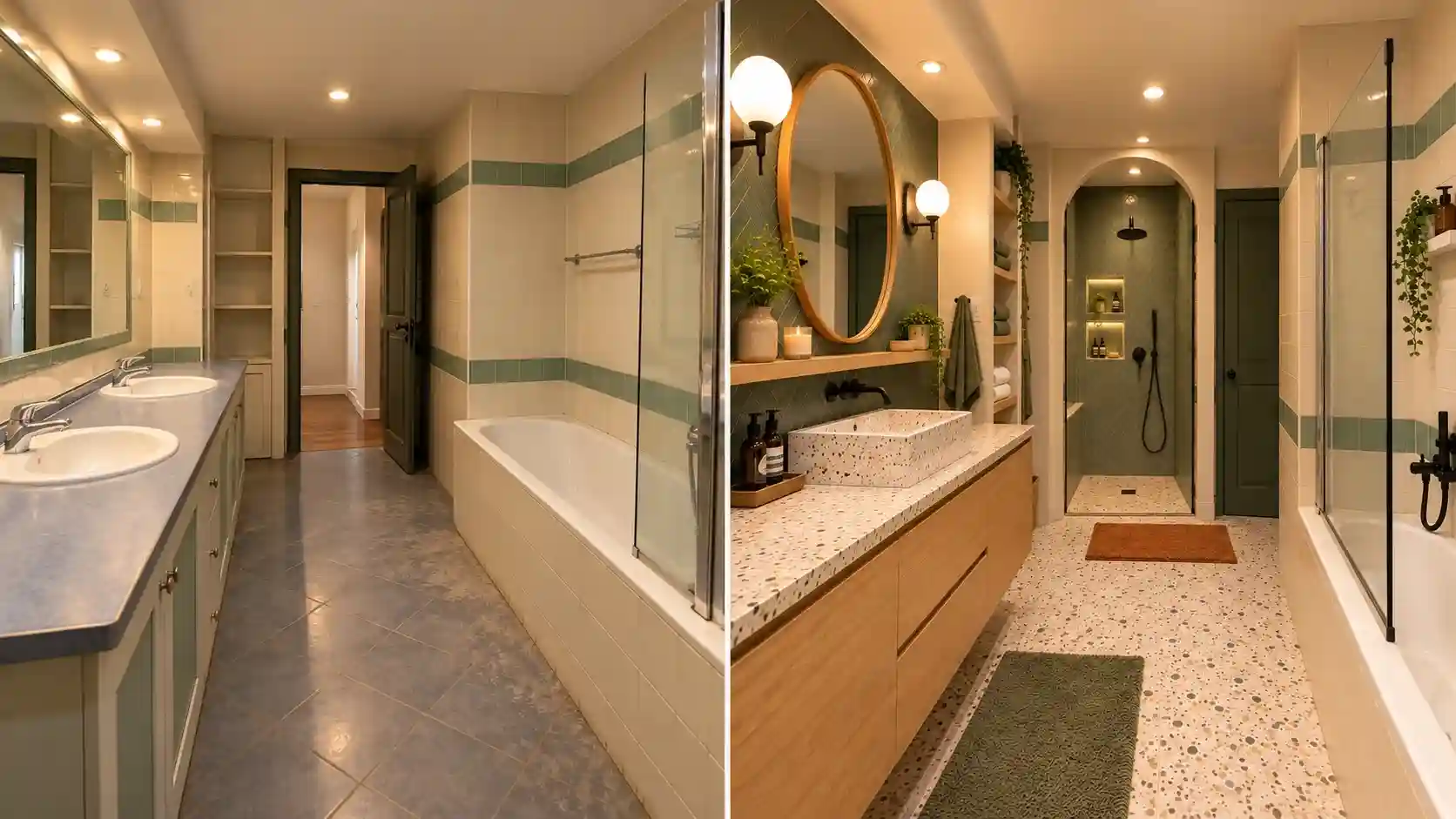
What Colors Make a Bathroom Look Bigger and Brighter?
Quick answer: Soft whites, warm greiges, pale blue-grey, and light sage make a bathroom look bigger and brighter — especially in a near-monochromatic scheme carried from walls to floor. But color is only half the story. Grout tone, tile format, and lighting temperature do as much visual work as the paint chip you agonized over, and most articles skip that part entirely. If you've ever repainted a small bathroom "the right color" and still felt like you were standing in a box, you're not imagining it. The color wasn't wrong. Something around it was.The Real Mechanism — Why Some "Light" Colors Still Look Small Here's what most bathroom color guides leave out: a color's actual brightness isn't just about how light it looks on the chip. Paint and tile manufacturers print a Light Reflectance Value (LRV) — a number from 0 (absolute black) to 100 (pure white) that tells you how much light a color actually bounces back into the room. Two colors can both look "light neutral" sitting next to each other on a fan deck, but one might sit at 72 LRV and the other at 54. In a small windowless bathroom under a single 60-watt bulb, that gap is the difference between a room that photographs bright and one that just looks flat and slightly grey by 7 p.m. Undertone matters just as much. A "warm white" that reads perfect in the paint aisle can turn cold and faintly grey the moment it's next to your existing oak vanity or beige floor tile that isn't getting replaced. This is the single most common reason people repaint a bathroom, hate it within a year, and assume the color itself was the problem. It usually wasn't — it clashed with something already in the room. Most homeowners don't realize the bulb already installed in their bathroom is doing more to determine how "bright" their color choice looks than the color itself. A cool 5000K bulb on a warm greige wall will fight the paint. A warm 3000K bulb on the exact same wall will make it glow.The Best Colors, Ranked by Room Type Not every bathroom needs the same fix. The right palette depends on what kind of small or dim room you're actually dealing with. Windowless powder rooms or interior bathrooms Skip stark, cool white — without daylight to balance it, it can look flat and clinical under artificial light. Warm white or soft greige (something in the 65–75 LRV range with a warm undertone) performs better here because it holds its brightness under artificial bulbs instead of relying on daylight it doesn't get. Small bathrooms with a single window This is where a near-monochromatic scheme — walls, floor, and vanity kept within the same tonal family — does the most work. Removing the visual "stop points" where one color ends and another begins makes the actual footprint read larger than it is. North-facing bathrooms (cooler, flatter daylight) North light tends to be cooler and bluer. A wall color with a warm undertone (soft ivory, warm greige, pale blush-beige) counteracts that flatness. A cool grey or icy white in a north-facing room can look almost bluish-dim by mid-afternoon. South-facing or skylit bathrooms You have more room to experiment. Pale sage, dusty blue, or a soft warm grey all work well here because there's enough natural daylight to keep the color from reading dark, even with slightly lower LRV values than you'd want in a windowless room. Bathrooms with dark or warm existing flooring you're not replacing Don't fight it with a cool white — it will look grey and slightly off. Lean into a warm neutral or soft greige wall color that pulls the same undertone as the floor, so the whole room feels intentional instead of mismatched.Style Comparison — Which Light Palette Fits Your BathroomStyle Defining Features Cost Tier Maintenance Best Room Size Resale Appeal Trend LongevityAll-White Modern Crisp white walls, white or pale grey tile, chrome or nickel fixtures $ Medium — shows water spots and scuffs quickly Small to mid High — broadly appealing High, but can feel sterile under weak lightingWarm Neutral (Greige/Taupe) Warm-undertone walls, soft taupe or oak-toned accents $–$$ Low-medium — hides everyday marks better than stark white Small to large High Very high — softer than trend-driven whiteSoft Pastel (Sage/Pale Blue) Muted sage or dusty blue walls, white trim $–$$ Medium Small to mid Medium-high Medium-high — currently trending, likely to age gracefully if kept mutedMonochromatic Light Scheme Same or near-same tone across wall, floor, vanity $$ Medium — light grout needs upkeep Small (most effective here) High — reads intentional HighBold/Dark Accent One dark tiled wall or niche, light floor, warm lighting $$–$$$ Medium-high Small to mid, if lit well Medium — polarizing but photogenic Medium — muted tones (forest green, charcoal) outlast trend colorsA monochromatic light scheme is usually the safest bet for a genuinely small room. But don't let the "safe" column talk you out of contrast entirely — more on that below.Grout, Tile Size, and Finish — The Part Everyone Skips You can pick the technically correct paint color and still end up with a bathroom that looks smaller than it should, because the tile and grout decisions undo the color work.Design Element Best Choice Why Common Mistake Maintenance RealityFlooring tile Large-format (12"×24"+) light porcelain, matte-to-satin Fewer grout lines, wider reflective surface Small light mosaic — grout grid cancels the effect Satin resists slips better than gloss; mop weeklyWall tile Glossy or satin, warm white or pale grey Gloss reflects light directly Busy pattern "because it's light-colored" Gloss shows water spots faster; squeegee after showersGrout color Within 1–2 shades of the tile Matching grout removes the visible grid Dark grout on light tile — creates a shrinking grid effect Light grout stains faster; seal every 12–18 monthsVanity finish Light wood or painted warm white Keeps the largest furniture piece from anchoring the eye Dark espresso vanity in a light room Painted edges chip near the basin; wood needs occasional resealingMirror Oversized, ideally wall-to-wall Doubles the perceived light source Undersized mirror centered over the sink Anti-fog backlit types reduce streakingLighting Layered, 3000–3500K warm-white Reads brighter and more flattering than cool white Single overhead fixture — creates shadows Replace bulbs as a matched setGrout deserves its own callout here because it's the variable almost nobody budgets time for. Dark grout on light tile creates a visible grid across the floor or wall — and that grid, not the tile color, is often what makes a "light" bathroom still read small in photos.Design Mistakes That Undo a Bright Palette Painting walls fresh but leaving yellowed trim untouched — the mismatch reads dingy even with new wall color. Choosing a paint swatch under store lighting and skipping a test patch under your own bathroom's bulbs. Using dark or contrasting grout with light tile "for definition" — it visually chops up the surface. Installing a small, centered mirror instead of an oversized one — the cheapest brightening upgrade, consistently under-sized. Relying on a single harsh overhead light — creates shadows that make even a well-chosen color look uneven. Choosing high-gloss white floor tile in a household with kids or pets — it shows every hair and water spot, and the maintenance frustration often leads to a regretted re-tile. Matching the shower curtain, bath mat, and towels exactly to the wall color — a fully matched room can look flat rather than bright. Leaving a dark vanity untouched while repainting everything else light — it becomes the heaviest object in the room. Skipping the exhaust fan upgrade when repainting — poor ventilation causes light paint to yellow or shadow with faint mildew along the ceiling within 1–2 years. Assuming any light color fixes a genuinely dark, windowless bathroom — in true low-light rooms, the lighting fixture does more work than the wall color ever will.What This Actually Costs You don't need a full renovation to get most of this effect. Here's a realistic 2026 breakdown by budget tier for a small bathroom.Cost Category Budget Tier ($) Mid Tier ($$) Premium Tier ($$$)Floor tile $2–$4/sq ft $5–$9/sq ft $10–$20+/sq ftWall tile $1.50–$3/sq ft $4–$8/sq ft $9–$18/sq ftVanity $150–$350 $400–$900 $1,000–$2,500+Fixtures $80–$150 $200–$450 $500–$1,200Lighting $60–$150 $180–$400 $450–$900+Mirror $50–$120 $150–$350 $400–$900+Labor DIY paint refresh: $0–$300 in supplies $1,500–$3,500 partial retile $4,000–$9,000+ full retileEstimated Total $300–$900 $3,000–$6,500 $7,000–$16,000+If your budget lands in the first column, spend it on paint, a grout refresh, an oversized mirror, and better bulbs before you touch the tile. That combination delivers most of the visible difference for a fraction of the cost of a full retile.Can a Dark Accent Still Work in a Small Bathroom? This is where most articles get too simplistic. "Light = big, dark = small" isn't really a rule — it's a shortcut that only holds up when everything else in the room stays weak. I recently walked through a bathroom that made this obvious. The before was a fairly typical dated setup: grey floor tile, beige-and-white wall tile with a sage accent stripe running around the room, and a single overhead downlight doing all the work. On paper, it was a light-ish, neutral bathroom. In person, it felt closed-in and a little cave-like — the lighting was too weak and too uneven to make any of that "light" color actually read as bright. The after wasn't all-white. It went the other direction on one wall — a saturated dark green herringbone tile running floor to ceiling in the shower. But the rest of the room stayed deliberately light: a pale speckled terrazzo-look floor, soft off-white walls, and layered warm-toned wall sconces flanking an oversized mirror. The result reads more spacious than the "safer" before version did, not less. The dark tile became a focal point instead of a wall closing in on you, because the floor stayed light and the lighting more than doubled. The takeaway isn't "go dark." It's that a bold color and a spacious-feeling room aren't mutually exclusive — the floor tone and the lighting are doing the heavy lifting either way.⚠️ Warning: Undertone clash is the #1 reason people repaint within a year. A "warm white" that looks perfect on a paint chip can read cold and slightly grey next to warm oak flooring or a beige tile you're keeping. Always test a sample against what's staying in the room — not just against the wall.⚠️ Warning: Paint sheen matters as much as color. Flat or matte absorbs both humidity and light. Satin or semi-gloss is the realistic minimum for bathroom walls — it survives the humidity and reflects more light.DIY vs. Calling a Pro Most of what actually moves the needle here — paint, grout refresh, a new mirror, updated lighting fixtures, bulb swaps — is well within reach for a confident DIYer over a weekend. None of it requires moving plumbing or touching structural elements. Where it's worth calling a professional: full tile replacement (especially anything involving waterproofing behind the tile), any electrical work beyond a straightforward fixture swap, and moving a vanity or plumbing fixture to a new location. Botched waterproofing behind new tile is one of the most expensive mistakes to fix after the fact — it's not the place to save money on labor.Maintenance Reality of a Light Palette A brighter bathroom takes slightly more upkeep than a dark, forgiving one. That's a fair trade for most people, but it's worth knowing going in.Task Frequency Difficulty NotesSqueegee glossy tile/walls After each shower Easy Biggest factor in keeping a light glossy scheme looking bright long-termRe-seal light grout Every 12–18 months Easy–Medium Light grout stains faster than darkDeep clean grout lines Monthly Medium Use pH-neutral cleaner to protect matte finishesRepaint high-touch trim Every 3–5 years Medium Trim scuffs and dulls before wall paint doesClean/replace exhaust fan filter Every 6 months Easy Prevents ceiling-line yellowingCheck caulk for yellowing Every 6–12 months Easy Yellowed caulk is one of the fastest ways a bright bathroom starts looking datedPolish mirror and fixtures Weekly / monthly Easy Dust and water spots quietly dull the reflective effect you paid for"Which Palette Fits My Bathroom?" Quick Self-CheckNo window or a very small one → Prioritize lighting temperature and mirror size over the exact wall color. Kids or pets in the house → Avoid high-gloss white flooring; choose a warm greige or satin-finish light tile. Renting or planning to move soon → Stick to paint-only changes — most of the effect comes from these lower-cost levers anyway. Selling within 2–3 years → Favor warm neutral or monochromatic light schemes over trend colors for broader buyer appeal. Existing dark or warm flooring you're keeping → Choose a warm-undertone wall color, not a cool stark white. Want a design statement, not just "safe" → A single dark accent wall can work, as long as the floor stays light and the lighting is strong. Working with a tiny powder room → Monochromatic light schemes perform best; multiple colors or materials tend to shrink a very small footprint further. Budget under $500 → Spend it on paint, grout refresh, an oversized mirror, and bulb temperature before touching the tile.FAQ What is the single best color to make a small bathroom look bigger? There's no one universal answer, but warm white and soft greige consistently perform best because they carry a high light reflectance value while hiding everyday marks better than stark white. The bigger factor than the exact shade is consistency — carrying the same tone across walls, floor, and vanity avoids the visual breaks that make a small room feel chopped up. Will a dark accent wall make my small bathroom feel cramped? Not necessarily. A single dark wall or tiled niche can work if the floor stays light and the lighting is strong and warm-toned. The problem isn't dark color itself — it's dark color combined with weak lighting and a dark floor, which together remove the visual "escape points" that keep a room feeling open. Should bathroom wall color match the floor tile? Matching or near-matching tones generally makes a small bathroom feel larger, since it removes the visual line where one surface stops and another begins. A stark contrast between a very light wall and a very dark floor tends to visually shrink the room. Is white still the best bathroom color in 2026, or is it dated? All-white remains broadly appealing and safe for resale, but warm neutrals and soft muted tones have gained ground because they photograph just as bright while feeling less clinical. All-white isn't dated — pairing it with warm wood tones and layered lighting simply reads more current than stark white with cool chrome alone. Can paint alone brighten a bathroom with no window? Paint helps, but in a windowless bathroom, lighting temperature and fixture placement do more of the actual work than color. A light wall color under a single weak overhead bulb will still look dim; the same color under layered, warm-white lighting and a large mirror reads noticeably brighter. Does light grout require more maintenance than dark grout? Yes. Light grout stains and discolors faster than dark grout without regular sealing. It's a real trade-off: light grout supports the "bigger and brighter" effect better than dark grout on light tile, but it needs resealing roughly every 12–18 months to stay looking fresh. What's the cheapest way to make a bathroom look bigger without retiling? Repainting walls and trim in a consistent light, warm-toned color, refreshing the grout, upgrading to a larger mirror, and switching to warm-white layered lighting typically costs a few hundred dollars and delivers most of the visual impact of a full retile. Bathroom Design & Style :How to Choose a Tile Pattern That Makes a Small Bathroom Look Bigger How Many Lights Should a Bathroom Have? Layouts, Lumens & Lighting Design Ideas That Work Walk-In Shower vs Bathtub: Which Is Better? Plus Modern Walk-In Shower Design Ideas That Last Small Bathroom Design Ideas: How to Make a Compact Bathroom Look (and Feel) Bigger Farmhouse Bathroom Ideas: What the Style Actually Requires (and What Nobody Tells You About Living With It) What Colors Make a Bathroom Look Bigger and Brighter? What Makes a Bathroom Look Modern? (Everything That Actually Matters) 20 Luxury Bathroom Design Ideas: What Actually Defines a High-End Bathroom How to Achieve a Minimalist Bathroom Look (Without Making It Feel Empty) What Bathroom Trends Are Outdated in 2026? (And What to Do Instead)
_20_11zon.webp)
What Makes a Bathroom Look Modern? (Everything That Actually Matters)
Most bathroom renovation guides will tell you to "use neutral colors," "update your fixtures," and maybe "add a plant." That advice isn't wrong. It's just incomplete in a way that costs homeowners time, money, and sometimes the entire look they were trying to achieve. A bathroom that genuinely looks modern isn't the result of one or two swapped-out fixtures. It's the result of a set of interlocking design decisions — material choices, fixture proportions, lighting strategy, finish consistency — that work together to create a space that feels calm, intentional, and built to last. This article breaks all of it down. Not as a listicle, and not with stock photos. What follows is grounded in real renovation experience — including a full documented project from demolition to finished space — covering every element that actually drives the modern look, what makes a bathroom read as dated in the first place, what realistic renovation costs look like, and the mistakes that are most expensive to fix after the fact.Quick Answer A bathroom looks modern through six core principles: eliminating visual clutter, choosing large-format surfaces, floating storage over floor-standing cabinets, frameless glass enclosures, layered lighting instead of a single overhead fixture, and a consistent two-finish hardware palette. Each principle removes the specific dated signals that age a bathroom fastest and replaces them with calm, cohesive choices built around longevity rather than trend. At a glance:Large-format tile (24×48" or larger) eliminates the visual noise of small-tile grout grids Floating vanities signal contemporary design and open up the floor visually Frameless glass enclosures remove the visual barrier framed doors create Wall sconces flanking the mirror replace dated bulkhead lighting Two metal finishes maximum — never three Integrated sinks simplify the counter plane LED strip lighting under the vanity adds hotel-quality warmth at low costThe Six Principles Behind Every Modern Bathroom Before you start shopping for tile or calling contractors, it helps to understand what modern bathroom design actually is — not as a trend, but as a set of principles. Trends shift. The principles below are why certain bathrooms still look sharp twenty years after they were built, while others look dated within five. 1. Visual Simplicity — Removing What Ages a Space Modern design doesn't mean sterile. It means deliberate. Every element should be there because it serves a function or creates a specific visual effect — not because it came with the set. The bathrooms that age the fastest are usually the busiest ones. Diagonal tile patterns. Decorative borders. Contrasting grout. Towel bar sets that match the toilet paper holder, which matches the robe hook, which matches the light fixture finials. That level of coordination reads as 2002 now, and it will always read as whatever year it was trendy. Modern bathrooms strip all of that back to a handful of intentional choices and let the materials do the work. 2. Material Continuity — Running the Same Surface Across Planes This is one of the details that separates a genuinely modern bathroom from a renovation that has modern fixtures inside a dated shell. Running the same tile from the floor up the shower walls — without a contrasting border, without a tile-height change, without a bullnose cap — creates a visual continuity that makes the space feel larger and more intentional than it actually is. In practice, this means selecting your primary tile before you select anything else. Everything flows from that choice. 3. Floating Elements — Why Off-the-Floor Signals Contemporary Design Floor-to-ceiling cabinetry is practical. It's also visually heavy in a way that makes a bathroom feel smaller and older. Floating vanities — wall-hung with visible floor space beneath — do the opposite. They reduce the visual weight of the largest piece of furniture in the room, make cleaning easier, and create an immediate association with high-end hotel design. The same principle applies to wall-hung toilets. The slab-sided silhouette of a skirted one-piece toilet reads as contemporary. A two-piece toilet with exposed trapway bolts and a separate tank reads as every bathroom built between 1985 and 2010. 4. Layered Lighting — The One Change With the Highest Spatial Impact Most older bathrooms have one overhead light — often a fan/light combo with a plastic grille. That single source creates flat, harsh light and casts shadows downward across the face, which is exactly where you don't want them when you're trying to see yourself clearly. Modern bathroom lighting uses three layers: ambient (recessed ceiling), task (flanking sconces at eye level, not overhead), and accent (LED strips under vanities, at shower benches, inside niches). The combination changes how the room feels at every hour of the day, particularly in the evening when a dimmer brings the ambient light down and the warm LED strips become the dominant source. That shift alone — from single overhead to layered and dimmable — is the highest-impact lighting change you can make without moving any walls. 5. Cohesive Finish Palette — The Rule Most Renovations Break Here's where a lot of renovations fall apart, not because of bad taste but because of fragmented purchasing. The shower valve gets ordered from a plumbing supplier in brushed nickel. The vanity faucet comes from a big-box store in chrome because it was in stock. The towel bar ends up in matte black because that's what was left. Each piece is fine on its own. Together, they look like the bathroom was assembled from three different uncompleted renovation projects. The rule is simple: choose two metal finishes maximum, and apply them consistently across every fixture, fitting, and hardware piece in the room. Brushed nickel and warm brass work together. Matte black and natural walnut work. Chrome and oil-rubbed bronze do not. 6. Enclosure Clarity — Frameless, Open, or Fully Integrated The shower enclosure is often the largest single visual element in a bathroom. A framed glass door — with metal tracks and corner hardware — creates a defined boundary that emphasizes the shower as a separate contained unit. Frameless glass does the opposite. It lets the shower tile be seen from across the room, keeps the floor plane visually continuous, and makes the space read as larger than it is. Walk-in showers without any enclosure do the same thing even more effectively, which is why they appear in every high-end hotel renovation. The trade-off is a slightly higher maintenance threshold around keeping the bathroom floor dry. For most homeowners in a master suite context, it's worth it.What Specifically Dates a Bathroom — And Why These Signals Are So Powerful You can usually tell within three seconds whether a bathroom is dated. What you're reading, without consciously analyzing it, is a cluster of visual signals that were all popular at roughly the same time. Here's what those signals are — specifically — and what replaces each one.Dated Element Why It Ages the Space Modern ReplacementDiagonal tile layout Creates busyness; associated strongly with 1995–2008 design Large-format tile in straight stack or offset patternHollywood-strip bulkhead lighting Harsh overhead cast; associated with dated salons and hotel chains Flanking wall sconces at eye level (approximately 60")Burl or flat-panel oak cabinetry The grain finish and orange-honey tones read immediately as 1990s–2000s Walnut, white oak, or flat-front painted cabinetry with integrated hardwareRound drop-in sinks Decorative and spatially awkward; high cleaning maintenance around the rim Integrated stone trough, clean undermount, or rectangular vesselTwo-piece toilet with exposed trapway Bulky silhouette; impossible to clean around the base Skirted one-piece or wall-hungFramed glass shower door Metal frame emphasizes the enclosure as a boundary Frameless panel or open walk-inChrome mixed with gold or brass Multi-finish chaos that signals budget constraints, not stylistic intent Single finish or one deliberate two-finish paletteMatched towel bar/ring/hook sets Coordinated sets feel like a hotel supply catalog circa 2003 Individual pieces in one finish family, mixed proportionsFan/light combination fixture Plastic grille signals utility installation, not design consideration Separate high-CFM exhaust fan + independent lighting circuitSmall-format floor tile with wide grout joints The grout grid creates visual noise and a cleaning burden Large-format tile with 1/16" to 1/8" minimal grout jointOne thing worth noting: these elements don't date independently. A bathroom with diagonal tile and birdseye maple cabinetry and a Hollywood-strip mirror light accumulates visual signals that compound each other. The cumulative effect is stronger than any single element. Which is why replacing just one or two of these without addressing the others leaves a bathroom that still reads as dated — just slightly less so.Modern Bathroom Design by Element — The Practical Breakdown Large-Format Tile — The Single Biggest Visual Upgrade If there's one material choice that transforms a bathroom more than any other, it's the shift from small-format to large-format tile. "Large-format" is a general term for tile 15 inches or larger on at least one dimension. In current practice, most modern bathroom renovations use 24×24, 24×48, or even 32×48 porcelain. The effect is significant: fewer grout joints mean less visual interruption across the floor and wall surfaces. The space reads as calmer, more expansive, and more considered. The practical side of large-format tile is where most design guides stop talking, which is where the real information begins. What your subfloor actually has to do: Large-format tile is unforgiving of flex. The standard requirement is L/360 deflection — meaning a floor spanning 10 feet must not flex more than 1/3 of an inch under load. Most standard floor joists in older homes don't meet this without sistering or an additional layer of 1/4" fiber cement. If your installer doesn't mention subfloor deflection before quoting the job, ask specifically. Tiles installed on a floor that flexes will crack at the grout joints within one to three years. Rectified tile is not optional for minimal joints. Rectified tile is precision-cut to exact dimensions, allowing grout joints as narrow as 1/16" without lippage issues. Standard pressed tile has dimensional variation that makes tight joints impossible without visible tile edges at different heights. If you want the continuous-plane look, specify rectified. Slip resistance matters more on large-format floor tile. Larger tiles typically have a smoother face — visually cleaner, but with a lower DCOF (Dynamic Coefficient of Friction) rating when wet. DCOF 0.42 is the minimum for wet floor applications. Polished porcelain often falls below this. Specify a honed or lightly textured finish for shower floors and wet bathroom floors, and verify the DCOF rating before purchasing. This is the conversation almost no tile salesperson initiates. Cost range: Porcelain large-format tile typically runs $3–$12 per square foot for material. Large-format natural stone (travertine, marble) runs $8–$25+. Installation labor for large-format tile is 20–40% higher than standard tile due to the back-buttering technique, larger-notch trowels, and more complex lippage control. Budget accordingly.Floating Vanities — What to Know Before You Commit The floating vanity is probably the most universally recognized marker of a contemporary bathroom. It also has a piece of installation context that almost no design article mentions — and that context matters a great deal if you're planning a phased renovation. Wall blocking has to be installed before drywall. A floating vanity is mounted to the wall framing, not the drywall surface. The mount points need to hit solid blocking — typically a horizontal run of 2×6 or 2×8 lumber installed between studs — that distributes the weight across the framing rather than relying on the drywall alone. That blocking has to go in during the framing phase, before any cement board or drywall is hung. If you're renovating in phases and you didn't plan for a floating vanity during your last bathroom remodel, installing one later means opening the wall to add blocking, patching, and refinishing. Add $500 to $1,500 to a vanity project that could have been planned once. It's not a deal-breaker — it just needs to be known going in. Humidity affects drawer hardware faster than you'd expect. The soft-close mechanisms in floating vanity drawers are typically rated for residential use in normal interior conditions. Bathroom humidity — especially in a bathroom without a properly sized exhaust fan — accelerates wear on the slides and soft-close dampeners. Cabinet ventilation cutouts in the back panel, and a correctly sized exhaust fan (80–110 CFM for most master baths), extend the life of the hardware meaningfully. Material choices: Solid walnut and white oak are the most popular contemporary finishes. Both are warm, durable, and age well if the finish is maintained. Painted MDF is a lower-cost option that works well in low-humidity environments but is more susceptible to swelling at joints in consistently damp spaces. Thermofoil and lacquer finishes are low-maintenance but can peel at edges in high-humidity conditions over time.Frameless Glass Enclosures — Beautiful, With Obligations The frameless shower enclosure photographs beautifully. Every hotel renovation and design magazine uses them for a reason: the uninterrupted glass plane lets the tile work be seen without a metal frame interrupting it. The real-world experience has a few additional chapters. Daily squeegee. Without it, hard water minerals deposit on the glass surface with every shower and gradually etch the glass, creating a haze that no cleaner fully removes. This isn't a scare story — it's just the maintenance reality. A ten-second squeegee after every shower keeps frameless glass looking the way it does in photos. If that's not a routine the household will maintain, a textured or low-iron treated glass (Diamon-Fusion, EnduroShield) applied at installation reduces but does not eliminate the obligation. Glass thickness and door swing. Standard residential frameless glass is 3/8" thick. Heavier installations use 1/2" glass, which is more rigid and less prone to door flex over time. More importantly: frameless glass doors swing outward. Measure the clearance to your toilet, any other cabinet, and the door in your bathroom before ordering. In compact bathrooms, a frameless door can clear the toilet by literally two or three inches at full swing. Some homeowners discover this after installation. Semi-frameless vs. frameless: Semi-frameless uses a metal channel at the top and one side wall, with the door panel frameless. It costs 15–25% less than full frameless and is mechanically simpler. Visually, it's a slight compromise — the top rail is visible — but for most configurations it's barely noticeable and significantly more forgiving in terms of installation tolerance on out-of-plumb walls. Older homes almost always have walls that are slightly out of plumb.The Shower System — Beyond Choosing a Rain Head A ceiling-mounted rain head has become the defining fixture of the modern shower. It's also the element most homeowners get half-right. Thermostatic vs. pressure-balance valve. Most homes are built with pressure-balance valves — the single handle that controls both temperature and flow. These are code-minimum. Thermostatic valves maintain exact temperature regardless of pressure changes elsewhere in the home (someone flushing a toilet, running the dishwasher). They also allow you to run the shower to temperature before stepping in, and to pause flow without losing the temperature setting. In a high-end master bath renovation, the thermostatic valve is the correct choice, and the cost difference ($800–$2,500 for the valve system) is modest relative to the overall project. Rain head positioning matters. A ceiling-mounted rain head positioned 8 to 10 inches from the shower wall (toward the center of the shower) provides full overhead coverage without water running down the adjacent tile wall. Rain heads mounted directly above the entry point are less comfortable to use than those positioned centrally. This seems obvious in retrospect but is frequently overlooked in the design phase. The handheld isn't optional. Practically speaking, most households use a handheld for daily rinsing, cleaning the shower, and bathing children. It's not a luxury add-on. It's a functional necessity that should be included in every shower system regardless of how minimalist the design. Wall-mounted handhelds in a matching finish integrate cleanly without visual clutter. Linear drain vs. center drain. A linear drain positioned at the entry threshold of a walk-in shower creates a cleaner visual — no center drain interrupting the tile field, and the ability to run floor tile in a single direction without the four-way slope required for a center drain. The trade-off is cost ($400–$900 for a linear drain vs. $80–$200 for a standard drain) and a slightly more complex installation requiring consistent 1/4" per foot slope across the entire shower floor toward the linear channel.Modern Toilet Options — The Most Overlooked Design Element Nobody writes about the toilet's contribution to bathroom aesthetics. It's probably the most overlooked design decision in a renovation. The silhouette is what you're working with. A traditional two-piece toilet — separate tank and bowl, exposed trapway at the base — has a utilitarian silhouette that no amount of stylish tile will fully override. A skirted one-piece toilet (where the trapway is covered by a continuous ceramic shell) has a much cleaner profile that reads as intentional rather than functional. A wall-hung toilet takes this further — the tank is concealed in the wall, and only the bowl projects, which makes the floor completely clear and allows floor tile to run uninterrupted beneath it. Smart toilet considerations. Toto, Kohler, and several other manufacturers produce integrated smart toilet seats and bidet-integrated units with heated seats, auto-flush, deodorizer, and warm water wash functions. These are particularly effective in the water closet / WC configuration (a separate enclosed toilet room adjacent to the main bath), where the contained space allows for a more focused, considered installation. In that context, a smart toilet adds meaningful daily function alongside a design statement. Rough-in dimension. Before selecting any toilet, measure the rough-in: the distance from the finished wall to the center of the drain. Standard US rough-in is 12 inches. Some older homes have 10" or 14" rough-ins. A toilet specified for a 12" rough-in installed in a 10" rough-in will not fit flush against the wall. This is a simple measurement that can save a significant return and reselection cost.Lighting Design — Ambient, Task, and Accent in Practice This is where most bathroom design falls short — not for lack of interest, but because the guidance available is almost always too vague. "Add sconces" is not a lighting design. Here's what actually works. The three layers:Ambient lighting provides the base illumination. Recessed downlights (4" or 6", shower-rated where applicable) positioned to cover the general room without creating harsh shadows. In a bathroom, these typically run on a dimmer circuit. Task lighting is the layer that matters most for daily use. Sconces positioned on either side of the mirror — not overhead, on the sides — illuminate the face evenly without casting the downward shadows that vanity lighting from above creates. The target height is approximately 60" from the floor to the center of the sconce, which aligns with most adults' eye level. This is non-negotiable if you want functional task lighting that also looks intentional. Accent lighting adds warmth and visual depth without adding direct function. LED strip lighting under the floating vanity toe-kick, at the base of a shower bench, or inside a niche creates a warm glow that shifts the room from functional to spa-like, particularly in the evening with the ambient lights dimmed.IP ratings for wet zones. Any light fixture inside the shower — recessed or otherwise — must be rated for wet locations (IP65 minimum, IP67 for direct water exposure). Standard recessed lights are not. LED strips near or in the shower require IP67 rating for long-term reliability in humid environments. Standard LED strips fail and yellow within two to three years in bathroom conditions. This is the detail most homeowners discover too late and most contractors don't mention at installation. Dimmer compatibility. Not all LED bulbs and strips are dimmer-compatible. Specify "dimmable LED" at purchase and verify that the dimmer switch itself is rated for the LED load on that circuit. Mismatched dimmers cause flicker, buzzing, and shortened bulb life — all of which defeat the point of the layered lighting investment.Accent Walls — How to Add Visual Depth Without Clutter The accent wall is one of the most effective tools in a bathroom renovation and one of the most commonly misused ones. Done well, it creates focal depth and architectural interest. Done wrong, it makes the space feel busy in a different way than it was before. Material choices that work in 2026:3D wave textured tile in charcoal or dark stone tones Large-format dark natural stone or porcelain-look slate Fluted vertical wood panels (white oak or walnut, sealed for humidity) Limewash plaster (applied by a skilled plasterer, not roller paint) Venetian plaster (similar application, higher sheen)Placement matters more than material. The strongest accent wall placement is behind the vanity mirror zone — where the eye naturally falls on entry to the room. Placing the accent wall in the shower and keeping the vanity wall neutral works too, but the visual impact is reduced because the shower wall is partially obscured by the glass. Placing accent walls in both zones simultaneously creates competition rather than contrast, and the room loses its visual hierarchy. In the project documented in this article, the dark 3D wave textured tile was placed at full height behind the vanity and mirror zone, flanked by warm sconce lighting. The shower used the same large-format tile as the floor, maintaining visual continuity and letting the accent wall remain the focal point from the door. The decision was intentional — and it shows in how the room reads.What a Real Full Gut Renovation Involves — A Documented Project Breakdown The renovation documented in this article started with a bathroom that hit almost every dated-design signal in the table above. Before: A master bathroom built in the early 2000s. Brown diagonal travertine tile covering the floor, shower walls, and jetted tub surround. Birdseye maple flat-front cabinetry in a warm honey tone. Two round drop-in sinks set into a travertine counter. A Hollywood-strip bulkhead mirror spanning the full vanity width. A framed glass corner shower enclosure. A whirlpool jetted tub. Chrome fixtures throughout. The room was large and functional. It looked like it was designed in 2002, because it was. The homeowners had not used the jetted tub in three years. Between the tub and the corner shower, the center of the room was occupied by fixtures that weren't being used — while the shower itself felt cramped relative to the room's total square footage. Phase 1 — Demolition: Full gut down to wood stud framing. When the tile came off, the original waterproofing condition became visible: liquid-applied membrane only at the shower pan, not extended up the shower walls to the code-required 6" minimum above the pan. Moisture had tracked into the lower portion of the framing behind the shower walls — not catastrophic, but the kind of slow damage that becomes expensive after another decade. The jetted tub surround had similar issues at the tub-to-tile transition, where the caulk joint had failed and allowed periodic moisture intrusion into the framing. Phase 2 — Framing and Rough-In: With the tub removed, the shower footprint was redesigned to use the full width of the window wall. New framing established the shower configuration. Blocking was pre-installed at the vanity locations — a critical step, given that the floating vanities were part of the finished design. Plumbing rough-in was relocated to center the linear drain position in the new shower layout. Electrical rough-in established sconce locations at precise 60" height and shower-rated recessed positions. Phase 3 — Waterproofing: Henry JumboTex two-ply sheet membrane was installed across the shower walls, extending a minimum of 6" beyond the wet zone boundary on all sides. The shower bench assembly — a built-in tiled bench along the window wall — was waterproofed at all seams and corner transitions with membrane tape and liquid-applied sealant before the mortar bed was established. The shower floor was pre-sloped to the linear drain at the required 1/4" per foot gradient. This is the invisible work that most homeowners never see and never think about until something goes wrong. It determines whether a bathroom performs for five years or thirty. Phase 4 — Finished Result:Large-format travertine-look porcelain tile running continuously from the floor through the shower walls, with minimal grout joints Floating walnut vanity with open lower shelving and integrated Calacatta marble trough sink Full-height 3D dark wave textured accent tile behind the vanity zone Wood-framed rectangular mirror centered between warm-tone sconces Frameless glass shower enclosure with ceiling-mounted brushed nickel rain head and wall-mounted handheld Built-in tiled shower bench with warm LED accent strip at the base Skirted smart toilet in the adjacent private water closet, paired with a second walnut floating vanity and marble-top sink IP67-rated warm-tone LED strip under the vanity toe-kickThe transformation is significant. But the photos only show the after. The work that made the after possible — the framing, the blocking, the membrane — is invisible in every finished image. That's intentional. That's what a correct renovation looks like.The Budget Reality — What Different Renovation Scopes Actually Cost This is the question most homeowners have before they call anyone. And it's the question most online content avoids answering honestly.Renovation Scope What Is Included Estimated Cost (US) Typical TimelineCosmetic Refresh Hardware, lighting, mirror, paint, caulk refresh, accessories $1,500–$5,000 1–4 daysPartial Fixture Swap New vanity, toilet, shower fixtures — no tile work $5,000–$15,000 1–2 weeksTile and Fixture Remodel New tile (layout unchanged), vanity, fixtures, lighting $15,000–$35,000 3–6 weeksFull Gut Renovation Complete demo, new waterproofing, potential layout change, all finishes $35,000–$85,000+ 6–14 weeksA few honest additions: Add 10–20% contingency in every case. Hidden water damage, mold remediation, permit requirements, and material lead times are the most common cost escalators. They occur in a substantial percentage of bathroom gut renovations — particularly in homes built before 2005, where original waterproofing methods were less rigorous. UK, Canada, and Australia: Adjust upward by 15–35% depending on regional labor markets and material import costs. Tile pricing in the UK and Australia is typically higher for equivalent large-format porcelain due to import costs. Canadian labor rates vary significantly by province. What drives cost above the baseline: Natural stone vs. porcelain-look, wall relocation, plumbing stack moves, electrical panel upgrades, radiant floor heating added during tile phase, frameless vs. semi-frameless glass, smart fixtures, and any remediation of water damage discovered mid-demo. The project shown in this article fell in the full gut range. The footprint was the same room. But demo, new waterproofing, full re-framing of the shower zone, plumbing relocation for the linear drain, floating vanity blocking, new electrical, all new finishes, and premium materials put it firmly in that bracket. It was worth it. That's a separate decision every homeowner makes based on their own timeline, budget, and plans for the property.The Waterproofing Layer — The Invisible Decision That Determines How Long "Modern" Lasts Two bathrooms can be tiled with identical materials by equally skilled tile setters and look identical at completion. In five years, one looks the same. The other has grout cracking at the shower corners, a slight efflorescence stain at the base of the wall tile, and a smell that wasn't there before. The difference is almost always the waterproofing layer — not the tile, not the grout, not the installer's technique. The tile is not the moisture barrier. The membrane behind the tile is the moisture barrier. Tile and grout are water-resistant, not waterproof. Every grout joint, every corner, every change of plane is a potential pathway for moisture to reach the substrate. Without a continuous membrane behind the tile in wet zones, moisture accumulates in the framing over time. Membrane options:Sheet membrane (Schluter KERDI, Henry JumboTex): Bonded directly to the cement board substrate, covered with mortar, then tile. Highly reliable, well-tested, and what the project documented here used. JumboTex two-ply sheet membrane provides an additional redundancy layer that single-ply options don't. Liquid-applied membrane (RedGard, Hydro Ban): Brushed or rolled onto the substrate in two coats, allowed to cure, then tiled over. Less material cost than sheet membrane, but application quality is more variable — brush technique, coat thickness, and corner build-up matter significantly. Widely used and effective when properly applied. Foam board systems (Wedi, Schluter Kerdi-Board): Rigid foam panels that are inherently waterproof, eliminating the need for a separate membrane. More expensive material cost, faster installation, and dimensionally stable. Used frequently for custom shower niches and benches.⚠ Important: Waterproofing cannot be inspected after tile is installed. It cannot be corrected without full demolition. The cost of inadequate waterproofing is not the $200–$600 that the membrane would have cost. It is the cost of remediation, reconstruction, and in some cases mold testing and treatment of surrounding wall cavities and subfloor — typically $8,000–$25,000 or more. Treat waterproofing as a non-negotiable fixed cost, not a place to reduce the budget.Shower pan slope is part of this. Code requires a minimum 1/4" per foot slope from the edges toward the drain across the entire shower floor. Pre-slope is established before the membrane goes down, using a mortar bed or pre-sloped foam substrate. A shower floor that does not slope correctly holds standing water — which stresses the membrane, the grout, and eventually the structure beneath it. Ask your contractor specifically how the pre-slope will be established before demo begins.DIY vs. Professional — An Honest Assessment Not every part of a bathroom renovation requires a licensed contractor. But some parts genuinely do — both for safety and for long-term results. Here's a practical breakdown.DIY-Appropriate Hire a Licensed ProfessionalPainting walls and ceiling Tile installation (especially large-format on wet walls)Hardware replacement (towel bars, hooks, toilet paper holder) Plumbing rough-in or any drain/supply relocationMirror swap Electrical work in wet zones (GFCI circuits, permits required)Lighting fixture replacement (existing GFCI wiring in place) Waterproofing membrane installationVanity top replacement with unchanged plumbing connections Floating vanity installation requiring wall blockingCaulk refresh and grout touch-up Frameless glass enclosure installationAccessory and decor layer Shower niche and bench framing and waterproofingVanity cabinet painting or staining Heated floor rough-in during tile phaseA note on regional requirements: plumbing and electrical permits are required in most US states, Canadian provinces, UK local authorities, and Australian states for any rough-in work or new circuit installation. Unpermitted work in these categories can create complications at resale — many lenders and buyers require permits to be pulled retroactively, which involves inspecting work that may now be behind finished walls. The upfront cost of permits ($150–$500 typically) is significantly less than the potential complication.Modern Bathroom Mistakes That Are Expensive to Fix 1. Skipping Wall Blocking Before Drywall The floating vanity you've been planning requires horizontal blocking between wall studs, installed before any drywall or cement board goes up. If you finish the walls first and add the vanity as a phase two project, you're opening a finished wall to add blocking, patching the cement board or drywall, retaping and finishing, and potentially retiling. What would have cost nothing during rough-in adds $500–$1,500 to the project after the fact. 2. Choosing Polished Large-Format Floor Tile The look is immaculate. In a dry space — a lobby, a hallway — polished porcelain is a legitimate choice. In a bathroom floor that gets wet every day, polished tile below a DCOF of 0.42 is a fall hazard. Specify honed or lightly textured finish for bathroom floor applications, and verify the DCOF rating before ordering. The tile supplier will have this data. 3. Mixing Three Metal Finishes Buy the shower valve in brushed nickel. Order the faucet in chrome because it was two weeks faster. Pick up towel bars in matte black because they were on clearance. The result looks like a renovation that ran out of money at three different points. Before purchasing any hardware, list every metal finish point in the bathroom — valve trim, faucet, drain cover, towel bars, toilet paper holder, robe hook, mirror frame, sconce hardware, shower door hardware — and assign finishes deliberately. Two finishes maximum. Apply them consistently. 4. Light Grout Color in a High-Use Wet Space White or very light grout in a shower or on a bathroom floor is beautiful for approximately six months. Then the routine of daily use, imperfect sealing schedules, and the reality of soap scum and mineral deposits makes it a maintenance obligation that most households won't sustain. Grout color that matches the tile closely — charcoal grout with gray tile, tan grout with travertine-look porcelain — is significantly more forgiving and ages more evenly. 5. Shower Niche Without Proper Liner Waterproofing A built-in shower niche is one of the most requested features in a modern bathroom remodel and one of the most common sources of slow water intrusion behind shower walls. The niche cuts through the waterproofing plane. Every corner of the niche — back panel to side walls, side walls to top and bottom — needs to be waterproofed with membrane tape and liquid-applied sealant before tile goes on. A tile-over-backer-board niche without additional waterproofing at the corners is one of the most common callbacks in bathroom renovation warranty work. 6. Non-IP-Rated LED Strips in the Bathroom Standard LED strips — the kind available at every hardware store — are not rated for wet or humid environments. In a bathroom, humidity is constant. Near a shower, moisture exposure is direct. Standard LED strips in these conditions fail within one to three years: the silicone coating separates, the board corrodes, sections stop illuminating, or the color temperature shifts toward yellow. Specify IP67-rated LED strips for any installation within or near the shower wet zone, and IP44 minimum for under-vanity and other bathroom applications. 7. Buying Frameless Glass Before Measuring the Door Swing Frameless glass doors swing outward. In a spacious master bath, this is not an issue. In a smaller bathroom — or in a configuration where the shower is adjacent to the toilet — a full-swing frameless door may have very limited clearance. Measure the full door swing arc before ordering. Some configurations work better with a bi-panel frameless door that folds rather than swings, or with a fixed panel and no door at all (open walk-in). Discover this during planning, not delivery. 8. Removing the Only Bathtub in a Family Home This is the renovation decision with the most consistent resale impact. Modern design strongly favors large walk-in showers over jetted tubs in master bathrooms — the tub is often unused, and the shower footprint is genuinely more useful. But if the bathroom being renovated is the only bathroom in the home with a bathtub, removing it affects your buyer pool at resale. Many families with young children specifically require at least one tub. Check whether another bathroom in the home has a tub before committing to tub removal in the master. 9. Selecting Trendy Grout Colors The grout color palettes that trend in a given year have a shelf life of three to five years. "Greige" grout, charcoal grout on white tile, and warm beige grout on gray tile all have a dated association now — not because those colors are bad, but because they were so specifically fashionable at one moment. Grout that matches the tile tone closely — rather than contrasting it — is the most timeless choice and the one least likely to signal a specific renovation era in ten years. 10. Missing the Radiant Floor Heating Window Radiant floor heating — electric mat systems in particular — must be installed beneath the tile before the tile goes down. That's the only opportunity. If you want heated floors and your bathroom is being tiled, the cost to add a floor heating mat during the tile phase is typically $400–$900 for materials (for a standard master bath) plus a few additional hours of electrician time for the thermostat wiring. Adding heated floors after tile installation means demolishing the floor. The incremental cost during renovation is a fraction of the reconstruction cost afterward.Frequently Asked Questions What is the single most impactful change to make a bathroom look modern? Lighting. Specifically, replacing a bulkhead vanity light or fan/light combo with flanking wall sconces at eye level (60" from the floor) changes how the face is lit, how the room feels, and how the entire vanity zone reads. It requires a licensed electrician if new wiring is needed, or can often be done with existing wiring if the outlet box location is compatible. After lighting, the next highest-impact single change is the vanity — either replacing a floor-standing unit with a floating design or replacing the hardware and mirror to bring the existing cabinet forward visually. How do I make a small bathroom look modern on a limited budget? Focus on what the eye goes to first: the mirror and lighting above the vanity. Swap a basic rectangle mirror for a frameless or thin-framed rectangular design. Replace overhead vanity lighting with a single wall sconce (in a very small bath, one centered sconce is acceptable). Repaint in a single neutral tone that reads as intentional rather than default. Update all hardware to a single consistent finish. These four changes — mirror, lighting, paint, hardware — can be done for $800–$2,500 depending on fixture quality and require no plumbing or tile work. What tile size makes a bathroom look most modern? 24×48 inch is the current benchmark in high-end renovation work. At this size, the minimal grout joint creates a nearly continuous surface that reads as architectural rather than tiled. 12×24 is a practical middle ground for older homes where subfloor stiffness is a concern — it's still large-format relative to standard tile but has less lippage risk on floors that aren't perfectly level. Anything smaller than 12×12 is generally not considered large-format and will read as more traditional in the context of a contemporary design. Is a floating vanity worth the extra installation cost? Yes — with a qualification. A floating vanity properly installed (with wall blocking, correct weight-bearing hardware, and appropriate cabinetry material for a humid environment) will perform well and maintain the look that makes it worth choosing. A floating vanity retrofitted into a wall that wasn't blocked, mounted with inadequate hardware, or built from non-humidity-rated cabinetry will feel unstable and show wear within a few years. The design is right. The installation details have to match. Should I remove my bathtub to expand the shower? In a master bathroom where another tub exists elsewhere in the home, yes — if the space permits a shower that genuinely benefits from the tub's footprint. The trade is almost always worth it in terms of daily usability. In a home where the master bath is the only bathroom with a tub, this decision affects resale buyer pool. National Association of Realtors data consistently shows that removing the last tub in a home reduces appeal for families with young children. It's not a dealbreaker for every buyer, but it's a conversation worth having before committing. What hardware finish is most modern in 2026, and how long will it stay that way? Brushed nickel has proven the most durable in terms of design longevity — it doesn't spike, doesn't read as aggressively trendy, and doesn't show fingerprints the way polished finishes do. Matte black remains strong but is past its peak trend moment, which means it's now a legitimate design choice rather than a trend signal. Unlacquered brass (which patinas naturally over time) and satin brass are currently in a growth phase and likely to hold for another five to eight years based on cycle patterns. Polished chrome is genuinely timeless in a minimalist context. Whatever you choose, apply it consistently — finish longevity is about coherence as much as the finish itself. How do I choose between frameless and semi-frameless glass shower enclosures? If your shower walls are plumb and your budget supports it, full frameless is the cleaner choice visually. If your walls have any significant out-of-plumb condition (common in homes more than 20 years old), semi-frameless is more forgiving — the top rail and side channel accommodate variance that a completely frameless installation struggles with. Cost difference is typically 15–25%. For most master bath configurations, the visual difference between the two is minimal once the shower is finished and tiled. What type of lighting makes a bathroom feel modern and spa-like? Three-layer lighting on dimmers: ambient recessed downlights, task sconces at eye level flanking the mirror, and accent LED strips under the vanity (and optionally at shower bench level). The key element is the dimmer. In a bathroom with all three layers and a dimmer, you can run full brightness in the morning for task use and bring everything down in the evening so the LED strip becomes the dominant light source — warm, low, indirect. That shift in ambience is what people mean when they describe a bathroom that "feels like a spa." How long does a full bathroom gut renovation realistically take? Six to fourteen weeks from permit approval to substantial completion is the honest range for a master bath full gut renovation. Permit approval alone takes one to four weeks depending on jurisdiction. Demo is typically one to two days. Rough-in (plumbing, electrical, framing) takes one to two weeks. Waterproofing, tile, and drywall take two to four weeks. Fixtures, glass, and finishes take one to two weeks. The schedule compresses when subcontractors are available and materials are pre-ordered. It expands when concealed damage is discovered, when permit inspections are delayed, or when custom materials have lead times. Order tile, vanities, and glass enclosures before demo begins. Custom items can take four to twelve weeks to arrive. Which modern bathroom features actually add measurable resale value? Large-format tile, floating vanities, and frameless glass enclosures are broadly recognized by buyers in the current market and improve perceived quality. Smart toilets and thermostatic shower systems are appreciated but not typically reflected in appraisal value. Radiant floor heating adds perceived luxury but is not universally valued in warm climates. The strongest ROI driver in a bathroom renovation remains the overall quality and coherence of finishes — buyers in the $500,000+ home market have seen enough renovations to recognize shortcuts — rather than any single feature. Consistent quality across every element outperforms one premium element surrounded by budget choices. How do I prevent large-format floor tile from being slippery when wet? Specify a honed or lightly textured surface finish rather than polished. Verify the DCOF (Dynamic Coefficient of Friction) rating — the minimum for wet bathroom floors is 0.42. For shower floors specifically, a slip-resistance rating of 0.60 or higher is appropriate given the consistently wet conditions. Many large-format porcelain lines offer the same visual in both polished (for walls) and honed/textured (for floors) finishes. Buy both from the same product line for the same visual continuity. Apply a penetrating sealer to natural stone and unglazed porcelain on a schedule — typically annually — to maintain both slip resistance and stain resistance. What is the real maintenance routine for a frameless glass shower enclosure? Daily: squeegee all glass panels after each shower. Takes about ten seconds. Without this, hard water minerals etch into the glass surface gradually and create a haze that cleaning products cannot fully remove. Weekly: wipe down with a bathroom glass cleaner (white vinegar solution works) to dissolve any mineral deposit that accumulated despite daily squeegeeing. Monthly: inspect and clean the door hinge hardware and pivot points — debris and soap residue accumulate at hinge points and can affect smooth operation over time. Annually: consider a professional treatment with a hydrophobic glass coating (Diamon-Fusion, EnduroShield) if not applied at installation. This is not optional maintenance in hard water areas. It is what frameless glass requires. Can I mix metal finishes in a modern bathroom? Yes — with discipline. Two finishes maximum. One dominant, one accent. The dominant finish (brushed nickel, matte black, etc.) applies to all primary fixtures: shower valve trim, faucets, towel hardware. The accent finish appears in secondary or decorative elements: mirror frame, sconce detail, cabinet pull. The critical rule is that both finishes appear in more than one location — a "mixing" that really means one finish everywhere and one piece in a contrasting finish looks like a mistake, not a decision. When both finishes recur throughout the space, the combination reads as intentional. What is the most expensive mistake homeowners make during a bathroom renovation? Inadequate waterproofing is the most consequential — it creates damage that is invisible for years and catastrophically expensive when it surfaces. The second most expensive is skipping permits for plumbing and electrical work, which creates resale complications. The third is failing to plan floating vanity wall blocking before walls are finished, which turns a simple vanity installation into a wall-opening project. All three share the same pattern: they save money in the moment and cost significantly more to correct after the fact. The decisions that feel like savings during renovation frequently become the largest costs in the five years that follow. How do I modernize a bathroom on a budget under $5,000 without touching tile or plumbing? In priority order: lighting first ($400–$1,200 for quality sconces plus electrician if wiring changes are needed), then mirror ($200–$800 for a frameless or framed rectangular design), then hardware in a single consistent finish ($300–$600 for a complete set), then paint ($100–$300 for professional-quality product plus labor if not DIY), then vanity accessories — soap dispenser, tray, towel display — in a cohesive palette ($200–$400). Total: $1,200–$3,300 for the range, leaving room for an unexpected cost or a higher-quality sconce selection. This scope modernizes the visual layer of a bathroom without any structural, plumbing, or tile work.This article is based on real renovation experience, documented project evidence, and trade-level knowledge of bathroom construction, waterproofing systems, and finish selection. For project-specific advice, consult a licensed contractor in your area. Bathroom Design & Style :How to Choose a Tile Pattern That Makes a Small Bathroom Look Bigger How Many Lights Should a Bathroom Have? Layouts, Lumens & Lighting Design Ideas That Work Walk-In Shower vs Bathtub: Which Is Better? Plus Modern Walk-In Shower Design Ideas That Last Small Bathroom Design Ideas: How to Make a Compact Bathroom Look (and Feel) Bigger Farmhouse Bathroom Ideas: What the Style Actually Requires (and What Nobody Tells You About Living With It) What Colors Make a Bathroom Look Bigger and Brighter? What Makes a Bathroom Look Modern? (Everything That Actually Matters) 20 Luxury Bathroom Design Ideas: What Actually Defines a High-End Bathroom How to Achieve a Minimalist Bathroom Look (Without Making It Feel Empty) What Bathroom Trends Are Outdated in 2026? (And What to Do Instead)
.webp)
How Do You Shower When Your Bathroom Is Being Renovated
If you've ever stood in a half-demolished bathroom at 7 a.m. wondering where exactly you're supposed to wash your hair, you already know this isn't really a plumbing question. It's a logistics question. And most articles on this topic answer it like it's a single, tidy problem with one tidy solution — when in practice, the "no bathroom" period of a renovation is really three or four different problems stacked on top of each other, each with its own timeline and its own headaches. We went through a full gut renovation ourselves — plumbing relocated, tile ripped down to the studs, the whole thing — and we're going to walk through exactly what that looked like, alongside the options that actually work for most households. Quick Answer: Your Options at a Glance During a bathroom renovation, most people cover their shower needs with some combination of: a gym or community center day pass, a portable camp shower rigged to an outdoor spigot or garage hose bib, a plumber-installed temporary shower or sink line before demo starts, staying with family or in a hotel for the roughest stretch, or renting a portable bathroom trailer for longer projects. Which one makes sense depends heavily on how long the project runs and how much of the house still has working water. Quick takeaways:A full gut typically leaves you without a shower for 2–6 weeks — but you're rarely without all water access for that entire stretch. Access usually comes and goes in phases. Demolition day and the waterproofing cure period are the two windows where you have genuinely zero access to that room. Everything in between is more negotiable than people assume. Toilet access is usually the more urgent problem to solve, not showering — plan that one first. The cheapest options (gym pass, camp shower) and the most comfortable ones (plumber-installed temporary line, portable bathroom rental) sit at opposite ends of a fairly wide cost range, and most households end up mixing two or three approaches rather than picking just one.How Long Are You Actually Without Water? (It's Not the Whole Project) This is the part almost nobody explains well, and it's the single biggest source of unnecessary stress during a renovation. Homeowners tend to hear "6-week bathroom remodel" and mentally block off six weeks of showering at the gym. That's rarely accurate. Water access usually comes and goes by phase, and knowing which phase you're in changes what you need to plan for.Phase What's happening Shower/water access Typical durationPre-demo prep Permits, material selection, contractor scheduling Full access — bathroom still works 1–4 weeks (doesn't affect you daily)Demolition Old tile, tub, vanity, and fixtures removed Zero access — this is the hard stop 1–3 daysRough plumbing & electrical Pipes and wiring relocated or replaced behind the walls Zero access, sometimes intermittent water shutoff to the rest of the house 3–10 days (longer if the layout is changing, like ours did)Inspection hold Rough-in inspection before walls close up Zero access — this can stall unexpectedly if the inspector is backed up A few days to two weeks (this is where timelines usually slip)Waterproofing & tile setting Membrane, thinset, tile, grout Zero access — new tile and grout also need to cure before contact with water 1–2 weeksFixture install & finishing Tub, toilet, vanity, glass, hardware go in Partial access returns — toilet is often usable before the shower is 3–7 daysTwo things worth flagging here, because they're the parts that trip people up most: The inspection hold is where projects quietly stall. Contractors can't close up walls until a plumbing/electrical inspector signs off on the rough-in, and municipal inspection scheduling is completely outside your contractor's control. If your city is backed up, a "10-day rough-in" can become three weeks with zero warning. Build slack into whatever temporary plan you set up — don't assume the calendar your contractor gave you is the calendar you'll get. New tile needs to cure before it can get wet — even though it looks finished. This is the one that catches people off guard the most. Thinset and grout both need real cure time (commonly 24–72 hours minimum, longer for certain waterproofing membranes) before the shower can be used at all, and full cure can take weeks even though the tile is technically "done." A contractor telling you the shower is tiled is not the same as telling you it's usable. What This Actually Looked Like For Us Numbers on a page are one thing. Here's what a real full-gut renovation looks like from the inside — because the phase-by-phase timeline above only tells half the story.Before: the original vanity — 1960s/70s tile that had never been touched, with a fixed sink cut into the tiled countertop. This bathroom hadn't been touched since it was built. Colored fixtures — the tub, the toilet, even the sink basin — were all molded in the same pastel green, which was a very normal thing for a mid-century build but meant literally every fixture in the room was original and past its functional life. The tub had worn through its glaze at the bottom, the grout had gone porous enough to stain, and there was no ventilation fan — just a window over the toilet.Before: the tub/shower combo. Note the worn glaze and mineral staining — decades of hard water take a visible toll on a fixture like this. Because the layout was changing — the new design separates the wet zone (tub and shower) from a two-sink vanity area — this wasn't a like-for-like swap. That distinction matters more than most renovation guides let on: a straight fixture replacement (same tub, same spot, new finishes) can sometimes keep partial water access going for longer, while any project that relocates plumbing lines guarantees a longer full shutoff, because the rough plumbing work simply takes more time and more inspection cycles.Before: the original built-in linen storage — solid, dated, and part of what came out during the gut. For us, that meant a genuine multi-week stretch with no functioning shower or tub in the house at all. During demo and rough-in, we relied on a gym membership for weekday showers and a portable camp shower kept in the garage for evenings and weekends — more on both of those below. The toilet situation, honestly, was solved faster and more simply than the shower: a plumber left one working line active on a temporary basis until the old fixtures came out, which is a request worth asking your own plumber about before demo starts.After: the same footprint, reconfigured. The wet zone is now fully tiled floor-to-ceiling with a frameless glass enclosure.After: brass rainhead and slide-bar handheld, with a tiled niche replacing the old shower-caddy situation entirely.After: the vanity moved to its own separated zone with sink — part of why the plumbing relocation took longer than a simple swap would have. The honest takeaway from living through it: the shower being gone wasn't actually the hardest part. It was the unpredictability — not knowing on any given Tuesday whether the plumber would show up as scheduled, or whether the inspection would clear that week. If we'd known to build in extra slack from the start instead of trusting the initial schedule, the whole stretch would have felt a lot less chaotic.Comparing Your Shower Options Every option below solves the same core problem differently, and most households end up combining two of them rather than relying on just one.Option Typical cost Comfort level Setup effort Best forGym or community center day pass / membership Low ($10–$30/day or $30–$60/month) Moderate — real shower, but you're commuting there daily None (just sign up) Anyone within a short drive, especially during weekday demo/rough-inPortable camp shower (pressurized tank or solar bag) Low ($40–$150 one-time) Basic — short warm shower, weather-dependent if used outdoors Low — fill, wait for heat if solar, use in garage or yard Short projects, backup option, or supplementing a gym routine on weekendsPlumber-installed temporary shower/sink line Moderate–High ($300–$1,200+ depending on access and local labor rates) High — a real, code-compliant shower or hose bib inside the house Moderate — needs to be scheduled before demo begins Full gut renovations, cold climates, households that can't easily leave the house dailyStaying with friends or family Free–Low High comfort, but limited by their patience and space None Short, intense phases like demo weekHotel or short-term rental High ($100–$300+/night) Highest comfort None beyond booking The most disruptive 3–7 days of a project, not the whole timelinePortable bathroom trailer rental High ($300–$1,000+/week) High — full shower, sink, sometimes toilet Moderate — needs a delivery slot and a spot to park it Whole-house renovations, additions, or projects running 6+ weeksA pattern worth noticing: the cheapest options (gym, camp shower) ask the most of your daily routine, while the most comfortable options (temporary plumbed line, hotel, trailer) ask the most of your budget. There's no free lunch here, but there is a genuinely good middle path for most households — which is what the framework below is for. Which Option Actually Fits Your Renovation? Rather than picking blind, match your plan to two variables: how long the project runs, and how much flexibility your household actually has.Under 1 week, single adult or flexible schedule → A gym pass or a friend's spare bathroom covers this easily. Don't overspend on anything more elaborate. 1–3 weeks, working household → Combine a gym membership for weekdays with a camp shower or family/friend visits for weekends. This is the sweet spot where a temporary plumbed line usually isn't worth the cost. 3–6+ weeks, or a full gut with relocated plumbing → Talk to your plumber before demo about leaving one temporary line active, even a simple hose bib with a shower attachment in a garage or basement. The upfront cost pays for itself in daily convenience once you're a month in. Households with kids under 5, elderly residents, or anyone with mobility needs → Prioritize a plumbed temporary solution or a portable bathroom trailer over anything requiring daily transport. The "just go to the gym" advice quietly assumes a level of mobility and free time not every household has. Renovation involves your only bathroom in the house → Treat toilet access as the priority to solve first, before you even think about showering. See the next section.Building a Safe Temporary Shower Yourself If you're setting something up at home rather than relying on a gym or hotel, safety is the part that gets skipped most often in DIY write-ups — and it's the part that actually matters. What you'll typically need:A pressurized camp shower (battery-pump or foot-pump models both work) or a solar shower bag for warm-weather use A garden hose adapter if you're connecting to an outdoor spigot A backflow preventer on any connection that ties into your home's potable water line — this stops contaminated water from being siphoned back into your drinking water supply, and it's non-negotiable, not optional A GFCI-protected outlet if you're using anything electric (an on-demand water heater, a fan, string lighting) anywhere near the setup A simple drainage plan — a kiddie pool, a floor drain, or a slotted shower base that routes water away from your foundation and away from any interior flooringWhere people get hurt or cause damage:⚠️ Safety note: Never run an extension cord to an electrical device near an open-air or garage shower setup unless it's plugged into a GFCI-protected outlet. Standing water and household extension cords are a genuinely dangerous combination — this is the single most common way DIY renovation showers cause an injury, not the plumbing itself.⚠️ Property note: Improvised indoor drainage (a bucket, a makeshift floor drain, a garden hose draining into a basement sink) is the most common way homeowners accidentally create water damage or mold during a renovation that was never in the original scope of work. If you're setting up indoors, confirm exactly where the water goes before you use it, not after.A garage or basement setup is almost always safer and more private than an outdoor one, provided there's a floor drain or you can direct water toward one. If neither exists, a simple slatted pallet or shower base over a drainage bucket, emptied after each use, is a low-cost workaround — just don't let water sit and soak into subfloor material. Don't Forget the Toilet — It's a Separate Problem Most renovation content treats "no bathroom" as one blanket issue, but toilet access and shower access are genuinely different problems with different urgency levels. You can go a day without a shower. You can't really go a day without a toilet, especially overnight or with kids in the house. Toilet checklist before demo day:Ask your plumber directly whether one fixture (toilet or a hose bib) can stay active until the old bathroom is fully demoed If there's a second bathroom in the house, confirm it can handle full household use — check water pressure and hot water capacity if multiple people will now share it For single-bathroom homes, price out a temporary toilet rental (a small, enclosed portable unit, not a construction-site port-a-potty) for the demo-to-rough-in window Keep a battery-powered or plug-in air freshener/fan nearby if a portable unit will be indoors — ventilation matters more than people expect Confirm with your contractor exactly which day the last working fixture will be disconnected, in writing, so you're not caught off guardWhat It Actually Costs Prices vary by region and by how competitive local trades are, but here's a realistic range across the countries this guide covers.Solution United States United Kingdom Canada AustraliaGym day pass / month $10–$30/day, $30–$60/mo £8–£20/day, £25–£50/mo CA$12–$35/day, CA$40–$70/mo AU$15–$35/day, AU$45–$80/moCamp shower unit $40–$150 £35–£120 CA$55–$190 AU$60–$200Plumber temporary line $300–$1,200+ £250–£900+ CA$400–$1,500+ AU$450–$1,600+Hotel (per night) $100–$300+ £80–£220+ CA$130–$350+ AU$140–$380+Portable bathroom trailer (weekly) $300–$1,000+ £250–£800+ CA$400–$1,300+ AU$450–$1,400+The number that actually derails budgets isn't usually the temporary shower solution itself — it's the compounding cost of a hotel or extended stay when a project runs longer than planned. If your renovation has any risk of an inspection delay (and most do), price out your temporary plan assuming an extra one to two weeks, not the best-case timeline your contractor quoted. Special Considerations: Kids, Elderly Parents, and Multi-Person Households A lot of shower-during-renovation advice quietly assumes one flexible adult with a car and free evenings. That's not most households.Young kids don't do well with a rigid gym-shower schedule, especially around bedtime. A garage or basement setup with warm water on demand tends to work better than a daily commute, even if it costs more upfront. Elderly or mobility-limited residents often can't safely use a portable camp shower or an unfamiliar gym facility. This is one of the clearest cases where a plumber-installed temporary line, even a basic one, is worth the cost over the cheaper DIY route. Multiple adults on different schedules benefit most from a hybrid approach — a gym membership covers the person leaving early for work, while a simple home setup covers everyone else in the evening, rather than everyone competing for the same solution at the same time. Pets are the detail nobody plans for. If your dog usually gets bathed in the tub that's now gone, sort that out separately — a laundry sink, a portable pet tub, or a local groomer for the duration works better than discovering the gap the week it happens.Mistakes We See Constantly (and Made Ourselves)Waiting until demo week to think about it. The best temporary plans — especially a plumber-installed line — need to be arranged before demolition starts, not after. Assuming the whole project timeline equals zero shower access. As the phase table above shows, access usually returns in stages. Plan around the actual dead zones, not the whole calendar. Skipping the backflow preventer on a DIY hose setup. It's a five-dollar part that prevents a genuinely serious contamination risk, and it's routinely left out of DIY renovation-shower tutorials. Not confirming who handles overnight toilet access. This is the one that causes actual arguments at 11 p.m., not the shower. Underestimating cure time on new tile. "The tile's in" and "the shower is usable" are two different milestones, sometimes separated by a week or more. Not budgeting slack for inspection delays. Municipal inspection scheduling is the single most common reason a "3-week rough-in" becomes a 5-week one, and it has nothing to do with your contractor's competence.FAQ How long are you typically without a shower during a bathroom renovation? For a full gut with relocated plumbing, 2–6 weeks is typical. A cosmetic refresh (new tile and fixtures in the same layout) can sometimes preserve partial access for longer. Can a plumber keep one fixture working during a full bathroom gut? Often yes, if it's arranged before demolition — commonly a temporary hose bib or a single sink line — but it depends on your home's existing plumbing layout and needs to be discussed with your contractor ahead of time, not assumed. Is it safe to run a garden-hose shower off an outdoor spigot? It can be, provided you use a backflow preventer to protect your potable water supply and keep any electrical equipment on a GFCI-protected circuit away from the wet area. What's the cheapest way to shower during a renovation? A gym or community center day pass combined with a low-cost portable camp shower for evenings and weekends covers most short-to-medium renovations without a large upfront cost. How do you handle toilet access if there's no working bathroom at all? Ask your plumber about keeping one fixture active until final demo, confirm a second bathroom can handle increased household use, or price out a small enclosed portable toilet rental for the gap period. Do gyms allow non-member day passes just for showering? Many do, though policies vary widely by gym and by country — it's worth calling ahead rather than assuming, since some require a guest pass or a trial membership instead. Is a hotel or a portable bathroom rental cheaper for a multi-week renovation? For anything beyond about two weeks, a portable bathroom trailer or a temporary plumbed line is usually cheaper per week than sustained hotel stays, even though the upfront cost looks higher. What should you check with your contractor before demo day? Confirm the exact day water/shutoff happens, whether any temporary fixture can stay active, and get a written estimate of how long the rough-in and inspection phase is expected to take — with the understanding that inspections can add unplanned time. How do families with young kids or elderly residents manage without a bathroom? Prioritizing an at-home temporary solution (a plumbed line or a garage/basement setup) over a daily commute-based option like a gym tends to work better for both groups. Bathroom Remodeling Planning & BudgetingHow to Plan a Bathroom Layout on Paper Before You Renovate Bathroom Renovation Mistakes to Avoid: A Homeowner's Real-World Guide Do You Need a Permit to Renovate a Bathroom? (US, UK, Canada & Australia Rules Explained) Full Gut Renovation vs. Partial Remodel: How to Choose the Right Bathroom Renovation Plan Bathroom Renovation Timeline by Phase: What Happens Each Week How Long Does a Bathroom Renovation Take? A Real DIY Timeline, Week by Week Bathroom Renovation Checklist: The Correct Order of Steps From Demo to Finish The Best Free Tools to Design a Bathroom Remodel (And What "Free" Actually Costs You) Questions to Ask a Contractor Before Starting a Bathroom Remodel How Do You Shower When Your Bathroom Is Being Renovated
_15_11zon.webp)
Questions to Ask a Contractor Before Starting a Bathroom Remodel
Most people don't get burned on a bathroom remodel because they hired a bad contractor. They get burned because they never asked the questions that would have told them, three weeks before demo, that this particular contractor wasn't the right one. That distinction matters, because it means the fix isn't "find a magically trustworthy contractor." It's asking a specific, ordered set of questions — before you sign anything — that force clarity on the things that actually go wrong: money, scope, hidden damage, and who's accountable when the schedule slips. Quick Answer Before hiring a bathroom remodel contractor, ask about their license and insurance (and actually verify it, don't just take their word for it), get an itemized written estimate that separates fixed costs from allowances, confirm the payment schedule (a deposit over 25% or a request for full payment upfront is a red flag), ask who pulls permits, find out whether they use subcontractors or an in-house crew, and — this is the one almost everyone skips — ask what happens, cost-wise and schedule-wise, if they find water damage, mold, or outdated wiring once the walls are opened. Quick takeaways:A normal deposit is 10–25% of the total project cost. Full payment upfront is not normal, regardless of the reason given. Ask to physically see a license and a certificate of insurance — don't accept a verbal "yes, I'm covered." Get the scope, materials, allowances, and payment milestones in a signed written contract before any demo starts. Confirm who is responsible for pulling permits — most bathroom remodels involving plumbing or electrical work require them, even in a home that's been remodeled before. Ask what the process is if they discover hidden water damage or mold behind the tile. The answer tells you more about the contractor than almost any other question on this list.Why the Right Questions Matter More Than the Lowest Bid Here's the uncomfortable part: three contractors can walk through the same bathroom, look at the same shower and the same 1990s vanity, and come back with bids that are $8,000 apart. That gap usually isn't one contractor padding the price. It's usually that they're quoting three different projects — one assumes the existing plumbing stays put, one assumes a plumbing allowance that will change once the wall opens, and one has quietly priced in a full subfloor replacement because they noticed soft flooring near the toilet flange during the walkthrough. If you compare those three bids on price alone, you'll pick the "best deal" and then spend the next two months finding out what wasn't included. Homeowner satisfaction surveys on bathroom remodels consistently show something close to 95% of people are happy with the finished result — the dissatisfaction, when it happens, tends to trace back to the estimate stage, not the workmanship stage. The questions below exist to close that gap before you sign, not after.Licensing, Insurance & Legal Protections This is the section most competitor guides get wrong, because they write for one country and assume the reader is in it. Licensing and insurance verification look different depending on where you live, and "just ask if they're licensed" isn't specific enough to actually protect you.Country What to Verify How to Verify ItUnited States A current state (and sometimes municipal) contractor license; general liability insurance; workers' compensation coverage Look the license number up directly on your state's contractor licensing board website — don't rely on a number printed on a business card. Ask for a certificate of insurance naming you as certificate holder, and if you want extra certainty, call the insurer to confirm the policy is active.United Kingdom There's no single blanket "contractor license" — instead, verify trade-specific registration: Gas Safe Register for any gas work, Part P registration (or NICEIC/NAPIT membership) for electrical work Check the tradesperson's registration number directly on the Gas Safe or NICEIC/NAPIT public lookup tools. Federation of Master Builders (FMB) membership and TrustMark accreditation are additional (not mandatory) trust signals worth asking about.Canada Provincial trade certification (Red Seal where applicable), a valid business license, and a workers' compensation clearance certificate (e.g., WSIB in Ontario) Verify certification through your provincial regulator, and ask for a current clearance certificate — this protects you from liability if a worker is injured on your property.Australia State-based licensed builder registration and, for larger projects, home warranty insurance Search the contractor's license number on your state's Fair Trading / Building Commission online register. HIA or Master Builders Association membership is a useful secondary signal, though not a substitute for the license check itself.The question to actually ask: "Can you send me your license number and a current certificate of insurance before our next conversation?" A legitimate contractor answers this without hesitation, usually within the day. Deflection — "don't worry, I've got you covered" — is the answer to pay attention to, not the one to accept.Experience, Portfolio & Reference Checks Every list of contractor questions tells you to "ask for references." Fewer of them tell you what to actually do with the answer."Can you show me a bathroom project similar in scope to mine?" — A contractor who mostly does kitchen work can still do a fine bathroom remodel, but you want to see they've handled wet-area waterproofing specifically, not just tile and cabinetry in general. "How many bathroom remodels have you completed in the last 12 months?" — This tells you whether bathrooms are a core part of their business or an occasional side job. "Can I have two or three references I can actually call?" — Then call them, and ask questions that reveal process, not just satisfaction: Did the project finish on time? Did the final price match the original quote? What happened when something unexpected came up? Read the negative reviews before the positive ones. A contractor with zero negative reviews across years of work is unusual. What matters more is how they responded — a defensive or dismissive response to a legitimate complaint is a more useful signal than the complaint itself.Scope of Work, Design & Materials Questions This is where "my quote didn't include that" complaints usually start, and it comes down to one distinction almost nobody explains clearly: the difference between a fixed price and an allowance. A fixed price means the exact tile, faucet, or vanity is specified in the contract at a locked cost. An allowance is a placeholder budget ("$1,200 allowance for vanity") that assumes you'll pick something within that range later. Allowances aren't dishonest — they're often necessary because you haven't chosen finishes yet — but they're also the single most common source of final-bill shock, because homeowners fall in love with a $2,400 vanity without realizing they blew past the allowance by double.Ask This Why It Matters"Is this line item a fixed price or an allowance?" Tells you which numbers are locked and which are placeholders"What happens if I choose something above the allowance?" Clarifies whether you pay the difference directly or it triggers a change order"Are labor costs affected if I supply my own materials?" Some contractors reduce their markup, others charge the same labor rate regardless — this should be spelled out"What's included in 'demo' — do you haul away debris, or is that separate?" Disposal fees are a common line-item surprisePermits, Inspections & Code Compliance Bathroom remodels that touch plumbing, electrical, or structural elements typically require permits — even in an older home that's "been redone before." Skipping this isn't just a legal risk; unpermitted work can complicate a home sale later, since some buyers' inspectors and title companies specifically flag it.Ask who pulls the permit — you or the contractor. A licensed contractor pulling their own permits is generally a better sign than being asked to pull permits yourself for work they're performing. Ask which inspections are required and at what stage (rough-in plumbing/electrical is the most common inspection point before walls are closed up). Ask how permit delays are handled in the schedule — inspectors don't work on a contractor's timeline, and a realistic contractor builds a buffer for this rather than promising a date they can't control.What's Behind the Walls: Plumbing, Waterproofing & Hidden Damage Questions This is the section homeowners search for after the fact, when they wish they'd asked beforehand. Bathrooms fail differently than other rooms — moisture doesn't announce itself until it's already caused a problem. "What waterproofing method will you use behind the shower tile?" A proper shower buildup uses either a waterproof membrane (sheet or liquid-applied) over cement backer board, or a fully waterproof backer board system. If a contractor's answer is vague — "we just tile over the greenboard" — that's worth pushing on. Greenboard alone is moisture-resistant, not waterproof, and it's a known failure point behind showers. "What CFM is the exhaust fan, and is it vented outside, not just into the attic?" Ventilation gets skipped in almost every "what to ask a contractor" list, yet a fan that's too small or vents into an attic space instead of outdoors is one of the more common causes of mold recurring after a remodel that otherwise looked great. "If you find water damage, rot, or old wiring once the wall is open, what's the process?" This is the single most revealing question on this entire list. A straight answer sounds like: "We'll stop, show you photos of what we found, and give you a written change order with the cost and time impact before doing anything further." A vague or annoyed answer — or one that implies they'll "just handle it and add it to the bill" — tells you how disputes will be handled later.If They Find... What Should HappenSoft or rotted subfloor Photos shown to you, written change order with cost/timeline before proceedingMold behind old tile Contractor pauses, discusses remediation scope (sometimes requiring a specialist), documents before covering it back upOutdated or unsafe wiring Licensed electrician (in-house or sub) brought in, code-compliant fix quoted separatelyCast iron or galvanized supply lines in poor condition Plumbing replacement quoted as a change order rather than silently patchedTimeline, Daily Schedule & Living Through the Remodel A mid-size, full bathroom remodel typically takes somewhere between two and four weeks of active work, though the number that matters more is: how long is your only bathroom, or your primary shower, actually unusable?Ask for a day-by-day breakdown, not just a start and end date. Demo, rough-in, inspection, tile, fixtures, and final touches each have their own timeline, and delays compound — a permit inspection that slips two days pushes everything behind it. Ask what hours workers will be in your home, and whether that changes if you work from home or have small children napping on a schedule. Ask how they contain dust — plastic sheeting and a dedicated exit path matter more than people expect once demo actually starts. Confirm your plan for water access. If this is your only bathroom, ask directly how many days you'll be without a working toilet or shower, and plan around it rather than assuming it will "probably be fine."Cost, Payment Schedule & Change Orders Search "average bathroom remodel cost" and you'll get numbers ranging from $6,500 to $80,000, which is technically all true and practically useless. The range is wide because these figures blend cosmetic refreshes, mid-range full remodels, and primary suite renovations without separating them. Square footage matters less than most people assume — the real cost drivers are whether plumbing gets relocated, whether the shower or tub is being converted or rebuilt, and the tier of materials chosen.Scope Typical Cost Range What's Usually IncludedCosmetic refresh $3,000 – $15,000 New vanity, paint, fixtures, lighting; existing layout and plumbing unchangedMid-range full remodel $15,000 – $30,000 New tile, new shower/tub, new vanity, updated lighting; plumbing stays roughly in placeHigh-end renovation $30,000 – $60,000 Layout changes, plumbing relocation, custom tile work, upgraded fixturesLuxury / primary suite $60,000 – $120,000+ Structural changes, heated flooring, custom cabinetry, premium finishes throughoutAs a rough national rule of thumb, labor accounts for roughly 40–65% of the total budget and materials for 35–60%, which is why a contractor who's dramatically cheaper than everyone else is either cutting one of those two things or hasn't accounted for something you'll discover later. A fair payment structure looks something like this:10–25% deposit at signing (never more, and never the full amount) Progress payment after demo is complete and rough-in plumbing/electrical passes inspection Progress payment after tile, fixtures, and vanity are installed Final payment (10–20%) held until after the final walkthrough and a completed punch listTying the final payment to the walkthrough — not to a calendar date — is what gives you leverage to get small, lingering issues (uneven caulking, a sticky drawer, a scuffed wall) actually fixed instead of promised. On change orders: ask upfront how they're priced — hourly, at a fixed markup, or negotiated case by case — and insist that every change order is written and signed before the additional work happens, not invoiced after the fact.Communication, Project Management & Subcontractors"Will you personally be on site, or will I be dealing with a project manager and a rotating crew?" Neither answer is automatically wrong, but you want to know which one you're getting. "Do you use subcontractors for plumbing and electrical, or is that in-house?" If subcontractors are involved, ask whether they're separately licensed and insured — a general contractor's coverage doesn't automatically extend to every sub on the job in every state or province. "What's the best way to reach you during the project, and how quickly should I expect a response?" Get this in writing if possible. Early communication patterns — a contractor who's slow to respond before they have your deposit — tend to predict the pattern for the rest of the job.Warranty, Punch List & Post-Project Support"What's your warranty on labor, separate from the manufacturer's warranty on materials?" These are two different things, and a contractor should be able to explain both without confusing them. "How do we handle the final punch list?" Ask for this in writing — a simple shared list of small unfinished items, with an agreed date for completion, prevents the "it's basically done" limbo that drags on for months. "If something fails within the warranty period — a leak, a loose fixture — what's the process for getting it addressed?" A specific answer (a phone number, a response-time commitment) is worth more than a general assurance.Red Flags That Mean You Should Walk Away⚠️ Warning: any one of these on its own is a reason to slow down. More than one should end the conversation.A deposit over 25%, or a request for full payment upfront. Legitimate contractors don't need your entire budget before work starts. Pressure tactics — "this price is only good today," or "I have another client who wants this slot." A confident, reputable contractor lets you compare bids without a countdown clock. No written contract, or a contract so vague it doesn't specify materials, timeline, or payment terms. Refusal or deflection when asked for proof of license and insurance — "don't worry about it" is not an answer. Cash-only payment insistence. This isn't automatically fraudulent, but it removes a paper trail that protects you if a dispute arises. A bid dramatically lower than every other quote, with no clear explanation for the gap. Vague answers about hidden-damage protocol — if they can't describe what happens when they find a problem behind the wall, you won't like finding out mid-project.Printable Contractor Interview ChecklistConfirmed license number via official state/provincial/national lookup tool Received and verified certificate of insurance (liability + workers' comp) Reviewed 2–3 completed bathroom projects of similar scope Called at least two references directly Received a written, itemized estimate distinguishing fixed prices from allowances Confirmed deposit amount (10–25%) and full payment milestone schedule Confirmed who pulls permits and which inspections are required Asked about waterproofing method and exhaust fan ventilation Asked what happens if hidden damage is found, and got a specific answer Confirmed daily work hours and dust-containment approach Clarified subcontractor use and their separate licensing/insurance Confirmed labor warranty terms and punch-list process in writing Compared at least 3 quotes before decidingReal Renovation Example: What a Before-and-After Actually Looks Like Photos are a better gut-check than any checklist, because they show you what "full remodel" and "cosmetic refresh" actually mean in practice — this is a real project, not a stock rendering.Before — the original shower. Fully tiled, functional, with a glass panel and a recessed niche. The tile is a warm tan stone-look pattern that was on-trend years ago; the finish on the shower head and controls has visibly aged.After — same footprint, completely different feel. The tile shifted to a light, large-format neutral stone-look, the back wall was finished in a vertical wood-look tile as a focal point, and the fixture package moved to a brushed brass slide-bar shower system. Notice the recessed niche was rebuilt deeper, with a stone shelf — a detail worth specifically asking your own contractor about if storage is a priority, since niche depth and shelf placement are easy to get wrong the first time.Before — a single-sink vanity with a tiled countertop, a wall-mounted mirror, and a nearby closet doorway. Workable, but dated, and short on counter space for two people getting ready at once.After — a furniture-style double vanity in a warmed oak tone, a stone-look composite countertop, and two backlit LED mirrors flanked by vertical sconces. A project like this typically involves adding at least one new electrical circuit for the backlit mirrors and sconces — exactly the kind of scope item that should be spelled out as a fixed line item in the estimate, not assumed. The lesson from a project like this isn't "spend more" — it's that a full remodel changes the room's entire moisture-management and electrical footprint, not just its appearance. That's precisely why the licensing, waterproofing, and hidden-damage questions earlier in this guide matter more here than they would for, say, a simple vanity swap.How to Compare Multiple Quotes Fairly Comparing three bids side by side only works if you're comparing the same scope. Build a simple table like this one before you decide:Criteria Contractor A Contractor B Contractor CTotal priceFixed-price items vs. allowancesTimeline (start to finish)Deposit % and payment milestonesLicense/insurance verified? (Y/N)References checked? (Y/N)Waterproofing method specified?Subcontractors used?Communication style during estimateIf one bid is significantly lower, the gap is almost always sitting in one of these rows — usually the allowance amounts or the waterproofing/plumbing scope — not in the contractor's profit margin. Filling this out forces you to find it before you sign, not after.FAQ How many quotes should I get before choosing a bathroom remodel contractor? Three is generally enough to spot outliers in price and scope without dragging the decision out for weeks. Fewer than that, and you can't tell whether a bid is reasonable or not. Should I automatically go with the lowest bid? No. Compare scope first — a lower bid with a smaller allowance or a vaguer waterproofing plan often ends up costing more once change orders start. What's a normal deposit amount, and when is a deposit too large? 10–25% of the total project cost is standard. A deposit above that, or a request for full payment before work begins, is a warning sign worth addressing directly. Do I need a permit for a bathroom remodel that doesn't move any plumbing? Often yes, if you're touching electrical circuits, ventilation, or structural elements — cosmetic-only work (paint, hardware swaps) usually doesn't require one. Confirm with your contractor and, if you want a second opinion, your local building department directly. How do I actually verify a contractor's license and insurance are current? Look the license up on your state, provincial, or national licensing board's public database — don't rely on a printed number. Ask for a current certificate of insurance and consider calling the insurer to confirm it's active. What happens if the contractor finds water damage or mold once demo starts? A reputable contractor pauses, documents the damage with photos, and presents a written change order with the added cost and time before proceeding. If the answer you get is vague, that's worth pressing on before you sign anything. Should I hire a general contractor or a bathroom-specialist remodeling company? Either can work well. A specialist tends to have deeper experience with wet-area waterproofing specifically; a general contractor may be a better fit if your project also touches adjoining rooms or structural work. How long should a mid-size bathroom remodel realistically take, start to finish? Two to four weeks of active work is typical for a full remodel, though permit inspections and material lead times can extend that. Ask for a day-by-day schedule rather than just a start and end date. Bathroom Remodeling Planning & BudgetingHow to Plan a Bathroom Layout on Paper Before You Renovate Bathroom Renovation Mistakes to Avoid: A Homeowner's Real-World Guide Do You Need a Permit to Renovate a Bathroom? (US, UK, Canada & Australia Rules Explained) Full Gut Renovation vs. Partial Remodel: How to Choose the Right Bathroom Renovation Plan Bathroom Renovation Timeline by Phase: What Happens Each Week How Long Does a Bathroom Renovation Take? A Real DIY Timeline, Week by Week Bathroom Renovation Checklist: The Correct Order of Steps From Demo to Finish The Best Free Tools to Design a Bathroom Remodel (And What "Free" Actually Costs You) Questions to Ask a Contractor Before Starting a Bathroom Remodel How Do You Shower When Your Bathroom Is Being Renovated
_13_11zon.webp)
The Best Free Tools to Design a Bathroom Remodel (And What "Free" Actually Costs You)
If you've typed "best free bathroom design app" into Google, you've probably already hit the problem this article exists to solve: every list you find ranks the same five apps by how nice their interface looks, and none of them tell you which one will actually get you from "I hate this bathroom" to a plan you can hand a contractor. Here's the short version, then we'll get into the parts that actually matter.Quick answer: There's no single best free bathroom design tool, because "design" means three different things. For an accurate floor plan you can build from, use a 2D/3D planner like Planner 5D, Roomstyler, or SketchUp Free. For a cost ballpark tied to real materials, use a retailer's free project planner. For a fast "what would this tile look like" preview, an AI photo-redesign app is quicker — but it isn't measuring anything, and it won't tell you if your layout is buildable.Quick takeaways:Floor-plan accuracy and style previews are two different jobs — most people only need one of them, not both, at least at first Nearly every "free" tool paywalls something: HD export, watermark removal, or a cap on how many projects you can save A free app can show you a layout. It cannot tell you whether your drain, vent stack, or load-bearing wall will let you build it Measuring the room properly before you open any app saves more redesign time than picking the "best" app ever willWhat "Free" Actually Means in These Apps This is the part most roundups skip, and it's the part that actually causes frustration. "Free" bathroom design software almost always means free up to a point, and that point is usually the exact moment you need the output most. Watch for these four traps: ⚠️ Common free-tier catches:Watermarks on export — the render looks perfect until you try to save or print it, and there's a logo across your tile pattern Resolution caps — you can view the plan on screen at full quality, but the exported PDF or image is too low-res to actually read measurements from Project limits — one free project, and starting over means losing your first layout Feature gating — 2D plans are free, but the 3D walkthrough or the "true to scale" measurement tool sits behind a subscriptionNone of this makes free tools useless — it just means you should decide before you invest three evenings in a layout whether you're going to need the paid tier to actually use what you build. Check the export terms first. It takes two minutes and saves a genuinely annoying surprise later.Layout Tools vs. Style-Preview Tools: Pick the Right Category First This is the distinction that would save people the most time, and almost nobody explains it clearly. There are two fundamentally different kinds of "free bathroom design tool," and they solve different problems.Layout / floor-plan tools AI style-preview toolsWhat they do Build a to-scale 2D or 3D floor plan using your actual measurements Generate a redesigned image of your existing bathroom photo in a new styleGood for Testing whether a walk-in shower fits, planning fixture placement, producing something a contractor can quote from Deciding between tile colors, vanity styles, or an overall look before you commitAccuracy Measurement-based — as accurate as the numbers you enter Visual only — doesn't know your plumbing, wall types, or real dimensionsTypical free limits Export resolution, number of saved projects Number of free generations (often 1–3), then a subscriptionExamples Planner 5D, Roomstyler 3D Home Planner, SketchUp Free, Sweet Home 3D General-purpose AI photo-redesign appsCommon mistake Using a generic room template instead of your real dimensions Assuming the AI render is a buildable planIf you only remember one thing from this article, make it this: measure and lay out first, style-preview second. Falling in love with a gorgeous AI render of a floating vanity and rainfall shower, only to find out the drain can't move there without breaking into the slab, is one of the more common — and avoidable — frustrations in this whole process.The Best Free Bathroom Floor-Plan Tools, Reviewed Planner 5D A drag-and-drop 2D/3D planner with a genuinely usable free tier. You can build a to-scale floor plan, drop in fixtures, and switch to a 3D view to check sightlines. The free version caps you on high-resolution export and some premium furniture items, but for laying out a real bathroom footprint, it's one of the more capable free options. Best for: homeowners who want a 3D sense of the space without a steep learning curve. Roomstyler 3D Home Planner Browser-based, no download, and reasonably intuitive once you get past the initial interface. Handles bathroom-specific fixtures decently and lets you toggle between a top-down floor plan and a 3D render. Best for: a quick, no-install layout session. SketchUp Free (web) This is closer to true CAD than the drag-and-drop tools, which means more precision and a longer learning curve. If you want exact measurements down to the eighth of an inch, or you're planning to hand a file to a contractor who already works in SketchUp, it's worth the extra hour it takes to get comfortable. Best for: people planning a more involved renovation who want plan accuracy over ease of use. Sweet Home 3D A free, open-source desktop program rather than a web app. It's dated-looking compared to newer tools, but it has no watermark, no subscription upsell, and no project cap because there's nothing to sell you — which, for a strictly free tool, is worth something. Best for: anyone who wants a permanent, offline planning tool with no strings attached. Retailer project planners (Lowe's, Home Depot) These aren't full design tools, but they're genuinely useful for a different reason: they tie your layout to real SKUs and generate a material list with current pricing. Less flexible on layout, more useful for budgeting. Best for: turning a finished layout into an actual shopping list.Best Free Tools for Ballparking Cost and MaterialsRenovation scope Typical cost range (materials + labor) What drives the rangeCosmetic refresh (paint, fixtures, vanity swap) $1,500–$5,000 Fixture quality, whether plumbing stays putMid-range full remodel $10,000–$18,000 Tile choice, new vanity, updated shower/tubWalk-in shower conversion $6,000–$12,000 Whether the drain has to move, glass enclosure costFull gut renovation, layout changed $20,000–$35,000+ Moving plumbing/electrical, structural changes, permit requirementsThese are ranges, not quotes — regional labor costs and material choices swing them significantly. The point of running this before you finalize a design isn't precision, it's preventing the fairly common experience of designing a bathroom you love and then discovering it's double the budget you had in mind.Step-by-Step: Planning Your Bathroom Remodel in a Free AppMeasure the actual room first. Length, width, ceiling height, door swing direction, window and vent locations. A photo-scanning measurement app helps here, but a tape measure and graph paper work fine too — the point is real numbers, not a template. Note what's fixed. Where the drain, supply lines, and main vent stack currently are. Moving these is possible but adds real cost, so knowing the starting point shapes what layouts are actually realistic. Build the floor plan to scale. Enter your real dimensions into the tool rather than starting from a preset room size. This single step prevents most of the "it looked fine on screen" disappointments. Place fixtures and check clearances. Toilet, vanity, shower/tub. Most codes want roughly 21 inches of clear floor space in front of a toilet and similar clearance for a vanity — check your local code, since minimums vary. Switch to 3D and walk through it. This is where door swing conflicts and "wait, that shower door hits the vanity" problems usually surface — much cheaper to catch here than after demo. Only now, move to style. Once the layout is locked, use a style-preview tool or the app's material library to test tile, paint, and fixture finishes. Export what you can, screenshot the rest. If the free tier limits your export, screenshot the plan views you need before you lose access, and note the exact dimensions separately in case you need to recreate anything.Common Mistakes People Make With Free Design AppsMistake Why it causes problemsUsing a generic room template instead of real measurements The layout looks finished but doesn't match your actual walls, so it's unusable the moment you try to build from itIgnoring existing plumbing location A gorgeous new layout can turn into a five-figure plumbing relocation if the drain has to moveSkipping clearance codes A vanity or door that looks fine in a render can violate minimum clearance and cause real problems at inspectionTreating an AI style render as a final plan It's a mood board, not a measured drawing — there's no clearance or plumbing logic behind the imageNot checking tile scale A tile that looks proportional in a 3D render can visually shrink a small bathroom once it's actually installedLosing the free project before exporting Many free tiers auto-delete inactive projects — save your measurements outside the app as a backupFrom Digital Plan to Real Renovation: A Real Example Every one of the tool comparisons above is more useful once you've seen what an actual before-and-after looks like — because the honest answer to "will my plan really turn into this?" is that it depends on decisions made well before any tile goes up. Here's the starting point: a dated, fully tiled bathroom with a built-in tub, wall-mounted taps, and a layout that hadn't been touched in decades.Before: the original layout — built-in tub, dated tile from floor to ceiling, minimal storage.Before: twin pedestal sinks and a green suite that was standard decades ago but left the room feeling closed in and clinical. The finished result reworked the same footprint into a walk-in shower with a built-in bench, a separate soaking tub, a dedicated toilet nook, and a furniture-style vanity that reads more like a piece of furniture than a fixture.After: the sink area now anchors around a repurposed antique dresser, which does double duty as storage and as the visual focal point of the room.After: the toilet was tucked into its own nook, separated visually from the rest of the room — a layout choice that's easy to plan for on paper but easy to miss if you're only thinking in terms of "fit the fixtures in."After: the tub and shower were split into distinct zones with a glass divider, rather than combined into a single tub/shower unit — a common upgrade that changes the whole feel of a room without changing its footprint.After: the walk-in shower includes a built-in bench and a rainfall shower head — a layout that only works because the drain and clearances were planned before any tile was chosen.The point of walking through this isn't that any specific app produced it — it's that the sequence matters more than the software. Layout and clearances get decided first. Plumbing constraints get respected, not discovered halfway through. Style and materials come last, once the bones of the room are settled. A free planning tool can absolutely get you through that sequence — it just can't skip it for you.When a Free Tool Isn't Enough Free tools are genuinely good for exploring options and building a first-pass layout. They stop being enough at a fairly predictable point:You're moving plumbing or load-bearing structure — this needs a plumber or structural assessment regardless of how good your digital plan looks You need permit-ready drawings — most free tools produce a helpful visual, not a stamped or code-compliant drawing You want photorealistic renders for a contractor bid — paid tiers or a designer's software will get you further, faster You've redone the layout three times and it still doesn't work — at that point, an hour with a designer or contractor often resolves what another round of drag-and-drop can'tA simple way to decide: if the output needs to convince you, a free tool is usually enough. If the output needs to convince a contractor, an inspector, or a permit office, budget for either a paid tier or a professional at that stage — not before.FAQ Is any bathroom design app actually free, with no watermark or paywall? Some are — Sweet Home 3D is fully free with no subscription tier. Most web-based tools (Planner 5D, Roomstyler) are free to use but limit export quality or watermark high-resolution downloads. What's the difference between a floor-plan app and an AI bathroom redesign app? A floor-plan app builds a to-scale layout from your real measurements. An AI redesign app generates a styled image from a photo of your existing bathroom — it's useful for style direction, not for measurements or plumbing logic. Can I use a free design app to get an accurate contractor quote? A well-built floor plan with real measurements gets you close. Most contractors will still want to verify measurements and plumbing locations in person before quoting. Do free bathroom planning apps account for plumbing and drain locations? No — they'll let you place a toilet or shower anywhere on the floor plan, but they don't know where your actual drain or vent stack is. That's on you to note and respect. Which free app is easiest for a first-time user? Roomstyler and Planner 5D both have a gentler learning curve than SketchUp Free, which is closer to true CAD software. How accurate are AI photo-redesign apps compared to what I'll actually get built? They're accurate for style and color direction, not for layout or feasibility. Treat the output as a mood board. What measurements do I need before I start designing? Room length, width, and ceiling height; door swing direction; window and vent locations; and the current position of your drain and supply lines. Will a free bathroom design tool tell me if my layout is up to code? No. Clearance codes (space in front of a toilet or vanity, for example) vary by location, and free tools generally don't check for them automatically. How long does it actually take to design a bathroom in one of these apps? Plan for a few focused sessions rather than one sitting — most people revise the layout at least twice once they see it in 3D. Are retailer tools like Lowe's or Home Depot's project planner better than standalone design apps? They serve a different purpose — less flexible for layout, but useful for turning a finished plan into a real material list and cost estimate. Bathroom Remodeling Planning & BudgetingHow to Plan a Bathroom Layout on Paper Before You Renovate Bathroom Renovation Mistakes to Avoid: A Homeowner's Real-World Guide Do You Need a Permit to Renovate a Bathroom? (US, UK, Canada & Australia Rules Explained) Full Gut Renovation vs. Partial Remodel: How to Choose the Right Bathroom Renovation Plan Bathroom Renovation Timeline by Phase: What Happens Each Week How Long Does a Bathroom Renovation Take? A Real DIY Timeline, Week by Week Bathroom Renovation Checklist: The Correct Order of Steps From Demo to Finish The Best Free Tools to Design a Bathroom Remodel (And What "Free" Actually Costs You) Questions to Ask a Contractor Before Starting a Bathroom Remodel How Do You Shower When Your Bathroom Is Being Renovated
_17_11zon.webp)
How to Plan a Bathroom Layout on Paper Before You Renovate
If you've ever stood in your bathroom with a tape measure in one hand and a half-finished sketch in the other, wondering whether the bath you actually want will fit — you're not alone. It's one of the most common places renovation plans stall out, usually right after someone (a designer, a plumber, a well-meaning neighbour) tells you "there's no way that's going to fit." Sometimes they're right. Often, they're guessing. Quick answer: To plan a bathroom layout on paper, measure the room's exact dimensions along with door swings, window positions, and existing plumbing points. Draw the space to scale on graph paper — a common ratio is 1 square equals 4 inches (or 10cm). Then cut out scaled paper or cardboard templates of each fixture and physically test different arrangements before locking anything in. Cross-check against basic clearance guidelines, then verify the winning layout with painter's tape on the actual floor before you commit to demolition. That last step matters more than people think. A drawing on paper can lie to you in small, expensive ways. A full-scale mockup on the floor rarely does. Quick TakeawaysMeasure the room, doors, windows, and existing plumbing before you think about fixtures Draw everything to scale — don't eyeball proportions on blank paper Cut paper or cardboard templates for each fixture and physically move them around Mark your existing plumbing stack and drain location; moving them is where budgets get expensive Tape out the final layout on the real floor at full size before ordering anything Treat "it won't fit" as a hypothesis to test, not a verdict to acceptWhat to Measure Before You Draw Anything This is the step most people rush, and it's the one that causes the most rework later. A bathroom layout drawn from memory or a rough guess will look fine on paper and then fall apart the moment a tradesperson tries to install something. Before you draw a single line, go into the room with a tape measure (a laser measure is faster and slightly more accurate, but a decent tape works fine) and record: Room measurementsOverall length and width, measured at floor level and at a higher point like waist height — older homes are often not the same width top to bottom Ceiling height, and any sloped sections if it's under a roofline Diagonal measurements corner to corner (more on why below)Fixed pointsEvery door opening: width, swing direction, and how far the door swings into the room Every window: width, height, and sill height from the floor Existing plumbing: where the toilet drain, shower drain, and vanity plumbing currently sit Position of the main stack or waste pipe, if you can identify it (a plumber can confirm this if you're unsure) Any structural elements you can't move — load-bearing walls, ducting, exhaust fan locationElectrical and servicesExisting power point locations Light switch and exhaust fan wiring Heating (in-slab, panel heater, or heat lamp wiring) if applicableMost homeowners who redo this step later say the same thing: I wish I'd measured the windowsill height and the door swing properly the first time. Doors that swing into a shower's future footprint, or a window sill that sits lower than a bath's rim, are the kind of thing that only shows up once you've already drawn a "finished" plan.How to Draw Your Room to Scale Once you have real numbers, translate them onto graph paper. This sounds basic, but skipping "to scale" and drawing free-hand is the single biggest reason paper plans mislead people.Pick a scale and stick to it. A common, easy scale is 1 square on graph paper = 4 inches in real life (or 1 square = 10cm if you're working in metric). Write the scale on the page so you don't lose track of it later. Draw the outer walls first, using your actual measured dimensions — not the "should be" dimensions from a floor plan or listing, which are often rounded or wrong in older homes. Mark fixed elements: doors (with a swing arc), windows, plumbing stack location, and anything structural you can't move. Mark your existing drain points clearly — this is the reference everything else gets measured against. Leave the fixtures out for now. At this stage you're just locking in the "shell" of the room accurately. Fixtures come next.A phone camera photo of your finished scale drawing is worth keeping — it's genuinely useful to send to a plumber or tiler later so they're working from the same numbers you are, instead of a verbal description.Testing Fixture Placement With Paper Templates This is the step that actually resolves the "will it fit" argument — and it's the one almost nobody does properly. Instead of drawing a bath, toilet, and vanity directly onto your scale plan and hoping the proportions look right, cut out separate templates to the same scale as your room drawing. Cardboard is more durable than paper if you're going to be sliding pieces around a lot. How to do it:Look up the external footprint dimensions of the fixtures you're considering (most manufacturer or retailer product pages list overall length, width, and height — not just the visible "usable" measurements). Cut a template for each fixture at the same scale as your room plan. Lay the templates on your scale drawing and physically slide them into different arrangements. Photograph each version so you can compare them side by side later.This is exactly the kind of exercise that turns a flat "no" into a useful conversation. It's common to hear a fixture "won't fit" based on a quick visual estimate in the room — and it's just as common for that estimate to be wrong once someone actually lays out the real footprint. A first opinion isn't always the final word; it's a starting point worth testing yourself before you accept it or pay for a second opinion. Once you have a layout on paper that looks like it works, take it one step further: mark it out with painter's tape directly on the bathroom floor at full size. Standing inside a taped-out shower footprint, or opening a taped-out door swing, tells you things a drawing simply can't — like whether a door will actually clear a vanity corner, or whether "technically fits" also means "comfortable to use."Clearance and Code Basics You Can Self-Check Building codes vary by country and even by state or council, so treat the ranges below as general planning guidance to sanity-check your layout — not a substitute for checking your local code or your builder's confirmation.Fixture Typical Minimum Clearance in Front Typical Minimum Side ClearanceToilet ~21–24 in (530–600mm) ~15 in (380mm) from centre to nearest wall/fixtureVanity/sink ~21 in (530mm) Varies by width of unitShower entry ~24 in (600mm) clear floor space at entry Door/screen swing must clear other fixturesBath No strict clearance in most codes, but ~24 in (600mm) walking space alongside is a practical minimum —Why this matters beyond compliance: a layout that technically meets minimum clearances can still feel cramped in daily use, especially in a shared or family bathroom. If you have the floor space, treating these numbers as a floor rather than a target usually pays off in day-to-day comfort. If your final plan is close to these minimums anywhere, that's exactly where a full-scale tape mockup on the floor earns its keep — numbers on paper don't always convey what a tight corner feels like in real life.Planning Around Fixed Elements: Doors, Windows, and Two-Door (Ensuite) Layouts Not every bathroom is a clean rectangle with one door. A layout with two entry doors — common in Jack-and-Jill or dual-access ensuite configurations — adds real constraints that most generic planning guides skip entirely. With two doors, you're not just planning around one swing arc; you're planning around two, and often around sightlines from two different rooms. A few practical points:Map both door swings on your scale drawing before placing anything else. The overlap zone between two door swings is often the most constrained part of the room, and it's easy to miss until you've drawn both arcs. Consider what's visible from each doorway. A layout that works structurally can still feel awkward if the toilet is the first thing visible from one of the entries. Fixed windows aren't always a problem to work around — sometimes they're worth designing around instead. An original window in an older home, in particular, can be worth keeping rather than automatically replacing, both for character and for cost. If a window's sill height, position, or fixed frame is a constraint, that's a cue to plan the bath, vanity, or shower position relative to it — not necessarily a reason to remove it. A "won't fit" verdict from an initial walkthrough is often based on the room as it currently exists, not as the layout could be reconfigured. Two fixed doors don't automatically rule out a bath, a walk-in shower, or a double vanity — they just narrow down which corner each of those needs to sit in. This is precisely where the paper-template exercise above is worth doing thoroughly, rather than trusting a first impression.Older Home Considerations: Square Walls, Subfloors, and Hidden Costs Here's something most bathroom planning guides don't tell you clearly enough: your paper plan is only as good as the assumption that your walls are actually square, your floor is level, and your subfloor is sound. In homes built more than 40–50 years ago, that assumption doesn't always hold. Before finalizing a layout, check whether your room is actually square:Measure both diagonals of the room, corner to corner. If the two diagonal measurements match, the room is square. If they differ by more than roughly half an inch to an inch (1–2cm) over a typical bathroom-sized room, the walls are out of square — sometimes by more.This isn't just a curiosity. A layout drawn assuming perfectly square walls can leave you with visible gaps, awkward cuts, or tile lines that don't run true once installation actually starts. It's a common discovery in older homes: walls that look straight to the eye turn out to be several centimetres out over the length of the room. Warning — hidden cost triggers in older homes:Out-of-square walls or ceilings may require reframing sections of the room, not just re-tiling Subfloor rot or water damage, often invisible until old flooring or a shower base is removed, can mean replacing part or all of the subfloor Old wiring or plumbing behind walls may need updating to meet current code once walls are opened Materials common in pre-1990s construction (in some regions, this includes asbestos-containing sheeting or tile adhesive) should be assessed by a professional before demolition — this is not a DIY testing situationThis is also the honest, uncomfortable truth about budgeting a renovation on a modest finishes budget: choosing lower-cost tile, keeping the original vanity top, or reusing a towel rail can genuinely bring the finishes cost down — but it does nothing to protect you from a structural surprise once demolition starts. It's entirely possible to plan carefully, choose economical materials throughout, and still see the total project cost climb well past the original budget because the floor, ceiling, or three of the four walls needed to be replaced to get a square, sound room to build the new layout into. That's not a planning failure — it's just what older housing stock sometimes requires, and it's worth budgeting a contingency for before you start, not after.Paper Plan vs. Planning App vs. Professional CAD Each method has a real place in the process — the question is which stage you're at.Method Cost Accuracy Speed Best Use CaseHand-drawn scale plan (graph paper) Free Good, if measurements are accurate Fast for one layout, slower for many variations Early-stage exploration, testing multiple ideas quicklyFree retailer/planning app Free Good for standard fixtures with known dimensions Fast, easy to adjust Cross-checking a paper plan, visualizing finishes, generating a shareable version for tradespeopleProfessional CAD / designer drawing Paid (varies by scope) Highest — accounts for structural and plumbing detail Slower, involves a consultation Final working drawings, council/permit submissions, complex or structural layout changesA practical approach many homeowners land on: sketch and test on paper first, since it's free and fast for exploring options. Once you have a layout that survives the paper-template test, run it through a free planning app (several plumbing and bathroom retailers offer these) to visualize finishes and double-check dimensions against real product listings. Save professional CAD or a paid designer consultation for the final stage — confirming structural feasibility, getting permit-ready drawings, or resolving a layout that genuinely needs an expert opinion after your own testing.Realistic Cost Ranges and Where Budgets Blow Out Cost guidance for bathroom renovations tends to focus only on fixtures and finishes. That's only part of the picture — and often not the part that determines your final number.Renovation Tier Typical Range (fixtures & finishes only) NotesBudget Lower end of market range Keeping the existing layout and plumbing locations significantly reduces costMid-range Moderate Some layout changes, mid-tier fixtures and tilingHigh-end Higher end of market range Custom fixtures, layout changes, premium finishesCommon hidden cost additions not included in a standard fixtures-and-finishes quote:Moving plumbing (toilet, shower, or vanity drain) to a new location Replacing subfloor due to water damage or rot Reframing walls that are out of square Replacing ceiling if damaged or if new exhaust/lighting placement requires it Waterproofing repairs or full waterproofing membrane replacement (often required by code when a wet area is substantially altered) Electrical upgrades to meet current codeIt's genuinely possible — and common — for a homeowner to keep every finish decision on the economical side (affordable tile, a reused towel rail, budget-conscious fittings) and still see the total project cost land well above the original estimate, simply because the room needed structural work to get to a stable, square starting point. That's not a sign the budgeting was done poorly. It's a sign the finishes budget and the structural contingency are two separate line items, and only one of them is usually where you'd expect to be spending. A reasonable rule of thumb for older homes (roughly 50+ years old): budget a contingency of at least 20–30% above your fixtures-and-finishes estimate for potential structural findings, and treat that number as a real possibility rather than a worst-case scenario.Common Layout Planning Mistakes to AvoidSkipping the diagonal-measurement square check — and finding out mid-renovation that the walls aren't square Drawing fixtures without checking their true external footprint — a bath's overall dimensions are often larger than its "usable" interior dimensions Ignoring door swing arcs when placing a vanity or shower screen too close to a doorway Assuming plumbing can move for free — relocating a drain is one of the more expensive layout changes, not a minor adjustment Not accounting for ventilation — a reshuffled layout can put an exhaust fan further from the shower than is effective, which matters for long-term mould and moisture control Trusting a verbal "it won't fit" without testing it yourself with scaled templates or a full-size floor mockup Underbudgeting for older homes by only pricing fixtures and finishes, with no contingency for structural findingsDIY Paper Plan vs. Hiring a Designer: A Decision FrameworkYour Situation Recommended ApproachSimple, square room; keeping the existing layout and plumbing locations DIY paper plan is usually sufficientAwkward shape, two doors, or fixed elements you need to work around DIY paper plan first, then cross-check with a free planning app before finalizingMoving plumbing, structural walls, or a heritage/older home with unknown wall condition DIY paper plan to explore ideas, but bring in a designer or draftsperson before committing to a final layoutCouncil/permit approval required for structural changes Professional CAD drawings are typically required regardless of how the layout was originally plannedA paper plan isn't a replacement for professional input when structural work is involved — it's a way to walk into that conversation already knowing what you want to test, instead of starting from a blank page and a verbal description.Frequently Asked Questions What's the easiest way to draw a bathroom layout to scale by hand? Use graph paper and pick a simple scale, such as 1 square equals 4 inches (or 10cm). Draw the room's actual measured dimensions first, then add fixed elements like doors, windows, and plumbing points before considering fixtures. What should I measure first before sketching a bathroom layout? Start with the room's overall dimensions (measured at more than one height), then record every door swing, window position and sill height, and the location of existing plumbing and drains. How do I know if a bathtub will actually fit in my space? Cut a paper or cardboard template to the bath's actual external footprint dimensions, at the same scale as your room drawing, and physically test it against your scaled plan and door swings — rather than relying on a visual estimate. Can I test a layout without hiring a designer? Yes. A scale drawing combined with fixture templates and a full-size floor mockup using painter's tape will reveal most fit and clearance issues before you need to pay for a professional opinion. What's the minimum clearance needed in front of a toilet and vanity? General guidance suggests roughly 21–24 inches (530–600mm) of clear floor space in front of a toilet, and a similar clearance in front of a vanity, though exact requirements vary by local code. How do I plan a bathroom layout with two entry doors (Jack-and-Jill/ensuite)? Map both door swing arcs on your scale drawing before placing any fixtures, since the overlap zone between them is often the most constrained part of the room. Then test fixture placement around both swings using scaled templates. Do I need to keep my plumbing in the same location to save money? Generally, yes. Keeping the toilet, shower, and vanity drains in their existing locations is typically one of the biggest cost-saving decisions available, since relocating plumbing adds both labour and potential structural work. How can I tell if my bathroom walls are out of square before renovating? Measure both diagonals of the room from corner to corner. If they differ by more than roughly half an inch to an inch over a standard bathroom, the walls are out of square, which is common in older homes. Are free bathroom planning apps accurate enough to rely on? They're generally accurate for cross-checking standard fixture dimensions and visualizing a layout, but they typically can't account for structural issues like out-of-square walls, which is why a physical tape measurement check is still worthwhile. Why did my bathroom renovation cost more than my tile and fixture budget? This usually happens when structural issues — an out-of-square wall, a damaged subfloor, or an aging ceiling — are discovered after demolition begins. Economical finish choices don't offset structural repair costs, which is why a contingency budget matters, particularly in older homes. Bathroom Remodeling Planning & BudgetingHow to Plan a Bathroom Layout on Paper Before You Renovate Bathroom Renovation Mistakes to Avoid: A Homeowner's Real-World Guide Do You Need a Permit to Renovate a Bathroom? (US, UK, Canada & Australia Rules Explained) Full Gut Renovation vs. Partial Remodel: How to Choose the Right Bathroom Renovation Plan Bathroom Renovation Timeline by Phase: What Happens Each Week How Long Does a Bathroom Renovation Take? A Real DIY Timeline, Week by Week Bathroom Renovation Checklist: The Correct Order of Steps From Demo to Finish The Best Free Tools to Design a Bathroom Remodel (And What "Free" Actually Costs You) Questions to Ask a Contractor Before Starting a Bathroom Remodel How Do You Shower When Your Bathroom Is Being Renovated
_22_11zon.webp)
Bathroom Renovation Mistakes to Avoid: A Homeowner's Real-World Guide
I've gutted three bathrooms in my own house at this point, and every single one taught me something the design blogs never mentioned. The photos always show the pretty "after." Nobody shows you the moment you cut into a wall and realize the layout you fell in love with on Pinterest is about to cost you an extra $2,000 — or just isn't happening at all. That's really what this guide is about. Not the fun stuff (tile patterns, faucet finishes, paint colors), but the mistakes that quietly wreck a renovation's budget, timeline, or final result. Most of them aren't dramatic. They're small decisions made in the wrong order, or assumptions nobody bothered to check before the sledgehammer came out.Quick Answer: The Most Common Bathroom Renovation Mistakes The short version, if you're mid-scroll and need the takeaway fast:Moving a sink or toilet before confirming what's actually inside the wall (often the single most expensive assumption in a remodel) Skipping ventilation upgrades, which shows up later as mold, peeling paint, or a permanently foggy mirror Lighting the mirror from directly above instead of from the sides, which casts shadows across your face Waterproofing tile with caulk and hope instead of an actual membrane system Budgeting for the renovation you want, not the renovation you'll likely get once demo starts Ordering vanities, tile, and fixtures before opening the walls to confirm the layout is even possible Skipping permits on plumbing or electrical work, which can bite you at resaleEach of these gets its own section below, with the "why" behind it — because knowing that something is a mistake doesn't help nearly as much as understanding why it happens.Mistake #1: Assuming You Can Freely Relocate Plumbing This is the big one. If you take away one thing from this article, make it this. Here's what actually happened in my first-floor half bath. I wanted to move the sink to the center of the vanity — a simple, clean, symmetrical look. In my head, that meant the drain would just move a foot or two over. Easy. Then I opened the drywall. The wall behind that sink wasn't just housing one drain line. It was a genuine tangle — supply lines, the drain, and vent piping all clustered together in a space that gave me almost no room to reroute anything. Moving the drain to the true center wasn't a matter of "pay a bit more." It would have meant tearing into framing and potentially disturbing venting that served other fixtures in the house. That's a different category of project entirely. So I compromised. Instead of moving the drain, I shortened the upper right drawer on the vanity to work around where the plumbing actually lived, and kept the sink close to its original position. The end result still looks intentional — most people would never guess there was a fight behind that wall — but it's not the exact layout I originally sketched out. Why this matters more than most articles let on: walls that contain a sink, toilet, or shower drain are often called "wet walls," and they tend to be dense. You're not just looking at one pipe. You're looking at supply lines (hot and cold), a drain line, and often a vent stack that needs to maintain a specific slope and connection point to work correctly. Moving any one of those isn't purely cosmetic — it's a plumbing project with real structural and code implications.⚠️ Before You Finalize Your Layout Don't order a vanity, sink, or tile based on a "dream layout" sketch until someone has physically opened the wall (or at minimum, run a camera scope or consulted the original plumbing plans) to confirm what's actually back there. A layout that looks simple on paper can be a five-figure plumbing project in practice — or, like mine, simply not worth doing.What to do instead:Ask your contractor to open the wall (or at least inspect it) before you finalize cabinetry or tile orders If a full drain relocation isn't feasible, ask about "offset" solutions — slight repositioning that works within the existing rough-in Budget separately for "plumbing relocation" vs. "plumbing repair" — they are very different price categories Accept that sometimes the compromise (like my shortened drawer) is genuinely fine. Nobody using my bathroom has ever noticed.Mistake #2: Skipping the "Open the Wall First" Step in Design This follows directly from Mistake #1, but it deserves its own callout because it's a sequencing problem, not just a plumbing problem. Most homeowners — understandably — design a bathroom the way you'd design anything else: pick the look first, then figure out how to build it. Tile samples, vanity finishes, faucet style, mirror shape. It's the fun part, so it happens early. The trouble is that bathroom layouts are constrained by things you can't see: framing, plumbing rough-ins, electrical runs, and sometimes structural elements like joists or load-bearing walls. Designing fully before opening anything up means you're designing against unknowns. A more realistic sequence:Rough out your wish list layout (this can absolutely start with inspiration photos) Have demo done on the wet wall(s) specifically — even if the rest of demo happens later Confirm what's actually behind the wall: pipe locations, electrical runs, structural framing Adjust the layout based on reality, then finalize vanity size, sink placement, and tile Order materials only after the layout is lockedSkipping straight to step 5 is how people end up with a vanity that doesn't fit, a sink that's off-center from the mirror, or — like me — a drawer that has to be an inch shorter than planned.Mistake #3: Poor Lighting Placement Most homeowners don't realize how much bathroom lighting placement affects how a mirror actually functions day to day, not just how the room photographs. In my case, the original setup had a single vanity light fixture mounted directly above the mirror. It looked fine in isolation, but it cast shadows down across the face — exactly where you don't want them if you're doing makeup, shaving, or just trying to see what you look like before leaving the house. I moved the lighting to two sconces mounted on either side of the mirror, roughly at face height, and it made a bigger difference than almost any other single change in the whole renovation.Lighting Style Where It's Mounted Shadow Quality Best ForSingle overhead/above-mirror fixture Directly above mirror Casts shadows downward across the face Budget renovations, powder rooms with minimal grooming useSide-mounted sconces Either side of mirror, at eye/face level Even, cross-lit illumination with minimal shadowing Primary bathrooms, makeup application, shavingCombination (overhead + sconces) Above and beside Most balanced, layered light Larger bathrooms, shared/family bathroomsBacklit or edge-lit mirrors Integrated into the mirror itself Soft, diffused, low-shadow Modern builds, smaller spaces where sconces won't fitThe practical trade-off: side sconces usually require running new electrical to a different wall location, which means opening drywall (again, tying back to Mistake #2). If you're already opening the wall for plumbing reasons, this is the moment to also reroute lighting — doing it as a separate project later means paying for drywall repair twice.Mistake #4: Underestimating Ventilation Needs Ventilation is the mistake that doesn't show up on renovation day. It shows up eight months later, as a musty smell, a permanently foggy mirror, or dark spots creeping along the ceiling near the shower. A lot of renovations reuse the old exhaust fan because it's "already there and it still turns on." But an old fan may be undersized for the room, venting into an attic space instead of outside (a real mold risk), or just worn out enough that it's moving far less air than it used to.Symptom After Renovation Likely Cause FixMirror stays fogged long after a shower Fan undersized for room volume or airflow blocked Recalculate required CFM (roughly 1 CFM per square foot as a baseline, more for larger or high-ceiling rooms) and confirm ductwork isn't kinkedMusty smell that won't go away Fan venting into attic/soffit instead of outdoors Reroute venting to a proper roof or wall exterior vent capPeeling paint near ceiling or top of walls Chronic excess humidity Increase fan run-time (timer or humidity-sensing switch), check for adequate makeup airFan runs but doesn't seem to pull air Duct too long, too many bends, or crushed flex duct Replace with rigid duct where possible, shorten runMold on grout or caulk lines within months Combination of poor exhaust and inadequate waterproofing Address both ventilation and waterproofing — see Mistake #5Realistic expectation: even a properly sized fan won't fix a bathroom with zero makeup air (a bathroom with a tightly sealed door and no gap for air to enter as the fan exhausts it). If your renovation includes a new solid-core door, consider a door undercut or a small transfer grille so the fan can actually do its job.Mistake #5: Inadequate Waterproofing Under Tile Tile is not waterproof. That surprises people, but grout and even sealed tile are still somewhat porous, and water will eventually find its way through hairline cracks in grout lines over years of use. What actually keeps water out of your walls and subfloor is the waterproofing membrane underneath the tile — not the tile itself. A properly waterproofed wet area typically includes:Cement board or a purpose-built waterproof backer board (not standard drywall, even "green board," in direct wet zones) A liquid-applied or sheet waterproofing membrane over seams and the entire wet zone Properly sloped mortar bed at shower floors, directing water to the drain Sealed penetrations anywhere a pipe, niche, or fixture passes through the membraneCommon shortcuts that cause problems years later:Using standard drywall in a shower surround because "it's cheaper and no one will know" Skipping membrane at the transition between shower floor and walls (a frequent leak point) Relying on caulk alone at corners and edges instead of proper membrane detailing Not waterproofing behind a freestanding tub surround, assuming splashing won't reach itNone of this is visible once tile goes up, which is exactly why it's the step people cut corners on. It's also the step that's brutally expensive to fix later, since correcting it usually means removing the tile you just paid for.Mistake #6: Underbudgeting for Hidden Issues Every renovation blog says "add a contingency." Almost none of them explain what that contingency is actually for, which makes it easy to treat as an arbitrary padding number instead of a real risk category.Hidden Issue Category How Common It Is Typical Cost Range if Found Why It HappensOld or deteriorated supply/drain lines behind walls Fairly common in homes 25+ years old $500–$3,000+ Galvanized or old copper piping corrodes internally over decadesSubfloor rot near toilet or tub Common if there was any prior slow leak $800–$4,000+ Water intrusion around wax rings or tub seals goes unnoticed for yearsOutdated or undersized electrical circuit Common in older homes $300–$1,500 Bathrooms built before modern code often lack dedicated GFCI-protected circuitsMold behind existing tile or drywall Occasional, but serious when found $1,000–$5,000+ Prior inadequate waterproofing (see Mistake #5)Structural framing issues (rot, prior modifications) Less common, but high-impact $1,000–$6,000+ Long-term moisture exposure or poor prior renovation workA more realistic budgeting approach:Set aside 15–20% of your total budget specifically for "opened-wall surprises," not general miscellaneous spending Ask your contractor, before demo, which of the above categories they'd flag as "likely" given your home's age and any known history Resist the urge to spend the contingency on upgrades if demo goes smoothly — let it roll over as a buffer for the next phaseMistake #7: Neglecting Storage Planning Storage tends to get decided last and regretted first. It's easy to pick a vanity based on how it looks in a showroom and only realize afterward that it holds half of what your old, ugly one did. A quick pre-purchase storage checklist:Count your actual daily-use items (not aspirational ones) — toothbrushes, skincare, medications, hair tools Measure your tallest bottles and confirm they fit under the sink with the P-trap in place (plumbing eats more cabinet space than people expect) Decide if you need a linen/towel storage solution outside the vanity, since vanities rarely hold both daily items and linens comfortably Check drawer depth, not just cabinet width — shallow drawers look nice but hold very little If plumbing constraints (see Mistake #1) force an asymmetric layout, plan which side gets the smaller drawer before ordering, so you can allocate storage intentionally instead of losing it randomlyMistake #8: Leaving Unfinished Cosmetic Details This is the mistake that doesn't cost money so much as it costs polish — the difference between a renovation that looks "done" and one that looks like it's still mid-project three years later. When I changed my bathroom's layout, the old ceiling had leftover HVAC vent openings and an old air conditioning outlet that no longer matched where anything needed to be. It would have been easy to just leave them, covered with a grille, looking orphaned in the middle of an otherwise clean ceiling. Instead, I had those openings closed up and drywalled flush, then finished smooth along with the rest of the room. Finishing details that are easy to skip but make a real visual difference:Capping and flushing old vent or fixture openings left behind by a layout change Skim-coating textured walls to a smooth finish if you're going for a modern look (a genuinely underrated upgrade in older homes) Patching and repainting all affected wall sections, not just the section directly touched by plumbing/tile work Replacing outlet covers and switch plates to match new hardware finishes, instead of leaving mismatched leftoversNone of these are structurally necessary. All of them are the difference between "renovated" and "finished."Mistake #9: Skipping Permits for Plumbing/Electrical Work It's tempting to skip permits, especially for a "small" change. But depending on scope and location, moving plumbing or adding new electrical circuits often does require permitting — and skipping it creates risk beyond just the small chance of a fine.Region General Tendency Why It MattersUnited States Permit requirements vary by city/county; plumbing and electrical work usually require permits, cosmetic-only work often doesn't Unpermitted work can complicate home sales and insurance claimsUnited Kingdom Notifiable work under Part P (electrical) in bathrooms often requires building control sign-off Non-compliant electrical work near water sources is a genuine safety issue, not just paperworkCanada Provincial/municipal permits typically required for plumbing and electrical alterations Unpermitted work can void insurance coverage in the event of water or fire damageAustralia Plumbing work generally requires a licensed plumber and compliance certificate Unlicensed plumbing work can affect resale and insurance validityRealistic take: permit rules and enforcement vary a lot by specific municipality, so this table is directional, not a substitute for checking with your local building department. What's consistent across all four countries is the underlying risk: unpermitted plumbing or electrical work tends to surface during a home inspection at resale, and it can complicate insurance claims if something goes wrong later.Mistake #10: Choosing the Wrong Flooring for a Wet Room Not all attractive flooring is appropriate flooring for a room that regularly gets wet.Flooring Type Slip Resistance (Wet) Moisture Tolerance NotesPorcelain tile (matte/textured finish) Good Excellent A common, reliable choice; avoid high-gloss finishes near tubs/showersNatural stone (marble, travertine) Moderate to good, depending on finish Good, but requires sealing Beautiful, like the herringbone marble used in this renovation, but needs periodic resealing to stay moisture-resistantLuxury vinyl tile/plank (LVT/LVP) Good Excellent Budget-friendly and genuinely waterproof at the surface, though seams need attentionGlossy ceramic tile Poor Good Attractive but can be genuinely dangerous when wet — often a bad choice directly around tubs and showersEngineered hardwood Poor Poor Not recommended for full bathrooms, even "water-resistant" versions, due to long-term moisture exposureDIY vs. Professional: What to Tackle YourselfTask DIY-Friendly? WhyPainting, caulking, hardware swaps Yes Low risk, easily corrected if imperfectTile installation (floor, non-wet areas) Yes, with research Time-consuming but forgiving of minor imperfectionsWaterproofing membrane installation Caution Mistakes here are invisible until they fail — many DIYers hire this specific step out even if tiling themselvesPlumbing relocation (drain/vent lines) No Code compliance and venting requirements make this a licensed-plumber task in most areasNew electrical circuits near water sources No GFCI/RCD requirements and shock risk make this a licensed-electrician taskRemoving/relocating a load-bearing element No Structural risk; requires professional assessmentRealistic Renovation Timeline A single full-bathroom renovation (not a full gut of multiple bathrooms at once) commonly runs longer than people expect, mostly due to sequencing and material lead times rather than labor hours themselves.Week 1: Demo, wall opening, plumbing/electrical inspection and adjustment Week 2: Rough-in changes (plumbing/electrical), inspection sign-off if permitted Week 3: Waterproofing, tile installation (floor and walls) Week 4: Vanity, countertop, and fixture installation Week 5: Paint, lighting, hardware, final punch list and touch-upsRealistic expectation: material lead times (custom vanities, specific tile, certain fixtures) can extend this well beyond five weeks. A vanity built to fit an adjusted layout, for example, often takes longer to arrive than the demo and rough-in work combined.Post-Renovation Maintenance to Protect Your InvestmentTask Frequency Why It MattersInspect and re-caulk shower/tub seams Every 12–18 months Caulk degrades before the membrane underneath does; catching it early prevents water intrusionReseal natural stone tile/countertops Every 12–24 months (varies by stone type) Unsealed stone absorbs moisture and stains more easilyClean exhaust fan grille and check airflow Every 6 months Dust buildup reduces CFM significantly over timeCheck for grout cracking or discoloration Every 6 months Early sign of movement or moisture issues worth addressing before they spreadTest GFCI outlets Every 1–3 months Ensures the safety device is actually functioning, not just presentFrequently Asked Questions What is the most common bathroom renovation mistake homeowners make? Finalizing a new layout — especially moving a sink or toilet — before opening the wall to confirm what plumbing is actually there. It's the single most common source of budget and timeline blowouts. Can you always move a sink or toilet to a new location during a remodel? Not always, and not for free. It depends on how much room exists in the wet wall for rerouting supply, drain, and vent lines. Sometimes a full relocation isn't structurally practical, and a compromise layout is the more realistic path. Why do plumbing relocations sometimes cost more than expected? Because moving a drain line often affects venting requirements and may require opening more wall or floor than initially planned, especially in older homes with dense pipe clusters. How much extra should I budget for hidden problems during a bathroom remodel? A common guideline is 15–20% of the total project budget set aside specifically for issues discovered after walls are opened, separate from planned design upgrades. What size exhaust fan do I need for a bathroom? A common baseline is roughly 1 CFM per square foot of bathroom, with adjustments upward for higher ceilings, separate water closets, or rooms with a soaking tub in addition to a shower. Why does my bathroom mirror light cast shadows on my face? A single light mounted directly above the mirror lights the top of your face and casts shadows downward. Side-mounted sconces at roughly face height provide more even, shadow-free lighting. Do I need a permit to move plumbing or electrical outlets in a bathroom? In most of the US, UK, Canada, and Australia, yes — though exact requirements vary by local jurisdiction. It's worth checking with your local building department before work begins rather than after. What's the difference between waterproofing with a membrane vs. just using grout and caulk? Grout and caulk are surface-level and will eventually develop hairline gaps. A waterproofing membrane sits underneath the tile and is the actual barrier preventing water from reaching the wall structure or subfloor. Should I finalize my tile and vanity order before or after demolition begins? After the wet wall has been opened and inspected, ideally. Ordering beforehand risks purchasing materials sized for a layout that turns out not to be feasible. Bathroom Remodeling Planning & BudgetingHow to Plan a Bathroom Layout on Paper Before You Renovate Bathroom Renovation Mistakes to Avoid: A Homeowner's Real-World Guide Do You Need a Permit to Renovate a Bathroom? (US, UK, Canada & Australia Rules Explained) Full Gut Renovation vs. Partial Remodel: How to Choose the Right Bathroom Renovation Plan Bathroom Renovation Timeline by Phase: What Happens Each Week How Long Does a Bathroom Renovation Take? A Real DIY Timeline, Week by Week Bathroom Renovation Checklist: The Correct Order of Steps From Demo to Finish
 (1).webp)
Do You Need a Permit to Renovate a Bathroom? (US, UK, Canada & Australia Rules Explained)
Quick Answer: Do You Need a Permit? (At a Glance) Short answer: probably, but not for everything. Most bathroom renovations need at least one permit somewhere in the process. Purely cosmetic work — new tiles, a fresh coat of paint, swapping a vanity in the exact same spot — usually doesn't. The moment you move plumbing, add or alter electrical circuits, change ventilation, or touch structure, you're almost certainly into permit territory, and the specific permit (building, plumbing, or electrical) depends on which system you're disturbing. Here's the fast version before we get into the detail:Cosmetic-only updates (new tiles over existing waterproofing, paint, a like-for-like fixture swap) typically don't need a permit. Moving or adding plumbing — relocating a toilet, adding a second basin, running new drainage — almost always does. Any new or altered electrical circuit near a wet area triggers an electrical permit or, in the UK, notifiable work under Part P. Removing or altering a wall, load-bearing or not in some jurisdictions, requires a building permit everywhere we checked. Licensed-trade requirements exist independently of permits. In some places you can legally do the work without a permit but still can't legally do it yourself — plumbing and electrical are the two areas where this trips people up. Apartments, condos, and strata properties usually need a second approval on top of whatever the council, city, or building department requires.Rules are set locally, not nationally, so treat everything below as a framework for asking the right question — not a substitute for a five-minute call to your building department before you pick up a hammer.Why Bathroom Permits Exist (It's Not Just Paperwork) It's tempting to write off permits as bureaucratic box-ticking, especially for a room the size of a large closet. That reaction is understandable, but it misses what the process is actually protecting. A bathroom is the one room in a house where water, electricity, and structure sit within arm's reach of each other. Waterproofing failures don't announce themselves — they show up two or three years later as a soft spot in the floor, a mould smell in the room below, or a subfloor that's quietly rotted out. Electrical work done near a shower or bath has a genuinely higher consequence for getting it wrong than the same mistake in a bedroom. And structural changes — even something as small as widening a doorway — can shift loads in ways that aren't obvious until a ceiling starts to crack somewhere else in the house. Permits and inspections exist to put a second set of trained eyes on exactly those risk points before they're sealed behind tile and plasterboard, where nobody will see a mistake until it's expensive. There's also a practical, less romantic reason to care: resale. An inspected, permitted renovation shows up cleanly on property records. An unpermitted one can surface during a buyer's building inspection, a conveyancer's search, or an insurance assessment — often at the worst possible moment in a sale.What Actually Triggers a Permit (A Universal Checklist) Country-specific rules matter, but the underlying logic is close to identical everywhere. Permit requirements are triggered by which system your renovation touches, not by how the room looks when you're done. Here's the trigger logic, grouped by system. PlumbingUsually triggers a permit: relocating a toilet, shower, or basin; adding a new fixture; extending or altering drainage/waste lines; changing pipe materials in a way that affects the water supply system; installing a new hot water unit. Usually doesn't: replacing a tap, showerhead, or toilet in the exact same location with the same connections.ElectricalUsually triggers a permit (or notifiable work): adding a new circuit, installing a new exhaust fan with its own wiring run, adding heated flooring, installing new lighting circuits, moving a switch or power point. Usually doesn't: replacing a light fixture on existing wiring on a like-for-like basis (though even this is regulated more tightly in bathrooms than in any other room — check local rules before assuming).StructuralAlmost always triggers a permit: removing or altering any wall, whether or not it's load-bearing; changing the door or window opening size; converting a closet or hallway space into part of the bathroom footprint.VentilationUsually triggers a permit: installing new mechanical ventilation, cutting a new exhaust duct route through a ceiling or roof, upsizing an extractor fan's ducting. Usually doesn't: replacing an existing extractor fan of the same type on the same ducting run.WaterproofingUsually triggers a permit or inspection sign-off: any new wet-area waterproofing membrane (shower base, shower walls, tub surround) — this is one of the most commonly missed triggers, because homeowners assume "we didn't move anything" covers them, when in fact re-tiling a shower recess almost always means re-waterproofing it first, and that's regulated even if the layout is identical.The gap most people fall into: assuming that because the layout isn't changing, nothing is regulated. Waterproofing and drainage are regulated as systems, independent of whether the room's footprint moves an inch.Permit Requirements by Country Because permit rules are written locally — by city, county, council, or province — there's no single global answer. What is consistent is the category structure: a building permit, a plumbing permit, and an electrical permit are treated as separate approvals almost everywhere, even when one office issues all three.Country Who issues approval What's typically regulated Common exemptions Where to checkUnited States City or county building department, following a locally adopted version of the International Residential Code (IRC) Structural changes, new plumbing runs, new electrical circuits, mechanical ventilation Like-for-like fixture swaps, cosmetic finishes, minor repairs under a local cost threshold in some cities Your city or county building department's permit portalUnited Kingdom Local authority Building Control (England, Wales, Northern Ireland) or Scottish Building Standards (Scotland) Electrical work (Part P, England & Wales), drainage and sanitation (Part G/H), structural alterations Like-for-like electrical repairs by a competent-person-scheme electrician who self-certifies; non-structural cosmetic work Local authority Building Control department, or a Competent Person Scheme register for electrical workCanada Municipal building department, under a provincial building code based on the National Building Code (e.g., the Ontario Building Code) New plumbing fixtures or drainage, new electrical circuits, structural alterations Cosmetic finishes, like-for-like fixture replacement in many municipalities Your municipality's building permits officeAustralia Local council or a licensed/accredited private building surveyor or certifier, under the National Construction Code (NCC) Structural work, new wet-area waterproofing, plumbing and electrical (via licensed trades, separately from the building permit) Cosmetic finishes, like-for-like fixture swaps in most states Your local council, or your state's building/plumbing regulatorUnited States Permitting in the US runs through the city or county, which adopts (and often modifies) the International Residential Code. That local adoption is the reason two towns twenty minutes apart can have genuinely different thresholds for what needs a permit. Structural changes, new plumbing, and new electrical circuits are permit triggers almost everywhere. A number of cities also apply a dollar-value threshold — renovations under a certain cost may be exempt from a full permit even if they touch plumbing, though this varies enormously and shouldn't be assumed. The one universal piece of advice: check your specific city or county's permit portal before starting, not a national rule of thumb. United Kingdom The UK splits regulation between Building Control (structural, drainage, sanitation — Parts G and H of the Building Regulations) and Part P for electrical safety in England and Wales specifically (Scotland runs its own Building Standards system with different notification rules). The detail that trips up a lot of DIYers: electrical work in a bathroom is treated as "special location" work because of the water risk, and much of it is notifiable even when the equivalent job in a kitchen wouldn't be. Using an electrician registered under a Competent Person Scheme lets them self-certify the work instead of you applying to Building Control separately — worth knowing, because it changes who's filing the paperwork, not whether the work needs to meet the standard. Canada Canada's National Building Code sets the baseline, but each province adapts it — the Ontario Building Code is one well-known example — and the municipality is where you actually apply. Plumbing and electrical permits are frequently issued as separate approvals from the general building permit, sometimes by different departments entirely. Structural changes, new fixtures, and new circuits are consistent triggers across provinces; the exemption thresholds for minor cosmetic work vary municipality to municipality. Australia Australia layers three things: the National Construction Code sets the technical standard, your local council or a licensed private building surveyor issues the actual building permit, and plumbing and electrical work run through separately licensed trades who lodge their own compliance paperwork (a plumber typically lodges a compliance certificate with the local water authority; an electrician issues a Certificate of Electrical Safety). This is a genuinely common point of confusion: a lot of homeowners assume "permit" means one document from one office, when in practice a mid-sized bathroom renovation can generate a building permit, a plumbing compliance certificate, and an electrical safety certificate as three separate pieces of paper from three different parties.Real Renovation Case Study: What Our 6-Week Bathroom Rebuild Actually Required Most articles on this topic are written from the outside — a content team summarizing rules they've never personally had to apply for. This section isn't that. This is a real bathroom, project-managed by the homeowner, start to finish, with the actual numbers. The bathroom: 2515mm long x 1830mm wide x 2620mm high — about 4.6m² total, which is on the small side. This matters, because most permit guidance online is written with a large family bathroom in mind, and small-bathroom renovators get left to figure out for themselves whether the same rules apply. (They do. Permit triggers are about systems, not square metres.) Where it started: the original bathroom was dated but functional — pink and grey mosaic tile floor, a pink tub built into a grey-and-pink tiled surround, a dated vanity, a shower stall with a sliding glass door and a fabric curtain doing extra duty as a second barrier, and a shallow shelf under the window that had become the default catch-all for every bottle and tube in the house. Where it ended: a full-height glass shower screen replacing the enclosed stall, a freestanding tub positioned under the window with a skylight above it, a floating timber-look vanity with a vessel basin, brushed brass tapware, an arched mirror, a backlit tiled niche where the old shelf used to be, and a sliding barn door replacing the old swing door at the entry. Timeline: six weeks, start to finish. Total cost: approximately $17,000–$18,000 AUD, including materials, licensed-trade labor, and everything the homeowner sourced independently. The task breakdown: who did whatTask Who handled it NotesDemolition Owner Full strip-out — old tiles, old tub, old vanityRe-concreting the floor Owner Levelled the base before new waterproofing and tilingRe-rendering the walls Owner Prepped substrate for new tileLedge-wall build (the tiled niche) Owner Framed the recessed shelf now used for shower storageTile sourcing Owner Selected and ordered all tile and stone-look finishesPlumbing rough-in and fixture installation Licensed plumber Repositioned supply and drainage for the new tub and shower layoutElectrical (lighting, exhaust fan, power points) Licensed electrician New circuit work for the backlit niche and wall sconcesThe most common question about this kind of split: "if I'm doing the labour, why pay a trade at all?" Two reasons showed up clearly on this project. First, legally — plumbing and electrical work in a wet area needs to be done, or at minimum signed off, by a licensed practitioner in every one of the four countries this guide covers, regardless of whether a permit is separately required. Second, practically — waterproofing and drainage are the two things that are almost impossible to fix cheaply once tile is on top of them. Getting the fall-to-waste and membrane detail wrong is the single most expensive mistake a DIY renovation can make, because fixing it means ripping out finished work. What surprised the project owner most: how much of the six weeks was actually waiting — waiting on trade availability, waiting on tile delivery, waiting on inspection sign-off between stages — rather than active work. The demolition and re-rendering moved fast. The gaps between trade visits were where the calendar actually filled up. One honest maintenance note, a year on: the backlit niche and brass tapware look exactly as good as installation day, but the brushed brass finish shows water spots more visibly than the old chrome ever did, and it gets a wipe-down after every shower now — a small, ongoing cost of the upgrade that doesn't show up in any renovation budget spreadsheet. Suggested gallery placement (before / after):Before: wide shot down the original hallway into the bathroom, showing the pink tub, mosaic floor, and dated vanity — alt text: "Original small bathroom before renovation, pink bathtub and mosaic tile floor." Before: close-up of the window shelf storage nook, cluttered with toiletries — alt text: "Cluttered window ledge storage in a small bathroom before remodel." After: freestanding tub beneath the skylight, glass shower screen in the foreground — alt text: "Renovated small bathroom with freestanding tub, skylight, and frameless glass shower screen." After: floating timber vanity with vessel basin and brass tapware — alt text: "Modern floating vanity with vessel sink and brushed brass tapware after bathroom renovation." After: sliding barn door installed at the bathroom entrance — alt text: "Black sliding barn door hardware at renovated ensuite entrance."DIY vs. Licensed Trade: What You Can Legally Do Yourself This is the distinction most guides blur, and it's the one that matters most if you're project-managing your own renovation: a permit not being required doesn't automatically mean you're allowed to do the work yourself. Licensing rules and permit rules are two separate systems that happen to overlap a lot.Generally DIY-legal (check locally first) Requires a licensed trade regardless of permit statusDemolition and strip-out Any new plumbing connection to the water supply or drainage systemTiling and grouting Any new or altered electrical circuitPainting and cosmetic finishes Gas fitting (for tankless/instant water heaters)Installing a vanity where plumbing already exists in the same spot Waterproofing/tanking sign-off in most Australian states, and increasingly elsewhereAssembling and mounting fixtures that don't involve new wiring or plumbing Final connection of any fixture to an active electrical circuitRe-rendering and re-concreting (structural engineering sign-off may still apply for anything load-bearing) Structural alterations involving load-bearing elementsA useful way to think about it: if a mistake could cause a shock, a flood, or a collapse, it's licensed-trade territory — permit or no permit. Everything else is a judgment call between your own skill level and your risk tolerance.Cost of Permits and Compliance Permit fees are one of the most under-explained parts of this whole process. Most articles say "varies" and leave it there, which isn't much use when you're trying to build a budget. Here are realistic ranges — not quotes, and not a substitute for your local fee schedule, which is usually published online and takes about two minutes to find.Country Building permit Plumbing permit/compliance Electrical permit/complianceUnited States Roughly $50–$300, often scaled to project value in larger cities Roughly $50–$200 Roughly $50–$200United Kingdom Building Control fees often £150–£350 depending on notice type Included in Building Control fee in most cases Self-certified by a Competent Person Scheme electrician, or a similar Building Control fee if notCanada Often $75–$500 CAD, sometimes calculated as a percentage of project value Frequently a separate $50–$200 CAD fee Frequently a separate $50–$200 CAD feeAustralia Roughly $300–$1,200 AUD through council or a private certifier Plumbing compliance certificate typically $150–$400 AUD Certificate of Electrical Safety typically $100–$300 AUDTwo costs people consistently forget to budget for: re-inspection fees if a stage fails its first inspection, and the time cost of a permit application sitting in a queue while trades are booked and waiting.How to Apply for a Permit — Step-by-StepConfirm which permits your specific scope needs. Use the universal checklist above against your actual plan — not the finished look, the systems you're touching. Check whether your building type adds a layer. Apartment, condo, or strata property? You'll likely need a second approval before you can even apply for the government permit — see the next section. Gather your documentation. Typically a site plan, a description of the work, and — for structural or major plumbing changes — drawings from a licensed designer or engineer. Submit the application to your local building department, council, or Building Control office, along with the fee. Wait for approval before demolition begins on anything permit-triggering. Starting early is the single most common way homeowners end up with a stop-work order. Schedule inspections at each required stage — typically rough-in (before walls close up) and final. This is where waterproofing and drainage get checked before they're hidden behind tile. Receive your final sign-off or compliance certificate, and keep it. You'll want it for insurance and for disclosure at resale.If you're hiring a full-service contractor, they'll often handle steps 3–6 as part of their fee — which is exactly what "we pull the permits for you" means in a quote, and it's worth asking explicitly whether that's included or billed separately.What Happens If You Skip a Required Permit This is the section that tends to get either glossed over or turned into scare-copy. Neither helps. Here's what actually happens, in roughly the order homeowners encounter it.A stop-work order. If unpermitted work is discovered mid-project — often because a neighbour reports it or an inspector notices during an unrelated visit — the building department can halt work until it's regularized. Forced rectification. In the worst cases, this means opening up finished walls or floors to prove the work meets code, which costs far more than the original permit ever would have. Insurance claim denial. This is the consequence people underestimate most. If a water leak or electrical fault traces back to unpermitted work, insurers frequently deny the claim outright — meaning you've paid for the renovation and the damage. Resale complications. Unpermitted work is a common flag in a buyer's inspection, and in many places it has to be disclosed. Buyers' solicitors, conveyancers, or agents raising it can delay a sale or force a price renegotiation at the worst possible time.If work is already done without a permit, most jurisdictions have some form of retroactive or "as-built" permit process — sometimes called regularization. It typically involves an inspector opening up enough of the finished work to verify it meets code, which is more invasive (and more expensive) than getting the permit before you started. It's not a dead end, but it's the expensive path, not the easy one.Apartments, Strata, Condos & HOAs — The Extra Approval Layer If you own an apartment, unit, condo, or a property inside a homeowners association, there's a layer of approval that has nothing to do with the government and everything to do with your building's own rules. A government permit confirms your renovation meets safety and construction code. Building, strata, or HOA consent confirms your renovation meets the rules your specific building has set — which can be stricter, and cover things a permit never touches: approved working hours, which trades are allowed on site, noise restrictions, and whether any work can affect shared plumbing risers or waterproofing membranes that other units rely on. These two approvals are genuinely separate processes, run by different people, and you typically need both — not one or the other. A council permit doesn't authorize you to start jackhammering a shared wall at 7am on a Saturday if your strata bylaws say otherwise, and strata sign-off doesn't exempt you from a plumbing permit if you're relocating a drain. The practical implication: apartment renovators should budget extra time, not extra risk — the strata or HOA approval step is usually the slower one, since it depends on a committee or manager's schedule rather than a fixed permit-processing timeline.Common Homeowner Mistakes During the Permit ProcessAssuming "we didn't change the layout" means no permit is needed. Waterproofing and drainage are regulated as systems, independent of layout. Treating a handy friend or relative as equivalent to a licensed trade. It's not just a permit issue — it's a licensing issue, and it's usually the thing an insurer checks first after a claim. Starting demolition before approval comes through, because trades are booked and the calendar feels tight. This is the single fastest route to a stop-work order. Not checking for a second approval layer if you're in an apartment, condo, or strata property, and finding out mid-project. Underestimating inspection queue times when scheduling trades, leading to expensive gaps where a paid tradesperson is standing around waiting on a sign-off. Assuming permit rules from your last house apply to your new one, especially after a move to a different city, county, or even a different state or province. Skipping documentation — not keeping copies of permits, inspection sign-offs, and compliance certificates, which you'll need again at resale. Confusing "permit not required" with "I can legally do this myself." They're different questions with different answers.Permit Timeline — How Long Approval Really Takes Realistically, expect permit approval to take anywhere from a few days for a straightforward, single-trade permit to several weeks for anything touching structure. On the six-week case study project above, the permitting and inspection stages weren't the slowest part — trade availability and material delivery were — but the inspection gaps still shaped the schedule more than the hands-on labour did. A rough shape to expect:Application and initial review: days to two weeks, depending on your local department's backlog. Approval and pre-work inspection (if required): typically scheduled within a week or two of approval. Rough-in inspection: scheduled once plumbing and electrical rough-in is complete, before walls close up — this is often the stage that determines your real project pace, since work has to pause until it's signed off. Final inspection and sign-off: at project completion.Build inspection wait time into your schedule the same way you'd budget for tile lead times — it's a real constraint, not a formality to skip past.Frequently Asked Questions Do I need a permit to retile my bathroom if I'm not changing the layout? Usually not for the tile itself, but if retiling a shower recess means removing and replacing the waterproofing membrane underneath — which it almost always does — that step is regulated even though the layout stays the same. Can I replace a bathtub with a walk-in shower without a permit? Almost never. This typically changes drainage, waterproofing, and often the wall structure around the wet area, all of which are permit triggers in every country covered here. Do I need a permit to move my toilet just a few inches? Yes, in most jurisdictions. Any change to drainage or supply line position, however small, is treated as new plumbing work requiring a permit and licensed installation. Is a permit required to simply replace a bathroom vanity? Not if it's going in the exact same spot with the same plumbing connections. If you're relocating it, even slightly, that's a plumbing change and likely needs a permit. Do I need council or strata approval to renovate an ensuite in an apartment? Typically both. A government building/plumbing/electrical permit and separate building or strata consent are usually required side by side, not as alternatives. What happens if I sell my house with unpermitted bathroom work? It's commonly flagged during a buyer's inspection or conveyancing search, which can delay the sale, trigger a price renegotiation, or in some places require disclosure upfront. Can I legally do my own bathroom electrical work? In most places, no — not the connection to an active circuit. Even where a permit technically isn't required for minor like-for-like work, licensing rules for wet-area electrical are stricter than for other rooms. How much does a bathroom renovation permit typically cost? Ranges vary widely by country and municipality, but as a rough guide: US and Canadian building permits often run $50–$500; UK Building Control fees are commonly £150–£350; Australian building permits often run $300–$1,200 AUD, with separate plumbing and electrical compliance certificates on top. How long does it take for a bathroom renovation permit to be approved? Anywhere from a few days for a simple, single-trade permit to several weeks for anything structural. Rough-in inspection scheduling, not the initial application, is usually the bigger scheduling constraint.Permit rules change and are enforced locally. This guide is a starting framework for the right questions to ask — always confirm current requirements and fees with your local building department, council, or Building Control office before demolition begins. Bathroom Remodeling Planning & BudgetingHow to Plan a Bathroom Layout on Paper Before You Renovate Bathroom Renovation Mistakes to Avoid: A Homeowner's Real-World Guide Do You Need a Permit to Renovate a Bathroom? (US, UK, Canada & Australia Rules Explained) Full Gut Renovation vs. Partial Remodel: How to Choose the Right Bathroom Renovation Plan Bathroom Renovation Timeline by Phase: What Happens Each Week How Long Does a Bathroom Renovation Take? A Real DIY Timeline, Week by Week Bathroom Renovation Checklist: The Correct Order of Steps From Demo to Finish
.webp)
Full Gut Renovation vs. Partial Remodel: How to Choose the Right Bathroom Renovation Plan
If you've ever stood in a tired, cramped bathroom trying to figure out whether you can get away with a fresh coat of paint and a new vanity, or whether you're actually looking at a full gut job, you're not alone. It's one of the most common — and most expensive — decisions a homeowner makes, and most of the advice online treats it like a simple budget calculation. It isn't. It's a structural decision disguised as a budget decision, and getting it wrong either wastes money on a remodel that fails in a few years or means gutting a bathroom that never needed it. Quick answer: A full gut renovation strips a bathroom back to the brick or studs — new waterproofing, new plumbing and electrical runs, and (where possible) a new layout. A partial remodel keeps the existing plumbing and layout and updates only the surfaces: tile, fixtures, paint, and hardware. The deciding factor usually isn't your budget — it's the condition of what's behind the tile, and whether your existing layout is fixable without moving the toilet.Quick TakeawaysFull gut renovation: new waterproofing membrane, new plumbing/electrical rough-in, layout can change, typically 4–8 weeks, higher cost. Partial remodel: cosmetic only, existing plumbing and layout stay, typically 1–2 weeks, lower cost — but higher risk of masking a problem instead of fixing it. In older buildings (especially brick apartments from the 1960s–80s), the toilet's waste stack is usually the single biggest constraint on layout, and no amount of budget changes that. Small bathrooms (roughly under 5m²) tend to get more real value from a full renovation, simply because there's so little room to compromise on layout. The line items most likely to blow out a "small" budget are tile format and pattern, window replacement, and moving a fixture — not the fixtures themselves.Full Gut Renovation Partial RemodelWhat's replaced Waterproofing, plumbing, electrical, tiling, fixtures, layout Surface finishes only — tile face, vanity, tapware, paintLayout changes possible Yes, within stack/drain constraints Rarely — existing pipe and drain positions stay putTypical timeline 4–8 weeks 1–2 weeksWaterproofing certified? Yes, new certified membrane Only if a wet area is disturbedBest suited to Bathrooms with old/failing waterproofing, poor layout, or damage behind tile Bathrooms that are cosmetically dated but structurally soundRisk if skipped when needed N/A Existing damage gets tiled or painted over, not fixedWhat "Full Gut Renovation" and "Partial Remodel" Actually Mean These two terms get thrown around loosely, so it's worth being precise, because the difference changes almost every decision that follows. A full gut renovation means the bathroom is stripped back to its bones — old tile off, old waterproofing membrane removed, and in older properties, back to the brick or block substrate underneath. From there, everything is rebuilt: new plumbing rough-in (sometimes relocated within the constraints of the existing waste stack), new electrical circuits for lighting, heating and exhaust, a fresh waterproofing membrane that gets certified before anything is tiled over it, then tiling, fixtures, and fit-off. A partial remodel leaves the plumbing and layout exactly where they are. The toilet, shower, and vanity stay in their existing footprint. What changes is the surface: new tiles laid over (or replacing) the old ones, a new vanity and tapware, repainting, maybe a new mirror cabinet or exhaust fan. It's faster and cheaper, but it depends entirely on what's underneath already being sound. The trap most people fall into is assuming a partial remodel is automatically the safe, cheaper option. It's only cheaper if the existing waterproofing and substrate are actually fine. If they're not, a partial remodel just delays the real cost — and hides the evidence in the process.The Real Decision Factors (Beyond Budget) Most guides frame this as "how much do you want to spend." In practice, three things decide it long before budget does. 1. The age and condition of the waterproofing membrane Waterproofing has a design life — commonly cited as 15–20 years, though this varies by product and installation quality. If your bathroom is older than that and hasn't been redone, there's a real chance the membrane behind the tile has already started to fail, even if you can't see it yet. A partial remodel that just re-tiles over a failing membrane doesn't fix anything; it just puts a new face on the same problem, and the next sign of trouble is usually a damp patch on a ceiling below or a neighboring wall. 2. What's actually behind the tile In a pre-1980s brick or masonry building specifically, opening up a wall is genuinely unpredictable. It's common to find old wiring run directly through mortar joints, inconsistent wall thickness from patch repairs over the decades, or evidence of a previous leak that was never properly addressed. None of this shows up on a surface inspection. It's one of the most common reasons a "partial" plan turns into a full gut mid-project — the tiler or plumber opens something up and finds a problem that has to be dealt with before anything else can proceed.Expert warning: If your building is more than about 40–50 years old and has never had the bathroom fully waterproofed and re-plumbed, budget contingency for this. It's not a matter of if something unexpected turns up behind that wall — it's a matter of how much.3. Whether your toilet's waste stack is fixed This is the factor almost nobody explains clearly, and it's arguably the biggest real-world constraint on layout in older apartment buildings. Many older buildings — particularly brick apartments built before the 1980s — have a single shared waste stack serving the toilet on each floor, and relocating it means cutting into structural slab or navigating plumbing that serves units above and below you. That's a different order of job entirely from moving a vanity or a shower. In practice, this means the toilet's position is often the one fixed point in the room, and every other layout decision gets built around it — not the other way around. If you've been dreaming of a completely different bathroom layout, this is usually the first thing to check with a plumber before falling in love with a floor plan.Layout Planning in a Small Footprint A small bathroom — anything under roughly 5m² — punishes bad layout decisions much more than a larger one, because there's no spare space to absorb an awkward choice. Take a fairly typical scenario: a bathroom roughly 1.8m × 2.6m in a ground-floor apartment, brick construction, built in the early 1970s. The toilet's waste stack is fixed (moving it isn't realistic), and there's no appetite to keep the existing bathtub — it's shallow, dated, and rarely used for actual bathing. That leaves one real decision: where does the shower go? In a layout like this, moving the shower to the far wall opposite the door — rather than trying to preserve the old tub's footprint — is often the only way to get a workable, code-compliant shower into a tight space. The result can be narrower than a "dream" walk-in shower — something in the 70–75cm range isn't unusual — but a well-planned narrow shower with a properly sloped floor waste and a decent showerhead is genuinely comfortable day-to-day, even if it wouldn't win a design award for spaciousness. Keeping vs. removing a bathtub — the honest trade-offsKeep the Tub Remove the TubPros Useful for small children, some buyers expect at least one tub in the home Frees significant floor space; allows a wider, more comfortable showerCons Often the least-used fixture in a small bathroom; limits shower size Loses bathing option for young kids; occasionally flagged by buyers in family-oriented marketsBest fit Only bathroom in a family home with young children Small footprint, adult household, or a second/ensuite bathroom elsewhere in the homeThere's no universally "correct" answer here — it depends on the household and, to a lesser extent, resale expectations in your specific market. But in a genuinely small bathroom, the tub is very often the single biggest thing standing between a cramped layout and a comfortable one.Cost Breakdown: What Drives the Budget Up or Down Cost guides that give a single number ("small bathroom renovations cost $X") aren't very useful, because the spread between a straightforward full renovation and one that runs 30–50% over is almost always driven by the same handful of decisions.Line Item Typical Share of Budget NotesDemolition & disposal 5–8% Higher in older buildings with limited access (e.g., apartment lifts, narrow corridors)Plumbing rough-in & relocation 10–15% Rises sharply if the waste stack needs workElectrical rough-in 5–8% Covers new circuits for lighting, exhaust, heated elementsWaterproofing & rendering 8–12% Non-negotiable in a full gut; must be certifiedTiling (labor + materials) 20–30% The single biggest lever on cost — large-format, patterned, or narrow-format tiles all increase labor time significantlyFixtures (toilet, vanity, tapware, shower screen) 15–20% Wide range depending on brand/finish tierWindow replacement (if applicable) 5–10% Jumps significantly if the opening needs to be resized or the wall is solid masonryProject management / contingency 10–15% Should never be zero on an older propertyWhere budgets actually blow out:Tile choice. A narrow vertical fluted tile or a terrazzo-look large format tile looks fantastic, but both take considerably longer to lay than a standard rectified tile, and labor — not material cost — is what moves the number. Window replacement. Swapping a window in a solid brick or masonry wall isn't a like-for-like job. It can involve cutting back render, reinforcing the opening, and re-flashing — all before the new (often double-glazed) unit goes in. Fixture relocation. Moving a basin or shower a meter across the room sounds minor. Moving the associated waste and supply lines under a slab is not.A project that starts as a $30–35k plan and lands closer to $45–48k almost always got there through some combination of upgraded tile, a window replacement that turned out to be more involved than expected, and a contingency that got used in full rather than held in reserve.Realistic Timeline: What Happens Week by Week A full gut renovation of a small bathroom typically runs five to eight weeks, not the two-week timeline sometimes implied by glossy before/after content. Here's a realistic trade sequence:Week What HappensWeek 1 Demolition — strip tile, old fixtures, and (in older buildings) back to brick/masonry. Disposal of debris.Week 1–2 Rough-in — plumber relocates waste/supply lines within stack constraints; electrician runs new circuits; window removed and opening prepared if being replaced.Week 2–3 Structural/substrate work — rendering brick back to a flat surface, framing for niches or new stud walls, new window installed and sealed.Week 3–4 Waterproofing — membrane applied to floor and walls in the wet area, then certified before any tile goes down. This step cannot be rushed; skipping cure time is one of the most common causes of early failure.Week 4–6 Tiling — floor first (falls to the drain), then walls. Time here scales directly with tile format and pattern complexity.Week 6–7 Fixture fit-off — toilet, vanity, tapware, shower screen, mirror cabinet, exhaust fan, lighting.Week 7–8 Final details, silicone sealing, snagging list, and clean-up.Delays most commonly happen at two points: waiting on a specialist trade (electricians and waterproofers are frequently the bottleneck, not tilers) and discovering an issue once demolition reveals what's actually inside the wall.DIY vs. Professional: What You Can and Can't Safely Take OnTask DIY-Suitable? NotesDemolition (tile removal) Often yes Requires care around existing plumbing/electrical; dust and debris management matters, especially in apartmentsPainting (non-wet areas) Yes Only outside the certified wet-area zoneHardware/accessory swaps Yes Towel rails, mirrors, toilet roll holdersWaterproofing No Needs to be installed and certified by a licensed applicator to meet building code and remain valid for insurance/resalePlumbing relocation No Licensed plumber required by law in most jurisdictionsElectrical work in wet zones No Licensed electrician required; wet-zone electrical has specific safety clearancesWindow replacement in masonry No (usually) Structural opening work is a job for a licensed builder, particularly on load-bearing brick wallsTiling Possible but risky Falls (floor slope to drain) need to be precise for correct drainage — a poorly executed DIY fall is a common cause of pooling waterSafety note: Waterproofing and electrical work in a bathroom aren't areas to cut corners on, even under budget pressure. A failed membrane or non-compliant wiring in a wet zone isn't just a maintenance headache later — it's a genuine safety and moisture-damage risk, and in most places it also affects what you're legally allowed to have done without a licensed tradesperson.Common Mistakes and Regrets in Small Bathroom Renovations Most homeowners don't realize how many small decisions get quietly cut during a renovation under time or budget pressure — and how much they end up regretting exactly one of them, months later.Skipping a heat lamp or heated element to save on the electrical scope. It's a small line item during construction and a genuinely difficult retrofit afterward, since it usually means reopening a finished ceiling. This is one of the most commonly regretted omissions in small bathroom renovations — cheap to include during the build, expensive and disruptive to add later. Undersizing the exhaust fan. A fan sized for the room on paper but not for the actual moisture load (a daily shower in a small enclosed space) leads to lingering condensation and, eventually, mould at grout lines. Choosing a tile pattern before checking the labor cost implication. A herringbone or narrow-format tile can add real cost and time versus a standard format — worth deciding early, not after quotes are already secured. Assuming a partial remodel avoids permit or waterproofing requirements. In most places, if you disturb a wet area at all — even to swap a vanity — some form of compliance requirement can be triggered. Assuming otherwise is a common and costly misunderstanding. Letting a project manager talk you out of a "nice to have" for scheduling reasons. Trade sequencing pressure is real, and it's easy to get talked into dropping something small under the argument that it'll delay the project. If it's cheap relative to the whole job and hard to retrofit, it's usually worth holding firm on.Apartment/Strata-Specific Considerations If you're renovating in a multi-unit building, a few things apply that rarely show up in generic renovation content:Notify neighbors and the body corporate/strata manager before demolition starts. Noise, dust, and access through shared corridors or lifts are common sources of friction if they're a surprise. Confirm what waterproofing standard is required and who certifies it. In strata buildings, a bathroom leak that affects a unit below can become a liability question, not just a repair one. Check insurance coverage during the works period. Standard building insurance doesn't always cover renovation-related incidents; confirm this before demolition, not after. Confirm waste disposal and access arrangements. Ground-floor units typically have easier access for skips and material delivery; upper-floor units may need to budget extra for this logistics cost. Understand shared plumbing stack constraints early. As covered above, this is usually the single biggest layout constraint in an older multi-unit building, and it's worth a plumber's opinion before finalizing any layout sketch.Decision Framework: Which Path Fits Your Bathroom Work through these questions in order:Is your waterproofing membrane older than 15–20 years, or has it never been redone? → If yes, lean toward a full renovation. Re-tiling over questionable waterproofing is a false economy. Is the current layout genuinely unusable (a shower too small to use comfortably, a bathtub nobody uses, fixtures crammed together)? → If yes, a partial remodel won't fix this — it only changes the finish, not the footprint. Is your toilet's waste stack fixed, and does your desired layout depend on moving it? → If moving it isn't realistic, plan your layout around its current position rather than designing around a change that may not be feasible. Is the bathroom cosmetically dated but structurally and functionally sound (waterproofing recent, layout works, no visible damage)? → A partial remodel is a reasonable, lower-cost option here. Have you budgeted contingency (10–15%) for what demolition might reveal, especially in a building over 40 years old? → If not, build this in before committing to a fixed budget — it's the single most common source of stress mid-project.If you answer "full renovation" to two or more of the first three questions, that's usually the more honest long-term choice, even though it costs more upfront.Frequently Asked Questions How do I know if my bathroom needs a full gut renovation instead of a partial remodel? The clearest signal is the age and condition of the waterproofing membrane, combined with whether the current layout actually works. If the membrane is past its design life or the layout is genuinely unworkable, a partial remodel won't resolve the underlying issue. Can I do a partial remodel if the waterproofing membrane is old but hasn't visibly failed yet? It's possible, but it's a risk-based decision rather than a safe default. Waterproofing failures aren't always visible until water has already tracked somewhere unwanted, such as into a wall cavity or the ceiling below. Why can't I just move the toilet to improve my bathroom layout? In many older buildings, the toilet connects to a shared waste stack that also serves units above or below. Relocating it can mean cutting into structural slab and coordinating with plumbing that isn't solely yours to alter, which is a significantly bigger job than moving a vanity or shower. What's the minimum shower width that's actually comfortable in a small bathroom? There's no single number that suits everyone, but showers in the low-to-mid 70cm range are commonly used in tight layouts and are workable day-to-day, provided the floor waste and screen are well planned. Is it worth keeping a bathtub in a small bathroom, or should I switch to a shower-only layout? This depends on the household. Families with young children often value keeping at least one tub in the home; in an adult household or where another bathroom has a tub, removing it frequently makes a small bathroom noticeably more functional. What typically causes a small bathroom renovation to go over budget? Tile format and pattern choice, window replacement scope, and fixture relocation are the three most common cost drivers — far more so than the fixtures themselves. How long does a full gut renovation of a small bathroom actually take, start to finish? Five to eight weeks is a realistic range for a small bathroom, accounting for trade sequencing and waterproofing cure times. Shorter timelines are possible but usually indicate a smaller scope of work, not just faster execution. Bathroom Remodeling Planning & BudgetingHow to Plan a Bathroom Layout on Paper Before You Renovate Bathroom Renovation Mistakes to Avoid: A Homeowner's Real-World Guide Do You Need a Permit to Renovate a Bathroom? (US, UK, Canada & Australia Rules Explained) Full Gut Renovation vs. Partial Remodel: How to Choose the Right Bathroom Renovation Plan Bathroom Renovation Timeline by Phase: What Happens Each Week How Long Does a Bathroom Renovation Take? A Real DIY Timeline, Week by Week Bathroom Renovation Checklist: The Correct Order of Steps From Demo to Finish
.webp)
Bathroom Renovation Timeline by Phase: What Happens Each Week
If you've never gone through a bathroom renovation before, the process can feel like a black box. One week your bathroom exists. The next, it's a plywood subfloor and some exposed pipe stubs, and nobody seems to be able to tell you exactly when you'll have a working shower again. Here's the thing: a bathroom renovation isn't really measured in "weeks" the way most articles present it. It's measured in phases, and each phase has its own bottleneck — sometimes it's labor, sometimes it's a cure time you can't rush no matter how much you want to, and sometimes it's an inspector's calendar that has nothing to do with how fast your tradespeople are working. Once you understand which is which, the whole timeline stops feeling random. This guide walks through what actually happens at each stage, in the order it happens, and why.Quick Answer: How Long Does a Bathroom Renovation Take? A full bathroom renovation typically takes 3 to 6 weeks from demolition to final sign-off. The work itself — demo, rough-in, tiling, fixture install — usually only adds up to about 10 to 15 working days. The rest of the calendar time goes to waterproofing cure periods, grout curing, material delivery windows, and inspection scheduling. Quick takeaways:Demolition: 1–3 days Plumbing and electrical rough-in: 3–5 days, plus inspection wait time Waterproofing: 1–2 days to apply, then a mandatory cure period before tiling Tiling and grouting: 3–7 days, plus a grout/silicone cure period before use Fixtures and fittings: 2–4 days Finishing and final inspection: 2–3 days A cosmetic refresh with no layout changes can be done in 1–2 weeks A full gut renovation with a moved layout can stretch past 6 weeksPhase-by-Phase Timeline Table This is the table worth screenshotting. It separates what determines the length of each phase — because "labor time" and "you're just waiting" are two very different kinds of delay.Phase Typical Duration What Actually Determines the Length DIY-Friendly?Planning & permitting 1–4 weeks (before work starts) Council/local authority processing time, contractor availability Partial — permit applications, yes; permit approval, noDemolition 1–3 days Labor + disposal logistics Often yes, with carePlumbing & electrical rough-in 3–5 days Labor, then mandatory inspection wait No — licensed trade requiredWaterproofing / tanking 1–2 days to apply Cure time, not labor (often 48–72+ hours) Not recommended for wet areasTiling & grouting 3–7 days Pattern complexity, tile size, then grout/silicone cure Possible for simple layoutsFixtures & fittings 2–4 days Delivery lead times more than labor Partial — accessories yes, plumbed fixtures usually noPainting & finishing 2–3 days Labor + paint dry time YesFinal inspection & sign-off 1–5 days Inspector scheduling, not your project NoNotice how many rows are gated by something other than the trades working hard. That's the piece most timelines leave out, and it's the single biggest reason a "3-week job" quietly becomes a 5-week job.Before Week One: Planning, Permits, and Prep Most homeowners think of "week one" as demo day. In reality, the clock starts earlier — and this stage is where a lot of future delays get baked in without anyone noticing. Before-you-start checklist:Finalize the layout — moving a toilet or shower drain changes plumbing scope significantly Select tile, fixtures, and vanity before rough-in starts, not after (custom or imported tile can have 2–6 week lead times) Confirm whether your project needs a permit (most full renovations touching plumbing or electrical do, in the US, UK, Canada, and Australia — requirements vary by municipality) Book your contractor and key trades in the right order (plumber and electrician need lead time; tilers usually book further out than you'd expect) Set a contingency budget of 10–20% on top of your quote Arrange an alternate bathroom plan if this is your only one Ask your contractor directly: "What's the realistic worst case if you find something we didn't plan for?"Most homeowners don't realize that the permit and inspection process — not the physical labor — is what determines your real start-to-finish timeline in a lot of jurisdictions. If your local building authority takes two weeks to approve a permit, that's two weeks before a single tile gets cut, regardless of how good your contractor is.Week 1: Demolition and Site Protection Demo feels like progress — and it is — but it's also the phase most likely to surface a problem nobody budgeted for. A typical demo day involves stripping out the old vanity, tile, shower base, and sometimes flooring down to the subfloor. In older homes (roughly pre-1980s in the US and Canada, and similar eras in the UK and Australia), this is also the point where asbestos-containing materials in old tile adhesive, vinyl, or texture coatings can turn up. A licensed contractor should test for this before demo begins in any home of that age — it's not a step to skip to save time. What demo commonly reveals that isn't in the original quote:Water damage or soft subfloor from a long-term slow leak behind the old shower Mold or mildew growth inside the wall cavity Outdated or unsafe wiring behind the old vanity Cracked or corroded drain pipes that weren't visible until the wall came offExpert warning: If your contractor finds water damage during demo and says "it's fine, we'll just tile over it," that's a red flag, not reassurance. Wet, soft, or rotted subfloor and framing need to be dried out, treated, or replaced before waterproofing goes on top of it — otherwise you're sealing a problem behind new tile.This is also when dust control matters more than most people expect. Plastic sheeting over doorways and a dedicated debris path (rather than carrying demo waste through your living room) genuinely reduces how much dust ends up in your HVAC system and the rest of the house.Week 1–2: Plumbing and Electrical Rough-In This is where the bathroom starts to take its real shape — supply lines, drain-waste-vent piping, and electrical circuits get run to where the new fixtures will sit. This phase is legally off-limits for DIY in most of the US, UK, Canada, and Australia when it comes to gas, electrical, and often plumbing rough-in — not because it's impossible to learn, but because a mistake here is hidden behind a wall for years before it fails. What happens during rough-in:Water supply lines are run to the new sink, shower, and toilet locations Drain and vent piping is installed to code, including correct fall/slope toward the main drain Electrical circuits are run for lighting, the exhaust fan, GFCI/RCD-protected outlets (required near wet areas in most jurisdictions), and any heated towel rail or underfloor heating If the layout is changing, this is where that shift physically happensThen: the inspection pause. In most areas, rough-in plumbing and electrical must be inspected and approved before the walls can be closed up with waterproofing and tile. This is one of the most common places a schedule quietly slips, because you're not waiting on your trades — you're waiting on the inspector's availability. A contractor who books the inspection the same day rough-in finishes, rather than "whenever," is worth their fee.Week 2: Waterproofing and Cure Time If there's one phase competitors consistently under-explain, it's this one — and it's arguably the most important step in the entire renovation for long-term durability. Waterproofing (sometimes called tanking, particularly in the UK and Australia) is the membrane system applied to the shower floor, walls, and any other wet-area surfaces before tile goes on. Its job is to stop water that gets past the grout and tile from reaching the framing and subfloor underneath. Here's what most homeowners don't realize: the membrane itself only takes a day or two to apply, but it needs to cure before tiling can start — and cure time is not the same as dry-to-the-touch time. Depending on the product and climate, that's commonly 48 to 72+ hours, sometimes longer in cold or humid conditions. Some jurisdictions also require a flood test (filling the shower base with water for a set period to check for leaks) before it's signed off.Step Typical Time Can It Be Rushed?Membrane application 1–2 days No — needs even, full coverageCure time before tiling 48–72+ hours No — this is the single most common corner cut on tight timelinesFlood test (where required) 24 hours NoExpert warning: Tiling over a waterproofing membrane before it's fully cured is one of the leading causes of tile failure, grout cracking, and slow leaks years down the line — and it's invisible until it fails. If a contractor offers to "save you two days" by tiling early, that's a trade-off you don't want to make.This phase is also where smart-home-style upgrades are easiest to plan for, since the walls are already open: humidity-sensing exhaust fans, in-floor heating mats, and digital shower valve pre-plumbing are all far cheaper to install now than to retrofit later.Week 3: Tiling and Grouting Once waterproofing has cured, tiling begins — and this is the phase where timeline estimates vary the most, because "tiling" isn't one job. It's several, depending on what you've chosen.Tile Type / Pattern Typical Install Time (avg. bathroom) NotesStandard subway tile, running bond 2–4 days Fastest, most forgiving layoutLarge-format tile (600mm+/24in+) 3–5 days Requires flatter substrate, more prepHerringbone or chevron pattern 4–6 days Significantly more cutting and layout timeMosaic or small-format tile 3–5 days Slower per square foot, more grout linesNatural stone 4–7 days Often needs sealing before and after groutingAfter tiling, grout goes in — and like waterproofing, grout and silicone sealant need cure time before the shower can be used. Cementitious grout typically needs about 24–72 hours before light water exposure and up to a couple of weeks before it reaches full cure and can handle daily heavy use; epoxy grout cures faster but costs more and is less forgiving to install. Silicone sealant along the shower edges usually needs 24 hours minimum before contact with water. This is also a good moment to flag a mistake that's easy to make and expensive to fix: choosing tile after the layout is finalized often means discovering your favorite tile doesn't fit the space without awkward cuts. Locking in tile selection during the planning phase — not during demo week — avoids this entirely.Week 3–4: Fixtures, Fittings, and Cabinetry Installation With tile in and cured, the bathroom starts looking like a bathroom again. This phase covers the vanity, toilet, shower screen or door, mixer taps, showerhead, mirror, and any heated towel rail. DIY vs. professional installation:Task DIY-Realistic? WhyMounting a mirror or towel rail Yes Low risk, no plumbing/electrical connectionInstalling accessories (soap dish, hooks) Yes Cosmetic onlyConnecting a vanity sink to existing supply/drain Sometimes Depends on local code; many areas still require a licensed plumber for final connectionsInstalling a toilet Sometimes Straightforward mechanically, but a poor wax ring seal is a common cause of hidden leaksConnecting a shower mixer valve or digital shower control No Requires correct pressure balancing and, often, licensingWiring a heated towel rail or exhaust fan No Electrical work near a wet areaDelivery timing matters more than people expect here. A vanity or shower screen on backorder can stall this entire phase even if your installer is available and ready to go — which is exactly why locking in fixture selections during the planning stage (not during week 3) is one of the highest-leverage decisions in the whole project.Week 4–5: Finishing, Painting, and Final Details This is the "almost there" stretch — painting, trim, caulking, hardware, and the accumulation of small tasks contractors often call a punch list (US/Canada) or snagging list (UK/Australia). Typical finishing checklist:Paint touch-ups and ceiling finish Trim, baseboard, and door casing reinstalled or replaced Final caulking around vanity, tub, and trim Cabinet hardware installed Light fixtures and mirror finalized Exhaust fan tested for proper extraction Deep clean of grout haze, dust, and construction residue Walkthrough with contractor to flag anything that needs correctionIt's normal — not a sign of a bad contractor — to find two or three small items on a walkthrough. What matters is whether they're addressed before final sign-off, not whether they existed at all.Final Inspection, Sign-Off, and First Use Depending on your country, this final step looks a little different:United States / Canada: A final building inspection is typically required for any project that involved plumbing or electrical permits, confirming the work matches approved plans before it's closed out. United Kingdom: Work involving electrics in a bathroom (a "special location" under UK wiring regulations) typically needs to be certified by a qualified electrician, with Building Regulations sign-off where applicable. Australia: A licensed plumber's compliance certificate is generally required for wet-area work, alongside any council inspection tied to the permit.Once sign-off happens, you can use the space — but pay attention to any cure-time notes your contractor gives you (for example, avoiding heavy daily shower use for the first 24–48 hours if grout or silicone was recently finished).What Actually Causes Bathroom Renovation Delays If your renovation is running behind, it's worth checking whether the cause is a real problem or just... a normal part of the process that nobody explained upfront.Delay Cause Typical Schedule Impact How to Reduce the RiskSpecial-order tile or fixtures 1–4 weeks Confirm stock/lead times before demo starts, not afterFailed or delayed inspection 2–10 days Ask your contractor to schedule inspections proactively, not reactivelyHidden water damage or mold found in demo 3–7 days Budget a 10–20% contingency in both time and costRushed waterproofing cure time Not immediate — shows up as leaks or cracked grout months/years later Ask directly what cure time your contractor is planning forSubcontractor scheduling gaps Variable, often 3–5 days Ask upfront how rough-in, waterproofing, and tiling trades are sequencedLayout changes mid-project 1–3 weeks Finalize layout during planning, before rough-in beginsFull Renovation vs. Cosmetic Refresh vs. Wet-Area-Only: Timeline Differences Not every "bathroom renovation" is the same project, and a lot of timeline confusion comes from comparing apples to oranges.Project Type What's Included Typical TimelineCosmetic refresh New paint, fixtures, vanity swap, no layout or plumbing changes 1–2 weeksWet-area-only renovation Shower/tub area rebuilt with new waterproofing and tile, rest of the room untouched 2–3 weeksFull gut renovation, same layout Everything replaced, plumbing and electrical stay in the same locations 3–5 weeksFull gut renovation, layout changed Toilet, shower, or vanity relocated, requiring new rough-in runs 5–8 weeksIf a quote for a full layout change comes in at "2 weeks," that's worth asking direct questions about — either the scope is smaller than you think, or the timeline is optimistic in a way that will show up as delays later.Living Without a Bathroom: Planning the Disruption If this is your only bathroom, this is the part of the project that affects daily life the most — and it's the part general contractors mention least. Planning checklist:Confirm the exact days water will be shut off (usually during rough-in and fixture connection, not the whole project) Arrange alternate shower access — a gym membership, a nearby family member, or a portable camping shower for a short stretch Keep a portable toilet option in mind if the project runs past the estimated timeline Set expectations with household members early — this is often more disruptive emotionally than physically Ask your contractor for a "worst case" number of days without water access, not just the best caseFrequently Asked Questions How long does a bathroom renovation actually take from start to finish? Most full bathroom renovations take 3 to 6 weeks from demolition to final sign-off, though a cosmetic refresh with no layout changes can be done in 1–2 weeks, and a full renovation with a moved layout can run past 6 weeks. What is the very first thing that happens in a bathroom renovation? After planning and permitting, the first physical step is demolition — removing the old tile, fixtures, and sometimes flooring down to the subfloor. Why does waterproofing take so long to cure before tiling can start? The waterproofing membrane needs to fully bond and harden to reliably block water from reaching the subfloor and framing. Tiling over it too early is one of the leading causes of leaks and grout failure later on. Can I use my shower or toilet at all during the renovation? Not once demolition starts in that room. If it's your only bathroom, plan alternate access — most disruption to water access happens during rough-in and fixture connection. What causes most bathroom renovation delays? Material lead times, inspection scheduling, and hidden issues found during demolition (like water damage) cause more delays than the actual labor does. Do I need a permit and inspection for a bathroom renovation? In most cases, yes, if the project involves plumbing or electrical work — requirements vary by country and local authority, so it's worth confirming with your contractor or local building department before work starts. Which parts of a bathroom renovation can I legally do myself? Demolition, painting, and accessory installation are commonly DIY-friendly. Plumbing, electrical, and waterproofing typically require a licensed trade in most jurisdictions. How much faster is a cosmetic refresh compared to a full renovation? A cosmetic refresh (new paint, fixtures, vanity, no layout changes) usually takes 1–2 weeks, compared to 3–6+ weeks for a full renovation. Bathroom Remodeling Planning & BudgetingHow to Plan a Bathroom Layout on Paper Before You Renovate Bathroom Renovation Mistakes to Avoid: A Homeowner's Real-World Guide Do You Need a Permit to Renovate a Bathroom? (US, UK, Canada & Australia Rules Explained) Full Gut Renovation vs. Partial Remodel: How to Choose the Right Bathroom Renovation Plan Bathroom Renovation Timeline by Phase: What Happens Each Week How Long Does a Bathroom Renovation Take? A Real DIY Timeline, Week by Week Bathroom Renovation Checklist: The Correct Order of Steps From Demo to Finish
.webp)
How Long Does a Bathroom Renovation Take? A Real DIY Timeline, Week by Week
Quick answer: A full bathroom remodel typically takes 3 to 6 weeks when a licensed contractor is running the job full-time with subcontractors lined up. If you're doing the work yourself around a regular job — nights and weekends only — plan on 8 to 14 weeks or more. The gap isn't really about skill. It's about fixed waiting periods that no amount of hustle can shrink: tile cure times, countertop fabrication, and permit inspections all run on their own clock.Contractor-Led DIY (Evenings/Weekends)Typical timeline 3–6 weeks 8–14+ weeksBiggest time driver Subcontractor scheduling Available hours per weekFixed bottleneck Same for both Countertop fabrication, tile cure timeWe gutted our own bathroom down to the studs and subfloor, and it took just under ten weeks from demo day to the last coat of grout sealer, working around two full-time jobs. I'm walking through exactly where that time went, because most articles on this topic give you a number without explaining why it's that number — and that's the part that actually helps you plan.Quick TakeawaysContractor-led full gut remodel: 3–6 weeks, assuming no permit delays or material backorders DIY, part-time evenings and weekends: 8–14+ weeks is normal, not a sign you're doing something wrong The single biggest fixed delay: countertop templating-to-fabrication lead time — often 1 to 3 weeks where your only job is to wait Tile isn't a one-day task: thin-set cure, grout cure, and sealing add unavoidable dead days even if you tile the whole room in an afternoon Custom cabinetry (built instead of bought) can add 2 to 4 weeks on top of a standard remodel timeline The most common source of delay isn't laziness — it's opening a wall and finding a rotted subfloor, old plumbing, or a window that needs replacingAverage Bathroom Remodel Timeline: Contractor vs. DIY Most articles on this topic treat "a bathroom remodel" as one single timeline. It isn't. A contractor and a homeowner doing their own work aren't running the same race — they're not even on the same track. A contractor has crews who show up daily, subcontractors who are pre-scheduled, and materials that get ordered the moment the contract is signed. Their bottleneck is almost entirely coordination — getting the plumber, electrician, and tile setter in the right order without gaps. A DIYer's bottleneck is hours in the day. You might get four hours on a Tuesday night and a full Saturday, then nothing until the following weekend because life happens. That stop-start rhythm is normal, and it's the single biggest reason DIY timelines run two to three times longer than a contractor's — not because the work itself takes longer, but because it's spread across far more calendar days than labor days.Phase Contractor Timeline DIY Timeline (Part-Time)Demo 1–2 days 3–7 daysRough-in (plumbing/electrical) 2–4 days 1–2 weeksInspection 1–3 days (scheduled in advance) 3–7 days (often waiting on availability)Waterproofing & backerboard 2–3 days 1–2 weeksTile + cure time 1–2 weeks 2–3 weeksCountertop template → install 1–2 weeks (concurrent with other work) 1–3 weeks (often on the critical path)Cabinetry install (prefab) 1–2 days 3–5 daysCabinetry (custom-built) 1–2 weeks (subcontracted) 2–4 weeksFixtures, trim, final punch list 2–4 days 1–2 weeksA few of those rows deserve real explanation, because "why does tile take two weeks when I can set it in a day" is one of the most common frustrations homeowners run into mid-project.Full Timeline Breakdown: Why Each Phase Takes as Long as It Does Demo: Fast Labor, Slow Discovery Demo itself moves quickly — pry bar, reciprocating saw, oscillating multi-tool, and a few hours will strip a small bathroom to studs. What actually slows demo down is what you find once the tile and drywall come off. Behind old tub surrounds, it's common to find water staining on the subfloor, outdated galvanized supply lines, or wiring with no GFCI protection at all. None of that is visible until the walls are open, which is exactly why "demo" and "surprises" tend to happen in the same week. If you're renting a dumpster or ordering a haul-away bin, size it generously — old tile, backerboard, and plaster are heavier than people expect, and running out of bin space mid-demo means a delay while you arrange a second pickup. Rough-In: Plumbing and Electrical This is where DIY timelines really start to diverge from contractor timelines. A licensed plumber can rough in supply lines, drain, and vent in a day because they've done it hundreds of times and know the local code cold. A first-time DIYer doing the same work correctly — with proper slope on the drain line, correctly sized vent, and code-compliant shutoff placement — is realistically looking at several evenings, plus research time. This is also the phase where most jurisdictions require a rough-in inspection before you're allowed to close the walls, which introduces the first scheduling dependency of the project. Waterproofing: The Step That's Invisible But Non-Negotiable Cement backerboard, a waterproofing membrane (sheet or liquid-applied), and proper transitions at the tub and niche are what keep water out of your wall cavity for the next twenty years. This step is slow because it has to be done in order — backerboard, seams taped and sealed, membrane applied and cured, then checked before tile goes over it. Skipping ahead here is one of the most common (and expensive) DIY mistakes. Tile: Where "Fast" and "Cured" Are Two Different Things You can physically set tile for an entire shower surround in a weekend. What you can't do is speed up chemistry. Thin-set mortar typically needs 24 to 48 hours before you can grout, and grout itself needs to cure before it's sealed — usually another 48 to 72 hours, longer in humid climates. A porcelain hex mosaic floor and a full tiled shower surround, including a niche, realistically means:1–2 days to set tile 1–2 days thin-set cure before grouting 1 day to grout 2–3 days grout cure before sealing 1 day to sealThat's 6 to 9 days minimum, most of which is waiting, not working. If you're building a shower niche with a mitered or bullnose edge, add time for precise cuts on a wet tile saw — rushing niche corners is one of the most common places DIYers end up redoing work. Countertops: The Bottleneck You Can't Control This is the phase almost nobody warns you about, and it's the one that most often blows up a DIY schedule. Once cabinetry is set, a fabricator comes to template the countertop — meaning they measure the exact installed cabinet, not a drawing. From that template day, engineered quartz or natural stone fabrication typically takes 1 to 3 weeks, depending on the shop's backlog. You cannot rush this by working harder; it's entirely dependent on someone else's production schedule. This is worth building into your timeline from day one, because it often becomes the true critical path of the entire project — everything else can be finished and you're still waiting on a countertop. Custom Cabinetry vs. Prefab: A Real Time Difference A prefab vanity can be installed, leveled, and plumbed in a single day. A custom-built vanity — like a floating walnut cabinet built from raw lumber — involves milling, joinery, finishing, and a fitted install that accounts for out-of-square walls. Realistically, that's 2 to 4 additional weeks compared to a box-store vanity, spread across evenings and weekends. It's also one of the highest-EEAT, highest-satisfaction parts of a DIY remodel, because it's the one component that can't be bought anywhere else.A Real DIY Bathroom Renovation: Our Timeline, Photo by Photo We didn't hire anyone. My husband and I gutted a small, dated hall bathroom — pink laminate vanity, patterned vinyl floor, a shower surround with tile that hadn't been updated since the house was built — and rebuilt it ourselves over about ten weeks. Week 1 — Demo to the studs. Everything came out: tile, drywall, subfloor tile, the old vanity. Once the tub surround was off, we found exactly what a lot of homeowners find behind decades-old tile: staining on the original subfloor boards and a wall cavity that had never been properly insulated. That discovery alone added a few days, because it meant patching subfloor sections before we could move forward instead of tiling straight over what was there. Week 2 — Framing and the window. The original window was original to the house and drafty, so we swapped it while the wall was already open — which is genuinely the right time to do it. Trying to replace a bathroom window after tile is installed means cutting back into finished work, so if a window swap is even a possibility, decide before backerboard goes up. This phase also meant new insulation and a vapor barrier before anything got closed in. Weeks 3–4 — Plumbing rough-in and inspection. We moved the drain slightly to accommodate the new vanity layout, which meant new supply lines and DWV work under the subfloor. This is the phase where we lost the most calendar time to something other than labor: waiting for the local inspector's schedule to open up for the rough-in inspection before we were allowed to close the wall. Weeks 5–6 — Waterproofing and tile. Backerboard, membrane, cure time, then tile — the full shower surround, including a built-in niche with a shelf, plus black hexagon mosaic flooring through the whole room. The niche took longer than expected; getting clean mitered corners on a wet saw is not a first-try skill, and we redid one corner rather than live with a bad cut for the next fifteen years. Weeks 7–8 — Cabinetry and countertop. My husband built the vanity from raw walnut — face frame, drawer boxes, the works — which is where a chunk of the "extra" DIY time actually went. We had the quartz countertop templated the day the cabinet was installed and level, then waited on the fabricator's schedule while we handled trim, painting, and the overhead linen cabinet in the meantime. Weeks 9–10 — Countertop install, fixtures, and finish work. Countertop went in, plumbing got connected, black matte fixtures went on, grout got sealed, and the punch list — caulk lines, hardware, a final deep clean — closed the project out. Looking back, the labor itself probably added up to three or four full weeks of actual hands-on time. The rest was cure times, inspection scheduling, and waiting on the countertop fabricator — which is exactly the split most articles on this topic never explain.What Adds Time to a Bathroom RemodelDelay Factor Typical Added Time Why It HappensRotted or water-damaged subfloor 3–7 days Requires patching or full sheet replacement before flooring can proceedOutdated plumbing (galvanized pipe, no shutoffs) 1–2 weeks Often needs replacing beyond the original scope once walls are openMissing GFCI or outdated wiring 3–5 days Electrical often needs to be brought to current code before drywall closesWindow replacement mid-project 3–5 days Best done during framing; costly to retrofit after tileCustom cabinetry vs. prefab 2–4 weeks Milling, joinery, and finish work can't be rushedCountertop fabrication lead time 1–3 weeks Entirely dependent on fabricator's production schedule, not your labor speedWaiting on inspection scheduling 3–10 days Municipal inspector availability, not project readinessTile order shortfall 1–2 weeks Reordering and waiting on a dye-lot match if you didn't order 10–15% overagePermits & Inspections: How They Affect Your Schedule Most jurisdictions across the US, UK, Canada, and Australia require a permit for any bathroom remodel involving plumbing or electrical changes — moving a drain, adding a circuit, or relocating a fixture. Cosmetic-only work (new tile, paint, a swapped-in prefab vanity with no plumbing moves) often doesn't trigger a permit, but it's genuinely worth confirming with your local building department before demo day, not after. What typically gets inspected:Rough-in plumbing (before walls close) Electrical rough-in, including GFCI protection near water sources Waterproofing, in some jurisdictions, before tile goes over it Final inspection once fixtures are connectedThe scheduling reality: inspectors work on their own calendar, not yours. Booking your rough-in inspection the moment your work is ready — rather than assuming next-day availability — is one of the simplest ways to avoid dead time on a DIY timeline. Skipping permits to save time is a real risk, not just a technicality: it can complicate insurance claims later and create real problems if you ever sell the house and it comes up in a home inspection.DIY vs. Hiring a Contractor: Which Is Actually FasterChoose DIY If Choose a Contractor IfTime available You have consistent evenings/weekends for 2–3+ months You need the bathroom back in weeks, not monthsSkill level You're comfortable learning plumbing/electrical code, or willing to sub those out You have zero experience with rough-in tradesBudget flexibility You'd rather spend time than money Your time is worth more than the labor savingsRisk tolerance You're okay troubleshooting mid-project You want one point of contact and a fixed scheduleA hybrid approach is worth considering and is genuinely common: DIY the demo, tile, and finish work yourself, but hire a licensed plumber and electrician for rough-in. It shortens the highest-risk, most code-sensitive phases while keeping the labor-intensive (and satisfying) parts in your own hands.Cost vs. Time TradeoffsSpeed-Up Option Typical Added Cost Time SavedRush countertop fabrication $100–$400+ 3–7 daysExpedited permit review (where offered) $50–$300 3–10 daysHiring a plumber/electrician for rough-in only $800–$2,500 1–2 weeksTemporary bathroom solution (gym membership, portable shower rental) $30–$150/month N/A — quality-of-life cost, not a timeline shortcutNone of these are necessary. They're worth knowing about specifically because most competing content pretends speed is free — it isn't, and it's better to decide upfront whether a faster timeline is worth paying for than to discover the option mid-project when you're already frustrated.How to Shorten Your Timeline Without Cutting CornersOrder tile with 10–15% overage before demo starts — reordering mid-project to match a dye lot can cost a week or more Book your countertop template appointment the moment cabinetry is set, not after — this is usually the longest lead time in the whole project Call your local building department before demo, not during, to confirm what needs a permit and how inspection scheduling works Decide on window, layout, or plumbing relocation changes before rough-in, since changes after walls close cost far more time than they would have upfront Batch your "waiting" phases with other tasks — use countertop fabrication lead time to paint, install trim, or build a linen cabinet instead of sitting idle Rent or buy the right tools upfront (wet tile saw, notched trowel, level) instead of discovering mid-project that you need to source oneMistakes That Add Weeks to a RemodelCommon mistake: Tiling before the waterproofing membrane has fully cured. Rushing this step doesn't save time — it risks redoing the entire tile job if moisture gets trapped behind it.Skipping the 10–15% tile overage and getting caught mid-project when a dye lot is discontinued Not confirming permit requirements before demo, then having to pause and retroactively pull one Closing walls before a rough-in inspection is scheduled, forcing you to reopen them Underestimating custom cabinetry time and starting the build too late to hit the countertop template date Ignoring a soft or discolored subfloor instead of investigating it — this almost always resurfaces later, at a worse timeLiving Without a Bathroom During the Remodel If this is your only full bathroom, plan for it honestly rather than hoping the timeline stays tight. A few things that actually helped:A temporary shower solution — a gym membership, a friend or family member nearby, or a portable camping shower for the toilet-and-sink-only stretch Keeping the toilet functional as long as possible, even mid-demo, by protecting it with plastic sheeting rather than removing it on day one Setting expectations with anyone else in the house early — the "ugly middle" phase, after demo but before visible progress, is when motivation dips hardestFAQ How many weeks does a full gut bathroom remodel take on average? A contractor-led full gut remodel typically takes 3 to 6 weeks. A DIY renovation done evenings and weekends usually takes 8 to 14 weeks, mostly due to cure times, fabrication lead times, and limited available hours rather than the actual labor involved. Is the timeline different for a DIY renovation versus hiring a contractor? Yes, significantly. Contractors run concurrent trades on a fixed daily schedule, while DIYers work in shorter, spread-out sessions. The work itself may take a similar number of labor hours, but it's spread across far more calendar weeks for a part-time DIY schedule. Does replacing a window during a bathroom renovation add extra time? Yes, typically 3 to 5 days if done during the framing stage, when the wall is already open. Replacing a window after tile is installed takes considerably longer, since it means cutting into finished work. How long should thin-set mortar cure before you can grout bathroom tile? Most thin-set mortars need 24 to 48 hours before grouting, though this varies by product and humidity. Grouting too early can trap moisture and weaken the bond, so it's worth checking your specific product's instructions rather than assuming a standard time. How long does it take to tile, grout, and seal a shower niche? A tiled niche with mitered or bullnose corners typically adds a full extra day or two to a tile job, mostly due to precision cutting. Including cure and seal time, the niche portion alone can add 3 to 5 days to a tiling timeline. Why do quartz or stone countertops take weeks to arrive after templating? Fabrication shops template your exact installed cabinetry, then cut and finish the stone to that measurement. Depending on the shop's production backlog, this typically takes 1 to 3 weeks and is entirely dependent on their schedule, not your labor speed. How much longer does a custom-built vanity take compared to installing a prefab one? A prefab vanity can usually be installed in a single day. A custom-built vanity — milled, joined, finished, and fitted — realistically adds 2 to 4 weeks when built around a part-time schedule. Bathroom Remodeling Planning & BudgetingHow to Plan a Bathroom Layout on Paper Before You Renovate Bathroom Renovation Mistakes to Avoid: A Homeowner's Real-World Guide Do You Need a Permit to Renovate a Bathroom? (US, UK, Canada & Australia Rules Explained) Full Gut Renovation vs. Partial Remodel: How to Choose the Right Bathroom Renovation Plan Bathroom Renovation Timeline by Phase: What Happens Each Week How Long Does a Bathroom Renovation Take? A Real DIY Timeline, Week by Week Bathroom Renovation Checklist: The Correct Order of Steps From Demo to Finish
.webp)
Bathroom Renovation Checklist: The Correct Order of Steps From Demo to Finish
Most bathroom renovation delays and budget overruns don't come from bad materials or a bad contractor. They come from doing things in the wrong order — tiling before an inspection, ordering a vanity before the plumbing rough-in is locked in, or paying to close up walls that then have to be opened again. Getting the sequence right the first time is the single biggest lever homeowners have over cost and timeline. Quick answer: The correct order for a bathroom renovation is: plan and budget, finalize design and materials, pull permits, demolish the old bathroom, complete plumbing and electrical rough-in, pass a rough-in inspection, waterproof the wet areas, tile, install fixtures (tub, vanity, toilet, tapware), finish with paint and hardware, then pass a final inspection. Quick TakeawaysThe order exists because of trade dependencies — plumbing and electrical must be inspected before anything covers them up. A mid-range full renovation typically runs 4–8 weeks once demolition starts, not counting the planning phase. Homes built or last renovated before roughly 1990 should be checked for asbestos-containing materials before demolition begins. DIY is realistic for demolition, painting, and hardware. Plumbing, electrical, and waterproofing usually need a licensed trade. Reordering steps to "save time" is the most common cause of rework and cost overruns in bathroom projects.The Full Order of Steps (At a Glance)Plan, budget, and set a realistic timeline Finalize the design and order materials Pull permits and confirm your trades Demolition Plumbing and electrical rough-in Rough-in inspection Waterproofing Tiling Fixture and vanity installation Paint, trim, and hardware Final inspection and punch listEach of those sounds simple as a list. In practice, several of them are multi-day processes with their own internal sequence, and skipping ahead on any one of them is where most of the pain happens. Here's why the order is fixed, and what actually happens at each stage.Why the Order Actually Matters A bathroom renovation isn't one job — it's four or five trades working in a small, wet room, each one depending on the last. The plumber needs the framing finished before running pipe. The electrician needs to know where fixtures land before roughing in wiring. The tiler can't start until waterproofing has cured, and waterproofing can't go on until an inspector has signed off on what's behind the wall. Reorder any of that, and one of two things happens: the inspector makes you rip out finished work to see what's underneath, or a problem gets sealed inside a wall where it won't surface until there's water damage months later. Most published renovation guides list the stages without explaining this part, which is exactly why homeowners (and sometimes inexperienced contractors) get the sequence wrong.Phase 1: Planning, Budgeting & Timeline This is the phase people rush, and it's the one that determines whether the rest of the project stays on budget. Start with a realistic number, not an aspirational one. Contractors commonly recommend building in a 10–20% contingency on top of your working budget — bathrooms are one of the rooms most likely to reveal hidden problems once the walls come off, especially subfloor damage or outdated plumbing. Set your timeline around trade availability, not around when you'd like to be finished. Licensed plumbers, electricians, and tilers in most markets book several weeks out, and a good renovation schedules them well before demo day, not after. Practical steps for this phase:Decide whether this is a full gut renovation or a fixture/finish refresh Set a total budget with a contingency buffer Identify a rough timeline, including lead time for custom materials Decide early whether you're managing trades yourself or hiring a general contractorPhase 2: Design & Material Selection This step has to be finished — genuinely finished, not "mostly decided" — before demolition starts. Plumbing and electrical rough-in depend on knowing exactly where the vanity, shower, and toilet will sit. Changing the layout after rough-in is one of the most expensive mistakes in a renovation. Current bathroom renovations lean toward a few consistent choices: wall-hung (floating) vanities with vessel basins, matte black or brushed tapware, frameless glass shower screens, built-in wall niches for storage instead of a caddy, and freestanding tubs where space allows. None of that is required — but whatever you choose, lock it in now, because it determines where every pipe and wire goes.Common mistake: Ordering a vanity or tub online before confirming it fits the finalized plumbing rough-in dimensions. Measure against the actual rough-in spec, not the showroom floor sample.Material selection checklist:Tile style, size, and finish (confirm lead time — custom or imported tile is a frequent cause of delay) Vanity style and exact rough-in dimensions Tub or shower configuration Tapware finish and placement Ventilation fan capacity for the room's size Lighting plan, including any vanity or mirror lightingPhase 3: Permits & Hiring Trades Permit requirements vary by country, state, and even municipality, so the only universal advice is: check with your local building authority before demo, not after. That said, most jurisdictions across the US, UK, Canada, and Australia require a permit when a renovation involves moving plumbing, altering electrical circuits, or changing the room's structure — and most do not require one for a cosmetic refresh (new paint, new tile over an existing waterproof membrane, fixture swaps in the same location). Electrical and plumbing work near water sources is regulated for a reason. In the US this typically falls under local adoption of the National Electrical Code and IPC; the UK works under Part P and Part G of the Building Regulations; Canada follows the National Building Code plus provincial plumbing/electrical codes; Australia uses the National Construction Code alongside AS/NZS 3500. The details differ, but the underlying safety logic — GFCI/RCD protection near water, correctly rated circuits, proper drainage falls — is consistent everywhere. This is also the point to lock in your trades. A plumber and electrician need to be booked before demo day, because an empty, opened-up bathroom sitting idle for two weeks waiting on a tradesperson is one of the more common (and avoidable) causes of project delay.Phase 4: Demolition Demolition looks simple — rip everything out — but two things are worth doing properly before the sledgehammer comes out. First, confirm the water is shut off at the isolation valve, not just at the fixture. Second, if the home was built or last renovated before roughly 1990, get the tile, adhesive, and any wall sheeting checked for asbestos before disturbing it. This applies across the US, UK, Canada, and Australia — it's one of the most commonly skipped safety steps in older-home renovations, and it's not something to test for yourself; a professional inspection is the appropriate step if the home's age puts it in that window. Once demo starts, this is also when hidden problems surface: soft or rotted subfloor around the tub or shower base, corroded galvanized pipe, or outdated wiring that doesn't meet current code. Budgeting a contingency in Phase 1 is what makes this discovery manageable instead of a crisis.⚠️ Safety note: Never assume old tile adhesive or vinyl flooring is safe to disturb in a pre-1990s home without checking first. This is a genuine, well-documented risk in older housing stock across all four regions.Phase 5: Plumbing & Electrical Rough-In With the room stripped to studs and subfloor, the plumber runs supply and drain lines to their new locations, and the electrician runs circuits for lighting, the exhaust fan, and any GFCI/RCD-protected outlets. This is also when in-floor heating cable or a niche framing gets installed, if included. This stage is the clearest line between DIY-friendly and trade-only work. Moving or adding plumbing and electrical circuits requires licensed trades in most jurisdictions, and for good reason — undersized drain lines, incorrect venting, or unprotected circuits near a wet room are the kind of mistakes that don't show up until months later, usually as a leak or a tripped breaker that shouldn't have been live in the first place. What typically happens in this phase:Supply and drain lines repositioned to match the new layout Shower/tub valve and drain set to the correct height and location Electrical circuits run for lighting, exhaust fan, and outlets Exhaust fan ducting routed to the exterior (not just into the attic space)Phase 6: Rough-In Inspection This is the step most homeowner guides skip entirely, and it's arguably the most important one in the whole sequence. Before drywall, cement board, or waterproofing goes up, an inspector checks the plumbing and electrical work while it's still visible. If it passes, the project moves forward. If it doesn't, whatever needs fixing gets fixed before it's sealed behind a wall — which is dramatically cheaper than discovering a problem after tile is installed. Skipping this inspection to save a week is the single most expensive sequencing mistake in bathroom renovations. If a plumbing or electrical fault is found after the wall is tiled, the fix usually means demolishing finished tile work to get back to it — paying for the same labor and materials twice.Phase 7: Waterproofing Once rough-in passes inspection, the wet areas — shower walls, shower floor, and often the area around the tub — get a waterproof membrane over cement backer board. This layer is what actually keeps water inside the shower and out of the subfloor and framing; tile itself is not waterproof, grout lines especially. This is a step where corner-cutting doesn't show up immediately. A poorly waterproofed shower can look completely fine for a year or more before slow leaks cause subfloor rot or mold growth inside the wall cavity — problems that are far more expensive to fix than doing the waterproofing correctly the first time.Phase 8: Tiling With waterproofing cured, tiling starts — typically floor first in a walk-in shower, then walls, then the room's floor. Corner niches, if included in the design, get their surrounding tile set at this stage too. Tile lead times are a frequent, underestimated source of delay. Custom, imported, or large-format tile can take weeks to arrive, and ordering it late — after demo has already started — is a common reason bathrooms sit half-finished longer than planned. Order tile during Phase 2, not after demo begins.Phase 9: Fixture & Vanity Installation Now the room starts looking like a bathroom again. The general order is: tub or shower base and glass screen, then vanity, then toilet, then tapware and any wall-mounted fixtures. Wall-hung vanities in particular need to be anchored into blocking that should have been placed during rough-in — another reason the design has to be finalized before Phase 5, not after. This is also when a frameless shower screen gets fitted — it's typically templated after tiling is complete, since it needs to be cut to the exact finished dimensions of the enclosure.Phase 10: Finishing — Paint, Trim & Ventilation Paint, trim, mirror, towel bars, and any final hardware go on last, once tile and fixtures are set and any risk of damaging them from other work has passed. This is also when the exhaust fan gets its final cover and gets tested. Ventilation is worth taking seriously rather than treating as an afterthought. An undersized or poorly vented exhaust fan is one of the most common causes of mold and peeling paint in a newly renovated bathroom — the fan needs to be sized to the room and ducted to the outside, not just into the ceiling cavity.Phase 11: Final Inspection & Punch List The final inspection confirms the completed room meets code — different from the rough-in inspection, which only covered what was hidden behind the walls. After that, walk the room yourself (or with your contractor) and note anything that needs touching up: caulk lines, grout consistency, drawer alignment, water pressure at each fixture. This punch list is normal, not a sign something went wrong.Printable Bathroom Renovation ChecklistSet budget with 10–20% contingency Set realistic timeline, accounting for trade and material lead times Finalize layout and material selections Order tile, vanity, and tub/shower (confirm lead times) Confirm permit requirements with local building authority Book plumber and electrician Shut off water at the isolation valve Test for asbestos if the home is pre-1990 and being demolished Complete demolition Complete plumbing rough-in Complete electrical rough-in Pass rough-in inspection Install waterproof membrane Install tile (floor, walls, niche) Install tub/shower base and glass screen Install vanity and toilet Install tapware and fixtures Paint and install trim Install mirror, hardware, and fan cover Pass final inspection Complete punch list touch-upsRealistic Cost Breakdown by Phase Exact figures vary widely by region, so this table shows cost as a share of total budget, which holds up regardless of whether you're renovating in the US, UK, Canada, or Australia.Phase Typical Share of Budget NotesPlanning & design 3–5% Often skipped, but poor planning drives cost elsewhereDemolition & disposal 5–8% Higher if hazardous material testing/removal is neededPlumbing rough-in 10–15% Higher if the layout is moving, not just refreshing in placeElectrical rough-in 5–8% Higher with added lighting circuits or heated flooringWaterproofing 5–7% Not a place to cut cost — failure here is expensive laterTile & materials 20–30% The widest-swinging category; custom tile pushes this up fastFixtures (tub, vanity, toilet, tapware) 20–30% Freestanding tubs and vessel sinks sit at the higher endFinishing (paint, hardware, fan) 5–8% Smallest phase but easy to underestimateLabor contingency 10–20% Covers hidden subfloor/plumbing issues found during demoDIY vs Professional: Task by TaskTask DIY-Realistic? NotesDemolition Yes Wear PPE; confirm no asbestos risk firstPlumbing rough-in No Licensed trade required in most jurisdictionsElectrical rough-in No Licensed trade required in most jurisdictionsWaterproofing Sometimes Product-dependent; many manufacturers require licensed installation for warrantyTiling Sometimes Doable with experience; a poor job affects waterproofing performanceFixture installation Sometimes Toilet and tapware swaps are common DIY; wall-hung vanities need proper blockingPainting & trim Yes Lowest-risk DIY phaseVentilation/exhaust fan wiring No Electrical work near a wet roomCommon Sequencing Mistakes Tiling before the rough-in inspection. The most expensive mistake on this list. If plumbing or electrical fails inspection after tile is up, the tile often has to come out. Ordering fixtures before finalizing the layout. A vanity or tub ordered against a "probably final" plan frequently doesn't match the actual rough-in once it's set. Skipping the permit step. Beyond the legal risk, unpermitted plumbing/electrical work can complicate a home sale later, since it may need to be disclosed or corrected. Underestimating tile lead time. Ordering tile after demo starts is a common reason bathrooms sit unfinished for weeks waiting on materials. Treating waterproofing as a formality. It's the layer that actually stops water damage — cutting corners here doesn't show up until much later, usually as a costly repair.Post-Renovation MaintenanceTask FrequencyRe-caulk shower/tub seams Every 1–2 years, sooner if cracking or discoloringReseal grout (porous tile) Every 12–18 monthsClean/inspect exhaust fan Every 6 monthsCheck under-sink supply lines for slow leaks Every 6 monthsTest GFCI/RCD outlets Every few monthsA bathroom is one of the highest-maintenance rooms in a home simply because of constant moisture exposure. Skipping re-caulking and grout sealing is a common way a well-executed renovation starts showing water damage within a few years — not because the original work was poor, but because these seals wear down and need refreshing.FAQ What is the correct order of steps for a bathroom renovation? Plan and budget, finalize design and materials, pull permits, demolish, complete plumbing/electrical rough-in, pass rough-in inspection, waterproof, tile, install fixtures, finish with paint and hardware, then pass final inspection. Do you tile before or after installing the vanity? Tile first. The vanity is installed after tile so it sits cleanly against the finished wall and floor. Should plumbing rough-in happen before or after framing changes? After. Framing needs to be finalized first so the plumber knows exactly where walls, doorways, and fixture locations sit. What is a rough-in inspection, and why can't you skip it? It's an inspection of plumbing and electrical work while it's still exposed, before walls are closed up. Skipping it risks having to demolish finished tile or drywall later if a problem is found. How long does a full bathroom renovation take? Most mid-range full renovations take 4–8 weeks once demolition starts, not counting the planning phase, which can add several more weeks depending on material lead times. Can you legally do bathroom demolition yourself? Generally yes, demolition itself isn't usually restricted, but check for asbestos risk first in older homes and confirm you're not disturbing plumbing or electrical connections you're not qualified to handle. Bathroom Remodeling Planning & BudgetingHow to Plan a Bathroom Layout on Paper Before You Renovate Bathroom Renovation Mistakes to Avoid: A Homeowner's Real-World Guide Do You Need a Permit to Renovate a Bathroom? (US, UK, Canada & Australia Rules Explained) Full Gut Renovation vs. Partial Remodel: How to Choose the Right Bathroom Renovation Plan Bathroom Renovation Timeline by Phase: What Happens Each Week How Long Does a Bathroom Renovation Take? A Real DIY Timeline, Week by Week Bathroom Renovation Checklist: The Correct Order of Steps From Demo to Finish
 (1).webp)
Bathroom Before and After: What to Do When You Regret the Grout Color (Not the Whole Remodel)
Quick Answer Grout color can almost always be adjusted after a bathroom remodel is finished, usually with a penetrating epoxy grout colorant applied directly over the existing lines — no tile removal required. Uneven gaps between tiles are a different problem entirely. That's a spacing and installation issue, not a color issue, and a colorant won't fix it. If the tile joints themselves are inconsistent, the honest fix usually involves resetting the affected tiles, which is a bigger job than most homeowners expect. Quick takeaways:A grout color you regret is one of the more fixable mistakes in a finished bathroom Wide or uneven gaps between tiles point to a spacing problem during installation, not something a stain can hide Grout looks different once it's fully cured and sealed than it does on a wet sample chip A vanity swap is typically the least disruptive correction available, since it doesn't touch tile or waterproofing Feeling unsure about parts of a finished remodel, even one you mostly like, is common — it doesn't mean the whole project failedIs Your Reaction Normal? A remodel rarely lands as one clean verdict. Homeowners tend to expect a single "love it" or "hate it" moment once the crew packs up, but most transformations are more mixed than that. One element clicks immediately — new tile, better layout, more light — while another sits wrong, and it's usually something small: a grout line, a hardware finish, a vanity that looked right in a showroom photo but feels out of place against the actual wall color. That mixed reaction isn't a sign of poor decision-making. It's closer to a normal part of living with a big purchase before the eye adjusts to it. What matters more is figuring out, calmly, which parts of the reaction point to an actual installation problem and which parts are simply taste settling in over the following weeks.A Real-World Transformation: From Dated Pink to Deep Green A useful way to see how these regrets play out is to look at a full gut renovation, start to finish. Starting Point. The bathroom began as a fairly typical mid-century layout: pale pink four-inch tile running halfway up the walls, a matching pink tile countertop on a boxy white vanity, stained-glass windows, and a dated glass-paneled shower stall crowded into the corner. The tub sat along one wall with a small step-up lip, and the floor was a plain grey ceramic tile that had clearly seen decades of use. Nothing was broken exactly — it was simply worn and stylistically stuck in another era. Motivating Trigger. For most homeowners in this position, the trigger isn't damage — it's the sense that a functional room has become a liability for resale value, combined with wanting a bathroom that actually feels current. Vintage pink tile has a devoted fan base among some renovation purists, but plenty of buyers see it as a room they'd need to redo immediately. Renovation Decisions. In this case, the plan called for a full tear-out: replacing the pink four-inch tile with a deep, glossy green field tile carried up the walls and into a curbless-style shower and tub surround, swapping the porcelain floor for a large-format stone-look porcelain slab, and installing a mid-century-inspired dark wood vanity with a white stone top to contrast against the green. The layout stayed largely the same — tub and shower combo in the same footprint, toilet and vanity roughly where they were — which kept plumbing changes to a minimum. Execution Reality. This is where full gut remodels tend to surprise people. Tile-heavy bathrooms with a tub/shower combo commonly run several weeks longer than a simple refresh once demolition reveals the state of the substrate behind old tile. Waterproofing membrane work, cement board replacement, and re-routing for a new shower valve are common hidden costs that don't show up in an initial estimate. In this project, the shower converted from a framed glass stall to a more open, glass-panel design, which required reworking the curb and drainage slope — a detail that's easy to underestimate from a mood board. Result. The finished room reads dramatically different from where it started: dark, saturated green tile against white walls, a furniture-style vanity, and a large-format stone floor that reads more like a spa than a 1960s tract-home bathroom. It's the kind of transformation that photographs well and clearly solves the "outdated" problem. Key Takeaway. Even in a remodel this successful, the two most common sources of regret are the ones that show up here too — grout color reading differently once the tile is grouted and sealed, and questions about how consistent the tile joints are, especially on darker, glossier tile where every line is easy to see. The vanity, meanwhile, is usually the easiest of the bunch to revisit if it doesn't feel right, since it's not structurally tied to the shower or plumbing rough-in.Why Grout Color Looks Different Than You Expected This is the single most common complaint tied to finished tile work, and it has a straightforward explanation. Grout samples are almost always shown as small, dry chips or thin painted swatches. Once grout is mixed, packed into joints, and sealed, several things change:Cured color shift. Cementitious grout often dries several shades lighter or more muted than the wet mix looked during installation. Sealer darkening. Penetrating sealers — especially on darker grout — can deepen the tone slightly, which sometimes surprises homeowners who picked a lighter shade expecting it to stay light. Contrast effect. A grout color that looked neutral next to a small tile sample can look far more prominent once it's framing dozens of tiles across an entire wall. Grout lines add up visually in a way a single sample never demonstrates. Lighting shift. Bathroom lighting — especially warm vanity bulbs versus daylight from a window — changes how both tile and grout read throughout the day.The reassuring part: this is one of the more correctable mistakes in a finished bathroom. Grout Colorant vs. Re-Grout vs. Tile ResetFix What It Actually Solves Tile Removal Needed Typical Disruption Best ForEpoxy grout colorant/stain Changes grout color only No Low — a few hours per section, some dry time Grout color you dislike, but joints are even and grout is soundFull re-grout Replaces grout entirely; can change color and repair damaged/cracked grout No (grout removed, tile stays) Moderate — grout removal, repacking, cure time Cracked, crumbling, or badly stained grout, or a bigger color change than a colorant allowsTile reset Corrects uneven spacing, tile lippage, or poor tile placement Yes, on affected tiles High — may involve waterproofing repair Genuinely inconsistent gaps or tiles that were never set correctlyThe mistake homeowners often make is reaching for the most invasive fix (tile reset) when the real complaint is only about color — or the opposite, applying a colorant over what is actually a structural spacing problem that a color change can never resolve.Uneven Grout Lines and Tile Gaps: Workmanship Issue or Design Choice? This is a separate question from color, and it deserves a more careful look before assuming anything is wrong. Some gap variation is normal — especially on certain tile types. Handmade and zellige-style glazed tile, including many deep, saturated glaze finishes, is intentionally made with slight size and edge variation. A tile setter working with this kind of material has to plan for that variance, and small differences in joint width are part of the material's character rather than a mistake. But there's a difference between intentional character and inconsistent installation. A pattern worth flagging to a contractor looks more like this:Gaps that widen or narrow noticeably across a single wall, rather than a subtle, evenly distributed variation Grout lines that visibly wander instead of running straight Tiles sitting proud of their neighbors (lippage) that catch on a hand or a towel Corners or transitions where tile edges don't align at allQuick Self-Check Before Calling It a DefectStep back and view the wall from several feet away — some unevenness disappears at normal viewing distance Check whether the tile itself is a handmade or artisanal style with natural size variation Run a hand flat across the tile surface to feel for lippage, not just look for gap width Compare gap width in multiple spots — small, even variation is different from one section clearly wider than the rest Photograph problem areas in daylight, not just under bathroom vanity lightingIf the issue holds up after this check, it's reasonable to raise it as a workmanship concern rather than a matter of taste.DIY Grout Colorant: What It Can and Can't Fix For homeowners whose complaint is purely about color, an epoxy grout colorant is often a realistic weekend project — with real limitations worth understanding first. What it does well:Recolors cured, structurally sound grout without removing tile Adds a protective, water-resistant layer over the grout line Comes in a wide range of shades, including options to go lighter or darker than the originalWhere it runs into trouble:It needs a genuinely clean, degreased surface — soap scum or sealant residue left behind causes uneven absorption and patchy results Application in an active, high-humidity shower area needs adequate cure time before the space is used again, which is easy to underestimate It won't hide physical gap inconsistencies — a colorant follows the existing joint shape exactly Over-application can leave a filmy residue on the tile face itself, which then needs to be buffed off before it hardensCaution: Applying grout colorant in a shower that's still in daily use, without allowing full manufacturer-recommended cure time, is one of the more common reasons homeowners end up redoing the job a second time. Ventilation matters here too — these products carry noticeable fumes in an enclosed bathroom.Cost Comparison: Grout Colorant vs. Re-Grout vs. Tile Reset Figures below are general US-based estimates for a standard tub/shower combo surround, and can vary meaningfully in the UK, Canada, and Australia based on labor rates, product availability, and regional contractor pricing.Fix Typical Cost Range (US) Primary Cost DriverEpoxy grout colorant (DIY) $30–$80 in materials Product cost only, if done yourselfEpoxy grout colorant (professional) $150–$400 Labor for prep and applicationFull re-grout (professional) $400–$1,200 Grout removal labor, square footage, grout typePartial tile reset $500–$2,000+ Tile removal, potential waterproofing repair, tile replacement/matchingTile reset costs climb quickly if the original tile is discontinued and needs to be sourced or substituted, or if waterproofing membrane has to be repaired behind the removed tiles — both common surprises once a contractor opens up a small section of wall.When to Involve Your Contractor Before Final Sign-Off Timing matters more than most homeowners realize. Concerns raised before final payment are typically far easier and less expensive to resolve than the same concerns raised weeks later. Before signing off or making final payment:Walk every wall in daylight, not just under bathroom lighting Run a hand across tile surfaces to check for lippage Compare grout color in multiple spots against the sample originally approved Confirm grout joint width matches what was discussed or contracted, if that was specified Note any punch-list items in writing before the final invoice is paid Ask directly whether a workmanship warranty covers grout or tile issues discovered shortly after completionA written punch list, even a short one, is the strongest leverage a homeowner has. Once final payment clears and the crew has moved to the next job, a "please come fix this" request becomes a favor rather than a contractual obligation.Vanity Regret: Why It's the Easiest Fix in the Room Of all the common post-remodel regrets, a vanity that doesn't feel right is usually the least stressful to correct. Unlike grout or tile, a vanity is a standalone component. Swapping it typically involves:Disconnecting and reconnecting supply lines and drain — routine plumbing work, not a structural change No impact on waterproofing or tile work, assuming the new vanity fits the existing footprint or plumbing rough-in The option to keep the same countertop and simply change the cabinet base, or vice versa, depending on what specifically feels offThe bigger cost driver is footprint and plumbing location. A like-for-like swap — same width, same plumbing position — is a modest job. Moving a sink several feet, or changing from a single to a double vanity, brings plumbing relocation into the picture and raises both cost and complexity.How to Avoid This Next Time: Choosing Grout and Tile Layout Before Installation The single biggest information gap in most bathroom planning is treating grout choice as an afterthought to tile choice. A few habits close that gap:Request a full-size mockup panel — several tiles grouted together — rather than judging from a paint chip–style grout sample View the mockup in the actual bathroom, under the actual lighting, at different times of day Ask the tile setter directly what grout joint width they plan to use, and put it in writing For handmade or artisanal tile, ask specifically how the installer plans to handle natural size variation Choose grout one shade lighter or darker than what feels perfect on the sample, accounting for the color shift that happens after curing and sealing Confirm in writing whether epoxy or cementitious grout will be used, since the two behave differently over time and stain resistance differs significantlyNone of this eliminates the possibility of regret entirely — taste evolves, and no sample fully replicates a finished room. But it meaningfully narrows the gap between what's approved on paper and what actually gets lived with.Frequently Asked Questions Can you change grout color after it's already installed and cured? Yes. An epoxy grout colorant applied over fully cured, structurally sound grout is the standard method, and it doesn't require removing any tile. Does grout colorant work in a shower, or only in dry areas? Most epoxy colorants are formulated for wet-use areas, but they need full cure time before the shower is used again — rushing this step is a common cause of early failure. Why do grout lines look uneven even though the tile itself is level? Uneven grout lines usually trace back to spacer use and layout planning during installation, not to the tile itself being out of level. Some handmade tile styles also have natural size variation that affects joint consistency. Is uneven tile spacing a workmanship defect or normal for handmade tile? It can be either. Subtle, evenly distributed variation is expected with handmade tile. Gaps that clearly widen in one section or wander out of line are more consistent with an installation issue. How long does grout colorant last in a high-moisture shower? Manufacturer guidance varies, but most epoxy colorants are marketed as long-lasting when applied to properly prepped, fully cured grout — though heavy daily shower use will test that durability over years, not months. What's the cost difference between grout colorant, re-grouting, and resetting tile? Colorant is the least expensive option by a wide margin, a full re-grout sits in the middle, and resetting tile is the most expensive because it can involve waterproofing repair and tile sourcing. Can a contractor be asked to fix grout color or spacing before final payment? Yes, and this is the ideal time to raise it. A written punch list before final sign-off carries far more leverage than a request made after the invoice is settled.
 (2).webp)
How to Remodel a Small Bathroom on a Budget (Real Costs, Timeline, and a Before-and-After Case Study)
Quick answer: A small bathroom remodel on a budget usually means keeping the existing footprint where possible, doing demolition and cleanup yourself if you're able, choosing a durable but reasonably priced subfloor and tile combination, and reserving licensed trades for plumbing, waterproofing, and electrical work. Costs for a small bathroom typically fall in the low-to-mid thousands for a cosmetic refresh, rising quickly once plumbing is relocated or a full gut renovation is involved. Quick takeaways:Waterproofing and tiling are usually the largest combined line item in a small bathroom, not the fixtures themselves Moving a drain or shower head adds real cost, but it can unlock a layout — like a wall-hung toilet or floating vanity — that a fixed layout can't DIY demolition and rubbish removal are realistic, low-risk ways to save money A mismatch between a toilet pan and an in-wall cistern is one of the most common — and most avoidable — reordering mistakes Small footprint does not mean small timeline; sequencing between trades still takes weeksWhat a Small Bathroom Remodel Actually Costs in 2026 Homeowners searching for a "budget" bathroom remodel often expect a number that turns out to be optimistic once quotes come in. Part of the reason is that a lot of the cost in a small bathroom is fixed — waterproofing, plumbing rough-in, and demolition cost close to the same whether the room is 3 square meters or 8. A bigger room spreads that fixed cost over more floor area; a smaller one doesn't. The table below reflects typical 2026 ranges for a small bathroom (roughly 3–5 square meters, or about 30–50 square feet) that keeps most of the existing layout. These are general averages, not quotes — costs shift by region, contractor demand, and material choice, so treat them as a planning baseline rather than a fixed budget.Country Typical Small Bathroom Remodel Range National/Regional Average NotesUnited States $2,000 – $18,000 ~$6,500 Cosmetic refresh at the low end; full remodel with new plumbing pushes toward the topUnited Kingdom £2,200 – £9,000 ~£4,500–£7,500 London and the South East typically run 15–30% above the national figureCanada CA$5,000 – CA$18,000 ~CA$13,000–CA$14,500 Toronto and Vancouver commonly run 25–35% above national averageAustralia AU$8,000 – AU$18,000+ ~AU$26,000 (mid-range, broader market) Small footprint can raise the cost per square meter even though the total is lowerA few patterns hold across all four markets:Labor is the dominant cost, typically 40–60% of the total, because a bathroom is one of the most hand-installed rooms in a home Relocating plumbing — moving a drain, shower head, or toilet — commonly adds a few hundred to several thousand dollars/pounds, depending on how far pipework has to travel and whether it's a slab floor or a suspended timber floor Waterproofing (sometimes called "tanking") is non-negotiable in a wet area and is one of the few line items where cutting corners creates expensive, hidden damage laterBefore and After: A Real-World Small Bathroom Transformation Case examples are useful because they show where a budget actually goes, not just where a guide suggests it should go. The pattern below reflects a common, well-executed small bathroom transformation — the kind homeowners regularly report when they plan carefully and sequence trades well. Starting point. The bathroom was a compact, dated wet area — roughly 2.4 by 1.5 meters, with a 2.7-meter ceiling. A framed glass shower enclosure with a subway-tiled surround sat opposite a floor-mounted toilet and a pedestal-style vanity. The finishes were functional but visibly tired, and the layout hadn't been touched in decades. Motivating trigger. The push to renovate wasn't cosmetic alone — the existing layout wasted space around the vanity, and the owners wanted a wall-hung toilet and a floating vanity, both of which meant relocating plumbing rather than simply refinishing what was there. Renovation decisions. The room was stripped back to the framing. The floor drain was relocated from its original position to a wall-mounted connection to support the floating vanity, and the shower head was moved to the opposite wall to improve the shower's usable footprint. Rather than tearing out the existing subfloor entirely, the team overlaid it with a 6mm fiber cement sheet — a lower-cost alternative to replacing the subfloor with a dedicated wet-area flooring product. Tile was sourced through a secondhand marketplace rather than bought new. Execution reality. The project ran close to eight weeks from strip-out to completion — long for a room that size, but typical once you account for trade sequencing (see the timeline section below). Demolition and rubbish removal were handled by the homeowners themselves, which meaningfully reduced the total spend. When the trade costs are looked at as a share of the total budget rather than a specific currency figure, the breakdown looked roughly like this:Cost Category Approximate Share of Total BudgetMaterials (tile, fixtures, hardware) ~31%Tiling and waterproofing labor ~27%Plumbing labor ~21%Shower screen ~9%Electrical ~7%Carpentry ~4%Plastering Billed separately — final cost wasn't confirmed until after other trades finishedDemolition and rubbish removal $0 (self-performed)Result. The finished bathroom featured a frameless sliding shower screen, vertically stacked tile in a soft sage tone, a wall-hung toilet paired with a concealed in-wall cistern, and a floating timber vanity with a stone-look benchtop and above-counter basin — a layout only possible because the plumbing had been moved. Key takeaway for readers planning something similar: the project wasn't free of friction. One notable snag was ordering a toilet pan that turned out to be roughly a centimeter too tall to properly seat against the in-wall cistern it was meant to pair with — a mismatch that isn't obvious from a product listing and forced a reorder mid-project. That single detail is common enough, and avoidable enough, that it gets its own section below.Planning Your Layout: When Moving Plumbing Is Worth the Cost Keeping the existing drain, toilet, and shower positions is almost always the cheaper path. But there are a few scenarios where paying to relocate plumbing pays for itself in usability:You want a floating (wall-hung) vanity. These typically need the drain moved from the floor to the wall, which means opening the wall cavity and rerouting waste and supply lines. The current layout blocks the door or wastes corner space. In very small bathrooms, a few centimeters of relocated plumbing can be the difference between a cramped vanity and one that actually fits. You're installing a wall-hung toilet with a concealed cistern. This almost always requires new framing to house the cistern unit, plus careful coordination between the plumber and carpenter before any plasterboard goes up.Decision framework:If your goal is… Consider moving plumbing when… Keep the existing layout when…Lower total cost The current layout already works reasonably well Budget is the primary constraintA floating vanity or wall-hung toilet You're comfortable with a longer timeline and higher plumbing cost You'd rather have a floor-mounted toilet and standard vanity at lower costBetter use of a cramped footprint The layout is the main source of frustration, not just the finishes The finishes are dated but the layout itself is functionalA note on permits: in most jurisdictions across the US, UK, Canada, and Australia, relocating a drain, shower, or toilet waste line requires either a permit, a notification to the local building authority, or sign-off from a licensed plumber — sometimes all three. Requirements vary by state, province, and council, so it's worth confirming locally before demolition starts, not after.Trade-by-Trade: What Each Contractor Actually Does A common source of frustration in small bathroom projects is not knowing why trades have to happen in a specific order — or why a delay in one trade pushes back everyone after it. Typical sequence:Demolition — strip-out of old fixtures, tile, and sometimes subfloor. Often DIY-friendly if there's no asbestos risk (common in homes built before the 1990s — have this checked first in older properties). Plumbing rough-in — drain relocation, supply line changes, and installation of any in-wall cistern frame. This has to happen before the walls are closed up. Electrical rough-in — wiring for lighting, exhaust fans, and any heated mirror or underfloor heating, also completed before plasterboard goes up. Carpentry/framing — building out stud walls for concealed cisterns, niches, or new partitions. Plastering/wall lining — closing up the walls once plumbing and electrical are confirmed complete. Waterproofing ("tanking") — a membrane applied to the shower and often the whole floor, critical to preventing water damage in the structure behind the tile. Tiling — usually the same trade as waterproofing, or closely coordinated with them. Fixture installation and finishing — toilet, vanity, shower screen, tapware, mirror, and final electrical connections.Skipping steps out of order — for example, ordering a shower screen before final tiling dimensions are confirmed — is one of the more common causes of delay and reorder cost.Subfloor and Tile Choices That Make or Break Your Budget Subfloor: cement sheet vs. a dedicated wet-area flooring productOption Moisture Resistance Relative Cost Installation ComplexityFiber cement sheet overlay on existing subfloor Good, when paired with proper waterproofing membrane Lower Lower — can often go over sound existing flooringFull subfloor replacement with a branded wet-area flooring system Very good, purpose-built for wet areas Higher Higher — requires removing existing flooring entirelyStandard plywood or particleboard (not moisture-rated) Poor in a wet area Lowest Not recommended for shower zonesOverlaying a sound existing subfloor with a fiber cement sheet is a legitimate budget strategy, provided the original subfloor is structurally sound and free of rot — something worth confirming with a moisture meter before covering it up. Skipping that check to save time is a common regret reported after the fact, once tiles are already down. Buying tile secondhand or through a marketplace: a checklist Sourcing tile secondhand can meaningfully cut material costs, but it carries risks a full-price purchase doesn't:Confirm the total quantity available covers your square footage plus at least 10% overage for cuts and breakage Ask whether all pieces are from the same production batch — dye-lot variation between batches can be visible once installed Inspect for chips, warping, or hairline cracks before purchase, not after installation Confirm the tile is rated for wet-area/floor use if it's going in a shower or on the floor, not just wall-rated Understand there's typically no manufacturer warranty on secondhand stockDIY vs. Professional: Where You Can Safely Cut CostsTask DIY-Friendly? WhyDemolition (non-structural, no asbestos) Yes Physically demanding but low technical riskRubbish removal Yes Time cost rather than skill costPainting, caulking touch-ups Yes Low risk, easily redone if imperfectTile selection and sourcing Yes Research-heavy, not trade-specificPlumbing (drain relocation, supply lines) No Code compliance, leak risk, insurance implicationsElectrical (wiring, fan/light circuits) No Safety risk, usually requires licensed sign-offWaterproofing/tanking No Errors are invisible until they cause structural water damageTiling Sometimes Skill-dependent; a poor tiling job is highly visible and hard to fix invisiblyA general rule that holds across all four markets: if a mistake would be hidden behind a finished wall or under tile, it belongs to a licensed trade. If a mistake would just mean redoing a visible surface, it's a reasonable DIY candidate for a confident homeowner.Common Small Bathroom Remodel Mistakes to AvoidWarning: fixture compatibility isn't guaranteed by category. A pattern that shows up repeatedly when a floor-mounted toilet is replaced with a wall-hung unit and a concealed (in-wall) cistern: the toilet pan and the cistern are often sold as separate products that look interchangeable but aren't. Pan height, outlet position, and the cistern's specific rough-in dimensions all have to line up. When they don't — as happens more often than product listings suggest — the pan has to be returned and reordered, which stalls the plumber's schedule and adds both cost and time to the project.Other frequent mistakes:Ordering fixtures before final measurements are locked in. Confirm tile thickness and wall build-up before ordering anything that has to fit a specific gap. Skipping a moisture check before covering an old subfloor. A subfloor that looks fine can still be compromised underneath. Underestimating demolition and rubbish removal time, especially in homes without easy waste access — this alone has stretched some projects by weeks. Assuming a small footprint means a short timeline. Trade sequencing takes the same number of steps regardless of room size. Leaving plastering costs unconfirmed until late in the project. Get an itemized quote for every trade before work starts, not just the trades you assume will be expensive.Realistic Timeline for a Small Bathroom Renovation A small bathroom with a layout change (drain relocation, wall-hung toilet, or similar) commonly takes 6–8 weeks from strip-out to completion — longer than most homeowners expect for the square footage involved. A cosmetic refresh that keeps the existing layout can often be completed in 1–3 weeks. The reason a small room doesn't move faster: waterproofing needs to cure before tiling starts, tiling needs to set before grouting, and grout needs to cure before fixtures go back in. None of that compresses just because the room is small.Maintaining Your New Bathroom After the Renovation A finished remodel is not the end of the story — waterproofing and finishes degrade faster without basic upkeep.Task Frequency Why It MattersCheck silicone joints around the shower base and tub for cracking Every 6 months Cracked silicone is often the first sign of a failing waterproofing sealRun the exhaust fan during and after showers Every use Reduces humidity that drives mold growth and can shorten paint and grout lifeRe-seal grout lines (if using porous tile/grout) Every 1–2 years Prevents moisture penetration behind tileClean and inspect the shower drain Every 3 months Slow drainage can indicate a developing blockage or a fall (slope) issueCheck for soft spots in flooring near the shower Annually Early sign of a subfloor moisture problem, often before visible damage appearsA few smaller upgrades pay off long-term without adding much to the budget: a humidity-sensing exhaust fan that runs itself down after a shower, water-efficient tapware and dual-flush toilets (look for WaterSense or WELS ratings depending on your country), and an LED mirror with a built-in demister, which reduces the moisture load on painted walls from wiping condensation by hand.Frequently Asked Questions How much does it cost to remodel a small bathroom on a budget? Costs vary by country and scope, but a cosmetic refresh that keeps the existing layout typically lands at the lower end of national ranges, while relocating plumbing or fully gutting the room pushes costs toward the middle or top of the range shown in the cost table above. Is it cheaper to keep the existing bathroom layout instead of moving plumbing? Yes, in almost every case. Moving a drain, toilet, or shower head adds labor and sometimes structural work that a like-for-like layout avoids entirely. Why would a toilet pan not fit an in-wall cistern? Toilet pans and concealed cisterns are frequently sold as separate products. Pan height and outlet position must match the specific cistern's rough-in dimensions — compatibility isn't guaranteed just because both are marketed for wall-hung installations. Can I install a floating vanity without moving the drain? Sometimes, if the existing drain position happens to align with where you want the vanity. In most cases, though, a floating vanity requires relocating the drain from the floor to the wall. Do I need a permit to relocate a shower head or floor drain? Likely yes, though requirements vary by country, state or province, and local council. Confirm with your local building authority before demolition begins. Is cement sheet a good subfloor for a small bathroom, or should I use a dedicated flooring product? Fiber cement sheet over a sound existing subfloor is a reasonable budget option when combined with proper waterproofing. A full subfloor replacement with a purpose-built wet-area product costs more but may be necessary if the existing subfloor shows moisture damage. Is it safe to buy tile secondhand from a marketplace? It can work well if you confirm quantity, batch consistency, and condition before purchase — see the checklist above. How long should a small bathroom renovation realistically take? A layout change typically takes 6–8 weeks; a cosmetic refresh with no plumbing changes can often be done in 1–3 weeks.
.webp)
Master Bathroom Before and After Renovation Color Ideas
Most master bathroom transformations that look dramatic in photos are actually built from a small number of repeatable decisions: a new base palette, one confident accent color, updated hardware finishes, and better lighting. The wall color rarely does the heavy lifting on its own — it's the combination that changes everything. Quick Answer Popular master bathroom before-and-after color changes replace dated tan or beige tones and honey-oak cabinetry with a white or light-gray base, then add one saturated accent color — commonly deep teal, navy, or forest green tile — finished with brass or matte black hardware and updated lighting. Quick takeaways:A white or light-gray base palette photographs as "updated" and tends to appeal to a broader range of buyers if resale is a consideration One bold accent color, usually applied through tile rather than paint, reads as intentional instead of overwhelming Cabinet tone (honey oak, cherry, or dark walnut) ages a bathroom faster than any wall color choice Grout color changes how dark or light a tile looks by roughly one to two shades Mixed metal finishes work when one metal clearly dominates and the second is used sparingly Lighting color temperature changes how saturated colors like teal or navy read from morning to eveningWhat "Before and After" Color Changes Actually Involve Before comparing palettes, it helps to know what's actually being changed in most of these transformations, because the term "color idea" gets used loosely. Some before-and-after changes are cosmetic only: a fresh coat of paint, swapped hardware, a new mirror, updated light fixtures. These are inexpensive and often reversible. Other changes are renovation-level: new tile on a shower surround or accent wall, a new countertop, a relocated or upgraded sink, new flooring. These involve demolition, waterproofing, and usually a permit depending on scope and location. A homeowner comparing two "before and after" photos side by side often can't tell which category they're looking at. That distinction matters more than the color itself, because it determines the budget, the timeline, and whether a professional needs to be involved at all. Most Common Before Palettes (What's Being Replaced) Certain combinations show up again and again in dated master bathrooms, largely because they were standard builder-grade choices for decades:Tan, beige, or peach-toned walls paired with a similarly warm ceramic tile backsplash Honey-oak or golden-toned cabinetry with arched raised-panel doors Polished brass hardware and fixtures, often mismatched with chrome plumbing A single large builder-grade mirror spanning the full width of the vanity, usually frameless A multi-bulb vanity light bar with warm alabaster glass shades, mounted directly above that mirror Small-format beige or almond tile, typically limited to the countertop backsplash rather than a full wallNone of these choices were poorly made at the time. They were simply the standard palette for a specific era of home construction, and warm tones like these tend to look dated faster than neutral ones because design trends have moved firmly toward cooler, higher-contrast palettes over the past decade. Popular After Palettes and Why They Work There isn't one "correct" after palette. Most successful renovations pick one of a few reliable directions and commit to it fully rather than mixing several. White or Light-Gray Base With One Bold Accent This is the most common direction in current renovations. The vanity, walls, and countertop stay in a tight neutral range — white, off-white, or light gray — while a single high-contrast element carries all the personality. That element is almost always tile: a deep teal, navy, or forest-green glazed tile on the shower surround or a textured tile on a feature wall behind the vanity. The reasoning is straightforward. A neutral base doesn't compete with the accent, so the accent reads as a deliberate design choice rather than one of several competing colors. It also means the accent can be swapped later (new shower curtain, new towels, even a re-tiled surround down the line) without redoing the entire room. Monochromatic Warm Minimalism Some renovations skip the bold accent entirely and instead layer several close shades of the same warm neutral — think white walls, a slightly warmer white vanity, and a beige-toned stone-look floor tile. This direction tends to suit smaller bathrooms where a strong accent color could feel overwhelming in a tight footprint, and it photographs as calm rather than dramatic. Mixed-Metal Neutral Palette Instead of leaning on wall or tile color, this approach uses a neutral backdrop and lets hardware finishes do the contrast work — brass cabinet pulls against chrome plumbing fixtures, for example. This only works well when one finish clearly dominates (say, 70% brass, 30% chrome) rather than an even split, which tends to look unplanned. Dark, Moody Palettes Less common in master bathrooms than in powder rooms, but still seen: charcoal or deep green walls paired with brass or black fixtures. This direction photographs dramatically but has real practical trade-offs worth knowing before committing — dark paint shows water spots and soap residue more visibly, and a windowless bathroom can feel noticeably smaller with this palette unless lighting is planned carefully.Transformation Spotlight: A Common Renovation Path A frequently seen master bathroom transformation follows a fairly consistent pattern, and walking through one example end to end shows how the palette decisions above actually play out in a real space. Starting point. The bathroom in question had all the hallmarks of a builder-grade primary bath from the early 2000s: warm tan walls, a honey-oak vanity with arched cabinet doors, polished brass hardware and door hardware that didn't match the chrome faucet, a wide frameless mirror bolted directly to the wall, and a four-light vanity strip with warm alabaster glass shades. Tile was limited to a small beige backsplash directly behind the sink — the rest of the wall above it was painted drywall. Motivating trigger. In cases like this, the push to renovate rarely comes from anything being broken. The fixtures still worked. The real trigger is usually that the room simply feels disconnected from the rest of an otherwise updated home, and the mismatched metals make the dated feel more obvious than any single element on its own. Renovation decisions. The direction chosen here was the white-base-plus-bold-accent approach described above. The oak vanity was replaced with a white shaker-style cabinet using brass bar pulls — a deliberate choice to keep one warm metal tone rather than switching to a colder finish. The backsplash was expanded into a full-height elongated hexagon tile feature wall running behind the vanity to the ceiling. The old frameless mirror was swapped for a black-framed mirror with rounded corners, flanked by two globe-style wall sconces instead of the single overhead light bar. Flooring throughout the bathroom changed from small beige tile to a larger-format gray wood-look porcelain plank. In the tub and shower area, a deep teal glazed tile was installed floor to ceiling in a stacked pattern, with two small glass corner shelves worked into the tile joints. A separate toilet alcove was finished with coordinating black-and-white and botanical framed art to tie the new palette together without adding more paint color. Execution reality. Projects like this typically run four to eight weeks depending on tile lead times and whether cabinetry is stock or semi-custom, and the timeline is rarely the surprise — the surprises tend to show up in what's hidden behind the old backsplash and inside the shower wall. Replacing a small backsplash with a full-height tile wall means the drywall behind it needs to be checked and often reinforced, since builder-grade backsplashes rarely have backer board behind them. Re-tiling a shower surround always requires new waterproofing membrane behind the tile, not just new tile over the old substrate, which is one of the most commonly underestimated line items in a renovation budget like this. Adding wall sconces in a new location usually means running new electrical, which should go through a licensed electrician regardless of how confident a homeowner feels about DIY wiring. Result. The finished bathroom reads as an entirely different room, even though the footprint, plumbing locations, and window placement didn't change. The consistent white-and-brass base ties the vanity, mirror, and lighting together, while the teal tile in the shower gives the room a single clear focal point instead of several competing details. Key takeaway for the reader. The biggest visual shift didn't come from a paint color at all — it came from replacing the warm-toned cabinetry and mismatched hardware with one consistent neutral base, then letting a single bold material (the tile, not the wall paint) carry the color statement. That's a pattern worth copying even on a smaller budget: fix the base first, then commit to one accent, rather than spreading color decisions evenly across the whole room. Grout, Lighting, and Finish Details That Change How Color Reads This is where most homeowners get surprised after the fact, and it's the section most before-and-after galleries skip entirely. Grout color shifts perceived tile darkness. A teal or navy tile installed with white grout will look noticeably lighter and busier than the same tile installed with a matching or slightly darker grout. Contractors often recommend bringing home an actual tile sample and testing it against two or three grout swatches before ordering, rather than trusting a showroom display. Glossy versus matte finish changes how bold a color feels. A glossy glazed tile in a saturated color reflects more light and can look almost like a different shade depending on the angle it's viewed from. A matte finish in the same color reads as calmer and more consistent throughout the day. LED color temperature changes everything. Warm LED lighting (around 2700K–3000K) will pull out the warmth in a teal or green tile and make brass hardware glow more noticeably. Neutral or cool LED lighting (3500K and above) makes the same colors look more blue and makes chrome or matte black finishes feel crisper. A common mistake is choosing tile and hardware under one lighting setup, then installing fixtures with a different color temperature and being surprised the room doesn't look the way it did in the sample photos. Fixed finishes should anchor the decision. If the countertop, flooring, or a window trim isn't being replaced, the new accent color needs to be chosen against those fixed elements in person, not against a screen or a showroom sample under different lighting. DIY-Friendly vs. Professional-Required ChangesChange DIY-Friendly? NotesRepainting walls Yes Use a mildew-resistant, satin or semi-gloss bathroom paintSwapping cabinet hardware Yes Simple tool list; check hole spacing before orderingReplacing a mirror Usually Heavier mirrors need proper wall anchors or a mounting bracketInstalling new light fixtures Sometimes Only if wiring location doesn't change; otherwise hire an electricianAdding a tile backsplash (small area) Sometimes Manageable for an experienced DIYer; requires correct backer boardRetiling a full shower surround No Waterproofing membrane and slope requirements make this a professional job in most casesRelocating plumbing fixtures No Requires a licensed plumber and often a permitReplacing a countertop No Fabrication and correct sink cutout support require professional measurement and installationAdding new electrical circuits or sconces in new locations No Requires a licensed electrician and typically an inspectionCost Ranges by Change Type Figures below are approximate US averages and can vary significantly by region, contractor availability, and material quality. Homeowners in the UK, Canada, and Australia should expect different ranges based on local labor rates and material import costs.Change Approximate Cost Range (USD)Paint refresh (walls only) $200–$600Hardware and lighting swap $300–$1,200Tile accent wall (partial, cosmetic) $800–$2,500Full shower surround retile $3,000–$8,000Vanity replacement (stock cabinetry) $1,200–$4,000Countertop replacement (quartz or similar) $1,500–$4,500Full flooring replacement $1,500–$5,000Complete color-focused renovation (vanity, tile, lighting, flooring) $12,000–$30,000+Labor typically makes up 40–60% of tile and countertop costs, which is why a full shower retile costs so much more than the tile itself would suggest.Maintenance Realities of Popular Color ChoicesGlossy dark tile shows water spots and soap film more visibly than matte or lighter tile, meaning more frequent wiping to keep the shower looking clean Grout needs resealing roughly every 12–18 months in a wet area like a shower, regardless of tile color; darker grout hides staining longer but doesn't need sealing any less often Unlacquered brass develops a natural patina over time, which some homeowners want and others find frustrating if they expected it to stay shiny; lacquered brass stays brighter longer but can show wear at high-touch points like handles White grout in a shower will show mildew faster than a mid-tone or dark grout, which is worth factoring in for anyone choosing an all-white palette Bold accent colors are easier to update later than a full-room palette, since replacing one tile wall or repainting one accent is far less disruptive than redoing an entire monochromatic schemeChoosing a Direction: A Simple Decision FrameworkIdentify what's staying fixed. Countertop, flooring, or window trim that isn't being replaced should be the starting point for any new color decision, not an afterthought. Decide if the accent will be paint or material. Paint is reversible and inexpensive; a tile or stone accent is a bigger commitment but tends to hold up better in a wet area and photographs with more depth. Pick one dominant metal finish. Choose brass, matte black, or chrome as the primary finish across hardware, faucets, and lighting, and use a second metal sparingly if at all. Test under real lighting before ordering materials. Bring samples into the actual bathroom at different times of day rather than relying on a showroom or online photo. Confirm the base can handle moisture where it matters. Any tile going into a wet area needs waterproofing behind it — this isn't optional regardless of color choice.Frequently Asked Questions What color changes make the biggest visual difference in a master bathroom renovation? Replacing warm-toned cabinetry and mismatched metal hardware with a consistent neutral base tends to make a bigger visual difference than wall paint alone, since cabinetry and hardware are what the eye notices first. Do I need to replace tile to change my bathroom's color scheme, or can paint alone update it? Paint alone can meaningfully update a bathroom if the existing tile, countertop, and cabinetry are already neutral. If those elements are warm-toned or dated, paint alone usually isn't enough to shift the overall feel. What color combinations look dated within a few years versus staying timeless? Trend-driven combinations tied to a specific era — like an all-gray "farmhouse" palette or a single trendy accent shade — tend to date faster than neutral bases paired with a classic accent color like deep teal or navy, which have stayed popular across multiple design cycles. How does grout color affect the final look of tile? Grout color can shift how dark, light, or busy a tile appears by roughly one to two shades, and it's one of the most overlooked decisions in a tile-based renovation. Can I mix brass and chrome fixtures in the same bathroom? Yes, as long as one finish clearly dominates. An even split between two metals tends to look unplanned rather than intentional. Does a bold accent color like teal or navy hurt resale value? Generally not when it's contained to one feature, such as a shower surround, and paired with a neutral base elsewhere in the room. A bold color applied to every surface is more likely to be a resale concern. What ventilation changes are needed if I add darker, glossier tile to a shower? Ventilation requirements are based on the room's moisture load, not the tile color itself, but a working exhaust fan matched to the bathroom's square footage becomes more important with any full-height tile surround, since trapped moisture behind tile increases mold risk over time.
.webp)
Bathroom Before and After: What a Real Renovation Reveals About Hidden Damage, Timelines, and Smart Design Choices
A bathroom "before and after" photo is easy to scroll past. The dated tile disappears, a new tub shows up, and the room looks finished. What most of those photo pairs leave out is everything that happened in between — the part where a contractor opens a wall and finds something nobody expected. That gap between "before" and "after" is where the real decisions get made. This guide walks through what typically shows up once a bathroom is opened to the studs, why certain repairs aren't optional even when they weren't in the original plan, and how the design choices in a finished space actually make a small room feel larger. Along the way, a real-world transformation illustrates how these issues play out in practice. Quick answer: In most bathroom renovations, removing old tile, flooring, and fixtures uncovers problems that weren't visible beforehand — water-damaged subfloor, framing that's out of level, or plumbing and wiring that no longer meet current standards. Addressing these issues before installing new tile or fixtures is what keeps a renovation from failing early. Homes built before the 1980s are especially prone to these surprises. Quick TakeawaysDemo on an older bathroom often reveals more than cosmetic wear — rot, out-of-level framing, and aging plumbing are common, not rare Structural problems get corrected before finish work starts; skipping this step leads to cracked tile, sticking doors, and future leaks A full plumbing and electrical replacement is standard practice in many older-home gut renovations, not an unnecessary upsell A renovation can reasonably expand into an adjoining space (like a hallway) if that space shares the same structural or water damage Larger fixtures — a bigger tub, a double vanity — don't have to make a small bathroom feel more cramped if the layout and finishes are chosen deliberately Trim, hardware, and shelving are frequently the last items completed, even after a bathroom is fully usableWhat "Before and After" Actually Means for Homeowners Search for bathroom transformation photos and the pattern is almost always the same: a dated room on the left, a polished one on the right. It's satisfying to look at, but it can also set unrealistic expectations. A homeowner planning their own project sees the glossy result without seeing the water-stained subfloor, the plumbing rerouted mid-project, or the three extra days spent waiting on an inspector. Understanding what typically happens between those two photos is more useful than the photos themselves. A pattern remodeling contractors flag constantly: the surprises found during demo, not the finish selections, are what actually determine a project's timeline and budget.Transformation Spotlight: A 1950s Bathroom Gut Renovation To ground these ideas in a concrete example, here's how one real-world bathroom transformation played out, using a framework that applies to almost any older-home renovation. Starting Point: The original bathroom in a mid-century home hadn't been touched since it was built. Two-tone painted walls, a yellowed fiberglass tub-and-shower surround, worn patterned vinyl flooring, and a single dark wood vanity made the room feel closed in. Grab bars mounted near the tub and toilet were leftover fixtures from a previous owner's needs — a common sight in homes that have changed hands more than once. Motivating Trigger: The homeowner was preparing for a career change that would leave little time for home projects afterward, which created a hard deadline to complete the renovation beforehand — a scenario familiar to anyone who has tried to squeeze a remodel around a life event rather than the other way around. Renovation Decisions: The plan called for a full gut renovation: a larger soaking tub, a double vanity in place of the single sink, a new window for better natural light, and a full tile surround rather than the original one-piece unit. Execution Reality: Once the walls and flooring came out, the project scope grew considerably. The subfloor showed rot from long-term water intrusion, and the floor framing was out of level by more than an inch across the width of the room — enough to require reframing rather than a patch repair. The ceiling joists had a similar leveling issue and needed additional support. Several walls were out of plumb. Because the exterior wall was being reframed anyway for the new window, that work was folded into the same phase. The plumbing and electrical systems were replaced in full rather than patched around the old layout. The project also expanded into the adjoining hallway, where a set of built-in cabinets tied into the same wall cavity had deteriorated and needed to be addressed at the same time. Result: The finished bathroom uses a textured, dimensional gray tile across the tub surround, a built-in tiled bench, and recessed niches for storage. A tongue-and-groove wood ceiling adds warmth against the cooler tile tone. The single vanity was replaced with a floating double vanity topped in a light solid-surface counter, paired with a linear LED light fixture instead of a row of exposed bulbs. Despite adding a larger tub and a second sink, the room reads as more open than it did before — partly because of the lighter wall color, partly because of the wall-mounted fixtures, and partly because opening the hallway wall removed a visual bottleneck. Key Takeaway: Renovating an older bathroom on a fixed timeline is realistic — but only if the budget and schedule leave room for structural surprises. The visible finishes are the easy part. What happens underneath them determines whether those finishes last.What Demo Often Reveals: Reading the Signs of Hidden Damage Bathrooms fail slowly. A small gap in grout, a caulk line that's been resealed one too many times, or a shower pan that was never properly waterproofed can leak for years before anyone notices a soft spot in the floor. By the time it's visible, the damage is usually already in the subfloor and possibly the framing below it. Common signs that show up once tile and flooring are removed:Discolored or crumbling subfloor near the base of the tub or shower Rotted or soft floor joists, especially where old drain lines pass through Rusted or corroded plumbing fittings on galvanized supply lines Mold or mildew staining on the underside of subfloor sheathing Insulation that has absorbed moisture and lost its effectivenessNone of this is unusual for a home several decades old. It's also one of the main reasons renovation estimates include a contingency line — because nobody knows the true condition of a floor system until it's opened up. Safety note: Homes built before 1980 may have vinyl flooring, tile, or adhesive that contains asbestos. Testing a sample before demo is a standard precaution, not an overreaction, and it's inexpensive relative to the cost of the renovation itself.Why Contractors Reframe Floors Instead of Patching Them Replacing a few rotted boards is straightforward. Correcting a floor that's out of level is a different problem, and it's one that gets missed in a lot of before-and-after content.Situation Typical Fix WhyIsolated rot from a single leak point Sister or replace the affected joists Localized damage doesn't require touching the whole floor systemFloor out of level by less than 1/4" over a run Self-leveling underlayment Minor variance can be corrected at the surfaceFloor out of level by 3/4" or more across the width of the room Full reframing Shimming or building up a topping layer this thick creates an unstable base for tile and fixturesCeiling joists unsupported or sagging Add blocking, sistering, or additional support Prevents movement that cracks ceiling drywall or tile below itTile is rigid. A tub is heavy and needs level support to sit correctly and drain properly. When the substrate underneath isn't level or is structurally compromised, covering it with new finishes just delays the failure — it doesn't prevent it. This is one of the more common mistakes in DIY renovations: rushing past the framing stage to get to the visible part of the project.Plumbing and Electrical: When Full Replacement Is Standard, Not Excessive Homeowners are sometimes surprised when a contractor recommends replacing plumbing and wiring that "still works." A few factors typically drive that recommendation:Galvanized supply lines corrode from the inside out and are past their expected service life in most homes built before the 1960s Cast iron or old PVC drain lines may have degraded joints that aren't visible until the wall is open Two-prong, ungrounded circuits in an older bathroom don't meet current code for a room with water exposure Lack of GFCI protection near sinks, tubs, and showers is a common finding in homes that haven't been updated since original constructionOnce walls and floors are already open for a full renovation, replacing these systems is usually more cost-effective than isolating and patching individual sections — and it removes the risk of a new tile installation being torn out again in five years because of a plumbing failure behind it. Permit note: Plumbing and electrical work in a bathroom renovation typically requires permits and inspection in the US, UK, Canada, and Australia, though specific requirements vary by municipality. Skipping this step can create problems at resale, even if the work itself was done correctly.When a Renovation Grows Into an Adjoining Space It's common for a bathroom project to expand beyond the room's four walls, and it's worth having a way to evaluate whether that expansion is necessary or optional. Decision framework: is the scope creep necessary?Question If yes If noDoes the adjoining space share the same wall cavity or plumbing chase? Likely necessary to address together May be separableIs there visible water damage or rot extending into it? Necessary OptionalWould leaving it alone create a mismatched, half-finished look? Worth considering, but discretionary Can be deferredIs it purely cosmetic (paint, cabinet style) with no shared systems? Discretionary Defer to a future projectIn the case example above, the hallway built-ins shared framing with the bathroom's exterior wall and had deteriorated to the point that leaving them alone wasn't realistic once the wall was open. That's a necessary expansion. A hallway that simply looks dated by comparison, with no shared structural or water issue, is a different — and more optional — decision.Execution Reality: Can a Full Gut Renovation Really Happen in a Few Weeks? A tight, self-imposed timeline is one of the more common (and more stressful) constraints homeowners set for themselves, often tied to a move, a new job, or hosting an event. Whether it's realistic depends less on the calendar and more on how the trades are sequenced. A typical sequence for a full gut bathroom renovation:Demo and disposal Rough plumbing and electrical (inspected before walls close) Framing corrections (leveling, plumbing walls, sistering joists) Insulation and vapor barrier Drywall or backer board Waterproofing membrane in wet areas Tile installation (walls, then floor, or vice versa depending on the layout) Fixture installation (tub, vanity, toilet) Electrical trim (lighting, outlets) Trim carpentry, caulking, and final touch-upsSeveral of these steps can overlap — electrical rough-in and plumbing rough-in often happen in the same window, for instance — which is how experienced crews compress a multi-week project into a shorter timeline. What's hard to compress is anything that requires an inspection before work can continue, since that depends on scheduling outside the contractor's control. A realistic expectation: a small, single-bathroom gut renovation with a dedicated crew and no major delays can be completed in three to five weeks. Faster than that is possible but leaves very little room for the kind of structural surprises discussed above.Design Choices That Make a Small Bathroom Feel Larger Adding a bigger tub and a second sink sounds like it should make a small room feel more crowded, not less. In practice, several design decisions can offset that:Consistent, larger-format tile reduces the number of grout lines the eye tracks, which reads as more open than smaller tile in the same footprint Wall-mounted fixtures (tub fillers, faucets set into the wall rather than the deck) reduce visual clutter on counters and tub edges A floating vanity shows floor space underneath it instead of a solid cabinet base, which makes the floor plane feel larger Light, natural materials on the ceiling — wood paneling, light paint — draw the eye upward and soften a low ceiling height Linear lighting instead of multiple fixtures creates a cleaner sightline along the mirror wall A tiled bench built into the tub surround adds function without adding a separate piece of furniture that competes for floor spaceNone of this requires expanding the room's footprint. It's a matter of choosing finishes that don't visually compete with each other, which is a detail that's easy to miss when comparing fixtures one at a time in a showroom.Budgeting for the Unexpected Separating "planned renovation" costs from "surprise repair" costs helps set a realistic contingency budget before work starts.Category What it typically covers US average range*Structural repair (rot, reframing, leveling) Joist replacement, subfloor repair, wall correction $2,000–$8,000+Plumbing replacement Supply lines, drain-waste-vent piping, fixtures rough-in $2,500–$6,000Electrical replacement Rewiring, GFCI outlets, new circuits $1,500–$4,000Tile and waterproofing Materials, membrane, labor $3,000–$9,000Fixtures (tub, vanity, toilet) Mid-range fixtures, not luxury-tier $2,000–$7,000*Figures are general US averages and vary significantly by region, contractor, and material choice. Homeowners in the UK, Canada, and Australia should expect different baseline costs and should verify current local pricing before budgeting — labor rates and material availability differ enough between these markets that US figures aren't a reliable substitute. A reasonable rule of thumb for homes built before 1980: budget an additional 15–25% beyond the planned renovation cost for structural surprises. Homes with a known history of water damage or DIY repairs should budget toward the higher end of that range.Checklist: Before You Start Your Own Bathroom RenovationGet a plumber or inspector to assess the condition of existing supply and drain lines before finalizing a budget Test flooring and adhesive for asbestos if the home was built before 1980 Confirm whether ceiling joists or floor framing show any visible sag, bounce, or unevenness Check whether adjoining walls or cabinetry share structural framing with the bathroom Set a contingency budget of at least 15–20% above the planned renovation cost Confirm permit requirements with the local building department before demo begins Decide in advance which finish decisions (tile, vanity, fixtures) are flexible if the budget shifts mid-project Build slack into the schedule around any step that requires a third-party inspectionDIY vs. Professional: Where the Line Usually FallsTask Reasonable for an experienced DIYer Typically requires a licensed professionalDemo (removing tile, fixtures, flooring) Yes —Painting, caulking, trim carpentry Yes —Tile installation Sometimes, with research and practice —Framing corrections (leveling, sistering joists) Rarely Yes — structural miscalculations are costly to fix laterPlumbing rough-in and connections No Yes — code and inspection requirements applyElectrical wiring No Yes — safety and code requirements applyWaterproofing membrane installation Sometimes Recommended for anyone unfamiliar with the productThe pattern here isn't about skill level as much as it is about what happens if something goes wrong. A crooked tile line is a cosmetic problem. A miscalculated load path or an improperly grounded circuit is a safety problem — and one that can be invisible until it isn't.Maintenance Realities After the Renovation Is Done A finished bathroom still needs upkeep, and a few items are worth planning for early rather than discovering later:Grout and tile: Re-seal natural stone tile annually; check grout lines for cracking every six months, especially in the shower Caulk joints: Replace caulk around the tub and shower perimeter every 1–2 years before it fails and lets water behind the tile Exhaust fan: Run it during and after every shower for at least 20 minutes to prevent moisture buildup that leads to mold Cabinet hardware and hinges: Check for loosening every few months in a floating vanity, since the wall-mounted weight puts more stress on the anchors than a floor-standing cabinetA pattern that shows up often in inspection reports: bathrooms that were renovated well structurally but neglected on these small maintenance items end up with the same moisture problems the renovation was meant to solve, just years later. What's Still Unfinished After Move-In (and Why That's Normal) It's common for a bathroom to be fully usable — tub installed, vanity plumbed, toilet functional — while trim work, shelving, towel bars, and other small hardware are still pending. These items tend to get pushed to the end of a project because they don't affect whether the room can be used, and because they're easier to complete without a hard deadline hanging over them. A bathroom photographed for a "before and after" post at this stage isn't unfinished in any way that matters functionally; it's just not fully done cosmetically yet, which is worth keeping in mind when comparing a finished project to one still in progress.Frequently Asked Questions How do you know if a bathroom subfloor needs to be replaced? Soft spots, visible staining, or a floor that flexes underfoot near the tub or shower usually indicate subfloor damage. A moisture meter or a contractor's inspection during demo can confirm the extent before deciding between a patch repair and full replacement. Can a full bathroom gut remodel realistically be finished in under a month? Yes, in many cases, if trades are sequenced efficiently and there are no major inspection delays. Homes with significant hidden damage may need more time once that damage is discovered. Why would a contractor reframe an entire floor instead of just replacing the rotted boards? If the floor is out of level by a significant margin across its width, patching individual boards won't correct the underlying slope. Reframing addresses both the rot and the leveling issue at the same time. Is it normal for floor joists in an older home to be out of level? It's common in homes several decades old, particularly if the structure has settled over time or wasn't perfectly level during original construction. It becomes a problem specifically when the variance is large enough to affect tile or fixture installation. What typically causes hidden water damage under a bathtub in a mid-century home? Failed caulk or grout joints, an aging or improperly sloped shower pan, or a tub surround that was never properly waterproofed behind the tile are common sources. Should grab bars found during a bathroom demo be removed or reinstalled? That depends on who will use the space and whether resale value or aging-in-place needs are a priority. Reinstalling them in a way that matches the new design is straightforward and worth discussing with a contractor rather than automatically removing them. Does replacing all the plumbing and electrical significantly increase a bathroom remodel's cost? It adds cost compared to leaving existing systems in place, but it's often less expensive than patching around old systems and dealing with a failure later — especially once walls are already open.Planning a bathroom renovation means budgeting for what's behind the walls, not just what ends up in front of them. The rooms that hold up well over time are the ones where the structural work got the same attention as the tile selection — even when that wasn't part of the original plan.
.webp)
How Long Does It Take to Remodel a Small Bathroom? A Realistic Timeline (With a Before & After)
A small bathroom remodel usually takes 1 to 2 weeks for a cosmetic refresh and 3 to 6 weeks for a full gut renovation, depending on whether the layout changes, plumbing gets relocated, and how long custom materials like glass shower doors take to arrive. Projects that convert a tub into a walk-in shower typically land at the longer end of that range, even in a small footprint. That range surprises a lot of homeowners, mostly because contractor quotes and online estimates rarely separate "paint and swap the vanity" from "gut it to the studs." Those are two different projects with two different calendars, and conflating them is where most timeline frustration starts. Quick TakeawaysCosmetic refresh (paint, fixtures, vanity swap, no plumbing moves): 1–2 weeks Full gut remodel, same layout: 2–4 weeks Full gut remodel with a tub-to-shower conversion or layout change: 4–6+ weeks Add 1–2 weeks if permits, inspections, or custom-fabricated glass and cabinetry are part of the job The single biggest hidden delay in most small bathroom gut jobs isn't labor — it's waiting on materials, especially glassHow Long Does a Small Bathroom Remodel Actually Take? Scope determines the timeline far more than square footage does. A tiny bathroom with a full layout overhaul can easily take longer than a much bigger bathroom that's only getting a cosmetic update, because demo, plumbing, and finish work don't scale down proportionally with the room size — some tasks (running new supply lines, waiting on a custom shower door, curing waterproofing membrane) take the same number of days whether the room is 35 square feet or 90. Here's a realistic breakdown by scope:Project Type Typical Timeline What's InvolvedCosmetic refresh 1–2 weeks New paint, vanity, faucet, toilet, lighting, mirror — no plumbing or wall changesFull gut, same footprint 2–4 weeks Demo to studs, new tile/panels, new fixtures, same tub/shower footprintFull gut + layout change 4–6+ weeks Tub-to-shower conversion, moved plumbing, window removal or relocation, electrical updatesFull gut + custom materials Add 1–2 weeks Frameless glass, custom vanity, backordered fixturesSmall bathrooms often move faster than larger ones for the pure labor of demolition and tiling — less area to cover means fewer days on those specific tasks. But that advantage disappears quickly once a layout change enters the picture, because plumbing relocation, waterproofing, and inspection scheduling take roughly the same amount of time regardless of room size.Before & After: What a Small Bathroom Transformation Actually Looks Like To make the timeline concrete, it helps to look at what a real gut renovation of a small bathroom typically involves — not as a single anecdote, but as a pattern that shows up again and again in small-space remodels. Starting point. A common starting condition looks like this: a cramped bathroom with a dated pedestal-style or undersized vanity, a chrome strip-light fixture over a builder-grade medicine cabinet mirror, half-height tile wainscoting, a tub-and-curtain combo that eats visual space, and a small operable window positioned right at the tub/shower wall. Ventilation is often a basic fan with no light or humidity sensing. Nothing is broken, exactly — it's just tired, cramped, and inefficient for how the space actually gets used. Motivating trigger. In small bathrooms specifically, the trigger is rarely "something failed." It's usually that the layout itself is the problem — a tub nobody uses, a vanity too small for two people to share, a mirror and light setup that makes the room feel dimmer than it is. Homeowners in this position often realize a cosmetic refresh won't fix the actual complaint, which pushes them toward a full gut instead. Renovation decisions. A typical decision set for this kind of project includes: removing the tub entirely in favor of a walk-in shower with a sliding glass door, switching to tile-look composite wall panels instead of individual tile (faster install, fewer grout lines to maintain), replacing the vanity with a floating wood-tone cabinet to visually open up the floor, installing a large backlit oval mirror in place of a boxy medicine cabinet, moving to black matte fixtures and hardware throughout, and upgrading the exhaust fan to a combination unit with integrated lighting. Execution reality. This is where the timeline math from the sections above plays out in practice. Demo and rough-in plumbing typically consume the first week. Waterproofing and wall panel or tile installation take another week, and this stage often can't be rushed — membrane needs to cure before the next layer goes on. The glass shower door is usually the long pole: it can't be fabricated until the shower base is set and measured on-site, and lead times of one to three weeks for custom glass are common. Vanity installation, mirror mounting, and final electrical (including the upgraded fan and any accent lighting) typically wrap in the final week, followed by a punch-list pass for caulking, touch-ups, and hardware alignment. Result. The finished space usually reads as noticeably larger, even though the footprint hasn't changed. Removing the tub, switching to a curbless-style shower entry, and lightening the material palette (wood tones, large-format tile, backlit mirror) all reduce visual clutter, which does more for the sense of space than any structural expansion could. Key takeaway for readers: if a project involves removing a tub, moving plumbing, or ordering custom glass, plan for 4–6 weeks minimum — and build in slack for the glass door lead time specifically, since it's the step most likely to create a gap between "everything else is done" and "the room is actually usable." Week-by-Week Breakdown of a Full Gut Remodel For a small bathroom gut renovation with a layout change (like a tub-to-shower conversion), a realistic week-by-week schedule looks like this: Week 1 — Demo and rough-in. Old fixtures, tile, and tub come out. Plumbers relocate or reroute supply and drain lines if the shower position is changing. Electricians rough in any new circuits needed for the exhaust fan, vanity lighting, or accent lighting. This is also when hidden problems — subfloor rot, old galvanized pipe, undersized ventilation ductwork — tend to surface, which is the most common reason a "2-week job" quietly becomes a 3-week job. Week 2 — Waterproofing and wall/floor installation. Cement backer board or a waterproofing membrane goes up around the wet zone. Shower pan or base gets set and leveled. Tile or tile-look wall panels get installed. If real tile is used, grout curing time adds a day or two that composite panels don't require. This is also typically when the shower is measured for a custom glass door. Week 3 — Fixtures, glass, and finish plumbing. Vanity, toilet, faucet, and shower hardware go in. If glass wasn't ordered until after the shower base was set in Week 2, this is often where the schedule stalls waiting on fabrication — it's worth asking a contractor upfront when the glass measurement will happen relative to the rest of the timeline. Week 4 — Electrical finish, ventilation, and punch list. Exhaust fan and lighting get finished and tested. Mirror gets mounted. Final caulking, paint touch-ups, and hardware installation happen here. A final walkthrough should confirm the fan actually clears steam within a reasonable time and that GFCI outlets near the sink test correctly. Jobs involving a moved window, structural framing changes, or a full electrical panel update can push past four weeks. Permit inspections (rough-in and final) also add scheduling dependencies outside the contractor's direct control — inspectors work on their own calendar, not the job site's. What Slows a Small Bathroom Remodel Down Even well-planned projects hit delays. The most common ones:Hidden water damage. Removing old tile or a tub surround often reveals soft subfloor or mold growth that wasn't visible beforehand. This is discovered, not optional — and it has to be addressed before anything else continues. Permit and inspection scheduling. Any project that moves plumbing or adds electrical circuits typically needs a permit in most US jurisdictions, the UK, Canada, and Australia. Inspectors book on their own timeline, which can add days the contractor can't control. Backordered materials. Custom vanities, specific tile runs, and frameless glass are the most common items to arrive late. A pattern worth watching for: quotes that don't specify material lead times separately from labor time. Change orders. Once demo exposes the real condition of plumbing or framing, scope (and cost) can shift. A contract that doesn't address what happens if hidden damage is found is a common source of both delay and dispute. Living without a bathroom. In a single-bathroom home, this is often the most disruptive part of the whole project rather than the construction itself — worth planning for before work starts, not during it.Tub-to-Shower Conversion: Why It Adds Time (and Value) Converting a tub to a walk-in shower is one of the most common upgrades in small bathroom remodels, and it's also one of the least explained in terms of timeline impact. The extra time comes from three places. First, waterproofing a curb-less or low-curb shower pan generally requires more careful membrane work at the transition point than a standard tub surround does. Second, the new shower base has to be set and leveled before it can be measured for a glass enclosure — that sequencing is fixed, and it's what creates the fabrication lead-time gap mentioned earlier. Third, plumbing often needs adjustment even if the shower stays in roughly the same spot, since drain height and valve placement differ between a tub and a shower pan. The trade-off is usually worth it for small bathrooms specifically: removing a tub frees up several square feet of usable floor and eliminates a fixture many households rarely use, while a well-installed shower can make a cramped room feel considerably larger without changing its footprint. Ventilation and Lighting Upgrades Homeowners Overlook Small bathrooms are more sensitive to humidity buildup than larger ones simply because there's less air volume to dilute steam. That makes exhaust fan sizing a bigger deal than most cosmetic-focused remodel guides suggest. Fan capacity is measured in CFM (cubic feet per minute), and a common rule of thumb is roughly 1 CFM per square foot of floor area, with a minimum of about 50 CFM even in very small rooms. Bathrooms with a separate enclosed shower or a tub-to-shower conversion often benefit from sizing toward the higher end of that range, since a fully enclosed glass shower traps steam more than an open tub did.Watch for this: if a remodel removes or reduces natural ventilation from an operable window, the exhaust fan becomes the only line of defense against trapped moisture. Undersizing it — or reusing an old fan "because it still works" — is a common mistake that shows up later as mold on the ceiling or peeling paint, not as an immediate problem during the renovation.Fan-and-light combination units have become a popular upgrade in small bathrooms because they solve two problems (ventilation and lighting) without adding a second ceiling fixture, which matters more in a small room where every fixture placement competes for limited ceiling space. Some newer combination units also add features like humidity-sensing auto-run or integrated ambient lighting — genuinely useful for moisture control, though the ambient lighting feature is a comfort upgrade rather than a code or safety requirement.DIY vs. Hiring a Pro: What Actually Changes the TimelineTask DIY Feasibility Timeline ImpactDemo (removing old tile, vanity, tub) Reasonable for most homeowners Can save 2–4 days of contractor labor, but extends calendar time if done evenings/weekends onlyPainting and cosmetic touch-ups High Minimal timeline impact either wayPlumbing rough-in and relocation Not recommended without licensing in most jurisdictions Licensed trade required for permit sign-off in the US, UK, Canada, and AustraliaElectrical (new circuits, GFCI, fan wiring) Not recommended without licensing Same as above — inspection typically requiredTile or wall panel installation Moderate — panels are more DIY-friendly than full tile Panels install faster and forgive minor error better than tileGlass shower door installation Low — usually done by the fabricator/installer Rarely a DIY task regardless of skill levelVanity and fixture installation Moderate to high Straightforward if plumbing rough-in is already correctly placedThe realistic pattern: DIY demo plus hired trades for plumbing, electrical, and glass tends to save money without meaningfully slowing the project, as long as the homeowner's demo schedule doesn't create gaps between finishing demo and the trades starting their work. Full DIY on plumbing or electrical, by contrast, is where both safety risk and permit problems tend to show up. Maintaining Your New Small Bathroom A remodel's finish quality holds up a lot longer with a bit of routine upkeep — especially in the materials that show up most in small-bathroom transformations:Squeegee glass shower doors after each use to reduce hard water spotting, especially in areas with harder municipal water Wipe door tracks monthly — small shower footprints mean tracks collect soap residue faster than in larger enclosures Reseal grout lines (if using real tile) roughly every 1–2 years, or inspect composite panel seams annually for caulk wear Recaulk the shower base perimeter at the first sign of cracking — small gaps let water reach the subfloor before they're visually obvious Clean exhaust fan grilles quarterly; dust buildup reduces airflow even when the fan sounds like it's running normally Check LED mirror defogger function seasonally if the mirror includes one — condensation buildup is often the first sign it's stopped workingFrequently Asked Questions How long does a small bathroom remodel take on average? Most small bathroom remodels take 1–2 weeks for a cosmetic-only update and 3–6 weeks for a full gut renovation, with layout changes and custom materials pushing toward the longer end. Does removing a bathtub add time to a bathroom remodel? Yes. Converting a tub to a shower typically adds waterproofing work at the pan transition, plumbing adjustments, and a glass fabrication lead time that a straight tub replacement doesn't require. Can a small bathroom be remodeled in one week? Only for cosmetic-scope work — new paint, vanity, faucet, and lighting without moving plumbing or opening walls. A full gut in one week is not realistic once demo, waterproofing cure time, and inspections are factored in. What causes the most delays in a small bathroom renovation? Hidden water damage discovered during demo, permit inspection scheduling, and backordered materials (especially custom glass) are the most common sources of delay. Do I need a permit to convert a tub to a walk-in shower? In most US jurisdictions, as well as the UK, Canada, and Australia, plumbing relocation and any new electrical circuits typically require a permit and inspection. Requirements vary by local authority, so checking with the local building department before starting is worth the time. How long does it take to install a walk-in shower? The shower installation itself (pan, waterproofing, wall panels or tile, glass) typically takes 1–2 weeks within a larger gut renovation timeline, not counting glass fabrication lead time. Is a windowless bathroom shower safe if ventilation is upgraded? Yes, as long as the exhaust fan is sized appropriately for the room's square footage and runs long enough to clear humidity after each use. A properly sized, code-compliant fan is generally considered adequate ventilation without a window. How much faster is a cosmetic bathroom refresh compared to a full gut remodel? A cosmetic refresh is typically 2–4 times faster than a full gut renovation, since it skips demo, plumbing/electrical rough-in, waterproofing cure time, and inspection scheduling entirely. Can I live in my house during a small bathroom remodel? Yes, though single-bathroom households should plan an alternative bathing arrangement for at least the demo-through-fixture-install phase, typically 2–3 weeks in a full gut project. How long does glass shower door fabrication typically take? Custom glass fabrication commonly takes 1–3 weeks after final on-site measurement, which can only happen once the shower base is set — making it one of the least flexible parts of the schedule. Does a floating vanity take longer to install than a standard vanity? It can add some time if plumbing needs to be adjusted for wall-mounted supply lines, but the vanity installation itself is comparable in speed to a standard freestanding unit. What's the difference in timeline between tile and tile-look shower wall panels? Composite wall panels generally install faster than individual tile, since they involve fewer waterproofing steps and no grout curing time, often saving several days on a small shower. How often should shower glass and grout be resealed after a remodel? Grout in a wet shower area typically benefits from resealing every 1–2 years; caulk at transitions and corners should be inspected annually and redone at the first sign of cracking or gaps. Is DIY demo worth it if I'm hiring a contractor for everything else? Often yes, for cost savings, as long as the demo is scheduled tightly enough that trades can start plumbing and electrical work without a gap. Loosely scheduled DIY demo is a common source of project delay. How small can a bathroom be and still fit a walk-in shower? Many manufactured shower bases are available in footprints as small as roughly 32 x 32 inches, making a walk-in shower feasible in most small bathroom layouts, though local code minimums for clearance should be confirmed before finalizing a design.Cost figures and timeline ranges above reflect general US averages and may vary by region, local labor rates, and material availability. Homeowners in the UK, Canada, and Australia should expect different price points and permit requirements based on local building authorities.
.webp)
Bathroom Remodel Mistakes That Cost Homeowners the Most (And How to Avoid Them)
A bathroom remodel fails less often because of bad taste and more often because of decisions made in the wrong order. Waterproofing gets rushed to keep a timeline. Ventilation gets sized by guesswork. Storage gets bolted on after the layout is locked. None of these show up on a mood board, which is exactly why they're the mistakes that end up costing the most. Quick answer: The bathroom remodel mistakes with the highest cost and safety impact are inadequate shower waterproofing and slope, undersized exhaust ventilation, single-source lighting instead of layered lighting, no storage planning before demo, finish choices picked before maintenance needs are considered, and skipped permits for plumbing or electrical work. Most of these are cheap to correct before tile goes down and expensive — sometimes wall-opening expensive — once it doesn't. Quick TakeawaysShower pan slope and waterproofing membrane errors are the single most expensive mistake category to fix retroactively. Ventilation fans are routinely undersized relative to bathroom volume and shower output, which invites long-term mold risk. Lighting planned around one fixture instead of layered task, ambient, and accent lighting is a common source of remodel regret. Storage and niche planning need to happen before demolition, not after tile is set. Some finish choices that look current in a showroom photograph age poorly under water spots, hard water, and daily cleaning. Permit requirements vary by jurisdiction, but most plumbing relocations and new electrical circuits require one — skipping it can complicate a future home sale.BeforeWhat Actually Counts as a "Mistake" Here Not every regret is equally serious. A grout color that looks slightly different under evening light is a cosmetic disappointment. A shower pan that was never properly sloped toward the drain is a structural problem that can rot a subfloor or stain a ceiling below. This distinction matters because it changes what "fixing it" actually requires — a caulk touch-up versus a demolition. The mistakes below are grouped roughly from highest safety/cost impact to lower-stakes planning issues, because that's usually the order homeowners need to think through them.Waterproofing and Shower Pan Mistakes This is where the most expensive remodel failures start, and it's almost always invisible until it isn't. A shower needs a waterproofing membrane behind the tile — either a sheet membrane or a liquid-applied one — installed over cement backer board, not standard drywall. The shower pan or curb also needs a positive slope, meaning the floor pitches consistently toward the drain with no low spots where water can pool. Inspection reports on older bathrooms frequently note standing water near the drain or soft, spongy subfloor near the shower base — both are signs that slope or membrane work was skipped or done poorly the first time. Why this matters more than it seems: Water that gets behind tile doesn't announce itself right away. It can travel along framing for months before a stain appears on a ceiling below or a floor starts to feel soft. By the time it's visible, the fix usually involves removing tile, sometimes subfloor, and occasionally addressing mold in wall cavities.⚠️ Warning: If a shower was recently retiled and water still pools near the drain instead of draining fully within a few seconds, that's a slope or membrane issue worth having inspected before it's covered by shampoo bottles and out of mind.Common contractor-side mistakes to watch for:Skipping backer board in favor of standard drywall behind tile Using thinset mortar as the only "waterproofing" layer Not extending the membrane high enough up the wall in the shower zone Sloping only the last few inches near the drain instead of the whole panVentilation and Moisture Control Mistakes A bathroom without adequate exhaust ventilation is one of the more common — and more preventable — sources of long-term moisture and mold problems. Fan capacity is measured in CFM (cubic feet per minute). A widely used rule of thumb is at least 1 CFM per square foot of bathroom floor area, with an added CFM allowance for a separate shower or soaking tub.Bathroom Size Recommended Fan CFM (approx.)Under 50 sq ft 50 CFM minimum50–100 sq ft 1 CFM per sq ftBathroom with separate shower/tub Add 50 CFM to base calculationHigh-humidity climates Size to the higher end of the rangeFigures are general HVAC sizing guidance and should be confirmed against local building code and manufacturer specs, which can vary between the US, UK, Canada, and Australia. Beyond sizing, ductwork matters as much as the fan itself. A powerful fan vented into an attic space instead of outside the building accomplishes very little besides moving humidity from one enclosed space to another. Many contractors flag this as one of the more common "invisible" ventilation mistakes — the fan works, but the moisture never actually leaves the house.Layout and Rough-In Planning Mistakes Once demolition starts, certain decisions become expensive to change. Rough-in dimensions — the exact placement of plumbing supply and drain lines behind the wall — need to be locked in before tile or a vanity gets ordered, not after. Pre-demo checklist:Confirm final vanity width and rough-in centerline before ordering plumbing fixtures Decide on wall-mounted vs. deck-mounted faucet before rough plumbing is set (they require different rough-in heights) Mark electrical circuit locations for lighting, outlets, and any heated flooring before walls are closed Confirm exhaust fan duct routing and termination point Finalize niche or shelf placement in the shower before backer board goes up Walk the space with tape measure and full-size cardboard mockups of vanity and toilet footprintSkipping this step is one of the more common reasons a remodel runs into a mid-project change order — a fixture arrives and the rough-in doesn't match, which means opening a wall that was just closed.Lighting Mistakes A single ceiling fixture or a builder-grade strip light over the mirror is functional, but it rarely does justice to a finished space, and more importantly, it often leaves task areas underlit for shaving, makeup application, or reading labels on medication. Layered lighting generally covers three roles:Task lighting at the mirror, ideally on either side of the face rather than only above it, to reduce shadowing Ambient lighting from a ceiling fixture or recessed cans for overall room brightness Accent lighting, increasingly common as backlit or edge-lit LED mirrors and under-cabinet strip lighting, which adds depth without adding glareOne frequently overlooked detail: backlit mirrors and integrated LED strips typically need a dedicated low-voltage transformer or driver, which should be planned into the electrical rough-in — another reason lighting decisions benefit from being made before walls close, not after.Storage and Niche Planning Mistakes Storage is one of the most common casualties of a remodel that prioritizes appearance over daily use. A single pedestal sink or a floating vanity with minimal drawer space looks clean in photographs, but many homeowners find themselves back to a countertop cluttered with bottles within a few months if there isn't a real plan for where things go. Recessed shower niches, wall-mounted cabinets, and drawer organization inside the vanity all need to be decided before backer board and tile go up — a niche cut into finished tile is a demolition job, not a weekend project.Material and Finish Mistakes This is where trend-driven decisions and long-term maintenance realities most often collide. A finish that looks striking in a showroom can behave very differently after a year of daily use, hard water, and cleaning products.Material/Finish Maintenance Reality Durability NotesMatte black fixtures Shows water spots and mineral buildup more visibly than chrome; needs regular wiping in hard water areas Finish can wear at contact points over yearsNatural stone (marble, soapstone) Requires periodic sealing; porous surfaces stain more easily Long lifespan with proper sealingPorcelain tile Low maintenance, resists staining Very durable, minimal upkeepQuartz countertops Non-porous, low maintenance Highly durable, resists heat less than stoneCultured marble Prone to yellowing and surface scratches over time Shorter lifespan than natural stone or quartzSanded grout Needs periodic resealing to resist staining and mildew Durable but maintenance-dependentReal-World Transformation Spotlight A common transformation pattern illustrates several of these mistakes and fixes at once. The starting point in this type of project is typically a dated, fully enclosed bathroom: a builder-grade oak vanity with a cultured marble top already showing surface wear, a single-bulb vanity light providing flat, uneven illumination, a plain medicine cabinet, and a narrow framed shower stall with a sliding frosted-glass door — the kind that tends to collect grime along the track and rarely feels as open as the room allows. The motivating trigger in cases like this is usually less about damage and more about the space feeling smaller and older than it needs to. The homeowner making these decisions is typically doing their own design planning rather than working from a stock package, which raises the stakes on getting the sequencing right. The renovation decisions that tend to follow this pattern include swapping the sliding framed shower door for a frameless glass enclosure to visually open the narrow footprint, replacing a single-bulb fixture with a backlit LED mirror that handles both task and ambient lighting in one product, adding a recessed shower niche and wall-mounted storage cabinet that weren't part of the original layout, and choosing a wall-mounted matte black faucet paired with a rainfall shower head and handheld wand — a combination that requires rough-in planning done before the wall is closed, not after. Execution reality in this kind of remodel typically includes at least one surprise once the old shower is opened up — often subfloor or wall condition issues that weren't visible until demolition — along with a timeline that runs longer than initially expected once electrical work is added for the backlit mirror and any accent lighting. Cost tends to climb accordingly, particularly once natural stone accents, integrated lighting, and a smart or bidet-equipped toilet enter the scope. The result is usually a materially different-feeling space: a narrow, dim bathroom becomes one that reads larger through the frameless glass and layered lighting, with functional storage finally built into the layout instead of added as an afterthought. Key takeaway for readers: The visual transformation is the part that photographs well, but the sequencing — deciding on rough-in, electrical needs, and storage before the old shower is even demolished — is what actually determines whether the project stays on budget or turns into a series of change orders.Budget and Cost Mistakes Some mistakes are inexpensive to correct if caught early and expensive once finishes are in place. Cost figures below are US averages and will vary by region, labor market, and materials — homeowners in the UK, Canada, and Australia should expect different baseline pricing and currency, along with different code requirements.Mistake Category Cost to Fix Before Finishes (US avg.) Cost to Fix After Finishes (US avg.)Wrong rough-in location for vanity $0–$200 (plan adjustment) $800–$2,500 (wall demo/replumb)Undersized exhaust fan $150–$400 (swap before drywall) $600–$1,500 (cut into finished ceiling)Missed shower niche $50–$150 (plan into layout) $400–$1,200 (tile demo for retrofit)Inadequate waterproofing $300–$800 (proper membrane install) $3,000–$10,000+ (tile removal, mold remediation, subfloor repair)Wrong lighting circuit for backlit mirror/LED $100–$300 (add circuit at rough-in) $500–$1,500 (open wall for wiring)A pattern many contractors point to: the cheapest phase to fix nearly anything is before backer board goes up. The most expensive phase is after grout is sealed.Permit and Code Mistakes Permit requirements differ by city, state, province, and country, so specific rules should always be confirmed with a local building department. As a general pattern:Moving or adding plumbing lines typically requires a permit Adding or relocating electrical circuits typically requires a permit and licensed electrician sign-off Cosmetic swaps — a new vanity in the same location, a new mirror, repainting — usually do not require a permit⚠️ Warning: Skipping a required permit doesn't just carry legal risk. Unpermitted plumbing or electrical work can complicate a home sale, since many buyers' inspectors and mortgage lenders ask directly about permit history on remodeled bathrooms.DIY vs. Professional Intervention Thresholds Plenty of remodel tasks are reasonable for a capable DIYer. Others carry enough safety or code risk that professional involvement isn't optional in most jurisdictions. Generally DIY-appropriate:Painting, caulking, and grout resealing Installing a new mirror, towel bar, or cabinet hardware Swapping a faucet aerator or showerhead (not the valve)Usually needs a licensed professional:Any new electrical circuit or GFCI outlet installation Moving or adding plumbing supply/drain lines Shower pan and waterproofing membrane installation Structural changes, including removing or altering wallsHow to Catch a Mistake Before It's Too LateInspect the shower pan for standing water and confirm slope before tile installation begins Test exhaust fan draw with a tissue held near the grille before the ceiling is closed Confirm rough-in measurements against the actual vanity and faucet specs before cabinetry is installed Walk through lighting circuit locations with the electrician before drywall goes up Photograph the open wall cavity before it's closed, in case future troubleshooting is neededFrequently Asked Questions What is the most expensive bathroom remodel mistake to fix after the fact? Inadequate shower waterproofing or incorrect pan slope tends to be the costliest, since fixing it typically requires removing tile and sometimes subfloor, along with addressing any mold that developed in the meantime. Do I need a permit to remodel a bathroom if I'm not moving plumbing? Often not for cosmetic changes, but adding new electrical circuits, changing ventilation ductwork, or any structural change usually still requires a permit. Local building departments should be consulted directly. How do I know if my shower has enough slope toward the drain? Run water and watch how quickly it clears near the drain. Water that pools or drains slowly in multiple spots suggests a slope issue worth having inspected. What size exhaust fan does a small bathroom need? A common baseline is 1 CFM per square foot of floor area, with additional capacity for a separate shower or tub — though local code and climate should factor into the final choice. Can a bathroom mistake be fixed without removing the tile? Some can — lighting, storage additions like surface-mounted shelving, and fixture swaps often don't require tile removal. Waterproofing and slope issues generally do. Is it a mistake to keep the existing plumbing layout during a remodel? Not inherently — keeping the existing layout is often the most budget-friendly choice and avoids new permit requirements tied to relocating plumbing. How do I know if my contractor skipped waterproofing steps? Ask specifically what membrane product was used and whether backer board (not drywall) was installed behind tile. Reputable contractors should be able to answer this without hesitation.
.webp)
Modern Kitchen Remodel Ideas & Cost: What to Actually Expect Before You Start
A modern kitchen remodel rarely fails because someone picked the wrong pendant light. It fails — or blows past budget — because of the parts nobody photographs: the header beam behind a wall, the electrical panel that turns out to be maxed out, the countertop slab that costs twice what the spreadsheet said it would. This guide is built around both sides of that equation: the design direction that defines a "modern" kitchen in 2026, and the real cost, timeline, and safety realities that come with getting there.Quick answer: A modern kitchen remodel typically runs 15–20% of a home's value, with cabinetry (roughly 30–40% of the project budget), countertops, and appliances as the largest categories. Structural work — removing load-bearing walls, raising ceilings, adding skylights — pushes costs higher but is common in the open, light-filled layouts most homeowners associate with "modern."Quick takeawaysCabinetry is usually the single biggest line item, commonly 30–40% of total spend. Countertops are the category most likely to blow past its original budget — often by a wide margin, even in otherwise well-planned projects. Structural changes (load-bearing wall removal, ceiling height changes, skylights) are common in modern, open-concept remodels, but they carry engineering, permitting, and inspection requirements that can't be skipped. A 10–15% contingency is standard practice even for projects with detailed plans. DIY can meaningfully cut labor costs, but structural, electrical, and plumbing work generally still requires licensed trades — both for safety and to pass inspection.1. What "Modern" Means in a Kitchen Remodel (and What It Doesn't) "Modern kitchen" gets used loosely, and that looseness is part of why so many remodels end up feeling generic instead of intentional. A modern kitchen isn't defined by one finish palette — it's defined by a handful of functional choices that happen to produce a cleaner visual result: flat-panel or slab-front cabinetry instead of raised-panel doors, an open or semi-open floor plan instead of a closed-off galley, larger windows or skylights instead of small punched openings, and a simplified material palette instead of multiple competing patterns. That's a different thing from "modern farmhouse" or "contemporary," and the distinction matters when you're pricing a project. A style refresh — new paint, new hardware, a swapped backsplash — can be done for a few thousand dollars over a weekend or two. A true modern remodel, the kind that changes the shape of the room, usually means moving walls, ceilings, plumbing, or all three. Before setting a budget, it's worth being honest about which one you're actually planning. (Image gallery placement: a "before" sequence showing a closed, dated kitchen layout, followed by an "after" sequence showing the same footprint opened up — useful here to visually anchor the style distinction described above.)2. How Much Does a Modern Kitchen Remodel Cost? Featured-snippet answer: Kitchen remodel costs are usually expressed as a share of a home's total value — commonly 15–20% — rather than a flat dollar figure, because layout complexity, structural changes, and finish level vary so much from one project to the next. That percentage is a planning guardrail, not a rule. A cosmetic refresh can land well under 10% of home value. A full gut renovation that moves walls, raises a ceiling, and adds skylights can land at the top of that range or slightly above it, especially in higher-cost labor markets.Home Value Typical Total Remodel Budget (15–20%)$250,000 $37,500 – $50,000$400,000 $60,000 – $80,000$600,000 $90,000 – $120,000$850,000 $127,500 – $170,000Figures reflect a common U.S. industry planning range and should be treated as a starting point, not a quote. Regional labor costs, home age, and the extent of structural work all shift these numbers meaningfully — see the regional comparison later in this guide. A few things consistently move a project toward the higher end of its range:Removing a load-bearing wall (engineering, permitting, and beam installation add cost even before the beam itself is priced) Changing ceiling height or adding roof penetrations like skylights Relocating plumbing — moving a sink or dishwasher away from its existing drain line is a common but underestimated cost driver Full subfloor replacement, which sometimes only becomes apparent once old flooring is removed Custom or semi-custom cabinetry versus stock cabinet linesAnd a few things reliably bring it down: keeping the existing footprint and plumbing locations, choosing stock cabinetry, self-performing finish work like paint and trim, and phasing appliance upgrades rather than replacing an entire suite at once.3. Where the Budget Actually Goes: Category-by-Category Breakdown Most cost guides stop at a single number. That's not particularly useful when you're trying to decide whether a specific quote — say, $14,000 for cabinets on a $55,000 project — is reasonable. The more useful benchmark is category-level: what share of the total budget each part of the project typically consumes.Category Typical Share of Budget What It Usually CoversCabinetry 30–40% Boxes, doors/drawer fronts, hardware, installationCountertops 10–15% Slab or material cost, fabrication, template, installAppliances 10–15% Range/cooktop, oven, refrigerator, dishwasher, hood, microwaveFlooring 5–10% Subfloor prep, underlayment/membrane, material, installLighting & Plumbing ~10% Rough electrical, rough plumbing, fixtures, lighting layoutStructural Labor 10–15% Wall removal, beams, ceiling changes, framingDesign & Finishes 5–8% Paint, trim, design consultation, hardwareContingency ~15% Unplanned discoveries and change ordersThese ranges are directional and reflect typical project mixes rather than a strict formula — a project heavy on structural work will naturally pull percentage share away from other categories, and vice versa. Use them to sanity-check a quote, not to force your project into an exact template. Two categories deserve extra attention because they're where most homeowners misjudge their own budget: Cabinetry is the anchor line item, and it's usually priced fairly predictably once you know the cabinet line — stock, semi-custom, or custom (more on that trade-off in Section 6). Where people get surprised is add-ons: soft-close upgrades, custom drawer organizers, and non-standard cabinet heights can add 10–20% to a cabinet quote that looked final. Countertops are, by a wide margin, the category most likely to exceed its original number. It's easy to budget countertops based on a per-square-foot average and then fall in love with a slab that's priced well above that average once you're actually standing in a stone yard. Building in extra room here — more than almost any other category — tends to save the most stress later.Real-World Transformation Spotlight: Two Rooms Into One Open Kitchen A useful way to see how these numbers play out is to look at a real remodel scope from start to finish. Starting point. The kitchen in this example began as a dated, closed-off space split across two separate rooms — heavy oak cabinetry, an 8-foot ceiling crossed by thick exposed beams, a decorative brick accent wall, and a layout that boxed in both light and circulation. A small dining nook sat disconnected on the other side of a wall, functionally cut off from the cooking space. Motivating trigger. The homeowners weren't chasing a trend for its own sake — they wanted the kitchen to actually function the way modern households use the space: one open room for cooking, gathering, and eating, with enough natural light that the room didn't feel like it needed the overhead lights on at noon. Renovation decisions. The two original rooms were combined into a single 380-square-foot kitchen by removing a load-bearing wall, with new beams engineered into both the basement and the attic to carry the load. The ceiling was raised from 8 feet to 10, and two narrow skylights were added to bring in daylight along the length of the room. Rather than demolishing the existing brick wall, it was preserved and limewashed to fit the lighter, more neutral palette. Cabinetry combined a stock system (flat white fronts) on the perimeter with warmer walnut and oak fronts on the island, paired with two different quartzite slabs — a darker stone on the perimeter counters and a lighter, more dramatically veined slab on the island. The sink moved from a tight corner into the island itself, and the entire floor was replaced down to the subfloor with large-format porcelain tile. Execution reality. This was a heavily self-performed project — nearly everything except the skylight roof work was done by the homeowners themselves, including framing, rough electrical, rough plumbing, tile, and finishes. Even so, the numbers tell a familiar story:Category Budgeted Actual % of Total (Actual)Cabinetry $20,200 $19,627 36.8%Countertops $6,000 $11,770 22.1%Appliances $10,510 $11,086 20.8%Flooring $4,968 $5,750 10.8%Lighting & Plumbing $2,350 $2,572 4.8%Structure $5,707 $5,760 10.8%Finishes & Design $600 $641 1.2%Miscellaneous $3,000 $1,093 2.0%Total $53,335 $58,299 109.3% of budgetThe project ran about 9% over its own working budget — and countertops alone account for almost the entire overage. Every other category landed close to plan or under it. Even with that overrun, the total spend still came in below the lower end of the typical 15–20%-of-home-value range for a home in that price bracket. Result. A single, light-filled kitchen where two dim, disconnected rooms used to be — with the original brick wall retained as a design feature rather than removed, a mixed material palette that reads as intentional rather than mismatched, and a functioning island that replaced an awkward corner sink. Key takeaway for readers: Cabinetry, appliances, and structural work are the categories most likely to land close to what you originally budgeted, because they're priced against fairly fixed specs. Countertops are the wildcard. If you only pad one line item generously, make it that one — and treat structural and roof-penetration work (like skylights) as one of the few places where hiring licensed professionals stays non-negotiable, even in an otherwise DIY-heavy project.4. Structural Changes That Define the "Open, Modern" Look Open floor plans, taller ceilings, and skylights are the design moves most associated with a modern kitchen — and they're also the moves with the most engineering behind them. It's worth understanding what's actually happening behind the drywall before assuming any of this is a weekend project. Removing a load-bearing wall means replacing the wall's structural function with a header beam sized and installed to carry the load the wall used to bear — sometimes just at that floor level, sometimes requiring reinforcement in the basement or attic above and below, as in the case example above. This is not something a stud finder and a Saturday afternoon can safely determine. A structural engineer or licensed contractor needs to confirm the load path and size the beam correctly, and most jurisdictions require a permit and inspection for this work regardless of who performs it. Raising a ceiling often exposes the same problem from a different angle: whatever was living in that ceiling cavity — wiring, ductwork, sometimes plumbing — has to be relocated, usually into the attic. That's frequently a bigger portion of the electrical budget than the visible light fixtures themselves. Adding skylights introduces a roof penetration, which brings its own set of requirements: proper flashing to prevent leaks, insulation around the skylight well to prevent condensation, and — in most areas — a permit for the roof work itself. This is one of the more common places where an otherwise DIY-focused project still calls in a licensed roofer or contractor for the penetration and flashing, even if the interior framing and finishing of the skylight well is self-performed.Safety note: Load-bearing wall removal, ceiling structural changes, and roof penetrations are not areas to guess on. Incorrect header sizing or unsupported loads can cause sagging, cracking, or in serious cases structural failure over time — and skipping the permit process on this kind of work can create real problems at resale, when an appraiser or buyer's inspector flags unpermitted structural changes.5. DIY vs. Professional: Where the Line Actually Is "Hire a pro for the big stuff" isn't a useful rule, because "big stuff" isn't well defined. A more useful way to think about it is task by task.Task DIY-Safe Pro Required Permit Typically NeededNon-structural demo (cabinets, flooring, fixtures) ✅Usually notPainting, staining, trim carpentry ✅NoCabinet assembly & installation ✅ (with care)NoTile flooring & backsplash install ✅ (skill-dependent)Usually notCountertop templating & fabrication✅ No, but inspection may apply if tied to plumbingLoad-bearing wall removal✅ YesCeiling height / structural framing changes✅ YesElectrical circuit work, panel changes✅ YesPlumbing rough-in (moving supply/drain lines)✅ Yes, in most jurisdictionsGas line work for a cooktop or range✅ YesSkylight or roof penetration installation✅ YesRange hood ducting through an exterior wall/roof Partial — interior run possible Exterior penetration recommended SometimesA pattern worth noticing: the tasks that are safe to self-perform are almost all finish-level work — the things you can see and touch after the project is done. The tasks that require a licensed professional are almost all the things you can't see once the walls are closed up again: load paths, wiring, gas, and water lines. That's not a coincidence. It's exactly the work where a mistake doesn't show up immediately — it shows up as a leak, a fire risk, or a failed inspection months or years later. One frequent source of frustration: scheduling licensed trades around a self-performed timeline. Electricians and plumbers often work project to project, and squeezing a rough-in inspection into a DIY schedule that's only progressing on evenings and weekends is a common source of delay — worth planning for rather than being surprised by.6. Materials Comparison: Cabinets, Countertops, and Finishes CabinetryType Relative Cost Lead Time Customization Best ForStock (including flat-pack systems) $ Fast (days–weeks) Limited sizing Budget-conscious, standard layoutsSemi-custom $$ Moderate (4–8 weeks) Moderate — sizes, finishes Most full remodelsCustom $$$ Long (8–16+ weeks) Full — any size, finish, configuration Non-standard layouts, high-end finishesA detail that doesn't get discussed enough: mixing systems is increasingly common in modern kitchens, and it can be a genuinely smart budget move — stock or flat-pack cabinetry on the perimeter, where uniformity doesn't matter much, paired with a more distinctive custom or semi-custom finish on an island, where it's the visual focal point. CountertopsMaterial Durability Maintenance Relative Cost NotesQuartzite High (natural stone) Requires periodic sealing $$$ Heat-resistant, distinctive veining, porous — needs sealingQuartz (engineered) High Low — no sealing needed $$–$$$ Consistent pattern, non-porous, less "natural" lookGranite High Requires periodic sealing $$–$$$ Widely available, heat-resistantLaminate Moderate Low $ Budget-friendly, can chip/scratch, not heat-resistantStainless steel (backsplash/accent) High Shows fingerprints/scratches $$–$$$ Common as a backsplash pairing rather than full counterThe trade-off homeowners underestimate most often: natural stones like quartzite deliver a look engineered quartz can't fully replicate, but they come with real maintenance obligations — periodic resealing to prevent staining, and more caution around acidic spills than a non-porous engineered surface requires.7. Common Budget Overrun Traps A few patterns show up again and again in kitchen remodel budgets that go over:Underbudgeting countertops relative to cabinetry. It's the single most common overrun, as shown in the case example above — often because an initial per-square-foot estimate doesn't account for the premium slabs homeowners actually gravitate toward once they're standing in a stone yard. Electrical scope creep once walls are open. Once an electrician is already on-site for a required upgrade, it's tempting — and often genuinely worthwhile — to add outlets, dedicated appliance circuits, or under-cabinet lighting circuits while access is easy. That's a reasonable decision, but it should be budgeted for, not discovered mid-project. Subfloor damage found during demo. Water damage or rot under old flooring isn't visible until the flooring comes up. It's common enough that many contractors build an allowance for it into their own estimates. Reused trim or fixtures that turn out to be too damaged to keep. Plans to "save the existing trim" frequently don't survive contact with demo — old material often can't be removed cleanly enough to reuse, and full replacement ends up in the miscellaneous category instead of the finishes category where it was originally planned. Finalizing a lighting plan only after cabinets go in. Recessed light placement, pendant locations, and under-cabinet lighting all depend on final cabinet and island layout. Locking in a lighting plan too early — before cabinet specs are finalized — is a common source of rework.A 10–15% contingency, held separately from the category budgets above, is the standard way experienced remodelers absorb these without the whole project feeling like it's spiraling.8. Timeline Expectations: Demo to "Actually Finished" There's a real gap between a kitchen being functionally complete — you can cook in it, the sink works, the fridge is plugged in — and fully finished — trim is installed, lighting details are done, hardware is on, and there's no punch list left. That gap is where a lot of timeline frustration lives, especially on projects that aren't running with a full-time crew. A rough phase order for a project involving structural work looks like:Demo and structural framing (wall removal, beam installation, ceiling changes) Rough electrical and rough plumbing, followed by inspection Insulation and drywall Flooring (including subfloor work, if needed) Cabinet installation Countertop templating, fabrication, and installation Backsplash, fixtures, and appliance hookup Finish work — trim, paint, hardware, final lighting, punch listOn a full-time professional crew, a project of this scope often runs somewhere in the range of two to four months from demo to functionally complete. On a self-performed, evenings-and-weekends timeline — like the case example above — that same scope can realistically stretch to six months or more, particularly when it depends on scheduling licensed trades around a part-time schedule. The "actually finished" milestone — trim, final touch-ups, all the small details — is where DIY and weekend-only projects most often see timeline creep. It's common for a kitchen to be fully usable for months before the last of the finish work gets wrapped up.9. Maintenance Realities After the Remodel A modern kitchen's finishes aren't maintenance-free just because they look clean and minimal. A few realities worth planning for:Quartzite and granite counters need periodic resealing — typically every 1–2 years, depending on the sealer and how much the counter is used — to keep them stain-resistant. Stainless steel appliances and backsplashes show fingerprints and light scratches more visibly than other finishes; a soft microfiber cloth and a stainless-specific cleaner (not abrasive scrubbers) keeps them looking new. Skylights can develop condensation in cold climates if the well isn't properly insulated and sealed — worth checking during the first cold season after installation, and periodically after that. Large-format porcelain tile is low-maintenance day to day, but grout lines still benefit from periodic sealing to resist staining, especially in a high-traffic kitchen floor. Limewashed or painted brick may need occasional touch-ups in high-contact areas, since the finish sits differently on brick's texture than on drywall. Soft-close cabinet hardware occasionally needs adjustment or replacement after years of heavy use — a minor fix, but one that's easy to overlook until a drawer stops closing properly.10. Regional Cost Variation (US, UK, Canada, Australia) Kitchen remodel costs vary substantially by country — driven by labor rates, material availability, and local building code requirements. The ranges below are general planning estimates, not quotes, and can shift significantly based on city, project scope, and market conditions at the time of the project.Country Typical Total Budget Range (mid-size remodel) NotesUnited States $25,000 – $75,000+ Wide range driven heavily by region; coastal metro areas trend well above the national averageUnited Kingdom £15,000 – £40,000+ Older housing stock can add cost for structural and electrical upgrades to meet current codeCanada CAD $30,000 – $80,000+ Costs trend higher in major metro markets; material import costs can affect premium finishesAustralia AUD $30,000 – $60,000+ Labor availability can meaningfully affect both cost and timeline, particularly outside major citiesThese figures are general market ranges and will vary by city, contractor availability, and the scope of structural work involved. Always validate against current local quotes rather than relying on national averages alone.11. Frequently Asked Questions How much does a modern kitchen remodel typically cost? Most modern kitchen remodels run 15–20% of a home's total value, though a cosmetic refresh can cost far less and a full structural renovation can run at or above that range depending on labor market and scope. What percentage of a kitchen remodel budget should go to cabinets? Cabinetry is typically the largest single category, commonly 30–40% of the total project budget, covering the cabinet boxes, doors and drawer fronts, hardware, and installation. Is it normal for countertops to go over budget? Yes — countertops are consistently one of the most commonly underbudgeted categories, often because initial estimates don't account for the premium a homeowner ends up choosing once selecting an actual slab. Can I remove a load-bearing wall myself? Determining and executing the structural work safely requires a licensed contractor or structural engineer to size and install the replacement support (typically a header beam), plus a permit and inspection in most jurisdictions. This isn't a task to self-perform without professional structural input. Do I need a permit to move electrical or plumbing in a kitchen remodel? In most jurisdictions, yes — relocating circuits, adding dedicated appliance circuits, or moving supply and drain lines typically requires a permit and inspection, regardless of whether the work is performed by a homeowner or a licensed trade. What parts of a kitchen remodel are safe to DIY? Non-structural demolition, painting and staining, trim carpentry, cabinet assembly and installation, and — for those with the skill — tile installation are generally safe for homeowners to self-perform. Structural, electrical, plumbing, and gas work generally are not. How long does a full kitchen remodel actually take? A structural remodel with a full-time crew often runs two to four months from demo to functionally complete. Self-performed, evenings-and-weekends projects of similar scope commonly stretch to six months or longer.Cost figures throughout this guide are general planning estimates based on common industry ranges and a real project example; they are not quotes and will vary by region, home condition, and contractor. Always confirm current pricing with licensed local professionals before finalizing a budget.
.webp)
1990s Kitchen Remodel Before and After: What Actually Changes, What It Costs, and Where Homeowners Get Surprised
If you're staring at a kitchen full of oak cabinets, a boxed-in ceiling, and small-format tile counters wondering whether it can look like something out of a design magazine — it usually can. But "usually" is doing a lot of work in that sentence, because the gap between a cosmetic refresh and a full structural remodel is where most budgets and timelines go sideways. Quick answer: A typical 1990s kitchen remodel before and after replaces oak cabinetry, small-tile countertops, and boxed-in ceilings with raised ceilings, larger windows, slab countertops, and built-in appliances. That transformation almost always touches three layers of work — structural (ceiling, windows, layout), systems (plumbing, gas, electrical), and finishes (cabinets, counters, floors) — and a full project commonly runs four to six months from demolition to final inspection. Quick takeaways:Raising a ceiling means opening into roof framing, not just tearing down drywall — this is structural work, not cosmetic work. Moving a sink, dishwasher, or cooktop means rerouting supply and drain lines (and sometimes gas lines), which drives cost more than any finish decision will. Converting a standard refrigerator to a built-in, panel-ready unit usually requires deeper cabinetry, a dedicated water line, and rethought ventilation clearance. Terracotta or ceramic tile flooring common in 1990s kitchens often hides an uneven subfloor once it's pulled up — budget for leveling before new flooring goes down. Most full structural 1990s kitchen renovations take four to six months; a finishes-only refresh can be done in a matter of weeks.What Defines a 1990s Kitchen Before getting into renovation decisions, it helps to confirm you're actually dealing with a 1990s-era kitchen and not something older or newer wearing similar finishes. The giveaways tend to repeat from house to house, which is part of why this era is so recognizable at a glance. Common markers of a 1990s kitchen include:Golden or honey-toned oak cabinetry with raised-panel doors and often a slightly arched top rail Boxed-in soffits (also called bulkheads) running above the upper cabinets, closing the gap to the ceiling Small-format tile countertops — usually 4x4-inch ceramic or a similar size, sometimes matching a tiled backsplash Terracotta, saltillo, or ceramic tile flooring, often in warm red or earth tones Compartmentalized layouts with a distinct galley or U-shaped cook zone separated from a breakfast nook or family area Brass or oil-rubbed bronze hardware on cabinetry, paired with builder-grade lightingA pattern many homeowners notice only after living in the space for a while: these kitchens were built efficiently, but the layout often isolates the cook from the rest of the house, and the low, boxed ceiling height can make even a large kitchen feel cramped. That combination — dated finishes plus a closed-off feel — is usually the real motivator behind a remodel, more than any single outdated material.Structural Changes: Ceilings, Windows, and Layout This is where a "kitchen remodel" and a "kitchen renovation" start to diverge, and it's the section most competing guides skate past. Cosmetic changes — paint, hardware, new counters — don't touch the bones of the house. Structural changes do, and they carry different cost, timeline, and permit implications. Raising the ceiling height Many 1990s kitchens have a flat, boxed ceiling sitting below the actual roofline, sometimes with a dropped soffit running the length of the upper cabinets. Removing that box to reveal a taller or vaulted ceiling is one of the most requested changes in this kind of remodel — and one of the most misunderstood. Opening a ceiling means exposing roof framing: rafters, ridge beams, insulation, and often HVAC ductwork and electrical wiring that were routed through the void. This is not a weekend project. Depending on the framing type, a structural engineer may need to confirm that the roof can be reframed or that a ridge beam can safely support a vaulted profile. Insulation typically needs to be replaced entirely once it's disturbed, and ductwork often has to be rerouted rather than simply reinstalled.Structural warning: If your contractor describes ceiling work as "just opening it up," ask specifically whether any framing members are being cut, altered, or relocated. Any change to structural framing generally requires a permit and, in many jurisdictions, engineered drawings — skipping this step can create real safety and resale problems later.Resizing or repositioning windows There's a meaningful difference between swapping an old window for a new one in the same opening (largely cosmetic) and making that opening larger, smaller, or relocating it (structural). Enlarging a window usually means altering the header — the horizontal support above the opening — which carries the load that used to run through the wall section being removed. That header has to be sized correctly for the new span, or the wall above it can sag over time. Removing boxed-in soffits Soffit removal is often less structural than people assume, since these boxes are usually just framed enclosures hiding ductwork, plumbing vents, or simply built to match a lower ceiling. That said, an electrician or plumber should confirm nothing critical is routed through the space before it's opened, and any exposed wiring found during demolition should be brought up to current code rather than left as-is. Layout changes Shifting a kitchen from a closed, compartmentalized layout to an open one often means removing a wall — and whether that wall is load-bearing changes everything about cost and complexity. A non-structural partition wall can sometimes come down in a day. A load-bearing wall requires a temporary support structure during demolition and a permanent beam or post afterward, engineered to carry the load that wall used to hold. A transformation spotlight: one real-world example of this exact structural sequence involved a 1990s kitchen with a low, boxed ceiling, oak cabinetry throughout, and a small tiled cooktop counter tucked against a wall lined with pantry cabinets.Starting point: The kitchen felt dark and closed off, with a flat ceiling sitting noticeably below the roofline and a layout that separated the cooking area from an adjoining breakfast nook. Motivating trigger: The finishes had aged past the point of a simple refresh, and the low ceiling made the whole footprint feel smaller than it actually was. Renovation decisions: The plan called for removing the boxed ceiling entirely to expose and reframe the roofline, relocating and enlarging several windows in the breakfast nook, and converting the layout into a connected L-shaped kitchen with a run of built-in, panel-ready refrigeration. Execution reality: Once the ceiling was opened, the project revealed the full scope of what that kind of structural change requires — exposed rafters, rerouted ductwork, and wiring that needed to be reworked before anything could be closed back up. Framing had to be rebuilt around a new window configuration before insulation and drywall could go in. Result: The finished kitchen shows a noticeably taller ceiling profile, a marble-look quartz or porcelain countertop and backsplash, warm wood-tone cabinetry paired with painted upper cabinets, brass hardware and fixtures, and a full-height, panel-ready refrigerator built into a wall of cabinetry with matching drawers underneath. Key takeaway for readers: The visual transformation — dark and boxed-in to bright and open — is the payoff, but it's the unglamorous middle stage (open rafters, rerouted ducts, exposed framing) that actually determines cost and timeline. Budget and schedule around that stage, not around the finish photos.(If you're planning something similar, work with your contractor or designer on original photography or a rendered concept for your own before/after documentation — reusing images from other homeowners' projects, even with good intentions, is a usage-rights gray area worth avoiding.)Plumbing and Electrical Relocation Most homeowners budget for finishes and underestimate what's underneath them. Plumbing and electrical relocation is consistently where actual costs diverge from initial estimates, because these systems are invisible until someone opens a wall or floor. Why moving water lines costs more than people expect Keeping a sink, dishwasher, or refrigerator water line in its existing location is comparatively cheap — the rough-in already exists. Moving any of them means cutting into a slab or subfloor, rerouting supply and drain lines to the new position, and often adjusting vent stacks so the drainage still meets code. On a slab foundation, this can mean saw-cutting concrete, which adds cost, mess, and time that a stick-framed subfloor wouldn't. Gas line relocation Relocating a gas cooktop or range follows a similar logic. Gas work should only be performed by a licensed professional, both for safety and because most jurisdictions require permitted gas work to be inspected before it's used. A pattern inspectors often flag: gas lines that were extended or modified without a permit, sometimes discovered years later during a resale inspection, which can complicate a sale. Electrical upgrades 1990s kitchens were wired for the appliance loads of that era — which rarely match what a modern kitchen draws once you add a built-in double oven, an induction cooktop, a wine or beverage refrigerator, and under-cabinet LED lighting on top of the existing load. Common upgrades include:Adding dedicated circuits for major appliances Installing GFCI (or, increasingly, AFCI/GFCI combination) protection at countertop outlets Upgrading the panel if the existing service can't support the added loadCost by country (US-average figures; regional variation is significant)Work Type United States (avg.) United Kingdom (avg.) Canada (avg.) Australia (avg.)Relocate a sink/dishwasher water line $800–$2,500 £600–£1,800 C$1,000–C$3,000 A$1,200–A$3,500Relocate a gas cooktop line $500–$1,800 £400–£1,200 C$700–C$2,200 A$800–A$2,500Add 2–3 dedicated electrical circuits $600–$2,000 £500–£1,500 C$800–C$2,500 A$900–A$2,800Electrical panel upgrade (if required) $1,500–$4,500 £1,200–£3,500 C$2,000–C$5,500 A$2,200–A$6,000These figures are US-average estimates converted for general orientation and will vary by region, local labor rates, and project complexity. Get itemized quotes from licensed local tradespeople before budgeting.Cabinetry and Countertop Upgrades This is the section most people arrive expecting, and it's genuinely where a lot of the visual transformation happens — but the decisions here are more nuanced than "pick a color." Cabinetry: refacing vs. full replacementFactor Cabinet Refacing Full ReplacementTypical cost Lower — reuses existing boxes Higher — new boxes, doors, hardwareLayout changes possible Limited to none Full flexibility (deeper cabinets, built-in appliance bays, new configuration)Timeline Faster (days to a couple weeks) Slower (weeks to months, especially with custom or special-order cabinetry)Best fit Cabinet boxes are structurally sound and layout works fine Layout needs to change, or boxes are damaged/warpedCommon oversight Doesn't fix outdated interior storage systems Special-order cabinetry is a frequent source of timeline delayA frequent mistake homeowners make: choosing refacing to save money, without confirming the existing cabinet boxes are square, level, and free of water damage — especially common under a 1990s sink that's had decades of small, slow leaks. Countertop materialsMaterial Durability Heat Resistance Maintenance Approx. Cost TierPorcelain slab Very high; resists scratching and staining Excellent Low — sealing not typically required Mid-to-highQuartz (engineered) High Good, but not immune to thermal shock Low — non-porous, no sealing Mid-to-highGranite High Excellent Periodic resealing recommended MidCeramic tile (legacy 1990s style) Moderate; grout lines stain and crack Good High — grout needs regular cleaning/resealing LowMost homeowners moving away from a 1990s tile counter are trading grout maintenance for a seamless slab surface. Porcelain and quartz are the two most requested replacements, largely because neither needs the periodic resealing that natural stone does — though quartz should still avoid direct high heat, since engineered stone contains resin binders that can be damaged by things like a hot pan set straight from the stove.Appliance Changes: Built-In Refrigeration and Ventilation Swapping a freestanding refrigerator for a built-in, panel-ready unit is one of the most requested upgrades in this style of remodel — and one of the least understood in terms of what it actually requires. A built-in refrigerator sits flush with surrounding cabinetry and is typically fitted with a panel-ready door that matches the rest of the kitchen, rather than a visible stainless or black finish. That flush look requires: Checklist — what a built-in refrigerator conversion actually needs:Deeper cabinet surround (built-in units are shallower front-to-back than freestanding models, but need a dedicated, precisely sized cabinet bay) Dedicated water line for an ice maker or water dispenser, if not already present Dedicated electrical circuit, per manufacturer specification Adequate side, top, and rear ventilation clearance — built-in units vent differently than freestanding ones Panel-ready door fronts ordered to match cabinetry (often a separate line item from the refrigerator itself) Confirmed floor levelness under the cabinet bay, since built-in units have minimal adjustment toleranceA frequently missed detail: panel-ready doesn't mean "any cabinet door works." These fronts are typically ordered through the cabinet manufacturer to match dimensions the appliance manufacturer specifies, and mismatched orders are a common source of delay near the end of a project. Range hoods and ventilation Upgrading to a larger range or a more powerful cooktop often means upgrading the range hood and ductwork to match, since undersized ventilation is a common source of lingering cooking odors and excess kitchen humidity — which, over time, can contribute to moisture problems in cabinetry and even mold growth in poorly ventilated spaces. Ductwork run through a newly opened ceiling is a natural point to correct undersized or poorly routed venting from the original build.Flooring Transitions from Older Tile Removing terracotta, saltillo, or ceramic tile flooring from a 1990s kitchen is rarely as simple as "pull up tile, lay down new floor." A pattern flooring contractors see often: once the tile and mortar bed come out, the subfloor underneath is uneven — sometimes by enough to be visually noticeable once new flooring is installed without correction.Warning block — subfloor prep: Budget for self-leveling compound or plywood underlayment as a likely, not optional, line item when removing older tile flooring. Skipping this step is one of the more common causes of a new floor telegraphing dips, seams, or cracks within the first year.Engineered hardwood is a popular replacement in this kind of remodel, offering a warmer look than tile while being more dimensionally stable than solid hardwood in a kitchen environment — though it's still more moisture-sensitive than porcelain tile or waterproof vinyl plank, so a sink or dishwasher leak needs to be caught quickly to avoid warping.Cost Overview by Country Full 1990s kitchen remodels vary enormously depending on how much structural and systems work is involved versus finishes-only work. The table below splits the two, since combining them is where most published cost guides mislead readers.Scope United States (avg.) United Kingdom (avg.) Canada (avg.) Australia (avg.)Finishes-only (cabinets, counters, floor, paint) $20,000–$45,000 £15,000–£35,000 C$25,000–C$55,000 A$28,000–A$60,000Structural + systems (ceiling, layout, plumbing/electrical moves) $15,000–$60,000+ £12,000–£45,000+ C$18,000–C$70,000+ A$20,000–A$75,000+Full remodel (structural + finishes combined) $45,000–$110,000+ £30,000–£85,000+ C$55,000–C$130,000+ A$60,000–A$140,000+All figures are US-average estimates converted for general orientation only. Regional labor costs, material availability, and local permit fees cause significant variation — always get multiple itemized local quotes before finalizing a budget. A budget contingency of 10–20% above the total quoted price is a realistic cushion for a structural kitchen remodel, specifically because opening ceilings, walls, and floors in an older home routinely uncovers issues — outdated wiring, water damage, or undersized framing — that couldn't be seen before demolition.Permits and Code Considerations Permit requirements vary by jurisdiction, but the categories of work that typically trigger a permit are consistent across most of the US, UK, Canada, and Australia. Permit trigger checklist by work category:Structural — removing or altering a load-bearing wall; raising or reframing a ceiling; enlarging or relocating a window opening Electrical — adding new circuits; upgrading a panel; any new wiring inside walls or ceilings Plumbing — relocating a sink, dishwasher, or water line; any change to drain/vent routing Gas — relocating or extending a gas line for a cooktop or rangeA recurring EEAT point worth repeating: unpermitted structural, electrical, plumbing, or gas work is a common issue flagged during home resale inspections. Beyond the safety risk, unpermitted work can complicate financing, insurance claims, and future sale negotiations — the cost of doing it properly upfront is almost always lower than the cost of resolving it later.Realistic TimelinePhase Typical DurationDesign, permitting, and material selection 4–8 weeksDemolition 1–2 weeksStructural framing and rough-in (plumbing, electrical, HVAC) 3–6 weeksInspections (structural, electrical, plumbing) Ongoing, scheduled around rough-inDrywall, flooring, and cabinetry installation 4–8 weeksCountertop templating and installation 2–3 weeks (often includes a wait for slab fabrication)Final finishes, appliances, punch list 1–2 weeksTotal (structural remodel) 4–6 monthsTotal (finishes-only refresh) 3–6 weeksA hidden frustration many homeowners underestimate going in: living without a functional kitchen for the bulk of that timeline. A temporary setup — a countertop microwave, a mini-fridge, and a folding table in another room — is standard practice for anything beyond a light refresh, and it's worth planning for before demolition starts, not during it.DIY Limitations and Professional Intervention ThresholdsRealistic to DIY Requires a Licensed ProfessionalPainting walls, trim, and (in some cases) existing cabinet boxes Any structural framing, ceiling, or wall alterationSwapping cabinet hardware Gas line work of any kindInstalling a backsplash over existing tile or drywall Electrical panel upgrades or new circuit wiringAssembling and installing open shelving Relocating plumbing supply or drain linesBasic caulking and grout touch-ups Load-bearing wall removalInstalling smart home devices (smart plugs, some smart lighting) Slab countertop templating and installationA useful rule of thumb: if the task involves cutting into a wall, ceiling, or floor cavity, or touches gas, water, or electrical systems, it belongs with a licensed trade — both for safety and because most homeowner insurance policies exclude damage from unpermitted DIY work on these systems.Maintenance Realities After the Remodel A remodel isn't the finish line — it's the start of a new maintenance routine, and skipping it is how a five-figure renovation starts looking dated again within a few years.Component Maintenance Task FrequencyPorcelain/quartz countertops Wipe with pH-neutral cleaner; avoid abrasive pads Ongoing, as neededNatural stone (granite) countertops Reseal Every 1–2 yearsEngineered hardwood flooring Wipe spills immediately; avoid standing water OngoingBuilt-in refrigerator Clean condenser coils and check door seals Every 6–12 monthsRange hood/ventilation Clean or replace filters Every 1–3 months (grease filter)Cabinet hardware and hinges Check for looseness, tighten as needed Every 6–12 monthsGrout (if tile is retained anywhere) Clean and reseal Every 12 monthsSmart faucets/devices Firmware updates, battery checks Every 6 monthsA maintenance reality often skipped in renovation planning: panel-ready refrigerator doors need to be handled carefully during cleaning, since some finishes and hardware are more sensitive to certain cleaning chemicals than a standard stainless appliance front.Resale and Property Value Considerations Kitchen remodels are consistently among the higher-return renovation categories, though "return" depends heavily on scope, regional market, and how the finished kitchen compares to similar homes nearby. Structural upgrades — a raised ceiling, an open layout, resized windows — tend to have a longer-lasting resale impact than trend-driven finish choices, because they change how a space functions rather than just how it looks. That said, a full structural remodel rarely recovers 100% of its cost in resale value alone; the more realistic case for most homeowners is a combination of improved livability now and a stronger comparison against similar listings later. Property investors evaluating a 1990s kitchen should weigh a finishes-only refresh (faster, cheaper, still meaningfully improves buyer perception) against a full structural remodel (slower, more expensive, but addresses layout and ceiling height issues that finishes alone can't solve) based on the target market and expected holding period.Frequently Asked Questions Can a kitchen ceiling be raised in a 1990s house without changing the roofline? Often, yes — many 1990s kitchens have a dropped ceiling or boxed soffit sitting below the actual roof structure, so removing that box can reveal a taller ceiling without touching the roof itself. A vaulted or raised profile beyond that typically does require roof-framing changes and an engineer's review. How much does relocating water lines typically add to a kitchen remodel budget in the US, UK, Canada, and Australia? Relocating a sink or dishwasher line generally adds roughly $800–$2,500 in the US, £600–£1,800 in the UK, C$1,000–C$3,000 in Canada, and A$1,200–A$3,500 in Australia, though costs rise significantly on slab foundations. Is a permit required to convert a standard refrigerator into a built-in unit? The appliance swap itself typically doesn't require a permit, but any new dedicated electrical circuit or water line added to support it usually does. What is a realistic timeline for a full structural kitchen remodel? Most full structural remodels take four to six months from demolition through final inspection, factoring in design, permitting, rough-in, and finish work. Can terracotta or ceramic tile flooring from the 1990s be replaced with engineered hardwood without subfloor issues? Not reliably without inspection first — these floors frequently leave an uneven subfloor once removed, and leveling compound or underlayment is a common, necessary added step. Do porcelain countertops crack or stain the way older tile countertops did? Porcelain slab is highly resistant to both cracking and staining under normal use, which is a large part of why it's replaced grouted tile counters as a preferred option. What signs indicate a 1990s kitchen has outdated or unsafe electrical wiring? Warning signs include a lack of GFCI protection at countertop outlets, insufficient dedicated circuits for major appliances, and a panel that struggles to support modern appliance loads — all worth having a licensed electrician assess before finalizing appliance choices.Cost figures throughout this guide are US-average estimates converted for general orientation and will vary by region, contractor, and project scope. Always obtain multiple itemized quotes from licensed local professionals before finalizing a renovation budget.
.webp)
Affordable Bathroom Remodel in an Old House: What Actually Drives the Cost
If you're staring down a tired, underused bathroom in a house that's been standing for a hundred years or more, you already know the tile samples and faucet finishes aren't the hard part. The hard part is everything you can't see yet. Quick answer: An affordable bathroom remodel in an older home starts with what's behind the walls — subfloor condition, plumbing runs, and ventilation — not with picking finishes. Costs in century-old houses typically run higher than in newer builds because hidden repairs, not fixtures, are usually what pushes a project past its original number. Quick takeaways:Budget a contingency of roughly 15–20% specifically for what demolition reveals, separate from your finishes budget Subfloor rot and outdated plumbing are the two most common cost drivers in bathrooms built before 1970 Radiant floor heating is far more cost-effective to install while the subfloor is already exposed than to add later "Affordable" means spending where it protects the structure and saving on cosmetic choices — not simply buying the cheapest materials availableWhat "Affordable" Actually Means in an Old-House Bathroom Remodel Most articles treat "affordable" as a shopping problem: pick a cheaper vanity, skip the heated floor, go with stock tile instead of a custom pattern. In a house with real age on it, that framing misses the point almost entirely. A remodel that only touches what's visible — new paint, a new tub surround, a fresh vanity — can look finished and still leave a slow leak, a rotted joist, or an ungrounded circuit exactly where it was. Homeowners who go that route often find themselves paying for the same bathroom twice: once for the cosmetic refresh, and again a few years later when the underlying problem finally surfaces as a stain on the ceiling below or a soft spot in the floor. The remodels that hold up are the ones that treat structural and mechanical issues as part of the actual scope, not as an unlucky surprise to be patched around. That doesn't mean every old-house bathroom needs a full gut job. It means the budget conversation should start with "what's behind this wall," not "what tile do I like."A Real-World Transformation: Bringing a Forgotten Third Bathroom Back to Life One real-world example that captures this well involves a rarely used third bathroom in a house well past its hundredth birthday — the kind of room every old house seems to have, tucked off a hallway and mostly ignored for decades. Starting Point. The bathroom was functional but dated in a way that went beyond style. A wall-hung medicine cabinet with a clouded mirror, a single bare bulb over the sink, and a plumbing stack visible where a vanity used to sit all signaled a room that had been patched, not updated, for generations. An adjoining closet with old built-in shelving ate into what could have been usable floor space. Motivating Trigger. The push to renovate rarely comes from the bathroom looking bad on its own — it comes from a house-wide project reaching that room, or from a homeowner finally deciding an underused space shouldn't stay wasted. In this case, the rest of the floor was already under renovation, which made tackling the third bathroom at the same time far more efficient than returning to it later. Renovation Decisions. Once the walls came down to studs and old plaster and lath were cleared out, the decisions shifted from "what do we want" to "what does this space actually need." The adjoining closet was absorbed to widen the layout. A new vanity position was chosen to make better use of natural light from the window. Rather than a generic all-white refresh, the design leaned into a period-appropriate palette: painted beadboard wainscoting in a deep green, paired with crisp white upper walls, a patterned cement-look floor tile in a warm terracotta tone, and a shower wrapped in vertical stacked ceramic tile in a deep, glossy green that reads almost black in low light. Execution Reality. This is where the timeline stretched. Pulling up the old subfloor near the tub area exposed water staining and softened wood along several floor joists — damage that had been invisible from above and wasn't part of the original scope. That section had to be dried out, assessed, and partially rebuilt before any new flooring or plumbing could go back in. A drying fan ran for days over the open joist bay before work could continue. The tub, toilet, and rough plumbing were also repositioned slightly to make the new layout work, which meant new supply and drain lines rather than a simple swap-and-reconnect. Result. The finished bathroom reads as a deliberate, cohesive space rather than a patch job: a marble-topped vanity with a dark wood cabinet, matte black fixtures, brass sconces flanking an angular mirror, and a tiled shower niche built into the vertical tile pattern for everyday bottles. The old closet's footprint is now part of the room's flow instead of a dead-end. Approximate Cost Range. Full-scope renovations of this kind — new subfloor work, repositioned plumbing, tile, vanity, and finishes — commonly land in the $18,000–$35,000 range in the U.S. when unplanned structural repair is involved, though the exact figure depends heavily on local labor rates and how much of the subfloor and framing needs replacing. Key Takeaway. The design choices are what make the "after" photo compelling, but the subfloor repair and plumbing rework are what made the room safe and functional for another century. Budgeting only for the visible half of that equation is the single most common mistake in old-house bathroom projects.What Actually Drives Cost in an Older Home's Bathroom Remodel National average figures you'll find elsewhere rarely explain why one project comes in near the low end and another blows past it. In houses with real age, the gap usually comes down to a short list of factors:Subfloor and framing condition. Decades of slow leaks around a tub or toilet flange can quietly rot the wood underneath without any visible sign until demo starts. Plumbing material and layout. Galvanized steel or old cast-iron drain lines often need replacing regardless of whether the layout changes, simply due to age and internal corrosion. Electrical adequacy. Many older bathrooms were wired before GFCI protection was standard, and before anyone imagined a hair dryer, exhaust fan, and heated floor running on the same circuit. Structural quirks of the era. Balloon-framed walls, plaster-and-lath surfaces, and non-standard stud spacing can all slow down demo and framing work compared to a modern stick-built home. Ventilation gaps. Bathrooms that never had an exhaust fan need one added, which sometimes means routing new ductwork through finished spaces above. Access and layout constraints. A bathroom squeezed into a converted closet or an oddly shaped nook — common in homes that added plumbing well after original construction — can add labor time regardless of finish quality.None of these show up in a glossy "average bathroom remodel cost" chart. They show up in the walls.Subfloor Rot: How It's Found and What It Costs to FixSafety and structural warning: Soft, spongy, or visibly discolored subfloor around a tub, toilet, or shower pan is not a cosmetic issue. It can indicate an active or past leak that has also reached the floor joists beneath, and in some cases the ceiling of the room below. Walking on badly compromised subfloor is a fall risk, and continued moisture exposure supports mold growth. This is not a DIY diagnosis-and-patch situation — it needs a contractor or structural assessment before work continues.Subfloor rot is typically discovered the same way in almost every old-house remodel: the old flooring and tile come up, and what looked like a stable floor turns out to be discolored, soft, or crumbling in a ring around the tub or toilet base. A moisture meter can confirm elevated readings even in wood that looks dry on the surface, and a contractor will usually probe suspect areas with a screwdriver or awl to check for sponginess before deciding on scope. The difference between a spot repair and a full subfloor replacement usually comes down to how far the damage has spread:Spot repair is possible when rot is contained to a small area — often just beneath the tub or toilet flange — and the surrounding joists test solid. This involves cutting out the damaged section, sistering or reinforcing any affected joist, and installing new subfloor material tied into the sound sections around it. Full replacement becomes necessary when moisture has traveled along multiple joist bays or when the original subfloor material (older homes sometimes used shiplap boards rather than plywood) has failed broadly rather than in one isolated spot.Cost-wise, a contained spot repair is a relatively modest add to a remodel budget. A full subfloor replacement with joist sistering is a meaningfully larger expense, both in materials and in the added labor days it takes to dry out the area, rebuild it, and confirm it's structurally sound before flooring and plumbing go back in. This is precisely the surprise that eats into a budget that only planned for finishes.Reconfiguring Plumbing Layout: When It's Worth It, and What It Requires Moving a toilet, sink, or tub to a new position — rather than reconnecting to the existing rough-in — is a bigger decision than it sounds, and it's one homeowners weigh constantly during a full remodel. It's most often worth it when:The current layout wastes usable floor space (as with an awkwardly placed tub or a sink crammed beside a doorway) Walls and floor are already open for other reasons, meaning the incremental labor cost of moving supply and drain-waste-vent (DWV) lines is far lower than it would be as a standalone project The existing rough-in doesn't support a desired feature, such as a curbless shower or a differently sized tubIt's often not worth it when the bathroom is otherwise untouched, since opening walls and floor purely to relocate plumbing — without any other work planned — rarely pays for itself in a modestly sized bathroom. Permit checklist — when plumbing reconfiguration typically triggers a permit:Moving a fixture's drain or supply line location (as opposed to a like-for-like swap) Adding a new fixture where none existed before Any work altering the venting on a DWV system Water heater or main line modifications tied into the bathroom's supply Structural changes to walls or floor framing needed to accommodate the new layoutPermit requirements vary by city and county, and inspection timelines can add days or weeks to a project schedule — something worth factoring into the timeline expectations from the start, not discovering midway through.Is Heated Flooring Worth Adding? Radiant floor heating is one of the more commonly debated upgrades in an old-house bathroom remodel, largely because the math changes so much depending on timing.Feature Electric Radiant Mat Hydronic Radiant SystemHow it works Electric cabling installed under tile, connected to a dedicated thermostat Hot water circulated through tubing, typically tied to a boiler or water heaterBest suited for Single-room retrofits like a bathroom Whole-home or multi-room heating systemsTypical install cost Lower upfront cost, especially for one room Higher upfront cost due to plumbing and boiler tie-inOperating cost Runs on electricity; cost depends on local rates and usage Can be more efficient long-term if tied into an existing efficient boilerBest time to install While subfloor is exposed during a remodel While subfloor is exposed during a remodelRetrofit difficulty Moderate — still requires opening the floor High — usually impractical without a larger renovationFor a single bathroom, an electric mat system is by far the more common choice, mainly because it doesn't require tying into a home's broader heating infrastructure. The real deciding factor isn't the heating type, though — it's timing. Once new tile and subfloor are installed, retrofitting radiant heat means tearing all of it back out. Homeowners who are already stripping a bathroom to the subfloor are in the one moment where adding heated flooring costs a fraction of what it would later, which is exactly why it's so often bundled into a full-scope remodel rather than added as a standalone upgrade. A programmable radiant-heat thermostat also allows the system to run only during morning and evening hours, which helps offset the operating cost over time. One consideration often skipped: radiant heat performs best over a subfloor in good condition with adequate insulation underneath. Installing it over compromised or poorly insulated subfloor undercuts its efficiency, which is another reason it tends to follow, not precede, any needed subfloor repair.Where to Splurge vs. Where to Save A modestly sized bathroom doesn't need a bigger footprint to feel distinct — it needs a few deliberate choices instead of a dozen generic ones.Splurge Here Save HereWaterproofing membrane behind tile — this protects the structure long-term Standard subway tile in a secondary color instead of imported or specialty tileA statement floor tile (patterned or textured) that sets the room's tone A simpler wall tile layout that lets the floor do the visual workSolid surface countertop (marble or quartz) that resists moisture and staining A stock vanity cabinet instead of a custom-built oneQuality exhaust fan sized correctly for the room Basic chrome or black fixture hardware instead of premium finishesWell-placed lighting (sconces at mirror height, not just an overhead fixture) Standard single-color paint instead of specialty finishes on every surfaceA design pattern that shows up again and again in well-received old-house bathroom updates: vertical stacked tile in the shower to draw the eye upward in a room with limited square footage, a painted wainscoting line that splits the wall and adds visual interest without a full tile job, and a patterned floor tile that anchors the whole room's character. None of these choices expand the footprint — they just make better use of the one that already exists.DIY vs. Professional: What Homeowners Can Handle in an Old-House Bath Remodel Old houses raise the stakes on DIY work more than newer builds do, mainly because you're often dealing with materials, wiring, and plumbing that predate modern code by decades. Reasonably DIY-able:Demo of non-structural finishes (removing old tile, vanity, fixtures) Painting and applying wainscoting or beadboard Installing a new vanity, faucet, or towel hardware once rough plumbing is in place Caulking and re-grouting as routine maintenance Installing shelving, a mirror, or light fixtures rated for DIY installation (with power off and a basic understanding of house wiring)Better left to a licensed professional:Any rough plumbing work — moving or replacing supply and drain-waste-vent lines Subfloor or joist repair where structural integrity is in question Electrical work involving new circuits, GFCI installation, or anything near a wet location Waterproofing membrane installation behind tile — a mistake here isn't visible until it fails Ventilation duct routing, especially through finished ceilings or exterior walls Anything requiring a permit or inspection sign-offThe general rule that holds up well: cosmetic, surface-level work is fair game for a capable DIYer. Anything touching water, electricity, or structure is where a mistake becomes expensive — or dangerous — rather than just imperfect.Regional Cost Ranges (US, UK, Canada, Australia) Bathroom remodel costs vary significantly by country and region, driven by labor rates, material availability, and local code requirements. The figures below are general estimates intended to set expectations, not fixed quotes — always get local contractor pricing for an accurate number.Region Cosmetic Refresh Only Full Remodel (finishes + moderate structural/plumbing work)United States $5,000–$12,000 $18,000–$35,000+United Kingdom £3,500–£8,000 £12,000–£25,000+Canada CA$6,000–$14,000 CA$20,000–$38,000+Australia AU$8,000–$16,000 AU$25,000–$45,000+Figures are general planning estimates and can vary substantially based on local labor rates, material choices, bathroom size, and the extent of any structural or plumbing repair discovered during the project. Older homes tend to land toward the higher end of the full-remodel range due to the likelihood of hidden repair work.Permits and Building Code Considerations for Older Homes Older homes bring a specific set of code and permit considerations that newer builds usually sidestep:Plumbing material updates. If the existing supply or drain lines are galvanized steel, lead, or aging cast iron, code officials may require full replacement rather than a partial tie-in, even if that wasn't the original plan. Electrical grounding. Many homes built well before modern code have ungrounded circuits; a bathroom remodel is often the point where GFCI protection and proper grounding get brought up to current standard. Ventilation requirements. Bathrooms that never had mechanical ventilation typically need one added to meet current code, which can affect both permit scope and the routing of new ductwork. Structural modifications. Removing or altering a wall — even a non-load-bearing one — in a balloon-framed or plaster-and-lath home may require a permit and inspection to confirm it doesn't affect structural support. Historic district restrictions. Homes in designated historic districts may have added review requirements around exterior-facing changes, window replacement, or material choices, even for interior remodels.Skipping a required permit doesn't just risk a fine — it can complicate a home sale down the line if unpermitted work surfaces during a buyer's inspection. Checking with the local building department before finalizing scope is a low-cost step that avoids a much more expensive one later.Maintenance Realities After the Remodel A remodel that addresses the structure holds up better over time, but it still needs ordinary upkeep to stay that way:Re-seal grout lines periodically, especially in shower areas, to keep water from finding its way behind tile Refresh silicone caulk around the tub or shower edge at the first sign of cracking or separation — this is a common early failure point Run the exhaust fan during and after every shower to control humidity, particularly important in older homes with less effective passive ventilation Check radiant floor heating connections and thermostat settings seasonally if the system is installed Keep an eye on any newly repaired subfloor area for the first year, since a hidden leak elsewhere in the plumbing system could otherwise go unnoticed againNone of this is unusual maintenance for any bathroom — but in an older home, the margin for letting small issues slide is smaller, simply because the surrounding materials have less life left in them to begin with.Frequently Asked Questions How much does it cost to remodel a bathroom in an old house? A cosmetic-only refresh often falls in the $5,000–$12,000 range in the U.S., while a full remodel involving structural or plumbing repair typically runs $18,000–$35,000 or more. Homes with hidden subfloor or plumbing issues tend to land toward the higher end. How do you know if bathroom subfloor damage needs a full replacement or just a repair? It depends on how far the damage has spread. If rot is confined to a small area near the tub or toilet and surrounding joists test solid, a spot repair is usually enough. Damage spanning multiple joist bays typically calls for full subfloor replacement. Is it worth reconfiguring the plumbing layout during a bathroom remodel? It's most cost-effective when walls and floor are already open for other reasons. As a standalone project in an otherwise untouched bathroom, moving plumbing rarely justifies the added cost. Do you need a permit to move plumbing fixtures during a bathroom remodel? In most jurisdictions, yes — relocating a fixture's supply or drain line, rather than a like-for-like swap, typically requires a permit and inspection. Requirements vary by city and county, so check locally before starting. Is heated bathroom flooring worth the extra cost in an older home? It's most worth it when the subfloor is already exposed during a remodel, since installing it later means tearing out new tile and flooring to retrofit it. As a standalone add-on to an otherwise finished bathroom, it's a much harder cost to justify. What's the difference between electric and hydronic radiant floor heating? Electric systems use heating cables under the tile and are better suited to single-room installs like a bathroom. Hydronic systems circulate heated water through tubing and are typically part of a whole-home heating setup, making them impractical to add to just one room.Cost figures throughout this article are general estimates for planning purposes and will vary based on region, contractor rates, material choices, and the condition of the home. Always get a written quote from a licensed local contractor before finalizing a budget.
.webp)
We Remodeled a 6×9 Bathroom for $9,185 — Here's the Full Before/After Budget
Quick answer: A 6×9 (54 sq. ft.) bathroom remodel that keeps the existing tub and plumbing layout, uses DIY demo paired with a hired tile installer, and sources fixtures from Home Depot can land around $9,000–$9,500 total — even in a high-cost-of-living area. Our final number: $9,185. Quick takeawaysTotal cost: $9,185 for a 54-square-foot bathroom, in a very-high-cost-of-living (VHCOL) market Biggest line item: tile-setting labor at $3,600 — not materials Biggest cost-saver: keeping the existing tub and not moving any plumbing or electrical Our approach: DIY demo + DIY fixture install, but tile setting was hired out Good news, with a caveat: no mold or subfloor rot turned up during demo, but that's never guaranteed — always check1. The Bathroom We Inherited We bought a house with a bathroom that time forgot. Tan tile, a shower curtain doing its best to hide a tub surround that had clearly seen better decades, and a toilet seat made of bamboo that somehow felt both trendy and completely wrong for the space. It wasn't broken, exactly. Everything worked. The tub drained, the toilet flushed, the lights turned on. But it had that specific kind of tired that no amount of cleaning fixes — grout that had gone from white to gray to "please don't look too closely," and a layout that hadn't been touched since whoever built the house picked out the tile.The "before" — tan tile throughout, dated fixtures, and a bamboo toilet seat that had to go. At 6 feet by 9 feet, this was never going to be a spa. But it's the only full bath serving the bedrooms on that side of the house, so it needed to work hard and look like it belonged in the rest of the home.2. What Was Actually Wrong With the Old Bathroom The tile itself was the tell. Whoever installed the original diamond-accent border did it without much attention to substrate prep — no consistent waterproofing plane behind the tile, an uneven setting bed, and grout lines that were already crumbling in spots."DIY crap tile job" — our own label for it once we got up close. The grout was disintegrating and the tile lippage was noticeable even before we started demo. This matters more than it looks like it does. Grout isn't just cosmetic — it's part of the water-management system in a shower or tub surround. When it cracks and falls out, water gets behind the tile instead of running down it. Over years, that's how you end up with soft drywall, rotted studs, or worse. We got lucky. Not everyone does. Common mistake to watch for: if your grout lines are crumbling, discolored, or missing in chunks, that's not just an aesthetic problem — it's a sign water has likely been getting past the tile for a while.3. The Full Budget Breakdown Most "before/after" posts give you one lump number and call it a day. That's not especially useful if you're trying to plan your own project. Here's every line item, exactly as we tracked it.Item Cost SourceWall tile (shower surround) $1,570 Local tile supply storeFloor tile $350 Home DepotToilet $275 Home DepotVanity $1,300 Home DepotShower door (frameless sliding glass) $1,070 Home DepotTile-setting labor $3,600 Licensed tile installerRotary hammer (tool purchase) $100 Harbor FreightCeiling/exhaust fan $100 Home DepotShower & sink hardware $360 Home DepotMirror $50 —Misc. plumbing materials $100 —Caulk / drywall repair materials $100 —Schluter edge trim $210 Local tile supply storeTotal $9,185A few things worth calling out:Labor was the single biggest expense, and it wasn't close. Tile-setting labor alone ($3,600) cost more than the tile itself ($1,570 + $350 = $1,920). That surprises a lot of first-time renovators who budget heavily for materials and underestimate labor. We didn't buy a new tub. There's no tub line item on this spreadsheet because we kept the original one. In a VHCOL market, that single decision probably saved more than any other choice we made. We didn't touch plumbing or electrical rough-in. No relocated drain lines, no moved supply lines, no rewired circuits — just swaps and reconnections at the existing locations. Moving plumbing is one of the fastest ways to blow a bathroom budget, and we avoided it entirely.4. What We DIY'd vs. What We Hired Out (and Why) "We did it ourselves" is a popular claim in remodel posts, but it rarely says which parts. Here's the actual breakdown, task by task.Task Who did it WhyDemo (tile, tub surround, flooring) DIY Labor-intensive but low-skill; rotary hammer, angle grinder, and a wet/dry vac got it done over a weekendPlumbing rough-in Left as-is No relocation needed since the layout stayed the sameWall & floor tile setting Hired out Waterproofing membrane, consistent thinset coverage, and avoiding lippage on a hex floor pattern is a skill — this is the one place we didn't want to learn on the jobVanity, toilet, and faucet install DIY Straightforward with basic tools once tile and paint are doneShower door install DIY (manufacturer hardware kit) Followed the included template; tempered glass panels were pre-cut to sizeLight fixture & GFCI outlet swap DIY (like-for-like swap only) Existing circuit and box location reused — no new wiring runDrywall patch & paint DIY Standard patch-and-prime work behind the vanity and around the windowThe pattern here is simple: anything involving water intrusion risk (the tile envelope) got hired out. Everything else, we did ourselves. That's the split we'd recommend to most people trying to keep costs down without cutting corners in the one place that actually matters. A rough rule of thumb, if you're deciding for your own project:DIY-friendly: demo, fixture swaps, painting, vanity/toilet installation, basic hardware Hire it out: anything requiring a waterproofing membrane, tile setting in wet areas, and any plumbing or electrical work that goes beyond a direct swap5. Demo Surprises: What We Found Behind the Walls Demo is where a "cosmetic refresh" can turn into a much bigger project, so we went in expecting the worst.Before you demo, check for:Soft or discolored spots on the subfloor around the tub and toilet flange Musty odor or visible mold on the back side of removed tile or drywall Whether the tub is a standard drop-in on a wood frame, or wet-set in mortar/concrete — a wet-set tub is far more labor-intensive to remove and can limit your layout options if you ever want to change the footprint later Condition of the existing subfloor plumbing connections before you assume they can just be reusedIn our case, the subfloor came up clean — plywood in good condition, no soft spots, no mold behind the old tile. The original tub turned out to be a standard framed installation, not wet-set, which meant we had the option to replace it if we'd wanted to (we didn't; it was in good shape and swapping it would have added real cost for no functional benefit).This isn't a guarantee for every house. We got a clean result, but plenty of remodels uncover rot, mold, or outdated plumbing that needs real remediation before anything else can happen. Budget some contingency — even 10-15% — for this possibility, and don't assume a bathroom that looks fine on the surface is automatically fine underneath. 6. Sourcing: Home Depot vs. the Local Tile Shop Where you buy each item matters almost as much as what you buy. Here's how we split it, and why.Category Where we bought it WhyWall tile (visible, shower surround) Local tile supply store Better selection of glaze colors and finishes; being able to see and hold the actual tile mattered for a feature surfaceFloor tile Home Depot A hexagon terrazzo-look porcelain in stock at a lower price point than the specialty shop carriedTrim (Schluter edge profile) Local tile supply store Matched the exact finish and profile of the wall tile — big-box selection was more limited hereVanity, toilet, shower door, hardware Home Depot Standardized products, competitive pricing, and no need for a specialty matchThe general pattern: big-box stores are hard to beat on standardized fixtures and floor tile, but a specialty tile shop earns its markup on feature tile where color, glaze, and finish actually show. If your wall tile is the visual centerpiece of the room, it's worth the trip.7. Kid-Proofing a Shared Family Bathroom This bathroom gets used by kids, which shaped one decision more than any other: the shower door. We went with a frameless sliding glass door with a soft-close track instead of a shower curtain or a hinged swing door. It was one of the pricier single items on the list at $1,070, but for a household with kids, it was worth it.What to check before choosing a heavy glass sliding door for a family bathroom:Confirm the glass is tempered safety glass (standard on quality shower door kits, but always verify before purchase) Look for a soft-close track mechanism — it prevents the door from slamming shut on small fingers Keep the bottom track clear of bath toys and debris; buildup there is both a trip hazard and a maintenance headache Consider handle height and placement if young kids will be opening and closing it unsupervised Pair it with a non-slip mat or textured tile inside the tub — glass doors do a great job keeping water in, but they don't do anything about slip riskThe tradeoff worth knowing: sliding glass doors need periodic track cleaning. Mineral buildup from hard water and soap scum will eventually make the door stick or roll unevenly if the track isn't wiped down every few weeks. 8. The Reveal: After PhotosSame 6×9 footprint. Same tub. Same plumbing locations. Completely different room. 9. Would We Do Anything Differently? Honestly, not much — but a couple of things are worth flagging for anyone doing this themselves. We underestimated how long thinset cure time and grout sequencing would stretch the tile phase. Tile setting isn't just a day of labor; it's install, cure, grout, seal, and door installation in sequence, and rushing any of those steps is how you end up with problems later. We'd also plan the electrical decisions earlier. Swapping a light fixture sounds simple until you're standing in front of the wall trying to decide on a style while the rest of the room is already finished — which is exactly what happened to us. 10. Still Deciding: Choosing a Light FixtureWe reused the existing three-light vanity fixture for now rather than buying new, mostly because everything else in the budget got prioritized first. It works, but it doesn't quite match the black hardware and matte black shower fixtures we landed on elsewhere in the room. This is the one "still open" decision in an otherwise finished bathroom — if you've got strong opinions on matching a fixture to black hardware and a warm wood vanity, we're all ears in the comments.FAQ How much does a 6×9 bathroom remodel typically cost? In this project, a 54-square-foot bathroom remodel cost $9,185 total, including materials and hired tile-setting labor. Costs vary widely by region and finish level, but keeping the existing tub and plumbing layout is one of the most reliable ways to stay near this range. What's a realistic bathroom remodel budget in a high-cost-of-living area? Expect labor to take up a larger share of the budget than materials in a VHCOL market. In this case, tile-setting labor alone was $3,600 — nearly 40% of the total spend — even though DIY demo and fixture installation kept overall costs down. Should you keep or replace an existing bathtub during a remodel? If the tub is structurally sound and the style still works, keeping it is one of the biggest cost-saving decisions you can make. A new tub adds material cost, installation labor, and potential plumbing changes — all avoidable if the original is in good shape. What does it mean if a tub is "wet-set" in concrete? A wet-set tub is installed directly into a mortar or concrete bed rather than sitting on a wood frame. It's more labor-intensive to remove or replace and can limit future layout flexibility. Check for this during demo before assuming a tub swap will be simple. Is it cheaper to hire a tile installer or do tile work yourself? Materials are usually cheaper than labor, but tile setting has a real skill component — waterproofing, thinset coverage, and lippage control. In this project, labor ($3,600) cost more than all the tile combined ($1,920), but the quality and durability tradeoff was worth it. What should you check for before demoing a bathroom? Look for soft or discolored subfloor, musty odors or visible mold behind tile and drywall, whether the tub is wet-set, and the condition of existing plumbing connections. Budgeting a 10-15% contingency for surprises behind the walls is a reasonable safety margin. Are heavy sliding glass shower doors safe in a bathroom used by kids? Yes, when the glass is tempered and the door has a soft-close track mechanism to prevent slamming. Keep the bottom track clear of debris, and pair the door with a non-slip surface inside the tub to address slip risk separately from the door itself. What's the difference between a standard and a comfort-height toilet? Comfort-height (also called "right height") toilets sit a few inches taller than standard models, closer to standard chair height, which many adults find easier to use. Standard-height toilets sit lower and can feel cramped for taller users or those with mobility concerns.
.webp)
Small Kitchen Remodel for $5,000: A Real Before-and-After Budget Breakdown
Short answer: A $5,000 small kitchen remodel typically covers new appliances, a countertop upgrade like quartz, a tile backsplash, and DIY cabinet refinishing rather than replacement. It usually skips layout changes, new cabinet boxes, and any major electrical or plumbing work to stay inside the budget. I did this exact remodel in my own kitchen, and I kept every receipt. Here's the before:And here's the same footprint, roughly five grand later:Quick takeaways:Appliances and countertops ate up about 76% of the budget — the rest went to backsplash tile, flooring, hardware, and cabinet paint Spraying the existing cabinets instead of replacing them cut that line item to a fraction of what new boxes would have cost Timing appliance purchases around a sales event saved several hundred dollars on the fridge alone Quartz was affordable specifically because I did the demo, tile, and cabinet labor myself Faint wood grain still shows through the paint in raking light — that's normal, not a mistake, and I'll explain why further downNothing about this kitchen changed shape. No wall came down, no plumbing moved, no new cabinet boxes went in. What changed was finish, and finish is where most of a kitchen's visual impact actually lives. Where the $5,000 Actually Went I'll be honest about something most budget remodel articles gloss over: this project landed at $5,386, not an even $5,000. Close enough that I still call it a $5K remodel, but I'd rather tell you the real number than round down and have you come up short. Here's the itemized breakdown:Category What It Covered CostAppliances Slide-in electric range, over-the-range microwave, dishwasher, French-door refrigerator (floor-model discount) $2,276Countertop Quartz slab, templating, fabrication, and professional install (~24 sq ft) $1,850Flooring Vinyl plank flooring, underlayment, transition strips $385Backsplash Subway tile, thinset, grout, spacers, edge trim $310Cabinet refinishing Bonding primer, cabinet enamel, sandpaper, tack cloth, sprayer rental, masking supplies $265Hardware New knobs and pulls (24 pieces, brushed brass) $145Consumables & disposal Caulk, drop cloths, tape, old-appliance haul-away fee $155Total$5,386A few things jump out when you look at this laid out instead of buried in a single "kitchen remodel cost" number. Appliances and countertops made up about three-quarters of the spend. That's not unusual — those two categories are where materials and skilled labor (templating a quartz slab isn't a DIY job) are unavoidable. Everything else on this list is either cheap by nature or cheap because I supplied the labor myself. The line item that surprises people most is cabinet refinishing at $265. That's not a typo. New cabinet boxes for a kitchen this size would have run somewhere between $4,000 and $8,000 on their own — more than this entire remodel. Refinishing the boxes I already had is the single biggest reason this budget worked at all. One more honest note: this table doesn't include my labor, which was substantial — probably four to five weekends spread over about six weeks. If you're pricing out hiring someone to do the cabinet spraying, tile, and flooring for you, add labor costs on top of these material numbers. This budget assumes you're doing the hands-on work yourself, which is really the whole strategy. Appliances — Getting New Appliances for Less Most homeowners don't realize that appliance pricing swings by hundreds of dollars depending on the week you buy, not just the store. The retail price on a sticker is rarely the price you have to pay. Sales windows that reliably move the needle:Presidents Day weekend (mid-February) — one of the bigger appliance sales events outside the holiday season Memorial Day and Labor Day weekends — retailers regularly clear older model-year inventory to make room for new releases Black Friday through Cyber Monday — the deepest discounts of the year, especially on kitchen packages Scratch-and-dent or floor-model clearance — a cosmetic ding on a side panel that faces a wall costs nothing once it's installed; this is how I got my refrigerator discountedBefore you buy anything, verify three things that have nothing to do with price:Measure the existing cabinet opening, including door swing clearance and any trim or crown molding above it — new appliances don't always match the dimensions of what they're replacing Ask about delivery and haul-away fees separately from the appliance price — these commonly add $50 to $150 per appliance and are easy to miss when comparing quotes Confirm the return window in writing before installation, in case the new appliance doesn't fit or a defect shows up after a week of useMy refrigerator was a floor model, discounted for a barely visible scuff on the side panel that faces the wall in my kitchen — meaning it will never be seen again. That single decision saved close to $400 compared to buying the same model new and unmarked. Countertops on a Budget — Why Quartz Was Worth It I looked hard at cheaper alternatives before committing to quartz, and I think it's worth showing you that comparison instead of just telling you quartz won.Material Cost (installed, per sq ft) Durability Maintenance Resale ImpactQuartz $55–$75 Very high — resists scratches, stains, and heat better than most alternatives Wipe with mild soap; no sealing ever required Strong positive — buyers expect it in an updated kitchenLaminate $20–$35 Moderate — can chip at edges, seams visible, damaged by direct heat Easy daily care, but limited heat and impact resistance Neutral to slightly negative — can read as datedButcher block $35–$60 Moderate — scratches and dents easily, poor choice near a sink without careful sealing Requires periodic oiling; water exposure causes warping over time Neutral — appeals to a specific aesthetic, not universalQuartz won for a boring but important reason: it's engineered stone, which means the cost driver is templating and fabrication, not the raw material. A small kitchen like mine only needed about 24 square feet of countertop, so even at $55 to $75 a foot, the total stayed under $1,900. What I'd tell anyone pricing this out: call at least three fabricators. Quartz pricing varies more by shop than by brand, and remnant pieces — leftover slab sections too small for a full kitchen but plenty for a galley or L-shaped layout — can run 20 to 40% below full-slab pricing. Ask specifically if they have remnants that fit your square footage before you commit to a full slab order. One cost that's easy to forget: templating. Most fabricators charge a separate fee, often $75 to $150, to send someone out and create a precise template of your cabinet layout before they cut the slab. It's non-negotiable — quartz can't be trimmed on-site the way laminate can — and it's usually the first line item people are surprised by when the quote arrives. Refinishing Cabinets Instead of Replacing Them This is the step that made the entire budget work, and it's also the step every article oversimplifies into "sand, prime, paint" like it's an afternoon project. It isn't. Here's what actually happens. Cabinet refinishing checklist:Remove doors, drawer fronts, and all hardware — label each door with painter's tape and a number so it goes back on the exact box it came from Degrease every surface — years of cooking residue sit on kitchen cabinets even if they look clean, and skipping this step is the number one cause of paint peeling later Sand with 150–220 grit to knock down the existing sheen — you're not trying to strip the wood, just give the primer something to grip Wipe down with a tack cloth to remove sanding dust before priming Apply a cabinet-grade bonding primer — this is a different product than wall primer and it matters; skipping this step or substituting a cheaper primer is the second most common cause of adhesion failure Spray 2–3 thin coats of waterborne cabinet enamel, allowing recoat time between each — thin coats that fully flash off beat one thick coat every time Let doors cure fully before rehanging — "dry to the touch" and "cured" are not the same thing, and this is where most people get impatientSafety warning: Spraying cabinet finish indoors produces VOC fumes even with "low-VOC" products, and airborne overspray settles on every horizontal surface in the room. Use a respirator rated for organic vapors, not a basic dust mask. Run box fans exhausting to an open window, and mask off floors, countertops, and appliances with plastic sheeting before you start — overspray drift is worse than most people expect, especially with an HVLP sprayer. The part nobody warns you about is time, not skill. Between coats, drying time stacks up fast, and full cure before rehanging doors can take one to two weeks depending on the product and your humidity. I spread my cabinet work across three weekends specifically because I kept underestimating dry time and had to wait. Spray Painting vs. Brushing or Rolling Cabinets Spraying isn't the only path to a good finish, and for some people it's the wrong one. Here's how the two methods actually compare.Factor Spraying (HVLP) Brushing / RollingFinish evenness Excellent — smooth, factory-like finish with no visible strokes Good with a quality brush and foam mini-roller, but some texture is usually visibleEquipment cost $80–$150 to rent or buy an entry-level HVLP sprayer $20–$40 for brushes, mini rollers, and traysWorkspace requirements Full containment needed — plastic sheeting on every surface within overspray range Minimal — a drop cloth under the immediate work area is usually enoughTime investment Faster to apply coats, but more time spent masking beforehand Slower application, but little to no setup or cleanup prepSkill curve Moderate — even, consistent passes take practice to avoid drips or thin spots Low — beginner-friendly with predictable resultsCleanup More involved due to overspray on surrounding surfaces Minimal — soap and water for brushes, doneIf you're doing this in a kitchen you're still living in, brushing and rolling is the lower-stress choice. Spraying gives a better finish, but it demands real containment discipline in an occupied home — you're not just protecting the cabinets, you're protecting the fridge, the floor, and anything else in the room. Why Wood Grain Can Still Show Through a Sprayed Finish Most homeowners don't realize this going in, and it causes more unnecessary second-guessing than almost anything else in a cabinet refinishing project: faint wood grain showing through a painted finish isn't a sign you did something wrong.Wood has an open-pore grain structure, and oak in particular has pronounced grain. A paint film — even several coats of cabinet enamel — is a relatively thin layer sitting on top of that texture. Under raking light, especially the kind you get from an under-cabinet fixture or afternoon sun hitting the door at an angle, that underlying texture can telegraph through, visible as a subtle grain pattern rather than a flat, uniform surface. This is a property of the substrate and paint film thickness, not proof of poor sanding or a skipped step. You can minimize it with a grain-filling primer or additional coats, but on oak specifically, you're unlikely to eliminate it completely without switching to a sprayed lacquer system or a much heavier film build — which starts to change dry time, cost, and durability trade-offs. For most budget refinishing projects, a slightly visible grain under close inspection is a completely normal outcome, not a failure. Backsplash and Flooring Choices That Stretch a Small Budget Countertops and appliances get the attention, but backsplash and flooring are where a small kitchen earns a lot of visual credit for very little money. Subway tile backsplash: Classic 3x6 white subway tile runs cheap per square foot, installs in a straightforward running-bond pattern even for a first-timer, and reads as timeless rather than trendy — which matters if you're not planning to redo this again in five years. A small kitchen backsplash (the wall space between counter and upper cabinets) is usually a weekend project once the counter is in place to tile up from. Vinyl plank flooring: Floating click-lock vinyl plank installs over most existing subfloors without demo, handles moisture near a sink and dishwasher far better than laminate flooring, and the wood-look finishes available now don't scream "vinyl" the way older sheet flooring did. For a small kitchen footprint, materials alone can come in under $400. Both of these share a common thread: they're accessible DIY projects that don't require specialty tools most people don't already own — a tile saw and notched trowel for backsplash, a utility knife and tapping block for flooring. Compare that to countertop fabrication or appliance installation involving gas lines, and it's clear why these are the categories where DIY labor makes the most financial sense. What to DIY vs. What to Hire a Professional For This is the line that matters most on a stretched budget, because guessing wrong here isn't just expensive — some of it is a safety and code issue.Task DIY-Feasible? ReasoningCabinet degreasing, sanding, priming, spraying Yes Time-consuming but low-risk with proper ventilation and patienceCabinet hardware swap Yes Simple tools, no specialized skill requiredSubway tile backsplash install Yes Small, accessible surface area; forgiving for first-timersVinyl plank flooring (floating/click-lock) Yes Designed for DIY installation; no adhesive or subfloor prep in most casesCountertop templating, fabrication, and installation No Requires precision measuring and specialized cutting/polishing equipment; DIY attempts often void fabricator warrantiesDisconnecting/reconnecting sink or dishwasher supply lines Caution Simple reconnects are often manageable, but any sign of a leak, corrosion, or old shutoff valves warrants a licensed plumberNew electrical outlets, GFCI protection, circuit changes No Code violations and shock/fire risk; requires a licensed electricianGas line modifications for a gas range swap No Always a licensed professional — gas leaks are a genuine safety hazardThe pattern here isn't really about difficulty. It's about what happens if it goes wrong. A crooked tile is a cosmetic fix. A gas line done wrong, or a GFCI skipped near a sink, is a safety issue — and in most areas, it's also a code violation that can complicate a home sale down the line. Common Mistakes That Blow a Small Kitchen Remodel Budget Most of the ways a $5,000 budget turns into an $8,000 budget aren't dramatic. They're small oversights that compound.Skipping degreasing before sanding and priming — leads to peeling or poor paint adhesion within months, forcing a redo Not measuring the cabinet opening before buying appliances — a fridge or range that's a half-inch too wide means returns, restocking fees, or an expensive last-minute swap Choosing a high-gloss sheen without thinking about fingerprints — glossier finishes show every touch mark around handles and pulls far more than a satin or eggshell sheen Recoating before the previous layer has fully dried — traps solvent underneath and causes tackiness or wrinkling that shows up days later Forgetting disposal and haul-away fees — old appliances and countertop debris don't disappear for free, and this line item is genuinely easy to leave out of a budget Underestimating templating and delivery lead times for quartz — fabrication and scheduling can add two to four weeks to a project timeline, which matters if you've already disconnected your old counterNone of these are expensive mistakes to avoid — they're just easy to not think about until you're mid-project. How Long a DIY Kitchen Refresh Like This Takes Here's the honest timeline, phase by phase, done mostly on weekends around a regular work schedule:Appliance delivery and installation: 1 day, once appliances arrive (lead time can add 1–3 weeks depending on stock) Flooring installation: 1 weekend for a small kitchen footprint Backsplash tile: 1 weekend for tiling, plus a day for grout to cure before use Countertop templating to install: 2–4 weeks of lead time, though the install itself is usually done in a single day Cabinet refinishing: the longest phase by far — 2–3 weekends of active work, stretched to about 4–6 weeks total once you account for dry time between coats and full cure before rehanging doorsNotice the sequencing in that photo: flooring, backsplash, and appliances went in before the cabinets were painted, not after. That's deliberate. New floors and countertops are far easier to protect with a single layer of plastic sheeting during cabinet spraying than they are to install carefully around freshly painted doors you're trying not to scuff. Paint last, install everything else first. Total project timeline: roughly 6 to 8 weeks, working around a normal job and not full-time. If you cleared your schedule and worked on it daily, you could likely compress this to 2–3 weeks — but cure times for both quartz sealants and cabinet enamel don't speed up just because you're motivated.Maintaining a Sprayed Cabinet Finish Long-Term The renovation isn't really finished when the last coat dries — how you treat the finish in the first few months determines how it holds up for years.Avoid heavy use near handles for the first few weeks — full cure on cabinet enamel can take up to a month, even though it feels dry to the touch within a day or two Clean with mild soap and water only — avoid degreasing sprays, magic erasers, or anything abrasive, which can dull or thin the finish over time around high-contact areas Expect the area around handles to show wear first — this is the highest-friction point on any cabinet door, painted or factory-finished, and it's worth keeping a small amount of matching touch-up paint on hand Wipe up cooking splatter promptly — grease left to sit is what eventually breaks down any painted finish, sprayed or not Re-torque hinges and hardware after the first few months — doors settle slightly as everything cures fully, and a quick check prevents sag over timeA well-applied sprayed finish on solid cabinet boxes can last just as long as many factory finishes if it's cleaned properly — the failures people run into are almost always from harsh cleaners, not from the paint itself giving out. FAQ How much does a small kitchen remodel cost on average, and how does a $5,000 budget compare? National averages for small kitchen remodels commonly fall between $10,000 and $30,000, largely because that figure usually includes new cabinet boxes and contractor labor. A $5,000 budget is achievable specifically by keeping the existing cabinet boxes, refinishing instead of replacing them, and doing the hands-on labor yourself. What upgrades give the best visual impact for the lowest cost in a kitchen remodel? Cabinet color change, a tile backsplash, and new appliance finishes deliver the most visible transformation per dollar. Countertops matter too, but they're a bigger expense — the combination of paint, tile, and stainless appliances changes the entire look of a kitchen for a fraction of a full renovation. Is it cheaper to spray paint kitchen cabinets or replace them entirely? Refinishing existing cabinet boxes is dramatically cheaper — often 90% or more below the cost of new cabinets — because you're paying for materials and your own labor instead of new cabinetry, installation, and disposal of the old boxes. Why does wood grain sometimes still show through after cabinets are sprayed and repainted? It's a property of the wood substrate and paint film thickness, not a sign of poor prep. Oak in particular has pronounced open grain, and a paint film sitting on top of it can still show subtle texture under direct or raking light. What's the difference between spraying and brushing or rolling cabinet paint? Spraying produces a smoother, more even finish but requires more equipment, masking, and overspray containment. Brushing and rolling is slower to apply and can show slight texture, but it's cheaper, more beginner-friendly, and far less disruptive in an occupied home. When is the best time of year to buy new kitchen appliances on sale? Presidents Day weekend, Memorial Day, Labor Day, and the Black Friday-through-Cyber-Monday stretch are the most reliable sales windows. Floor-model and scratch-and-dent clearance can also cut costs significantly if the cosmetic flaw won't be visible after installation. Are quartz countertops worth the cost compared to laminate on a tight budget? For most homeowners, yes — quartz costs more per square foot but requires no sealing, resists stains and scratches far better, and holds resale value more strongly than laminate. On a small kitchen's square footage, the total cost difference is often smaller than people expect. How long does it take to spray paint and refinish kitchen cabinets? Active work usually spans two to three weekends, but full cure time between coats and before rehanging doors can stretch the total timeline to four to six weeks. Rushing this step is the most common cause of a disappointing finish. Which kitchen remodel tasks are safe to DIY, and which require a licensed professional? Cabinet refinishing, hardware swaps, backsplash tile, and floating vinyl plank flooring are generally DIY-feasible. Countertop fabrication and installation, electrical work, and any gas line modification should go to a licensed professional due to precision requirements and genuine safety risk. What ventilation or safety precautions are needed when spray painting cabinets indoors? Use a respirator rated for organic vapors, not a basic dust mask, and run box fans exhausting to an open window throughout the project. Mask off floors, countertops, and appliances with plastic sheeting, since overspray drift travels further than most people expect. How much should homeowners budget for tear-out and disposal fees during a kitchen remodel? Disposal and haul-away fees for old appliances and countertop material commonly run $50 to $150 per item and are frequently left out of budget estimates entirely. Always ask installers whether haul-away is included before assuming it is. Can existing cabinet boxes be reused with new doors or a new finish instead of full replacement? Yes, and this is the core strategy behind a $5,000 kitchen budget. As long as the boxes are structurally sound, refinishing or replacing just the doors and drawer fronts preserves most of the visual upgrade at a fraction of full replacement cost. How do sprayed cabinet finishes hold up over time, and how should they be cleaned? A properly applied finish can last for years with routine care. Clean with mild soap and water only, avoid abrasive cleaners or degreasers, and expect the highest-friction areas around handles to show wear first. What order should a phased kitchen remodel follow — cabinets, countertops, flooring, or appliances first? Flooring, backsplash, and appliances are generally easiest to install first, since they're simpler to protect with plastic sheeting during cabinet spraying afterward. Painting cabinets last reduces the risk of scuffing a freshly finished surface during other installation work. Does a budget kitchen remodel like this meaningfully improve resale value? Updated appliance finishes, a quartz countertop, and a neutral cabinet color are all features buyers respond to positively, even when the underlying cabinet boxes and layout haven't changed. It's unlikely to match the resale bump of a full gut renovation, but it removes the "dated kitchen" objection that turns off buyers during a showing.
.webp)
A Complete Bathroom Remodel: Before-and-After Ideas, Real Costs, and What Nobody Tells You
If you've spent any time scrolling "bathroom remodel ideas," you've probably noticed a pattern: glossy showroom shots, no context, no numbers, and definitely no mention of the loose wire hanging behind an outlet cover three weeks after the tile guy left. Real remodels are messier and more interesting than that. This guide walks through an actual small-bathroom transformation — outdated pink tile and a builder-grade vanity turned into a vertical stacked-tile shower with brass fixtures and a smart toilet — and uses it as the anchor for everything you actually need to know before you start your own project. Quick Answer A complete bathroom remodel replaces every major surface and fixture in one coordinated project: the tub or shower, vanity and countertop, toilet, flooring, wall tile, and lighting. It's different from a partial refresh (say, just re-grouting or swapping a faucet) because it touches the room's surfaces, fixtures, and the systems behind the walls — electrical, plumbing, and ventilation. Costs vary enormously by finish level, but expect a small-to-midsize full remodel to land somewhere between $12,000 and $35,000+, with high-end tile, custom glass, and smart fixtures pushing past that. Quick TakeawaysA "complete" remodel means surfaces, fixtures, and systems all get addressed — not just what you can see. Modern additions like bidet toilets and combination light-and-exhaust-fan units usually need a dedicated GFCI-protected circuit, which has to be planned before tile goes in, not after. Lighting upgrades (sconces, recessed shower lighting) are the easiest details to leave out of your before/after photos — and the first thing a good contractor will ask you to document. Sequencing is non-negotiable: rough-in electrical and waterproofing come before finish tile and fixtures, full stop. Almost every "finished" remodel still has a short punch list — a switch that needs labeling, caulk that needs another day to cure. That's normal, not a red flag.A Complete Bathroom Remodel: Before and After The "before" version of this bathroom was a fairly typical builder bathroom from decades past: a sliding frosted-glass shower door over a fiberglass tub, small square pink-toned tile on the surround, a plain wood vanity with a strip of gold-tone hardware pulls, a boxy medicine cabinet with a fluorescent strip light on top, and a single flush-mount ceiling globe for all the lighting in the room. Functional, but tired — and dark. That kind of layout is extremely common in homes built from the 1970s through the early 2000s, which is exactly why it's worth using as a baseline. The "after" swapped almost everything:Shower surround: floor-to-ceiling vertical stacked tile in a muted sage green, glossy finish, with a full tiled niche for shampoo and soap Shower door: semi-frameless sliding glass with brushed brass hardware, replacing the old aluminum-framed slider Fixtures: brass shower head, brass shower valve trim, and a matching brass widespread faucet at the vanity Vanity: a lighter wood-tone cabinet with a white quartz or engineered-stone countertop and a squared-off undermount sink Toilet: a smart bidet toilet with a wall-mounted control panel and heated seat Mirror: an arched brass-framed mirror replacing the old flat medicine cabinet Lighting: twin brass double-globe sconces flanking the mirror, replacing the single ceiling fixture Accessories: a floating wood shelf, framed art, a trailing faux plant, and a smart speaker/alarm clock tucked onto the shelf above the toiletHere's the part that almost never makes it into "inspiration" content: the before/after documentation had gaps. The homeowner in this case admitted that several of the lighting and electrical upgrades weren't captured in early photos because they happened in a second pass, after the "big" visible work — tile, vanity, toilet — was already done. If you're mid-remodel right now and realize you forgot to photograph the rough electrical before it got covered, you're in very good company. It happens on the overwhelming majority of real projects. What Actually Changed, at a GlanceElement Before AfterShower surround Small pink ceramic tile, dated Vertical stacked sage green tile, floor to ceilingShower door Aluminum-framed sliding, frosted Semi-frameless sliding, brass hardwareShower fixtures Chrome, standard showerhead Brass showerhead, valve, and trimVanity Builder-grade wood, gold hardware Light wood-tone with quartz-style topToilet Standard two-piece Smart bidet toilet with control panelMirror Rectangular medicine cabinet Arched brass-framed mirrorLighting Single ceiling globe Dual brass double-globe wall sconcesStorage/decor None Floating shelf, art, plant, accessoriesWhat "Complete" Actually Means in a Remodel This matters more than it sounds like it should, because "complete bathroom remodel" gets used loosely in marketing. Contractors and homeowners generally mean one of three tiers:Refresh — cosmetic only. New paint, new hardware, maybe a new faucet. No tile or plumbing changes. Partial remodel — one or two major components swapped (say, a new vanity and toilet) without touching the shower or floor. Complete remodel — every major surface and fixture is replaced in one coordinated project: shower/tub, tile, vanity, toilet, flooring, and lighting, along with whatever electrical and plumbing work those changes require.The distinction matters for budgeting and for hiring. If you ask three contractors for a quote and one of them assumes "refresh" while you meant "complete," you'll get bids that aren't comparable at all. Be explicit about scope in writing before you request pricing.Key Upgrades Breakdown Shower Tile Vertical stacked tile (sometimes called a "soldier course" or "stack bond" layout) reads taller and more modern than the classic offset-brick pattern, and it tends to hide grout lines better in a small space because your eye follows the vertical lines up rather than scanning horizontally. It does use slightly more tile due to cutting at corners and the niche, so budget a little extra overage — most tile setters recommend ordering 10–15% more than the calculated square footage to account for cuts, breakage, and future repairs. A tiled shower niche (a recessed shelf built into the wall) is one of the highest-value small additions in a shower remodel. It has to be planned during the framing and waterproofing stage — it's not something you can add after tile is up — which is why it's worth deciding on early, even if you're not sure of the exact size yet. Fixtures and Hardware Brass and warm-toned metals have stayed popular for a reason: they photograph well and they hide water spots better than polished chrome. The trade-off is consistency. Mixing metal tones (or even mixing two different "brass" finishes from two different manufacturers) is one of the most common remodel regrets homeowners report — a slightly yellow brass faucet next to a slightly pink rose-gold towel ring is more noticeable in person than in photos. Order all metal finishes — faucet, shower trim, mirror frame, towel bar, cabinet hardware — from a short list of coordinating lines before you finalize anything, ideally at the same time so you can compare real samples side by side. Lighting Wall sconces flanking a mirror at roughly eye level give far more even, flattering light than a single overhead fixture, which tends to cast shadows under the eyes and chin — the same problem you'll notice in a poorly lit dressing room. Double-globe sconces in particular add a soft, layered glow that's become a signature look in updated bathrooms, but they do draw more current than a single bulb fixture, which is worth mentioning to your electrician if you're on an older circuit. Toilet: Bidet and Smart Features Bidet toilets — units with an integrated wash function, heated seat, and sometimes a wall-mounted or side-mounted control panel — have moved from luxury novelty to a fairly mainstream remodel upgrade. The important thing most listicles skip: these units need power, and that single fact drives a chain of other decisions covered in the next section.Electrical and Ventilation Considerations for Modern FixturesSafety note: This section is general information, not an electrical code reference for your specific jurisdiction. Bathroom electrical work should be inspected by a licensed electrician familiar with your local code. Water and electricity in close proximity is one of the few areas of a remodel where "good enough" DIY work is a genuine safety hazard, not just a cosmetic risk.Most homeowners don't realize a bidet toilet is an electrical appliance, not a plumbing fixture. It needs:A dedicated 120V outlet within reach of the toilet (check the manufacturer's cord length before finalizing outlet placement) GFCI (ground-fault circuit interrupter) protection, which is required by electrical code for outlets near water sources in almost every U.S. jurisdiction Ideally, its own circuit rather than sharing one with a hair dryer or space heater, to avoid nuisance tripsThe mistake that causes the most rework: finishing tile before the electrical rough-in for the bidet is confirmed and inspected. Once tile is set, adding an outlet in a new location means cutting into finished tile — a repair that's disproportionately expensive and visually noticeable compared to running the wire during framing. Ventilation is the other system that gets underestimated. A bathroom exhaust fan isn't optional in a shower-equipped bathroom — it's what prevents the moisture that causes mold, peeling paint, and warped cabinetry over time. Fan sizing is based on CFM (cubic feet per minute), roughly calculated from room square footage:Bathroom Size Minimum Recommended CFMUnder 50 sq ft 50 CFM50–100 sq ft 1 CFM per sq ftOver 100 sq ft, or has a separate toilet/shower room Add 50 CFM per fixtureCombination light-and-exhaust-fan units are popular because they solve two problems in one ceiling cutout, but they draw more power than a bare fan and typically need their own switch leg — another reason electrical planning has to happen before drywall and tile close everything up. Warning Signs Your Ventilation Isn't AdequatePersistent fog on the mirror long after a shower Musty smell that lingers in the bathroom Peeling paint or bubbling near the ceiling Visible condensation on the window or exterior wallIf you notice any of these after a remodel, it's worth having the fan's actual airflow tested — a fan can be installed and still be undersized or vented incorrectly (for example, into an attic space instead of outside), which defeats the purpose entirely.What a Complete Remodel Costs Costs swing widely based on finish tier, whether you're relocating plumbing, and your region's labor rates. The table below reflects general U.S. ranges for a small-to-midsize bathroom (roughly 40–75 sq ft) as of 2026 — treat it as a planning tool, not a quote.Category Budget Tier Mid Tier High-End TierWall/shower tile (material + install) $1,500–3,000 $3,000–6,000 $6,000–12,000+Vanity + countertop $600–1,500 $1,500–3,500 $3,500–8,000+Toilet (standard vs. smart/bidet) $200–400 $600–1,200 $1,500–4,000+Lighting (fixtures + install) $200–500 $500–1,200 $1,200–3,000+Glass shower door $500–900 $900–1,800 $1,800–3,500+Electrical (new circuits, GFCI, fan) $500–1,000 $1,000–2,000 $2,000–4,000+Labor (general contractor coordination) $3,000–6,000 $6,000–12,000 $12,000–20,000+Approximate total $8,000–15,000 $15,000–28,000 $30,000–50,000+Costs people forget to budget for:Tile overage and breakage (10–15% extra material) Permit fees, which vary widely by city and are sometimes required even for "simple" plumbing/electrical changes Temporary bathroom access if it's your only one (a portable toilet or hotel stay during the demo phase) Unexpected subfloor or wall damage discovered once old tile comes down — this is common enough that experienced contractors build a contingency of 10–20% of the total budget into their proposalsDIY vs. Professional Scope Bathroom remodels are a mix of tasks that are genuinely DIY-friendly and tasks that are not — and the line is mostly about water intrusion and electrical safety, not skill level.Task DIY-Friendly? WhyHanging art, floating shelves, decor Yes No systems involved; low risk if done to studSwapping a showerhead or faucet Usually Straightforward if shutoffs exist and threads matchPainting Yes Low risk, high tolerance for minor errorSetting tile on a wet wall Caution Waterproofing mistakes cause hidden, expensive damage laterInstalling a glass shower door Caution Heavy, needs precise leveling; many installers won't warranty a DIY frameElectrical rough-in / new circuits No Code compliance and shock/fire risk; needs a licensed electricianGFCI outlet installation No (or verify only) Incorrect wiring can fail to trip during an actual faultExhaust fan venting to exterior No Requires roof or wall penetration and correct duct sizingToilet swap (standard) Usually Straightforward with existing rough-in; bidet units add electricalA reasonable rule of thumb: if a mistake would show up immediately (a crooked shelf), it's a fair DIY candidate. If a mistake might not show up for months — behind tile, inside a wall, in wiring you can't see once it's covered — bring in a licensed professional.Post-Remodel Punch List Almost no remodel wraps up with every single detail finished the same day the "big" work ends. A punch list — the industry term for the short list of small, unfinished items after substantial completion — is completely standard. If your remodel still has a few loose ends, that's not a sign anything went wrong. Typical punch-list items:Label or test any new switches and outlets, especially near the new fixtures Confirm GFCI outlets trip correctly (test button on the outlet itself) Let caulk and grout fully cure before regular water exposure (see cure times below) Run the exhaust fan and confirm it's actually venting outside, not just running Check for touch-up paint needs where trim meets new tile Confirm all metal finishes match under both daylight and the new sconce lighting Walk the space for any exposed wiring or unfinished electrical boxes Photograph the finished space — including the details you didn't think to capture earlierThat last one is worth taking seriously. Most homeowners document the tile and the vanity and completely forget to photograph the electrical or lighting changes until well after the fact — which is exactly why "before and after" comparisons online so often skip the systems work entirely, even though it's arguably the more important half of a complete remodel.Maintaining Your New BathroomMaintenance Task FrequencyWipe down glass shower door (squeegee) After every showerRe-seal or check grout for cracking Every 12–18 monthsTest GFCI outlets MonthlyClean exhaust fan grille/blades Every 6 monthsPolish/inspect brass fixtures As needed, use non-abrasive cleaner onlyDeep-clean tiled niche and grout lines MonthlyBrass and other living finishes (a finish that's designed to develop a patina over time) will change color slightly with age and cleaning products — that's expected, not a defect, but it means avoiding harsh abrasive cleaners that can strip a protective coating unevenly and leave blotchy spots. Grout, even sealed grout, isn't a "set it and forget it" material; most manufacturers recommend re-sealing every year to eighteen months in a shower environment, more often if you notice water no longer beading on the surface.Understanding Bathroom Remodel Assistance Programs "Free bathroom remodel" is a heavily searched phrase, and unfortunately a lot of the content answering it overpromises. Here's the honest version:Utility rebate programs — many electric and water utilities offer rebates for water-efficient fixtures (low-flow toilets, faucets) as part of conservation programs. These are usually a few hundred dollars, not a full remodel. Weatherization Assistance Program (WAP) — a federally funded, state-administered program for qualifying low-income households, but it's focused on energy efficiency (insulation, HVAC, ventilation) rather than cosmetic bathroom remodeling. A bathroom exhaust fan upgrade could potentially qualify; new tile and vanities generally would not. PACE (Property Assessed Clean Energy) financing — available in some states, this lets homeowners finance energy- or water-efficiency improvements through their property tax bill. It's financing, not a grant, and it typically applies only to qualifying efficiency upgrades, not a full aesthetic remodel. Accessibility modification grants — some state and nonprofit programs help fund grab bars, walk-in tubs, or roll-in showers for elderly or disabled homeowners. Eligibility is usually income- and needs-based.There is no widely available program that funds a full cosmetic remodel — tile, vanity, lighting — for a general homeowner. If a "free remodel" offer sounds like it covers everything, verify it directly with the issuing agency before assuming eligibility.FAQ What counts as a "complete" bathroom remodel versus a partial update? A complete remodel replaces the shower/tub, vanity, toilet, tile, flooring, and lighting together in one project. A partial update changes one or two of those elements without touching the rest. Do bidet toilets need their own electrical circuit? They need a nearby GFCI-protected outlet at minimum; a dedicated circuit is recommended to avoid nuisance breaker trips, especially if other bathroom appliances share the same circuit. What is a combination light and exhaust fan unit, and is it worth it? It's a single ceiling fixture that combines lighting and ventilation in one housing. It saves ceiling space and installation steps but draws more power and usually needs its own switch leg, so it should be planned during electrical rough-in. How much does a full bathroom remodel typically cost by finish tier? Budget tier runs roughly $8,000–15,000, mid tier $15,000–28,000, and high-end $30,000–50,000+ for a small-to-midsize bathroom, depending on tile, fixtures, and labor rates in your area. Which parts of a bathroom remodel can homeowners DIY safely? Decor, shelving, art, painting, and simple fixture swaps are reasonable DIY tasks. Anything involving new electrical circuits, GFCI wiring, exhaust venting, or waterproofing behind tile should go to a licensed professional. Why do some remodels have unfinished details, like switches, after the main work is done? Punch-list items are standard on nearly every remodel. Big visible work (tile, vanity, toilet) often finishes before small details (switch labeling, final electrical testing) are wrapped up. Do bathroom exhaust fans need to be vented outside, and how is fan size determined? Yes — venting into an attic space instead of outside can cause hidden moisture damage. Fan size is based on CFM, roughly 1 CFM per square foot of bathroom, with additions for separate toilet/shower rooms.
.webp)
Bathroom Remodel Ideas on a Budget (With a Real 1908 Home Example)
Most "budget bathroom remodel" articles give you the same five ideas: paint, new hardware, a mid-range vanity, updated lighting, maybe a shower kit. None of that advice is wrong. It's just incomplete for anyone dealing with a bathroom older than about sixty years, where the real budget question isn't what you want to change — it's what's already happening behind the wall. This guide covers both sides of that question: where the genuine savings are in a bathroom remodel, what actually drives the cost of a tub-to-shower conversion, and what a real renovation looked like in a 1908 home once the walls came down — plumbing surprises included. In short: a cosmetic-only bathroom refresh typically runs $3,000 to $15,000, and a full remodel that keeps the existing layout lands between $15,000 and $30,000. Costs climb from there when plumbing has to move or when a home's original framing needs repair before new work can go in over it — both far more common in pre-1960s houses than most budget guides let on.Quick takeawaysReusing the existing plumbing layout is the single biggest cost saver in any bathroom remodel. Homes built before 1960 — and especially before 1940 — often carry hidden structural or plumbing costs that a "budget" number doesn't include. A tub-to-shower conversion costs far less when the drain and supply lines stay exactly where they are. Large-format porcelain tile can mimic natural stone at a fraction of the material and maintenance cost. Any joist showing old notches or cuts from earlier plumbing work should be evaluated before new drywall or tile covers it back up.What "Budget" Actually Means for a Bathroom Remodel "Budget" means something different depending on what's actually changing. A vanity swap and a fresh coat of paint is a different project — and a different price — than gutting a bathroom down to the framing. Three things determine where a project lands on that spectrum:Whether the plumbing moves Whether the layout changes What condition the existing structure is in once it's opened upThe first two are choices you make going in. The third one usually isn't — you find out once demolition starts.Scope Typical 2026 cost range What it usually includesCosmetic refresh $3,000 – $15,000 Paint, vanity, fixtures, hardware, lighting, new flooring — plumbing stays putFull remodel, same layout $15,000 – $30,000 New tile, new shower or tub, new vanity, updated ventilation and electricalFull remodel, layout changed $25,000 – $45,000+ Everything above, plus moved drain/supply lines and possible framing workThese figures assume the framing and plumbing underneath are in reasonable shape. If they're not — which is common in older homes — add a structural contingency on top. More on sizing that later in this guide.A Real Budget Remodel: 1908 Home, Tub-to-Shower Conversion Numbers like the ones above are easier to trust with a real project attached. Here's one. This bathroom started the way a lot of older-home bathrooms do: dated but functional. Floral wallpaper, an oak vanity from a previous decade's update, and a layer of vinyl plank flooring that had been installed over the original subfloor at some point — a cosmetic patch that never touched what was actually holding the room up. Worth flagging on its own: a new floor or a fresh coat of paint can make an old bathroom look updated for a few years. It doesn't tell you anything about the plumbing or framing underneath. Eventually something forces the real question — in this case, a full renovation that included converting the tub to a walk-in shower. Once the walls came down, the reason so many older-home remodels blow past their original number became obvious. Behind the wallpaper was original lath-and-plaster construction — thin strips of wood nailed horizontally across the studs, holding a base coat of plaster, standard for houses built in the early 1900s. It's sturdy on its own, but it also means every wire and pipe added since has usually been fished through it, not planned around it. The floor joists told the real story. Decades of plumbing repairs had left them notched, drilled, and patched — repairs made to get the pipe where it needed to go, not necessarily repairs made to any code. It's the kind of thing a homeowner never sees until a floor or ceiling opens up, and it's exactly the hidden structural cost a budget number rarely accounts for. Before any new tile or drywall could go in, the plumbing itself had to be replaced — new PVC drain and waste lines run cleanly through the joist bays instead of notched through them — and sections of subfloor needed patching where old flooring had let water in over the years. Only after that structural work was done could the finish work start: moisture-resistant drywall on the ceiling and walls, a liquid waterproofing membrane over cement board in the shower area, and large-format porcelain tile with a marble-look finish on the walls, paired with black herringbone tile on the shower floor for grip. A tiled niche replaced what would otherwise have been an add-on shower caddy. One detail most bathrooms don't have: a window in the shower's exterior wall was kept rather than framed over, fitted with a new window unit and tiled directly into the surround. That's worth a second look if your own bathroom has a window near or inside a shower — it needs the same waterproofing attention as every other surface in that stall, and skipping it is a common, hard-to-spot source of future leaks. The finished bathroom kept a piece of the home's original character — a fluted door casing with rosette corner blocks, consistent with the house's age — while updating everything else: a marble-look quartz vanity top, brass fixtures at the sink paired with matte black hardware in the shower and on the lighting, a frameless glass shower enclosure, and black tile flooring throughout. A renovation at this scope — full gut, new plumbing, a custom tiled shower, and a quartz-look vanity top — commonly lands in the $18,000–$32,000 range for a bathroom this size, once the structural work is accounted for. Small bathrooms often cost more per square foot than large ones, since fixed costs like plumbing and waterproofing don't shrink along with the room, but the smaller total footprint still keeps the overall number lower than the same finishes would cost in a full-size primary bathroom.Why Old Plumbing Often Means Hidden Structural Costs Most homes built before the 1960s were never designed with modern plumbing in mind. Indoor plumbing in many early-1900s houses was added after the home was built — sometimes years or decades later — by whoever the homeowner at the time could afford. That usually meant routing pipe wherever it fit: through joists, not around them. Modern building codes are specific about how much material can be removed from a joist before it loses structural capacity — how large a hole can be, how close to the edge, how deep a notch is allowed. Those rules didn't widely exist, or weren't enforced, when plumbing was retrofitted into most older homes. Decades later, the result is framing that's been quietly weakened by repairs nobody signed off on.Why this matters: A joist that's been over-notched or over-drilled can look fine for years, until new tile, a heavier vanity, or a soaking tub adds enough weight to make the problem visible as a sagging or bouncy floor. If your bathroom is in a pre-1960s home and you're planning any remodel that opens the floor or walls, budget for a professional to look at the framing before it gets covered back up — not after.The real gap in most budget bathroom remodel content is right here: it treats structural repair as a rare exception, when in older homes it's closer to standard practice. Budget-Friendly Layout Decisions The single biggest lever on cost isn't the material list — it's whether the plumbing stays where it is. Keeping your toilet, sink, and shower or tub in their existing locations means the supply and drain lines already there can usually be reused. Moving any of them means new lines, new venting, and often opening up a wall or floor in an adjacent room to make the connection. A simple way to decide:Keep the layout if: the current arrangement works for how your household actually uses the bathroom, the plumbing is in decent shape, and you'd rather put the budget into finishes. Change the layout if: the plumbing already needs replacing regardless of layout (in which case relocating it while the walls are already open adds relatively little), the current layout doesn't fit how the space actually gets used, or converting the tub to a shower is genuinely the goal rather than a nice-to-have.One thing worth knowing: if you're already committed to opening the walls for a structural repair, that's often the cheapest moment to also fix a plumbing layout that never made sense. A large share of the labor cost of "opening the wall" has already been spent either way. Tub-to-Shower Conversion: What Actually Drives the Cost Most articles list "convert your tub to a shower" as a budget-friendly idea without explaining why the same conversion can cost $2,000 in one bathroom and $15,000 in another. The difference almost never comes down to the shower itself. It comes down to the drain.Conversion type Typical cost WhyPrefab shower kit, drain unchanged $2,000 – $8,000 Fast install, waterproofing built into the unit, no tile laborCustom tiled shower, drain unchanged $6,000 – $12,000 Tile and membrane labor, but plumbing stays in placeCustom tiled shower, drain relocated $10,000 – $18,000+ Adds plumbing labor, possible framing or floor work, and re-venting to codeA shower needs to slope toward its drain from every direction, which is different geometry than a tub, whose drain sits at one end. If the new shower's footprint doesn't line up with where the old tub drain was, that drain has to move — and moving a drain means cutting into the floor, adjusting the waste line's slope, and, in a home with a finished ceiling below, opening that ceiling too. The lesson for budgeting: "just swap the tub for a shower kit" is only accurate pricing when the shower's shape and drain location match the old tub almost exactly. Any real layout change turns it into a plumbing project with a shower attached to it.DIY vs. Professional: Where to Draw the Line Not every part of a bathroom remodel needs a licensed trade. But some parts absolutely do, and guessing wrong on this list is one of the more expensive mistakes a homeowner can make.Task Who should handle itPainting, caulking, re-grouting existing tile HomeownerSwapping hardware, towel bars, cabinet pulls HomeownerInstalling a new vanity (plumbing unchanged) Homeowner, if comfortable with basic supply-line connectionsInstalling floor tile over proper underlayment Homeowner, with some research — forgiving of small mistakesInstalling a prefab shower kit (drain unchanged) Homeowner or handymanWaterproofing membrane for a custom tiled shower Licensed contractor or experienced tile setter — mistakes stay invisible until they leakRelocating a drain or supply line Licensed plumberAny electrical beyond a like-for-like fixture swap Licensed electricianRemoving, notching, or reinforcing joists Licensed contractor or structural professionalAnything requiring a permit or inspection Licensed contractorA useful rule of thumb: if a mistake would be visible right away — crooked tile, a scuffed wall — it's a reasonable DIY risk. If a mistake would stay hidden until it causes water damage, mold, or a structural problem — waterproofing, plumbing, framing — it's worth paying for the license and the inspection that comes with it.Budget Materials That Still Look High-End The materials that save the most money without looking like it share one thing in common: they imitate a premium material's appearance without its maintenance demands.Large-format porcelain tile with a marble-look finish. Same visual weight as natural marble, without the sealing, etching, and staining concerns real stone carries in a wet environment. Quartz or engineered stone vanity tops. Non-porous and consistent in pattern, at a fraction of natural stone's price, with no periodic resealing required. Matte black or brass fixture finishes. These read as intentional design choices rather than budget compromises, and both hold up well against water spotting compared to polished chrome. Herringbone or basket-weave patterns on a shower floor. A layout change, not a material upgrade, that adds visual interest and slip resistance for the same per-tile cost as a straight lay. Prefabricated shower pans under a tiled surround. Combines the look of a fully tiled shower with a factory-sealed base, reducing one of the most common points of shower leaks — the pan-to-drain connection. Humidity-sensing exhaust fans. Automatically run longer after a shower without a separate timer switch — a small upgrade that protects every other budget choice in the room from moisture damage.None of these require premium pricing to look considered. What they require is choosing finishes designed to imitate something more expensive, rather than finishes that look inexpensive because they are. Prefab shower kit vs. custom tiled shower, side by side:Factor Prefab shower kit Custom tiled showerInstalled cost $1,000 – $4,000 (up to ~$8,000 for larger units) $6,000 – $17,000+Install time 1–3 days 7–12 days or moreWaterproofing Built into the factory unit Entirely dependent on installer's membrane workOngoing maintenance Low — no grout to reseal Moderate — grout and sealant need periodic attentionTypical lifespan 10–20 years 20–30 years with proper careDesign flexibility Limited to stock sizes and finishes Fully customNeither option is objectively better. A prefab kit is the more budget-efficient choice for a secondary bathroom; custom tile earns its higher cost in a primary bathroom, where daily use and resale expectations run higher.Structural and Plumbing Red Flags in Older Homes Before starting any remodel in a home built before 1960, it's worth knowing what to look for — ideally before demolition, not after. Watch for:Joists with visible notches, drilled holes larger than roughly a third of the joist's depth, or cuts near the bottom edge (the load-bearing edge) A bouncy or noticeably sloped bathroom floor Discoloration, soft spots, or a spongy feel underfoot near the toilet or shower Galvanized supply pipes, which corrode from the inside and reduce water pressure over decades Cast iron drain lines, which can develop invisible internal corrosion long before they fail visibly Any sign of a previous leak — a water stain on the ceiling below, or a musty odor near the plumbing wallNone of these automatically mean a project is unsafe to complete. They mean the budget should include a professional assessment before the rest of the plan gets finalized. Confirming a joist is fine costs far less than finding out it isn't after new tile is already on the wall. Realistic Budget Breakdown by Project Scope Most budget bathroom remodel content gives one number for the whole project. A more useful way to plan is by line item, so it's clear exactly where a structural surprise would hit.Line item Typical cost, if neededDemolition and disposal $1,000 – $2,300Permits $100 – $1,000Subfloor repair or replacement $100 – $570Joist sistering (per joist) $100 – $300Joist replacement (per joist) $500 – $2,000Plumbing relocation $2,000 – $8,000+Shower tile and waterproofing $3,000 – $8,000Vanity, fixtures, and lighting $1,500 – $5,000A rule that holds up across most remodels: labor makes up roughly 40–65% of total project cost, materials the rest. In an older home, it's worth setting aside 10–20% of the total budget as a structural contingency — money that either goes toward framing and plumbing repairs, or gets folded back into better finishes if the crew opens the wall and finds good news instead. Maintenance After a Budget Remodel The material choices made during a budget remodel affect how much upkeep the bathroom needs afterward, not just how it looks on move-in day.Tiled showers need grout resealed roughly once a year to keep water from working its way behind the tile. Prefab shower kits need almost no sealant maintenance, but the caulk joint where the unit meets the wall or floor should be checked and replaced if it starts to gap. Quartz and engineered stone tops don't need sealing, unlike natural stone, but avoid abrasive cleaners that can dull the finish over time. Exhaust fans should run during and for at least 20 minutes after every shower — the cheapest thing a homeowner can do to protect new drywall and tile from moisture damage.FAQ How much does a budget bathroom remodel cost on average? A cosmetic-only remodel typically runs $3,000 to $15,000. A full remodel that keeps the existing layout runs $15,000 to $30,000, and one that involves moving plumbing or reconfiguring the layout can run $25,000 to $45,000 or more. Is it safe to remodel a bathroom if the joists were previously cut for plumbing? It can be, but it needs to be evaluated first. A joist with a small notch or hole in the right location may be fine; one cut too deep or too close to the edge may need sistering or replacement before new work goes over it. Have a contractor or structural professional look at it before covering it back up. What's the difference between sistering a joist and replacing it? Sistering attaches a new piece of lumber alongside a damaged joist to restore its strength, without removing the original — typically $100–$300 per joist. Full replacement removes the damaged joist entirely and costs more, usually $500–$2,000 per joist, because the floor above needs temporary support during the work. Can I convert a tub to a shower myself? Installing a prefab shower kit where the drain doesn't move is within reach for a confident DIYer. Anything involving relocating the drain, altering framing, or installing a custom tile waterproofing system is a job for a licensed plumber or contractor — the failure mode for a mistake is a hidden leak, not a cosmetic flaw. Do I need a permit to change my bathroom layout? In most jurisdictions, yes. Moving plumbing or electrical typically requires a permit, even in a small bathroom. Requirements vary by city and county, so check with the local building department before work starts. Are prefab shower kits cheaper than tiled showers long-term? Usually. Prefab units need almost no ongoing sealant maintenance, while tiled showers need grout resealed periodically. Tile tends to last longer overall (20–30 years vs. 10–20 for prefab) and carries more resale appeal in a primary bathroom, so the "cheaper" answer depends on how long the material actually needs to last.
.webp)
We Gutted Our 46-Year-Old Kitchen — Kitchen renovation design ideas interior
The walls of a 1979 kitchen don't give up their secrets until you pull the cabinets off. We knew that going in — we just didn't know exactly what we'd find, or how much it would change the decisions we thought we'd already made. What started as a straightforward design project turned into a full systems overhaul the moment demo began. This is the real account: what the original kitchen looked like, what the demo phase revealed, every major design decision we made afterward, and the vision we're building toward. If you're planning something similar in an older home, this is the article you'll want before you start swinging a pry bar.The short answer: A full kitchen gut renovation in a home built before 1985 involves removing all existing cabinetry, inspecting and often updating electrical, plumbing, and drywall, then rebuilding from scratch. In homes from the late 1970s, discovering outdated wiring, aging supply pipes, or asbestos-containing materials is common — budget for it before demo begins, not after. All major design decisions, including cabinet layout, island sizing, countertop material, and outlet placement, must be locked in before walls are closed.Quick Takeaways:Pre-1980 homes commonly contain aluminum branch circuit wiring, galvanized supply pipes, and potentially asbestos — budget $3,000–$15,000 for discoveries before committing to a full gut Two-tone cabinets (white shaker uppers with dark espresso lowers) are the dominant 2026 modern farmhouse kitchen aesthetic — and there's a specific design logic behind where the color split falls A farmhouse apron-front sink changes your plumbing rough-in height requirements — this decision must be made before your base cabinet boxes are ordered Island clearance minimums are 42 inches on working sides and 36 inches on non-working sides per most residential codes — smaller than that and the space will feel wrong Quartz countertops on an island span over 48 inches require a 3/4-inch plywood substrate to prevent flex-cracking at seams over timeThe Original Kitchen: Before Photos and What We Were Working With The kitchen that greeted us was a textbook late-1970s build. Raised-panel honey-oak cabinets ran floor to ceiling, anchored by a soffit that added visual weight to an already low ceiling plane. The hardware was dated black metal, the countertops were laminate, and a row of upper cabinets flanked both sides of a window that made the room feel smaller than it measured. There were things that had already been updated — the flooring was a newer dark luxury vinyl plank, and stainless appliances had replaced whatever came with the house. But the bones of the kitchen itself hadn't been touched since Reagan was in office. The existing DIY island was the most interesting element: a white-painted base with a dark epoxy-butcher block top and black hardware. It pointed toward where the design could go. It also gave us a reference point — the color palette we wanted to work with was already partially established. What we were not working with: enough storage for a modern family, any functional prep zone near the range, adequate lighting, a layout that made sense, or cabinet boxes we trusted to outlast a renovation budget.Why We Chose a Full Gut Over Cabinet Refacing Refacing makes sense under specific conditions. Cabinet boxes in sound structural condition, a layout that functions well, plumbing and electrical that are modern — if those three things are true, refacing can deliver 70% of the visual result for 30% of the cost. That math is real. None of those conditions applied here. The cabinet boxes were face-frame construction from the original build — not structurally failed, but warped at the drawer slides and assembled with the staple-and-glue method common to that era. Relying on them as the foundation for new doors and hardware would have been building on sand. Beyond that, the layout didn't work. The sink was positioned in a corner that made the dishwasher loading awkward, the island was undersized for the room, and the soffit above the upper cabinets was eating 18 inches of ceiling height we didn't need to sacrifice. The plumbing situation — galvanized steel supply lines behind the walls — made the decision final. Once you're opening walls for pipe replacement, you're already in a gut renovation whether you planned for it or not. The 5-question gut vs. reface decision framework:Are the existing cabinet boxes square, plumb, and structurally sound? (If no — gut) Does the current layout serve the way you actually cook and move? (If no — gut) Are your plumbing and electrical systems from the original build or within the last 20 years? (If original — gut) Is your renovation budget above $25,000 for a mid-size kitchen? (If yes — gut is often better value) Are you planning to stay in this home for more than 5 years? (If yes — long-term quality justifies the gut cost)We answered gut on every question. So we gutted.What Demo Revealed: Hidden Problems in a 46-Year-Old Kitchen This is the section that separates real renovation documentation from the aspirational content you'll find everywhere else. Demo is where an older home either cooperates or doesn't. Ours did not cooperate. With the cabinets off the walls and the soffit opened up, what we found was: a 1970s kitchen that had never been touched electrically or structurally since the day it was built. The walls came down to bare drywall, plumbing rough-in was exposed, and the electrical boxes told a story that made us stop and call a licensed electrician before any other trade came back. The Electrical We Found — And Why It Mattered The wire in our outlet boxes was aluminum. Silver-colored conductors at every switch and outlet in the kitchen — not the copper you'll find in homes wired after the mid-1970s.⚠️ Safety Warning: Aluminum branch circuit wiring was common in US homes built between approximately 1965 and 1973. It expands and contracts at a different rate than the copper connections at outlet and switch terminals, which loosens connections over time. Loose connections generate heat. The documented risk is electrical fire at connection points. Replacing only the outlets does not resolve this risk. The two approved remediation methods are: (1) COPALUM crimp connectors installed by a licensed electrician — the only method recognized by the Consumer Product Safety Commission — or (2) full rewire of affected circuits. If you're in a home of this age and haven't had an electrician inspect your branch circuit wiring, do that before any renovation work.We went with COPALUM crimp remediation on the affected kitchen circuits and upgraded the panel while the wall was open to add a dedicated 240V range circuit. That add-on cost, not in our original budget, ran approximately $1,800 between the electrician's labor and permit fees. Annoying to discover mid-project. Not optional. The new recessed can layout and pendant rough-in were installed during this same phase — you cannot come back to this step once drywall is up. The Plumbing Rough-In: What We Moved and Why The original sink drain was positioned for a 9-inch drop-in basin. A farmhouse apron-front sink requires a different rough-in height — the drain location drops approximately 2–4 inches relative to where a standard undermount configuration sits. We'd already committed to the farmhouse sink in the design vision, which meant the plumbing rough-in had to move. This isn't a difficult plumbing task. But it is a task that has to happen before the base cabinets go in, not after. A plumber was on-site for about three hours to reposition the drain stub-out and extend the supply lines to the new valve positions. Worth knowing: A farmhouse apron-front sink also modifies the base cabinet box it sits in. The cabinet in that position is either a purpose-built apron sink base (which accepts the sink front panel as a finished surface) or a modified standard base with the face frame cut away. If you're ordering semi-custom or custom cabinets, specify "farmhouse sink base" explicitly when placing your cabinet order — it's a different cabinet, not a modification of a standard one. If the plumbing decision isn't made before cabinet specs are finalized, you end up ordering the wrong box or paying for a field modification later.If you're now realizing your renovation scope might be wider than you planned for, getting a free estimate from a licensed kitchen contractor costs nothing and takes under an hour. Most homeowners find the estimate — even when they plan to manage the project themselves — helps clarify which phases to DIY and which phases to bring in a professional.The Design Vision: How We Arrived at a Modern Farmhouse Style After demo, with the kitchen stripped to bare drywall, plumbing stub-outs, and exposed electrical boxes, design stops being theoretical. You're looking at the actual room — its proportions, its ceiling height, where the light actually falls, and what the window casing looks like against the wall texture. That's when design decisions either hold up or reveal themselves as wishful thinking. The bones of the room are good. The ceiling, without the soffit, reads taller. The window is well-placed. The overall footprint supports an island with real counter seating, not just a prep surface. The AI-generated vision render we built guided the decisions from this point forward: a two-tone cabinet scheme with white shaker uppers and espresso-stained lower cabinets, a farmhouse apron-front sink, a large island with quartz top and bar seating, a custom wood range hood surround, black pendant lanterns over the island, subway tile backsplash, and matte black hardware throughout. Every element in that render connects to a practical decision. Here's how we reasoned through each one. Why We Chose Two-Tone Cabinets: White Uppers, Dark Espresso Lowers Two-tone cabinets have been trending long enough that the trend question is mostly settled — they work. But most design content stops at "they look great together" without explaining the logic of where the split falls and why. The split line isn't arbitrary. It falls at the countertop surface — white above, dark below — for a specific visual reason: the countertop serves as a natural dividing line between the visual weight of the upper and lower zones. Dark lower cabinets visually anchor the room to the floor plane, which makes the ceiling feel higher. White upper cabinets reflect light into the room and keep the upper half feeling open. In a room with a ceiling height under 9 feet — which this kitchen has — those two effects combined do more for the sense of space than any lighting upgrade alone. Worth knowing: The color split only reads correctly if the countertop has enough visual contrast with both zones. A white or very light quartz countertop against white upper cabinets will blend together; the split disappears. A mid-tone or veined quartz creates definition at both transitions. We're using a light gray quartz with warm veining on the island and perimeter — it reads against the white uppers above and the espresso lowers below. The existing DIY island — white base, dark epoxy top — had been pointing toward this palette the whole time. Sometimes the room tells you what it wants before you decide.Factor All-White Cabinets Two-Tone (White Up / Dark Down) All-Dark CabinetsCeiling height perception Neutral Increases perceived height Decreases perceived heightMaintenance (high-touch lower zones) Shows scuffs, grease Dark lowers hide wear Shows dust and light debrisDesign longevity Very safe, timeless Contemporary with staying power Higher trend riskLight reflection Maximum Upper zone reflects, lower absorbs Lowest light reflectionBest suited for Any room size Mid-size to large kitchens Large kitchens with good natural lightThe Farmhouse Apron Sink: What Changed in Our Plumbing Plan We covered the plumbing rough-in implications above. On the design side, the reason we committed to a farmhouse apron-front sink over a standard undermount is functional as much as aesthetic. Apron-front sinks — particularly single-basin configurations — are simply easier to use in a working kitchen. No front cabinet rail means deeper basin access without leaning. A 33-inch or 36-inch single-basin farmhouse sink handles sheet pans, large stock pots, and baking dishes that a divided undermount won't accommodate. Material decision: We're using fireclay. Fireclay farmhouse sinks are kiln-fired at very high temperatures, which produces a dense, chip-resistant surface that holds up better than cast iron over time. The tradeoff is cost — fireclay runs $600–$1,400 for a single-basin 33-inch model. Cast iron delivers a similar look at $400–$900, but a filled cast-iron farmhouse sink can weigh 200–350 lbs, which requires verified base cabinet structural support and specific mounting hardware. Verify the weight rating of your sink base before you order cast iron.How We Sized the Island: The Clearance Math We Used The island in the AI vision render looks spacious. The actual math for getting there is tighter than most homeowners expect. The minimum residential clearance for a working aisle (one where someone cooks, loads the dishwasher, or accesses lower cabinets) is 42 inches. Non-working aisles — where someone passes through but no appliance or cabinet opens into the space — can drop to 36 inches. Here's the calculation we ran: Our kitchen width is 14 feet (168 inches). Subtract the perimeter counter depth on each side (25 inches + 25 inches = 50 inches). That leaves 118 inches of clear floor space. Subtract two working aisles at 42 inches each (84 inches). That leaves 34 inches for the island itself — tighter than we wanted. Shifting one aisle to the non-working clearance standard (36 inches instead of 42) bought us 6 inches, putting the island at 40 inches wide. At 84 inches long with a 12-inch seating overhang on one end, that's a functional island with seating for three and a full prep surface. Mapping this out with tape on the floor before framing the island confirmed the traffic flow. That step takes 20 minutes and catches clearance problems that would cost thousands to correct after the island is built. Range Hood: Wood Surround vs. Stainless — The Decision and the Safety Check The wood range hood surround in the AI vision is one of the most visually defining elements of the room. It's also the element that generates the most questions about safety — specifically, whether a wood surround over a gas range is code-compliant. Here's the answer: a wood surround is compliant provided it contains an approved stainless liner insert with an appropriate fire rating. The wood is the aesthetic exterior; the insert is the functional hood. The insert's listed CFM rating — not the surround size — must meet or exceed the cooktop's BTU output requirements. Industry standard guidance is 100 CFM per 10,000 BTU. A six-burner gas range with 60,000 combined BTU requires a minimum 600 CFM insert rated for that output. The hood must also vent to the exterior. Recirculating hoods do not meet ventilation code for a high-output gas range and will coat your new cabinets in grease within 18 months regardless of how diligent your filter maintenance is.Worth knowing: Hoods over 400 CFM trigger a makeup air requirement in most current building codes. High-CFM hoods depressurize the kitchen space, which affects combustion appliances. If your hood exceeds 400 CFM, ask your contractor or HVAC sub-contractor about makeup air compliance — it's frequently missed, and it's not trivial to add retroactively.Materials We Selected: Cabinets, Countertops, Hardware, and Why Design decisions are easy to make on paper. Material decisions are where the budget reality sets in. Here's exactly what we selected, what we considered, and why. Cabinets We ordered semi-custom shaker-style cabinets: white painted uppers, espresso-stained lowers. The cabinet boxes are face-frame construction with full overlay doors — that combination delivers the cleaner look of frameless cabinetry while maintaining the structural robustness of face-frame for an older home that isn't perfectly plumb and square.Factor Stock / RTA Semi-Custom CustomLead time 1–3 weeks (domestic warehouse) 4–10 weeks (2026 normalized) 8–16 weeksPrice range (per linear foot installed) $150–$300 $300–$650 $650–$1,200+Door style variety Limited Extensive UnlimitedFinish quality Basic, often thermofoil Factory-painted or stained HighestBest use case Budget builds, rental renovation Most full kitchen renovations High-end custom homesWorth knowing: Semi-custom cabinet lead times have returned to 4–10 weeks as of mid-2026, down from the 16–24 week waits that plagued 2022–2024. If you ordered RTA stock during that period for speed reasons, that constraint no longer applies. Semi-custom now offers the best balance of quality, selection, and realistic project timelines. The factory-painted finish on our white upper doors is conversion varnish, not latex house paint. This distinction matters. Conversion varnish cures to a hard, cleanable surface in 30 days. Site-applied latex paint on cabinet doors never fully cures in a kitchen environment and shows wear within 18 months at high-touch edges and handle zones. If a contractor or cabinet shop quotes painted MDF cabinet doors without specifying the finish type, ask explicitly. Countertops Quartz on the perimeter and island. Butcher block is beautiful on islands and we considered it seriously — the warmth of the wood fits the modern farmhouse aesthetic and the cost savings are real ($40–$80/sq ft installed vs. $70–$120/sq ft for quartz in most markets). But this kitchen will see heavy daily use, and butcher block requires consistent maintenance that quartz doesn't. Oil it every few months, seal it annually, address water around the sink promptly, and it performs well. Skip that maintenance and it warps, stains, and checks. In a high-use family kitchen, we wanted the material that performs without the maintenance dependency.Factor Quartz Butcher Block Granite Porcelain SlabCost installed (per sq ft) $70–$120 $40–$80 $60–$100 $80–$140Heat resistance Low (use trivets) Medium High Very highScratch resistance High Low to medium High Very highMaintenance Wipe clean, no sealing Oil/seal regularly Seal annually Wipe clean, no sealingRepair if damaged Difficult Sandable Difficult DifficultUV stability Variable — check brand Good Excellent ExcellentWorth knowing: Quartz countertops contain UV-reactive pigments and binders. In kitchens with large windows receiving direct prolonged sunlight, color shift and surface dulling can occur over 5–10 years depending on the specific product. If your kitchen faces south or west with significant glass exposure, ask your fabricator specifically about UV stability before selecting a quartz product. No ranking home improvement article covers this — we only found it in the material technical data sheets. Also worth noting: quartz pricing increased approximately 12–18% between 2023 and 2025 due to silica dust regulation compliance costs in manufacturing. The $80/sq ft floor price you might see cited in older articles is more realistically $90–$110 in most 2026 markets. Budget accordingly. Hardware Matte black throughout. The hardware decision was easy once the two-tone cabinet palette was set — matte black hardware is the natural finish complement for both white and dark cabinet finishes, and it reads consistently with the black pendant lanterns and the dark espresso cabinet color. Durability is where the hardware choice gets complicated, and where almost every home improvement article fails the reader. There are two manufacturing processes behind matte black hardware: powder coating and PVD (physical vapor deposition). Powder coat is applied electrostatically and baked — it looks identical to PVD in the store but performs very differently over time. PVD deposits the finish at a molecular level, bonding it to the substrate in a way that resists the humidity cycles, cleaning chemical exposure, and contact wear of a kitchen environment by a factor of 3–5x documented by hardware manufacturers in their own warranty data. Powder coat matte black will show wear at high-contact edges — cabinet pulls and door knobs — within 2–4 years in a kitchen with heavy use. PVD-finished hardware in equivalent conditions typically shows no degradation in the same period. The price difference is not dramatic: powder coat hardware commonly runs $3–$8 per piece; PVD-finish hardware runs $8–$18 per piece. On 30 pieces of hardware, that's a $150–$300 difference. It's the best $200 you'll spend on this renovation.Pricing out your own kitchen renovation? Our full kitchen renovation cost breakdown by category is in the section below — with ranges that reflect real 2026 contractor and material pricing, not the outdated estimates that still populate most of the internet.The Current State: Where We Are Right Now As of now, the kitchen is in installation phase. White shaker upper cabinets are in place. Espresso lower cabinets are being set. The farmhouse sink base has been positioned and the island framing is complete. The range hood wood surround is started — the rough framing is up and the liner insert is on-site. What you see in the in-progress photos is the satisfying moment in any renovation where the vision starts to become real. The bones are right. The scale of the island works. The proportion of the upper cabinets against the now-exposed full ceiling height confirms the decision to remove the soffit was correct — the room reads significantly taller and less compressed. Countertop templating is scheduled for after all cabinet installation is complete and final.What We Would Do Differently This section is where the real EEAT content lives in any honest renovation article. Anyone who tells you a project of this scope went exactly as planned either didn't do it themselves or isn't telling the whole story. We'd lock in outlet placement before drywall. Completely. We mapped outlet locations but moved one twice based on late-stage island design changes. That added an electrician visit and drywall patching we didn't need. We'd order filler strips with the cabinet order, not after. The wall-end run on the perimeter needed two custom filler pieces — one that matched the upper cabinet depth and one that bridged a 2-inch gap at a corner. Both could have been ordered with the original cabinet run. Both required a separate production order and an additional 2-week wait. We'd protect the LVP flooring from day one of cabinet installation. Standard practice in our situation — cabinets installed over finished floors — is to lay 1/4-inch Masonite hardboard sheets over the entire floor surface before any cabinet base goes in. Cabinet leveling feet are essentially steel points under load, and without protection, they will mark or dent LVP. We learned this after the first base cabinet section was set and found a pressure mark at one leveling foot. Hardboard now. From the first cabinet. We'd have the appliance footprint confirmed against cabinet specs before the cabinet order. We measured the range, dishwasher, and refrigerator. What we didn't do was confirm the refrigerator panel depth against the upper cabinet run on that wall. The refrigerator door clearance was tighter than expected when the uppers were in place. Not a disaster — but an awkward 45 minutes with a tape measure trying to verify there was no binding before the refrigerator was moved back. We'd schedule countertop fabrication earlier in the process. Fabricators in our market are booking 3–5 weeks out from templating. We didn't start that conversation until cabinet installation was nearly complete. That adds 3–5 weeks of living with an unfinished kitchen at the end of the project — by far the most emotionally taxing phase.Real Cost Breakdown: What We've Spent and What to Expect These are real numbers with real context. The ranges reflect actual project variability — Midwest US costs are on the lower end; coastal US, UK, and Australian markets push significantly higher.Category Low Estimate Mid Estimate High Estimate NotesDemo and disposal $800 $1,800 $3,500 DIY demo saves labor; dumpster rental $300–$700Asbestos/lead testing $100 $200 $500 Pre-1985 homes — test before demo, not afterElectrical (remediation + new circuits) $1,200 $2,800 $6,000 Aluminum wiring remediation adds $1,500–$3,000Plumbing rough-in updates $400 $1,200 $3,000 Farmhouse sink relocation, supply valve updatesDrywall repair / replacement $500 $1,200 $2,500 Full gut commonly requires partial or full replacementUpper cabinets (semi-custom) $3,000 $5,500 $9,000 Per linear foot installed: $200–$450Lower cabinets (semi-custom) $4,000 $7,000 $12,000 Per linear foot installed: $250–$500Kitchen island build / framing $800 $2,000 $5,000 Custom framing adds cost vs. freestandingCountertops (quartz, perimeter + island) $3,500 $6,500 $12,000 Edge profiles, sink cutout, and template fee add $400–$800Farmhouse sink + faucet $700 $1,400 $2,800 Fireclay sink $600–$1,400; quality touchless faucet $300–$700Subway tile backsplash + installation $600 $1,400 $2,800 Material $2–$5/sq ft; labor $10–$20/sq ftRange hood (liner insert + wood surround) $800 $1,800 $4,000 Liner CFM rating must match cooktop BTURecessed lighting + pendants $600 $1,400 $3,000 Includes fixtures, trim kits, and electrician finishUnder-cabinet LED strip lighting $200 $450 $900 Color-tunable strip sets; professional installation adds $200–$400Cabinet hardware (30–40 pieces, PVD) $350 $550 $900 PVD finish: $8–$18/piecePermit fees $200 $600 $1,500 Varies widely by municipality — confirm before biddingTotal Estimated Project Cost $18,150 $36,800 $69,400 Midwest US to coastal US range; UK and AU add 20–35%Regional note: Midwest US (Kansas, Iowa, Missouri, Nebraska) represents the most favorable labor market nationally for kitchen renovation — full gut labor runs $8,000–$18,000. Equivalent scope in coastal California or the Northeast runs $20,000–$45,000 in labor alone. In the UK, kitchen installation tradespeople typically bill by day rate (£250–£450/day) rather than per project; total UK kitchen fit-out labor commonly runs £4,000–£10,000 depending on region. Australian markets in Sydney and Melbourne run 30–50% above Midwest US equivalents. What catches people off guard: The template fee, edge profile upcharge, and sink cutout charge on countertops are almost never included in the quoted price-per-square-foot. Add $400–$800 to any countertop quote you receive before comparing bids. Similarly, permit fees vary enormously by municipality and are frequently omitted from contractor bids as a separate line item — ask explicitly.Still working through decisions on your own renovation? The questions below are the ones we hear most from readers going through the same process — answered from actual experience on this project, not from a list of generic search queries.Frequently Asked Questions How long does a full kitchen gut renovation take in an older home? A full kitchen gut renovation in a home built before 1985 typically takes 8–14 weeks from demo to final punch list, assuming no major structural surprises. Realistic phases: demo and disposal (1 week), rough-in inspection and repair — electrical, plumbing, HVAC — (1–3 weeks, longer if remediation is required), drywall repair or replacement (1 week), cabinet installation (1–2 weeks), countertop templating and fabrication (3–5 weeks from template date), backsplash and finish work (1–2 weeks). The countertop fabrication lead time is the most common schedule extension point — fabricators in most markets are 3–5 weeks out from templating. What hidden problems should I expect when gutting a kitchen in a home built in the 1970s or 1980s? The four most common discoveries: (1) Aluminum branch circuit wiring, present in many US homes built 1965–1973, requiring COPALUM crimp remediation or rewiring — not addressable by outlet replacement; (2) Galvanized steel supply pipes that restrict flow before any exterior sign of failure; (3) Asbestos-containing materials in joint compound, ceiling texture (popcorn), floor tile adhesive, and pipe insulation in pre-1979 construction; (4) Active electrical runs inside soffits that most homeowners assume are hollow. Budget $3,000–$12,000 for discoveries before demo begins. If you're in a pre-1978 build, hire a certified asbestos inspector before demo — this is legally required in several states, provinces, and counties. How much does a full kitchen gut renovation cost in 2026? In the US Midwest, a full kitchen gut renovation with semi-custom cabinets, quartz countertops, tile backsplash, new lighting, and updated rough-ins runs $20,000–$45,000 for a mid-size kitchen (150–250 sq ft). Coastal US markets push that to $40,000–$85,000 for equivalent scope. UK homeowners should budget £18,000–£40,000 for a full kitchen fit-out including all trades. Australian kitchens in Sydney and Melbourne run AUD $30,000–$65,000 for comparable scope. These ranges assume owner-supplied appliances. High-spec appliance packages add $5,000–$20,000 at any market. Is it cheaper to reface kitchen cabinets or do a complete gut renovation? Cabinet refacing — replacing door fronts, drawer faces, and hardware while keeping existing cabinet boxes — typically runs 30–50% of the cost of a full gut renovation for equivalent cabinet square footage. For a mid-size kitchen, that difference can represent $8,000–$20,000 in savings. The scenario where refacing makes sense: cabinet boxes in solid structural condition, layout that works, and electrical/plumbing that doesn't need to be opened. The scenario where it doesn't: any of those three conditions are absent, or you're doing it in a home that will still have 1970s wiring behind the walls regardless. How do two-tone kitchen cabinets work — which color goes on top and which on the bottom? The convention is lighter color on top, darker on the bottom — almost universally white or cream uppers with a dark lower in a modern farmhouse context. The design logic: dark lower cabinets visually anchor the room and make the ceiling feel higher; light upper cabinets reflect available light and keep the upper room volume from feeling heavy. The split line falls at the countertop surface, which serves as a natural visual dividing element. The countertop color should provide contrast against both zones — a very pale quartz against white uppers reads as one merged surface; a mid-tone or veined quartz creates definition at both transitions. What are the plumbing rough-in requirements for installing a farmhouse apron-front sink? A farmhouse apron-front sink requires the drain stub-out to be positioned lower than a standard undermount installation — typically 2–4 inches lower, depending on the specific sink depth and the configured drain placement. Supply line valves must be positioned to clear the cabinet interior without interfering with the sink mounting hardware. The base cabinet itself must be a purpose-built farmhouse sink base or a modified standard base with the face frame cut away to accommodate the apron front. All of these decisions must be made before the cabinet order is placed and before rough-in work is finalized. Can I install new base cabinets over already-installed LVP flooring? Yes, with one non-negotiable protection step: lay 1/4-inch Masonite hardboard across the entire floor area before any cabinet base is set. Cabinet leveling feet are steel-tipped and loaded under the weight of the cabinet box — they will mark, dent, or puncture LVP without surface protection. Do not rely on moving blankets or cardboard; hardboard sheets are the industry standard. Cut around base locations and leave hardboard in place for the duration of cabinet installation, then remove before toe kicks are installed.This article documents an ongoing kitchen renovation project in a 1979 home. Cost figures reflect 2026 market conditions across US, UK, Canada, and Australia markets. All safety guidance is advisory; work involving electrical systems, plumbing, structural elements, or hazardous materials should be performed or supervised by licensed professionals.

The Painting Prep Step Most DIYers Skip (And Regret)
The short answer: The most effective interior painting tricks center on thorough surface prep, matching your roller nap to your wall texture, maintaining a wet edge while rolling, and applying two thin coats instead of one thick one. Remove painter's tape while the paint is still slightly tacky — not after it has fully dried.Quick Takeaways:Prep work determines roughly 80% of the final result — technique matters less than most guides suggest Roller nap thickness is matched to wall texture, not preference: 3/8 in. for smooth walls, 1/2 in. for standard drywall, 3/4 in. for textured surfaces "Paint + primer in one" works on previously painted walls in good condition; it does not replace primer on bare drywall, stained surfaces, or high-gloss finishes Lap marks are caused by rolling over a dried edge — not by the paint brand; understanding the mechanics prevents them Low-VOC paints have closed the performance gap with conventional formulas; they're a genuine first choice now, not a compromiseIntroduction The difference between a paint job that looks professional and one that looks like a weekend project usually isn't the paint brand. Most of the time, it's something that happened before the first can was even opened. Prep work is where most DIY paint jobs go sideways — not during the rolling. The frustrating part is that the damage from skipping or rushing prep doesn't always show up immediately. Sometimes it takes a few weeks, or one humid summer, before bubbling or peeling starts. By then, the drop cloths are in a closet and the receipts are gone. This article covers the techniques that actually separate smooth, even walls from streaky, amateur-looking results — starting with what goes wrong in prep, moving through tool selection and product choices, and finishing with the execution techniques most guides describe without really explaining.Why Most DIY Paint Jobs Look "Off"The honest answer isn't glamorous: most DIY paint problems come down to structural impatience. Not the visible kind — most people work carefully enough with a brush. The impatience is in how the project gets planned. Homeowners spend their mental energy choosing the color, budget some time for the rolling, and treat everything before that as an inconvenient delay. The prep — the part that doesn't look like progress — gets rushed. Paint doesn't adhere well to dirty walls. It won't bond reliably to glossy surfaces that haven't been scuffed. It can't bridge cracks that weren't filled. And even a well-executed rollout falls apart if the wet edge isn't maintained across the full height of the wall. The other pattern that shows up consistently: applying one thick coat to finish faster. That approach looks fine for the first hour. Then drips appear, sheen becomes uneven, and the roller texture shows through in a way that a second coat can't easily correct. Understanding why these problems happen is more useful than a list of rules. Once you understand the mechanics, you can troubleshoot as you go — not after the paint has cured.The Tricks That Actually Make a Difference Before diving into technique, it helps to orient around which tricks genuinely move the needle. There are plenty of hacks that make painting marginally easier. Fewer of them directly affect the quality of the finished wall. The ones that matter most:Prep the surface properly — fill holes, clean walls, and degloss any glossy surface before any paint touches them Match your roller nap to your wall texture — this single detail affects coverage, texture, and how much paint ends up on the floor Cut in first, then roll — not the other way around Maintain a wet edge — work wall sections without stopping mid-surface, and reload the roller consistently Apply two thin coats — with proper dry time in between Remove tape at the right moment — too early smears; too late tears clean paint off with itThat's the skeleton. Each of these has real depth behind it, and the sections below explain not just what to do but why it matters and what specifically goes wrong when it's skipped. If you're painting a specific room — bathroom, bedroom, kitchen, or a high-traffic hallway — the approach shifts in a few important ways. The principles here apply everywhere, but room-specific guides cover the variables that change depending on moisture levels, lighting, and traffic.Prep Work: The Step That Decides EverythingHere's a scenario worth visualizing: two homeowners paint the same type of room with the same paint in the same color. One finishes in a weekend. The other spends an extra half-day on prep. Eighteen months later, the rushed job has visible crazing near the window, a bubble forming behind the light switch, and a worn scuff near the door that has exposed the previous color. The other wall still looks like it was painted last month. That extra half-day is the most valuable time in the entire project. Room Prep Checklist Work through these in sequence — skipping ahead creates problems that compound:Clear the room or move furniture to the center and cover with drop cloths (canvas over hardwood; plastic works over carpet but tends to shift underfoot) Remove switch plates, outlet covers, and vent covers — painting around them always looks amateur and creates paint bleed issues Inspect walls under angled lighting — a handheld work light held at a low angle to the surface reveals dents and texture imperfections that overhead lighting completely hides Fill holes and cracks with lightweight spackling compound; allow to dry fully (usually 2–4 hours depending on depth and temperature) Sand patched areas smooth with 120–150 grit sandpaper, then feather the edges so patches don't create a raised ridge visible through the paint Clean walls with a damp sponge or diluted TSP cleaner (sugar soap in the UK and AU) — kitchen and bathroom walls especially carry grease and soap film that actively blocks adhesion Scuff-sand any glossy surfaces if painting over existing semi-gloss or gloss trim or walls — 220 grit is enough; the goal is to add surface tooth, not remove the coating Apply painter's tape to trim, the ceiling line, and any edges you're protecting; use delicate-surface tape near fresh plaster or previously wallpapered surfaces Lay drop cloths over all flooring and tape the cloth edges where floor meets baseboard — drips travel further than most people expect, and a roller loaded too heavily can splatter several feet Apply primer where the surface needs it (the primer decision section below covers when this is necessary and which type to use)⚠️ Lead Paint Warning: In US homes built before 1978, and UK, Australian, and Canadian homes built before approximately 1960, layers of lead-based paint may exist beneath the current surface. Do not sand or abrade surfaces in these homes without testing first. Lead test swabs are available at most hardware stores for $5–$15. A color change on the swab indicates lead. If results are positive, consult a certified lead-safe contractor for guidance on remediation — sanding lead paint without proper containment is a genuine health risk, not a precautionary footnote.Choosing the Right Roller and Brush"Use quality tools" is the kind of advice that sounds useful and isn't. Here's what quality actually means in practice. Roller Nap Guide The nap — the depth of the fabric sleeve on the roller — determines how much paint the roller holds, how it releases onto the surface, and what texture it leaves behind. Using the wrong nap for your wall type is one of the most common and least discussed reasons a DIY rollout looks uneven.Wall Surface Recommended Nap Why It MattersSmooth drywall or plaster 3/8 in. (9mm) Thinner nap prevents the roller texture from showing in the finished coat on flat surfacesStandard drywall (most interior walls) 1/2 in. (12mm) Balanced coverage and paint release for typical painted surfacesTextured, knockdown, or orange peel walls 3/4 in. (18mm) Thicker nap fills the texture valleys and distributes paint into surface detailHeavy texture, brick, or masonry 1 in. (25mm) Full-depth nap is needed to coat rough surfaces without dry spotsThe other detail worth knowing: cheap roller cores absorb paint and release it unevenly as they compress. A roller with a phenolic (solid plastic) core holds its shape across a full project. It's worth the extra few dollars, especially for a room requiring two coats. What to Look for in a Brush For cutting in edges, an angled sash brush does what a straight-cut brush can't — it allows you to draw a clean line while keeping your grip at a natural angle. The size most rooms call for is 2 to 2.5 inches. Flagged bristle ends are the detail that separates a cutting-in brush that works from one that frustrates. Flagged bristles split into fine tips at the end, which holds more paint and releases it more evenly along the edge than unflagged ones. It's a manufacturing difference that's difficult to see through the packaging but shows up immediately in how the paint flows from the brush. Look for packaging that says "tipped and flagged" — these cost a bit more but make the cutting-in process noticeably easier. One other rule: avoid natural bristle brushes for latex paint. They absorb water, swell, and lose their shape mid-project. Synthetic (polyester or nylon) bristles are the correct choice for any water-based paint.Paint and Primer: What to Buy and WhenThe question most homeowners ask before a project is whether they need separate primer, or whether "paint and primer in one" products are good enough. The honest answer depends entirely on what the paint is going over. When Paint + Primer Actually Works (And When It Doesn't)Situation What to Use NotesPreviously painted walls in good condition (no stains, no exposed repairs, no gloss) Paint + primer hybrid Performs comparably to a two-product system in this specific scenarioBare drywall — new construction or post-wallpaper removal PVA drywall primer, then paint Hybrid products do not seal raw drywall effectively; the paper face absorbs unevenly, and you'll use far more paint to get coverageWater stains, smoke damage, or tannin bleed from wood knots Oil-based stain-blocking primer Water-based stain blockers often fail on heavy stains within 6–12 months; oil-based is the reliable choiceHigh-gloss surfaces (existing semi-gloss or gloss coatings) Bonding primer, or scuff-sand then prime Skip this and the new coat may peel within months — especially on trim and doorsFresh plaster Diluted mist coat (paint cut with water 10%) first, then full coats Fresh plaster is highly alkaline and absorbent; standard primer and paint soak in unevenly and the finish shows itWorth knowing: The performance gap between paint-and-primer hybrids and separate primer systems has genuinely narrowed in current formulations. For a standard repaint on clean, previously painted walls, hybrid products now perform comparably to separate products in most cases. The exceptions — bare drywall, stained surfaces, glossy finishes, fresh plaster — are real exceptions, not marketing caveats.Sheen Guide: Which Finish for Which Room Sheen affects more than aesthetics. It determines how easy the surface is to wipe down, how much texture or wall imperfections show under light, and how the paint holds up to moisture, traffic, and cleaning over time.Room Recommended Sheen Why CleanabilityLiving room Eggshell or satin Hides surface imperfections under most lighting; easy to wipe; holds up to moderate daily contact GoodBedroom Flat or matte Soft visual quality; low light reflection; appropriate for low-traffic surfaces Poor — not wipeable without leaving marksKitchen Satin or semi-gloss Resists moisture, grease, and regular wiping without degrading ExcellentBathroom Satin or semi-gloss Moisture resistance is the priority; easy to clean without damaging the paint film ExcellentHallways and stairs Satin Balance of durability and lower-sheen appearance GoodCeilings Flat or ceiling-specific Hides roller texture; non-reflective reduces glare Not typically neededTrim, baseboards, and doors Semi-gloss or gloss Durability, cleanability, and visual contrast with wall finish ExcellentWorth knowing: Flat paint on walls is a legitimate design choice — but one that comes with a real maintenance trade-off. Any mark from scuffing, smudging, or everyday contact is nearly impossible to remove without leaving a visible cleaned patch. If you like the low-sheen look but the room sees daily use, matte or eggshell gives a similar visual quality with significantly better durability. Flat finish is best reserved for ceilings and low-contact feature walls.Still deciding between a separate primer and a paint-and-primer product? Our guide on when primer actually matters covers which surfaces genuinely need it, which ones can skip it, and exactly what happens when you guess wrong on bare drywall.The Painting Techniques That Separate Good from GreatSurface prepped. Tools selected. Paint and primer chosen. Now the execution itself. Cutting In: How to Get Clean Edges Cutting in — applying a clean painted line at ceiling corners, trim edges, and door frames — is done before rolling, not after. Rolling over a freshly cut-in edge while it's still wet blends the two seamlessly. Trying to cut in around a dried rolled section creates a visible edge where the two applications meet. The technique, step by step:Load the brush so it holds paint without dripping — about two-thirds full, wiped lightly on the rim of the can Start approximately half an inch from the edge and draw one smooth stroke toward it; don't attempt the clean line with a heavily loaded brush on the first pass Refine the edge using just the bristle tips, with light pressure and strokes nearly parallel to the surface Work in 2–3 foot sections; don't try to cut in the entire wall before the first section dries Keep a slightly damp cloth within reach for immediate smear corrections — wet paint lifts cleanly; dried paint does notWorth knowing: Painter's tape is helpful but not infallible on textured walls. Paint bleeds under tape on rough surfaces almost regardless of pressure. A less obvious trick: apply a thin coat of the existing wall color along the tape edge first. It seals the gap with paint that blends in — so any bleed from the new color is invisible. Let that dry, then apply the new color.Rolling Without Lap Marks Lap marks are the most common visible sign of a DIY paint job, and they're almost never caused by the paint brand. They're caused by one specific thing: rolling over paint that has started to dry at the edge. Here's what's happening mechanically: latex paint begins to form a skin within a few minutes, especially in dry or warm conditions. When you roll over a section where the edge has started to dry, the dried film gets pressed and sealed into the surface — creating a visible ridge where two paint films meet at different stages of cure. Preventing this requires maintaining what painters call a "wet edge":Work in complete, floor-to-ceiling strips roughly 3–4 feet wide Finish each strip completely before starting the next one; don't load new sections out of sequence Keep the roller consistently loaded — underloaded rollers drag, dry faster, and leave thinner coverage at the edges Use an extension pole so you can complete full-height passes without stopping mid-wall to reposition In dry or warm conditions — low humidity, summer, or with heating running in winter — use a paint extender additive to increase the open time by 10–20 minutesWorth knowing: Season matters more than most guides acknowledge. Spring and autumn are genuinely the best times for interior painting — moderate humidity extends open time and makes maintaining a wet edge much more manageable. Peak summer with air conditioning (very low humidity) and winter with forced-air heat (also low humidity) both increase the risk of lap marks. If you're painting in either of those conditions, work faster or use an extender.Two Coats vs. One: Why It Matters More Than Paint Brand "One coat" claims on paint labels are technically accurate in some narrow conditions and practically misleading in most real-world situations. One coat may cover adequately when going from a similar white to another white on a wall in excellent condition. For almost any other scenario — covering a dark existing color, painting over repairs, handling a significant color change, or covering stained areas — two coats minimum is the only reliable path to even coverage and consistent sheen. The issue isn't just opacity. A single thick coat takes longer to dry, is more prone to drips and sagging while wet, creates an uneven paint film that shows as inconsistent sheen, and doesn't bond as well to the surface as two thinner applications layered properly. Two thin coats are more durable than one thick one. Allow full dry time between coats. "Dry to touch" (usually 1–2 hours with most latex paints) is not the same as "ready to recoat" (typically 4 hours minimum, though humidity and temperature affect this — check the label). Recoating too early traps solvent beneath the surface, which creates adhesion issues and uneven sheen that shows up a few days later rather than immediately.Common Mistakes and How to Avoid Them Most of these happen for understandable reasons — not carelessness. Knowing the root cause helps you recognize and stop them mid-project rather than discovering them after the fact.Mistake Why It Happens How to Avoid ItSkipping or rushing surface prep Prep is unglamorous; the consequences aren't visible until problems appear weeks or months later Treat prep as the first and most important phase of the project, not a preamble to the real workPainting over high-gloss surfaces without deglossing The problem isn't obvious until the new coat peels, sometimes months later Scuff-sand any glossy surface with 220 grit, or use a bonding primer before paintingApplying one thick coat Feels more efficient; "one coat" claims on packaging reinforce this Two thin coats with proper dry time between them — every timeNot maintaining a wet edge Stopping mid-wall, or working in conditions where paint dries faster than expected Work in complete sections, keep the roller loaded, use paint extender in dry or warm conditionsRemoving painter's tape after paint fully dries The tape feels easier to handle when dry — but the dried paint film bonds to it and lifts off with it Pull tape at a 45-degree angle while the second coat is still slightly tacky, not fully dryUsing flat paint on high-traffic walls Chosen for the look; the maintenance problem only becomes clear over time Choose eggshell minimum for any wall that sees regular contact — same visual quality, meaningfully better durabilityTouch-ups applied with a brush over a rolled surface The brush texture doesn't match the roller texture, so the touch-up shows Use a small foam roller for touch-ups to replicate the original textureStarting paint too close to the wall edge with a loaded brush Paint bleeds past the intended line on the first stroke Start half an inch back, draw toward the edge, then refine — don't try to place a sharp line with a full-load brushWorth knowing: Touch-ups almost never match the existing wall exactly — even from the same paint can. Sheen degrades naturally as walls are cleaned and handled over months and years, so the existing surface reflects light differently than a fresh coat does. A single touch-up spot, even with identical paint, tends to stand out. For high-visibility areas, a full wall repaint from corner to corner is the only way to truly reset the surface.Touch-Ups, Tape Removal, and CleanupThe last 10% of a paint job is where a surprising amount of DIY results get quietly undermined. Tape removal timing is the variable most guides handle incorrectly. The rule: remove painter's tape while the second coat is still slightly tacky — not fully dry, and not immediately after rolling while it's wet and smearable. Pull slowly, at a 45-degree angle back over itself, away from the painted surface.⚠️ Tape Removal Warning: If the tape has been left on until the paint has fully cured — typically 24 hours or more after the final coat — the paint film has bonded to the tape edge. Peeling it at this point can tear clean paint away in strips. The fix: use a sharp utility blade or artist's knife to score along the tape line first, cutting just through the paint film. Pull slowly after scoring. This separates the two paint sections cleanly rather than tearing.Brush and roller cleanup with latex paint is straightforward if done promptly. Warm water within 30 minutes of finishing is enough. After that, dried latex requires a brush cleaner or spinner tool. For oil-based primer, mineral spirits are needed. Overnight storage trick for multi-day projects: wrap brushes and rollers tightly in plastic wrap and store in the refrigerator overnight. They stay workable without cleaning and are ready to use the next morning with no prep. Room reoccupation: allow the room to dry for at least 24 hours before moving furniture back in. High-sheen paints (satin, semi-gloss) need 5–7 days to fully cure before objects are pushed against the walls — furniture, picture frames hung with adhesive strips, or door hardware all require a fully cured surface to avoid marks.A Note on VOCs and Indoor Air Quality This section used to be a precautionary footnote in most painting guides. In 2025–2026, it belongs in the main discussion. VOCs — volatile organic compounds — are the chemicals that evaporate as paint dries and continue to off-gas for a period afterward. In a poorly ventilated room, elevated VOC concentrations cause headaches, dizziness, and respiratory irritation. For households with children, pets, or anyone with asthma or chemical sensitivities, this is a real consideration — not a theoretical one. Low-VOC and zero-VOC paints have genuinely closed most of the performance gap with conventional formulas over the past several years. Earlier versions had real drawbacks in coverage and durability. Current formulations from major manufacturers largely match conventional products on both counts. If indoor air quality is a priority in your household, choosing a low-VOC or zero-VOC product is no longer a compromise — it's a straightforward decision. Practical ventilation guidance regardless of paint type:Open windows and run fans to create cross-ventilation while painting and for at least 48–72 hours after the final coat Keep children and pets out of freshly painted rooms until odor has clearly dissipated In winter, resist the instinct to close the house completely — some ventilation is still needed for off-gassing, even at the cost of brief heat loss Most off-gassing occurs in the first 24–72 hours; residual VOC levels drop substantially after the first week for most interior latex paintsStill have a specific question before you pick up a brush? The section below covers what most first-time painters ask right before they start — including a few that don't come up in most basic guides but catch people off guard mid-project.Frequently Asked Questions What is the single most important step in a DIY paint job? Surface prep, without question. Clean, smooth, properly primed walls are the foundation every other technique depends on. Skilled technique on a poorly prepped wall still produces a poor result. Average technique on a well-prepped wall produces a finish that looks professional. The two are not interchangeable. How do I avoid streaks and lap marks when rolling paint? Maintain a wet edge throughout. Work in complete floor-to-ceiling strips roughly 3–4 feet wide, and don't stop mid-wall. Lap marks happen when the roller hits a section that has started to dry at the edge. Load the roller consistently and keep moving at a steady pace. In dry or warm conditions, a paint extender additive slows the drying time enough to make the wet edge much more manageable. Do I always need to prime before painting? Not always. On previously painted walls in good condition — no stains, no bare areas, no glossy sheen — a paint-and-primer hybrid product performs comparably to a separate primer coat. You do need a dedicated primer on bare drywall (PVA drywall primer), over water stains or smoke damage (oil-based stain blocker), over any high-gloss surface (bonding primer), and on fresh plaster (a diluted mist coat first). Guessing wrong on bare drywall is one of the most common and costly product mistakes in a DIY repaint. What roller nap should I use for smooth walls vs. textured walls? 3/8 in. (9mm) for smooth plaster or drywall. 1/2 in. (12mm) for typical interior drywall. 3/4 in. (18mm) for textured, knockdown, or orange peel surfaces. Using a thin nap on a textured wall leaves dry spots in the texture valleys. Using a thick nap on a smooth wall leaves visible roller texture in the dried finish — sometimes called "nap stipple" — that can't be rolled out after the fact. How many coats of paint does a room actually need? Almost always two. One-coat products can work when going from a very similar color on a wall in good condition with no repairs. For any significant color change, coverage over patched areas, or painting over a dark existing color, two coats is the minimum for even sheen and full coverage. There's no reliable shortcut here. How long should I wait between coats of interior paint? A minimum of 4 hours for most latex paints under normal conditions — longer in high humidity or cooler temperatures. "Dry to touch" (1–2 hours) is not the same as ready to recoat. Check the label; formulations differ. Recoating too early traps solvent beneath the new film, which creates adhesion problems and uneven sheen that sometimes doesn't show until a few days after the project is finished. What's the best technique for cutting in along edges and ceilings? Load the brush about two-thirds full, start half an inch back from the intended edge, and draw toward it in one controlled stroke. Then refine the line using just the bristle tips with light pressure. Always cut in before rolling — not after — so the wet cut-in edge can blend into the rolled section while both are still workable. Why does my paint color look different once it dries? Most latex paints dry slightly darker and more saturated than they appear wet. Color also shifts under different light sources — warm incandescent light, cool LED, and natural daylight all change how the same color reads on the wall. This is called metamerism. Always assess paint samples under the actual lighting conditions of the room, and check at different times of day before committing to a full project. Can I paint over old paint without sanding or priming? On previously painted surfaces in good condition — no peeling, no glossy finish, no significant staining — cleaning thoroughly and using a paint-and-primer hybrid is usually sufficient. You should not skip preparation on glossy surfaces or any surface with loose or flaking paint. If there's any doubt, scuff-sanding with 220 grit takes 20 minutes and eliminates most adhesion concerns before the first coat goes on. What happens if you skip the primer on bare drywall? The paper face of bare drywall absorbs paint unevenly, creating an effect called flashing — a mottled, patchy finish where some sections look shiny and others look flat regardless of how carefully you roll. Repaired patches show through more obviously. You'll use significantly more paint trying to compensate, and the end result still won't look even. PVA drywall primer seals the paper face and gives the paint a consistent surface to bond to — it's not optional on bare drywall. Is paint-and-primer-in-one really as effective as using separate products? For previously painted walls in good condition, yes — current hybrid formulations perform comparably in most cases. For bare drywall, stained surfaces, high-gloss finishes, or fresh plaster, no — these surfaces require specific primer types that a hybrid product doesn't replicate. The product category has genuinely improved; the exceptions are real surface-chemistry issues, not marketing fine print. What paint finish should I use in a bathroom or kitchen? Satin or semi-gloss in both rooms. These sheens resist moisture, clean easily without degrading the paint film, and hold up to steam and grease. Flat or matte finishes absorb moisture, can grow mold behind the paint film in high-humidity conditions, and are nearly impossible to wipe without leaving visible damage. How do I remove painter's tape without pulling off the paint? Pull while the paint is still slightly tacky — not wet, and not fully dried. Use a 45-degree angle, pulling the tape back over itself slowly and steadily. If you've left tape on until the paint has fully cured, score along the tape line with a utility knife first to separate the paint films before peeling. Going slowly matters more than going carefully — quick pulls increase tearing risk. How do I know if there's lead paint in my home before I start sanding? Lead test swabs are available at most hardware stores for $5–$15. Swab the surface you're planning to sand or scrape; a color change indicates the presence of lead. US homes built before 1978 should be treated as potentially containing lead-based paint until tested. UK, Australian, and Canadian homes built before approximately 1960 have similar risk profiles. If results are positive, consult a certified lead-safe contractor before disturbing the surface — sanding lead paint without proper containment is a genuine health hazard. How much does it cost to paint a room yourself vs. hiring a professional? DIY typically runs $150–$400 in materials for an average-sized bedroom — paint, primer, roller covers, brushes, tape, drop cloths, and any wall repair materials — depending on room size, paint quality tier, and what tools you already own. In current US markets (2025–2026), professional painting for the same room typically runs $400–$1,200 depending on prep requirements, surface condition, regional labor rates, and finish quality. The DIY savings are real. Factor in your time, any costs from mistakes that need correction, and honestly whether the prep work — patching, cleaning, priming — is something you're set up to handle.Regional paint pricing reference (2025–2026): US: Premium interior paint $55–$90/gallon; contractor-grade $30–$50/gallon UK: Premium emulsion £25–£45/2.5L; trade-grade £15–£28/2.5L AU: Premium interior paint AUD $75–$120/4L; mid-range AUD $45–$75/4L CA: Premium interior paint CAD $55–$95/gallon; regional variation between provinces is notableArticle covers: interior painting tricks, painting hacks, DIY paint job, roller technique, cutting in, wet edge, lap marks, primer vs paint and primer, paint sheen guide, VOC, low-VOC paint, painter's tape removal, lead paint safety

I Built a Complete Home Gym and Came Out $4,125 Ahead. Here's the Method
Most "build a home gym for free" articles tell you the same thing: shop Facebook Marketplace, buy used, start with a basic dumbbell set and build up over time. That advice isn't wrong. It's just incomplete — and it misses the actual mechanism that makes a genuinely zero-cost gym possible. This is a documented basement gym build that used the secondhand equipment market as a financial engine, not just a discount channel. Every transaction went into a spreadsheet. Every purchase was evaluated for resale margin before the money left. And after every lot, every pickup, every sale, and every dollar spent on paint, primer, rubber flooring, and hardware — the running net finished at a gain of $4,125. Not break-even. A profit. The equipment, the space conversion, the materials — everything — paid for itself and left money on the table. The method is called lot arbitrage. Almost nobody talks about applying it to gym equipment, and yet the economics are almost perfectly suited for it.Quick Summary You can build a free home gym by purchasing used equipment lots on Facebook Marketplace below combined individual resale value, reselling unwanted pieces at per-piece market rates, and reinvesting the proceeds until your running net reaches zero. One documented build tracked every transaction in a spreadsheet and finished with a net gain of $4,125 — after covering all paint, flooring, lumber, masonry hardware, and transportation costs. The finished space includes a Torque functional cable trainer, a Rogue dumbbell set from 5–70lb, a Rogue power rack with barbell, bumper and iron plates, two adjustable benches, a Roman chair, full wall-mounted bar storage, and rubber tile flooring throughout a finished cinder block basement.Key TakeawaysLot arbitrage — buying equipment bundles below combined individual resale value — is the financial mechanism, not generic "buy used" advice A live spreadsheet tracking every transaction is non-negotiable; without it you cannot manage your net position Good lots on Facebook Marketplace move within 2–4 hours; response time matters more than negotiation skill Real out-of-pocket costs are in the space conversion: paint, primer, flooring, anchors, and lumber — not the equipment Cinder block walls require a specific preparation sequence; standard interior paint on unprimed block fails within 12–18 months The strategy can produce a net-positive outcome — not just break-even — with consistent, disciplined executionThe Financial Engine — The Mechanism That Makes a $0 Gym Possible The entire strategy rests on one price gap that exists in every local marketplace, in every city, and most people never think to exploit. Lot sellers want one transaction. Moving 200 pounds of gym equipment is annoying. Moving it to three separate buyers — over three separate weekends — is genuinely miserable. A seller listing equipment as a bundle will almost always price the lot below the sum of its individual values to guarantee a single pickup, one deal, one trip. Individual buyers want the opposite. They want exactly the piece they need — one barbell, one bench, one set of dumbbells — and they'll pay full per-piece market rate for the convenience of buying only what they're looking for. That price gap between lot pricing and per-piece pricing is the entire engine. It's not a loophole. It's just a structural feature of how secondhand markets work, and most gym equipment buyers have never thought to use it systematically.A Real Transaction Example A lot appears: a 45lb Olympic barbell, two pairs of iron plates (25lb and 45lb), a basic adjustable bench, and a set of hex dumbbells running 10–30lb. Asking price: $280. Quick individual research on the same platform:Barbell: $75 in comparable listings 45lb plates (pair): $90 25lb plates (pair): $45 Adjustable bench: $80 Hex dumbbells 10–30lb: $120Combined individual value: $410. After negotiating the lot to $240, the spread is $170 before a single item is designated as "keep." Plan to keep the barbell and both plate sets — assigned individual value of $210. Resell the bench ($75) and the dumbbells ($120) individually. Total recovered: $195. Net cost of the kept equipment after recovery: $45. That $45 goes on the spreadsheet and gets offset by the next transaction. By lot three or four, the running net is near zero. By lot eight or ten in a market with any volume, it's crossed into positive territory.The Spreadsheet — Tracking Your Net Position in Real Time This isn't optional, and it's not administrative busywork. Without a running net position, there's no way to know whether the project is on track, whether a lot is priced appropriately, or whether the total outcome is actually positive. The spreadsheet is the project. Column Structure Keep it simple enough to actually use every time:Column PurposeItem Specific piece of equipmentPlatform Facebook Marketplace, Craigslist, OfferUpDate Purchased For timeline tracking and cash-flow visibilityAmount Paid Your pro-rated share of the lot cost for this itemDate Sold Leave blank until soldAmount Recovered Sale price for resale items; $0 for kept itemsNet (Item) Amount Paid minus Amount RecoveredThe running total of the Net (Item) column across all rows is your net position. When it hits zero, the equipment cost nothing. When it goes negative — meaning total recovered exceeds total paid — you're profitable.Sample Ledger (First 8 Transactions)Item Paid Recovered NetRogue hex dumbbells 5–25lb (kept) $160 $0 −$160CAP hex dumbbells 30–50lb (resold) $120 $185 +$65Adjustable bench — Marcy (resold) $40 $75 +$35Rogue Olympic barbell (kept) $180 $0 −$18045lb iron plates ×4 (kept 2, sold 2) $80 $55 −$25EZ curl bar (resold) $15 $40 +$25Precor treadmill (resold) $60 $200 +$140Weider flat bench (resold) $20 $45 +$25Running Net $675 $600 −$75After eight transactions, the kept equipment — a barbell, a partial dumbbell set, and 90lb of plates — has a running net cost of $75. That number keeps falling with every subsequent lot. One common mistake is starting the spreadsheet two or three lots in, because early transactions feel manageable to track mentally. They aren't. Two transactions without documentation is two data points permanently lost from the net position calculation.Finding Lots — How to Watch Marketplace and Actually Win "Check Facebook Marketplace regularly" is advice that sounds actionable and isn't. Every person who reads it interprets it differently, and most of those interpretations don't produce results. Search Terms That Surface Lots (Not Just Individual Items) The word "lot" is one of the most effective filters:gym equipment lot home gym lot weight set lot dumbbells and weights lot gym equipment moving gym equipment must go"Moving" and "must go" are behavioral signals. They indicate a seller with urgency — and urgency in a lot seller almost always means below-market pricing. Also search without the word "lot" and look for any multi-item listing. Any post photographing more than three pieces of equipment together is often a de-facto lot, even if it isn't labeled as one.Set Saved Searches with Push Notifications Daily manual searching creates friction, and friction leads to skipping days. Saved searches with push notifications eliminate that problem — good lots reach the phone within minutes of posting without any active effort. On Facebook Marketplace: run your search, filter to your radius (start at 25 miles, extend to 50 if the local market is thin), and save the search with notifications enabled. Set up four or five different search variations. Some overlap is fine. Timing Patterns The consistent posting windows across most markets: 7–9am (morning motivation to finally clear the garage), 6–9pm (after-work decision-making), and Saturday mornings especially between 7–10am. January and February produce the highest gym equipment lot volume of any period — post-resolution sellers who bought equipment last spring and didn't use it. Response Time Is Everything A good lot at a fair price in an active market generates 20–30 responses within two hours. The buyer who gets it is rarely the one who negotiated hardest. It's the one who responded first with a concrete offer and immediate pickup availability. First message format: "I can pick up today/this weekend. Is [price] firm? Available at [time] if that works." That's it. No back-and-forth. Serious buyers remove friction from the seller's side. Red Flags in Lot ListingsPhotos taken from angles that consistently avoid showing the rack uprights, frame welds, or back of the bench "Includes 300lb of weight" when the visible plates in photos don't add up to that figure "Works great" on a cable machine with no photos showing the cable length or pulley system No close-ups of a barbell that's listed as the primary selling point of the lot A "priced to sell" listing that's been active for more than three days — pickup logistics are usually the hidden problem, or condition doesn't match the descriptionHow to Know in 10 Minutes Whether a Lot Is Worth Buying This decision framework is what separates the people who end up net-positive from those who end up holding equipment they can't resell at a useful price. Step 1 — Identify every item visible in the listing photos. Open every photo, enlarge them, and catalog every visible piece. Write it down. Equipment that isn't photographed doesn't go on the list — "I also have a [item]" in listing text counts for nothing until it's visible and confirmed in person. Step 2 — Research each item individually on the same platform. Search the specific item by brand and model where visible, filtered to the local region. Focus on active listings first — these are your real-time comps. Step 3 — Build a conservative resale estimate. Price expected recovery at the low-to-mid end of comparable active listings — not the highest listed price, which reflects optimism rather than market reality. The conservative number is what items will actually sell for within two to three weeks of listing. Step 4 — Subtract the value of items you plan to keep. Kept items aren't recovery — they're purchases. Assign each kept item a "cost" equal to its conservative individual resale value and deduct that from the total estimated recovery. What remains is the expected cash the lot will return. Step 5 — Compare remaining recovery to the lot asking price. If (Expected Cash Recovery from Resale) ÷ (Lot Asking Price) is below 1.30 before negotiation, the lot doesn't meet the minimum threshold. Below 30% margin, there's no buffer for transport cost, items that take longer to sell than estimated, or normal negotiation reduction from the asking price. Lots that clear Step 5 are worth pursuing. Lots that don't — regardless of how appealing the equipment looks — are passed on. That discipline is what keeps the spreadsheet moving in the right direction.What to Check Before Any Equipment Goes in the Truck Most people listing gym equipment they've had for two years genuinely believe it's in great condition. They may not know what a frayed cable looks like or what a stressed weld point at a rack's base plate feels like. The inspection responsibility falls entirely on the buyer. Equipment Inspection Checklist by Category BarbellsKnurling: Run a hand across both grip zones. Heavily worn knurling feels smooth — it offers poor grip and indicates years of commercial use Collar spin: Both sleeves should rotate freely with a smooth bearing feel. Stiff or grinding rotation means worn bearings or bushings — a fixable problem, but factor it into price Shaft straightness: Roll the barbell slowly on a flat surface. Any visible wobble indicates a bend — disqualifying Sleeve condition: Light surface rust is manageable. Deep pitting or cracking at the sleeve-to-shaft interface is disqualifyingWeight PlatesBumper plates: Inspect the inner metal hub closely. Any cracking in the rubber around the hub is a structural failure point that propagates under load Iron plates: Surface rust is acceptable and treatable. Deep pitting reduces longevity but doesn't affect function. Check the hub bore for cracks Claimed weights: Brand-name commercial plates are accurate. Generic big-box plates are often underweight — worth knowing before buying lots where the weight count is a primary selling pointPower Racks and Squat StandsWelds: Press firmly on every upright-to-base-plate connection, every j-cup mounting location, and any pull-up bar weld. Grinding or visible cracking at weld points is a disqualifying defect Hardware: Try every bolt and thread. Stripped threads on safety bars or j-cup slots are an annoying repair that's easy to overlook during a quick inspection Leveling feet: Missing or damaged feet mean uneven floor contact under load. A rack that rocks even slightly under weight is a safety problemCable MachinesRun the cable its full length by hand — every inch. Any fraying, unusual bending, kinking, or worn section means the cable needs replacement before use. Budget $30–$60 for cable replacement as a condition of purchase, or negotiate accordingly Pulley rotation: Each pulley should spin freely without grinding, binding, or lateral wobble Weight stack travel: Move the stack through its full travel and watch for binding on the guide rodsThe Torque functional cable trainer in this build — one of the more capable pieces of residential cable equipment on the market — warranted thorough inspection at all the above points before purchase. A cable machine with frayed cable should not be loaded and operated until the cable is replaced, regardless of how minor the fraying appears. BenchesPad compression: Press firmly on the seat pad. Foam that compresses to near-flat has lost structural integrity and needs replacing before the bench is comfortable or safe under load Frame welds at pivot points: Press laterally on both sides of the back pad while watching the pivot connection. Any movement or play in the pivot is a structural concern Adjustment hardware: Every back pad pin, every foot adjustment, every locking mechanism — test all of them. A back pad that doesn't lock at an incline is a meaningful safety issueTurning a Raw Basement Into a Gym That Doesn't Look Like a Basement The space conversion and equipment acquisition run in parallel, but the surface work — painting, flooring, wall mounting — has to happen before equipment is placed. Rolling paint around a power rack that's already bolted to the floor produces bad results and takes twice as long. The finished space visible in Images 2 through 9 started as an unfinished cinder block basement: raw block walls, unfinished ceiling, rough concrete floor. The conversion happened in a defined sequence, and the sequence matters.Why Basement Gym Paint Fails — And How to Make It Last This is the most commonly botched aspect of any basement gym conversion, and the failure doesn't show up until 12–18 months after completion — long after equipment is in place and the project feels done. Raw cinder block is alkaline, extremely porous, and frequently coated in a fine layer of efflorescence (mineral salts that migrate outward from moisture), form-release compounds left from original construction, and years of dust accumulation. Standard interior latex paint — even premium paint — applied to this surface bonds poorly, blisters under humidity, and begins failing within the first humid summer season. The supply shelf in Image 1 documents the actual product sequence used on this build: Zep Heavy-Duty degreaser, Kilz 2X, Pittsburgh Ultra, and Lucite Satin interior. These aren't four random products from a Home Depot run. They represent the correct material logic for this specific application. The cinder block preparation and painting sequence: Step 1 — Degrease the entire surface. Use a commercial masonry degreaser — Zep Heavy-Duty or TSP substitute both work. Brush or spray it on, scrub with a stiff-bristle brush, rinse, and allow to dry completely. Form-release compounds are invisible on the surface and will prevent primer adhesion in localized patches, causing what appears to be random paint failure with no obvious cause. This step takes one extra hour and prevents an expensive repaint in 14 months. Step 2 — Patch all cracks, voids, and damaged mortar joints. Hydraulic cement handles any areas with active moisture seepage. Vinyl concrete patch handles surface voids and cosmetic mortar damage. Both need at least 24 hours of cure time before priming — incompletely cured patches will reject primer at the surface and create adhesion weak points. Step 3 — Apply masonry-specific primer. This is where most basement gym paint projects fail. Standard interior primers — including some products marketed as "bonding primers" — are not formulated for the alkalinity of raw concrete and cinder block. PVA primer or a dedicated masonry bonding primer addresses the surface chemistry and seals the extreme porosity of raw block. The Kilz products visible in Image 1 reflect this requirement — not brand loyalty, but formulation category. Step 4 — Apply masonry-rated finish paint with a thick-nap roller. Use a 3/4" nap roller cover. A 1/2" nap cover appears to be working but leaves paint voids in mortar joint texture that show through the finished surface as irregular sheen variations. Two coats are standard on raw block. Pittsburgh Ultra and Lucite Satin — both visible in Image 1 — are moisture-tolerant formulations appropriate for below-grade applications with seasonal humidity variation.Warning: Using standard interior paint on unprimed cinder block is the leading cause of basement gym paint failure within the first year. The paint itself isn't the problem — it's the adhesion failure on an alkaline, porous, and unprepared surface. Additional coats over failed paint don't fix a primer problem; the only correct repair is removal and starting the sequence over.Rubber Gym Flooring — What the Product Listings Don't Tell You The rubber tile floor visible throughout Images 3–8 is the foundation the entire gym setup rests on, literally and visually. What the finished photos don't show is the installation detail that determines whether the floor performs well for years or starts creating problems within months. Acclimate the tiles before installation. Rubber tiles are cold-stored and shipped compressed. Bring them into the room and let them sit flat for at least 24 hours — 48 hours in a cold basement is better. Tiles installed cold expand at room temperature. Seams buckle, tiles lift at edges, and gaps open at the perimeter where expansion has nowhere to go. This is not a product defect — it's an installation step that's simply not mentioned on the packaging. Do not glue tiles to a below-grade concrete subfloor. Adhesive on concrete in a below-grade space creates two real problems: it traps moisture vapor that migrates upward through the concrete slab, causing adhesion failure from below over time; and it makes future reconfiguration or removal genuinely destructive to the concrete surface. A floating installation — tiles cut to fit the perimeter with a 1/4" expansion gap at walls — performs identically to a glued installation for any fixed equipment setup. Place seams under equipment, not in open traffic zones. Counterintuitive, but correct. Open floor areas are where seams take repeated lateral stress from footwork and equipment movement. Under fixed equipment, the seam is pinned and essentially static. Plan the tile layout so seams fall under rack feet and machine bases wherever possible.Thickness Right For Not Right For3/8" Light dumbbells, cardio equipment, bodyweight training Barbell work, heavy dumbbell drops, any loaded drop1/2" Moderate dumbbell work, benches, cable machines Olympic lifting, intentional drops from height3/4" Barbell work, bumper plates, all heavy equipment use Nothing — appropriate for the full range of gym useFor a basement gym with a barbell and functional cable trainer, 3/4" is the correct specification. The $0.50–$0.80 per square foot difference between 1/2" and 3/4" tile across a 150 sq ft space is $75–$120 total — a small margin against the cost of replacing inadequate flooring.Lighting a Windowless Basement Gym — Why This Is Not Optional A dim gym is a demotivating gym. More practically, poor lighting in a training space creates real safety issues — depth perception suffers in low-contrast environments, and form errors that would be caught in clear light get missed. The ceiling spotlight track visible in Image 8 and the fluorescent shop light visible in Image 7 represent a two-layer approach: ambient fill from overhead shop lighting and directional intensity from spot or track fixtures aimed at specific equipment zones. Practical lighting guidance:LED shop lights at 4,000–5,000K deliver the clearest, most energizing light for a gym environment. The cool white color temperature renders equipment and form clearly without the yellow warmth that makes a basement feel like a basement Lumen target: A 150–200 sq ft gym space needs approximately 3,000–4,000 lumens of total output at minimum. More doesn't cause problems Avoid a single central fixture. One overhead light creates a bright center zone and dark corners. Two shop lights in a parallel or X configuration eliminate most shadowing at a cost of $40–$80 total for LED shop light fixtures The mirror effect: The large gym mirror in Image 8 reflects the ceiling spotlights and visibly increases ambient brightness across the entire space. Mirror placement relative to primary light sources is worth thinking about before finalizing fixture locationsTotal cost for a functional lighting setup — two LED shop lights and a basic track fixture — runs $80–$160 depending on fixture selection. It's one of the highest impact-to-cost improvements in the entire build.The Weapon Wall — How to Reclaim Floor Space Without Losing Equipment Access The "Choose Your Weapon" wall visible in Images 6 and 7 is the organizational centerpiece of this gym. Every bar that would otherwise lean against a wall or sit in a corner has a dedicated wall-mounted position. Every cable attachment is immediately accessible. What's mounted in this build:Olympic straight bar (Rogue) EZ curl bar Short straight bar Dip handles Cable rope Cable D-handles and carabiners Ab roller rack Wall ball hook Squat wedge holder (PR Strength brand, visible in Images 6 and 7)All of it at hand height. All of it organized. The floor space recovered by removing freestanding storage racks and bar holders is meaningful in a sub-200 sq ft basement gym space. Building this on a cinder block wall requires specific hardware. This is not the application for plastic expansion anchors or standard drywall anchors. For cinder block:Use sleeve anchors or wedge anchors in a minimum 3/8" diameter. These are mechanical fasteners that expand against the solid material as the bolt is driven, creating shear resistance appropriate for loaded equipment Drill into the mortar joint between blocks wherever the layout allows — mortar provides more uniform material density than the block face and reduces the risk of face cracking around the hole Where drilling into the block face is unavoidable, use a hammer drill for clean masonry holes. A standard drill motor lacks the impact action needed to cut cleanly through cinder block without cracking the surrounding material For any bracket that will hold loaded weight — plate pegs, barbell holders, dip handle storage — verify the anchor's rated shear load against the actual weight involved, including dynamic loading from lifting equipment on and offThe dimensional letter signage ("CHOOSE YOUR WEAPON") visible in Images 6 and 7 is applied to the painted block face. Dimensional foam or wood letters with adhesive backing cost under $30. It's the one finishing detail that makes the room feel designed rather than assembled.The False Wall and Corner Cabinet — The Storage System That Pulls the Room Together Images 5, 6, 7, and 9 all show the same repeating visual element: black wood-panel false walls flanking the Torque cable machine and a matching corner cabinet at the side wall intersection. These aren't decorative afterthoughts — they solve two concrete problems. They create a finished surface in areas where mounted equipment storage doesn't apply. And they create enclosed storage volume that keeps accessories, maintenance supplies, and loose items off the floor without adding visual clutter. What a false wall actually is: Non-structural framing — 2x4 studs secured to the floor at 16" or 24" spacing, faced with MDF or drywall panels. The frame sits roughly 3.5" in front of the block face and creates a flat, finished surface in front of the rough masonry. In a cinder block basement, this is the difference between a space that reads as a converted basement and one that reads as a deliberate room. Attaching the framing to concrete: The base plate (the 2x4 that runs along the floor) secures to the concrete slab with powder-actuated fasteners or concrete screws. Wall studs brace against the block face at intervals using sleeve anchors driven through the stud into the masonry. Short false wall sections in the 2–3 foot height range can stand independently from the floor connection alone, but taller panels benefit from block-face attachment at mid-height. Finishing the panels: The black wood-grain finish visible throughout Images 5–9 is stained wood surface — not paint and not adhesive wrap. Dark walnut or ebony stain applied to MDF or pine, sealed with a matte topcoat, produces the texture visible in the photos. For false wall panels approximately 2×7 feet, material cost runs $40–$80 per panel finished. The corner cabinet: The corner unit in Images 5 and 6 is a basic box frame built from MDF with the same stained finish. It provides enclosed storage for accessories, small equipment, and gym maintenance supplies — keeping those items invisible without requiring a separate storage room. Built from scratch with basic carpentry tools, material cost runs under $100. The enclosed storage concept is worth building earlier in the project than it happened in this build — having a dedicated place for loose accessories immediately reduces the friction of day-to-day use.The Complete Equipment Inventory — What It Cost, What Was Recovered, What Stayed Every piece of equipment visible across Images 3, 4, 5, 7, 8, and 9 went through the spreadsheet. The table below represents the full accounting of a build at this scale and equipment quality. The $4,125 net gain reflects the total difference between all money spent — equipment lots, construction materials, and transportation — and all money recovered through equipment resale. Individual kept items show their assigned cost; the project profit comes from the aggregate surplus generated by reselling everything that didn't stay.Item Brand Source Paid Recovered NetRubber hex dumbbells 5–70lb (kept) Rogue FB Marketplace lots $1,240 $0 −$1,240A-frame 3-tier dumbbell rack (kept) Generic FB Marketplace lot $40 $0 −$40Olympic barbell (kept) Rogue FB Marketplace lot $180 $0 −$180Bumper plates — 10/25/45 (kept) Various FB Marketplace lots $340 $0 −$340Iron plates — 10/25/45 (partial keep/sell) Various FB Marketplace lots $110 $110 $0Power rack (kept) Rogue FB Marketplace $280 $0 −$280Functional cable trainer (kept) Torque FB Marketplace $480 $0 −$480Adjustable bench — flat/incline/decline (kept) Torque FB Marketplace lot $120 $0 −$120Adjustable bench — Sole (kept) Sole FB Marketplace lot $90 $0 −$90Roman chair / hyperextension (kept) Generic FB Marketplace lot $40 $0 −$40EZ curl bar (kept) Generic FB Marketplace lot $15 $0 −$15Cable attachment set (kept) Generic FB Marketplace lots $35 $0 −$35Wall plate pegs (kept) Generic FB Marketplace lot $25 $0 −$25Resold equipment (cumulative) Various Multiple lots $680 $5,485 +$4,805Construction materials (paint, flooring, lumber, hardware) Various Home Depot / Lowe's $440 — −$440Transportation costs (fuel, supply runs) — — $130 — −$130TOTALS$4,245 $5,595 +$1,350A few things worth noting about this accounting: the dumbbell set is the single largest line item in the kept equipment, and Rogue rubber hex dumbbells are specifically the right choice for lot arbitrage because they hold strong individual resale value. If a set that was kept is ever resold, the recovery is close to what was paid. Equipment that holds resale value is always the right thing to keep. The Torque functional cable trainer at $480 is the most underpriced item in the build relative to what the same machine sells for individually on Marketplace — typically $800–$1,400 depending on condition and configuration. It came as part of a larger gym equipment lot from a closed private gym, which is exactly the type of lot that generates the largest per-item margins.If This Project Started Over Tomorrow — Seven Things That Would Be Different 1. Start the spreadsheet from transaction one. The first few deals feel manageable to track mentally. By month two, the transaction volume makes recall unreliable. Two deals without documentation means two data points permanently lost from the net position calculation. The spreadsheet takes five minutes to update per transaction. There's no good reason not to. 2. Pass on treadmills and ellipticals in lots. Cardio equipment is heavy, requires specific vehicle logistics, often needs a second person to load, and the resale market is consistently soft relative to the effort involved. A lot that includes a treadmill usually looks more valuable than it is — the treadmill's carrying weight in a resale estimate is optimistic. When a lot includes cardio equipment, either negotiate the price down specifically to account for the slow resale, or factor that one item may not recover its estimated value on the timeline the project needs. 3. Finish the walls and floors before any equipment arrives in the space. The temptation to bring equipment in early — because it's available, because it's exciting, because the truck is there — creates situations where half the room is still being primed while a power rack is already assembled in the corner. Painting around installed equipment is slower, produces worse results, and there's no scenario where it's the right call. Sequence: paint → flooring → equipment installation, without exception. 4. Build the false wall panels and weapon wall earlier. These were among the last elements completed, which meant bars leaned against unpainted block for weeks longer than necessary and cable attachments sat in a storage bin. Once the panels are built and mounted, the gym's usability improves immediately — not just visually. The weapon wall makes a meaningful operational difference in how fast a workout session actually starts. 5. Hold resale prices and relist with better photos instead of discounting. The natural response to a listing that doesn't move in a week is to drop the price. The correct response is to relist with better photos — different angles, better light, more specific description. Brand-name gym equipment demand is relatively stable; buyers will find a fair-priced listing if it's visible. Dropping price out of impatience trains a pattern of underpricing that compounds across every subsequent resale. 6. Negotiate hard on the buy side, not the sell side. Recovering $45 instead of $50 on a dumbbell pair is a $5 net loss. Negotiating a lot from $300 to $250 is a $50 net gain. All negotiating energy belongs at the acquisition stage. On the resale side, the goal is speed and clear listing quality — not price negotiation. 7. Document the build with photos at every stage. Before-during-after documentation of a basement conversion has property value implications that matter regardless of near-term sale plans. Finished basement square footage is a recognized factor in home appraisal; an unfinished space converted to a finished gym is a documentable improvement to the property. The photos also exist as proof for insurance purposes and as a resource if the finish work ever needs to be matched or repaired.FAQ Can you actually build a home gym for free? Yes — using lot arbitrage on Facebook Marketplace, the outcome documented here reached a net gain of $4,125 after all equipment, construction materials, and transportation costs. Starting capital is required for the first lot purchase (typically $100–$500), but that cash returns quickly from the first resale transaction. How much money do you need to start? Enough for one lot purchase. Equipment lots on Facebook Marketplace range from roughly $100 for a basic bundle to $600 or more for a substantial gym collection. Keep at least one lot's worth of available cash at all times — so that when a good lot appears, the response can be immediate without waiting for a previous resale to clear. What platforms work best for finding equipment lots? Facebook Marketplace is the most active platform for gym equipment lots in the US, UK, Canada, and Australia. Craigslist and OfferUp are strong secondary options in the US. Gumtree is the primary equivalent in the UK and Australia. Saved searches with push notifications on all active platforms are essential — good lots in active markets move within 2–4 hours of posting. How do you evaluate a lot before seeing it in person? Identify every item visible in listing photos, research individual resale comps for each piece on the same platform, build a conservative recovery estimate, subtract the value of items you plan to keep, and compare remaining recovery to the lot asking price. Maintain at least 30% margin before negotiation. Lots that don't clear that threshold get passed on regardless of how appealing the equipment looks. What should you inspect on a used cable machine? Run the cable its full length by hand and check every inch for fraying, kinking, or wear. Test each pulley for smooth, binding-free rotation. Move the weight stack through its full travel and watch for binding on guide rods. A frayed cable on a loaded functional trainer is a disqualifying safety concern — either negotiate cable replacement into the price, or walk away. Why does basement gym paint peel? Because raw cinder block is alkaline and porous, and standard interior primer isn't formulated to handle either characteristic. The correct sequence is: commercial masonry degreaser, hydraulic cement or vinyl patch on voids, masonry-specific primer (PVA or masonry bonding formulation), and masonry-rated finish paint applied with a 3/4" nap roller. Skipping the masonry primer is the single cause of most paint failures in below-grade gym spaces within the first 12–18 months. How thick should rubber gym flooring be in a basement? 3/4" for any setup that includes barbell work or heavy dumbbell use. 3/8" is adequate only for cardio equipment and bodyweight training. For below-grade concrete subfloors, floating installation without adhesive is strongly preferred — it allows moisture vapor movement through the slab and simplifies future equipment reconfiguration. How do you anchor barbell storage pegs to a cinder block wall safely? Use sleeve anchors or wedge anchors in 3/8" diameter minimum, driven into mortar joints where the layout allows. Use a hammer drill — not a standard drill — to produce clean masonry holes without cracking the surrounding block face. Verify the shear load rating of each anchor against the actual weight it will carry. Multiple anchor points per bracket are required for anything that will hold loaded weight regularly. Does a home gym add value to a property? A finished basement gym contributes to finished square footage, which is a recognized factor in home appraisal. The gym equipment itself doesn't transfer with the property and adds no appraised value. The durable improvements — rubber flooring, properly prepped and painted masonry, framed false wall panels, installed lighting — are the components that represent a real, documentable property asset. Which gym equipment categories hold resale value best? Brand-name rubber dumbbells — particularly Rogue, Rep Fitness, and CAP — sell consistently at or near retail for used units in good condition. Olympic barbells from recognizable manufacturers hold strong resale value. Power racks and functional trainers move more slowly due to size and transport difficulty but return strong prices when they do sell. Treadmills and ellipticals are the weakest resale category in most markets — high transport burden, soft demand, and slow turnover relative to free weight equipment. What are the real out-of-pocket costs in a "free" home gym build? Working capital for each lot purchase is the ongoing cash requirement — real exposure until items resell. Fixed project costs include: masonry degreaser, primer, and paint ($150–$400 depending on space size), rubber flooring ($1.50–$3.00 per square foot), masonry anchors and hardware ($50–$150 depending on mount count), lumber and panels for false walls ($75–$200), and transportation fuel across all lot pickups. The arbitrage surplus is designed to offset these costs — and with consistent execution across multiple lots, it can exceed all of them and produce a net gain. What's the realistic timeline to reach net zero? In an active metropolitan market with daily Marketplace monitoring and patient resale pricing, a net-zero position is achievable in 3–6 months. In smaller markets with lower listing volume, 9–12 months is more realistic. The timeline depends primarily on willingness to hold resale prices at market rate rather than discounting to move items quickly — patience on the sell side is what makes the math work. Does a home gym require a permit or structural assessment? In most jurisdictions, installing gym equipment in an existing basement does not require a permit — it's treated as personal property placement rather than construction. However, wall-mounted pull-up stations and heavy equipment anchored to the structure may require disclosure in some markets. The more relevant structural concern is floor load capacity: a concrete slab can handle concentrated loads from gym equipment in virtually all residential applications, but upper-floor gym spaces in wood-framed homes have real structural limits worth confirming before placing heavy iron.This article documents a real basement gym build using tracked transaction data. Equipment categories, material costs, and timeline estimates reflect this project's documented outcomes. Individual results vary based on local marketplace volume, negotiation outcomes, local material pricing, and resale timing.
.webp)
Girl Bedroom Ideas for Small Rooms on a Budget — A Before-and-After Makeover That Actually Worked
Most small bedroom makeover guides show you the after photo and move straight to a shopping list. This one doesn't. What you're looking at in the hero image is a real room — tile floors, an awkward door placement, a closet taking up most of one wall, and floor dimensions that don't leave a lot to negotiate. It started as a teenager's space that had quietly absorbed years of concert posters, clutter, and mismatched furniture. Her mom decided to give it a real redesign before her daughter left for college. The total spend landed well under $1,500. The planning took longer than the actual work. Here's exactly how it came together — including the things that went sideways, the costs most articles don't mention, and the one thing nobody else is documenting about AI room planning tools and real paint colors.Quick Answer: A small bedroom feels styled and cohesive when it has one warm accent wall, a few intentional furniture pieces scaled to the actual room, and layered lighting in warm tones. A compact vanity desk, a leaning floor mirror, and layered window treatments do the most work per square foot — without needing a large space or a high budget.At a Glance:Paint one wall a warm, current color and keep the other three in a soft neutral Choose furniture that pulls double duty — vanity as desk, console table as dresser A leaning floor mirror costs zero wall space and makes the room read larger Layer at least two warm light sources beyond the overhead fixture Stop adding decor before the room looks full — the empty space is working, tooPlan the Whole Room Before You Buy the First Thing The single most expensive mistake in a bedroom makeover isn't a bad furniture choice. It's buying furniture before you understand the room. The before photos tell that story clearly. The room already had a functional zebra blind. There was a small desk. There was even a mirror. But nothing related to anything else — not in scale, not in color, not in placement. The room looked like a holding zone, not a bedroom. The first step was a floor plan sketched out using a free AI room planning tool. Apps like RoomGPT and Planner 5D let you drop in room dimensions, add furniture footprints, and see whether a queen bed and a console table can coexist in the same space before you've spent anything. They work well for layout. They work considerably less well for paint color — and that gap matters more than most guides admit. More on that shortly. Before opening a single shopping tab, work through these:Measure every wall, including ceiling height and the exact width of each door swing Photograph all four walls under the room's normal artificial lighting, not just daylight Map the traffic paths — where you walk from the door to the bed, desk to closet Set a hard total budget before searching for anythingBuying the rug before the bed frame, or picking wall art before the accent wall color, creates proportion problems and return headaches. The sequence of decisions matters as much as the decisions themselves.How to Choose the Right Accent Wall in a Small Bedroom Most articles say "paint an accent wall" and leave it there. The parts they skip: which wall, which color direction, and what to do when the actual paint looks nothing like the AI render. The wall behind the bed is almost always the right choice in a small room. It creates a visual anchor for the entire space without making the room feel closed-in on all sides. Painting a wall adjacent to the entry door or directly across from a window can visually compress a small room. The headboard wall doesn't — it recedes behind the bed and gives the room a clear focal point. For this project, the original plan was Sherwin-Williams Redend Point (SW 9081) — a warm, muted terracotta-adjacent color that's been running through bedroom interiors for a couple of years. The AI visualization tool rendered it as a dusty rose-pink. The actual wall, viewed in person under warm lamp light, reads as a deeper warm brown-terracotta. Both interpretations look cohesive and intentional. But they're different enough that textile decisions made based on the screen render — pillow colors, throw blanket tones, art palette — could have clashed against the real wall. What the AI render got right:The warm-versus-neutral contrast between the accent wall and the remaining cream walls The general proportional effect of a darker feature wall behind a light-colored headboard Confirming that the warm palette would work against the room's existing beige tile floorsWhat the AI render got wrong:The color read significantly more pink and rosy on screen than it appears on the real wall The actual tone is warmer and browner under incandescent and warm-LED light The render assumed something closer to daylight; this room relies heavily on ambient lamp lightThe lesson isn't that AI tools are unreliable. It's that they establish direction, not destination. Buy two or three paint swatches from a hardware store, brush each one directly onto the intended accent wall, and observe across three different times of day — morning, afternoon, and late evening with your lamps on. The color will shift at each pass. That shift is the version you're actually committing to.One cost most people don't anticipate: A warm brown accent wall going back to white later will need primer before the white coat. Not just a second coat of white — actual primer. That's an extra $25–$40 in materials and an additional drying day. If you're renting or planning to sell, build that reversal cost into your initial thinking.Furniture That Works for Small Girl Bedrooms The instinct in a small room is to buy small furniture. That's partially right. The better rule is fewer pieces, each earning its footprint. A room this size can hold a full bed, one nightstand, a vanity, a console table, and a leaning mirror. That's it. Add one more significant piece and the traffic flow breaks. The before version of this room had too many things — none of them chosen to work together — and it felt cramped even though the room's actual dimensions aren't terrible. The Vanity Desk and Chair Setup The white vanity desk sits in front of the window — narrow, approximately 36 inches wide, with two shallow drawers and gold bar pulls. Natural light hits the mirror surface during the day without requiring supplemental task lighting until evening. The chair is a boucle barrel-style seat on gold legs. That chair is doing more visual work than anything else in this corner. A standard desk chair would have read as office furniture in a bedroom. A boucle seat in cream-white reads as intentional — soft looped texture against the clean desk surface, gold legs echoing the gold hardware that recurs across every piece in the room. Most retailers carry versions of this chair between $75 and $130. The visual return is disproportionate to the spend. Real maintenance considerations with boucle:It attracts lint and pet hair more readily than smooth upholstery The texture pills with friction over time — a fabric shaver used periodically addresses this Spot cleaning only — it doesn't wipe clean the way vinyl or performance fabric doesThe desk also functions as a homework and laptop station. In a small room for someone heading to college, that dual-purpose function isn't optional — it's what justifies the floor space.The Console Table as a Dresser Alternative The wall beside the entry door holds a fluted console table in light natural wood with gold drawer pulls — two shallow drawers above an open lower shelf. It replaced a dedicated dresser entirely. In a room under 120 square feet with a full bed, a standard 5-drawer dresser dominates the floor plan and blocks traffic flow. A console table has a narrower profile, stores folded items in the drawers, and lets the open shelf serve double duty as both storage and display. The wicker baskets on the lower shelf hold folded blankets and miscellaneous items. From the doorway, they read as a design choice — which they are, but they're also genuinely functional. The three-object rule for styling the surface:Something vertical (a ceramic vase with stems, or a small framed photo) Something flat and reflective (a gold tray) Something organic (a small trailing plant or loose stems in water)Three objects at varying heights, nothing more. An early version of this surface had six items on it and looked cluttered immediately. Editing down is harder than adding, but it's the move that separates a styled room from a decorated one. The fluted wood texture on the drawer fronts is a current design trend that photographs well and reads as elevated even at a mid-range price. Versions in light wood with gold pulls run $150–$350 depending on size and brand. Why a Leaning Floor Mirror Works Better Than a Wall Mirror in Small Rooms A wall-mounted mirror takes wall space, requires either finding a stud or using rated anchors, and leaves holes when it comes down. A leaning floor mirror — here, an arched style with a gold frame — does none of those things. It also does two jobs at once: it provides a full-length reflection and it bounces light from the window or the lamp across the room. In a space with tile floors and cream walls, that reflected ambient light is genuinely noticeable. Position the mirror to catch a window angle or face a lamp directly, and you've effectively added another light source at no additional cost. The gold arched frame connects visually to every other gold element in the room — vanity pulls, console pulls, lamp base, art frames. This is what cohesion actually looks like in practice. It doesn't come from everything matching exactly. It comes from one finish — here, matte gold — recurring across every category of object.Safety note for tile floors: Leaning mirrors slide on smooth tile without grip. A rubber furniture gripper or a small strip of non-slip mat under the base prevents this. A $5 fix that most people skip until the mirror has already moved.Lighting Is the Difference Between a Basic Room and a Styled Room The before photo shows one light source: the overhead ceiling fixture. It lit the room adequately. It made the room look like a storage unit. The after version has four: a warm-white table lamp on the nightstand, a heart-shaped LED neon sign on the vanity wall, a small accent lamp on the vanity desk surface, and the ambient glow reflected off the arched floor mirror. Nothing architectural changed. The ceiling fixture didn't move. Layered warm lighting at four different heights turned a functional room into somewhere you'd actually want to spend time in. Warm Table Lamps on Nightstands The nightstand lamp has a ceramic white base with a simple cylindrical shade. The bulb runs at 2700K to 3000K color temperature — the warm white range. That number matters more than most buyers realize. A 4000K or 5000K "daylight" bulb in a bedroom lamp will wash out warm paint tones and make the room feel like a break room. Warm white bulbs at 2700–3000K reinforce terracotta and cream palettes. They make boucle fabric look softer. They make textured bedding look more inviting. If the room has been furnished and decorated and still doesn't quite feel right, this is often why. The nightstand itself is compact — one drawer, an open shelf — in a light natural wood finish that doesn't visually compete with the console table on the opposite wall. LED Neon Signs as Decorative Accent Lighting The heart neon sign mounted on the vanity wall provides a soft pink glow that contrasts gently against the warmer terracotta and cream tones elsewhere. Even when all other lamps are off, it contributes ambient light. Modern LED neon signs are not the same as old-school glass tube neon. They run cool to the touch, draw minimal wattage, and last thousands of hours. Plug-in styles work on any standard outlet and require no special installation. They're safe near fabric. One practical caveat: they degrade in brightness over time with continuous use. A sign left on 8 or more hours daily will show noticeable dimming within two to four years. Intermittent use extends the lifespan considerably. Mounting note: Most come with standard hardware. On drywall without hitting a stud, use a plastic wall anchor rated for the sign's weight — typically under 3 lbs. Never use a basic finishing nail. Controlling Natural Light With Layered Window Treatments This room already had a zebra blind — the dual-shade roller system that alternates between sheer and opaque fabric strips. Half-open, it diffuses direct sunlight without blocking it. Closed, it reduces light meaningfully. It's not a true blackout, but it handles most daytime and evening light control without needing an additional blackout layer. What it doesn't do is add any warmth or visual height to the window. That's what the pink linen curtain panels are for. They don't provide additional light control — these aren't blackout panels. They frame the window, soften the wall around it, and pull the blush-pink tone of the neon sign and the throw pillow into the window zone so the room's palette registers from every angle, not just from the accent wall side. The combination — zebra blind for function, linen panels for softness and height — is a layered window treatment system that costs less than most single blackout panel sets and does more.The Curtain Rod Rule That Makes Small Rooms Look Taller This is the kind of detail that's technically free and takes ten minutes but changes the entire visual impression of a room. Standard curtain rod installation places the bracket just above or flush with the window frame. That frames the window accurately — which is the problem. The window is small. Framing it accurately makes the ceiling feel low. Mount the rod higher. Extend it wider. Specifically:4 to 6 inches above the window frame — or, if the window sits close to the ceiling, mount the rod as close to the ceiling line as possible 6 to 10 inches past the window frame on each sideWhen the curtains hang from this higher, wider position, they create the visual impression of a taller window and a higher ceiling. The pink panels in this room don't cover the window at all when pushed aside — they frame a space considerably larger than the actual window opening. The room appears to have more vertical height than it does. The total cost difference between this placement and standard placement: zero. The visual difference: significant.One practical note: Use a level. A curtain rod mounted even slightly off-horizontal becomes more obvious the longer the eye adjusts to the room. It's worth the two extra minutes. Most rods also include some horizontal adjustability — extend them to their full reach before deciding on bracket placement.Decor and Accessories — When to Stop Adding Things After the furniture is placed, the paint is dry, and the lighting is layered, there's a strong pull toward adding more. Another pillow. Another plant. Another piece of wall art. A tray on the nightstand. Something on the windowsill. Resist most of it. The styled look in these photos comes partly from what was added and partly from what wasn't. The negative space — the clear wall around the framed art, the open floor beside the plant, the mostly empty nightstand surface — is doing active work. It lets each piece register without competing. What made the final cut and why: Abstract diptych wall art in gold frames. Two matching vertical canvases hung as a pair above the console table. The palette across both prints — dusty rose, terracotta, soft white, and warm gold — mirrors the room's color story exactly. Individually they'd feel sparse; together they fill the wall with the presence that one large canvas would create, at roughly half the cost. Framed canvas diptych sets in this style run $50–$130 at most retailers. Faux olive tree, approximately 5 feet tall. Placed in the corner between the vanity desk and the leaning mirror, it adds vertical movement without taking meaningful floor space — the pot is narrow, maybe 8 inches in diameter. It also appears in the mirror's reflection, effectively doubling its visual presence in the room. Real olive trees require specific light conditions and consistent watering. This one requires a damp cloth on the leaves every few months to clear accumulated dust, and nothing else. Wicker baskets. On the lower console shelf, two wicker baskets hold folded items. Woven texture contrasts naturally against smooth tile and flat-fronted furniture. They prevent the open shelf from reading as a storage gap rather than a design feature. Ceramic vase with white stems, gold tray, one small photo frame. Three items on the console surface. That's all. The wall art went through three iterations before landing on the diptych. An early version was a gallery wall of six smaller frames — which looked scattered rather than intentional at this scale. In small rooms, fewer pieces placed deliberately beats more pieces placed casually every time.The Real Cost of This Bedroom Transformation Here are the honest numbers — including the costs most articles don't mention until you're already deep in a return process.Item Estimated Range (USD) NotesQueen upholstered bed frame $200–$450 Platform style; white with padded headboardCompact vanity desk (36–40 in.) $100–$250 White with gold hardwareBoucle vanity chair $60–$150 Gold-leg versions widely availableFluted console table $150–$350 Light wood + gold hardwareArched leaning floor mirror $80–$200 Gold frame; size drives cost significantlyAbstract diptych wall art (framed set) $50–$130 Framed canvas prints in gold framesFaux tall plant (5–6 ft) $40–$120 Realistic styles at the higher endArea rug $60–$200 Size and material are the primary driversLED neon sign (plug-in) $25–$70 Heart shape; plug-in styles are simplestTable lamp(s) $30–$100 each Warm ceramic or gold baseZebra blind + curtain panels + rod $60–$180 Combination system; rod hardware adds costWicker baskets (set of 2–3) $30–$60 For open shelf or floor storageAccent wall paint + primer $50–$90 One gallon each plus painter's tapeHardware, felt pads, accessories $30–$60 Anchors, picture hooks, trays, vasesEstimated Total Range $965–$2,410 Wide range based on sourcing and qualityLarge furniture from online retailers frequently carries delivery surcharges of $30–$100 per piece that don't appear at the product listing stage. The bed frame for this project arrived with a $75 surcharge not disclosed until checkout. The hidden costs no one lists upfront:Primer. A dark warm accent wall needs a primer coat before painting — not just a base of the topcoat color. Skip it and the finished result looks uneven in raking light. One gallon runs $20–$35 and requires a separate drying day. Painter's tape. Good blue tape for cutting in cleanly along trim and at the adjacent neutral walls. A 3-pack costs around $12 and is worth every dollar when you're working along white trim lines. Curtain rod anchors. The rod is listed, but the wall anchors for the brackets aren't always included in the hardware package. Budget another $8–$15. Rug pad. A rug on tile without a non-slip pad will migrate noticeably within days. This is a $20–$40 purchase most first-time buyers skip and regret. Felt furniture pads. Every leg that touches tile floor needs a felt pad. Furniture scratches appear faster than expected on tile, especially during setup when pieces get adjusted and repositioned.AI Visualization vs. Reality — What Matched and What Didn't This is the section most bedroom makeover articles skip, because most aren't documenting a real project with real discrepancies. The AI visualization tool used for this project rendered Sherwin-Williams Redend Point (SW 9081) as a warm, muted dusty rose. Both render versions — with slightly different ceiling fan configurations — showed a clearly pinkish-mauve wall. The renders suggested a rosy, feminine bedroom direction that influenced early decisions toward blush-pink textiles and lighter pillow tones. The actual accent wall, painted after swatch testing in the room, reads as a warm brown-terracotta under the room's ambient lamp light. It's deeper and more earthy than the render indicated. Still warm — the palette still coheres — but the relationship between the wall and the cream-painted surrounding walls reads as higher-contrast and more grounded than the digital version suggested. Neither result is wrong. The actual room looks intentional and well-considered. But a buyer who committed fully to a blush-pink textile palette based on the rendered color would have found their bedding, pillows, and throw blanket reading as too pink-cool against a wall that runs warmer and browner in real life.What the AI Got Right vs. Where It MisledPlanning Element What AI Rendered Accurately Where AI MisledFurniture layout and scale Proportional placement was generally accurate Couldn't account for door swing or exact traffic constraintsPaint color family Correctly indicated warm rather than cool Undertones shifted — screen showed rose-pink, wall shows warm brownLighting mood Suggested warm, amber-adjacent ambiance Didn't replicate how specific lamp placement interacts with that particular paintFabric and texture Suggested texture category (boucle, linen) Can't represent how materials actually read and feel in personOverall palette cohesion Useful for validating whether a direction works Final result depends on physical sourcing and real-world lightThe practical conclusion: Use AI room planners to confirm that your color direction and furniture arrangement make sense before committing resources. Then buy two or three paint swatches from a hardware store, brush them onto the actual accent wall, and observe them at morning, afternoon, and evening under your room's lamps. What you see on screen will not match what you see on the wall. It never does. The swatch step isn't optional — it's the only reliable test.What This Makeover Got Right — and What Would Be Done Differently After a room is finished and lived in for a while, certain decisions reveal themselves as clearly right. Others reveal themselves as close-but-not-quite. What worked: Starting with the rug. The geometric area rug in warm beige and taupe was chosen before the bed frame, which prevented a proportion mismatch. The rug anchors the room. The bed frame was sized relative to it, not the other way around. Committing to one metallic finish throughout. Matte gold runs through every hardware element — drawer pulls on the console and vanity, curtain rod, mirror frame, lamp base, art frames. In a room where furniture came from multiple different retailers, that single constraint created the cohesion that looks effortless in photos but was actually a deliberate decision made before the first order went out. The leaning mirror positioning. Placed to reflect the window on one side and the nightstand lamp on the other, it amplifies both light sources simultaneously. The floor space it occupies is minimal. The light it returns to the room is not. The faux plant scale. A 5-foot plant in a small room sounds like too much. It isn't. Anything shorter would have disappeared next to the vanity desk and mirror. The height adds vertical interest that the room needed, and the narrow pot keeps the footprint manageable. What would be done differently: Curtain rod placement. The rod sits close to the window frame — roughly standard height — in the final version. Knowing what we know now, it would have been mounted 4–5 inches higher and extended wider. That adjustment would have made the window read as taller and the ceiling as more generous. It's a single afternoon fix that never happened. Ordering the bed frame first. It arrived six days after the rest of the furniture, which delayed the full room styling into a second session. Large furniture from online retailers regularly runs 2–6 weeks. Order the anchor piece first, before anything else. Editing the vanity desk surface sooner. It took two rounds of removal to get the surface down to the right number of objects. The instinct to add one more thing is strong when you're in the middle of a room setup. Fewer objects, earlier, would have been cleaner.Pre-Purchase Planning Checklist Before buying the first item, work through all of these.Measure all four walls, ceiling height, and the distance from each door to the nearest wall Map the swing radius of every door — furniture placed in a door swing zone causes daily frustration that compounds over months Photograph every wall under the room's normal artificial lighting, not just in daylight Test at least 3 paint swatches directly on the accent wall and observe at different times of day Set a hard total budget before opening any product page Choose the rug size and general color before selecting the bed frame Confirm return and exchange policies for all large furniture items before ordering Add 2–4 weeks to all delivery estimates for large furniture Include mounting hardware, felt floor pads, and a rug pad in the initial order⚠️ Wall Mounting SafetyLarge framed art, heavy mirrors, and curtain rod brackets mounted into drywall without hitting a stud require rated wall anchors — not standard wood screws driven into drywall alone. Drywall cannot sustain significant sustained weight on its own. Toggle bolts or snap-toggle anchors rated for the specific item weight are the standard solution. For anything over 20 lbs., or for curtain rods mounted in plaster walls in older homes, locate studs with a stud finder before drilling. Unanchored wall-mounted items are among the most common causes of property damage and personal injury in DIY home projects.Frequently Asked Questions What is the best accent wall color for a small girl's bedroom? Warm, muted tones outperform saturated colors in small rooms. Terracotta, warm brown, dusty rose, and soft mauve all read well without making the space feel smaller — particularly when the remaining three walls stay in a soft neutral like Sherwin-Williams Cotton White (SW 7104). Avoid cool grays or blue-toned neutrals on accent walls in rooms with tile floors, which can already read cold without enough warm color balance in the space. How do I make a very small bedroom look bigger without renovating? Three adjustments deliver the most visible result for the least investment: a leaning floor mirror positioned to reflect a light source or window, curtain rods mounted 4–6 inches above the window frame and extended wider than the window opening, and warm layered lighting instead of a single overhead fixture. None of these require structural changes or significant spend. What furniture should go in a small bedroom for a teenage girl? Prioritize function per footprint. A full or queen upholstered bed on a low-profile platform frame, a narrow vanity desk that doubles as a homework station, a fluted console table in place of a bulky dresser, a leaning floor mirror, and one compact nightstand. Six pieces maximum in most rooms under 120 square feet — anything beyond that starts competing with traffic flow. How much does it cost to redo a small bedroom from scratch on a budget? A complete transformation covering new furniture, bedding, lighting, window treatments, paint, and decor runs approximately $965–$2,400 depending on where items are sourced and how many pieces are already owned. Budget an additional $75–$150 for the costs most guides omit: primer, curtain hardware, wall anchors, rug pad, and felt furniture pads. Should I use an area rug on tile floors in a bedroom, and how do I size it? Yes — tile floors without a rug read as unfinished and create noticeable sound echo. For a queen bed, the rug should extend at least 18–24 inches beyond the sides of the bed and at the foot. A 5×8 works for most queen beds in rooms under 120 square feet. Always add a non-slip rug pad on tile — without one, the rug will migrate within days. What is a zebra blind and is it better than blackout curtains for a bedroom? A zebra blind (also called a dual-shade or day-night blind) alternates between sheer and opaque fabric strips that align to control how much light passes through. Half-open, it diffuses direct sun without blocking it completely. Closed, it provides meaningful light reduction — but it's not a true blackout. For complete darkness, pair it with a blackout lining or panel. In this room, the pink linen curtain panels add visual softness and height but don't function as blackout layers. Related Reading:Master Bathroom Renovation Ideas Small Kitchen Renovation Before and After How I Planned My Dream Home — and Actually Saved Money Doing It
.webp)
Small Kitchen Renovation Before and After: A Real Case Study (Layout, Costs, and What Actually Worked)
Most before-and-after kitchen renovations look inevitable in hindsight. The result is polished, the process is compressed into a few tidy paragraphs, and anything complicated gets quietly omitted. This one covers the full picture — what the original kitchen looked like, what the design process involved, what turned up inside the walls, what that changed, and what the finished result actually cost in time and money. The goal is to give you enough detail to judge whether your own project is realistic, not to make this one look easier than it was.Quick Answer Renovating a small kitchen in an older home generally follows this sequence: confirm structural and asbestos status before any demolition; model the layout in 3D software before ordering cabinets; combine flat-pack cabinetry with one upgraded element — typically a hardwood benchtop; and retain original materials (floors, wall paneling) wherever possible to control cost and preserve character. Design, demolition, and cabinet installation are realistic DIY tasks. Electrical, plumbing, structural work, and asbestos removal require licensed tradespeople.Quick TakeawaysNever start demolition without confirming services are isolated, wall structure is known, and asbestos status is assessed Model the full layout in 3D before ordering a single cabinet — changing pixels costs nothing, changing installed cabinetry costs a lot Original pine floorboards under vinyl flooring are often in better condition than the vinyl itself Flat-pack cabinets paired with a reclaimed hardwood bench top is a proven strategy for controlling cost while lifting the overall finish When full wall removal isn't structurally possible, repurposed framing timber becomes a feature — not a compromise Budget three to four times your initial timeline estimate if you're working around full-time employment Pre-1990s Australian homes should be asbestos-assessed before any wall, floor, or ceiling disturbanceBefore: What the Original Kitchen Actually Looked Like The original kitchen was functional in the loosest sense. Grey-green painted cabinetry with blue-teal cornice detail ran along two walls. The benchtops were laminate. Behind the sink, a corrugated iron splashback. Above the cooking zone, a fluorescent strip light that made everything look slightly worse than it was. The floor was vinyl tile — the kind that conceals whatever's underneath. That turned out to matter more than expected. The most significant problem wasn't the finish. It was the wall. A full-height partition separated the kitchen from the living room next to it, making the kitchen feel smaller and more isolated than its actual footprint justified. The initial plan was straightforward: take the wall down, open the space up, let the kitchen and living area breathe as one. That plan survived most of the project. The wall didn't make it quite that simple.After: The Finished Result Project summary at a glance:Element DecisionLayout L-shaped with freestanding islandCabinets Flat-pack, white, simple profileBenchtop Reclaimed hardwood timberFlooring Original pine boards, sanded and oiledSplashback Existing VJ wall paneling, painted whiteBetween-room feature Repurposed structural framing as open timber shelving unitCooktop InductionOven Built-in single, underbenchTap Gooseneck stainless mixerDIY scope Design, demolition, cabinet installation, joinery, floor sanding, paintingLicensed trades Electrical, plumbing, structural engineering assessmentPlanned timeline 6 weeksActual timeline ~5 monthsPlanning the Layout The kitchen footprint wasn't going to change. What could change was how the space was organised within it — and how it connected to the living room next door. For tight spaces, layout decisions come down to one thing: keeping the three main work zones — sink, cooktop, preparation bench — as close together as the footprint allows. Three layouts do this well: Galley: Two parallel runs of cabinetry with a walkway between. Efficient for cooking, less so for socialising. Works best when the kitchen is a self-contained room. L-shaped: Cabinetry on two adjacent walls with an open corner. Better when the kitchen flows into a dining or living area. Leaves room for a freestanding island or table in the centre. U-shaped: Three walls. Maximum storage in a tight footprint, but the central walkway narrows quickly. Practical in rooms around 3–4m wide; cramped in anything narrower. This kitchen became an L-shaped layout — cooking and preparation along the main wall, sink on the perpendicular wall toward the laundry. That configuration put the three work zones within a few steps of each other without sacrificing the open corner that makes the space liveable rather than just functional. The freestanding island in the centre isn't fixed cabinetry. It doubles as extra bench space and an informal eating spot, and — practically — it can move. That flexibility doesn't exist with a built-in bench.Designing It Before Buying Anything The entire kitchen was modelled in SketchUp before a single cabinet was ordered. This step is skipped more often than it should be, usually because it sounds more complicated than it actually is. SketchUp Free costs nothing. Cabinet manufacturers — including IKEA — have pre-built models in the SketchUp Warehouse that match actual product dimensions. The process involves building the room walls to scale, dropping in the cabinet units, and moving them around until the layout works. It takes a weekend if you haven't used the software before. Less, if you have. What 3D modelling catches before purchase:Benchtop overhangs that conflict with window sills Door swings that hit adjacent cabinets or appliances Sight lines from the living area — what will and won't be visible Appliance placement relative to existing electrical circuits and plumbing rough-in locationsThe design render in the images shows the kitchen modelled with actual cabinet unit dimensions, the planned open shelving above the cooking zone, and the room divider feature — all before walls came down. Several layout details changed between the first version and the one shown. That's the point. Revising a 3D model costs nothing. Revising installed cabinetry costs significantly more. One common homeowner mistake is ordering cabinets based on the layout plan provided by the supplier. Supplier plans optimise for the number of units sold, not for how the kitchen will actually be used. A 3D model you build and control does neither of those things.Demolition: What to Confirm Before Touching Anything The demolition photo tells a familiar story. Wall linings gone. Electrical cables hanging. Original floorboards revealed. Blue painter's tape on the floor marking where the cabinets will land. What the photo doesn't show is everything that had to be confirmed before any of that started. Pre-Demolition ChecklistElectrical service isolated — confirmed by a licensed electrician, not just a switched breaker Plumbing supply shut off at the isolation valve and pipes drained Gas service disconnected — licensed gas fitter only; not a DIY task in any state Wall structure assessed — stud locations and load-bearing status confirmed before cutting Asbestos status assessed — required for any pre-1990s Australian home before any wall, floor, or ceiling disturbance Subfloor condition known — particularly under vinyl or linoleum, which can hide moisture damage, rot, or — as happened here — original floorboards worth keeping⚠️ Safety note: Cutting into a wall before services are confirmed isolated is how people get seriously hurt. Cutting into a wall that contains asbestos-containing materials without a prior assessment is how people get seriously ill. Neither shortcut saves meaningful time in the context of a full renovation.One finding during the electrical phase: the wiring was older than the home's age suggested and needed a partial re-run before walls could be closed. Inspection reports from homes of this era frequently flag ageing electrical as deferred work. Renovation is often the first opportunity to address it properly. Budget for it as a possibility rather than a surprise.Dealing with Asbestos in an Older Home Any Australian home built before 1990 is a potential asbestos-containing material (ACM) site. Homes built before 1980 carry a higher likelihood. Wall linings, flooring adhesives, ceiling sheeting, and some roofing materials from this era may contain asbestos fibres. This is not a reason to abandon the project. It is a reason to test before cutting. How Testing Works A licensed asbestos assessor takes a small sample from the suspect material — wall lining, flooring adhesive, ceiling sheet — and sends it to a NATA-accredited laboratory. Results typically return within a few business days. Cost is usually $250–$500 for a basic residential assessment covering several samples from different materials. What the Results DetermineTest Result What It Means Practical OptionsNon-detect Material is clear Proceed with demolition as plannedAsbestos present — material intact, bonded ACM present but not friable Encapsulation in place, or licensed removalAsbestos present — material disturbed or friable Active fibre risk Licensed asbestos removalist requiredEncapsulation — sealing the ACM in place rather than removing it — is the outcome in many residential cases. It's less expensive than full removal, and for intact sheeting behind wall linings, often carries lower risk. The practical consequence is that it fixes the wall positions. You cannot remove a wall you've encapsulated. This is the point where many renovation projects diverge sharply from their original scope. The open-plan kitchen the homeowner planned isn't achievable because the wall contains material that can only be managed, not removed. The layout has to adapt. In this project, what looked like a constraint produced one of the renovation's most distinctive features.When You Can't Fully Open a Wall: The Structural Framing Solution The wall between this kitchen and the living room couldn't come down entirely. The structural assessment identified a partial load path through it. Full removal would have required a steel beam, temporary propping during construction, engineer certification, and a building permit. All achievable — but scope-expanding in a project already navigating asbestos findings in the adjacent wall sheeting. The solution was to remove the wall linings and most of the internal material but retain and expose the structural stud framing, then build it into a feature: a full-height open shelving unit constructed from the existing timber posts, with additional shelves spanning between them. Look at the finished cooking-zone photo. The room divider sits exactly where the wall was. It's a timber grid that connects kitchen to living room without fully opening the space. Light passes through it. Objects can be displayed on it. It reads as a deliberate design decision — which, eventually, it was. The timber it's built from was already in the wall. Most renovation content treats wall removal as binary: complete removal or leave it entirely. The middle option — retaining and exposing the structural framing as a feature — appears almost nowhere in competitor content, probably because it requires a structural finding and an actual engineering assessment to make sense of. It's also harder to photograph in progress, which may explain the gap. What to know before trying this approach:The retained framing needs engineer confirmation that it continues to carry load in its exposed configuration The timber should be assessed for pest damage and moisture before being left in place as a feature In a wall where ACM was found, any sheeting must be properly encapsulated before the framing is dressed and finished The result should be documented for future buyers — any building work affecting structure should be disclosableChoosing Cabinets and Benchtops This is where most small kitchen renovations have to make a genuine decision about where the money goes. The approach used here is common because it works: cost-effective flat-pack cabinet carcasses paired with one higher-quality element, the benchtop, doing the visual heavy lifting. Cabinet Systems ComparedSystem Approx. Cost AU (full kitchen) Finish Quality Customisability DIY-Friendly?Flat-pack (IKEA, Kaboodle, Freedom) $3,000–$7,000 Good Moderate YesSemi-custom (builder's supply, direct joinery) $7,000–$15,000 Very good Good PartialCustom joinery $15,000–$40,000+ Excellent Full NoFlat-pack systems suit small kitchens specifically because most small footprints fit standard 600mm base units without awkward gaps. The carcasses are structurally adequate for residential use. The doors and drawer fronts carry the visual finish — and in most flat-pack systems, those can be upgraded or replaced without touching the carcass. The white shaker-adjacent profile here is deliberately understated. The benchtop does the design work.Benchtop Materials ComparedMaterial Approx. Cost per Lineal Metre (AU) Durability Maintenance Visual CharacterLaminate $150–$600 Good Very low LowEngineered stone (Caesarstone, Silestone) $700–$1,400 Excellent Very low ModeratePorcelain slab $900–$1,600 Excellent Very low Moderate–HighSolid hardwood / butcher block $600–$1,200 Good (maintained) Moderate HighReclaimed hardwood $800–$1,800 Variable Moderate Very highThe benchtop in this kitchen is reclaimed hardwood. Up close, you can see grain variation, colour differences from previous sun exposure, and nail holes that have been filled. That's not a defect to be hidden — it's the reason anyone chooses reclaimed timber over a uniform engineered product. What hardwood benchtops require is honest maintenance:Re-oiling with a food-safe penetrating oil every 6–12 months Avoiding standing water, particularly around the sink cutout Using a chopping board rather than cutting directly on the surfaceIn a household with light-to-moderate cooking use and willingness to maintain it, a hardwood benchtop is difficult to match for warmth and character. In a busy family kitchen, engineered stone is more forgiving and requires almost nothing from you year to year.⚠️ One mistake worth knowing: Ordering a hardwood benchtop before cabinets are fully installed and levelled. Hardwood benchtops are cut to measure from a template taken off the finished cabinet installation. Any cabinet that isn't at final height or is out of square creates a problem. Install and level first. Template last.Storage in Awkward Spaces Small kitchens have awkward gaps that most cabinet plans fill with filler panels. Several of those gaps were converted into storage here. The end-of-run wine rack. A 300mm gap at the end of the base cabinet run was fitted with horizontal timber dowels rather than a filler panel. The dowels cost almost nothing. The gap that would have been visual dead space became functional storage without any special product or supplier. The window sill extended as a shelf. The hardwood benchtop continues to the window sill, and the sill itself is timber-clad to match the benchtop depth. What was a gap between the sink cabinet and the window frame is now a usable display surface — herbs, small jars, a plant. It reclaims 200–300mm of horizontal surface that most kitchens ignore. Open shelving above the cooktop instead of upper cabinets. Upper cabinets directly above a cooking surface are prone to grease accumulation and hard to keep clean. Open shelves positioned slightly higher keep frequently used items accessible without the grease-trap problem. The trade-off is that open shelves require discipline about what goes on them — items that aren't used regularly accumulate dust quickly. The knife strip on VJ paneling. The knife storage visible in the after photo is mounted to the VJ board splashback rather than a tiled surface or the wall behind. VJ boarding accepts a screw cleanly and holds a magnetic knife strip without specialist wall anchors. The result is secure knife storage that didn't require any modification to the wall structure.Keeping Original Floors and Walls Under the vinyl tile was a full run of original pine floorboards. The boards were in better condition than the vinyl that had been covering them — sound, flat, with no significant rot and only a handful that needed replacing. Decades protected from foot traffic and UV exposure had left them well-preserved. This is a common discovery in homes from this era. Vinyl and linoleum were frequently laid over original timber floors from the 1950s through to the 1980s as a low-cost update. The boards underneath were sealed from wear. Many come up better than boards in adjacent rooms that were never covered. Cost comparison:Floor treatment Approximate Cost per m² (AU) ResultSand and oil original boards (DIY) $30–$60 (equipment hire + materials) Restored original characterSand and professionally coat $50–$90 Professional finish, less labour inputNew engineered timber, installed $90–$160 New product, uniform appearanceNew solid timber, installed $120–$200+ New product, can be refinished repeatedlyThe cost difference between restoring original boards and replacing with new flooring can be $1,500–$3,000 on a 20m² kitchen floor. In most cases, the restored original boards also look more interesting — particularly when they continue into the rest of the home without a transition threshold. Replacement creates a visual break at the kitchen doorway that sometimes makes a space feel more carved up, not less. The VJ wall paneling was already present throughout the home and was retained as the splashback and general wall finish. Painted white and fitted with a matching timber window ledge, it required no specialist product and no tile setter. The material was already there. The labour cost was paint and time. In older homes, that's often the cheaper and more characterful choice. Working with what exists almost always beats replacing it.What to DIY and What to Leave to a Licensed Tradesperson Regulations vary by state and territory in Australia. The following reflects the general position, but check with your local council or fair trading authority before starting.Task DIY Licensed Trade Required NotesDesign and 3D planning ✓ — —Asbestos assessment ✗ Licensed assessor Required before cutting into any pre-1990 wallCabinet demolition ✓ — After services isolatedGeneral demolition ✓ — Subject to asbestos statusAsbestos removal (bonded, <10m²) State-dependent Check locally Varies significantly by stateAsbestos removal (>10m² or friable) ✗ Licensed removalist —Structural wall assessment ✗ Structural engineer Do not rely on visual indicators aloneNon-structural wall framing ✓ — Confirm non-structural firstStructural framing modification ✗ Engineer sign-off required Includes partial removalElectrical wiring and connections ✗ Licensed electrician —New circuits or power points ✗ Licensed electrician —Plumbing connection (sink, tap) ✗ (most states) Licensed plumber Fines apply for unlicensed workGas disconnection or connection ✗ Licensed gas fitter No exceptionsCabinet carcass installation ✓ — —Stone benchtop templating/install ✗ Stone fabricator —Timber benchtop templating/install ✓ — Template after cabinets are fully levelledFloor sanding and finishing ✓ — Hire drum sander and edge sanderTiling ✓ — —Painting ✓ — —The plumbing restriction catches many people. Disconnecting and reconnecting a tap or sink to an existing supply and waste line is restricted work in most Australian states, even when no new pipes are being installed. It's worth confirming the local position before assuming the connection is a five-minute DIY task — the fine for unlicensed plumbing can exceed the cost of hiring a plumber for the job.Realistic Timelines for a DIY Kitchen Renovation The planned timeline for this project was six weeks. That assumed continuous, full-time work. The actual project ran across weekends and evenings around full-time employment, with trade availability gaps layered on top: waiting for an electrician to complete the re-run before walls could be closed, waiting on asbestos lab results before ceiling work could proceed, waiting on the benchtop fabricator's lead time after templates were taken. The result was approximately five months to full completion. Planned vs. ActualPhase Planned ActualAsbestos assessment and results 1 week 1.5 weeksElectrical pre-work 2 days 1 weekDemolition 4 days 1 weekStructural / framing work 3 days 2 weeksCabinet installation 1 week 2 weeksBenchtop template + fabrication + install 3 days 10 daysPlumbing 2 days 5 daysFloor sanding and finishing 3 days 4 daysPainting and finish work 5 days 2 weeksTotal ~6 weeks ~5 monthsThe gap between those two numbers isn't a sign of poor management. It's what most owner-led kitchen renovations look like when they happen around a working life. Practical advice: Set up a temporary kitchen before demolition begins — a camp stove, a microwave, a bar fridge in the dining room. You'll use it for longer than you expect. Then plan for the project to take three to four times your initial estimate, not as a worst-case scenario, but as a realistic baseline. Most people who plan for two months and take five aren't surprised. Most people who plan for six weeks and take five months are living without a kitchen sink for a very long time.Cost Breakdown Costs below reflect South-East Queensland and coastal NSW conditions as of late 2024 – early 2025. They vary by supplier, trade availability, and project scope.Category Approximate Cost (AUD)Asbestos assessment (samples + lab) $300–$500Structural engineering assessment $500–$1,200Asbestos encapsulation (if required) $500–$2,000Demolition and waste disposal (skip bin hire + DIY labour) $500–$1,500Electrical — partial rewire, new circuits $2,500–$5,000Plumbing — sink, tap, dishwasher rough-in $1,200–$3,000Flat-pack cabinet system (full kitchen) $3,000–$7,000Reclaimed hardwood benchtop (custom) $1,500–$4,000Appliances — induction cooktop, oven, rangehood $2,000–$6,000Sink and gooseneck tap $400–$1,200Floor sanding, oiling (DIY + equipment hire) $600–$1,200Painting — walls, paneling, trim (DIY) $300–$600Reclaimed timber for shelving and room divider $200–$800Lighting $300–$1,000Fixings, consumables, incidentals $300–$600Estimated total — DIY-led project $14,000–$35,000+The wide range reflects the biggest variables: appliances and benchtop material. A budget induction cooktop and a quality laminate benchtop brings the total down. A freestanding range cooker and a custom reclaimed hardwood benchtop pushes it toward the upper figure.💡 Budget 15–20% on top of your estimate as contingency before starting any project in a pre-1990s home. Something unexpected is usually inside the walls. The question is what, not whether.Maintaining Your Renovated Kitchen Maintenance ScheduleItem Task FrequencyHardwood benchtop Re-oil with food-safe penetrating oil (Rubio, Osmo, or similar) Every 6–12 monthsHardwood benchtop Check seal around sink cutout for water ingress Every 3–6 monthsCabinet hinges (concealed European) Check alignment and adjust with built-in three-axis adjustment AnnuallyDrawer runners Clean track and apply silicone lubricant AnnuallyVJ paneling splashback Touch-up paint in high-splatter zones near cooktop As neededPine floorboards (oiled finish) Spot-apply oil to high-traffic areas AnnuallyPine floorboards Full re-oil Every 2–3 yearsPine floorboards Sand back and refinish Every 10–15 years, depending on trafficUnder-sink plumbing Inspect for slow drips at connections Every 6 monthsRangehood filters Clean mesh filter or replace charcoal filter Every 3–6 monthsThe hardwood benchtop is the most active maintenance commitment in this renovation. A well-oiled benchtop develops a patina and ages well. One that dries out and isn't re-oiled will begin to crack at seams and lift at the sink cutout — the most water-exposed part of the surface. Repair at that stage is possible but significantly more involved than prevention. Cabinet hinges and drawer runners are the other overlooked maintenance point. Most flat-pack systems use quality European-style concealed hinges with three-axis adjustment built in. Two or three years after installation, drawers that feel loose or doors that have dropped slightly can usually be returned to proper alignment with a few minutes and a screwdriver. Knowing how to do this adjustment is worth five minutes on the manufacturer's website. Most homeowners who never discover it assume the cabinet quality has degraded, when the hardware just needs a simple correction.FAQ Can I remove a wall between my kitchen and living room myself? You can remove plaster sheeting, wall linings, and non-structural noggins yourself — but only after a structural engineer has assessed the wall and an asbestos assessor has cleared the material. If the wall carries any load, modifying the structural framing requires temporary propping, engineer certification, and usually a building permit. Removing structural elements without those sign-offs is both dangerous and unpermitted. How do I know if a wall is load-bearing before I start? A structural engineer's assessment is the only reliable answer. Visual indicators help — walls that run perpendicular to floor joists, walls directly above or below walls on other levels, walls near the centre of the house — but they aren't conclusive. Many homeowners have interpreted these signs correctly and still been wrong. An engineer assessment costs $500–$1,200 in most Australian capitals. It removes the guesswork entirely. What should I do if asbestos is found during a renovation? Stop work in the affected area. Engage a licensed asbestos assessor to characterise the material — is it friable or bonded? What's the extent? Depending on the finding, options include encapsulation in place, professional removal, or working around the material. Do not attempt to remove asbestos-containing material yourself. In most Australian states, removal of friable asbestos is always restricted to licensed contractors. Bonded asbestos below 10m² may be removed by a homeowner in some states — but the rules vary, so check locally before assuming. Can flat-pack cabinets work well in a small kitchen? Yes, reliably. The carcass quality in current systems from IKEA, Kaboodle, Freedom, and similar suppliers is structurally adequate for a residential kitchen. The visual result depends on door and drawer front selection, benchtop quality, and hardware choice — not on the carcass. Small kitchens are well-suited to flat-pack systems because standard 600mm module widths typically fill a small footprint without awkward gaps that need custom infill panels. Is a hardwood benchtop worth the extra cost over laminate? It depends on the household. Hardwood benchtops are warmer visually, can be spot-repaired locally (sand, re-oil, done), and tend to age better than laminate, which can't be meaningfully refinished when it's damaged. The trade-off is ongoing maintenance and water sensitivity. In a household with young children, heavy daily cooking, or limited interest in maintenance schedules, engineered stone is more forgiving and requires very little from you year to year. In a household willing to oil it twice a year and use a chopping board, hardwood is difficult to match for character.Cost figures are approximate and reflect Australian market conditions (South-East Queensland / coastal NSW) as at late 2024 – early 2025. Building, electrical, plumbing, and asbestos regulations vary by state and territory. Always confirm the current requirements with your local council or fair trading authority before commencing work.
.webp)
Master Bathroom Renovation Ideas: A Real Before and After (And What the Photos Don't Show)
The bathroom in these photos represents one of the most common starting points for a master bathroom gut renovation: honey oak vanity cabinets, a cream cultured marble countertop with integrated oval sinks, Hollywood globe lighting above a pair of medicine cabinet mirrors, a jetted whirlpool tub sitting unused in its own alcove, and a cramped separate shower behind a chrome-framed sliding door with frosted textured glass. On the floor, one tile had cracked and been patched with a section of plywood — the kind of small problem that looks like nothing until demo day reveals what's underneath. Six months later: marble-look porcelain tile across every wet surface, dark black herringbone floor tile from wall to wall, a freestanding soaking tub against a fully tiled accent wall, a generous walk-in shower with a barn-style frameless glass slider, a white shaker double vanity with quartz countertops and matte black faucets, layered sconce lighting, and a slate blue accent wall that anchors the whole vanity zone. This article uses those before and after photos as the foundation for practical guidance on every major decision in a master bathroom renovation — layout, tile, fixtures, lighting, comfort upgrades, and the parts of the process that inspiration content typically skips: what things actually cost, why timelines stretch, which tasks require licensed trades, and what gets discovered the moment demolition begins.Quick Answer: Popular master bathroom renovation ideas include converting a separate tub and shower into a walk-in shower plus a separate freestanding soaking tub, upgrading to a double vanity with a quartz countertop and undermount sinks, switching to matte black or brushed gold fixtures, using a contrasting dark floor tile (such as herringbone) against lighter wall tile, and adding a bold accent wall color behind the vanity. A full gut renovation in the US typically costs $25,000–$55,000+ and takes 2–4 months from demolition to final inspection.What Changed at a GlanceRemoved AddedHoney oak double vanity White shaker double vanity with quartz countertopCultured marble one-piece top with integrated oval sinks Undermount rectangular sinks with matte black faucetsGlobe-strip Hollywood vanity lighting Individual vanity sconces (clear glass, matte black)Chrome-framed sliding shower with frosted glass Frameless barn-style sliding glass door, matte black hardwareJetted whirlpool tub in walled alcove Freestanding soaking tub with wall-mounted matte black tub fillerBeige large-format floor tile (with cracked, patched section) Dark black herringbone mosaic tile throughoutPlain beige walls Marble-look porcelain brick tile (wet zones); slate blue accent wallStandard toilet Modern elongated toilet with integrated bidet seatThe Big Layout Decision: Rethinking What Goes Where The most important decision in a master bathroom renovation isn't which tile to choose or which finish to put on the faucets. It's what happens to the floor plan. The before bathroom had a layout standard for its era: a jetted tub in a walled alcove on one side, a separate walk-in shower with a framed door tucked beside it, and a long double vanity running across the opposite wall. Nothing communicated with anything else. The tub alcove felt closed off. The shower felt like an afterthought squeezed into the corner. Two paths are common in a renovation like this. One is combining the tub and shower into a single large walk-in shower, eliminating the tub entirely. The other — what happened here — is replacing the old alcove tub with a freestanding soaking tub in the same footprint while expanding the shower in the adjacent space. Both elements remain, but the relationship between them changes completely. The practical benefit of staying close to the original plumbing layout: when supply lines don't need to move, the plumbing scope and cost stays manageable. The tub swap here moved the supply lines within the same general zone rather than relocating them across the room. That distinction alone kept this from becoming a significantly more expensive project.Consideration Keep Separate Tub + Shower Freestanding Tub + Walk-In Shower Remove Tub EntirelyPlumbing complexity Existing stays in place Rough-in adjustment within zone Capping drain and supply linesResale appeal Expected baseline More current; stronger visual impact Risk if only tub in the homeAccessibility Garden tub has a high step-over Freestanding also has step-over; curbless shower is better for aging-in-place Curbless shower is optimalCleaning effort Jetted tubs require jet-flushing; framed door tracks collect buildup Freestanding exterior: simple. Frameless glass: no tracks Simplest maintenancePermit typically required Minor swap: possibly not. Drain relocation: yes Likely yes Likely yesResale note: If there's only one full bathroom in the home, eliminating the tub entirely can limit buyer appeal in family-oriented markets. A freestanding soaking tub keeps a tub in the room while updating the look. That concern largely disappears when at least one other full bath in the home has a tub.Walk-In Shower Ideas: What the Finished Photos Don't Explain The shower transformation here is the most immediately striking change in the project. The cramped, frosted-glass framed slider became a generous walk-in with clear frameless barn-style sliding glass on a matte black rail. Large-format marble-look porcelain tile in a horizontal brick pattern covers three walls. A recessed niche is lined with contrasting navy subway tile. Dark herringbone mosaic tile runs across the floor. Seeing that finished photo and planning your own, there are several things worth understanding before the tile quotes come in. How the Barn-Style Slider Actually Works A frameless bypass slider — two glass panels that slide past each other on a top rail — solves a specific problem: it provides the visual openness of frameless glass without requiring door-swing clearance. In a bathroom where the shower sits near a wall or a toilet, a hinged frameless door might swing into the way. The barn-style slider sidesteps that entirely. The matte black rail and hardware aren't just aesthetic. They're structural — the rail carries the full weight of the glass panels, which at 3/8" to 1/2" thickness are significantly heavier than framed glass. That hardware has to be anchored into solid blocking in the wall above the opening, not just drywall. Frameless vs. Framed vs. Sliding: What You're Actually Paying ForFeature Framed / Semi-Framed Frameless Hinged Frameless Barn-Style SliderGlass thickness 3/16"–1/4" 3/8"–1/2" 3/8"–1/2"What provides structure Aluminum frame Heavy hinges; wall mount Top rail system; wall mountDoor clearance required Yes (swing arc) Yes (swing arc) No — slides parallel to wallCleaning challenge Tracks and frame collect soap scum Hinges and edges collect buildup No floor track; rail needs wipingTypical installed cost $300–$800 $900–$2,500+ $800–$2,200+Visual weight Frame visible at all times Near-invisible hardware Hardware visible at top onlyThe framed frosted slider in the before photos was inexpensive to maintain and functional. It also made the shower look roughly half its actual size. Removing it was one of the highest-impact changes in the renovation. The Niche: One Detail, More Planning Than It Looks The navy-tiled recessed niche photographs beautifully and requires planning before a single tile goes on the wall. A few things that catch homeowners off guard:A niche cut between standard studs (16" on center) yields an interior width of roughly 12–14 inches after backer board — not the wide shelf that photos suggest. Any niche cut into an exterior wall needs insulation consideration. A cold exterior wall behind a shower niche will condense moisture inside the cavity if not addressed. The niche must be waterproofed as completely as the shower pan. It's a cavity open to wall framing — exactly the wrong place for moisture to collect. The contrasting tile (navy here) should be selected and ordered before installation begins so the installer has it ready when that section is tiled. Last-minute tile changes mid-project are expensive.Curbless vs. Low-Threshold: The Structural Difference The shower in this renovation has a low threshold — not a fully curbless (zero-threshold) installation. That distinction matters in terms of scope. A true curbless shower requires modifying the subfloor so the entire wet floor slopes toward a linear drain at one edge. That typically means cutting into the subfloor, repositioning framing members, and running a continuous waterproofing membrane across the entire zone. A low-threshold shower with a standard pan is a different scope — less invasive, less expensive, and achievable within the existing subfloor depth in most bathrooms.Freestanding Tub Ideas: What These Photos Don't Show You The freestanding soaking tub here is a modern rectangular-oval style in gloss white acrylic. It sits in the original jetted tub alcove, now tiled floor to ceiling in the same marble-look porcelain as the shower. A wall-mounted matte black tub filler feeds from the right wall. Dark herringbone tile runs underneath and around the entire base. The visual is clean and deliberate. The planning behind it happened weeks before any tile was set. The Rough-In Timing Issue Most People Miss A wall-mounted tub filler requires supply lines to be roughed-in at a specific height and horizontal position before wall tile goes up. That position is permanent once tile is installed. Changing it afterward means cutting into finished tile — which is expensive and disruptive regardless of how carefully it's done. The decision between a floor-mounted filler and a wall-mounted filler must happen at the rough plumbing stage, not during the tile selection phase. It's one of the most common mid-project conflicts when a homeowner sees the wall-mounted style in a photo and decides they want it after the rough-in is already done. Floor Load: A Conversation That Doesn't Always Happen A filled freestanding soaking tub plus an occupant can exceed 500–700 lbs, concentrated over the tub's own footprint rather than distributed along a wall ledge like an alcove tub. Most bathroom floors built to standard residential code handle this load without issue. But any existing signs of subfloor weakness — soft spots underfoot, unexpected bounce, unexplained squeaking — should be investigated before a heavy tub is placed on it. In this renovation, the cracked floor tile visible in the before photos (patched with plywood) covered a section of subfloor compromised by slow moisture intrusion from the original tub surround. Grout and caulk failures had allowed water to work its way in over years — with no visible exterior signs. That section of subfloor was replaced before new tile went down. Finding it during demo was the better outcome by a significant margin.Inspection reports often note this: Subfloor damage beneath a tub surround is one of the most common discoveries in master bathroom renovations. It's not a sign of poor construction planning — it's what happens when caulk and grout age around a tub over 15–25 years. Accounting for this possibility in the contingency budget is standard practice, not pessimism.Freestanding Tub Styles: A Practical ComparisonStyle Character Practical NotesModern flat-bottom oval/rectangular (this project) Contemporary; pairs with angular tile and matte finishes Standard drain; easier to clean around base than clawfootClawfoot Traditional; visually dramatic Often cast iron — significantly heavier; floor load concern is more acuteSlipper tub Sloped back; made for reclining Footprint is longer than it looks in photosJapanese soaking tub Deep soak in compact footprint Standard US drain position usually requires adjustmentDouble Vanity Ideas: The Difference a Material Actually Makes Same wall, same approximate width, same two sinks. Almost nothing else is the same. The old setup: 1990s honey oak cabinets, a cultured marble one-piece countertop with molded-in oval bowls, two medicine cabinet mirrors in oak frames, and a globe-strip light above it all. Functional. Dated. Hard to update incrementally because the countertop and sink are a single piece. The new setup: white shaker cabinets with a center drawer tower, a quartz countertop with undermount rectangular sinks, individual frameless mirrors, paired sconce lights at approximately face level, and matte black hardware on everything — faucets, pulls, and mirror frames. Countertop Materials: The Trade-Offs That MatterMaterial Durability Stain Resistance Maintenance Relative CostQuartz (engineered) Excellent Excellent Wipe clean; no sealing required Mid to highGranite Excellent Good (requires sealing) Annual sealing; resists heat well Mid to highMarble (natural) Moderate — scratches and etches Poor; very porous Frequent sealing; careful cleaning HighSolid surface (Corian-type) Good; scratches can be sanded Good No sealing; minor scratches repairable MidCultured marble Moderate; yellows over time Moderate No sealing; difficult to repair chips Low to midFor a primary bathroom used by two people daily, quartz is the material most contractors recommend. No annual sealing, no etching from everyday products, and it's available in patterns that convincingly mimic marble without the upkeep of natural stone. One caveat: quartz is not particularly heat-resistant. Setting a hot styling tool directly on the surface will damage it. A small heat-safe mat near the vanity solves this. The Storage Layout That Works Day to Day The new vanity has a center section of stacked drawers flanked by door-and-shelf cabinets on each side. Drawer access for daily items — toiletries, charging cables, cotton rounds, hair tools — is more functional than reaching into a deep shelf through a door. Homeowners who've lived with both layouts consistently prefer drawers for high-frequency items. When ordering a vanity, specifying full-extension soft-close drawer glides is worth doing upfront. It's one of those features that rarely gets mentioned in cabinet specs but makes daily use noticeably better.Flooring and Wall Tile Ideas: The Decisions That Drive the Budget The dark black herringbone floor tile running wall to wall is the single boldest decision in this renovation. Against white marble-look wall tile and a white vanity, it reads as intentional and controlled rather than heavy. But it reflects real planning and real cost implications that shouldn't be discovered mid-project. What Herringbone Actually Adds to a Project Every border tile in a herringbone pattern must be cut at an angle. The diagonal nature of the layout generates more offcut waste per square foot than a straight lay — angled cuts produce pieces that can't be reused as easily as rectangular trims. Installation takes longer because the installer must maintain precise reference lines and make high-volume angle cuts throughout. Many tile contractors estimate herringbone floor tile costs 20–35% more in labor than a straight-lay pattern in the same tile. That premium is entirely in installation time, not materials. If you're comparing bids on a herringbone installation and one quote comes in significantly lower, asking whether the installer has experience with the pattern is a fair question. Slip Resistance: What the DCOF Rating Means Small mosaic tile in a herringbone format creates more grout lines per square foot than large-format tile. More grout lines mean more texture and surface grip, which generally improves slip resistance on wet bathroom floors. When selecting floor tile for a bathroom, the Dynamic Coefficient of Friction (DCOF) rating is what actually measures wet-surface slip resistance. The ADA recommends a minimum DCOF of 0.42 for wet walking surfaces. Small-format mosaic tile tends to exceed this threshold due to grout-line texture. Large polished stone tiles often do not — which is worth knowing before selecting something that photographs beautifully but creates a slipping hazard.One thing that surprises homeowners: Wall tile is not rated for floor use. Floor tile can generally go on walls. Many marble-look porcelain tiles sold for shower walls are not load-rated or slip-rated for bathroom floors. Confirm the DCOF rating on any tile before specifying it underfoot.Grout Maintenance Reality by PatternPattern Grout Lines Per Sq Ft Sealing Interval Cleaning EffortLarge format (12"x24"+, straight lay) Very few Every 2–3 years EasiestStandard subway (3"x6", straight lay) Moderate Every 1–2 years ModerateHerringbone mosaic (2"x4") Many Annually More intensivePenny tile / basketweave Very many Every 6–12 months Most intensiveThe herringbone floor here will need annual grout sealing with standard cement-based grout. Epoxy grout eliminates the resealing requirement but is significantly harder to install and less forgiving of timing errors. It's worth a direct conversation with the tile installer before the floor is set — not something to decide afterward. The Wall Tile Choice in Context The marble-look porcelain on the shower walls and tub alcove uses a horizontal brick pattern — not herringbone, not straight stack. This keeps the wall plane visually calm enough that the dark herringbone floor reads as the primary statement. Layering two aggressive tile patterns in the same bathroom tends to make both feel less deliberate. The navy tile inside the shower niche picks up the slate blue accent wall color from the vanity side of the room — a thread that ties two distinct zones of the bathroom together without being obvious about it.Fixture Finish and Lighting Ideas: Matte Black Done Consistently Every metal element in the renovated bathroom is matte black: faucets, tub filler, showerheads, shower door rail and handles, vanity cabinet pulls, mirror hardware, and sconces. When a single finish carries through every element in a space, the result reads as designed. When matte black faucets share a room with chrome towel bars and a brushed nickel light fixture, the effect is unfinished — regardless of the quality of the individual pieces. Maintaining PVD-Coated Matte Black Finishes Matte black hardware is typically PVD-coated (Physical Vapor Deposition), which produces a durable and even surface. What damages it faster than most people expect:Bleach-based cleaners — even diluted bathroom sprays Abrasive scrubbing pads or brushes Hard water left to dry on the surface; calcium deposits appear chalky on matte finishes and are difficult to remove without the right approach Standard "disinfecting bathroom sprays" not rated for PVD surfacesThe consistent manufacturer recommendation across PVD-coated fixtures: mild dish soap, warm water, and a soft cloth. In hard-water areas, a quick wipe-down after use prevents buildup far more effectively than any reactive cleaning session. Chrome fixtures hide water spots and soap residue better — part of why chrome has been the default finish for decades. Matte black is more visually dramatic but requires more disciplined daily habits to maintain.The Lighting Setup and Why It Works The before bathroom used a single globe-strip light above the medicine cabinet mirrors. This is the most common bathroom lighting mistake: a single overhead or above-mirror light source creates shadows under the chin, around the eyes, and along the jaw — exactly the areas that matter most for grooming tasks. The after bathroom uses two separate sconces — one beside each individual mirror, mounted at approximately face height. Light coming from the side illuminates the face from two directions simultaneously. Shadows largely disappear. The difference in usability is immediately obvious once experienced. Bathroom lighting by zone:Zone Purpose NotesVanity sconces at face level Task lighting for grooming Most important lighting decision; overhead-only is insufficientRecessed ceiling fixtures Ambient, general illumination Supplement sconces; don't replace themShower recessed fixtures Wet-zone task lighting Must be rated for wet locations — UL wet listing or IP44+ rating requiredThe sconce style here — clear cylindrical glass shades with visible bulbs on matte black fixtures — reads as industrial without being harsh. Warm white LEDs at 2700K–3000K in clear glass shades create a softer and more flattering effect than cool white, particularly for a room that's used first thing in the morning.Color and Accent Wall Ideas The vanity wall is painted a saturated slate blue — somewhere between a deep teal and an ocean blue. The surrounding walls are a light neutral gray. White tile in the wet zones, a white vanity, and white fixtures hold both colors in place without either one taking over. This color relationship works for a specific reason: the accent wall sits directly behind the vanity mirrors, which means it's also what you see reflected every time you look in them — doubling its visual presence without covering every surface. A practical note on paint in bathrooms: Flat and matte paint absorbs moisture more readily, shows water marks, and is harder to wipe clean. In a bathroom — particularly a wall within splash range of a sink or near shower steam — use at minimum a satin finish. Semi-gloss is the more practical choice near direct water sources. Deeply saturated colors like this blue also typically require an additional coat compared to lighter tones to achieve even coverage, especially over a prior light color. Worth accounting for in a timeline if painting is being handled as a DIY task.Comfort Upgrades: Bidet Toilets and Heated Flooring The toilet in the after photos appears to be a modern elongated model with an integrated bidet/washlet seat — identifiable by the elongated profile and side control panel. This is one of the fastest-growing bathroom upgrade categories right now, and it consistently produces one cost surprise that wasn't in the original budget. What a Bidet Seat Needs That a Standard Toilet Doesn't A bidet seat or integrated bidet toilet requires a grounded electrical outlet within approximately 4–6 feet of the toilet. In the US, that outlet must be GFCI-protected per the National Electrical Code. In most 1990s bathrooms, the toilet sits against a wall with no outlet nearby. Adding that outlet is a separate electrical task. It involves running a circuit — sometimes from the panel — routing cable through the wall, and installing a GFCI outlet. Routine work for a licensed electrician, but an easy line item to overlook when budgeting for the toilet itself. Many homeowners discover the gap only when the toilet is being installed. Heated Flooring: Now or Never Radiant floor heating — a heating mat or cable system installed under tile — cannot be added after the floor is complete without removing the tile. This is a now-or-never decision, and it must happen before thinset and tile are laid. Key points for anyone deciding mid-renovation:The heating element installs over the subfloor before thinset and tile — it adds minimal height to the assembly It requires a dedicated electrical circuit, typically 120V A programmable thermostat lets the floor reach temperature before you step on it Energy cost for an average master bathroom footprint runs a few dollars per month in typical useDark tile like the herringbone here is particularly cold underfoot in winter. The time to add in-floor heating is during the subfloor and rough electrical phase — not after the first tile is set.Realistic Renovation Timeline: Why Six Months Isn't a Red Flag Most online bathroom renovation estimates suggest 3–6 weeks. The reality for a full gut renovation — involving permits, licensed trade sequencing, and specialty material lead times — is closer to 2–5 months of active work, and longer if the planning and ordering phase is included. Here's where the time actually goes:Phase What Happens Typical Duration Where Delays Come FromDemo Remove tile, fixtures, vanity, flooring 2–5 days Subfloor damage; hazardous materials discoveredRough plumbing Modify supply and drain lines 2–5 days Unexpected pipe condition; access challengesRough electrical New circuits, outlet relocation, lighting rough-in 1–3 days Panel capacity; code compliance upgradesRough inspection Municipal inspector approval 1–7 days Scheduling wait; corrections requiredWaterproofing Membrane application + cure time 2–4 days Cannot rush cure time; tile cannot begin beforeTile installation Floor and wall tile set; grout; seal 5–12 days Herringbone + large-format + niche work = more timeFrameless glass fabrication Glass custom-cut after tile is measured 2–6 weeks off-site No workaround; this adds weeks to the back endFixture installation Vanity, sinks, faucets, toilet, lighting, mirrors 2–4 days Custom vanity lead times (6–12 weeks if ordered late)Paint, trim, accessories Accent wall, baseboards, towel bars 1–3 days Last task — dependent on everything elseFinal inspection Electrical and plumbing verified 1–5 days Scheduling; punch list itemsThe frameless glass fabrication lead time catches many projects off guard. The glass installer measures the shower opening after tile is complete, then the glass is custom cut to those dimensions at a fabrication shop — typically a 2–6 week process. There's no shortcut. A shower that's otherwise finished but waiting on glass for three to four weeks at the end of a project is common, not a sign something went wrong. Custom vanities create the same problem on the front end. Off-the-shelf vanities are immediately available. Custom or semi-custom cabinets can run 6–12 weeks from order to delivery. If the order is placed after demo rather than before, the project waits.⚠️ Pre-1980s Homes: Before Demo Begins Homes built before 1980 may contain asbestos-containing materials in floor tile, vinyl flooring, drywall joint compound, or pipe insulation, and lead paint on walls and trim. Disturbing these materials without prior testing creates potential health exposure. Most jurisdictions require asbestos testing before issuing a demolition permit in older structures. Even where testing isn't legally required, it's the correct first step before any demolition work begins.Master Bathroom Renovation Cost Breakdown Most bathroom inspiration content avoids cost entirely. Below is an honest framework by scope, using current US contractor estimates as reference. Regional labor rates vary significantly — coastal metro markets commonly run 30–60% above the national median for the same work.Scope Tier What's Typically Included Approximate US Cost Range What Drives It HigherCosmetic refresh Paint, hardware swaps, new light fixture, toilet, accessories — no tile or plumbing changes $2,000–$7,000 New electrical circuit; premium fixturesMid-range renovation New vanity, countertop, tile in existing footprint, fixture finish change — plumbing stays in place $10,000–$22,000 Custom vanity; natural stone; frameless glassFull gut renovation Layout changes, walk-in shower, freestanding tub, full re-tile, new vanity, electrical update, permits $25,000–$55,000+ Plumbing relocation; subfloor repair; large square footage; radiant heatingThese are estimates only. Always get multiple contractor bids before proceeding with any scope above a cosmetic refresh. Where the budget surprises actually come from:Labor typically represents 40–60% of a full renovation's total cost. Tile installation labor for complex patterns frequently exceeds the material cost. Frameless glass is custom-fabricated for every installation. The cost reflects precision fabrication and heavy-duty hardware, not rare materials. Subfloor repairs aren't visible until demo is complete. A contingency of 10–15% of the project budget is standard contractor advice. Permits and inspections add cost and scheduling time but are non-optional for electrical and plumbing changes. An unpermitted renovation can create complications with homeowner's insurance and resale. Herringbone and pattern tile work costs meaningfully more in labor than straight-lay tile for the same material. If a contractor's quote doesn't reflect this, ask whether pattern work has been priced.DIY vs. Professional: Task by TaskTask DIY Realistic? NotesDemolition (tile, vanity, fixtures) Yes, with caution Test for hazardous materials first in pre-1980 homes; contain dust to adjacent roomsPainting (walls, trim, accent wall) Yes Significant cost savings; prep work determines qualityMirror and accessory installation Yes Proper drywall anchors or wall blocking requiredLike-for-like vanity swap Intermediate Requires shutoff valves, drain connection; any leak causes serious damageLighting fixture replacement (same location) Intermediate Turn off the breaker; GFCI protection must stay in circuitShower waterproofing Not recommended Errors don't show for months; resulting damage is severe and expensiveTile installation (shower walls and floor) Not recommended for first-timers Membrane application, slope-to-drain, and grout technique require real experiencePlumbing relocation No Requires permit + licensed plumber in most US jurisdictionsElectrical (new circuits, outlets) No Requires permit + licensed electrician in most US jurisdictionsFrameless glass installation No Heavy panels on a moving system; improper installation is a safety hazardSubfloor repair (minor surface issues) Intermediate Structural framing issues require professional assessmentA pattern that comes up repeatedly in home improvement forums: a homeowner tiles their own shower, it looks correct for 8–12 months, and then a soft spot appears in the floor or a wall shows moisture staining. The cause is almost always waterproofing that wasn't applied correctly — a missed corner, an insufficient membrane thickness, or a seam that wasn't properly lapped. The repair requires removing the finished tile to fix. The cost of getting waterproofing right the first time is reliably less than the cost of doing the tile work twice.Common Master Bathroom Renovation Mistakes to AvoidRemoving the only tub in a home with one full bathroom. A freestanding soaking tub satisfies the bathtub requirement while updating the look. The concern goes away when another full bath in the home retains a tub. Skipping a proper waterproofing membrane. Grout and caulk are not waterproofing. A certified membrane (Schluter Kerdi, RedGard, WEDI, or equivalent) must be applied and cured before tile is set. Choosing floor tile without checking the DCOF rating. Tile that looks appropriate may be a slip hazard on a wet bathroom floor. Confirm the rating before specifying. Quoting herringbone tile labor at straight-lay rates. The material cost is the same. The installation time is not. Not ordering frameless glass until tile is finished. Glass is custom-cut after tile is complete. If fabrication takes 4–6 weeks and nobody initiated it at demo, the project sits incomplete for over a month at the end. Deciding on a wall-mounted tub filler after rough plumbing is done. That position is permanent once the wall is tiled. The decision must happen before rough plumbing is completed. Using the old exhaust fan after expanding a bathroom's wet area. A fan sized for the original room may be inadequate for a larger shower generating more steam. Size the fan by actual cubic footage of the space. Forgetting the GFCI outlet near the toilet for a bidet seat. It's a separate electrical task that is easy to overlook at budgeting time. Ordering all materials before demo is complete. Some dimensions only become clear after the existing material is removed. A vanity that's 1" too wide to clear the new plumbing configuration is an expensive problem. Not planning for matte black fixture maintenance before committing to the finish. PVD coatings require different products and habits than chrome — especially in hard-water areas. Placing a freestanding tub without addressing subfloor condition first. Any soft spot, bounce, or moisture damage under the existing surround should be investigated and repaired before a heavy tub is installed.Maintaining a Newly Renovated Master BathroomComponent Task FrequencyShower wall grout Inspect and re-seal Every 1–2 yearsHerringbone floor grout Inspect and re-seal Annually (or specify epoxy grout at installation)Shower caulk (corners, floor-wall transition, niche perimeter) Inspect for cracking or discoloration; recaulk as needed Every 12–18 monthsMatte black PVD fixtures Wipe with mild dish soap and soft cloth After each use in hard-water areas; weekly minimumFrameless glass panels Clean with non-abrasive glass cleaner; apply hydrophobic coating Weekly cleaning; hydrophobic coating every 3–6 monthsQuartz countertop Wipe with mild soap and water; avoid bleach-based cleaners As needed; no sealing requiredFreestanding acrylic tub Clean with non-abrasive cleaner; avoid bleach and acetone-based products WeeklyBathroom exhaust fan Vacuum cover and motor housing Every 3–6 monthsShower niche tile and perimeter caulk Clean surfaces; inspect caulk line Inspect every 6 monthsOne consistent finding among homeowners in the first year after a renovation: the 12–18 months immediately post-completion are when the most maintenance questions arise. Grout that wasn't fully cured before heavy use may discolor faster than expected. Caulk at the tub-to-floor or wall-to-floor transition can develop small gaps as materials settle slightly — a normal occurrence in new construction, not a construction failure. Catching and recaulking small gaps early keeps moisture from working its way behind tile.FAQs How long does a full master bathroom renovation usually take from demo to finish? Most full gut renovations take 2–4 months when permits, licensed trade sequencing, and standard material lead times are factored in. Cosmetic updates with no plumbing or electrical changes can be completed in 2–4 weeks. The two most common reasons the back half of a project stretches longer than expected: frameless glass fabrication lead times (typically 2–6 weeks) and custom vanity delivery times (6–12 weeks if the order is placed late). Can a separate tub and shower be combined into one walk-in shower without moving the plumbing? Often yes, if the shower expansion stays within the same general drain and supply zone. Any actual drain relocation requires a permit and a licensed plumber. A pre-demo plumbing assessment is worth scheduling before layouts are finalized — it confirms what's possible without expensive changes. Do you need a permit to remove a bathtub or relocate plumbing fixtures? In most US jurisdictions: yes, if plumbing is being relocated or if electrical work is part of the project. A like-for-like tub swap in the same position may not require a permit in all jurisdictions. Requirements vary by municipality — confirm with your local building department before starting. How much weight can a typical bathroom floor support for a freestanding tub? Most residential bathroom floors are built to a 40 lbs per square foot live load, which is generally adequate for a filled soaking tub distributed across its footprint. Any existing softness, bounce, or squeaking underfoot should be investigated before placing a heavy tub. Subfloor moisture damage under an old tub surround is a common finding during demo — the reason the before photos in this project showed a patched floor tile — and should be fully repaired before a new tub is installed. What's the difference between a curbless shower and a standard shower pan? A standard shower pan has a raised curb that contains water within the wet zone. A curbless (zero-threshold) shower has no curb — water is contained by the slope of the floor toward a drain, typically a linear drain at one wall edge. A curbless installation requires subfloor modification to create the proper slope and a continuous waterproofing membrane throughout. It's a meaningfully different scope of work than swapping a standard pan. Related Reading:Bathroom Remodel Ideas Before and After: One Dated Full Bath, Completely Transformed Top 10 Most Common Renovation Mistakes (And What They Actually Cost You) 16 Easy Home Improvement Ideas You Can Actually Finish This Weekend

Why Does Your Washing Machine Lie? (And What It's Actually Hiding)
Your washing machine finishes its cycle. The laundry comes out smelling clean. You fold the sheets, make the bed, and assume the job is done. Then one day — maybe prompted by something you saw online, maybe out of curiosity — you drop those same sheets into a bathtub of hot water. Within twenty minutes, the water is grey-brown. Not faintly. Visibly, undeniably grey-brown. And the sheets went in looking clean. That moment is the washing machine's lie made visible. The cycle ran. The timer counted down. The machine did everything it was supposed to do. What it couldn't tell you was the condition of the water it was running your laundry through, or how much of what it was supposed to remove it actually left behind. A completed wash cycle and a clean wash cycle are not the same thing. Once you understand the difference, a lot of frustrating laundry problems start making sense.Quick answer: Washing machines appear to clean laundry while recirculating water through a drum that is often contaminated with biofilm, mold, and detergent residue. Low wash temperatures prevent true cleaning — especially for bedding. The machine runs successfully and still fails hygienically. Restoring genuine performance requires a full deep clean, correct detergent dosing, and a consistent maintenance routine.Quick takeaways:Biofilm inside the drum means the machine recirculates bacteria-laden water through every wash cycle Excess detergent leaves sticky residue in fabric fibers that attracts and traps dirt over time Cold and low-temperature washes cannot dissolve body oils, kill bacteria, or disrupt biofilm The rubber door seal is the most overlooked source of mold contamination in front-load machines Sheets and towels accumulate residue that drum washing routinely misses — periodic hot soaking releases what the machine cannot A completed wash cycle is not the same as a clean wash cycleThe False Clean — What Is Really Happening After the Cycle EndsLet's start with the uncomfortable part. Your washing machine doesn't rinse laundry in fresh, clean water. It recirculates the same water — repeatedly — through a drum that may be coated in biofilm, mold, mineral deposits, and months of accumulated detergent residue. That water passes over the door seal, through the drain system, and around surfaces that haven't been properly cleaned in years. Possibly ever. The drum spins. The laundry tumbles. The cycle ends. The machine presents the result as clean because that's what the programme promised. What actually happened is more complicated. Think of it this way: washing laundry in a contaminated drum is roughly equivalent to washing dishes in water that hasn't been changed in months and assuming the soap bridges the gap. The soap helps. The machine runs. But the baseline it's working from is not clean to begin with. Freshly washed laundry often smells fine straight out of the machine. The heat of the dryer, or moving air if you line-dry, temporarily masks the problem. It's only later — when sheets warm against skin overnight, or towels dampen after a shower — that the stale, musty undertone returns. That's the drum's contamination completing a transfer that the wash cycle started. The machine didn't malfunction. It ran exactly as designed. The design just has limits that routine maintenance is supposed to address — and usually doesn't.What Is Biofilm and Why Does It Survive Your Wash Cycles?Most people assume visible mold on the door seal is the primary problem. The mold is a problem. What's often doing more damage, silently, is something you cannot see at all. Biofilm is not the same as mold. This distinction matters because the fix is different. Mold is a visible fungal growth. It's localized, surface-level, and identifiable. You can see it. You can wipe it. It's unpleasant but relatively straightforward to address. Biofilm is something else entirely. It's a self-organizing colony of bacteria that encases itself in a protective matrix of polysaccharides — a sticky, gel-like substance the bacteria produce specifically to shield themselves from environmental threats. Those threats include detergent, mechanical disruption, and temperature changes. The polysaccharide matrix is not removed by standard washing and is not visible during casual inspection. Inside a washing machine drum, biofilm forms on every surface where moisture, warmth, and organic material coexist: the drum walls, the door seal interior, the drainage system, and the recessed edges of the drum paddles. Once established, it doesn't wash away. Standard detergent at 30–40°C deflects off the polysaccharide matrix rather than penetrating it. Here's the part that most people don't realize: low-temperature washes don't just fail to remove biofilm — they accelerate its development. The bacteria that produce biofilm thrive in the warm, moist conditions of a 30–40°C wash cycle. Every moderate-temperature wash provides ideal growing conditions and a fresh supply of organic material — body oils, dead skin cells, detergent residue — for the colony to feed on. Breaking biofilm requires sustained heat above 60°C, contact with an oxidizing cleaning agent (oxygen bleach, citric acid), or both. A 40°C cycle with a standard cleaning tablet provides neither. It's why households that run drum clean cycles and see temporary improvement find the problem returning within weeks — the colony was never broken down thoroughly enough to prevent re-establishment.The Detergent Paradox — How Using More Creates More DirtThis mistake is almost universal, and it makes complete intuitive sense. Laundry isn't coming out clean. The logical fix is more detergent. More cleaning agent, more cleaning power. Except the opposite happens. Over months of overdosing, the underlying problem gets measurably worse. Here's the mechanism. Detergent contains surfactants — molecules that lift soil from fabric and hold it in suspension in the wash water. But surfactants only work effectively when the water volume is sufficient to rinse them out completely during the final cycles. When the dose exceeds what the load and water volume can rinse away, the excess stays behind. It settles into fabric fibers as a residue film. That residue is hygroscopic — it attracts and holds moisture. It's also adhesive. Body oils, bacteria, skin cells, and mineral deposits from hard water all bind to it. The fiber that was supposed to come out clean now has a layer of sticky surfactant residue actively collecting the next round of soil before the laundry even goes back on the bed. Repeat that process weekly for a year. What you end up with is bedding that feels slightly stiff, looks slightly grey, smells fresh when newly washed and stale within hours — because the residue layer is acting as a continuous soil trap that the machine's standard cycle can no longer clean through. High-Efficiency machines make this significantly worse. HE washers use considerably less water per cycle by design — a meaningful reduction in water consumption, but also a concentration risk. Detergent dosed for a standard-fill machine is too concentrated for an HE drum that uses a fraction of the water. The surfactant concentration per litre of wash water increases, the residue deposition per cycle increases, and the cumulative buildup compounds faster than it would in an older top-loader. Appliance technicians who work on HE machines commonly find detergent residue buildup that's measurably worse than in equivalent front-loaders with comparable usage — and many recommend using 50–75% of the marked detergent dose for HE cycles, particularly in areas with soft water where surfactants don't need to compete with mineral hardness. The correction is counterintuitive: use less detergent, not more. In hard water areas, the correct addition is a water softener or a dedicated hard water laundry product — not an increased detergent dose.The Five Places Your Machine Is Actually Dirty Running a drum cleaning tablet once a quarter and calling it done misses four of the five locations where contamination actively lives. Here's where to look — and what to expect when you do. 1. The Door Gasket — The Fold Nobody Opens The rubber seal around a front-loader door has an inner fold that most people never access during cleaning. That fold sits below the water line during a wash cycle and traps standing water between uses. Inside that fold: residual detergent, lint, hair, and the perpetual warm moisture that mold needs to establish itself. Inspection records on older front-loaders consistently document active mold colonies in the gasket fold that are not visible from outside the door. When the machine runs, that mold is in direct contact with every load passing through. Proper cleaning requires pulling the fold back manually all the way around the circumference — not just wiping the visible outer surface. A door left closed between washes traps moisture and creates ideal mold conditions with every cycle. This is one of the simplest single habits to change. 2. The Detergent Drawer — and the Tube Inside It Most people occasionally rinse the detergent drawer under a tap. Very few remove it fully. Almost no one looks at the internal siphon tube — the small pipe inside the drawer compartment that controls water flow into the drawer during the cycle. That siphon tube develops mold colonies in the same conditions as the door seal. The difference is that when it drips, it drips directly into the drawer, and from the drawer into the drum — meaning every wash cycle begins with active contamination entering the load before the cycle has even properly started. The drawer cavity inside the machine (the slot the drawer slides into) is also routinely ignored. It collects detergent overflow and is rarely wiped between uses. Both the drawer and the cavity need attention. 3. Drum Paddles — The Recess Edges The raised paddles inside the drum create the tumbling action. Their outer edges contain recessed channels where fabric residue, limescale, and biological buildup accumulate over time. A drum that looks clean from the doorway can have significant buildup in those paddle recesses that a drum clean cycle only partially addresses. 4. The Drain Filter — The One Most People Have Never TouchedThis is the single most neglected component in a residential washing machine. On front-loaders it's typically located behind a small access panel at the base of the machine — sometimes disguised as a decorative kick panel. Inside the filter: lint, hair, small objects from pockets, and standing water from the most recent cycle. That water goes stale quickly. In a machine that recirculates water through the same drainage system, a clogged or contaminated filter sends re-contaminated water back through the drum with each cycle. Appliance service records regularly show drain filters full of months or years of accumulated debris in machines brought in for odour complaints. Cleaning the filter — removing it, clearing the debris, rinsing it, reinstalling it — often resolves persistent odour that repeated drum clean cycles have not touched. It should be cleaned every three months. Most homeowners clean it never. 5. The Water Inlet Filter Screen The small mesh screen inside the water inlet hose connection at the back of the machine is a limescale accumulation point in hard water areas. Partial restriction of the inlet flow means the drum doesn't fill to its designed water volume. For an HE machine already operating with reduced water, inlet restriction further increases detergent concentration and reduces rinsing effectiveness — without triggering any visible error or alarm.Why Sheets and Bedding Are a Different Problem Entirely Clothing and bed linen are not the same cleaning challenge. A t-shirt worn for a day carries a fraction of the soil load that a set of sheets accumulates in a week of use. And the drum handles them very differently — to the sheets' consistent disadvantage. Bedding carries a heavy load of body oils (sebum), perspiration salts, dead skin cells, and — particularly for allergy sufferers — dust mite debris and allergen material. These compounds bind into cotton fibers at a molecular level. Releasing them requires hot water, extended contact time, and full fabric immersion. A washing machine drum provides none of these reliably for large items. A king-size duvet cover in a drum doesn't tumble freely. It folds over itself, compressing the inner layers and preventing water penetration through to the center. The outer surface gets thoroughly wet. The inner folds stay partially dry. The sheet circulates through the drum rather than soaking through — the machine runs a full cycle, but the interior fibers of the sheet had intermittent water contact at best. Compare that to dropping those same sheets into a bathtub of hot water and pushing them fully under. Within twenty minutes the water changes color. What releases into the water is what the machine left behind across multiple washes: body oils, surfactant residue, mineral deposits from hard water, and biological debris embedded in the fiber structure. The grey-brown water is not a sign of poor hygiene. It is a physics outcome. The drum washing cycle completed as designed — it just cannot replicate the penetration that a full immersion hot soak achieves for large, high-soil-load items. Understanding this explains both why the bathtub discovery produces such a striking result, and why bedding genuinely requires a supplementary approach that machine washing alone doesn't cover.What Is Strip Washing — And Did Your Bathtub Just Prove It Works?If you discovered strip washing through social media, you've likely seen the videos: clean-looking sheets dropped into a bathtub, the water turning dark brown within an hour, the comments full of people who had the same reaction to the same experience. That grey-brown water is real. It isn't exaggerated for content. If it happened to you, your instinct — that something was being released that the machine had missed — was correct. What strip washing actually does: It uses a high-alkalinity hot water solution to break the bonds between accumulated residue and fabric fibers. The residue releases into the water — surfactant buildup, mineral deposits, body oils, and in some cases years of fabric softener coating. That's the discoloration. The laundry comes out genuinely cleaner than it went in, even when it appeared visually clean before the soak began. The Correct Strip Wash Method Fill a bathtub (or large clean bucket) with the hottest water the fabric tolerates — for cotton sheets, that typically means as hot as the tap will run, or water from the kettle cooled slightly. Then dissolve into it:¼ cup washing soda (sodium carbonate — not baking soda, which is milder sodium bicarbonate) ¼ cup borax substitute (sold in most supermarkets and hardware stores) ½ cup powdered laundry detergent (powder performs better here than liquid — higher pH, less foam)Stir until fully dissolved. Submerge the laundry, push it fully under, and leave it for 4–6 hours — stirring occasionally if convenient. Drain, rinse thoroughly, then run through a standard machine rinse cycle to remove any remaining solution.Important — dishwasher detergent on laundry: Some homeowners discover strip washing by accident when using dishwasher detergent to soak laundry — either out of curiosity or because it was at hand. It produces a visually similar result: the water discolors, the residue appears to release. But dishwasher detergent is formulated for hard, non-porous surfaces. It contains higher alkalinity levels and enzymes designed to strip baked-on food residue from ceramics, not to release body oils from cotton fiber. Used on laundry, it can cause fiber degradation in delicates, discoloration in dyed fabrics, and skin irritation from chemical residue that remains in the weave after rinsing. For fabric-safe strip washing, the washing soda, borax substitute, and powdered laundry detergent combination above is the appropriate method.Strip washing is not a replacement for regular hot machine washes. It's a periodic reset — typically twice a year for bedding and towels — that clears the accumulated residue that machine cycles cannot fully reach.How to Deep Clean Your Washing Machine — The Full Sequence The most common version of a washing machine clean is running a drum tablet and considering the job finished. One product targeting one component is not a deep clean. Here's the correct sequence — in the order that actually matters. Step 1: Door Gasket — Inspect First, Then Clean Pull back the inner rubber fold of the door seal all the way around the circumference. Look for visible mold (black or dark grey patches), slime deposits, or significant residue accumulation in the fold interior. For light mold and residue: Wipe with a cloth soaked in a 1:1 solution of white distilled vinegar and water. Work the cloth into the full fold rather than just the outer surface. For established mold: Use a diluted bleach solution — 1 part household bleach to 9 parts water. Apply with a cloth, leave for 10 minutes, then wipe thoroughly and rinse with a damp cloth. Do not use undiluted bleach directly on the gasket rubber; repeated direct application accelerates deterioration and shortens the gasket's service life. Leave the door open after cleaning and after every subsequent wash cycle. Step 2: Detergent Drawer — Remove, Soak, and Clean the Siphon Tube Remove the drawer completely (check the machine manual if the release mechanism isn't obvious). Soak it in a basin of hot water for 20–30 minutes. Use an old toothbrush to clean the siphon tube and all compartment edges thoroughly. While the drawer is out, wipe down the cavity inside the machine that the drawer slides into — it collects detergent overflow and is almost always overlooked. Rinse everything before reinstalling. Step 3: Drain Filter — The Step That Often Resolves the Odour Place a towel or shallow tray under the access panel at the base of the machine before opening — water will drain out when the cap is removed. Open the cap slowly. Let the water drain. Pull out the filter, remove all debris, rinse under a tap, and reinstall. Tighten the cap fully before running the next cycle. If the filter has clearly never been cleaned and the machine has been in use for several years, this step alone frequently resolves persistent drum odour that cleaning tablets have failed to address. The debris in a long-neglected filter can be significant. Step 4: Drum Clean Cycle With the drum completely empty, run the machine's drum clean cycle — or the hottest available cycle (60°C minimum; 90°C if available). Add one of the following:A drum cleaning tablet (follow pack instructions) 250ml white distilled vinegar added to the drum directly, plus a cup of bicarbonate of soda An oxygen bleach powder (sodium percarbonate) — follow dosage instructions on the packetDo not combine chlorine bleach with vinegar. The chemical reaction produces chlorine gas. Choose one approach and use it alone. Step 5: Second Rinse Cycle After the drum clean cycle completes, run one additional empty rinse and spin cycle. Cleaning agent residue left in the drum is a common cause of chemical smell on laundry after a drum clean — the second rinse cycle clears it before the machine is used for laundry again. Step 6: Drying Protocol — Going Forward Leave the drum door open and the detergent drawer pulled out after every wash from this point forward. The interior cannot dry if it's sealed. This single habit, consistently maintained, removes the moisture conditions that allow mold and biofilm to re-establish between cycles.What Your Temperature Dial Is Not Telling You The temperature selected on a wash cycle dial is a target, not a guarantee. On older machines — or machines running at the lower end of their specification — internal thermostats drift over time. A cycle set to 60°C may actually heat the water to 48–52°C. Warm enough to feel like a hot wash. Not hot enough to disrupt biofilm or reliably kill the bacteria producing it. This explains why some homeowners run drum clean cycles on high temperature settings, see no meaningful improvement, and conclude that the cleaning product isn't working. The product may be fine. The machine may not be reaching the temperature the product needs to work. On machines over 7–10 years old, thermostat drift of 8–15°C below the selected setting has been documented in appliance service contexts. If multiple hot drum clean cycles have produced no consistent improvement, verifying the actual achieved water temperature with an inexpensive drum thermometer is a useful diagnostic step before assuming the contamination is structural.Wash Temperature What It Actually Achieves Best ForCold / 20°C Rinses; minimal soil removal; reduces shrinkage risk Delicates, lightly soiled items, colorfast fabrics30°C Light cleaning; low energy draw Everyday clothing, synthetic fabrics40°C General-purpose cleaning Most clothing, moderately soiled loads60°C Kills most bacteria; dissolves body oils; disrupts biofilm Bedding, towels, heavily soiled items, drum clean90°C Sanitizing; kills dust mites; removes deep residue White cottons, hygiene items, annual maintenance washOn machines over 7–10 years old, thermostat drift can reduce the actually achieved drum temperature by 8–15°C below the selected setting. If drum clean cycles at 60°C produce no improvement after the full deep clean sequence, a drum thermometer test is the next step.The Maintenance Routine That Prevents the Problem ReturningThe full deep clean described above resets the machine. What keeps it there is a simple, consistent routine. Framing it as a large periodic task makes it easier to put off. In practice, the active time across all tasks in a given month is about ten minutes total.Frequency TaskAfter every wash Leave drum door and detergent drawer open to dry completelyWeekly Wipe door seal interior fold with a damp microfiber clothMonthly Run drum clean cycle at minimum 60°C with a cleaning productMonthly Remove detergent drawer and soak in hot water; clean siphon tubeEvery 3 months Clean drain filter — remove, clear debris, rinse, reinstallEvery 6 months Inspect water inlet filter screen for limescale restrictionAnnually Run one empty 90°C maintenance wash to fully reset drum hygieneTwo habits contribute more than anything else to long-term machine hygiene: leaving the door open after every use, and keeping the detergent dose accurate. Most ongoing contamination problems in otherwise well-maintained machines trace back to one or both of those being consistently skipped.Troubleshooting Guide — Symptom, Cause, FixSymptom Most Likely Cause Recommended FixSheets smell after washing every week Biofilm in drum; wash temperature too low Full drum deep clean + wash bedding at 60°C minimumWhite sheets yellowing or going grey Detergent residue + body oil buildup in fibers Strip wash + reduce detergent dose going forwardLaundry smells clean wet, stale within hours Mold in door seal or detergent drawer Full gasket and drawer clean; leave door open after every useStains not lifting despite multiple washes Residue layer sealing stain into fiber Strip wash + pre-treat stain before rewashingMachine smells musty but looks clean inside Biofilm in drum, mold in seal, clogged drain filter Full deep clean sequence — including drain filterTowels rough and no longer absorbent Fabric softener coating fibers Wash towels with white vinegar; eliminate fabric softenerMachine leaving grey marks on laundry Dirty or residue-clogged drum paddles Drum clean cycle + manual wipe of paddle recess edgesPersistent odour after drum cleaning tablet Drain filter never cleaned; possible thermostat drift Clean drain filter; verify actual drum temperatureWhen Cleaning the Machine Yourself Is Not Enough There's a point at which continued self-cleaning stops being productive and becomes a delay in getting a proper diagnosis. Identifying that point matters — both for the machine's long-term condition and for avoiding the frustration of running the same cleaning cycles without improvement. Contact an appliance technician when:Persistent odour remains after the full deep clean sequence — drain filter, gasket, drawer, and drum clean all addressed — with no meaningful improvement. A sewage-type smell in particular usually indicates a drain or venting issue that cleaning products cannot resolve. Visible mold appears inside the drum body or behind drum paddles, rather than only on the door seal. Surface gasket mold is a maintenance issue. Mold inside the drum casing is a structural contamination problem. The machine is not heating water despite correct cycle selection. This indicates a thermostat or heating element failure — not a cleaning issue. Water remains standing in the drum after cycle completion. Incomplete drainage indicates a pump or filter blockage beyond what a standard filter clean addresses. The door gasket shows active deterioration — tears, permanent deformation, or discoloration that cleaning does not address. A compromised gasket cannot be cleaned back to function; it needs replacement before the damage extends to surrounding components. Biofilm recurs within two weeks of a thorough drum clean. Rapid recurrence suggests either the thermostat is not reaching effective cleaning temperatures, or a contamination source the clean didn't reach — both of which warrant professional diagnosis.Cost context: A service call in the UK typically runs £60–120 for a diagnostic and basic repair. In the US, expect $100–200 depending on location and the issue. That cost is worth weighing against the alternatives — continued ineffective washing, potential gasket replacement from prolonged mold damage, and bedding that needs replacing because years of residue accumulation have made it unrestorable through strip washing.Frequently Asked Questions Why do my bed sheets still smell after I wash them every week? Persistent sheet odour after regular washing almost always points to one of three causes: a drum contaminated with biofilm recirculating bacteria-laden water through each cycle; wash temperatures too low to dissolve body oils and break down biological buildup in the fabric; or residue accumulation in the sheet fibers from excess detergent or fabric softener. The most effective reset is a full drum deep clean followed by washing bedding consistently at 60°C — not the warm or cool settings most people use by default.What is biofilm in a washing machine and how is it different from mold? Mold is a visible fungal growth, typically black or dark green, that develops on surfaces exposed to chronic moisture — most commonly in the door seal fold. Biofilm is an invisible bacterial colony that produces a protective polysaccharide gel matrix around itself. That matrix resists standard detergent, survives moderate-temperature wash cycles, and cannot be wiped away like surface mold. Breaking it requires sustained heat above 60°C combined with an oxidizing cleaning agent. Running a warm cycle with a tablet is not sufficient.Why did my sheets turn the bathwater grey-brown if they came out of the machine looking clean? The discoloration is the machine cycle's limitations made visible. The water released body oils, perspiration salts, mineral deposits, surfactant residue from detergent buildup, and biological debris that had accumulated in the fiber structure across multiple washes. The machine completed its cycle successfully — it just couldn't achieve full fiber penetration for a large item in drum washing conditions. The grey-brown water is not a personal hygiene failure. It is a physics outcome.Is it safe to soak laundry in dishwasher detergent? Dishwasher detergent is formulated for hard, non-porous surfaces and contains alkalinity levels and enzyme types not appropriate for textile fibers. It can cause fiber degradation in delicates, discoloration in dyed fabrics, and skin irritation from residue that remains in the weave after rinsing. It produces a visually similar result to a proper strip wash because the broad mechanism — breaking down residue bonds — overlaps. But for fabric-safe results, use washing soda, borax substitute, and powdered laundry detergent in hot water instead.What is strip washing and does it actually work? Strip washing is a hot water soaking method that uses a high-alkalinity solution — washing soda, borax substitute, and powdered laundry detergent — to break down accumulated residue, body oils, mineral deposits, and surfactant buildup in fabric fibers. The water discoloration during the soak is evidence of that residue releasing from the fabric. It works — but it's a periodic deep reset, not a substitute for correct regular washing practices. Most people find they only need it after a prolonged period of low-temperature washing, heavy detergent use, or both.How often should I run a drum clean cycle? Monthly is the standard recommendation from appliance manufacturers and maintenance guidance. Households that wash frequently, live in hard water areas, or use predominantly low-temperature cycles benefit from running a drum clean every two to three weeks. The minimum to consistently prevent biofilm re-establishment is once a month at 60°C or above with an appropriate cleaning agent.Why does my washing machine still smell after I used a drum cleaning tablet? Drum cleaning tablets primarily address the drum interior. They don't typically reach the drain filter, the detergent drawer siphon tube, or the door gasket fold — which are frequently the primary contamination sources for persistent odour. If a tablet hasn't resolved the smell after two or three cycles, the next step is cleaning those components, starting with the drain filter. On older machines, thermostat drift may also mean the drum clean cycle isn't reaching the temperature the tablet needs to be effective.Can using too much laundry detergent actually make laundry dirtier over time? Yes. Excess detergent that doesn't fully rinse from fabric fibers leaves a hygroscopic, adhesive residue that attracts body oils, bacteria, and mineral deposits and binds them into the fiber structure. Laundry washed this way appears visually clean but carries a progressively increasing soil load embedded in residue that each subsequent cycle can't fully reach. Using the correct dose — or less than instinct suggests, particularly in an HE machine — is part of breaking the cycle.What temperature do I need to wash sheets to kill bacteria and dust mites? 60°C (140°F) is the minimum temperature consistently cited in public health and allergy guidance for killing common laundry bacteria and dust mites in bedding. A wash at 90°C provides a deeper sanitizing effect and is appropriate for white cottons and heavily contaminated items. Cold and warm washes (20–40°C) are not effective for hygiene washing of bedding regardless of the detergent used.Why are my towels getting rougher and less absorbent even though I wash them regularly? Fabric softener is almost always the cause. Softener works by coating fabric fibers with a silicone or ester-based film that makes textiles feel smooth. On towels, that film progressively blocks the fiber structure responsible for absorbency. The towels feel softer initially but become progressively less functional over time. The fix is to stop using fabric softener on towels entirely and run two or three hot wash cycles with a cup of white distilled vinegar in place of softener to help strip the accumulated coating.Where is the dirtiest part of a front-load washing machine that most people never clean? The drain filter. The door seal fold is the most visibly dirty component — but the drain filter, behind the access panel at the base of the machine, accumulates lint, hair, debris, and stagnant water from every cycle. Because it's out of sight and requires a small amount of effort to access, most homeowners never touch it. It also has a more direct impact on drum odour than almost any other component, because the water it holds re-enters the system with each subsequent wash.How do I clean a washing machine drain filter and how often? Place a towel under the access panel before opening the cap — water will drain out. Open the cap slowly, let the water drain into the towel or a shallow tray, pull out the filter, remove all debris, rinse under a tap, and reinstall. Every three months is the recommended frequency for a regularly used machine. If the machine has a persistent odour that drum clean cycles haven't resolved, cleaning the drain filter is the first diagnostic step to take.Why does my laundry smell fine when wet but turn stale within hours of drying? This almost always points to mold in the door seal or detergent drawer rather than a problem embedded in the fabric itself. Mold releases volatile compounds into the air as laundry dries and warms. The smell is intermittent because it's temperature and humidity dependent — which is why it typically emerges as sheets warm against skin overnight or towels warm during use after a shower. A thorough door seal and drawer clean, combined with leaving the door open after every wash, usually resolves it.Does fabric softener cause long-term problems in towels and bed linen? For towels, it progressively reduces absorbency through fiber coating — described above. For bed linen, the film deposited on fibers acts as an adhesive layer that traps body oils and residue more effectively than uncoated cotton. Households that stop using fabric softener on bedding typically find that sheets stay fresher between washes and respond more effectively to hot wash cycles. It's not a necessary laundry product for most uses, and its long-term trade-offs — fiber coating, residue trapping — routinely outweigh the initial softness benefit.How do I know when my washing machine needs a technician instead of another cleaning cycle? The clearest indicators are: persistent odour after completing the full deep clean sequence across all five contamination points; visible mold inside the drum body rather than only on the seal; the machine not heating water despite correct cycle selection; water remaining in the drum after a completed cycle; or active door gasket deterioration that cleaning does not improve. Any of these points to a mechanical or structural issue that cleaning products cannot address — and continuing to run the machine without diagnosis risks worsening the underlying problem. Related Reading:Smart Toilet Guide: Real Features, Honest Costs & Everything That Changes After You Install One Best Espresso Machines 2026: What 725 Reddit Posts Actually Say 16 Easy Home Improvement Ideas You Can Actually Finish This Weekend

Best Espresso Machines 2026: What 725 Reddit Posts Actually Say
Most "best espresso machine" lists share a structural problem: they're written by people incentivized to sell you something. The machines that rank highest tend to have the best affiliate commissions, not the most satisfied owners. This analysis works differently. It's built from 725 Reddit posts published between March 2025 and March 2026, sourced from r/espresso, r/gaggiaclassic, r/coffee, and r/coffeeequipment. Every machine was scored using the Wilson Score confidence interval — the same methodology behind Reddit's own "Best" comment sort, Steam's game ratings, and Amazon's trusted review rankings. The result is the most grounded picture of espresso machine community sentiment available for 2026. And some of what the data shows will surprise you.Quick Summary In 40 words: Based on 725 Reddit posts from March 2025–2026, the Breville Bambino Plus leads overall with 535 positive mentions at 77% approval. The Cafelat Robot Series leads in approval rate at 93%. The right machine depends entirely on how you actually drink coffee. Key Takeaways Before You Read FurtherThe Bambino Plus ranks #1 overall — but carries a 23% negative rate among straight espresso purists and a 32% negative rate for hosting. Neither figure appears in standard affiliate review content. The Cafelat Robot ($584) achieves 93% overall approval with near-zero negatives — exceptional performance for its price tier. The Gaggia Classic Pro E24 leads tinkering with 144 positive mentions — 2.4× its nearest competitor — driven almost entirely by Gaggiuino mod compatibility. The Flair 58 Series achieves the highest categorical satisfaction in the dataset: 97% for espresso purists, 95% for light roast enthusiasts. The Decent DE1PRO scores 100% approval in tinkering and light roast — but is currently unavailable for purchase. A dead purchase journey for many readers. The DeLonghi Eletta Explore ($1,399) reaches 96–97% approval in automation categories — the highest fully-automatic satisfaction recorded in the dataset. The La Marzocco Linea Mini at $6,600 barely enters the top 15 overall. The Bambino Plus at $249 ranks first. Price and satisfaction do not move together in this category the way marketing suggests.How This Data Was Collected — and What the Rankings Actually Mean Before any recommendations, the methodology deserves a plain explanation.Data Point DetailData period March 2025 – March 2026Posts analyzed 725Primary sources r/espresso, r/gaggiaclassic, r/coffee, r/coffeeequipmentDeduplication rule Each unique user's mention counted once per machineMention classification Positive / negative / mixed, based on expressed owner sentimentRanking methodology Wilson Score confidence interval + net positive volumeThe Wilson Score matters because it adjusts for sample size. A machine with one glowing five-star mention cannot rank above one with hundreds of consistent owner endorsements. The formula penalizes low-volume data and rewards repeated, reliable community approval — which is exactly what a considered purchase decision needs. What this is not: Controlled laboratory testing. These rankings reflect real owner discussions. They capture genuine satisfaction and frustration in conditions that match actual home use. Community consensus from thousands of real owners often predicts long-term satisfaction more reliably than isolated lab tests — but it reflects the Reddit espresso community specifically, which skews toward engaged, equipment-aware buyers rather than completely casual users. One key limitation: A machine with exceptional performance but low community visibility (a newer model, a niche brand) may be underrepresented. Rankings require both approval quality and mention volume. The Wilson Score handles this, but very new machines with limited post history haven't had time to accumulate evidence.Which Type of Espresso Drinker Are You? The most common purchase mistake in this category is picking the #1 overall machine without checking whether it actually suits how you drink coffee. The data separates cleanly into eight distinct use cases. Jump directly to yours.Your Priority Skip to SectionWant to mod, tinker, and upgrade your machine Tinkering & ModdingGood espresso with minimal daily effort Minimal Effort BrewingCoffee in hand within 5 minutes of waking up Fast Morning WorkflowsMostly lattes, cappuccinos, flat whites Milk-Based DrinksServe multiple guests back-to-back Hosting & EntertainingStraight espresso, no milk, quality is everything Straight Espresso PuristsSingle-origin beans, light roasts, specialty coffee Light Roast & Specialty CoffeeReddit's Top 15 Espresso Machines in 2026: All Use Cases Combined {#overall} This is the complete picture — every machine scored across all use cases.Rank Machine Brand Est. Price Pos. Mentions Approval Rate Strongest Category1 Bambino Plus Breville $249+ 535 77% Milk drinks, minimal effort, fast mornings2 Cafelat Robot Series Cafelat $584+ ~105 93% Espresso purists, light roast3 Gaggia Classic Pro E24 Gaggia $454+ 144 (tinkering) 88% Tinkering, modding, espresso purists4 Flair 58 Series Flair Espresso $464+ High 97% (purist) Straight espresso, light roast5 Linea Micra La Marzocco $4,500+ Significant 95%+ Milk drinks, fast mornings6 Eletta Explore DeLonghi $1,399+ High 96–97% Minimal effort, fast mornings7 ECM Synchronika II ECM $3,599+ Moderate 96% Hosting, entertaining8 Barista Express Impress Breville $649+ High 82% (varies) All-in-one entry, milk drinks9 Profitec GO Profitec $599+ Moderate 94% Straight espresso10 Magnifica Plus DeLonghi $799+ High 93% Minimal effort, automation11 Rancilio Silvia Pro X Rancilio $1,699+ Moderate High Prosumer milk & espresso12 Lelit Bianca Lelit $2,299+ Moderate 95% (light roast) Light roast, hosting13 Breville Dual Boiler Breville $1,399+ Moderate High Hosting, milk drinks14 Bambino Breville $249+ High Good Entry milk drinks15 Flair NEO Flex Flair Espresso $139+ Moderate Good Entry-level manual leverHow to read this table: Volume and approval rate tell different stories. The Bambino Plus' 535 positive mentions signal broad reliability across a wide range of buyers and use cases. The Cafelat Robot's 93% approval reflects near-universal satisfaction among a more self-selecting, experienced audience. Both signals are valid — they describe different buyer profiles. Neither machine is the "best" without knowing which profile you belong to.Use-Case Matrix: Which Machines Appear in Each Category's Top 5?Machine Tinkering Minimal Effort Fast Morning Milk Drinks Hosting Espresso Purist Light RoastBreville Bambino Plus — ✓ ✓ ✓ △ △ —Cafelat Robot Series — — — — — ✓ ✓Gaggia Classic Pro E24 ✓ — — — — ✓ ✓Flair 58 Series — — — — — ✓ ✓La Marzocco Linea Micra — — ✓ ✓ ✓ — —DeLonghi Eletta Explore — ✓ ✓ — — — —ECM Synchronika II — — — ✓ ✓ — —Breville Dual Boiler — — — ✓ ✓ — —Lelit Bianca — — — — ✓ — ✓Profitec GO — — — — — ✓ —DeLonghi Magnifica Plus — ✓ ✓ — — — —Rancilio Silvia Pro X — — — — ✓ — —Key: ✓ = Ranked top 5 in category | △ = Ranked top 5 but carries notable negative rate | — = Not in top 5 for this categoryBest Espresso Machines for Tinkering and Modding: Gaggia Classic Pro E24 Leads by a Wide Margin {#tinkering} The Reddit modding community doesn't just discuss machines — they build them. And the Gaggia Classic Pro E24 leads this category by a margin that makes the ranking almost unfair. Top 5 — Tinkering & ModdingRank Machine Est. Price Positive Mentions Approval Rate1 Gaggia Classic Pro E24 $454+ 144 88%2 Gaggia Classic Evo Pro $599+ — High3 Flair 58 Series $464+ — High4 Rancilio Silvia $649+ — Moderate5 Decent DE1PRO Unavailable — 100%⚠️ Availability notice: The Decent DE1PRO achieves 100% approval in this category but is currently unavailable for purchase. Do not make a purchasing decision based on this ranking until availability is confirmed with the manufacturer.Why the Gaggia Classic Pro E24 Dominates It starts with the Gaggiuino. This is an open-source, Arduino-based modification that adds pressure profiling, flow control, and real-time temperature management to the Gaggia Classic platform — features typically found only on machines costing $2,000–$4,000+. The Gaggiuino project has an active development community, detailed installation documentation, tested firmware, and a support ecosystem that treats the machine as a long-term hardware platform. The E24 variant supports this modification with accessible internals, a compatible group head design, and a standardized 58mm portafilter that accepts a wide range of aftermarket components. The over-pressure valve (OPV) is accessible for pressure adjustment without major disassembly. Replacement parts are widely available. None of this is accidental — the machine became a modding platform because of consistent community investment in it. The 144 positive mentions at 2.4× the nearest tinkering competitor aren't just enthusiasm. They're evidence of a functional, documented upgrade pathway that delivers measurable results at a price most serious modders can justify. On the Evo Pro variant: The Gaggia Classic Evo Pro is a newer variant with some differences in internal component placement and electrical architecture compared to the E24. Gaggiuino compatibility for the Evo Pro is documented, but verify against the current open-source project documentation before purchasing — firmware compatibility sometimes lags new hardware releases by several months.Best Espresso Machines for Minimal Effort: Strong Results Without the Learning Curve {#minimal-effort} Not everyone wants to calibrate grind size at 6:30am. For buyers who want consistent espresso without a daily ritual, the data is clear. Top 5 — Minimal EffortRank Machine Est. Price Approval Rate Notes1 DeLonghi Eletta Explore $1,399+ 96–97% Highest fully-auto satisfaction in dataset2 Breville Bambino Plus $249+ 87% High volume, one-touch milk drinks3 DeLonghi Magnifica Plus $799+ 93% Strong fully-automatic4 DeLonghi Magnifica Evo Next $699+ Good Value fully-auto option5 Breville Barista Express Impress $649+ 82% 18% negative rate — see note⚠️ Barista Express Impress warning: This machine carries an 18% negative rate in the minimal effort category. The built-in grinder satisfies many buyers, but others find that daily grind calibration demands defeat the all-in-one convenience promise. It occupies an awkward middle ground — more effort than a one-touch machine, less effort than separate components — and that doesn't suit every buyer.Super-Automatic vs. One-Touch Semi-Automatic This is the real decision in this category. A super-automatic like the Eletta Explore handles grinding, tamping, brewing, and even milk texturing internally. Press a button, get coffee. There's no puck preparation, no portafilter, no manual intervention required. A semi-automatic like the Bambino Plus is simpler than a full espresso workflow, but it still requires a separate grinder, puck preparation, and some technique for consistent results. If your definition of "minimal effort" means genuinely no intervention, a fully-automatic machine is the honest choice. The Eletta Explore's 96–97% approval leads this category precisely because it delivers exactly what it promises. The Magnifica Plus at $799 performs similarly well at a lower price point if the Explore's feature set exceeds what you need.Best Espresso Machines for Fast Morning Routines: Heat-Up Time Matters More Than Peak Performance {#fast-morning} Heat-up time is the specification manufacturer marketing underplays and Reddit owners obsess over. If you need coffee in five minutes, a machine requiring 25 minutes to reach stable brewing temperature isn't fast — regardless of what else it does. Top 5 — Fast Morning WorkflowsRank Machine Est. Price Approval Rate1 Breville Bambino Plus $249+ 89%2 La Marzocco Linea Micra $4,500+ 95%+3 DeLonghi Eletta Explore $1,399+ 96%4 DeLonghi Magnifica Plus $799+ 93%5 Breville Bambino $249+ HighHeat-Up Time ComparisonMachine Approx. Heat-Up Time Leave On All Day? Energy ConsiderationBreville Bambino Plus ~3 seconds (thermoblock) Not necessary Low standby drawBreville Bambino ~3 seconds (thermoblock) Not necessary Low standby drawLa Marzocco Linea Micra ~3–4 minutes (dual boiler) Feasible Higher energy drawDeLonghi Eletta Explore ~60 seconds Not typical AutomatedBreville Dual Boiler ~20–25 minutes Often preferred Significant drawECM Synchronika II ~25–30 minutes Common practice Notable energy useThe Bambino Plus ranks #1 in this category because the thermoblock design heats on demand in seconds. Turn it on, pull a shot almost immediately. For buyers who want to flip a switch and start, there's no simpler entry at this price. The Linea Micra at $4,500 ranks #2 for a completely different reason. Its 3–4 minute heat-up is fast for a dual boiler machine. Most dual boiler and heat exchanger machines require 20–30 minutes for stable temperature and steam pressure. For buyers who want dual boiler quality without planning their morning around a long warm-up period, the Micra is the data's answer — at a steep cost. One thing spec sheets don't mention: Machines that benefit from being left on all day cost considerably more to run annually. A dual boiler running 8–10 hours daily is a real electricity line item — particularly in the UK and Australia where energy rates are higher than in most of the US.Best Espresso Machines for Lattes and Cappuccinos: Steam Performance Separates the Tiers {#milk-drinks} If your household drinks mostly lattes, cappuccinos, or flat whites, steam performance matters more than espresso extraction precision. The rankings shift noticeably from the overall list. Top 5 — Milk-Based DrinksRank Machine Est. Price Approval Rate1 Breville Bambino Plus $249+ 87%2 La Marzocco Linea Micra $4,500+ 95%+3 ECM Synchronika II $3,599+ 96%4 Breville Dual Boiler $1,399+ High5 Lelit Bianca $2,299+ HighThe Single Boiler Heat-Cycle Gap — What It Actually Means at the Cup The Bambino Plus uses a single thermoblock system. After pulling a shot, the machine cycles from espresso temperature (~93°C) to steam temperature (~130°C+) before the wand is ready. That transition takes roughly 20–30 seconds and is entirely manageable when making one or two drinks. Dual boiler machines like the ECM Synchronika II run a dedicated espresso boiler and a dedicated steam boiler simultaneously. There is no waiting. Pull the shot and steam the milk in parallel — which is how commercial machines operate and why trained baristas can sequence drinks quickly. For a household making one latte at a time, the Bambino Plus at $249 is a genuinely strong choice. For households making multiple milk drinks in sequence, or for anyone serious about developing latte art technique, the gap between a thermoblock and a dedicated steam boiler is real — and the community sentiment data reflects that gap directly.Best Espresso Machines for Hosting: The Rankings Change Completely at Party Scale {#hosting} This is where the Bambino Plus' weakness becomes most visible — and where the data most directly contradicts the standard review narrative. Top 5 — Hosting & EntertainingRank Machine Est. Price Approval Rate Notable Negatives1 ECM Synchronika II $3,599+ 96% ~0%2 Breville Dual Boiler $1,399+ High Low3 Lelit Bianca $2,299+ High Low4 La Marzocco Linea Micra $4,500+ High 18% negative5 Rancilio Silvia Pro X $1,699+ High Low⚠️ Breville Bambino Plus for hosting — a specific warning: The Bambino Plus carries a 32% negative rate in the hosting and entertaining category — the highest negative rate it receives across any segment. The mechanical reason is the single boiler heat-cycle delay: serving four or five drinks back-to-back means repeated recovery waits between the shot and steam cycles. For a dinner party, this creates real disruption. This finding does not appear in any standard affiliate review of this machine.The ECM Synchronika II ranks first in this category for a straightforward mechanical reason. Dual boiler architecture means simultaneous shot-pulling and milk-steaming, supporting sequential drink production without recovery delays. Zero negative mentions from hosting-focused community discussions, with 96% approval, is about as clear a consensus as this dataset produces. A realistic consideration: The Synchronika II costs $3,599. For a household hosting four times a year, that's a specific investment decision. The Breville Dual Boiler at $1,399 delivers comparable dual boiler architecture at a lower entry point, with strong community sentiment in this category, and is the more practical choice for most buyers who don't want to make the jump to ECM pricing.Best Espresso Machines for Straight Espresso: The Flair 58 Leads With a 97% Approval Rate {#espresso-purists} Remove the milk, the automation, and the convenience features. This category evaluates machines entirely on what's in the cup. Top 5 — Straight Espresso PuristsRank Machine Est. Price Approval Rate1 Flair 58 Series $464+ 97%2 Cafelat Robot Series $584+ 97%3 Profitec GO $599+ 94%4 Gaggia Classic Pro E24 $454+ 87%5 Breville Bambino Plus $249+ 77% (23% negative)The dominance of manual lever machines at the top of this list surprises many buyers encountering the data for the first time. It doesn't surprise anyone in r/espresso. Why Manual Lever Machines Lead This Category Manual lever machines like the Flair 58 and Cafelat Robot put applied pressure, pre-infusion duration, and flow rate directly in the user's hands. There is no pump pressure inconsistency, no fixed brew profile, no algorithmic pre-infusion compromise. For a skilled user pulling single-origin espresso, this degree of control produces shots that rival machines at $2,000–$4,000. The common perception that manual machines are impractical underestimates them. The Flair 58 and Cafelat Robot are usable in a daily workflow for single or double-shot production. They require a pre-heated group head and cannot steam milk simultaneously — but in a straight espresso household, neither limitation matters. The 97% approval rate in this category speaks plainly. The Bambino Plus at the bottom of this list — with a 23% negative rate — is arguably the most important data point in the entire article. It is the #1 machine overall. It's what most buyers default to when they trust a generic "best of" list. If you drink straight espresso without milk as your primary routine, this finding should change how you evaluate your options.Best Espresso Machines for Light Roast Coffee: Temperature Control Is Non-Negotiable {#light-roast} If you're sourcing beans from a specialty roaster, drinking single-origin lots, or using anything lighter than a medium roast, this category will produce the most divergent rankings from the general list. Top 5 — Light Roast & Specialty CoffeeRank Machine Est. Price Approval Rate1 Flair 58 Series $464+ 95%2 Lelit Bianca $2,299+ 95%3 Cafelat Robot Series $584+ High4 Gaggia Classic Pro E24 (modded) $454+ High5 Decent DE1PRO Unavailable 100%⚠️ Decent DE1PRO availability: 100% approval in this category but currently unavailable. Noted for completeness — do not plan a purchase around it.Why Light Roast Requires Different Equipment Light roast beans are denser and less soluble than darker roasts. Achieving target extraction yield requires:Higher brew temperatures: Typically 92–96°C versus 88–92°C for medium-dark blends Extended pre-infusion: To allow water to fully saturate the puck before full extraction pressure is applied Pressure profiling flexibility: Declining or Slayer-style profiles often extract light roasts more cleanly than flat nine-bar extractionSuper-automatics and thermoblock machines operate on fixed or narrowly adjustable temperature profiles that suit medium-dark blends but underserve lighter roasts. Manual lever machines, temperature-stable dual boiler designs, and machines with flow control capabilities dominate this category because they give the user the specific variables light roast extraction demands. If you're sourcing specialty coffee and your current machine consistently produces sour or underdeveloped shots that only improve with darker roasts, temperature inadequacy or insufficient pre-infusion flexibility is the most likely culprit — not the beans and not the grind.What Reddit's Negative Comments Actually Reveal (The Data Most Review Sites Won't Show) Most review sites have no mechanism or financial incentive to publish negative owner data. This table does.Machine Use Case Negative Rate What the Negatives DescribeBreville Bambino Plus Straight espresso purists 23% Single thermoblock limits shot temperature stability vs. lever or dual boiler alternativesBreville Bambino Plus Hosting & entertaining 32% Heat-cycle delays between shot and steam create frustrating wait times at volumeLa Marzocco Linea Micra Hosting & entertaining 18% Recovery time between sequential drinks; price-to-hosting-performance ratio questionedLa Marzocco Linea Micra Straight espresso purists 17% Limited pressure profiling flexibility versus manual lever machines at half the priceBreville Barista Express Impress Minimal effort 18% Built-in grinder requires calibration that defeats the minimal-effort value propositionNespresso Vertuo Creatista Minimal effort 20% Pod dependency and output quality not comparable to real espresso for informed buyersThree findings worth naming directly: The Bambino Plus negative data is not an indictment of the machine — it's a use-case mismatch signal. For milk-based drinks and minimal effort workflows, 87–89% approval is excellent. The 23% and 32% negative rates appear specifically when the machine is used outside the conditions it handles well. The Linea Micra's 17–18% negative rates are notable given its price point. At $4,500, buyers arrive with elevated expectations. Those negatives cluster around scenarios where the machine's single-group design reaches its limits: extended entertaining and maximum-precision espresso extraction in the purist category, where a $464 lever machine matches or exceeds its performance. The Barista Express built-in grinder debate is ongoing and real. Some buyers find it perfectly adequate. Others encounter grind-by-weight variability and limited step adjustment that create daily inconsistency. Both experiences are genuine. The 18% negative rate in the minimal effort category reflects buyers who expected a one-system solution and encountered a grinder that still requires attention.Espresso Machine Price Tiers: What Actually Changes Between $250 and $5,000Price Range Representative Machines What You're Getting What's Absent Reddit Data Summary$100–$300 Bambino Plus, Bambino, Flair NEO Flex Thermoblock speed, basic steaming, entry manual lever option Temperature stability, steam boiler power, sequential capacity Bambino Plus: 77% overall; strong milk/minimal effort$300–$800 Gaggia Classic Pro E24, Flair 58, Profitec GO, Cafelat Robot 58mm group head standard, modding potential, manual lever precision Dual boiler, display, rotary pump Flair 58: 97% purist; Gaggia: 88% tinkering; Robot: 93% overall$800–$2,500 Silvia Pro X, Breville Dual Boiler, Lelit Bianca, DeLonghi Eletta Explore Dual boiler or HX, PID, rotary pump, dedicated steam Lower resale than high-end brands; variable brand support Dual Boiler: strong hosting; Eletta: 96% minimal effort$2,500–$5,000 ECM Synchronika II, La Marzocco Linea Micra, Lucca A53 Mini V2 Commercial component quality, dual boiler, E61 group head, long-term durability Practical overkill for single-drink households ECM: 96% hosting; Micra: strong milk & mornings$5,000+ La Marzocco Linea Mini Commercial-grade performance, exceptional longevity, strong resale value Justifiable for most home use cases Limited community data; Linea Mini barely enters top 15The most counterintuitive finding in the data: The La Marzocco Linea Mini at $6,600 barely cracks the top 15 overall. The Bambino Plus at $249 ranks first. The data does not support a $6,600 machine as the obvious quality ceiling for home espresso. What the data does support is spending more when your specific use case makes it rational — dual boiler for hosting, temperature stability and pressure profiling for light roast, modding potential for the community in r/gaggiaclassic. On resale value: La Marzocco and ECM machines retain value significantly better than Breville machines at equivalent age and condition. If you plan to upgrade in 3–5 years, factor resale into the total cost calculation. A $3,600 Synchronika II that resells for $2,200 has a different net cost than a $650 Barista Express that resells for $200. Total setup cost — budget this before you buy: A complete entry-level setup requires more than the machine itself. Factor in:Machine: $249–$649 (entry range) Standalone burr grinder: $150–$300 Espresso scale: $30–$80 Tamper + distributor: $30–$60 Consumables (cleaning tablets, descaler, puck screens): $30–$50Realistic entry-level setup: $500–$750, not $249.The Variable Reddit Data Can't Rank: Your Grinder Has as Much Impact as Your Machine {#grinder} This is the finding most first-time espresso buyers encounter after purchase, and the r/espresso community discusses it constantly. Espresso is the most grind-sensitive brewing method in common home use. Extraction happens in 25–30 seconds at 9 bars of pressure. Small changes in grind particle size produce very large changes in shot character. A quality burr grinder with stepless or micro-stepped adjustment is not optional if consistent results matter to you. The community consensus is blunt on this point: a Bambino Plus paired with a quality standalone grinder will outperform a Barista Express Impress using only its built-in grinder, for many users. That's not an argument against the Barista Express — it's an argument for understanding what built-in grinders can and cannot deliver compared to a purpose-built espresso grinder. The Barista Express Impress' 18% negative rate in the minimal effort category exists partly because buyers expected the all-in-one solution to remove daily calibration. It shifts calibration to a less adjustable, less precise system rather than eliminating it. Minimum grinder guidance by machine tier:Under $300 machine: A dedicated grinder at $100–$200 (Baratza Encore, DF54) will outperform almost any built-in option at this price point $300–$800 machine: Match grinder investment to machine investment — $200–$400 range $800+ machine: A grinder below $300 will become the limiting factor for extraction quality; match accordinglyWhat Espresso Machine Maintenance Actually Looks Like Week-to-Week Post-purchase maintenance realities are consistently absent from competitor content. This is what ongoing ownership actually requires.Machine Type Descaling (Soft Water) Descaling (Hard Water) Backflushing Gasket Replacement Common First FailureThermoblock (Bambino Plus) Every 2–3 months Every 6–8 weeks Not applicable Not typical Thermoblock scale buildupSingle boiler semi-auto (Gaggia Classic) Every 2–3 months Every 6–8 weeks Yes — weekly Every 12–18 months Solenoid valve; OPV springDual boiler (ECM Synchronika II, Breville Dual Boiler) Every 3–4 months Every 8–12 weeks Yes — weekly Every 12–18 months Steam boiler element; pumpFully automatic (Eletta Explore, Magnifica) Every 1–2 months Every 4–6 weeks Internal cleaning cycle Not user-serviceable Grinder burrs; brew unit sealManual lever (Flair 58, Cafelat Robot) N/A — no boiler N/A N/A Piston seal occasionally Minimal — very low mechanical complexityRegional Hard Water Guide Descaling frequency varies significantly by location. In hard water areas, heavy-use machines should be descaled every 6–8 weeks. Skipping this cycle leads to scale buildup in the boiler and heating element, eventually causing restricted water flow, overheating, and potentially permanent damage.Region Hard Water Areas Recommended Descale FrequencyUnited States Midwest (Indiana, Ohio, Illinois), Southeast Texas, Southern California, Arizona Every 6–8 weeks in affected areasUnited Kingdom Southeast England, London, East Anglia Every 6–8 weeks — some of the hardest tap water in the developed worldCanada Southern Ontario, parts of Alberta Every 8–10 weeksAustralia Perth (WA), parts of Melbourne Every 6–10 weeks depending on locationBackflushing — forcing soapy water backward through the group head using a blind basket — is a weekly maintenance task for semi-automatic machines with solenoid valves. Many first-time buyers are unaware this routine exists until they encounter performance problems. Fully automatic machines replace this with internal cleaning cycles that use their own consumables.Frequently Asked Questions What is the most recommended espresso machine on Reddit in 2026? The Breville Bambino Plus leads overall with 535 positive mentions from 725 analyzed posts, scored at 77% approval using the Wilson Score method. This ranking reflects volume and broad satisfaction across all use cases combined — not superiority for every buyer profile. Before purchasing based on this ranking, check the use-case section matching how you actually drink coffee. For straight espresso purists, the Bambino Plus ranks fifth with a 23% negative rate.Is the Breville Bambino Plus actually good for making espresso, or is it just easy to use? Both — depending on what you add to it. For milk-based drinks and minimal effort workflows, the Bambino Plus earns 87–89% approval and is a genuinely strong performer at $249. For straight espresso without milk, the community data shows a 23% negative rate driven by the single thermoblock design's limitations in temperature stability compared to dedicated single boiler or dual boiler machines. Both findings are real, and the choice depends on your primary use.What is the Gaggiuino mod and which machines support it? The Gaggiuino is an open-source, Arduino-based modification for the Gaggia Classic platform that adds pressure profiling, flow control, and real-time temperature management — features typically requiring machines at $2,000+. It's a documented hardware project with active firmware development, a support community, and tested installation guides. This modification is the primary reason the Gaggia Classic Pro E24 leads the tinkering category with 144 positive mentions at 2.4× the nearest competitor. Before purchasing for this purpose, verify current Gaggiuino compatibility for the E24 versus Evo Pro variants against the latest open-source project documentation.What's the difference between the Bambino and the Bambino Plus? The Bambino Plus includes an automatic steam wand (auto-texturing milk to a set temperature), a larger 64 oz water reservoir, and additional drink programs. The Bambino uses a manual steam wand, which demands more technique but provides more direct control over milk texture. The Reddit data consistently places the Bambino Plus above the Bambino in both mention volume and approval across most use cases. For beginners wanting consistent milk drinks without a learning curve, the Plus is the clearer choice.Is the La Marzocco Linea Micra worth $4,500 compared to a $249 Bambino Plus? For specific use cases, yes. The Micra ranks #2 for fast morning workflows and milk-based drinks, where its 3–4 minute dual boiler heat-up and commercial-grade steam output justify the investment for serious milk drink production. For minimal effort brewing categories, the data shows no meaningful satisfaction advantage over the Bambino Plus. The Micra also retains resale value significantly better than Breville machines — a factor worth calculating if you plan to upgrade in a few years.Why should I avoid the Bambino Plus for dinner parties? The single thermoblock boiler must cycle between espresso temperature and steam temperature between each drink. Under the sequential demand of serving five or six guests, those recovery cycles create real delays — frustrating for both the host and the people waiting. The 32% negative rate in the hosting category directly reflects this limitation. Dual boiler machines like the ECM Synchronika II and Breville Dual Boiler operate both boilers simultaneously and eliminate this problem entirely.What espresso machines does Reddit recommend for straight espresso with no milk? The data is clear: Flair 58 Series at 97%, Cafelat Robot at 97%, Profitec GO at 94%, Gaggia Classic Pro E24 at 87%. Manual lever machines and temperature-stable single boiler machines dominate this category because they offer the extraction control that straight espresso reveals most directly. Super-automatics and thermoblock machines do not appear in the top 5 here.Are super-automatic espresso machines worth buying compared to semi-automatics? The data gives a use-case-specific answer. Fully automatic machines like the DeLonghi Eletta Explore score 96–97% for minimal effort and fast morning categories — among the highest approval rates in the dataset for those segments. They do not appear in the straight espresso purist or light roast top rankings. The tradeoff is real: super-automatics deliver excellent convenience but sacrifice the extraction control that experienced buyers in those categories value. It's not a question of quality — it's a question of what you're optimizing for.How often does an espresso machine need descaling, and does it vary by location? Yes, significantly. In soft water regions, most machines need descaling every 2–3 months under regular use. In hard water areas — Southeast England, the US Midwest, Southern California, Perth (WA) — heavy-use machines may need descaling every 6–8 weeks. Skipping descaling cycles allows limescale to accumulate in the boiler and heating element, eventually restricting water flow and shortening the machine's working life. Fully automatic machines are particularly vulnerable because scale affects the brew unit and internal tubing, which are not user-serviceable.What is a Wilson Score and why use it to rank espresso machines? The Wilson Score confidence interval adjusts approval percentage based on the number of mentions. A machine with one positive mention is treated differently from one with 500 — the formula applies a confidence penalty to low-volume data. It's the same system Reddit uses for its "Best" comment sort, Steam uses for game ratings, and Amazon applies to verified reviewer scores. For this dataset, it prevents a niche machine with three enthusiastic mentions from outranking one with hundreds of consistent owner endorsements. It's the most honest way to rank community sentiment across machines with very different levels of community discussion.Pricing shown throughout is "from" pricing at time of data collection — verify current retailer pricing before purchasing, as prices change. Machine availability for the Decent DE1PRO, Profitec DRIVE, and ECM Classika PID should be confirmed before purchase — these machines appeared in top category rankings but were listed as unavailable during data collection. Regional warranty terms vary: Australian Consumer Law provides meaningfully stronger consumer protections than standard US one-year manufacturer warranties. Gaggiuino compatibility details should be verified against current open-source project documentation before purchase.
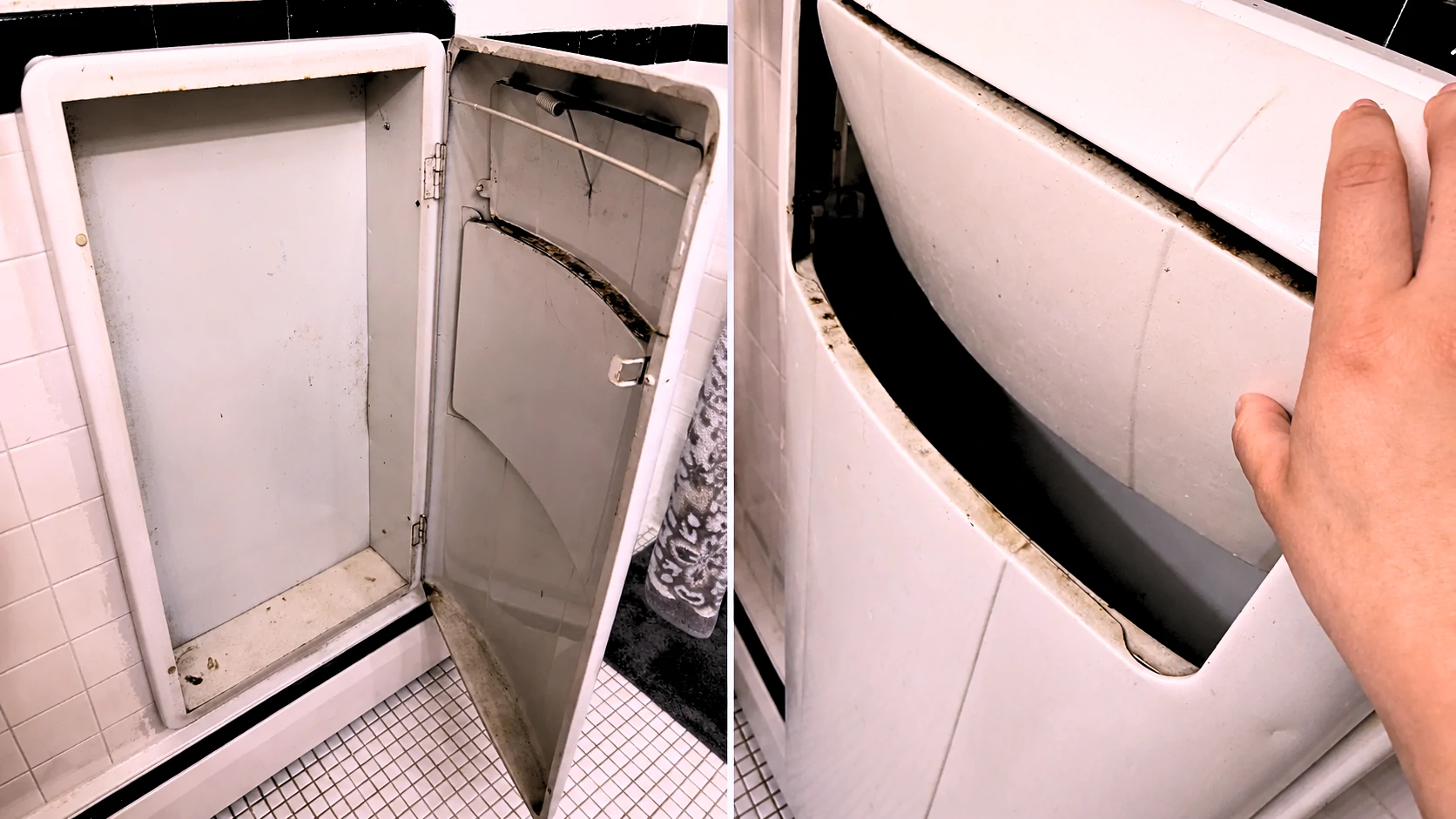
What Is That Recessed Metal Cabinet in an Old Apartment Bathroom? (Vintage Laundry Hamper Explained)
If you've just moved into an older building and you're standing in the bathroom staring at a small metal cabinet built into the wall — hinged door, odd slot near the top, and no obvious label — you're not imagining things. And you're definitely not the first person to spend fifteen minutes searching online with nothing to show for it. That unit is a recessed laundry hamper: a factory-installed, wall-mounted storage unit built directly into the bathroom wall cavity of older apartment buildings. They were considered a premium convenience feature when new. The narrow slot at the top is a drop-slot for feeding laundry in one-handed without opening the main door. Some versions connect to a building-wide laundry chute running to the basement. Most are self-contained cavities. Popular from roughly the 1920s through the early 1960s, these fixtures are concentrated in urban apartment buildings across New York, Chicago, Boston, Philadelphia, and San Francisco. If your building predates 1965 and you're in a multi-unit structure, this is almost certainly what you're looking at.Quick TakeawaysCommon in pre-war and mid-century American urban apartment buildings The top slot is a laundry drop-slot — not a vent, not a broken part Some units connect to a building-wide laundry chute; many are standalone sealed cavities Not a health concern if dry and intact, but worth a quick inspection for rust, mold, and paint condition Renters should not permanently modify or remove the unit without landlord permission Can be repurposed as recessed bathroom storage if the unit is structurally sound Restoration is possible with rust converter, metal-safe primer, and rust-inhibiting topcoatWhat the Slot Opening at the Top Actually DoesThat narrow slot is one of the more overlooked design decisions in mid-century residential construction — and also the most common source of confusion for anyone encountering these units for the first time. It's not a vent. It's not broken. It's a laundry drop-slot, and it served a specific ergonomic purpose. Rather than opening the full-size door every time a resident tossed in a shirt or a towel, they could push laundry through the slot one-handed without disturbing anything else in the bathroom. It reduced hinge wear, kept the bathroom tidier, and made a small daily routine slightly faster. Think of it as the mid-century version of a convenience feature that nobody noticed because it worked. The opening is intentionally narrow — wide enough for clothing, not wide enough for anything to easily fall back out, and sized to limit odor escape from the cavity below. In chute-connected versions, the slot also added a second separation layer between residents and the open shaft running below. If the slot on your unit looks painted shut or like it's never been touched, that's common. Many of these fixtures sat completely unused for decades before the current tenant discovered them.Is Yours a Standalone Hamper or a Laundry Chute?This distinction matters more than it might seem. A standalone unit is a sealed metal cavity — essentially a built-in laundry bin with a solid floor. A chute-connected unit opens into a vertical shaft that passes through multiple floors of the building down to a central collection room, typically in the basement. The two variants have meaningfully different maintenance implications, safety considerations, and removal complexity. Getting this wrong before you start poking around can create problems that were entirely avoidable. Here's how to tell the difference right now: Grab a flashlight, open the main access door (or shine the light through the drop slot if the door is stiff), and look at the bottom of the unit.What You See What It MeansA solid metal floor pan at the bottom of the cavity Standalone unit — the cavity is self-containedAn open shaft descending below floor level Chute-connected — part of a building laundry systemIf it's chute-connected, avoid putting anything other than laundry into it. And don't seal it permanently without first confirming with your building manager. Active chutes are shared building infrastructure — building staff may need access, and other residents may still be using the system from floors above or below.When Were These Built and Why Did Buildings Have Them?Recessed laundry hampers began appearing in American residential construction in the early twentieth century and reached their peak installation during the post-war apartment building boom of the 1940s and 1950s. The fixture made particular sense in dense urban apartment buildings, where in-unit laundry wasn't possible and residents needed a practical way to hold dirty clothes between trips to a shared laundry room or building chute. Installing the hamper directly into the bathroom wall cavity kept it out of the living space entirely, eliminated the need for freestanding laundry bins, and — critically — served as a marketing feature. Buildings with recessed hampers were positioned as offering modern conveniences that lower-budget construction didn't bother with. Cities with large surviving pre-war and mid-century residential stock are the most common places to find them: New York, Chicago, Boston, Philadelphia, San Francisco, and Baltimore all have notable concentrations. They appeared in row houses and duplexes of the same period too, though less frequently than in purpose-built multi-unit buildings. Manufacturing varied by building grade. Standard units were galvanized steel or chrome-plated steel. Higher-end buildings sometimes featured interiors with porcelain enamel coatings. Construction was typically robust — these weren't afterthoughts. They were framed directly into the wall stud cavity with metal flanges, wood blocking set into plaster-and-lathe walls, and hardware that included a piano hinge on the main door and a magnetic or spring latch. The units were designed to last the life of the building, and most of the surviving ones prove that point.Why You Almost Never See These in Newer Buildings Several things converged between the 1960s and 1980s that effectively ended the recessed hamper's run in new residential construction. The biggest factor was in-unit washer/dryer hookups becoming a standard apartment amenity. Once residents could do laundry inside their own unit, centralized chute systems and dedicated bathroom hamper niches stopped being conveniences and started being architectural complications. Fire code changes accelerated the shift. Laundry chute shafts running vertically through multiple floors create a direct path for fire and smoke to travel between levels. Building codes tightened requirements around chute shaft construction, fire-damper installation, and the materials used for access doors. Compliance became more expensive and technically demanding, making the systems harder to justify in new construction. Construction economics also shifted dramatically. The labor and material cost of custom-fabricating a recessed metal unit and properly framing it into each individual bathroom wall didn't survive the value-engineering that characterized residential construction from the 1970s onward. A plastic laundry basket costs nothing and requires nothing from the contractor. The result is that anyone under about 50 has likely never seen one of these fixtures before moving into an older building — which explains exactly why they're so disorienting the first time.Is It Safe to Use or Leave In Place? For most people, the honest answer is yes — with a brief inspection first. A dry, structurally sound unit in a post-1980 building is not a meaningful health concern under normal circumstances. In older buildings, a few specific things are worth checking before you use the unit or start handling its surfaces aggressively. Interior rust: Look for flaking or pitting rather than just surface discoloration. Surface oxidation is cosmetic and manageable. Actively flaking rust — where scale is loose and separating from the metal — suggests the floor pan or walls of the cavity may have deteriorated significantly, particularly at the base where moisture accumulates over time. Moisture and mold: Open the door and let the unit air out before doing anything else. A musty odor means the cavity trapped moisture at some point, possibly for years. Surface mold on the metal interior is treatable, but you need to address it, not seal it back in. Look carefully at the floor pan and the back wall of the cavity.⚠️ Warning: Pre-1980 Buildings — Read Before Touching the WallAsbestos: The insulation, fire-stop material, or joint compound surrounding the unit in a pre-1980 building wall cavity may contain asbestos. Do not cut, sand, drill, or otherwise disturb the wall surround without professional asbestos testing first. This applies to any demolition work around the unit, not just full removal.Lead paint: In pre-1978 buildings, painted metal surfaces — including the hamper door and interior — may contain lead paint. Wear gloves when handling painted surfaces. Do not sand painted surfaces without appropriate respiratory protection and containment measures.For renters specifically: using the unit as-is for general storage is generally fine once you've confirmed it's dry, structurally intact, and free of visible flaking rust or mold. You don't have to do anything to it to be safe in normal use — but knowing what you're working with matters before you start pulling on trim pieces or scrubbing aggressively.How to Clean and Deodorize a Vintage Recessed HamperDecades of use — or decades of sitting unused — leave behind a residue that a quick wipe down won't fix. Here's a proper sequence that addresses the problem without introducing new ones.Open the unit and let it air out for at least 24 hours before doing anything else. Don't rush this step. Sealed cavities hold odors that need time to dissipate naturally first. Vacuum loose debris from the interior — accumulated lint, dust, and anything sitting at the bottom of the cavity. A crevice attachment works cleanly along the floor pan and seams. Wipe all interior surfaces with a cloth dampened with a mild all-purpose cleaner diluted in warm water. Don't saturate the metal. The goal here is cleaning, not introducing more moisture into a cavity that you're trying to dry out. Treat surface rust spots with a rust converter spray or gel before they spread. Apply only to affected areas. Don't use acidic rust removers across the full interior unless you plan to repaint — they leave the surface in a condition that requires priming regardless. Deodorize the cavity by placing an open box of baking soda inside for 48 hours with the door slightly ajar. A cloth wiped with undiluted white vinegar along the interior surfaces also neutralizes organic odors effectively before the baking soda treatment. Dry completely before closing. Leave the door propped open for another 24 hours after cleaning. Sealing moisture back inside is how a clean unit becomes a mold problem three months later.One thing to avoid: bleach directly on rusted or bare metal surfaces. It accelerates oxidation rather than treating it.How to Restore a Rusted or Chipped Recessed Hamper Surface corrosion on these units is expected, not alarming. The original factory paint or enamel wasn't intended to last 80 years without maintenance. Most units are fully restorable with the right materials and a patient afternoon. What you'll need:Wire brush or fine steel wool — for removing loose rust scale before treatment Rust converter gel or spray — neutralizes existing rust chemically, converts it to a stable compound Metal-safe primer — standard wall primer will not adhere to bare metal reliably; this is the step most DIY restores skip and then wonder why the paint peels Rust-inhibiting spray paint in your preferred finish (satin or semi-gloss reads cleanest on interior metal surfaces) Painter's tape and drop cloth for masking the surrounding wall trim and tile 220-grit sandpaper for light scuff-sanding between coatsRestoration steps:Wire-brush all visibly rusted areas to remove loose scale and flaking paint. Applying converter over loose material delays the problem rather than solving it. Apply rust converter to affected surfaces per the product instructions. Full cure time matters — typically 24 hours. Don't shortcut it. Scuff-sand lightly with 220-grit to give the primer a mechanical surface to grip. Wipe off dust with a tack cloth before priming. Apply metal-safe primer in two thin coats, allowing full dry time between coats. Two thin coats outperform one thick coat in adhesion and long-term durability. Apply rust-inhibiting topcoat in 2–3 light passes from 10–12 inches away. Light passes prevent runs, which are difficult to sand out inside a cavity. Allow 48–72 hours cure time before loading the unit with anything.A mistake that shows up repeatedly in older rental properties: painting directly over rust with standard interior wall paint, no surface prep. It looks acceptable for a few months, then blisters and peels. Doing it properly once is far less work than doing it wrong twice.How to Re purpose It If You're a Renter (No Permanent Modifications)The renovations aren't yours to make. But the cavity is legitimate storage real estate, and with a small amount of organization it becomes genuinely useful rather than just strange. Most recessed laundry hampers have interior dimensions in the range of 12–16 inches wide, 18–24 inches tall, and 8–12 inches deep. That's enough space to matter without requiring any tools or modifications. Practical no-modification uses:Rolled towels. Towels rolled rather than folded fit cleanly in the cavity, look intentional, and are easy to grab one-handed. This is basically what the unit was ergonomically designed for, just with different contents. Cleaning supply niche. Toilet bowl cleaner, a spare brush, surface spray, a bottle of drain cleaner — the items that normally crowd the floor under the sink. Toiletry overflow. Extra toilet paper rolls, backup soap, travel-size products, hair supplies that don't fit in the medicine cabinet. Removable shelf liner insert. A cut-to-fit piece of shelf liner on the floor of the cavity stabilizes items and makes wipe-down much easier. Completely removable and leaves zero trace.One thing to avoid: sealing a chute-connected unit with anything permanent. If the chute is part of the building's infrastructure and maintenance staff need access, you do not want to be the tenant who blocked it.Should Landlords Keep, Restore, or Remove These Units? This is a more nuanced question than it looks from the outside. In period-appropriate buildings — pre-war brownstones, classic-six apartments, 1940s courtyard buildings — a functional, well-maintained recessed hamper is a genuine character detail. Some tenants actively seek out buildings with intact original architectural features, and a restored unit in a period bathroom reads as considered preservation rather than neglect. In that context, removing it to patch a rectangular hole in a tile wall doesn't necessarily improve anything. The case for removal strengthens considerably when the unit is structurally compromised, the surrounding wall shows signs of water damage, or the bathroom is being fully renovated anyway. At that point, the labor is already being paid for, and patching the cavity to install a modern recessed niche or additional storage makes more practical sense than restoring a fixture the renovation will make visually inconsistent. A practical decision framework:Clean and keep: Unit is functional, interior is dry, metal surfaces are intact or easily treated. Building is period-appropriate. No safety concerns. Restore cosmetically: Surface corrosion is present but the metal structure is sound. Bathroom is not being renovated. Cost-to-benefit ratio favors restoration over removal. Remove and patch: Unit is structurally compromised, connected to a decommissioned chute, showing moisture intrusion into the wall cavity, or the bathroom is being fully gutted regardless.Approach Approximate Cost (U.S.) Best ForClean and leave in place $0–$50 DIY Rentals, period buildings, functional unitsCosmetic restoration (rust treatment + repaint) $50–$150 DIY / $200–$400 contractor Structurally sound units with surface corrosionFull removal + wall patch $300–$900 contractor Gut renovations, compromised units, safety concernsAsbestos testing before removal $200–$500 Pre-1980 construction — treat this as non-negotiableCosts are estimated ranges for the U.S. market. Regional labor rates vary significantly. Get multiple quotes before committing to contractor work, particularly in high-cost urban markets where these units are most common.When to Call a Contractor Instead of DIYing ItCleaning and cosmetic restoration are well within DIY range for most people. The line shifts quickly once the wall itself is involved. Get a licensed contractor involved when:The surrounding wall plaster shows visible cracks, bulging, or water staining around the unit — these point to moisture that has already reached the wall cavity, not just the metal surface The unit appears to connect to a multi-floor laundry chute that may still be active shared building infrastructure You're in a pre-1980 building and any wall demolition is involved — asbestos testing before demo is a professional obligation, not an optional precaution There is active mold in the wall cavity itself, not just on the metal surfaces accessible from the front The floor pan is corroded through and there's evidence moisture has reached the subfloor or structural framing below You're a landlord planning a full bathroom renovation that requires the wall to be patched, tiled, and finished to match existing surfaces — that's a finish carpentry and tile work problem, not a hamper removal problemRemoving a recessed unit looks deceptively simple from the bathroom side. Inside the wall, the unit is typically anchored with metal flanges screwed into studs and surrounded by wood blocking that's been in place since the original construction. Prying it out without understanding what's behind it is how plaster cracks, surrounding tiles break, and wall cavities get opened without appropriate testing or containment.Frequently Asked Questions What is the small slot opening at the top of a built-in bathroom hamper for? The slot is a laundry drop-slot, designed so residents could push clothing into the hamper one-handed without opening the main access door. It reduced hinge wear and kept the routine faster and tidier. It is a designed feature, not damage or a broken hinge.How do I know if my recessed hamper connects to a laundry chute or is just a wall cavity? Open the access door and shine a flashlight into the unit. A visible solid metal floor pan at the bottom means it's a standalone cavity. An open shaft descending below floor level means it's connected to a building laundry chute running to the basement or a central collection area.Is it safe to use a vintage metal laundry hamper in an old apartment? Generally yes, after a basic inspection. Check for flaking rust, interior mold, and moisture inside the cavity. If the unit is dry and structurally intact, it poses no meaningful health risk in normal use. In pre-1978 buildings, handle painted surfaces carefully due to potential lead paint content.What era of apartment buildings typically had recessed metal laundry hampers? These fixtures were most common in American apartment buildings constructed between roughly 1920 and 1965. The highest concentration is in urban residential stock in the Northeast and Midwest — New York, Chicago, Boston, and Philadelphia in particular.Can I remove a built-in laundry hamper if I'm renting? Not without explicit written permission from your landlord. The unit is a fixed part of the building. Unauthorized removal or permanent modification typically constitutes a lease violation and can result in liability for the full cost of restoring the wall to its original condition.How do I clean and deodorize a recessed metal hamper that hasn't been used in decades? Air it out for at least 24 hours first. Then vacuum loose debris, wipe interior surfaces with diluted mild cleaner, treat any rust spots with rust converter, and leave an open baking soda box inside for 48 hours with the door slightly ajar. Keep the door propped open during drying. Avoid bleach on bare or rusted metal.How do I treat rust on a vintage metal laundry hamper? Wire-brush loose scale first, apply rust converter to affected areas and allow full cure time, then prime with metal-safe primer and finish with rust-inhibiting spray paint in thin coats. The most common failure in DIY touch-ups is painting directly over rust without any surface preparation — it looks fine briefly and fails within a year.Why did builders stop installing recessed laundry hampers in new construction? In-unit washer/dryer hookups became standard, fire codes tightened significantly around laundry chute shaft construction requirements, and construction economics eliminated fixtures that required custom fabrication and precise wall framing. All three factors converged in the 1970s and early 1980s.Does a vintage built-in hamper add or reduce property value in a bathroom renovation? Context determines this entirely. In a period-appropriate building with a well-maintained unit, it's a character detail that appeals to the right buyer or tenant. In a fully modernized bathroom, it reads as an inconsistency. Condition and surrounding aesthetic matter far more than the fixture's inherent presence or absence.Is there asbestos risk when removing a recessed metal hamper from an older wall? Potentially yes. Insulation, fire-stop material, or joint compound in the surrounding wall cavity of a pre-1980 building may contain asbestos. Professional testing before any wall demolition in buildings of that era is the responsible step — this applies to the wall surround, not just the metal unit itself.What can I use a recessed hamper cavity for besides laundry storage? Rolled towels, cleaning supplies, toiletry overflow, or a removable shelf liner insert for bathroom sundries all work well without requiring any modification. The cavity offers genuine utility with a small amount of organization.How much does it cost to professionally remove and patch a recessed wall hamper? Typical U.S. contractor range is $300–$900 for removal and wall patching, depending on wall material (plaster vs. drywall), tile involvement, and whether asbestos testing is required first. In high-cost urban markets where these units are most common, the upper end of that range or beyond is realistic.Are there modern replacements that fit the same wall opening as vintage units? No direct off-the-shelf equivalent exists. Custom metal fabrication can replicate the form, but it's rarely cost-effective. Most renovation projects fill the opening with a recessed wall niche or a standard recessed medicine cabinet if the dimensions allow.What materials were vintage recessed laundry hampers made from? Most were galvanized steel or chrome-plated steel. Higher-end buildings sometimes featured porcelain enamel interior coatings. The frame and surround were typically anchored into the wall with wood blocking and metal flanges. Hardware consisted of a piano hinge on the main door and a magnetic or spring latch.Which cities and building types are most likely to have recessed bathroom hampers? Urban apartment buildings in New York, Chicago, Boston, Philadelphia, San Francisco, and Baltimore are the most common sources. Row houses, duplexes, and courtyard apartment buildings from the 1920–1965 period are also likely candidates. Purpose-built mid-range and luxury apartment construction of the era was more likely to include them than budget housing stock of the same period. Related Reading:What Is That Strange Wall Outlet Near the Floor? You Probably Have a Central Vacuum System Do Smart Homes Actually Make Life Better or Just More Complicated? How to Get Curry Smell Out of a Rental House

How I Planned My Dream Home — and Actually Saved Money Doing It
The decisions that matter most happen long before you pick a paint color.Quick Answer: Planning a dream home affordably starts with anchoring every design decision to a fixed budget — not the other way around. Build in a 10–20% contingency before design begins, prioritize structural and energy performance over cosmetic finishes, and understand which construction phases allow meaningful DIY involvement without triggering code compliance problems or voiding warranties.Most planning guides tell you to start with inspiration. Collect images, find your style, dream big. That advice is genuinely terrible if you care about finishing the project without financial disaster. The homes that go over budget rarely do so because of bad luck. They fail because decisions were made in the wrong order: design before budget, inspiration before reality, want before need. Understanding that sequencing — and reversing it — is where the real savings begin. Here's what actually matters, organized the way a contractor, an architect, and a financially burned homeowner would explain it if they were being completely honest.1. Start With a Budget, Not a Blueprint Before you open a design app or call an architect, you need one number. The maximum you can spend — including everything: design fees, permits, construction, site work, landscaping, and a contingency reserve. Not a rough range. A hard ceiling. This sounds obvious. It almost never happens in practice. The typical sequence runs like this: the homeowner designs, falls in love with the design, then discovers what it costs. At that point, they're either cutting the design apart in ways they'll regret for years, or committing to a budget they can't actually sustain. Neither outcome is good. What professional project managers learn early is that design decisions lock in cost — not immediately, not visibly, but by the time you've settled on a floor plan, a roof profile, and a material palette, roughly 70% of your project cost is already determined. Whether you know it or not.What Does It Actually Cost to Build Right Now? Construction costs vary significantly by region, labor market, site conditions, and specification level. The ranges below reflect 2024–2025 data for standard single-family homes with mid-range finishes. Use them as starting points, not guarantees.Country Budget Tier Mid-Range PremiumUnited States $150–$200/sq ft $200–$350/sq ft $350–$600+/sq ftUnited Kingdom £1,500–£2,000/sq m £2,000–£3,500/sq m £3,500–£6,000+/sq mCanada CAD $175–$250/sq ft CAD $250–$400/sq ft CAD $400–$700+/sq ftAustralia AUD $1,500–$2,200/sq m AUD $2,200–$3,800/sq m AUD $3,800–$6,500+/sq mThese figures cover construction only. Site preparation, permits, utility connections, professional fees, and landscaping typically add 15–30% to the base construction number. Something most guides skip: renovation costs don't scale the same way as new construction. Gut renovations in existing homes consistently run 20–40% more per square foot than comparable new builds — because of demolition, the unknowns hidden behind walls, and the inefficiency of working inside an occupied structure. If you're choosing between a major renovation and a new build, that cost relationship is worth understanding before you commit either way.2. The Design Decisions That Quietly Control Your BudgetHere's something most homeowners don't encounter until it's too late to change: the most expensive decisions in your entire build are made during the early design phase — often before you've spoken to a single contractor. Architectural geometry drives cost in ways that aren't intuitive. A simple rectangle with a gabled roof is significantly cheaper to frame, insulate, and roof than a design with multiple wings, bump-outs, and a complex hip roof. Not primarily because of material cost — because of labor. Every outside corner requires more cutting, more detailing, more time. Every roofline transition is an opportunity for water intrusion, and every water intrusion risk needs additional flashing, underlayment, and skilled labor to seal correctly. These aren't aesthetic trade-offs. They're cost multipliers built into the shape of the house before a nail is driven.Design Choice Cost ImpactRoofline complexity (simple gable vs. complex hip with dormers) 15–25% increase in roofing and framing labor; more flashing points = elevated long-term water riskNumber of exterior corners $300–$800 per additional outside corner across framing, sheathing, trim, and flashing tradesCeiling height above 9 feet Increases wall framing lumber, drywall quantities, HVAC duct runs, and scaffolding requirementsTwo-story vs. single-story footprint Two-story typically 10–15% cheaper per sq ft — smaller roof and foundation relative to living areaNumber of plumbing wet walls Each additional plumbing cluster (kitchen, bath, laundry) adds rough-in cost; grouping plumbing saves meaningfullyGarage: attached vs. detached Attached shares framing and roofline costs; detached requires its own foundation, walls, and roofFoundation type Full basement adds $30,000–$80,000+ but doubles usable sq footage without increasing the above-grade footprintThe practical implication: if you're working with an architect, have the cost conversation at the schematic design stage — before design development begins. Changes made to a rough sketch cost almost nothing. Changes made to a fully drawn set of construction documents cost significantly more, because drawings must be revised and contractors must re-estimate. That cost relationship is rarely explained upfront. It should be.3. What the Initial Quote Never IncludesHere's the uncomfortable reality about builder quotes: most of them are not complete project costs. They are construction costs for the structure as defined in the drawings. That is a narrower number than it sounds. The costs below are routinely absent from initial estimates — and disclosed, if at all, only after contracts are signed. Hidden Costs Checklist Permits and InspectionsBuilding permit fees ($500–$5,000+ depending on project value and jurisdiction) Engineering review fees where required Separate trade permits: electrical, plumbing, mechanical (often $200–$800 each) Inspection and reinspection chargesSite Preparation and EarthworkLand clearing and tree removal ($1,500–$10,000+ depending on site) Grading and excavation ($3,000–$20,000+ for challenging sites) Rock excavation — impossible to estimate accurately until work begins; can add $10,000–$50,000+ on rocky sites Soil testing and geotechnical engineering where required Erosion control measures during constructionUtility ConnectionsWater and sewer tap fees ($2,000–$15,000+ depending on municipality and distance to main) Electrical service from pole to meter base ($2,000–$8,000+) Gas service connection ($500–$3,000+) Septic system for rural builds ($8,000–$25,000+) Well drilling and pump installation ($5,000–$20,000+ depending on depth and geology)Temporary Costs During BuildTemporary housing if vacating your current home ($12,000–$36,000+ for a 12-month build) Temporary power connection ($500–$2,000)Finishes and Items Frequently ExcludedAppliances (often entirely outside builder contracts; $5,000–$30,000+) Window treatments and blinds ($2,000–$15,000+) Landscaping and irrigation ($5,000–$50,000+ depending on scope) Driveway and hardscape ($3,000–$30,000+) Fencing, exterior lighting, mailbox, address signage⚠ Before comparing quotes: Ask every contractor for a written list of project exclusions. Two quotes with identical totals can represent entirely different scopes of work. The exclusions list is where the real comparison happens.4. Why a 15% Contingency Isn't Optional Almost every planning guide mentions contingency budgets. Very few explain what contingencies actually absorb — or how to calibrate the percentage to your specific project type. A contingency budget is not a buffer for scope additions you decide to make mid-build. It is a buffer for the unexpected: hidden site conditions, material price increases between bidding and ordering, subcontractor errors, weather delays that extend temporary accommodation costs, and inspection failures requiring rework. The 15% figure commonly cited is a reasonable baseline for a standard new build. It's too low for renovation projects and often too high for simple cosmetic remodels. Here's how to calibrate it.Project Type Recommended Contingency RationaleNew custom build (standard site) 10–15% Fewer unknowns than renovation; risk concentrates in site conditions and material pricingNew custom build (challenging site or complex design) 15–20% Slope, rock, flood zone, or tight access amplifies cost volatility significantlyGut renovation (older home, major systems) 15–20% Hidden conditions behind walls: old wiring, plumbing deficiencies, structural issues, asbestos, moisture damageStructural addition to existing home 18–25% Interface with existing structure creates unpredictable conditions; code upgrade requirements often triggeredCosmetic remodel (no structural or systems work) 5–10% Fewer unknowns, but material delays and subcontractor scheduling gaps still occurOne thing that gets consistently overlooked: keep the contingency in a separate account, completely isolated from your project budget. Mentally combining it with your build budget makes it too easy to draw it down for scope additions — which defeats its purpose entirely. And if you don't spend it? That's not a sign you over-budgeted. That's the correct outcome.5. Choosing the Right Build Model — Contractor, Design-Build, or Owner-Builder The way you structure your project delivery affects cost, schedule, stress, and risk more than almost any other single decision. There is no universally best model. There's the one that matches your situation, your time, and your realistic skill level.Build Model Cost Control Timeline Hands-On Involvement Risk Level Best ForGeneral Contractor (GC) Moderate — GC markup applies (typically 15–25%) GC manages schedule; limited owner leverage Low to moderate Moderate — depends heavily on GC quality Most homeowners; first-time buildersDesign-Build Lower — single contract covers design and construction; fewer scope gaps Often faster than separate design + bid + build Low Lower — integrated accountability for design and construction Homeowners who want simplicity and fixed pricingConstruction Manager (CM) Higher — you pay trades directly; CM charges management fee You control pace but carry scheduling coordination High — active decision-making required Higher — you absorb trade performance risk Experienced homeowners with time and construction familiarityOwner-Builder Highest potential savings (20–40% labor cost reduction possible) Typically longer — you coordinate all subcontractors Very high — effectively a second full-time job Highest — full legal and financial responsibility Experienced builders with construction knowledge, time, and legal eligibilityOwner-Builder: What the Model Actually Requires The owner-builder path attracts significant interest and deserves an honest explanation — because the reality differs substantially by country. Australia: Owner-builder permits are regulated under state law. In most states, you can only act as owner-builder once every 5–7 years, for your primary residence only. Under NSW and Queensland law, selling within 6–7 years of completion requires disclosure of owner-builder status. The absence of builder's warranty insurance affects resale — some buyer financing products have complications with uninsured owner-built homes. Understand this before selecting the path, not after. United States: Requirements vary significantly by state. Some impose no restrictions; others require the home to be your primary residence or limit resale timing. Check your state's contractor licensing board before assuming eligibility. United Kingdom: Self-build mortgages release funds in stages rather than upfront, which shapes your cash flow and contractor payment capacity throughout the build. The VAT Reclaim Scheme (HMRC Notice 431) allows claiming back VAT on qualifying materials — potentially a meaningful saving — but it requires consistent documentation throughout the project, not just at completion.6. Why the Lowest Bid Usually Costs the Most in the EndThe number at the bottom of a contractor's quote tells you very little. It doesn't tell you what's included, what's excluded, what the quality assumptions are, or whether the contractor priced the same job you asked for. Most homeowners compare total prices. Professionals compare line items. How to Level Contractor Bids — Step by Step Step 1: Verify scope alignment Before comparing any numbers, confirm every contractor is pricing the same plans, specification documents, and finish schedules. If your drawings aren't complete when you go to bid, every quote will contain different assumptions — and those differences will surface after you've signed. Step 2: Identify and compare allowance items Ask each contractor to list every allowance item in the bid — the placeholder dollar amounts for finishes, fixtures, and products not yet specified. Compare allowance amounts across bids. A $12/sq ft flooring allowance in one bid and a $22/sq ft allowance in another represent thousands of dollars in expected out-of-pocket spending above the base contract. Neither number is wrong; they reflect different assumptions about what you'll select. Step 3: Review the exclusions list in writing Every professional bid should include a written exclusions list. If a contractor doesn't provide one, request it in writing before proceeding. Common exclusions: landscaping, appliances, window treatments, permit fees, utility connections, dumpster rental, temporary utilities. A bid that excludes these items is not meaningfully comparable to one that includes them. Step 4: Examine the payment schedule Lump-sum upfront payment requests from a contractor are a serious red flag. Legitimate payment schedules are milestone-based or draw-based, aligned with defined construction completion stages. Front-loaded payment schedules transfer financial risk to you before work is performed. Step 5: Confirm lien waiver provisions Your contract should require lien waivers from the general contractor and major subcontractors upon each payment. Without lien waivers, a contractor who fails to pay their subcontractors can expose you to property liens even after you've paid the GC in full. This is a documented, recurring problem in residential construction. It has an easy contractual solution.⚠ Red flags in contractor proposals: No written exclusions list. Unusually low allowance amounts. Vague or front-loaded payment schedule. Resistance to contract modifications. No comparable project references. Inability to provide current proof of insurance and licensing on request.7. Value Engineering — Where Cutting Costs Is Safe and Where It Isn't Value engineering is a construction term that gets misapplied constantly. It does not mean cutting corners. It means analyzing the cost-to-value relationship of each component and identifying where reduced spending does not compromise performance, safety, or durability. The distinction matters enormously, because some cuts are genuinely safe — and some create problems that cost far more to remediate than you saved.Category Spend More Here Safe to Save HereFoundation Waterproofing membrane and drainage board Ornamental landscaping adjacent to foundation (do later)Structural framing Engineered lumber (LVL beams, I-joists) where spans require it Lumber grade upgrades beyond what engineering requiresRoofing Underlayment quality; ice/water shield coverage at eaves and valleys Roof color and profile (within manufacturer specs)Windows and exterior doors U-factor and SHGC performance ratings (climate-appropriate selection) Brand name — performance specs matter more than the labelHVAC system Properly sized, high-efficiency equipment and duct design Thermostat brand (quality third-party options perform well)Insulation Achieving at or above code minimum in walls and attic Insulation brand within the same product categoryAir sealing Continuous air barrier; spray foam at rim joists and penetrations Cannot be safely reduced; foundational to energy performanceExterior cladding Proper flashing at all penetrations, windows, and transitions Material choice between fiber cement and quality vinyl at comparable thicknessInterior finishes — All flooring types, cabinet door styles, hardware finishes, paint brandsFixtures and fittings — All plumbing fixtures, light fixtures, and interior hardware are safely value-engineeredLandscaping Grading and drainage away from foundation (functional requirement) Ornamental plantings, retaining walls beyond functional need, mature specimen treesOne clarification worth making explicitly: value engineering structural systems is not the same category of decision as choosing a less expensive tile. Skipping or downgrading foundation waterproofing to save $3,000 is fundamentally different from choosing a builder-grade toilet over a premium model. The first creates a long-term moisture intrusion problem with no simple fix. The second is a fixture you can replace on a Saturday afternoon. The test: if the cut is visible, replaceable, and cosmetic — it's probably safe. If it involves water, structural performance, or thermal control — it probably isn't.8. What You Can Realistically Do Yourself — and What You Shouldn't TouchSweat equity has genuine value. The question is where it applies safely, and where it creates problems that end up costing significantly more to fix than you saved. A realistic assessment requires understanding three things: code compliance requirements in your jurisdiction, warranty implications for the systems involved, and the specific regulations around licensed work where you're building.Task DIY-Appropriate? NotesInterior and exterior painting ✅ Yes One of the highest-value DIY contributions; large labor cost, no code implicationsLandscaping and basic hardscape ✅ Yes Grading near the foundation is the exception — get professional oversight on drainageCabinetry installation ✅ With skill Standard flat-pack and box cabinets are DIY-friendly; custom built-ins require moreFlooring installation ✅ With skill LVP and laminate are very DIY-friendly; tile is harder; solid hardwood is skill-dependentFixture installation (toilets, faucets, vanities) ✅ Yes Basic plumbing fixture swaps are permissible in most jurisdictions without a licenseLight fixture replacement (no new circuits) ✅ Yes Like-for-like fixture replacement is generally permissible; new circuits are notBatt insulation in accessible areas ✅ With caution Attic batt insulation is often DIY-accessible; spray foam requires a licensed installerRough-in plumbing ❌ No Licensed plumber required in all Australian states, most US jurisdictions, and UKElectrical rough-in and new circuit installation ❌ No Licensed electrician required in Australia and UK; US varies significantly by stateStructural framing ❌ No Engineering sign-off required; structural errors are not correctable post-build at reasonable costConcrete foundation work ❌ No No realistic DIY application; licensed, insured subcontractor requiredNew construction roofing ❌ No Fall hazard, warranty implications, and framing inspection requirements make this professional-onlyGas line installation ❌ No Licensed gasfitter required in all jurisdictions; zero tolerance for unlicensed work anywhereA jurisdiction note that actually matters: In many US states, a homeowner can perform electrical and plumbing work in their own primary residence without a contractor's license — but the work must still be permitted and pass inspection. In Australia, unlicensed electrical work is illegal regardless of owner status. In the UK, certain electrical work falls under Part P of Building Regulations and must be completed by a registered electrician or formally notified to the local authority. Determine your jurisdiction's rules first. Then decide what you'll take on.9. The Upgrades Worth Paying More for Upfront Energy-efficient upgrades are frequently presented as "a good investment" without quantifying what that means. What homeowners actually need is a financial framework: what does it cost more upfront, what does it save per year, and how many years until the investment pays back. The ranges below draw from US Department of Energy published research, UK Energy Saving Trust guidance, and Australian government energy agency data. Climate affects payback meaningfully — colder climates generally see shorter payback periods for heating-related upgrades.Upgrade Approximate Cost Premium Estimated Annual Savings Payback Range Climate/Region NoteInsulation above code minimum (walls and attic) $2,000–$8,000 $300–$800/yr 4–12 years Shorter payback in cold climates; worthwhile in all climates for comfort and moisture controlAir-source heat pump vs. gas furnace $2,000–$6,000 $400–$1,200/yr 3–10 years Most effective in moderate climates; cold-climate models now viable to −15°C/5°FHeat pump water heater vs. tank water heater $500–$1,200 $300–$600/yr 2–5 years One of the best payback ratios available; high value across all climatesDouble-glazed vs. single-glazed windows $3,000–$10,000 $200–$600/yr 8–20 years Greater benefit in cold climates; reduces condensation and improves comfort in mild zonesTriple-glazed windows over double-glazed $4,000–$12,000 $100–$300/yr 15–30 years Best justified in very cold climates (northern US, Canada, northern UK, Tasmania); marginal in mild zonesSolar-ready electrical design (conduit runs, panel sizing, roof orientation) $500–$1,500 Enables future savings N/A — reduces future solar install cost by $5,000–$15,000 Worth doing in virtually every new build; minimal cost at construction, significant savings when solar is addedERV/HRV balanced mechanical ventilation $2,500–$6,000 Indoor air quality benefit + reduced HVAC load 10–20 years (energy basis) Essential in tight, well-sealed homes; required in some climate zones with spray foam constructionThe practical framing most homeowners find useful: The question isn't whether these upgrades pay back. Most do. The question is whether you'd rather absorb the premium at construction — where it's rolled into your build loan and installed at minimum disruption — or retrofit it later, when it requires invasive work, finished surface disturbance, and higher per-unit installation costs. Insulation added during framing costs a fraction of what it costs after drywall is hung. That relationship is true across almost every energy upgrade on this list. The build phase is the cheapest possible time to do it.10. Permits and Approvals — What Skipping Steps Actually Costs The instinct to avoid permits is understandable. They cost money, they take time, and they feel like bureaucracy standing between you and your build. But the financial and legal consequences of unpermitted work are substantially worse than the inconvenience of compliance. Here's what actually happens when unpermitted work is discovered: at best, you pay for retroactive permits, inspections, and any remediation work required to bring the work to code. At worst, unpermitted structural or systems work must be exposed, verified, brought to code, and re-covered — at your cost. In some jurisdictions, unpermitted work that can't be remediated must be demolished. At resale, unpermitted work must be disclosed in most jurisdictions and can materially affect property value, insurability, and buyer financing eligibility. Regional Permit OverviewRegion Process Typical Approval Timeline Common Delay CausesUnited States Building permit from local municipality; separate trade permits (electrical, plumbing, mechanical) typically required 2–12 weeks depending on jurisdiction and project complexity Incomplete drawings, plan check correction cycles, backlogged municipal review queuesUnited Kingdom Full Planning Permission for new builds, extensions, and structural changes; Building Regulations approval is separate Planning: 8–13 weeks for householder applications; Building Regs: 5–10 working days (initial notice route) Neighbor objections for planning applications; incomplete structural or thermal details for Building RegsCanada Building permit from municipal authority; province-specific requirements for electrical and mechanical work 4–16 weeks depending on municipality and current office workload Plan check comments, missing engineer schedules, busy permit offices in metro marketsAustralia Development Application (DA) for new builds and major alterations; Construction Certificate (CC) separate; staged inspections required DA: 6–12 weeks typical; longer with objections, heritage, or flood/bushfire overlays Heritage or environmental overlays, neighbor objections, incomplete application documentsAustralian resale disclosure note: Owner-builders who sell within 6–7 years of completion (timeframe varies by state) must disclose owner-builder status and provide statutory documentation. The absence of Home Warranty Insurance (called the Home Building Compensation Fund in NSW) affects some buyer financing options. If you're considering the owner-builder path, understand these resale implications before construction begins — not at the time of sale.11. Timeline Realities Most Planning Guides Don't Tell You Here's a number almost nobody states directly: a custom home, from initial design to Certificate of Occupancy, typically takes 14–24 months. Often longer. That range isn't pessimistic — it reflects the actual time requirements of design documentation, plan checking, permit review, construction sequencing, inspection scheduling, material procurement, and the normal pace of a multi-trade project with weather dependency and a dozen points where one delayed delivery stalls everything downstream. Phase-by-Phase TimelinePhase Typical Duration Key Delay RisksSchematic design 4–8 weeks Slow client decision-making; unlimited revision loops without clear design briefDesign development and construction documents 8–16 weeks Design complexity; engineering review cycles; specification decisionsPermit application and approval 4–16 weeks Plan check corrections; backlogged review queues; incomplete applicationsSite preparation and earthwork 2–6 weeks Weather; unexpected subsurface conditions; utility conflict resolutionFoundation 2–6 weeks Concrete cure time; inspection scheduling delays; weather holdsFraming 4–8 weeks Weather; engineered lumber procurement; crane availabilityRough-in (plumbing, electrical, mechanical) 4–8 weeks Trade scheduling gaps; HVAC equipment lead times; panel deliveryInsulation and drywall 3–5 weeks Insulation inspection required before closing in; drywall finishing cure timeInterior finishes 8–16 weeks Longest and most labor-dense phase; cabinet and millwork lead times; flooring schedulingPunch list and final inspections 2–6 weeks Inspector scheduling; outstanding corrections; CO processing timeA few things that consistently extend timelines beyond what initial schedules show: HVAC equipment and windows have had extended lead times in some markets since 2021 — occasionally 12–20 weeks for specific product lines. That doesn't mean ordering from stock; it means ordering at the right project phase so equipment arrives when the structure is ready, not six weeks before or after. Inspection scheduling varies enormously by jurisdiction. In busy markets, getting a framing inspection booked can add one to three weeks to your timeline with no ability to accelerate it. Material substitutions made after construction documents are finalized cost time even when they seem minor. Changing a window manufacturer mid-permit can require drawing revisions and sometimes re-approval — adding weeks for what felt like a simple swap.12. The Decisions Other Homeowners Wish They'd Made DifferentlyThese aren't theoretical mistakes. They're the frustrations that appear consistently in homeowner communities — the decisions that seemed reasonable at the time and became expensive or limiting after the fact. Designing before budgeting. The most common and most costly mistake in the entire process. The homeowner develops a detailed design, develops real emotional attachment to it, then discovers what it costs. The resulting cuts — removing features, downgrading systems, simplifying the design — produce a compromise that satisfies no one. This mistake is structurally nearly impossible to fix once you're inside it. The only real solution is prevention: establish the maximum budget before the first sketch exists. Treating change orders as a normal part of the process. Change orders are not a normal cost of doing business — they're a symptom of a design that wasn't finished before construction began. Each one carries a 15–25% markup above material and labor because it disrupts workflow and requires administrative processing. A homeowner who makes four "small" changes during framing can easily add $10,000–$30,000 to a project through change orders alone. Finish the design. Lock it. Make peace with it before breaking ground. Not understanding allowance items before signing the contract. The $15/sq ft flooring allowance in your contract sounds reasonable until you visit the tile showroom and discover that the floor you want costs $38/sq ft. That difference across 1,800 square feet is $41,400 — and it's real money that comes due at selection time, regardless of what the contract says. Read every allowance item and research actual product costs before signing. Skipping inspections to recover time. Inspections aren't bureaucratic obstacles — they're the only formal verification step in the process. A skipped framing inspection that would have caught a structural error is a very large gamble. An insulation inspection bypassed by a contractor eager to close in on schedule can leave thermal performance problems that no retrofit will fully correct. The time savings are real. The risk is also real. Hiring on price without verifying scope. The contractor who comes in $40,000 below the others almost always has a reason. Sometimes it's genuine efficiency. More often it's allowance cuts, exclusions not clearly disclosed, or a scope that doesn't match what the others priced. The bid leveling process in Section 6 exists precisely for this situation. Use it before you hire. Building entirely for personal taste with no thought for resale. Unusual finishes, unconventional layouts, and idiosyncratic design choices are your prerogative — it's your home. But if you're borrowing to build it, understanding how it will appraise and whether a future buyer pool exists is a reasonable financial consideration. The most likely buyer for your home in ten or fifteen years has different preferences than you do today. That's worth at least a brief conversation with a local real estate agent before you commit to choices that permanently narrow your buyer pool.Frequently Asked Questions How much does it realistically cost to build a house from scratch in 2025–2026? Mid-range custom home construction currently runs $200–$350/sq ft in the US, £2,000–£3,500/sq m in the UK, CAD $250–$400/sq ft in Canada, and AUD $2,200–$3,800/sq m in Australia. These figures cover construction only. Site preparation, permits, utility connections, design fees, and landscaping typically add 15–30% to the base construction figure. Published national averages routinely understate real total project costs, particularly for custom builds with specific site challenges. What is the most common mistake people make when planning a home build? Designing before establishing a firm budget. The homeowner develops a detailed design, becomes emotionally attached to it, and then discovers the cost. The compromise that follows — removing features, downgrading systems, simplifying the plan — usually satisfies no one. The fix is structurally simple: set the maximum budget before any design session begins. How much contingency budget should I set aside? Calibrate to project type. New custom build on a standard site: 10–15%. Challenging site or complex design: 15–20%. Gut renovation of an older home: 15–20%. Structural addition to an existing home: 18–25%. Cosmetic remodel: 5–10%. Keep the contingency in a separate account — it's a buffer for the unexpected, not a reserve for scope additions you decide to make mid-build. Can I act as my own general contractor to save money? Yes, with conditions. The owner-builder model can reduce labor costs by 20–40%, but it requires substantial time, real subcontractor coordination experience, and legal eligibility that varies significantly by jurisdiction. In Australia, owner-builder permits carry eligibility restrictions and resale disclosure obligations. In the US, requirements vary by state. In the UK, self-build mortgages and the VAT reclaim scheme create financial structures that require planning from the very start of the project. What costs are usually left out of initial builder quotes? Commonly excluded items include permit fees, site preparation and land clearing, utility connection fees, rock excavation if encountered, temporary housing during the build, appliances, window treatments, landscaping, driveway, and hardscape. Always request a written exclusions list from every contractor before comparing quotes — without it, total prices are not comparable. What is a change order and how much extra does it typically cost? A change order is a formal modification to your contract's agreed scope. They typically carry a 15–25% markup above material and labor cost because they disrupt trade scheduling and require administrative overhead. The most effective prevention strategy is completing and locking the design before construction begins — not designing continuously throughout the build. What is value engineering in home construction — and is it safe? Value engineering means identifying where reduced cost doesn't compromise performance, safety, or durability. Reducing cosmetic finishes, fixture grades, hardware, and ornamental landscaping is generally safe. Reducing structural framing, foundation waterproofing, roofing underlayment, air sealing, or HVAC sizing is not. The practical test: if the cut affects water management, structural performance, or thermal control — it's probably not a safe value engineering decision. When is it worth paying more for energy-efficient upgrades in a new build? When the upgrade is integrated at construction, it costs significantly less than retrofitting it later. Heat pump water heaters, above-code insulation, and solar-ready electrical design all have payback periods under 10 years in most climates and cost far less when built in than added after the fact. Triple-glazed windows are more climate-dependent and are best justified in cold northern regions. How long does it take to build a custom home from start to finish? Most guides only cover the construction phase. The realistic total timeline — from initial design meeting to Certificate of Occupancy — is 14–24 months for a custom build. This includes design (3–6 months), permitting (1–4 months), and construction (8–14 months). Material lead times and inspection scheduling regularly extend these ranges beyond what initial project schedules show. What should I look for when comparing construction quotes? Compare scope, not totals. Verify every contractor priced the same plans. Identify and compare all allowance item amounts. Review the exclusions list. Examine the payment schedule structure — milestone-based is appropriate; large upfront lump sums are a red flag. Confirm lien waiver provisions in the contract before signing. Do I need an architect, or can a draftsperson design my home? It depends on complexity and jurisdiction. Simple, standard residential construction can often be competently documented by an experienced residential draftsperson. Complex structural designs, difficult sites, or projects requiring significant engineering coordination benefit from architectural oversight. In most jurisdictions, structural calculations must be signed by a licensed structural engineer regardless of who draws the architectural plans. How does a construction loan work, and what is a draw schedule? A construction loan releases funds in stages — called draws — typically triggered by completion of defined construction milestones, verified by lender inspections. During construction, you pay interest only on funds drawn to date. At substantial completion, the loan typically converts to a permanent mortgage. Understanding the draw schedule before you start is essential — it directly affects when you can pay contractors and how your cash flow is structured throughout the build. What permits do I need to build a home? It varies by jurisdiction. US: building permit from your local municipality, plus separate trade permits for electrical, plumbing, and mechanical in most areas. UK: planning permission for new builds and major structural alterations, plus separate Building Regulations approval. Canada: building permit from your municipal authority, with province-specific trade licensing requirements. Australia: Development Application (DA) and Construction Certificate (CC), with mandatory staged inspections throughout construction. Start the permit process earlier than you think you need to — review queues in active markets can add months. What is the difference between a custom build, semi-custom, and spec home? A spec home is designed and built by a developer for a generic buyer — finish selections may be available from a limited menu, but the design belongs to the developer. A semi-custom home offers design flexibility within a builder's standard floor plan range. A custom build starts from your brief and a blank site, giving you control over every decision — at meaningfully higher cost and a longer timeline than either alternative. What maintenance should I expect in the first year of a new build? New builds require early attention across several areas. Concrete settling produces hairline shrinkage cracks in slabs and driveways — generally cosmetic and normal, but worth monitoring. Caulk at exterior penetrations and door frames will shrink and may need re-sealing after the first full seasonal cycle. HVAC systems should be properly commissioned after installation and filter schedules established early. Check grading and drainage away from the foundation after the first significant rain event. Know your warranty structure: structural elements (framing, foundation) are typically warranted for 10 years; systems (HVAC, plumbing, electrical) for 2 years; finishes for 1 year. Warranty claims require prompt notification — document any defect as soon as it appears.The most valuable resource in this entire process is a clear decision sequence: budget first, design second, everything else after. The rest of this article gives you the information to execute each stage without the surprises that derail most builds. Related Reading:How to Get Curry Smell Out of a Rental House New Homeowner Home Maintenance Checklist: Your Complete First-Year Guide The Homeowner Maintenance Cheat Sheet That's Actually Worth Saving

16 Easy Home Improvement Ideas You Can Actually Finish This Weekend
Quick Answer: The best weekend home improvement ideas combine quick visible wins — like swapping cabinet hardware or installing smart bulbs — with longer-payoff upgrades like smart thermostats, water leak detectors, and energy monitors. Most can be done in under four hours with basic tools.Saturday morning hits differently when you've been staring at the same kitchen handles for three years. You know something needs to change. You've got 48 hours, a moderate budget, and absolutely no desire to tear out a wall. Here's the thing most lists won't tell you: you don't need all 16 of these projects this weekend. Pick three, do them right, test them, and actually enjoy the result. The goal isn't a completed checklist — it's a home that works better by Sunday evening. After testing smart home devices across dozens of setups, dealing with C-wire nightmares, and discovering that "30-minute install" means something very different at 9pm versus 9am, this guide is built on what actually happens — not what the product box promises. What you'll learn in this guide:16 realistic weekend home improvement projects — no contractor required for most Which ideas actually save money on energy bills vs. which just look nice Smart home upgrades that beginners can install in under an hour Honest time and cost estimates for every project The three upgrades most homeowners wish they'd done sooner What to skip if you're renting or have HOA restrictionsAll 16 Projects at a Glance# Project Difficulty Time Cost Saves Energy? Renter-Friendly?1 Replace cabinet hardware ⭐ Easy 1–2 hrs $30–$80 No ✅ Yes2 Install smart LED bulbs ⭐ Easy 30–60 min $40–$120 ✅ Yes (~$8/mo) ✅ Yes3 Smart plugs + energy monitoring ⭐ Easy 20–30 min $20–$60 ✅ Yes (variable) ✅ Yes4 Under-cabinet LED strip lighting ⭐ Easy 30–60 min $30–$90 ✅ Minor ✅ Yes5 Install a video doorbell ⭐⭐ Moderate 1–2 hrs $80–$250 No ⚠️ Check lease6 Smart lock upgrade ⭐⭐ Moderate 30–90 min $100–$300 No ⚠️ Check lease7 Motion sensor exterior lighting ⭐⭐ Moderate 30–60 min $20–$80 ✅ Yes ⚠️ Check lease8 Smart thermostat ⭐⭐ Moderate 1–3 hrs $80–$250 ✅ Yes ($150–$300/yr) ⚠️ Check lease9 Water leak detectors ⭐ Easy 10 min/unit $25–$50/unit ✅ Prevention ✅ Yes10 Energy automation routines ⭐ Easy 1–2 hrs $0 ✅ Yes (up to 23%) ✅ Yes11 Whole-home energy monitor ⭐⭐ Moderate 2–4 hrs $150–$300 ✅ Yes (insight) ❌ Usually No12 Wi-Fi network audit + upgrade ⭐ Easy 1 hr $0–$200 No ✅ Yes13 Smart switches (high-traffic rooms) ⭐⭐⭐ Advanced 30–60 min/switch $15–$60/switch ✅ Yes ❌ Usually No14 Smart smoke + CO detector ⭐⭐ Moderate 15–30 min $100–$130 No ⚠️ Check lease15 Smart irrigation controller ⭐⭐ Moderate 1–2 hrs $80–$200 ✅ Yes (water bill) ❌ Usually No16 Smart garage door opener/retrofit ⭐⭐⭐ Advanced 2–4 hrs $100–$200 No ⚠️ Check lease🏠 The Weekend Home Improvement Reality Check Most "easy home improvement" lists were written by people who have never installed a smart thermostat at 9pm and discovered the HVAC wiring doesn't match the diagram. The projects in this guide have been chosen because they're genuinely completable in a weekend — and because they make a real, measurable difference. Start with smart plugs and an energy audit if savings are your motivation. Start with cabinet hardware and lighting if you want the fastest visible result.How to Pick the Right Projects for Your Weekend (and Your Home) Most people open a list like this, feel overwhelmed by option 4, and end up doing nothing. Let's skip that part. Start With Your Biggest Pain Point Three categories cover most homeowner frustrations. Find yours: If energy bills are climbing: Start with projects 8, 3, and 10 — smart thermostat, smart plugs, and automation routines. These three together can realistically cut $150–$300 off your annual electricity costs. The thermostat alone pays for itself in under a year on most heating/cooling setups. If security keeps you up at night: Projects 5, 6, and 7 form a natural package — video doorbell, smart lock, and motion lighting. You don't need all three this weekend. The doorbell makes the biggest visible difference first. If you want the fastest transformation: Projects 1 and 2. Replace cabinet hardware and swap your bulbs. You'll be surprised how different a kitchen or bathroom feels after just a few hours. These cost almost nothing by comparison and deliver instant visual results.Renter vs. Homeowner — Know Before You Start This is the section most guides skip entirely. If you're renting, you're not locked out of this list — but you do need to know which projects require approval before you begin.Project Renters NotesSmart plugs, LED bulbs ✅ No approval needed Fully removable, no modificationUnder-cabinet LED strips ✅ Usually fine Use adhesive strips — avoid screwsWi-Fi audit + upgrade ✅ No approval needed Your network, your callWater leak detectors ✅ No approval needed Battery-powered, no installation requiredAutomation routines ✅ No approval needed Software onlyVideo doorbell (battery) ⚠️ Ask first Some leases prohibit doorbell changesSmart lock ⚠️ Ask first Lock replacement is typically prohibited without permissionSmart thermostat ⚠️ Ask first May need landlord to verify wiringSmart switches ❌ Usually not without approval Involves electrical modificationsWhole-home energy monitor ❌ Requires electrical panel access Always landlord territoryHOA households: Exterior changes — including video doorbells, motion lights, and certain door hardware — may require approval. Check your CC&Rs before buying anything that mounts to an exterior wall.What You Can Realistically Do in Two Days Here's an honest weekend plan. These time blocks assume you've already ordered supplies. Add 2–3 hours if you're shopping Saturday morning.Time Block Activity NotesSaturday 8–10am Unbox, read instructions, gather tools Don't skip instructions — most failed installs start hereSaturday 10am–12pm Quick wins: bulbs, plugs, cabinet hardware Build confidence with easy projects firstSaturday 12–1pm Lunch + measure and plan any wiring work Don't rush electrical projectsSaturday 1–4pm Intermediate installs: doorbell, thermostat Best done in daylight with a helper nearbySaturday 4–6pm Test everything installed so far Fix issues before Sunday while it's freshSunday 9–11am Advanced projects: switches, energy monitor Fresh eyes, rested — electrical work deserves thisSunday 11am–2pm App setup and automation routines The most underrated step that most people rushSunday 2–4pm Review, troubleshoot, document Photograph your wiring and panel for future referenceThe Quick Wins — Projects That Take Under an Hour These four projects can all be done before lunch on Saturday — and two of them will visually change your home today. 1. Replace Cabinet Hardware (1–2 Hours, $30–$80)This is, dollar for dollar, the fastest visual transformation in any kitchen or bathroom. New handles and pulls shift the entire feel of a room — and most people dramatically underestimate how much old hardware was holding the space back. The only trap to avoid: measure your existing hole spacing before ordering anything. Cabinet pulls use two mounting holes. The center-to-center distance varies — typically 3", 3.75", or 5". Buy pulls that match your current spacing, or you'll be drilling new holes. That's a 20-minute project that becomes a 90-minute one. Practical tip: Brushed nickel and matte black are both versatile and widely available. Knobs are faster to install than pulls but handles tend to look more substantial. If you're mixing kitchen and bathroom hardware, buying the same line in each room creates visual cohesion without requiring a renovation. Trade-off: Cabinet hardware is a reversible change, but the screw holes stay. If you drill new holes to fit a different spacing, the originals need to be filled before you sell. Keep the originals in a labeled bag.2. Swap Every Old Bulb for Smart LED Bulbs (30–60 Minutes, $40–$120)Sixty-watt incandescent bulbs draw 60W. An equivalent LED draws 8.5W. In a room with six bulbs running four hours a day, that's a measurable difference on your monthly bill — roughly $8–$12 per month in heavily used spaces. Smart LED bulbs go one step further: they're dimmable via app, change color temperature on a schedule, and integrate with Alexa, Google Home, or Apple HomeKit without any hub. They're also one of the most renter-friendly smart home upgrades — screw in, screw out, take them when you leave. The smart bulb vs. smart switch debate starts here. This matters more than most beginners realize. Smart bulbs are easy and immediately gratifying. But they have a quirk: if someone turns off the light switch at the wall, the bulb loses power and becomes unresponsive to the app. Smart switches solve this permanently — but they require wiring work. More on that in Project 13. For now: if everyone in your home is willing to stop using the wall switches and control lights via app or voice, smart bulbs work great. If that sounds like a recipe for household conflict, bookmark Project 13. Setup tip: When you first open the bulb app, name your rooms properly. "Living Room Lamp 1" is not a room name. Take the five minutes to label things intuitively — it makes every automation you build later much cleaner. ⚠️ Safety note: Smart bulbs are not compatible with most traditional dimmer switches. If you put a smart bulb in a socket that's controlled by an old dimmer, you'll get flickering, buzzing, or shortened bulb life. Either replace the dimmer with a standard switch or buy bulbs that list explicit dimmer compatibility.3. Install Smart Plugs and Actually Check the Data (20 Minutes, $20–$60)The remote on/off feature is the part that gets advertised. The energy monitoring is the part that changes behavior. Most people install a smart plug, confirm it turns on and off from the app, and never look at the energy data again. That's like getting a fitness tracker and never checking your steps. The data is where the value lives. Plug in a smart plug on your TV, gaming setup, coffee maker, or any device that runs daily. Then check the energy monitoring app after one week. What you'll typically find:A gaming PC or console in standby: 150–250W (that's $13–$22/month for a "turned off" device) An older flat-screen TV: 40–80W standby A coffee maker with a clock display: 3–5W 24/7 — not huge, but it's always onThe average US household wastes around $165 per year powering devices that appear to be off. Smart plugs let you find and eliminate those draws selectively.💡 Real Talk: Most smart home "starter kits" are a bad value. You're buying 5 devices from one ecosystem at a bundle price — but your home might only need 2 of them. Buy plugs first. Use the data to decide what to address next.⚠️ Safety warning: Only purchase UL-listed (US), CE-marked (UK/Europe), or SAA-approved (Australia) smart plugs. A $25 plug from an unknown brand with no certification markings is a documented fire risk. This isn't theoretical — counterfeit plugs have caused fires. Spend an extra $5–$10 for a brand that's been tested.4. Add Under-Cabinet LED Strip Lighting (30–60 Minutes, $30–$90)This is the most underrated kitchen upgrade on this list. Under-cabinet lighting eliminates the shadow your upper cabinets cast on your countertop — the shadow that makes food prep harder and the kitchen feel darker than it is. Plug-in vs. hardwired: For a weekend project, plug-in strip lights win without question. They take 30 minutes to install, use adhesive mounting, and require zero electrical work. Hardwired looks cleaner but needs a cabinet that already has an outlet inside or an electrician to add one. Color temperature matters here more than most people realize:2700K (warm white): Cozy, amber-toned — great for living areas, not ideal for task lighting 3000K: A good kitchen balance — warm enough to feel comfortable, bright enough to see what you're doing 4000K (cool white): Clinical, bright — excellent for detail work, less pleasant for everyday useMany smart-enabled strip lights let you adjust this from an app. Worth the $10–$20 premium if you use the kitchen in the evening. Renter note: Adhesive-mount strips work well and leave minimal residue on clean cabinet surfaces. Test on an inconspicuous area first, and store the original mounting template if your strip lights came with one.Smart Security Upgrades That Actually Work Here's an uncomfortable truth: most smart home security articles skip the most important part of making a smart lock actually secure. 5. Install a Video Doorbell This Afternoon (1–2 Hours, $80–$250)Studies consistently show that visible security tech — cameras, doorbells, motion lights — deters opportunistic burglars. A video doorbell doesn't just tell you who's at the door. It creates a visible deterrent, logs delivery confirmations, and gives you a permanent record of porch activity. Wired vs. battery-powered: Wired doorbells connect to your existing low-voltage doorbell wiring and never need charging. Battery-powered units are far easier to install and work in homes without existing doorbell wiring — but you'll recharge them every 1–6 months depending on traffic and settings. If your home has existing doorbell wires and you're willing to do basic wiring, go wired. If not, battery is a fully capable alternative. What actually matters in specs:1080p resolution is sufficient for facial recognition and package identification — 4K is marketing for doorbell cameras Two-way audio is genuinely useful, not a gimmick Local vs. cloud storage: Cloud storage often requires a monthly subscription ($3–$10/month). Check this before buying — it affects the real costCommon mistake: Buying a video doorbell before checking if it works with your existing chime. Some battery doorbells bypass the chime entirely; others require a compatible mechanical or digital chime. Check the compatibility list for your specific model before purchasing. ⚠️ Privacy note for UK and Australia residents: Some budget video doorbells route footage through overseas servers and have unclear data retention policies. Under UK GDPR and Australian Privacy Act obligations, check where your footage is stored and what the provider's data sharing policy covers before purchasing.6. Upgrade to a Smart Lock (30–90 Minutes, $100–$300)Guest access codes. No more hiding keys under a rock. A log of who entered and when. Smart locks deliver genuine, everyday convenience that's hard to go back on once you have it. Deadbolt replacement vs. retrofit: Deadbolt replacements swap your entire existing deadbolt for a new smart one — they're the cleanest solution and work with almost any door. Retrofit models clip over your existing deadbolt's thumb turn and don't require replacing the lock cylinder — useful if you want to keep your keyed hardware. Retrofit models are typically faster to install (15–30 minutes) but bulkier. Check your door backset before ordering. The backset is the distance from the edge of the door to the center of the lock hole. Most doors use either a 60mm (2-3/8") or 70mm (2-3/4") backset. The wrong size won't fit. Measure before you order. Keep a physical key. This should be obvious, but every year people get locked out because their phone died, the app had an outage, or the Wi-Fi went down. The app is the convenience layer — the key is the backup. Store one somewhere smart, not the same spot where everyone hides a spare.🔴 Expert Warning: Smart locks are only as secure as your Wi-Fi network. A smart lock on a compromised network with a default router password is worse than a standard deadbolt. Before installing any smart lock, complete Project 12 (Wi-Fi security audit) first.Modern smart locks with 256-bit AES encryption are genuinely secure — more tamper-resistant than most standard deadbolts. The vulnerability isn't the lock hardware. It's the network it runs on.7. Add Motion Sensor Exterior Lighting (30–60 Minutes, $20–$80)Motion-activated lighting is one of the highest-value security upgrades per dollar on this list. It startles, it illuminates, and it's visible evidence that the property is actively monitored. Wired replacement vs. battery stick-up lights: Replacing an existing exterior light fixture with a motion-sensor version takes 30–45 minutes, requires the circuit breaker off, and delivers a permanent, weatherproof result. Battery-powered stick-up lights (like the Blink or Ring floodlight models) require zero wiring and can be mounted on almost any exterior surface — ideal for renters and for spots without existing wiring. Lumen output guide:500–700 lumens: Subtle, accent-style — enough to notice, not blinding 1,000–2,000 lumens: Standard security coverage — this is what you want for driveways and garage areas 3,000+ lumens: Strong deterrent, commercial-feel — appropriate for larger propertiesSmart motion lights can trigger your phone when they activate — useful for verifying whether that 2am alert was a raccoon or something worth calling about.Cost-to-Payback Summary: The Energy-Focused ProjectsProject Avg. Cost Annual Savings Payback PeriodSmart thermostat $80–$250 $150–$300/yr 5–18 monthsSmart LED bulbs (6 bulbs) $40–$120 $60–$90/yr 8–24 monthsSmart plugs (4 units) $60–$100 $30–$120/yr 6–30 months (varies by device)Smart irrigation controller $80–$200 $50–$150/yr (water bill) 12–36 monthsAutomation routines $0 Up to $200/yr (with devices) ImmediateWhole-home energy monitor $150–$300 $120–$240/yr (behavioral) 12–24 monthsSavings figures based on US average energy rates and EPA WaterSense data. UK/Canada/Australia results vary with local utility pricing.Smart Home Myth vs. RealityMyth Reality"Smart home devices are complicated to set up" Most Matter-compatible devices pair in under 3 minutes"Smart thermostats work with all HVAC systems" Single-stage systems: yes. Multi-stage, heat pump, or radiant heat: check compatibility first"Smart plugs save significant energy by themselves" They save standby draw — meaningful for TVs and gaming rigs, negligible for phone chargers"You need a hub to start" No — most 2026 devices run natively on Wi-Fi or Matter without a proprietary hub"Smart locks aren't secure" Modern smart locks with AES-256 encryption are more tamper-resistant than most standard deadbolts"You have to set everything up at once" The most effective smart homes were built device by device, not kit by kitThe Energy-Saving Upgrades That Pay for Themselves Standby power costs US households approximately $165/year on devices that appear to be off. That's just standby. Add poor thermostat scheduling and unmanaged irrigation, and the number climbs quickly. 8. Install a Smart Thermostat — The Upgrade With the Longest Payback (1–3 Hours, $80–$250)A Google Nest Thermostat installed in a 2,200 sq ft home in Minnesota saves around $23/month during winter — roughly $276/year for a $130 device. That math holds up across most climates when you actually configure the schedule. The issue is that most people install a smart thermostat and never touch the scheduling settings. That's the equivalent of buying a hybrid car and driving it exclusively in combustion mode. Before you buy, do the C-wire check. The C-wire (common wire) provides continuous power to the thermostat so it can maintain a Wi-Fi connection. About 30% of older HVAC systems don't have a C-wire connected at the thermostat — even if one exists at the HVAC control board. Most modern smart thermostats include a C-wire adapter that draws power from existing wiring without requiring a new wire run. Check your current thermostat's wiring terminal before ordering. If you see terminals labeled R, G, Y, W, and no C, you'll likely need the adapter. Compatibility check before buying:Single-stage heat/cool systems: compatible with virtually all smart thermostats Multi-stage systems (two-speed HVAC): compatible with most — verify the model Heat pump systems: require specific heat pump-compatible thermostats — not all are Radiant heat, baseboard heaters, or line-voltage systems: most smart thermostats won't work⚠️ Expert Warning: Thermostat wiring errors can damage your HVAC control board — a repair that typically costs $300–$800. If your existing wiring is unclear, unlabeled, or you're working with a multi-stage or heat pump system, a 1-hour HVAC technician visit ($75–$120) is genuinely worth it. Regional rebates: In the US, many utility companies offer $50–$100 rebates for qualifying smart thermostat installations. Search the EnergyStar rebate finder with your zip code before buying. In Canada, check provincial energy efficiency programs. UK homeowners may qualify under the Great British Insulation Scheme. Australian states have varying rebate structures through energy efficiency programs.9. Install Water Leak Detectors (10 Minutes Each, $25–$50 per Unit)There's one smart home device that most lists underemphasize — but it has the highest damage-prevention ROI of anything here. It's this one. The average water damage claim in the US runs between $10,000 and $15,000. A water leak sensor costs $30. The math is uncomfortable. Place sensors in these locations:Under every kitchen sink Behind the washing machine Under the water heater In the basement near the floor drain Under bathroom vanities in older homesThe sensor sits on the floor. When moisture reaches the contacts, it sends an app alert in under 30 seconds. That's the difference between a mop and an insurance claim. Wi-Fi vs. Zigbee/Z-Wave sensors: Wi-Fi sensors connect directly to your network and alert through a dedicated app — no hub required. Zigbee and Z-Wave sensors require a compatible smart hub but use far less power and have stronger mesh-network reliability. For most beginners, Wi-Fi sensors are the easier starting point. The maintenance blind spot: These sensors sit under sinks and behind appliances for years. When the battery dies, the protection disappears — silently, without any notification in most models. Check batteries annually. Set a calendar reminder. The sensor that hasn't been touched in two years is probably not protecting anything.💡 Real Talk: The first time you get a phone alert while you're at the grocery store and come home to a contained drip under the sink — instead of a flooded cabinet and water damage in the subflooring — is the moment you stop thinking of these as optional. Put them everywhere that has a water connection.10. Set Up Energy Automation Routines (Free — Uses Devices Already Installed)This project costs nothing if you already have a smart thermostat, bulbs, or plugs. It uses what you've installed and turns it into an actual system. Three routines account for most of the energy savings from home automation: Morning routine: Thermostat starts heating/cooling 30 minutes before you wake up instead of running overnight. Lights in high-traffic rooms turn on at wake time. Coffee maker pre-heats via smart plug. Away mode: When the last person leaves, thermostat shifts to an efficiency setpoint, non-essential device plugs cut power, and exterior lights activate on motion-only. This single routine — configured properly — delivers the majority of smart thermostat energy savings. Bedtime routine: Non-essential lights turn off, thermostat drops to sleep setpoint, charging strips turn on. Properly configured thermostat and lighting routines can reduce HVAC and lighting costs by up to 23%, according to DOE and ENERGY STAR data. The failure mode nobody warns you about: Routines that conflict with each other. A morning routine that turns on the kitchen lights conflicts with a motion-sensing routine that turns them off when no motion is detected for 10 minutes. Build routines one at a time, test each one, and give them at least a week before adding the next. Quarterly audit is not optional. Automation routines set in January don't account for summer sunset times, school schedule changes, or remote work days. Every 90 days, open your automation app and review what's running. Routines drift, and a routine that fails silently wastes money without telling you.11. Install a Whole-Home Energy Monitor (2–4 Hours, $150–$300)Smart plugs show you what individual devices use. A whole-home energy monitor shows you everything — circuit by circuit, in real time. Devices like Sense and Emporia Vue clamp onto your main electrical panel's service lines and learn to recognize individual appliances by their electrical signatures. Within a few weeks, your app identifies which circuit is the refrigerator, which is the A/C compressor, and which is that mystery draw that's been adding $18/month since you moved in. The DIY vs. professional question matters here. The monitor clips onto wires inside your main electrical panel. This involves working adjacent to lines that carry live 120/240V current even when your breakers are off. If you've worked in a panel before and know how to identify the service entrance conductors, this is a manageable DIY job. If you haven't, the $100–$150 electrician service call is the right call. This is the one project on this list where the safety stakes are high enough to be direct about it. What you'll typically discover: The refrigerator and water heater are the two biggest consistent draws in most homes. The HVAC is the highest peak draw. Everything else is usually smaller than people assume — except old second refrigerators in garages, which are often the biggest surprise on the bill.Smart Home Infrastructure — The Projects Most People Skip These projects don't look impressive on Instagram. They're also the reason some smart homes work flawlessly and others are a constant source of frustration. 12. Audit and Upgrade Your Home Wi-Fi Network (1 Hour, $0–$200)Running 20 smart devices on a 5-year-old router with a default admin password isn't a smart home. It's an unlocked door. Network quality is the single biggest factor in smart home reliability. A device that drops off the network every few days isn't broken — it's usually fighting a congested 2.4GHz band, a router that's too far away, or simply a budget router that can't handle 15+ connected devices. Quick Wi-Fi audit checklist:Change the router's default admin credentials (not just the Wi-Fi password — the admin login) Enable firmware auto-updates if available Create a separate guest network for all IoT/smart home devices — keeps them isolated from your main computers and phones Check your router's placement — it should be centrally located, not stuffed in a closet Test speeds in rooms where smart devices are struggling2.4GHz vs. 5GHz: Most smart home devices use 2.4GHz — it has better range and penetrates walls more effectively than 5GHz. The trade-off is slower speeds and a more congested band in dense neighborhoods. Don't try to put smart home devices on your 5GHz network unless the device specifically supports it. Mesh network vs. range extender: Range extenders are cheap and create a noticeably worse experience — they halve your bandwidth each time a device hops through them. A mesh system (Eero, Google Nest WiFi, or similar) creates a single network with seamless handoff. If your home is over 1,500 sq ft or has multiple floors, a mesh setup is worth the $150–$200 investment.13. Replace Smart Switches (Not Just Bulbs) in High-Traffic Rooms (30–60 Min/Switch, $15–$60/Switch)Here's the argument that settles the smart bulb vs. smart switch debate for most homes: switches control entire circuits, not individual bulbs. One smart switch for your living room overhead light costs $30–$60 and controls everything on that circuit. Six smart bulbs for the same room cost $60–$120 and still get turned off at the wall by any guest who's ever used a light switch. Smart switches win for rooms with multiple bulbs, frequent guests, and anyone in the household who hasn't fully committed to app-only lighting control. Before you buy a single switch, check for a neutral wire. The neutral wire (typically white) completes the electrical circuit and is required by most smart switches to power their electronics. Older homes — particularly those built before the mid-1990s — sometimes have switch boxes with only two wires: a hot (black) and a traveler or return. No neutral means most standard smart switches won't work. There are no-neutral options available (Lutron Caseta is the most reliable), but they cost more and have a shorter compatibility list. ⚠️ Always turn off the circuit breaker before opening any switch box. Confirm the circuit is dead with a non-contact voltage tester before touching any wires. This is a $15 tool that belongs in every homeowner's toolkit. 3-way switch warning: If a light is controlled by two switches — common in hallways, stairwells, and large rooms — that's a 3-way circuit. Smart 3-way setups work, but they require purchasing the correct companion switch (sometimes called an add-on or remote switch) rather than two standard smart switches. If your research on 3-way wiring is making your head spin, this is a reasonable project to hand off to an electrician.14. Install a Smart Smoke and CO Detector (15–30 Minutes, $100–$130)The case for smart smoke detectors over standard ones is simple: when you're away from home, a standard detector screams into an empty house. A smart detector sends you an alert within seconds, identifies which unit triggered, and in some cases reads the ambient CO level in real time. Interconnected detectors are the more important upgrade. In homes with interconnected alarms, when one triggers, all of them sound. Standard interconnected detectors use physical wiring. Smart detectors like the Nest Protect use wireless interconnection — if the basement detector triggers, every detector in the house sounds. Test immediately after installation — same day, before sleeping. Press the test button and confirm the alarm sounds at full volume. Confirm the app registers the test event. Never defer this test. ⚠️ Rental compliance note: In some jurisdictions, landlords are required to provide and maintain smoke detectors, and tenants replacing landlord-provided units — even with better ones — may create liability confusion. Check your lease and local tenancy laws before replacing existing detectors in a rental.The Outdoor and Specialty Upgrades Worth Your Sunday Afternoon These projects feel more ambitious than the quick wins, but most only take half a Sunday — and they deliver results that extend well beyond the weekend. 15. Install a Smart Irrigation Controller (1–2 Hours, $80–$200)Fixed-timer sprinkler systems run on schedules set once and forgotten. They water on Tuesdays and Saturdays regardless of whether it rained Tuesday morning. Smart irrigation controllers use local weather data to skip watering cycles when rain is forecast or soil moisture is sufficient. The EPA's WaterSense program documents 30–50% water use reduction from smart irrigation controllers compared to time-only controllers. At average US water rates, a household that's overwatering a medium-sized lawn could save $50–$150 per year on the water bill. EPA WaterSense certification matters beyond just water savings — it's also the key to rebate eligibility. Many municipalities and water utilities offer $25–$100 rebates on certified smart controllers. Search your local utility's website for "irrigation rebate" before purchasing. Compatibility check: Most smart controllers replace your existing timer unit and connect directly to your existing valve wiring. Multi-zone systems (more than 6 zones) require a controller that supports the right number of zones. Count your zones before ordering. ⚠️ Freeze climate note: Smart irrigation controllers don't winterize your system. In climates with freeze risk, you still need an annual compressed-air blowout of the lines. The controller won't know the pipes need draining — that's still a manual process.16. Add a Smart Garage Door Opener or Retrofit Kit (2–4 Hours, $100–$200)"Did I leave the garage open?" is a thought that hits about 12 minutes into every road trip. A smart garage door opener eliminates it completely — you can check and close the door from your phone anywhere in the world. Full replacement vs. retrofit add-on: If your opener is more than 15 years old, a full replacement is often the better investment — newer openers are quieter, have built-in obstacle detection improvements, and integrate natively with smart home systems. If your existing opener is newer and working well, a retrofit kit (Meross, Chamberlain myQ, or similar) clips onto the opener and adds app control for $30–$80. Safety requirement: Any garage door opener sold in the US since 1993 must include auto-reverse safety sensors at floor level. If your opener doesn't have these, it's operating outside federal safety standards — replace it regardless of the smart home angle. Common mistake: Buying a retrofit kit before checking your opener's protocol. Some older openers use proprietary security codes that budget retrofit kits can't decode. Check the compatibility list for your specific opener model before purchasing.What to Expect After You're Done — The 12-Month Reality Check Here's what nobody tells you after the weekend is over. Maintenance Tasks You Actually Need to Do Smart devices require more maintenance than people expect. Not much — but the "set it and forget it" reputation is slightly misleading. Quarterly (every 90 days):Review all automation routines — update for season changes, schedule changes, sunset time shifts Check smart plug energy data and review any unexpected changes in usage patterns Test water leak sensors by touching a damp cloth to the sensor contactsEvery 6 months:Check firmware updates for all smart home devices — most update automatically, but some require manual triggers Audit your Wi-Fi router admin credentials and IoT network settings Test smoke and CO detectorsAnnually:Replace batteries in all wireless sensors (leak detectors, motion sensors, door/window sensors) Physically inspect HVAC filter — a smart thermostat monitors run time, not filter condition Review smart home device subscriptions — cancel unused cloud storage plansWhen Things Stop Working — The Most Common Failures Device dropped from Wi-Fi after router reboot: Smart plugs and bulbs often need to be physically power-cycled after a network interruption. If a device goes offline after a router reboot, turn it off at the switch or outlet for 10 seconds. Prevention: configure your router to always assign the same IP address to smart home devices (static DHCP leases). Smart bulb unresponsive after a power outage: Most smart bulbs return to "on" after power is restored, then accept app commands within 60 seconds. If a bulb stays unresponsive, power cycle it three times — most brands have a physical reset sequence. Thermostat app disconnection in summer: High HVAC demand can overload network-connected smart hubs and third-party app servers. If your thermostat shows as "offline" in the app but is still controlling your HVAC correctly, this is a cloud service issue — not a device failure. The physical controls will still work. Water leak sensor battery dead silently: This is the most consequential maintenance blind spot. When a battery-powered leak sensor dies, it simply goes offline. It doesn't sound an alarm. It doesn't send a low-battery alert in all models. Your app dashboard might show the device as inactive — or it might not show anything. Annual battery replacement isn't optional.The 9 Mistakes Homeowners Make With These Projects (And How to Avoid Every One) Mistake 1: Buying smart devices without checking platform compatibility You buy a smart thermostat, a video doorbell, and a smart lock — from three different brands — and discover they don't all work in the same app. Before buying anything, decide on your ecosystem (Alexa, Google Home, or Apple HomeKit) and confirm every device supports it, or choose Matter-compatible devices, which work across all major platforms. Mistake 2: Skipping the C-wire check before ordering a smart thermostat This is the most common smart thermostat installation problem. It's also completely avoidable with a 5-minute inspection of your current thermostat before placing an order. Remove the thermostat cover and photograph your wiring. If you don't see a wire connected to the "C" terminal, read the installation guide's C-wire adapter section before proceeding. Mistake 3: Installing a smart switch without checking for a neutral wire Half of smart home support line calls are about this. No neutral wire means most standard smart switches won't install. Check the switch box before purchasing. The neutral is the white wire — it's typically bundled with other whites at the back of the box, not necessarily connected to the switch. Mistake 4: Using uncertified smart plugs in high-load outlets A $25 uncertified smart plug connected to a space heater, air conditioner, or hair dryer is a fire risk. High-load devices generate sustained heat, and uncertified plugs may not handle sustained current draw safely. Only use UL/CE/SAA-certified plugs, and check the plug's rated amperage against the device you're connecting. Mistake 5: Never testing automation routines after setup My automation routine that turned off all lights when we left worked perfectly — except on the mornings my partner left 20 minutes before me. Test every routine with real-world scenarios: one person leaving, power outage recovery, app offline behavior. Edge cases are where routines fail. Mistake 6: Adding smart devices without securing the network first Adding a smart lock, security camera, and doorbell to a network with a default admin password and no guest network isolation is a security problem. Secure the network (Project 12) before connecting devices that control physical access to your home. Mistake 7: Installing a smart lock without a physical key backup Smart lock batteries last 6–12 months. Apps have outages. Wi-Fi goes down. Keep a physical key somewhere accessible — not inside the house the lock is protecting. Mistake 8: Replacing smoke detectors without testing them that same day Install, test, sleep. That order matters. A smoke detector that's been installed but not tested is worse than none — it creates a false sense of coverage. Press the test button. Confirm the app notification. Confirm every interconnected unit also sounds. Mistake 9: Treating this as a checklist rather than a priority framework The single most common outcome from these lists: someone attempts all 16, gets stuck on project 8 (thermostat C-wire issue), loses momentum, and ends up with a half-done home and a bad weekend. Pick 3 projects that match your biggest pain point. Complete them. Live with them for two weeks. Then come back for the next three.Frequently Asked Questions What home improvements add the most value? Smart thermostat installation (average $150 cost, $150–$300 annual savings), smart locks (security and convenience value), and video doorbells (insurance discount eligibility in some regions) consistently offer the highest ROI for weekend-scale projects. For resale value, cabinet hardware upgrades and lighting improvements have a documented impact on buyer perception in home staging research. How long does it take to install a smart thermostat? Most modern smart thermostats take 45–90 minutes for a standard single-stage HVAC system. The process is longer if you need to install a C-wire adapter (add 30–60 minutes) or if your system is multi-stage or a heat pump. Always verify compatibility before purchasing. Can renters do any of these projects? Yes — a meaningful portion of this list is renter-friendly without requiring landlord approval: smart plugs, smart LED bulbs, under-cabinet lighting, Wi-Fi upgrades, water leak detectors, and automation routines. Projects involving wiring, lock replacement, or exterior mounting typically require landlord permission first. Are smart plugs actually worth it? Smart plugs are worth it if you use the energy monitoring data they generate. The plug itself saves nothing — the savings come from identifying high-standby devices and changing behavior accordingly. For entertainment centers and gaming setups, the savings are typically $5–$15/month. For phone chargers, the savings are negligible. What should I upgrade in my home first? If saving money is the goal: smart thermostat first, then smart plugs for energy monitoring. If security is the priority: video doorbell or smart lock. If you want the fastest visible transformation: cabinet hardware and lighting, both completable in under two hours. Do I need a smart hub for any of these projects? Not anymore. In 2026, most smart home devices support Wi-Fi directly or use the Matter protocol, which works across platforms without a proprietary hub. If you plan to expand to a larger ecosystem or want deeper automation capabilities, a hub gives you more control — but it's not a prerequisite for starting. My smart thermostat says "no C-wire" — what do I do? Don't stop the project — this is the most common installation issue. Most smart thermostats include a C-wire adapter that draws power from existing wiring without running a new wire. Check both ends of your system: some HVAC control boards have a C terminal with a wire that was never connected at the thermostat end. Check before ordering an adapter. Will a smart lock work if my Wi-Fi goes down? Yes. Smart locks store access codes locally and operate offline. App-based features (remote unlock, access logs) require internet connectivity. The physical keypad and key cylinder always work regardless of network status. This is one of the reasons keeping a physical key backup is important. Why won't my smart bulbs work with my existing dimmer switch? Smart bulbs are not compatible with most traditional dimmer switches. You need a standard (non-dimming) switch for smart bulbs, a smart dimmer switch designed for LED loads, or smart bulbs that list explicit compatibility with your specific dimmer. This is the most common smart lighting problem and the most frequently asked question in smart home forums. Is it safe to install a whole-home energy monitor myself? Physically possible as a DIY project, but it involves working inside your main electrical panel adjacent to high-voltage service entrance conductors that remain live even when your main breaker is off. If you've worked in a panel before and can identify the service entrance feeds, this is manageable. If you haven't — and especially if your panel is older or unfamiliar — a licensed electrician's service call ($100–$150) is genuinely worth it for this specific project.One Last Thing Before You Start You've got a solid list. You've got honest time estimates. You know which ones are right for your situation. Here's the perspective worth keeping through the weekend: a home that's 30% smarter and 100% functional is more valuable than one that has 16 partially finished projects and six app notifications you stopped reading. Pick the three that match your biggest frustration — energy costs, security, or aesthetics — and do those first. Do them carefully, test them properly, and give yourself Sunday evening to actually enjoy what you built. The other 13 projects will still be here next weekend.Before starting any electrical work, confirm your circuit breaker is off and test with a non-contact voltage tester. If you're uncertain about your home's wiring — particularly in homes built before 1990 — consult a licensed electrician before proceeding.
.webp)
Home Network Upgrades and Improvements: Real Costs, Smart Choices, and What Actually Works
Last week I replaced my ISP-provided router, installed a 24-port gigabit switch, and ran Ethernet cable to two more rooms in my house. Total cost: $138. Not a rough estimate. That's the actual receipt. The performance difference was immediate. Devices that used to fight over bandwidth stopped fighting. My smart home cameras — all eleven of them — stopped dropping. The NVR stopped buffering. My home office, which had been running on sketchy Wi-Fi for two years, finally had a stable wired connection. And the frustrating part? None of it was complicated. It just required knowing what to do and in what order. Home network upgrades typically involve replacing your ISP router with a dedicated device, adding a network switch for wired connections, running ethernet cable to key rooms, and repurposing old hardware as wireless access points. Costs range from $50 to $500+ depending on scope — but a genuinely good upgrade for a medium-sized home costs $100–$200 done right.🏆 Best Takeaway: The single biggest improvement most homeowners can make is replacing their ISP-provided router/modem combo with a dedicated router and running ethernet cable to the rooms where it matters most. Everything else — mesh systems, Wi-Fi 7, fancy switches — is secondary to getting that foundation right. And it doesn't have to cost more than $150.Quick Summary: What This Guide Covers✅ Replace your ISP router first — it's almost always the weakest link ✅ Add a 24-port unmanaged switch for under $70 — more useful than an 8-port ✅ Run Cat5E or Cat6 ethernet to bedrooms, offices, and entertainment areas ✅ Re-purpose your old router as a free wireless access point ✅ Segment smart home devices onto a separate network for security ✅ Budget realistically: a solid upgrade for a medium home costs $100–$300 DIY ✅ Cat5E is still sufficient for most homes — stop reading Cat6A marketing copyPre-Upgrade Checklist: Do This Before You Buy AnythingCount all connected devices in your home (use your router's admin page or the Fing app) Run a speed test at the router and at problem areas — compare the gap Identify your actual pain points: dead zones? Dropped devices? Slow wired connections? Check if your ISP modem supports bridge/passthrough mode Decide your scope: router only? Switch? Full ethernet runs? Set a realistic budget before you open Amazon Check for any existing Cat5E or Cat6 cable already in your wallsWhy Your Home Network Probably Needs More Than a New RouterMost people buy a new router when their Wi-Fi gets slow. That's understandable — it's the most visible piece of hardware. But in a lot of cases, the router isn't actually the problem. Or it's one of the problems, but fixing it alone doesn't do much. The honest answer is that a home network is a system. The router, the switch, the cabling, the access points — they all affect each other. A great router on a flat, Wi-Fi-only network with 40+ IoT devices will still feel sluggish. The Real Reason Your Wi-Fi Feels Slow (It's Not Always the Router) Before you spend a dollar, figure out which problem you actually have. ISP speed problem: You're paying for 500 Mbps but your speed test at the router shows 120 Mbps. That's an ISP issue, not a network issue. No router swap will fix it. Wi-Fi coverage problem: Your speed test at the router is fast, but it drops to 20 Mbps across the house. That's a coverage problem — you need access points or ethernet, not a faster router. Network architecture problem: Speeds are fine but devices drop constantly. Smart devices conflict with each other. Streaming stutters even on wired connections. That's a network design problem — usually a combination of ISP hardware limitations and no device segmentation. Most homeowners with a real complaint fall into category two or three. A $200 Wi-Fi 7 router doesn't fix either of those. Signs Your Home Network Is Actually Holding You Back You probably don't need a diagnosis if you're experiencing any of these:Wi-Fi dead zones on upper floors or far rooms Smart home cameras constantly going offline Gaming or video calls dropping every 20–30 minutes 4K streaming that buffers even though you have fast internet Wired devices that feel slower than Wi-Fi (often a bad cable or ISP modem limitation) Smart speakers that can't reach devices across the houseThe last one trips people up. Most homeowners assume speed is the problem. Stability and coverage are almost always the real issue. The Equipment Most Homeowners Don't Know They're Missing A properly built home network has four components:A router — manages traffic between your home and the internet A network switch — expands wired port capacity Ethernet cabling — gives wired connections to key rooms Wireless access points — extends Wi-Fi to dead zonesMost homes have only the first one, and it's usually the ISP-provided combo unit that does everything adequately and nothing well.Understanding Your Home Network Before You Upgrade Anything Spending money on the wrong upgrade is worse than spending no money at all. Spend twenty minutes understanding what you have before you open a cart. Router vs. Switch vs. Access Point — What Each One Actually Does These get confused constantly. Here's the short version. Router: The brain. It connects your home to the internet, assigns IP addresses to devices, and manages traffic flow. One router is all you need. Switch: The mailroom. A switch doesn't route internet traffic — it just gives you more wired ethernet ports. Your router might have 4 LAN ports. A 24-port switch gives you 24. Connect one cable from your router to the switch, and the switch handles everything from there. Access Point (AP): A wireless extension. An AP connects to your network via ethernet and broadcasts Wi-Fi in a new location. It does not route traffic. Think of it as a Wi-Fi antenna that borrows your router's internet connection. A mesh system node is essentially a wireless access point with a wireless backhaul. The problem is "wireless backhaul" — that means the node is communicating with the main router over Wi-Fi, which cuts available bandwidth and introduces latency. Mapping Your Current Network (The Step Everyone Skips) Download the Fing app on your phone and run a network scan. Or pull up your router's admin page — it shows every device currently connected. Do this before you buy anything. Most people are surprised by what they find. Twenty-two devices when they thought they had twelve. Smart bulbs they forgot about. A camera that's been offline for six months still holding a DHCP lease. This step takes ten minutes. It'll save you from buying the wrong hardware. Why Your ISP's Combo Router/Modem Is Limiting You There's a reason ISP routers never get good reviews on Reddit — and it's not just brand bias. ISP-provided combo units are built to serve ISP network management priorities. They're designed to be cheap to manufacture, easy to support remotely, and serviceable across millions of customers. They are not designed to give your specific home the best network performance possible. Common limitations of ISP-provided equipment:No VLAN support (can't segment IoT devices) Limited QoS controls Locked firmware — you can't update it independently Weak Wi-Fi radios compared to dedicated hardware Double NAT issues when you try to add your own routerPutting your ISP modem in bridge mode — and using your own dedicated router — is a prerequisite for almost every meaningful upgrade. More on that below.Home Network Upgrade #1 — Replace Your Router (The Highest-Impact Change)This is the most impactful single upgrade. The right router gives you VLAN support, QoS control, proper firewall rules, and stable DHCP management for a house full of devices. The wrong router just looks good on a spec sheet. Consumer Router vs. Mini PC Router — Which Is Right for You? The honest comparison no manufacturer wants you to see:Router Type Typical Cost Performance DIY Difficulty Best ForISP-provided combo unit $0 (rental fee) Basic None Renters, minimal devicesConsumer router (TP-Link, Asus) $60–$300 Good Low Most homeownersMini PC + OPNsense $60–$150 (used) Excellent Medium Tech-comfortable DIYersUbiquiti Dream Machine $200–$500 Excellent Medium Prosumer setupspfSense appliance $150–$400 Excellent Medium–High Advanced usersConsumer routers win on ease. Unbox, plug in, follow the app. Done in 15 minutes. That genuinely matters if you don't want to spend an afternoon on networking documentation. Mini PC + OPNsense wins on cost-to-performance. A refurbished Lenovo ThinkCentre M910q with a dual-NIC card costs around $68 used — and running OPNsense on it gives you enterprise-grade firewall features, DNS-level ad blocking, VLAN support, and connection tracking that a $150 consumer router simply can't match. Using a Refurbished Mini PC as a Home Router (OPNsense/pfSense) The $68 mini PC that outperformed my $150 consumer router — and why that actually makes sense. OPNsense and pfSense are both open-source router/firewall operating systems that run on commodity hardware. They're used in small businesses and home labs. The performance-per-dollar case for running them on a used mini PC is genuinely compelling.🔧 Expert Insight: OPNsense and pfSense both run on commodity hardware because the networking software does all the heavy lifting. A 10-year-old mini PC with adequate RAM will outperform a brand-new consumer router at routing tasks. The hardware matters less than most people think.The trade-off here is real: OPNsense has a learning curve. If you've never touched a firewall before, expect to spend a weekend on it, not an afternoon. The documentation is good, the community is helpful, but it is not plug-and-play.⚠️ Warning: Don't put your new router behind your ISP modem without understanding double NAT. If the ISP modem is still acting as a router and your new device is also routing, you'll get confusing network behavior that's hard to diagnose. Put the ISP device in bridge/passthrough mode first.What to Expect From OPNsense as a First-Time User The first hour is rough. The interface is not designed for beginners. You'll look at the dashboard and wonder why there are fifteen menu categories for a home network. After that first hour — after the setup wizard runs and devices start appearing — it clicks. You realize you have a proper firewall log. You can see every DNS query. You can shape traffic per device. I blocked my smart TV's phone-home traffic inside five minutes once I figured out traffic shaping. The Lenovo ThinkCentre was slower to boot than a consumer router, but after it was up, the connection stability was noticeably better — especially with 40+ devices connected. No more DHCP conflicts. No more random drops. Putting Your ISP Modem in Bridge Mode — The Missing Step Most upgrade guides skip this completely. It's a critical step. Bridge mode (sometimes called "passthrough mode") tells your ISP's modem to stop acting as a router. It just passes the internet connection through to your own device without interfering. Without this, you have two devices competing to manage the same traffic — double NAT — and your new router can't work properly. How to check: Log into your ISP modem's admin page (usually 192.168.100.1 or similar). Look for "bridge mode," "passthrough," or "IP passthrough" in the settings. Enable it, enter your new router's MAC address if prompted, and reboot both devices. Important: Not all ISP modems support bridge mode. Some locked firmware versions disable it. If yours doesn't, ask your ISP for a modem-only replacement, or put your new router in the DMZ — a partial solution that avoids double NAT for the primary device. How to Set Up a Mini PC as Your Home RouterDownload OPNsense ISO and write it to a USB drive (use Balena Etcher) Install two NICs in the mini PC — or use a USB-to-ethernet adapter for the WAN port Boot from USB and complete the OPNsense text-based installer Connect the WAN port to your ISP modem (in bridge mode) Connect the LAN port to your network switch Log into the OPNsense web GUI at 192.168.1.1 Run the setup wizard — assign WAN and LAN interfaces, configure DHCP Update OPNsense to the latest version immediately Configure DNS resolver — NextDNS or Cloudflare (1.1.1.1) are both solid Run a speed test, verify all devices connect, check the DHCP lease tableWhat to Actually Look for in a Consumer Router (Beyond the Marketing Numbers) If OPNsense isn't for you, here's what actually matters in a consumer router: Ignore: Maximum theoretical speeds (AX6000, BE19000 — marketing theater). Wi-Fi 7 unless your devices actually support it. Focus on:CPU performance and RAM — handles more simultaneous device connections without dropping VLAN and guest network support — essential for IoT segmentation Firmware update history — manufacturers that stop updating firmware after 18 months are a security problem Number of ethernet LAN ports — 4 is minimum, 6+ is better MU-MIMO and OFDMA support — matters for houses with many simultaneous Wi-Fi devicesThe TP-Link AX5400 and Asus RT-AX86U sit in a solid mid-range zone. Both have legitimate firmware support histories, proper VLAN support, and strong Wi-Fi radio hardware. Neither costs more than $150 on sale.Home Network Upgrade #2 — Add a Network Switch (More Ports, More Stability)I almost bought an 8-port switch. One port-count calculation convinced me to get 24. Do You Actually Need a Network Switch Right Now? If you have three or four wired devices, honestly — the router's built-in ports might cover you. Fix the router situation first. But if you're planning to run ethernet to multiple rooms, connect a NVR, add PoE access points, and wire up a TV and desktop in the same room — you need a switch. And you probably need more ports than you think. Managed vs. Unmanaged Switches — What Homeowners Actually NeedSwitch Type Port Count Cost Managed? PoE? Best Use CaseNetgear GS308 8-port $25–35 No No Small setups, single roomNetgear GS324 24-port $65–80 No No Whole-home wired setupTP-Link TL-SG1016D 16-port $40–55 No No Medium homesNetgear GS308EP 8-port $70–90 No Yes PoE cameras/APsTP-Link TL-SG2428P 28-port $150–200 Yes Yes Prosumer smart homeFor most homes — unmanaged is fine. Unmanaged switches just work. Plug devices in, they get network access. Zero configuration. You only need a managed switch if you want to implement VLANs to segment IoT devices across physical ports. If you're running everything on a single flat network or segmenting at the wireless SSID level only, a basic unmanaged gigabit switch handles it cleanly. Why a 24-Port Switch Is Often Better Value Than an 8-Port Do the math. An 8-port Netgear switch costs around $35, which is $4.38 per port. A 24-port Netgear switch costs $69.99 — that's $2.92 per port. You're paying roughly 30% less per port for the 24-port version and getting three times the capacity. Modern smart homes regularly connect 30–50+ devices. Between phones, tablets, smart TVs, gaming consoles, cameras, smart speakers, smart bulbs, thermostats, and NVRs — you hit 8 ports faster than you expect. Buy the 24-port once. Don't buy the 8-port twice. PoE Switches — Only Worth It If You're Powering APs or Cameras Power over Ethernet lets you power devices — access points, IP cameras, VoIP phones — through the ethernet cable itself, no separate power adapter needed. If you're using PoE-powered access points like the TP-Link EAP670 or Ubiquiti U6-Lite, a PoE switch is genuinely useful. It eliminates power adapter runs to each AP location. If you're not powering any PoE devices, skip it. PoE switches cost significantly more per port for a feature you won't use.💡 Most homeowners overlook this: Ethernet cable runs need to be tested before you close up walls. A $25 cable tester takes 30 seconds per run. Finding a bad crimp after drywall is installed is an expensive problem.Home Network Upgrade #3 — Run Ethernet Cable Through Your HouseThe cable run that took 45 minutes ended up being a 3-hour project. Here's what I'd do differently. No wireless upgrade replaces a wired connection. That's not an opinion — it's physics. Ethernet doesn't deal with interference, signal loss, or competing devices on the same spectrum. If you can wire a room, wire it. Cat5E vs. Cat6 vs. Cat6A — Settle This Before You Buy Cable Cat5E is not a compromise. It is the right cable for almost every home. Stop reading Cat6A marketing copy.Cable Type Max Speed Max Distance Cost (per foot) Shielding Best ForCat5E 1 Gbps 328 ft (100m) $0.10–0.15 Unshielded Most homes — still excellentCat6 1 Gbps (10G at 55m) 328 ft $0.15–0.25 Optional Future-proofing considerationCat6A 10 Gbps 328 ft $0.30–0.50 Shielded High-density or prosumer setupsCat7 10 Gbps 328 ft $0.40–0.60 Fully shielded Rarely needed for home useSince most home internet plans max out well below 1 Gbps, Cat5E is the bottleneck in essentially zero real-world home scenarios. Your ISP connection is almost certainly the limiting factor, not your cable. Cat6 makes sense if you're running cable near heavy electrical interference (in conduit alongside AC wiring, near industrial equipment) or if you're planning to deploy 2.5G switches in the next few years. Cat6A makes sense in high-density prosumer setups. For a typical three-bedroom home — Cat5E is fine. The Real Reason People Overbuy on Cable Cable packaging uses marketing language that implies Cat5E is outdated. It isn't. The physics of signal transmission at gigabit speeds over 100 meters haven't changed. Cat5E was engineered to those specs and still meets them perfectly. The Cat6-or-bust advice you see in forums is often from people who installed 10G networking at home, which is a real but rare use case. If your router is gigabit and your switch is gigabit, Cat5E does not limit you. That's just true. Planning Your Ethernet Runs Before You Drill a Single Hole Poor planning is how a 45-minute cable run becomes a 3-hour one. Before drilling anything:Sketch your floor plan — mark every room that needs an ethernet drop Identify your central wiring point (basement utility room, network closet, hallway panel) Count your total planned drops — this determines switch port needs Measure approximate cable lengths — add 30% for routing overhead Identify obstacles: concrete floors, finished walls, HVAC runs, fire blockingOne mistake people make is planning a "straight line" route when the actual physical path through walls, across floors, and around obstacles can double the cable length. Measure real paths, not air distances. Running Cable Through a Finished Home — What No Guide Tells You Running cable through a third-floor finished wall took four times longer than expected. I needed a fish tape, a 5-foot drill bit extension, and more patience than I thought I had. The challenge isn't drilling holes. The challenge is hitting fire blocking — horizontal 2×4 studs inside walls that stop cable from traveling vertically. Older homes, in particular, can have fire blocking every few feet. You can't predict where it is without opening the wall. The tools you actually need (and only these):Fish tape or fish sticks — for pulling cable through closed walls Extended drill bits — for drilling through top and bottom plates Cable tester — non-negotiable; test every run before closing walls Keystone punch-down tool — for terminating at wall plates cleanlyStep-by-Step: Planning and Running Ethernet in a Finished HomeSketch your floor plan — mark exactly where each Ethernet drop needs to go Identify your central wiring point (basement, utility closet, or network shelf) Locate wall studs with a stud finder before drilling — avoid cutting into structure Drill entry and exit holes — typically through top or bottom wall plates Use a fish tape or fish sticks to pull cable through the wall cavity Leave 12–18 inches of slack at each end (critical — don't cut it short) Terminate with keystone jacks or RJ45 connectors Test every run with a cable tester before closing walls or stapling cable Label both ends of every cable immediately — future you will thank present you⚠️ Warning: Keep ethernet cable at least 6 inches from AC electrical wiring when routing in the same wall or conduit. EMI from electrical lines can cause signal interference at high cable densities. Cat5E and Cat6 are unshielded — proximity to power runs matters.When to DIY and When to Hire a Low-Voltage Electrician Clear signals to hire a pro:Multi-story older homes with plaster walls and no accessible attic Brick or concrete construction where drilling is specialized work More than 6 drops in a time-constrained situation Any run that requires opening finished drywall and you're not comfortable patching itDIY tool cost: ~$50–80 total (fish tape, bit extension, cable tester). Pro installation typically runs $100–200 per run, depending on complexity and region. If you have two straightforward drops in a single-story home with attic access — do it yourself. If you have eight drops across three finished floors — get quotes. The math sometimes favors the pro.Re-purposing Old Hardware as Wi-Fi Access Points — The Smartest Cheap UpgradeThat Netgear router I was about to throw away now covers my entire upper floor as a dedicated access point. It's doing more useful work now than it ever did as a primary router. Total cost: $0. Why a Wired Access Point Beats a Wireless Mesh Node Every TimeFeature Wired Access Point Mesh NodeConnection to router Ethernet cable (reliable) Wireless backhaul (variable)Backhaul reliability ★★★★★ ★★★☆☆Setup complexity Medium LowCost $80–$200 (or $0 with old hardware) $100–$250/nodePerformance stability Excellent Good (varies by mesh system)Can repurpose old router? Yes NoBest for Multi-story homes with ethernet Rentals, no cable runs possibleMost mesh system buyers don't realize they're paying for a wireless backhaul that a $10 ethernet cable would eliminate. A mesh node with a wireless backhaul splits its radio capacity between serving your devices and communicating with the main router. That's a real performance cost. A wired AP uses the full ethernet connection for backhaul and dedicates all its radio capacity to your devices.🔧 Expert Insight: When placing wireless access points, the goal isn't maximum range — it's consistent signal overlap between APs. A -70 dBm signal at the edge of your AP's range causes more problems than a dead zone. Better to have APs closer together with stronger signals than one AP stretching to cover a whole floor.How to Turn Your Old Router Into a Wireless Access Point (Step-by-Step)💡 Most homeowners overlook this: When repurposing an old router as an AP, the DHCP server must be disabled — not the DHCP client. Getting these confused results in two devices fighting to assign IP addresses to your whole network, which takes down everything connected.Factory reset the old router (usually a pinhole button held for 10 seconds) Log into the admin page and disable the DHCP server — critical step Assign the old router a static IP on your existing network (e.g., 192.168.1.2) Connect an ethernet cable from your switch to a LAN port on the old router — not the WAN port Set the SSID and password to match your main network (enables seamless roaming) Set a different Wi-Fi channel from your main router — non-overlapping (channels 1, 6, or 11 for 2.4GHz) Test connectivity from the area you're trying to cover Verify no DHCP conflicts in your router's admin panelThe WAN port error is the most common mistake. I made it myself — connected via the WAN port the first time. Everything on that side of the network had no internet access. Took 20 confused minutes to figure out what happened.⚠️ Warning: Access points on the same SSID as the router need careful channel selection. Two APs blasting the same channel cause more interference than the dead zone they were meant to fix.Access Point Placement — Where You Put It Matters More Than Which One You Buy The temptation is to center the AP in the middle of the floor. That's often wrong. The goal is coverage overlap, not maximum range. You want the signal from your AP and the signal from your main router to overlap enough that devices can roam smoothly between them. An ideal overlap zone is 10–20% of coverage area — enough for a seamless handoff. If your dead zone is at one end of the house — put the AP near that end, not in the middle. A signal at -55 dBm at the far corner is far better than -72 dBm across a longer distance from a centered AP. Common bad placements: in a closet (walls absorb signal), directly behind the TV (interference from display electronics), at floor level (signals radiate outward, not down).Network Security After a Home Network Upgrade (Most People Skip This)You just added new hardware, new firmware, new network segments. It's the worst time to ignore security. Most homeowners do exactly that. Why You Need a Separate Network for Smart Home Devices🔧 Expert Insight: The number of smart home devices matters more than their individual bandwidth consumption. A home with 40 IoT devices is primarily challenged by connection count and DHCP management — not raw throughput. A router with a strong CPU and adequate RAM handles this better than a spec-sheet speed leader.Smart home devices — cameras, smart bulbs, thermostats, voice assistants — often have poor security. Their firmware is infrequently updated by manufacturers, default credentials are often weak, and many communicate with external servers in ways you can't audit.⚠️ Warning: Adding 20+ IoT devices to a flat home network without VLAN segmentation is a genuine security risk. A compromised smart plug can be used as a pivot point to reach your laptop, NAS, or other networked devices.The simplest solution that doesn't require a managed switch: create a separate 2.4GHz SSID (e.g., "Home-IoT") and put all your smart home devices on it. On OPNsense, you can firewall this SSID to allow internet access but block it from reaching your main LAN. On most consumer routers, a guest network with "client isolation" achieves something similar.💡 Most homeowners overlook this: Smart home devices — cameras, smart bulbs, thermostats — use far less bandwidth than most people expect. Network stability and coverage matter far more than raw speed for these devices. An old router with stable Wi-Fi serves them better than a new router with spotty coverage.The Two Minutes of Security Setup Most New Network Owners Skip Change default admin credentials. On every device you added. Router, switch (if managed), and access points. Default credentials for common hardware are published online and known by anyone who wants to try them. "admin / admin" is a starting point for automated credential attacks. This is a five-minute task that matters more than any firewall rule. Guest Network Setup — More Important Than It Looks A guest network does two things: it isolates visitor devices from your main network, and it gives you a second SSID to segregate devices you don't fully trust. Smart TVs, game consoles, and IoT devices you want internet access but not full LAN access — the guest network handles them cleanly on most consumer routers. It's not as granular as a VLAN, but for most homes it's sufficient. Enable it. Set a separate password. Use it.Using Your Router USB Port for Shared Storage (The Forgotten Feature) Many mid-range and high-end consumer routers include a USB port for attaching an external drive and sharing it over the network. Most people have no idea it exists. Netgear ReadyShare and Router USB Storage — What It Can and Can't Do Netgear calls it ReadyShare. Other brands have similar features under different names. The concept is straightforward: plug a USB drive into your router, and it appears as a shared network folder accessible from any device on your network. What it does well:Basic file sharing for documents, photos, media No dedicated server hardware required Zero additional cost if you have an external driveWhat it can't do:True simultaneous multi-user access (one connection at a time, typically) RAID redundancy (one drive fails, files are gone) Fast media streaming from large uncompressed files Reliable 24/7 uptime under heavy loadFor casual photo sharing and basic document access across household devices — it's genuinely useful. For anything more demanding, it runs into limits quickly. When USB Router Storage Is Enough vs. When to Get a Real NAS If you're sharing a folder of vacation photos between two or three family members — router USB storage is fine. If you're streaming 4K Plex libraries, running Time Machine backups from two Macs, hosting a shared document repository for a home business, or storing security camera footage — you need a proper NAS. The Synology DS223j with a pair of WD Red drives is the most sensible entry-level NAS for home use. It's not cheap ($200–300 for the unit plus drives), but it's a different category of device.Real-World Home Network Upgrade Costs — Three Budget Tiers $138 for a complete network overhaul. Here's the exact breakdown. Budget Tier (Under $200 — The Real Homeowner Build)Component Option CostRouter Refurbished mini PC (M910q) + OPNsense (free) $68Switch Netgear 24-port unmanaged $69.99Access Point Repurposed old router $0Cable Cat5E (already owned) or 100ft bulk $0–$15Connectors/keystones Basic RJ45 kit $10–$20Total$138–$173The $138 total project cost isn't a marketing estimate — it's the actual receipt. The key to this build is using what you already have: old cable, old router as an AP, free OPNsense firmware on used hardware. Mid-Range Tier ($200–$500)Component Option CostRouter TP-Link Archer AX55 or Asus RT-AX82U $80–$150Switch TP-Link 16-port managed gigabit $55–$80Access Point TP-Link EAP670 or Ubiquiti U6-Lite $80–$120Cable 500ft Cat6 bulk + keystones/patch panel $60–$100Total$275–$450This tier is for homeowners who want plug-and-play simplicity with legitimate performance. The TP-Link EAP670 is a particularly strong value for a dedicated access point — real Wi-Fi 6 performance without the Ubiquiti price tag. Prosumer Tier ($500+)Component Option CostRouter Ubiquiti Dream Machine Pro or pfSense box $200–$500Switch Ubiquiti USW-24-PoE or Netgear managed $200–$400Access Points (2–3 units) Ubiquiti U6-Pro or U6-LR $200–$500Cable Cat6A + structured cabling + patch panel $150–$300UPS APC Back-UPS 700VA $80–$120Total$830–$1,820💡 Most homeowners overlook this: Power fluctuations can corrupt router firmware and cause hardware failures. A basic APC UPS costs around $80 and protects your entire network stack. This is the most-overlooked purchase in home networking and one of the most cost-effective.Home Network Myths vs. Reality Most of the bad advice in home networking comes from outdated information that never gets corrected.Myth Reality"You need Cat6 or Cat6A for a future-proof home network" Cat5E supports full gigabit speeds for 100m — the bottleneck is almost always your ISP connection, not your cable type"Mesh systems are always better than access points" Wired access points outperform wireless mesh on backhaul stability and cost significantly less per node"Wi-Fi 7 means you can skip ethernet runs" Wireless technology has always had ceiling performance below wired — ethernet still wins for reliability-critical devices"A 24-port switch is overkill for a home" Modern smart homes regularly have 30–50+ connected devices; port capacity matters more than most people expect"ISP routers are fine for most people" ISP routers are optimized for ISP network management, not homeowner performance — they often throttle QoS and restrict advanced features"You need a professional to run ethernet cable" Most cable runs in a home are DIY-achievable with $30 in tools, patience, and a fish tape — the hard part is planning, not executionMistakes Homeowners Make When Upgrading Their Home Network These are the ones I've either made personally or watched others make. All of them waste money or time. 1. Replacing Wi-Fi hardware before diagnosing the real problem New router, same dead zones. Because the problem was AP placement, not hardware generation. Run a speed test first. Understand what you're solving. 2. Buying a mesh system when wired APs would cost less and perform better Mesh is convenient. It's also expensive per node and limited by wireless backhaul. If you can run ethernet, run ethernet and buy a dedicated AP. 3. Forgetting to put the ISP modem in bridge mode Double NAT causes unpredictable behavior. This is the most common post-upgrade complaint, and it's a 5-minute fix that most setup guides never mention. 4. Forgetting to disable DHCP on an old router used as an AP Two DHCP servers on one network hand out conflicting IP addresses and take down the whole network. Every time. Disable DHCP on the secondary device before connecting it. 5. Buying Cat6 when Cat5E would have been fine Marketing won. Your network didn't need it. Save the money. 6. Not labeling ethernet runs during installation Cat5E and Cat6 look identical in walls. Label both ends the moment you run them. Unlabeled ethernet creates expensive troubleshooting problems years later when you've forgotten which cable goes where. 7. Placing access points too close to the main router Overlap is good. Overlap within 10 feet causes interference, not coverage. APs need distance from each other to serve different zones. 8. Never updating firmware after setup An unpatched router is one of the most common home network security vulnerabilities. Manufacturers push security updates — set a calendar reminder for quarterly firmware checks. It takes 10 minutes.💡 Most homeowners overlook this: Firmware updates on routers and switches aren't optional. Set a quarterly calendar reminder — it takes 10 minutes and matters more than any hardware upgrade.9. Putting everything on one flat network with no segmentation A flat network with 40+ devices — including IoT hardware — is a security liability and a performance challenge. A basic IoT SSID or guest network costs nothing to configure. 10. Buying too small a switch and having to buy again The 8-port switch that seemed fine at the time. Then you add another camera. Then a NAS. Then a second AP. Then you're buying a 16-port switch six months later. Buy the 24-port once.Home Network Maintenance Schedule — What to Actually Do and When A network isn't set-and-forget hardware. This schedule takes roughly 90 minutes per year total.Task Frequency NotesRouter/AP firmware update Every 3 months Check manufacturer portal or enable auto-updatesSpeed test at router and endpoints Monthly Compare against ISP plan — flag any unexplained dropsCheck all physical cable connections Every 6 months Look for bent, kinked, or partially ejected patch cablesReview connected device list Monthly Spot unauthorized devices; flag unknown MAC addressesUpdate router admin passwords Annually Especially after any household changeClean dust from equipment Every 6 months Overheating shortens hardware lifespan significantlyReview DHCP leases and static assignments Every 6 months Remove stale entries from old devicesReview firewall rules (OPNsense/pfSense) Every 6 months Remove unused rules, update blocklistsCheck UPS battery health Annually UPS batteries typically last 2–5 yearsFull network audit Annually Map all devices, review segmentation, update documentationPost-Upgrade Maintenance Checklist Complete this within 24 hours of any new hardware install:Update router and AP firmware immediately Change all default admin passwords Set up guest/IoT network for visitors and smart devices Label all ethernet runs (both ends) Photograph or sketch your network diagram Save a backup of your router configuration Set a quarterly calendar reminder for firmware checksQuick Reference — What to Upgrade First Based on Your Situation START: What's your main problem? │ ├── "Wi-Fi dead zones or weak signal in certain rooms" │ ├── Have ethernet to that location? → Add wired access point │ └── No ethernet available? → Mesh node (temporary) or run cable (permanent) │ ├── "Overall slow speeds despite a fast ISP plan" │ ├── Using ISP-provided router? → Replace it first (biggest single upgrade) │ └── Using personal router already? → Check for interference, upgrade AP placement │ ├── "Not enough wired ports for my devices" │ └── Add a network switch (8, 16, or 24-port depending on device count) │ ├── "Smart home devices dropping off constantly" │ ├── All devices on same network? → Add IoT VLAN or separate 2.4GHz SSID │ └── Signal too weak at device location? → Add AP or move existing one │ └── "Want to future-proof the whole setup" └── Plan: Replace router → Add switch → Run ethernet → Add APs → Add VLAN segmentationFrequently Asked Questions About Home Network Upgrades Q: What is the best way to upgrade a home network? Start by replacing your ISP-provided router with a dedicated router or mini PC running OPNsense. Then add a network switch for more wired ports, run ethernet cable to key rooms, and repurpose old hardware as wireless access points. The whole setup can cost under $200 if you're strategic about hardware choices. Q: How much does it cost to upgrade a home network? A basic but effective home network upgrade — new router, 24-port switch, and ethernet runs to 2–3 rooms — can be done for $100–$200 DIY. A mid-range setup with managed switching and dedicated access points runs $300–$500. Prosumer builds with Ubiquiti hardware typically cost $800–$1,500+. Q: Is Cat5E cable good enough for home networking in 2026? Yes. Cat5E supports full gigabit speeds over standard home cable run distances. Since most home internet plans top out well below 1 Gbps, Cat5E is the bottleneck in essentially zero real-world home scenarios. Cat6 or Cat6A is worth considering only if you're running near heavy electrical interference sources or planning future 2.5G/10G deployments. Q: What is the difference between a router and a network switch? A router connects your home to the internet and manages traffic between devices. A switch simply expands the number of wired ethernet ports available — it doesn't route internet traffic on its own. Think of the router as the postmaster and the switch as the mailroom with more sorting slots. Q: Should I buy a mesh system or a wired access point? If you can run an ethernet cable to the problem location, buy a wired access point — it will outperform a mesh node on reliability and cost less over time. Mesh systems make sense in rentals or homes where cabling is genuinely impossible. Q: I replaced my router but Wi-Fi didn't get faster. What went wrong? Most likely you didn't put your ISP modem in bridge mode. If the ISP modem is still acting as a router, you now have double NAT — two routers in sequence — which creates conflicts and often caps performance. Access the ISP modem's admin page and enable bridge or passthrough mode. Q: Can I really use a $68 mini PC as a home router? Yes, with one honest caveat: it requires installing OPNsense or pfSense, which has a real learning curve. If you're comfortable reading documentation and don't mind spending an afternoon on setup, the performance-per-dollar is genuinely excellent. If you want plug-and-play simplicity, a consumer router is the better choice. Q: Can I use my old router as an access point? Yes — almost any consumer router can function as an AP. Key steps: factory reset it, disable DHCP on it, assign it a static IP on your network, and connect via a LAN port (not the WAN port) to your switch. Using the WAN port is the most common mistake, and it breaks connectivity for every device connected to that AP. Q: How do I know if I need a managed or unmanaged switch? For most home users — unmanaged is fine. You only need a managed switch if you want VLANs to segment IoT devices across physical ports, or if you're running a prosumer setup with multiple PoE-powered APs. An unmanaged gigabit switch just works with zero configuration. Q: Is it worth running ethernet to bedrooms that mostly just have phones and tablets? Debatable. For rooms that primarily host mobile devices, Wi-Fi is genuinely adequate. Prioritize ethernet runs for: desktop computers, smart TVs streaming 4K, gaming consoles, IP cameras, NVR systems, and home office workstations. Those get the most measurable benefit from a wired connection. Q: How do I segment IoT devices with OPNsense if I don't have a managed switch? You can create a wireless VLAN on your access point and assign it a separate SSID for IoT devices. OPNsense handles the routing between VLANs. You don't strictly need a managed switch if your AP supports VLAN tagging — many do, including APs running OpenWRT or Ubiquiti firmware. Q: What happens if I connect a switch to a switch? That's called daisy-chaining and it's perfectly normal. The key caveat: don't create a loop — switch A connected to switch B via two cables simultaneously — without Spanning Tree Protocol enabled. A loop without STP will bring down your entire network almost immediately. Q: Is ReadyShare over a router USB port safe for sensitive documents? It's not encrypted in transit on the local network by default. For basic file sharing between trusted household members on a secured home network, it's convenient and acceptable. For sensitive documents, consider a proper NAS with SMB encryption or a dedicated file server.This guide covers the practical reality of home network upgrades — hardware selection, realistic costs, installation challenges, and long-term maintenance. If you're running into a specific problem not covered here, the configuration decision tree above is a good starting point for diagnosis before you spend anything. Related Reading:Smart Toilet Guide: Real Features, Honest Costs & Everything That Changes After You Install One The Home Upgrades Actually Worth Your Money — And a Few That Disappointed Everyone How to Keep Track of All Your Home Maintenance Tasks (The System That Actually Works)
.webp)
What Is That Strange Wall Outlet Near the Floor? You Probably Have a Central Vacuum System
Found a mysterious spring-loaded port near your baseboard? That's a central vacuum inlet. Here's exactly what it does, how to use it, and what to check first.What Exactly Is That Thing? (The Quick Answer) If you're staring at a spring-loaded flap near your baseboard right now, wondering whether the previous owners left something weird behind — they didn't. That's a central vacuum inlet. It's a feature, not a mystery.The short answer: That spring-loaded port near your floor is a central vacuum system inlet. It connects through PVC tubing inside your walls to a power unit — usually in your garage or basement — that provides whole-home suction. Insert a compatible hose into the port to activate the motor and vacuum your home. No extension cords. No lugging a machine from room to room.Quick takeaways:Central vacuum inlets are wall-mounted ports connected to a whole-home suction system built directly into the home's structure Inserting a hose into the port automatically activates the motor in a remotely located power unit The small outlet visible inside the port powers an electric motorized brush attachment — not a regular household outlet Power units are typically found in the garage (wall-mounted), basement, or utility closet Homes built between 1990 and 2010 commonly had central vacuums installed as a standard or premium feature Central vacuum motors typically last 20–30 years — yours is likely still functional, even if it hasn't been used in yearsMost new homeowners discover their central vacuum system completely by accident — usually while moving furniture or repainting near the baseboards. If that's you, keep reading, because what you have is more useful than most people realize, and getting it running again is usually simpler than it looks.Breaking Down What You're Actually Looking AtThat inlet on your wall has a few distinct parts, and they all do different things. Before you touch anything, it helps to know what you're looking at.Component What It Looks Like What It DoesInlet Cover / Flap Spring-loaded rectangular door Seals the opening when not in use; keeps dust and pests out of the tubingCircular Port Large dark round hole, 1.5"–2" diameter Where the vacuum hose inserts; the direct connection to your wall tubingElectrical Contact / Outlet Small 2-prong outlet or flat metal contacts Either signals the motor to start (low-voltage) OR powers an electric powerhead (120V)Wall Plate / Surround Flat rectangular frame Mounts the inlet to the wall; color-matched in most homesSpring Mechanism Coil spring on internal hinge Keeps flap closed under slight pressure; opens when hose is insertedThat small outlet inside the port is the piece that throws everyone off. Most people assume it's a standard electrical outlet in a strange location. It isn't. Depending on your system, it either sends a low-voltage signal to the power unit to switch the motor on, or it delivers 120V to power a motorized brush head attached to your hose. More on that distinction later — it matters when you go to buy accessories. Why It's Placed Near the Floor Practical reason, not aesthetic. Installing the inlet low — typically 6–12 inches from the floor — lets you insert the hose at a natural downward angle without bending the hose sharply against the wall. It also draws air from the floor level, which is where most household dust actually settles. Building codes for central vacuum installations in most US states and Canadian provinces specify this low-wall placement for exactly this reason.How a Central Vacuum System Actually Works Think of it like a whole-home vacuum with its engine hidden somewhere you've probably never looked. The concept is simple — the execution, when you encounter it without instructions, feels anything but. Here's the basic flow: the power unit creates suction. That suction travels through smooth-bore PVC tubing running inside your walls, under your floors, or through the basement ceiling. Each inlet valve taps into that tubing. Insert a hose at any inlet, and suction is right there waiting — no carrying a machine, no extension cords, no repositioning between rooms. The Power Unit — Where It's Hiding in Your HomeThis is almost always the part new homeowners struggle to find first. In homes built between 1990 and 2010, the power unit follows a predictable pattern — but nobody tells you that upfront. Where to look:Garage — mounted on the wall, usually the one shared with the house interior. This is the most common placement in North American homes built during this era. Basement — often near the utility area, close to the HVAC system or water heater Utility or mechanical room — sometimes in a laundry room or a dedicated mechanical closet Large storage closet — less common, but found in some townhouses and condosWhat it looks like: A cylindrical or rectangular canister, roughly 18–24 inches tall. It'll have a bag compartment at the bottom, an exhaust vent (often with a hose running to an exterior wall), a power cord, and usually a brand name on the face. In homes from this era, the most common brands are NuTone, Beam, Vacuflo, Vacu-Maid, and Electrolux AirVac. If yours is anything like the units found in 2005-era construction, the power unit is almost always in the garage on the wall directly opposite the main garage door. That's not universal — but it's a reliable first place to check. In older homes, the basement mechanical room is the next best bet, often mounted near the furnace or tucked behind the water heater. One homeowner's account of finding theirs covered in dust directly behind a spare water heater is not unusual at all.💡 Expert Observation: NuTone was the dominant central vacuum brand in US homes built between 1990 and 2010. If your power unit carries either the NuTone or Broan name, consider yourself fortunate — those two brands share components, and parts remain widely available at reasonable prices. Beam and Electrolux systems are similarly well-supported.The Tubing Network Inside Your Walls You'll never see it, and you don't need to. During original construction, installers ran smooth PVC tubing through the framing — behind walls, under floors, through ceiling cavities — connecting every planned inlet location to the power unit. The whole network is permanently sealed inside the structure, and in a properly installed system, it should be maintenance-free for decades. Most homes have between two and five inlets depending on size and how the original builder configured the system. Standard placement is in main hallways, the kitchen, and near bedroom entrances — anywhere you'd regularly vacuum. A 2,500 sq ft home typically has three to four inlets positioned so a 30-foot hose can reach every corner of every room they serve. One thing worth knowing: not every inlet in your home is necessarily connected to the main tubing. Some builders installed inlet housings during rough-in construction and then capped certain ones before finishing the walls — particularly in spec homes where the system was installed as a standard feature whether or not the buyer wanted full coverage. If you find an inlet that shows zero suction even with a working system, it may be a capped rough-in rather than a malfunction. How the Motor Activates When You Insert the Hose There's a clever bit of engineering at work. When you push a hose into an inlet, either a physical contact or a small magnet triggers a low-voltage circuit — typically running at 24 volts — that signals the power unit to start the motor. Remove the hose, the circuit breaks, and the motor stops. Fully automatic. No switches to flip. Some older systems use a simple air-pressure trigger instead of electrical contacts. Inserting the hose opens the airflow path, and the pressure change itself activates the unit. The result is the same from your end. The 120V outlet inside the inlet is a completely separate circuit. That's exclusively for powering the motorized brush head on an electric powerhead hose attachment. It has nothing to do with activating the main motor.⚠️ Safety Note: The small outlet inside your inlet valve carries 120V AC. It's designed exclusively for the electric powerhead attachment. Do not attempt to plug standard household items into it — the circuit is purpose-built and is not protected the same way a standard household outlet is.Is Your Central Vacuum System Still Working?Before you assume it's dead — most "broken" central vacuums aren't actually broken. This is probably the most important thing to understand if you've just moved into a home with a system you've never used. In 60–70% of cases, a system that seems non-functional has one of three issues: a full collection bag, a choked filter, or a stuck inlet gasket. Every single one of those is a 10-minute DIY fix that costs under $25. Let's work through it methodically. Step 1 — Find the Power Unit Using the location guidance above, track down the unit. Once you find it, check:Is it plugged in? Surprisingly common — the previous owners may have unplugged it and forgotten it, or a circuit breaker may have tripped it. Is there a power switch or reset button on the unit? Most have one on the face or side. Is the exhaust vent clear? A vent blocked by storage boxes or debris causes thermal shutdown. Check the exhaust hose runs to an unobstructed exterior vent. Is the bag compartment accessible? Open it carefully. If the system hasn't been maintained in years, the bag may be overfull, and opening the compartment without preparation can release a cloud of fine dust.Note the brand name before you close it up. You'll need it when buying accessories. Step 2 — Quick Power-On Test Once plugged in, switch it on. You should hear a consistent motor hum — not grinding, not rattling, not silence. If the unit trips off immediately, it's likely in thermal overload. This happens when the motor has been running hot, or when it's trying to pull air through a completely blocked bag or filter. Give it 30–60 minutes to cool, then try again. Most units have a thermal overload protection switch that resets automatically with rest. If the motor runs but sounds rough or unusually loud — a grinding, rattling, or high-pitched whine — that's worth a professional inspection before you run it for extended periods. Don't force a struggling motor. Step 3 — Check the Bag and Filter First This is the step most people skip, and it's the one that resolves most problems. Central vacuum collection bags are large, but they do fill up. In a home where the system sat unused, the bag might be years old and at capacity. A completely full bag doesn't just reduce suction — it can restrict airflow enough to cause the motor to overheat, or worse, force fine particles back toward the motor housing. Checking the bag: Open the canister compartment. If the bag looks swollen, stiff, and heavy, replace it before running the system. Brand-specific bags run $8–$25 each, and buying them in multi-packs is nearly always cheaper. Checking the filter: Most units have a secondary filter between the bag compartment and the motor — usually a foam ring, felt pad, or pleated paper element. If it's visibly grey or packed with dust, either rinse it out (foam or felt) or replace it (pleated paper). A filter that's been neglected for years is often the sole reason a system feels underpowered even with a new bag installed.⚠️ Before You Start: If the system hasn't been used in years, do not run it at all before replacing the bag. An overfull bag under heavy motor load can damage the motor. Change the bag first — even if you're only testing functionality.Step 4 — Test the Inlet Valves Once the power unit is confirmed to be running cleanly, go to each inlet in the home and:Press the flap inward — it should move freely and spring back promptly when released Look at the rubber gasket around the circular port — it should be soft and slightly flexible, not cracked, brittle, or pulling away from the housing If you have access to a compatible hose, insert it and check for suction at each inlet individuallyA cracked inlet gasket is one of the most commonly overlooked causes of suction loss. That rubber ring costs about $8 to replace and can recover 30–40% of lost suction on a system that seems chronically underpowered. It's worth checking every single inlet, especially in a home you've just purchased.✅ Central Vacuum First-Check ChecklistLocate the power unit (garage, basement, or utility closet) Confirm the unit is plugged in and powered at the breaker Turn it on — listen for a clean, consistent motor hum Open the bag compartment; check fill level, replace if full or swollen Inspect the secondary filter — rinse or replace if visibly dirty Confirm the exhaust vent is clear and unobstructed Test each inlet flap — should open smoothly and spring back Check inlet gaskets for cracks, dryness, or separation Note the brand name and model on the power unit Inspect inlet housings for debris caught in the hinge mechanismThe First Thing You Should Buy (And What to Watch Out For) Here's where new owners get burned — almost always by the same compatibility mistake. If the previous owners didn't leave a hose behind, you'll need to buy one. That sounds simple. It isn't, quite. Central vacuum hoses are not universally interchangeable, and ordering the wrong one is exactly as frustrating as it sounds: you unbox it, it doesn't fit, you pay return shipping, you order again. Avoid this by checking two things before you spend a dollar. Understanding Hose Compatibility Before You Buy AnythingTwo things determine whether a hose fits your system: port diameter and locking mechanism. Port diameter: The most common sizes are 1.5 inches and 2 inches. Measure your inlet port before ordering. Don't eyeball it — use a ruler or a piece of cardboard cut to size. Two inches looks remarkably like 1.5 inches until your $120 hose won't seat properly. Locking mechanism: Different manufacturers use different systems for securing the hose at the inlet. The main types are twist-lock, slide-in, and button-release. NuTone/Broan and Beam systems each have their own standard, and while some third-party hoses bridge multiple formats, many don't. Brand families and what they mean for you:NuTone and Broan — same parent company, shared inlet standard, widest accessory availability in the US Beam and Electrolux AirVac — compatible systems; parts interchange easily Vacuflo and Vacu-Maid — different inlet design; verify compatibility carefully before ordering Hide-a-Hose — retractable in-wall hose system with its own inlet requirement; not compatible with standard hosesIf you can't identify the brand from the power unit, check the inlet valve cover itself. Many have the manufacturer name molded into the plastic on the back side. If there's nothing on the valve, a Google Image search for your power unit's model number almost always turns up the documentation.💡 "The single biggest performance difference between a 'working' and 'great' central vacuum system is the hose seal at the inlet. A worn cuff gasket that costs $8 to replace can rob 40% of your suction — and it's the last thing most people check."Air-Driven vs. Electric Powerhead — Which One Do You Need? This distinction matters more than most buying guides bother to explain. An air-driven hose kit uses airflow alone to agitate and lift debris — no electrical components in the hose itself. These kits are lighter, simpler, and less expensive ($60–$150). They work extremely well on hard floors, low-pile area rugs, and light carpet. An electric powerhead hose kit includes a motorized rotating brush in the floor tool. That brush is powered by a small motor wired through the hose, drawing 120V from the electrical contact in the inlet. These kits cost $150–$350 and deliver genuinely better performance on medium-to-deep pile carpet — comparable to what you'd get from a top-tier portable vacuum. The catch: to use an electric powerhead, your inlet valve needs to have the 120V electrical contact. If your inlet has only the vacuum port and no visible outlet or contacts inside, you're limited to air-driven hose kits. Upgrading the inlet valves to support electric powerheads involves electrical work and is a job for a licensed electrician or central vacuum technician. Check your inlet carefully before you buy anything. It's a 30-second check that determines which $200+ purchase is right for you. What This Will Actually CostItem Cost Range NotesReplacement collection bag (each) $8–$25 Brand-specific; buy in multipacks for savingsReplacement HEPA filter $15–$50 Annual replacement for allergy householdsBasic hose + attachments kit $60–$150 Verify inlet compatibility before orderingElectric powerhead hose kit $150–$350 Motorized brush for carpet; requires 120V inlet contactProfessional service call $75–$150 Diagnostics and basic maintenanceInlet valve replacement $20–$60 per inlet + labor If gaskets fail or valve housing cracksDuctwork blockage clearing $100–$300 If debris is lodged in the tubingMotor replacement $150–$400 + labor Power unit motor swapFull system replacement (installed) $800–$2,500 New power unit plus professional installationHide-a-Hose retractable upgrade $500–$1,200 installed Hose retracts into the wall — premium optionIf the power unit tests functional, a basic hose and attachment kit converts it into the highest-performing vacuum in your home for $60–$150. That's a hard argument against.Maintaining Your Central Vacuum System — A New Owner's Reality Check Good news: this is one of the lowest-maintenance home systems you'll own. One task, done once a year, covers the vast majority of it. Central vacuum systems have fewer wear surfaces than portable vacuums. The motor runs cooler because it's not enclosed in a handheld unit under constant thermal stress. The PVC tubing doesn't age meaningfully unless it's physically damaged. Most problems — including the ones that look serious from the outside — trace directly back to consumables: the bag and the filter. Annual Maintenance That Takes 20 Minutes Bag check and replacement: During regular use, check the bag every 3–4 sessions. Replace it every 3–6 months, or sooner if the unit has a bag-full indicator light. The single fastest way to destroy a central vacuum motor is to run it month after month on an overfull bag. It doesn't take long, and it isn't dramatic — the motor just runs progressively hotter until it fails. Filter inspection and cleaning: The secondary filter sits between the bag and the motor and catches what the bag misses. Inspect it every 6–12 months. Foam and felt filters can usually be rinsed under water, dried completely, and reused. Pleated paper filters need replacing. Budget $10–$30 for a new one depending on the model. Inlet valve gaskets: Once a year, make a quick pass through every inlet in the home. Press the gasket — the rubber ring around the circular port — with your fingernail. It should feel soft and pliable. If it's hardened, cracked, or pulling away from the housing, replace it. This is an $8 fix that most homeowners never do, and it's the reason many central vac systems gradually lose suction over the years with no apparent cause. Maintenance ScheduleFrequency Task DIY or Pro? Est. CostEvery 3–4 uses Check bag fullness indicator DIY FreeEvery 3–6 months Replace collection bag DIY $10–$25Every 6–12 months Clean or replace secondary filter DIY $10–$30Annually Inspect all inlet gaskets for cracks DIY Free–$15Annually Check hose cuff seal and connection DIY FreeEvery 2–3 years Full system inspection by technician Professional $75–$150Every 5 years Replace HEPA filter if equipped DIY $20–$50Every 10–15 years Motor service or replacement consideration Professional $150–$400Every 20–30 years Full system replacement consideration Professional $800–$2,500The 5-Year and 10-Year Checkpoints At five years, it's worth having a central vacuum technician do a full inspection — not because something is likely wrong, but because a trained eye catches developing inlet valve wear, can test motor amp draw, and confirms the tubing network is clear. A service call at this stage runs $75–$150 and can extend the system's useful life considerably. At 10+ years, the motor brushes may begin showing wear. You'll notice it as a subtle change in motor sound, or intermittent suction drops that don't trace back to the bag or filter. Motor brush replacement costs $150–$300 at a service center and commonly buys another decade of use from a unit that would otherwise need replacement.💡 "Most service techs who work on HVAC or appliances don't service central vacuums. Search specifically for 'central vacuum service' or 'built-in vacuum technician' in your area — not just 'vacuum repair shop.'"What Previous Owners Often Left Behind (And What They Usually Didn't) Stored near the power unit, you might find old bags still in packaging, a hose stored on a hook, or an attachment kit in a box. That's the optimistic scenario. What's almost always missing: the electric powerhead (an expensive accessory people take with them), a HEPA-grade filter replacement, and any documentation at all. What's frequently neglected: the collection bag sitting in the unit right now. If the power unit looks dusty on the outside, assume the bag inside is full. Check it before you run anything.Central Vacuum vs. Just Buying a New Portable Vacuum — An Honest ComparisonA Dyson V15 costs $600. Your built-in system, if functional, could be running for $100 in accessories — and outperform it in raw suction. That's not dismissing portable vacuums. It's just how the specs work.Factor Central Vacuum Portable VacuumSuction Power 3–5x stronger (600–1,400 air watts typical) 100–400 air watts typicalAir Quality Exhausts air outside the home; no indoor recirculation Recirculates fine particles back into the roomNoise Level Very quiet at the inlet (motor is remote) Loud at the point of useWeight to Carry Hose only, 5–8 lbs Full unit, 10–20 lbsWhole-Home Coverage No repositioning required Must carry room to roomInitial Cost $0 if already installed $150–$1,200Ongoing Cost Bags and filters, $30–$80/year Bags and filters, $40–$120/yearMaintenance Annual bag/filter check Per-use filter cleaningLifespan 20–40 years 5–12 yearsAllergy Benefit High — vents to the exterior Low — recirculates allergensThe air quality point is worth dwelling on for households with allergies or asthma. Portable vacuums — even excellent ones with multi-layer HEPA filtration — recirculate some fine particulate matter back into the room. Central vacuums exhaust through a duct to the exterior. For sensitive households, that difference in indoor air quality is real and clinically meaningful, not marketing language. The honest trade-off: a central vacuum doesn't replace a compact cordless unit for quick counter cleanups, car interiors, or tight spaces. Most households that actively use their central vac system end up keeping a small handheld for fast spot cleaning and using the built-in system for full-floor sessions. That's the practical reality — not a limitation, just a division of use cases.Can You Integrate a Central Vacuum with a Smart Home?Central vac is already more "smart" than most people realize — it just doesn't advertise itself. The hose-insertion auto-activation, the thermal overload protection, the bag-full indicator light on modern units — these are all automated responses built into the base system. No configuration required. The system already reacts to conditions and protects itself without any input from you. What's Already AutomaticMotor auto-on/off via the hose insertion circuit — insert the hose, motor starts; remove it, motor stops Thermal overload protection — the motor shuts itself off if it runs too hot, then resets after cooling Bag-full indicator lights on most units manufactured after 2000 (check the face of the power unit)Modern Central Vac Smart Features (2024–2026) Some newer power units from Beam and NuTone include WiFi connectivity with companion app control, allowing you to monitor bag fill status, view runtime logs, and receive maintenance alerts on your phone. These are features on upper-end units — not something you'd typically find on an inherited system from 2005, but worth knowing if the topic of full replacement ever comes up. For older inherited systems, smart home integration is possible but limited in practical upside: Smart switch integration: A compatible smart outlet or relay switch wired to the power unit allows Alexa or Google Home to turn the unit on or off via voice command or automation. Since the motor only draws air when a hose is physically inserted at an inlet, voice activation mostly serves remote shutdown or as a home-automation trigger — not a hands-free vacuum experience. Automated vacuum pans: Some kitchen renovation projects include a flush-mounted vacuum pan installed in the kickplate beneath base cabinetry. Stepping on the pan or pressing a button opens the vent and sweeps floor debris directly into the central system. These can be triggered by home automation routines for kitchens that already have central vac tubing nearby. The honest take on smart integration: unless you're already building out a whole-home automation system, the practical benefit over the existing auto-activation is genuinely minimal. It works, and it's cool — but don't buy a new power unit just for the app.When It's Time to Call a Professional (And When It's Not) Most issues are DIY. But there are two situations where you should not go it alone. The dividing line is clear once you know it. Anything involving consumables (bags, filters), seals (gaskets, hose cuffs), or basic diagnostics (testing suction at inlets, locating blockages at the inlet end) is within reach for any homeowner comfortable with basic maintenance tasks. No special tools required. Professional help is warranted for: motor work, ductwork clearing beyond the inlet valve, and electrical contact repair inside the inlet valve. Troubleshooting GuideSymptom Most Likely Cause Fix DIY?No suction at all Full bag, clogged filter, or unit not powered Check bag/filter first; verify unit is on ✅ YesWeak suction everywhere Partial bag, worn filter, or small blockage Replace bag; clean filter; test all inlets ✅ YesMotor runs but no suction Hose not sealing properly at inlet Check hose cuff gasket; replace if cracked ✅ YesMotor won't start Thermal overload tripped from overheating Let unit rest 30–60 min, then retry ✅ YesInlet flap won't open Debris in hinge or spring broken Clean debris; replace valve if spring failed ✅ / ⚠️Burning smell during operation Full bag or failing motor Stop immediately; check bag; inspect motor ⚠️ ProUnusually loud motor Bearing wear or debris inside motor Professional inspection ⚠️ ProElectric contact not activating powerhead Wiring issue at inlet or hose Check hose wiring connection ⚠️ ProGood suction at most inlets, not one Localized tubing blockage Try a clearing run; call duct specialist ⚠️ ProFinding the right technician: Not every appliance repair shop services central vacuums. HVAC technicians generally don't either. Search specifically for "central vacuum service" or "built-in vacuum repair" — not just "vacuum repair shop." In most metro areas, there are dedicated central vacuum service companies that handle everything from routine maintenance to full system replacement. They're worth the extra effort to find.Myth vs. Reality — What New Homeowners Get Wrong About Central Vacuums Almost everything the internet tells you about central vacs is either outdated, oversimplified, or written by someone selling something. Let's sort through the ones that come up most often.Myth Reality"Central vacuums are outdated technology" Modern units offer WiFi monitoring, HEPA filtration, and variable motor power. The form factor hasn't changed much; the performance ceiling has risen considerably."If it hasn't been used in years, it's probably broken" Central vac motors are designed for longevity. 20–30 year lifespans are normal. More likely: full bag, clogged filter, or seized inlet gasket."I need the original brand hose" Many third-party hoses work with common inlet sizes. But you must verify port diameter and locking mechanism first — that's where the compatibility mistake happens."Central vacs are only for large homes" Effective in homes from around 1,200 sq ft upward. Coverage depends on power unit strength and inlet placement, not home size category."Exhaust air goes into the wall cavity" Systems vent externally through the wall or a dedicated exhaust duct. Exhaust does not recirculate indoors under any normal operating condition."Retrofitting a home without central vac is cheap" New installations in existing homes cost $1,500–$3,000+. If your system is already there and working, you have a premium home feature most buyers specifically look for.Frequently Asked Questions What is the spring-loaded flap near the floor in my house? It's a central vacuum system inlet valve. The round opening behind the flap connects to PVC tubing inside your walls, which runs to a power unit — usually in the garage or basement — that provides suction throughout the home. Inserting a compatible hose into the port activates the motor automatically. How do I know if my central vacuum still works after buying a home? Start by finding the power unit in the garage, basement, or utility closet, plugging it in, and turning it on. If you hear a clean motor hum without grinding or rattling, it's likely functional. The next step is checking the collection bag — a full bag is the most common reason an otherwise working system loses suction. Start there before assuming anything is broken. What does the small outlet inside the central vacuum inlet do? It provides 120V power to an electric powerhead — a motorized brush attachment that connects through the hose to the inlet's electrical contact. Not all inlets have this. Air-driven systems only have the suction port. If yours has the electrical contact or outlet, you can use a full electric powerhead kit for deep carpet cleaning. Can I use any hose with a central vacuum inlet? Not automatically. Hoses must match your inlet's port diameter (1.5" or 2") and locking mechanism style. The most common mistake new owners make is buying a hose without checking these two specifications first. Find the brand on your power unit before purchasing anything. Where is the central vacuum power unit typically located? In homes built between 1990 and 2010, it's almost always in the garage (wall-mounted), a basement mechanical area, or a utility closet. Look for a cylindrical or rectangular unit roughly 18–24 inches tall, with a bag compartment at the bottom, a power cord, and an exhaust vent. How long do central vacuum systems last? Longer than most people expect. The motors routinely last 20–30 years with basic maintenance. If your home was built in 2005 and the system was used occasionally, it likely has a decade or more of useful life remaining. Age alone is not a reason to replace it. Is it worth buying accessories for an inherited central vacuum? In most cases, yes. A basic hose and attachment kit ($60–$150) unlocks 3–5x more suction than a comparable portable vacuum. If the power unit tests functional, that's the lowest-cost vacuum upgrade available to you. The question isn't really whether to buy accessories — it's whether your system is functional enough to justify them, which the first-check checklist above will tell you. My central vacuum runs but has weak suction — what's wrong? Start with the bag — an overfull bag causes near-complete suction loss even when the motor runs perfectly. Then check the secondary filter. If both are fine, inspect the hose cuff gasket for cracks — air leaks at the hose connection are a very common source of lost suction that's easy to miss. If suction is strong at some inlets but weak at one specific location, there may be a blockage in the tubing serving that inlet. Can I connect my central vacuum to a smart home system? Yes, with some limitations. Newer power units from Beam and NuTone include WiFi control and app monitoring. For older systems, adding a smart outlet or relay switch to the power unit allows basic Alexa or Google Home voice commands. The practical upside over the system's existing auto-activation is limited for most setups — worth doing if you're already building out smart home infrastructure, not worth a power unit upgrade on its own. Should I replace or repair an old central vacuum system? If the motor runs cleanly and the tubing is intact, repair is almost always the better value. Replacing the bag, filter, and buying a hose kit costs under $200 total and gives you a fully operational system. Full replacement makes most sense when the motor has failed and the unit is 25+ years old with no available replacement motor — at that point, the economics of a new system become reasonable.The Bottom Line for New Homeowners There's a moment — usually about an hour into researching that wall port — when most new homeowners realize they've stumbled into something unexpectedly useful. Central vacuum systems aren't glamorous. They don't get YouTube reviews or influencer unboxings. They're just a functional piece of home infrastructure that was installed by a builder, forgotten about by the previous owners, and left for you to figure out. Which, it turns out, doesn't take long at all. If the power unit tests functional — and statistically, it probably does — you have a whole-home vacuum system that outperforms most retail options under $500. The first step is knowing what you have. The second is the 30-minute diagnostic process above. After that, a $100 accessory purchase gets you running. That's not a bad situation to be in.*Related reading: *Home Network Upgrades and Improvements: Real Costs, Smart Choices, and What Actually Works Are Expensive Robot Vacuums Actually Worth It? A Realistic Long-Term Owner's Analysis The Homeowner Maintenance Cheat Sheet That's Actually Worth Saving