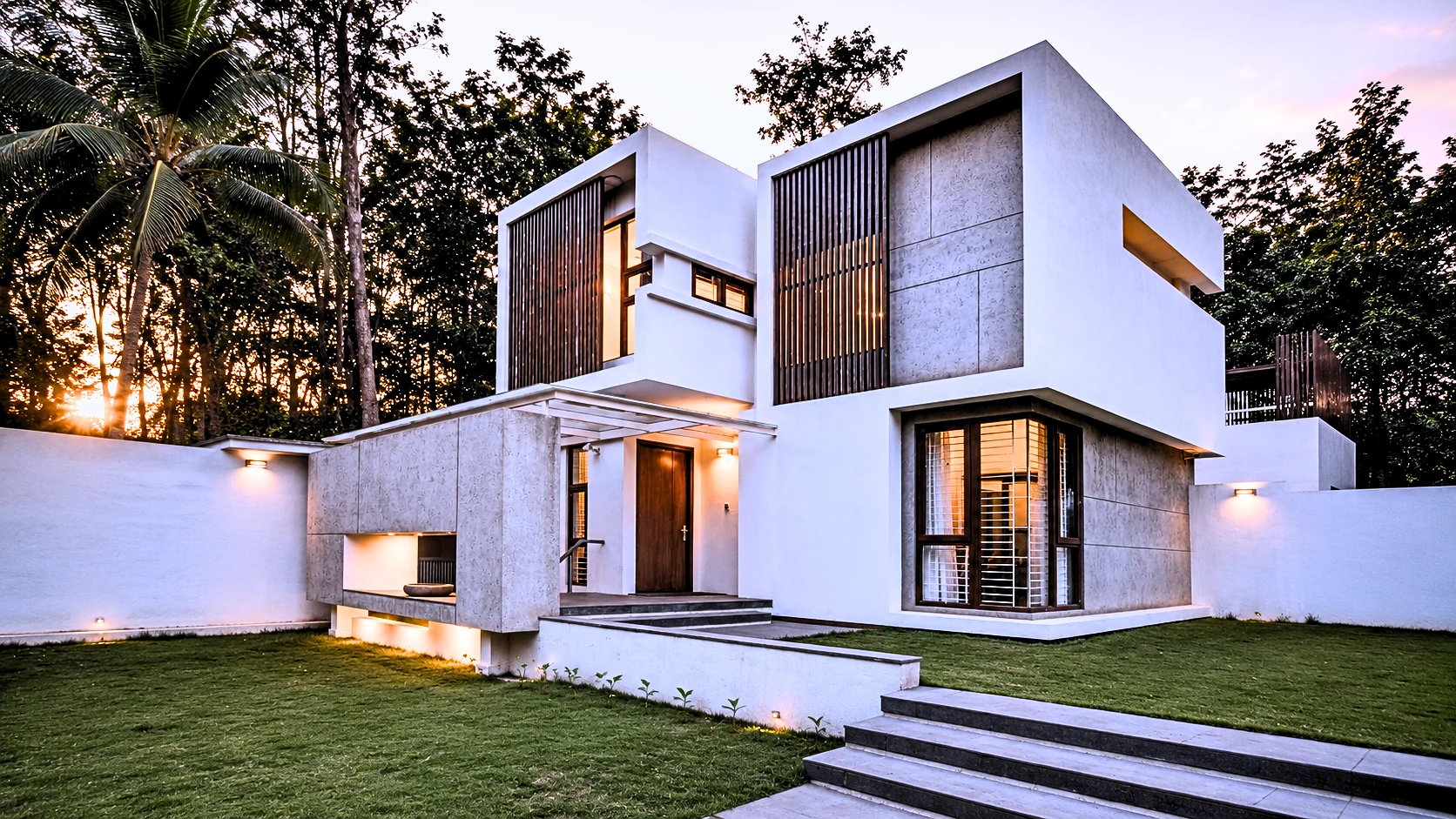
The decisions that matter most happen long before you pick a paint color.
Quick Answer: Planning a dream home affordably starts with anchoring every design decision to a fixed budget — not the other way around. Build in a 10–20% contingency before design begins, prioritize structural and energy performance over cosmetic finishes, and understand which construction phases allow meaningful DIY involvement without triggering code compliance problems or voiding warranties.
Most planning guides tell you to start with inspiration. Collect images, find your style, dream big. That advice is genuinely terrible if you care about finishing the project without financial disaster.
The homes that go over budget rarely do so because of bad luck. They fail because decisions were made in the wrong order: design before budget, inspiration before reality, want before need. Understanding that sequencing — and reversing it — is where the real savings begin.
Here’s what actually matters, organized the way a contractor, an architect, and a financially burned homeowner would explain it if they were being completely honest.
1. Start With a Budget, Not a Blueprint
Before you open a design app or call an architect, you need one number. The maximum you can spend — including everything: design fees, permits, construction, site work, landscaping, and a contingency reserve. Not a rough range. A hard ceiling.
This sounds obvious. It almost never happens in practice.
The typical sequence runs like this: the homeowner designs, falls in love with the design, then discovers what it costs. At that point, they’re either cutting the design apart in ways they’ll regret for years, or committing to a budget they can’t actually sustain. Neither outcome is good.
What professional project managers learn early is that design decisions lock in cost — not immediately, not visibly, but by the time you’ve settled on a floor plan, a roof profile, and a material palette, roughly 70% of your project cost is already determined. Whether you know it or not.

What Does It Actually Cost to Build Right Now?
Construction costs vary significantly by region, labor market, site conditions, and specification level. The ranges below reflect 2024–2025 data for standard single-family homes with mid-range finishes. Use them as starting points, not guarantees.
| Country | Budget Tier | Mid-Range | Premium |
|---|---|---|---|
| United States | $150–$200/sq ft | $200–$350/sq ft | $350–$600+/sq ft |
| United Kingdom | £1,500–£2,000/sq m | £2,000–£3,500/sq m | £3,500–£6,000+/sq m |
| Canada | CAD $175–$250/sq ft | CAD $250–$400/sq ft | CAD $400–$700+/sq ft |
| Australia | AUD $1,500–$2,200/sq m | AUD $2,200–$3,800/sq m | AUD $3,800–$6,500+/sq m |
These figures cover construction only. Site preparation, permits, utility connections, professional fees, and landscaping typically add 15–30% to the base construction number.
Something most guides skip: renovation costs don’t scale the same way as new construction. Gut renovations in existing homes consistently run 20–40% more per square foot than comparable new builds — because of demolition, the unknowns hidden behind walls, and the inefficiency of working inside an occupied structure. If you’re choosing between a major renovation and a new build, that cost relationship is worth understanding before you commit either way.
2. The Design Decisions That Quietly Control Your Budget

Here’s something most homeowners don’t encounter until it’s too late to change: the most expensive decisions in your entire build are made during the early design phase — often before you’ve spoken to a single contractor.
Architectural geometry drives cost in ways that aren’t intuitive.
A simple rectangle with a gabled roof is significantly cheaper to frame, insulate, and roof than a design with multiple wings, bump-outs, and a complex hip roof. Not primarily because of material cost — because of labor. Every outside corner requires more cutting, more detailing, more time. Every roofline transition is an opportunity for water intrusion, and every water intrusion risk needs additional flashing, underlayment, and skilled labor to seal correctly.
These aren’t aesthetic trade-offs. They’re cost multipliers built into the shape of the house before a nail is driven.
| Design Choice | Cost Impact |
|---|---|
| Roofline complexity (simple gable vs. complex hip with dormers) | 15–25% increase in roofing and framing labor; more flashing points = elevated long-term water risk |
| Number of exterior corners | $300–$800 per additional outside corner across framing, sheathing, trim, and flashing trades |
| Ceiling height above 9 feet | Increases wall framing lumber, drywall quantities, HVAC duct runs, and scaffolding requirements |
| Two-story vs. single-story footprint | Two-story typically 10–15% cheaper per sq ft — smaller roof and foundation relative to living area |
| Number of plumbing wet walls | Each additional plumbing cluster (kitchen, bath, laundry) adds rough-in cost; grouping plumbing saves meaningfully |
| Garage: attached vs. detached | Attached shares framing and roofline costs; detached requires its own foundation, walls, and roof |
| Foundation type | Full basement adds $30,000–$80,000+ but doubles usable sq footage without increasing the above-grade footprint |
The practical implication: if you’re working with an architect, have the cost conversation at the schematic design stage — before design development begins. Changes made to a rough sketch cost almost nothing. Changes made to a fully drawn set of construction documents cost significantly more, because drawings must be revised and contractors must re-estimate.
That cost relationship is rarely explained upfront. It should be.
3. What the Initial Quote Never Includes
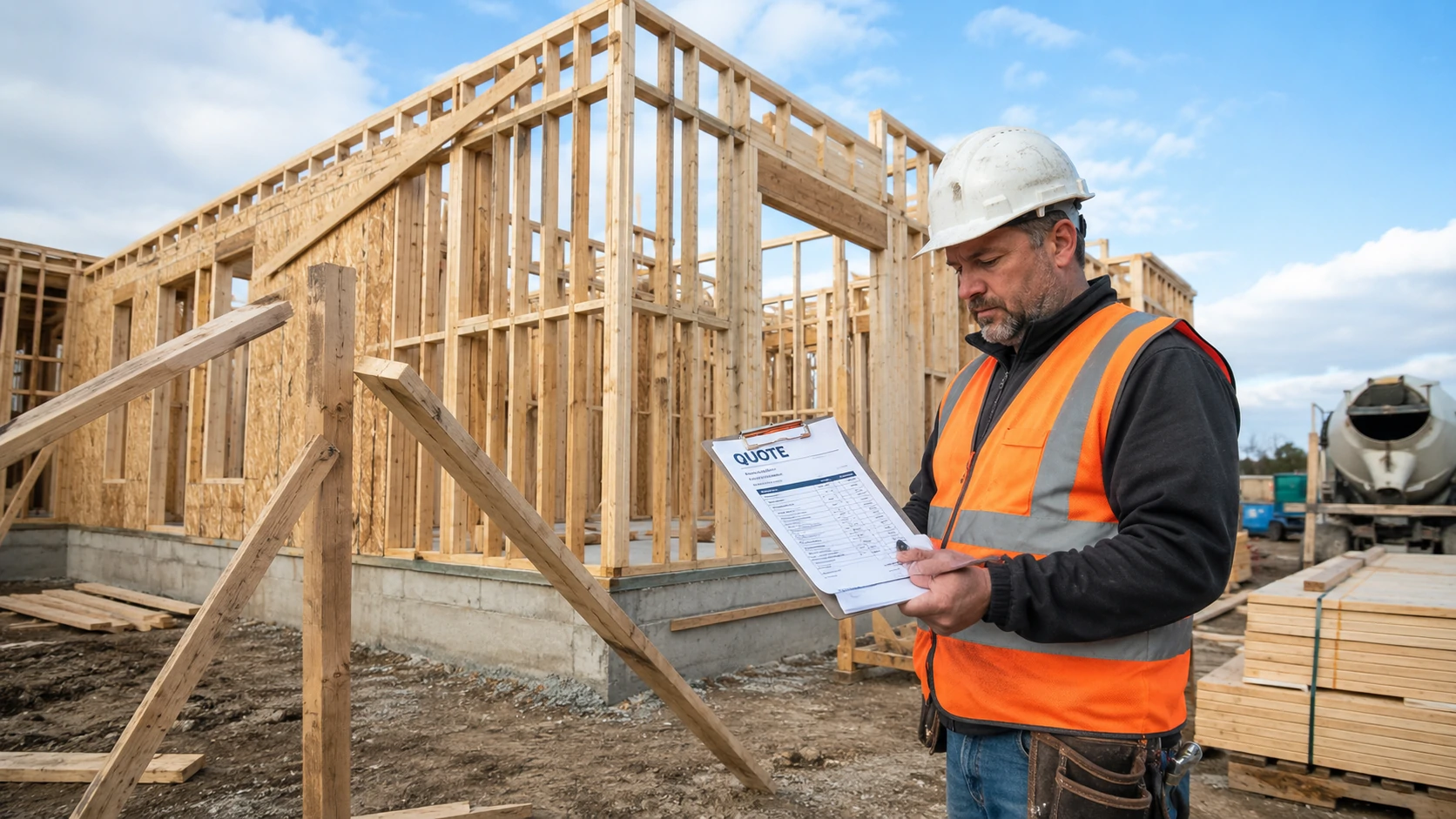
Here’s the uncomfortable reality about builder quotes: most of them are not complete project costs. They are construction costs for the structure as defined in the drawings. That is a narrower number than it sounds.
The costs below are routinely absent from initial estimates — and disclosed, if at all, only after contracts are signed.
Hidden Costs Checklist
Permits and Inspections
- Building permit fees ($500–$5,000+ depending on project value and jurisdiction)
- Engineering review fees where required
- Separate trade permits: electrical, plumbing, mechanical (often $200–$800 each)
- Inspection and reinspection charges
Site Preparation and Earthwork
- Land clearing and tree removal ($1,500–$10,000+ depending on site)
- Grading and excavation ($3,000–$20,000+ for challenging sites)
- Rock excavation — impossible to estimate accurately until work begins; can add $10,000–$50,000+ on rocky sites
- Soil testing and geotechnical engineering where required
- Erosion control measures during construction
Utility Connections
- Water and sewer tap fees ($2,000–$15,000+ depending on municipality and distance to main)
- Electrical service from pole to meter base ($2,000–$8,000+)
- Gas service connection ($500–$3,000+)
- Septic system for rural builds ($8,000–$25,000+)
- Well drilling and pump installation ($5,000–$20,000+ depending on depth and geology)
Temporary Costs During Build
- Temporary housing if vacating your current home ($12,000–$36,000+ for a 12-month build)
- Temporary power connection ($500–$2,000)
Finishes and Items Frequently Excluded
- Appliances (often entirely outside builder contracts; $5,000–$30,000+)
- Window treatments and blinds ($2,000–$15,000+)
- Landscaping and irrigation ($5,000–$50,000+ depending on scope)
- Driveway and hardscape ($3,000–$30,000+)
- Fencing, exterior lighting, mailbox, address signage
⚠ Before comparing quotes: Ask every contractor for a written list of project exclusions. Two quotes with identical totals can represent entirely different scopes of work. The exclusions list is where the real comparison happens.
4. Why a 15% Contingency Isn’t Optional
Almost every planning guide mentions contingency budgets. Very few explain what contingencies actually absorb — or how to calibrate the percentage to your specific project type.
A contingency budget is not a buffer for scope additions you decide to make mid-build. It is a buffer for the unexpected: hidden site conditions, material price increases between bidding and ordering, subcontractor errors, weather delays that extend temporary accommodation costs, and inspection failures requiring rework.
The 15% figure commonly cited is a reasonable baseline for a standard new build. It’s too low for renovation projects and often too high for simple cosmetic remodels. Here’s how to calibrate it.
| Project Type | Recommended Contingency | Rationale |
|---|---|---|
| New custom build (standard site) | 10–15% | Fewer unknowns than renovation; risk concentrates in site conditions and material pricing |
| New custom build (challenging site or complex design) | 15–20% | Slope, rock, flood zone, or tight access amplifies cost volatility significantly |
| Gut renovation (older home, major systems) | 15–20% | Hidden conditions behind walls: old wiring, plumbing deficiencies, structural issues, asbestos, moisture damage |
| Structural addition to existing home | 18–25% | Interface with existing structure creates unpredictable conditions; code upgrade requirements often triggered |
| Cosmetic remodel (no structural or systems work) | 5–10% | Fewer unknowns, but material delays and subcontractor scheduling gaps still occur |
One thing that gets consistently overlooked: keep the contingency in a separate account, completely isolated from your project budget. Mentally combining it with your build budget makes it too easy to draw it down for scope additions — which defeats its purpose entirely.
And if you don’t spend it? That’s not a sign you over-budgeted. That’s the correct outcome.
5. Choosing the Right Build Model — Contractor, Design-Build, or Owner-Builder
The way you structure your project delivery affects cost, schedule, stress, and risk more than almost any other single decision. There is no universally best model. There’s the one that matches your situation, your time, and your realistic skill level.
| Build Model | Cost Control | Timeline | Hands-On Involvement | Risk Level | Best For |
|---|---|---|---|---|---|
| General Contractor (GC) | Moderate — GC markup applies (typically 15–25%) | GC manages schedule; limited owner leverage | Low to moderate | Moderate — depends heavily on GC quality | Most homeowners; first-time builders |
| Design-Build | Lower — single contract covers design and construction; fewer scope gaps | Often faster than separate design + bid + build | Low | Lower — integrated accountability for design and construction | Homeowners who want simplicity and fixed pricing |
| Construction Manager (CM) | Higher — you pay trades directly; CM charges management fee | You control pace but carry scheduling coordination | High — active decision-making required | Higher — you absorb trade performance risk | Experienced homeowners with time and construction familiarity |
| Owner-Builder | Highest potential savings (20–40% labor cost reduction possible) | Typically longer — you coordinate all subcontractors | Very high — effectively a second full-time job | Highest — full legal and financial responsibility | Experienced builders with construction knowledge, time, and legal eligibility |
Owner-Builder: What the Model Actually Requires
The owner-builder path attracts significant interest and deserves an honest explanation — because the reality differs substantially by country.
Australia: Owner-builder permits are regulated under state law. In most states, you can only act as owner-builder once every 5–7 years, for your primary residence only. Under NSW and Queensland law, selling within 6–7 years of completion requires disclosure of owner-builder status. The absence of builder’s warranty insurance affects resale — some buyer financing products have complications with uninsured owner-built homes. Understand this before selecting the path, not after.
United States: Requirements vary significantly by state. Some impose no restrictions; others require the home to be your primary residence or limit resale timing. Check your state’s contractor licensing board before assuming eligibility.
United Kingdom: Self-build mortgages release funds in stages rather than upfront, which shapes your cash flow and contractor payment capacity throughout the build. The VAT Reclaim Scheme (HMRC Notice 431) allows claiming back VAT on qualifying materials — potentially a meaningful saving — but it requires consistent documentation throughout the project, not just at completion.
6. Why the Lowest Bid Usually Costs the Most in the End
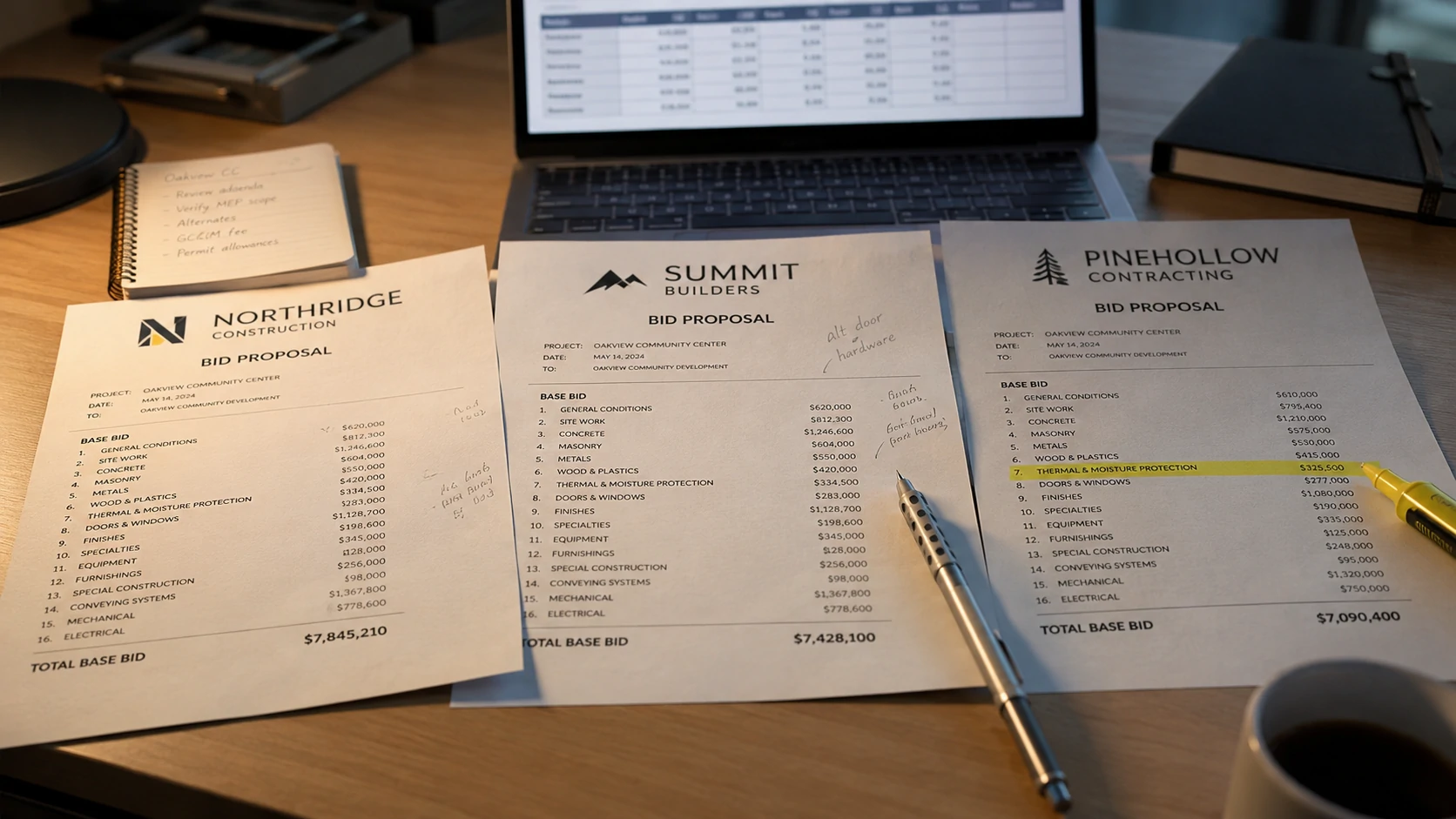
The number at the bottom of a contractor’s quote tells you very little. It doesn’t tell you what’s included, what’s excluded, what the quality assumptions are, or whether the contractor priced the same job you asked for.
Most homeowners compare total prices. Professionals compare line items.
How to Level Contractor Bids — Step by Step
Step 1: Verify scope alignment Before comparing any numbers, confirm every contractor is pricing the same plans, specification documents, and finish schedules. If your drawings aren’t complete when you go to bid, every quote will contain different assumptions — and those differences will surface after you’ve signed.
Step 2: Identify and compare allowance items Ask each contractor to list every allowance item in the bid — the placeholder dollar amounts for finishes, fixtures, and products not yet specified. Compare allowance amounts across bids. A $12/sq ft flooring allowance in one bid and a $22/sq ft allowance in another represent thousands of dollars in expected out-of-pocket spending above the base contract. Neither number is wrong; they reflect different assumptions about what you’ll select.
Step 3: Review the exclusions list in writing Every professional bid should include a written exclusions list. If a contractor doesn’t provide one, request it in writing before proceeding. Common exclusions: landscaping, appliances, window treatments, permit fees, utility connections, dumpster rental, temporary utilities. A bid that excludes these items is not meaningfully comparable to one that includes them.
Step 4: Examine the payment schedule Lump-sum upfront payment requests from a contractor are a serious red flag. Legitimate payment schedules are milestone-based or draw-based, aligned with defined construction completion stages. Front-loaded payment schedules transfer financial risk to you before work is performed.
Step 5: Confirm lien waiver provisions Your contract should require lien waivers from the general contractor and major subcontractors upon each payment. Without lien waivers, a contractor who fails to pay their subcontractors can expose you to property liens even after you’ve paid the GC in full. This is a documented, recurring problem in residential construction. It has an easy contractual solution.
⚠ Red flags in contractor proposals: No written exclusions list. Unusually low allowance amounts. Vague or front-loaded payment schedule. Resistance to contract modifications. No comparable project references. Inability to provide current proof of insurance and licensing on request.
7. Value Engineering — Where Cutting Costs Is Safe and Where It Isn’t
Value engineering is a construction term that gets misapplied constantly. It does not mean cutting corners. It means analyzing the cost-to-value relationship of each component and identifying where reduced spending does not compromise performance, safety, or durability.
The distinction matters enormously, because some cuts are genuinely safe — and some create problems that cost far more to remediate than you saved.
| Category | Spend More Here | Safe to Save Here |
|---|---|---|
| Foundation | Waterproofing membrane and drainage board | Ornamental landscaping adjacent to foundation (do later) |
| Structural framing | Engineered lumber (LVL beams, I-joists) where spans require it | Lumber grade upgrades beyond what engineering requires |
| Roofing | Underlayment quality; ice/water shield coverage at eaves and valleys | Roof color and profile (within manufacturer specs) |
| Windows and exterior doors | U-factor and SHGC performance ratings (climate-appropriate selection) | Brand name — performance specs matter more than the label |
| HVAC system | Properly sized, high-efficiency equipment and duct design | Thermostat brand (quality third-party options perform well) |
| Insulation | Achieving at or above code minimum in walls and attic | Insulation brand within the same product category |
| Air sealing | Continuous air barrier; spray foam at rim joists and penetrations | Cannot be safely reduced; foundational to energy performance |
| Exterior cladding | Proper flashing at all penetrations, windows, and transitions | Material choice between fiber cement and quality vinyl at comparable thickness |
| Interior finishes | — | All flooring types, cabinet door styles, hardware finishes, paint brands |
| Fixtures and fittings | — | All plumbing fixtures, light fixtures, and interior hardware are safely value-engineered |
| Landscaping | Grading and drainage away from foundation (functional requirement) | Ornamental plantings, retaining walls beyond functional need, mature specimen trees |
One clarification worth making explicitly: value engineering structural systems is not the same category of decision as choosing a less expensive tile. Skipping or downgrading foundation waterproofing to save $3,000 is fundamentally different from choosing a builder-grade toilet over a premium model. The first creates a long-term moisture intrusion problem with no simple fix. The second is a fixture you can replace on a Saturday afternoon.
The test: if the cut is visible, replaceable, and cosmetic — it’s probably safe. If it involves water, structural performance, or thermal control — it probably isn’t.
8. What You Can Realistically Do Yourself — and What You Shouldn’t Touch
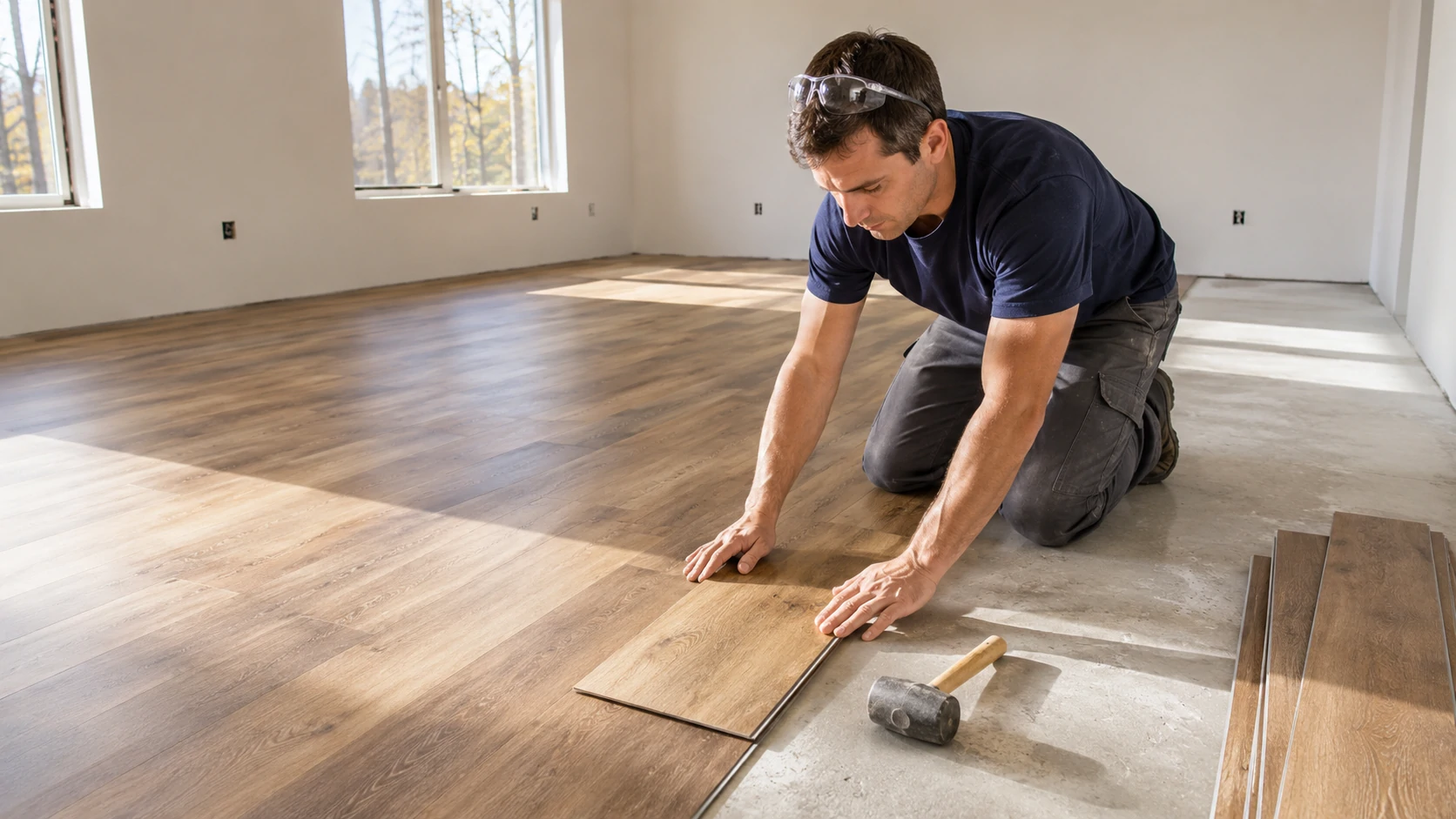
Sweat equity has genuine value. The question is where it applies safely, and where it creates problems that end up costing significantly more to fix than you saved.
A realistic assessment requires understanding three things: code compliance requirements in your jurisdiction, warranty implications for the systems involved, and the specific regulations around licensed work where you’re building.
| Task | DIY-Appropriate? | Notes |
|---|---|---|
| Interior and exterior painting | ✅ Yes | One of the highest-value DIY contributions; large labor cost, no code implications |
| Landscaping and basic hardscape | ✅ Yes | Grading near the foundation is the exception — get professional oversight on drainage |
| Cabinetry installation | ✅ With skill | Standard flat-pack and box cabinets are DIY-friendly; custom built-ins require more |
| Flooring installation | ✅ With skill | LVP and laminate are very DIY-friendly; tile is harder; solid hardwood is skill-dependent |
| Fixture installation (toilets, faucets, vanities) | ✅ Yes | Basic plumbing fixture swaps are permissible in most jurisdictions without a license |
| Light fixture replacement (no new circuits) | ✅ Yes | Like-for-like fixture replacement is generally permissible; new circuits are not |
| Batt insulation in accessible areas | ✅ With caution | Attic batt insulation is often DIY-accessible; spray foam requires a licensed installer |
| Rough-in plumbing | ❌ No | Licensed plumber required in all Australian states, most US jurisdictions, and UK |
| Electrical rough-in and new circuit installation | ❌ No | Licensed electrician required in Australia and UK; US varies significantly by state |
| Structural framing | ❌ No | Engineering sign-off required; structural errors are not correctable post-build at reasonable cost |
| Concrete foundation work | ❌ No | No realistic DIY application; licensed, insured subcontractor required |
| New construction roofing | ❌ No | Fall hazard, warranty implications, and framing inspection requirements make this professional-only |
| Gas line installation | ❌ No | Licensed gasfitter required in all jurisdictions; zero tolerance for unlicensed work anywhere |
A jurisdiction note that actually matters: In many US states, a homeowner can perform electrical and plumbing work in their own primary residence without a contractor’s license — but the work must still be permitted and pass inspection. In Australia, unlicensed electrical work is illegal regardless of owner status. In the UK, certain electrical work falls under Part P of Building Regulations and must be completed by a registered electrician or formally notified to the local authority. Determine your jurisdiction’s rules first. Then decide what you’ll take on.
9. The Upgrades Worth Paying More for Upfront
Energy-efficient upgrades are frequently presented as “a good investment” without quantifying what that means. What homeowners actually need is a financial framework: what does it cost more upfront, what does it save per year, and how many years until the investment pays back.
The ranges below draw from US Department of Energy published research, UK Energy Saving Trust guidance, and Australian government energy agency data. Climate affects payback meaningfully — colder climates generally see shorter payback periods for heating-related upgrades.
| Upgrade | Approximate Cost Premium | Estimated Annual Savings | Payback Range | Climate/Region Note |
|---|---|---|---|---|
| Insulation above code minimum (walls and attic) | $2,000–$8,000 | $300–$800/yr | 4–12 years | Shorter payback in cold climates; worthwhile in all climates for comfort and moisture control |
| Air-source heat pump vs. gas furnace | $2,000–$6,000 | $400–$1,200/yr | 3–10 years | Most effective in moderate climates; cold-climate models now viable to −15°C/5°F |
| Heat pump water heater vs. tank water heater | $500–$1,200 | $300–$600/yr | 2–5 years | One of the best payback ratios available; high value across all climates |
| Double-glazed vs. single-glazed windows | $3,000–$10,000 | $200–$600/yr | 8–20 years | Greater benefit in cold climates; reduces condensation and improves comfort in mild zones |
| Triple-glazed windows over double-glazed | $4,000–$12,000 | $100–$300/yr | 15–30 years | Best justified in very cold climates (northern US, Canada, northern UK, Tasmania); marginal in mild zones |
| Solar-ready electrical design (conduit runs, panel sizing, roof orientation) | $500–$1,500 | Enables future savings | N/A — reduces future solar install cost by $5,000–$15,000 | Worth doing in virtually every new build; minimal cost at construction, significant savings when solar is added |
| ERV/HRV balanced mechanical ventilation | $2,500–$6,000 | Indoor air quality benefit + reduced HVAC load | 10–20 years (energy basis) | Essential in tight, well-sealed homes; required in some climate zones with spray foam construction |
The practical framing most homeowners find useful: The question isn’t whether these upgrades pay back. Most do. The question is whether you’d rather absorb the premium at construction — where it’s rolled into your build loan and installed at minimum disruption — or retrofit it later, when it requires invasive work, finished surface disturbance, and higher per-unit installation costs.
Insulation added during framing costs a fraction of what it costs after drywall is hung. That relationship is true across almost every energy upgrade on this list. The build phase is the cheapest possible time to do it.
10. Permits and Approvals — What Skipping Steps Actually Costs
The instinct to avoid permits is understandable. They cost money, they take time, and they feel like bureaucracy standing between you and your build. But the financial and legal consequences of unpermitted work are substantially worse than the inconvenience of compliance.
Here’s what actually happens when unpermitted work is discovered: at best, you pay for retroactive permits, inspections, and any remediation work required to bring the work to code. At worst, unpermitted structural or systems work must be exposed, verified, brought to code, and re-covered — at your cost. In some jurisdictions, unpermitted work that can’t be remediated must be demolished. At resale, unpermitted work must be disclosed in most jurisdictions and can materially affect property value, insurability, and buyer financing eligibility.
Regional Permit Overview
| Region | Process | Typical Approval Timeline | Common Delay Causes |
|---|---|---|---|
| United States | Building permit from local municipality; separate trade permits (electrical, plumbing, mechanical) typically required | 2–12 weeks depending on jurisdiction and project complexity | Incomplete drawings, plan check correction cycles, backlogged municipal review queues |
| United Kingdom | Full Planning Permission for new builds, extensions, and structural changes; Building Regulations approval is separate | Planning: 8–13 weeks for householder applications; Building Regs: 5–10 working days (initial notice route) | Neighbor objections for planning applications; incomplete structural or thermal details for Building Regs |
| Canada | Building permit from municipal authority; province-specific requirements for electrical and mechanical work | 4–16 weeks depending on municipality and current office workload | Plan check comments, missing engineer schedules, busy permit offices in metro markets |
| Australia | Development Application (DA) for new builds and major alterations; Construction Certificate (CC) separate; staged inspections required | DA: 6–12 weeks typical; longer with objections, heritage, or flood/bushfire overlays | Heritage or environmental overlays, neighbor objections, incomplete application documents |
Australian resale disclosure note: Owner-builders who sell within 6–7 years of completion (timeframe varies by state) must disclose owner-builder status and provide statutory documentation. The absence of Home Warranty Insurance (called the Home Building Compensation Fund in NSW) affects some buyer financing options. If you’re considering the owner-builder path, understand these resale implications before construction begins — not at the time of sale.
11. Timeline Realities Most Planning Guides Don’t Tell You
Here’s a number almost nobody states directly: a custom home, from initial design to Certificate of Occupancy, typically takes 14–24 months. Often longer.
That range isn’t pessimistic — it reflects the actual time requirements of design documentation, plan checking, permit review, construction sequencing, inspection scheduling, material procurement, and the normal pace of a multi-trade project with weather dependency and a dozen points where one delayed delivery stalls everything downstream.
Phase-by-Phase Timeline
| Phase | Typical Duration | Key Delay Risks |
|---|---|---|
| Schematic design | 4–8 weeks | Slow client decision-making; unlimited revision loops without clear design brief |
| Design development and construction documents | 8–16 weeks | Design complexity; engineering review cycles; specification decisions |
| Permit application and approval | 4–16 weeks | Plan check corrections; backlogged review queues; incomplete applications |
| Site preparation and earthwork | 2–6 weeks | Weather; unexpected subsurface conditions; utility conflict resolution |
| Foundation | 2–6 weeks | Concrete cure time; inspection scheduling delays; weather holds |
| Framing | 4–8 weeks | Weather; engineered lumber procurement; crane availability |
| Rough-in (plumbing, electrical, mechanical) | 4–8 weeks | Trade scheduling gaps; HVAC equipment lead times; panel delivery |
| Insulation and drywall | 3–5 weeks | Insulation inspection required before closing in; drywall finishing cure time |
| Interior finishes | 8–16 weeks | Longest and most labor-dense phase; cabinet and millwork lead times; flooring scheduling |
| Punch list and final inspections | 2–6 weeks | Inspector scheduling; outstanding corrections; CO processing time |
A few things that consistently extend timelines beyond what initial schedules show:
HVAC equipment and windows have had extended lead times in some markets since 2021 — occasionally 12–20 weeks for specific product lines. That doesn’t mean ordering from stock; it means ordering at the right project phase so equipment arrives when the structure is ready, not six weeks before or after.
Inspection scheduling varies enormously by jurisdiction. In busy markets, getting a framing inspection booked can add one to three weeks to your timeline with no ability to accelerate it.
Material substitutions made after construction documents are finalized cost time even when they seem minor. Changing a window manufacturer mid-permit can require drawing revisions and sometimes re-approval — adding weeks for what felt like a simple swap.
12. The Decisions Other Homeowners Wish They’d Made Differently
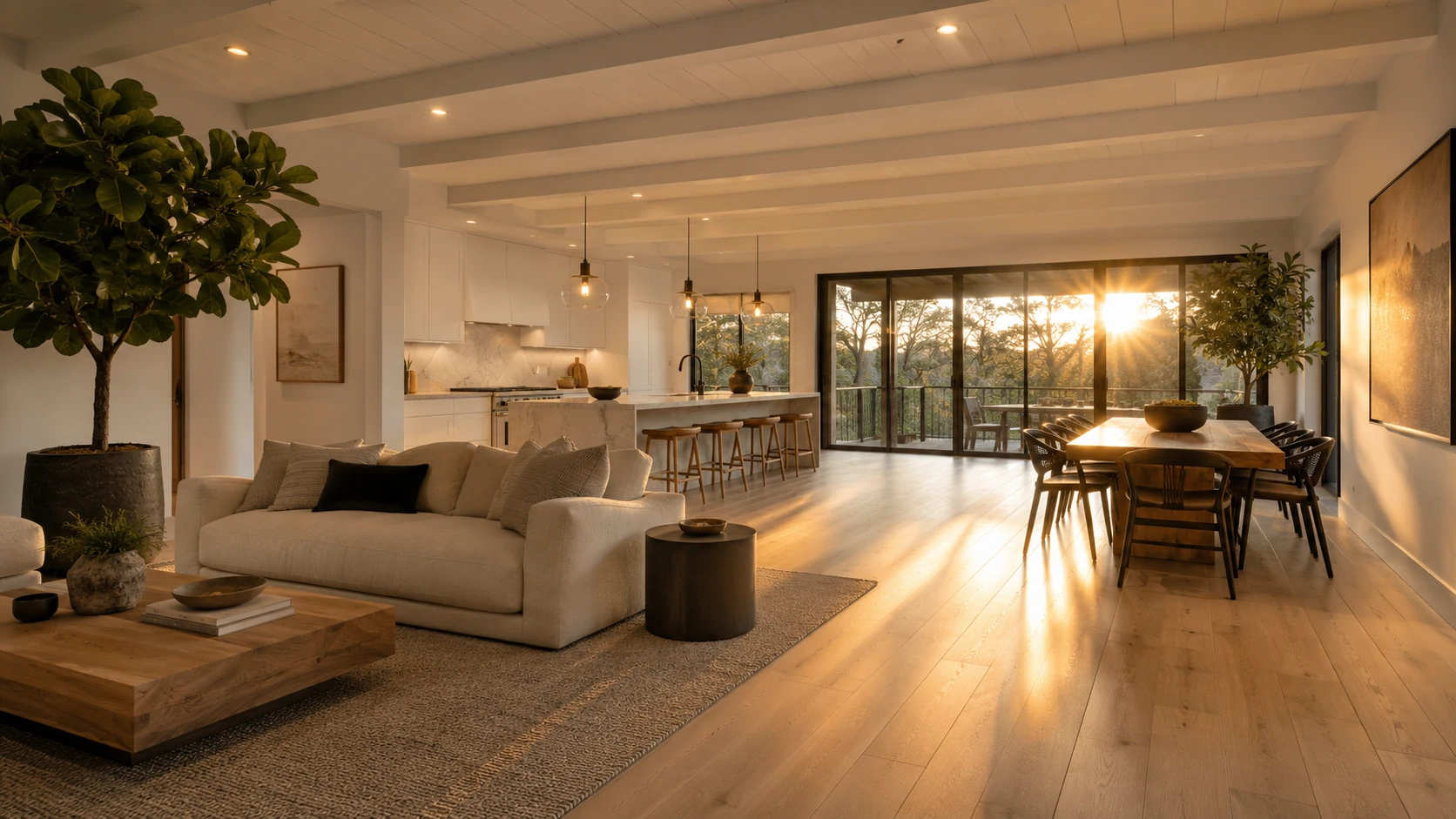
These aren’t theoretical mistakes. They’re the frustrations that appear consistently in homeowner communities — the decisions that seemed reasonable at the time and became expensive or limiting after the fact.
Designing before budgeting. The most common and most costly mistake in the entire process. The homeowner develops a detailed design, develops real emotional attachment to it, then discovers what it costs. The resulting cuts — removing features, downgrading systems, simplifying the design — produce a compromise that satisfies no one. This mistake is structurally nearly impossible to fix once you’re inside it. The only real solution is prevention: establish the maximum budget before the first sketch exists.
Treating change orders as a normal part of the process. Change orders are not a normal cost of doing business — they’re a symptom of a design that wasn’t finished before construction began. Each one carries a 15–25% markup above material and labor because it disrupts workflow and requires administrative processing. A homeowner who makes four “small” changes during framing can easily add $10,000–$30,000 to a project through change orders alone. Finish the design. Lock it. Make peace with it before breaking ground.
Not understanding allowance items before signing the contract. The $15/sq ft flooring allowance in your contract sounds reasonable until you visit the tile showroom and discover that the floor you want costs $38/sq ft. That difference across 1,800 square feet is $41,400 — and it’s real money that comes due at selection time, regardless of what the contract says. Read every allowance item and research actual product costs before signing.
Skipping inspections to recover time. Inspections aren’t bureaucratic obstacles — they’re the only formal verification step in the process. A skipped framing inspection that would have caught a structural error is a very large gamble. An insulation inspection bypassed by a contractor eager to close in on schedule can leave thermal performance problems that no retrofit will fully correct. The time savings are real. The risk is also real.
Hiring on price without verifying scope. The contractor who comes in $40,000 below the others almost always has a reason. Sometimes it’s genuine efficiency. More often it’s allowance cuts, exclusions not clearly disclosed, or a scope that doesn’t match what the others priced. The bid leveling process in Section 6 exists precisely for this situation. Use it before you hire.
Building entirely for personal taste with no thought for resale. Unusual finishes, unconventional layouts, and idiosyncratic design choices are your prerogative — it’s your home. But if you’re borrowing to build it, understanding how it will appraise and whether a future buyer pool exists is a reasonable financial consideration. The most likely buyer for your home in ten or fifteen years has different preferences than you do today. That’s worth at least a brief conversation with a local real estate agent before you commit to choices that permanently narrow your buyer pool.
Frequently Asked Questions
How much does it realistically cost to build a house from scratch in 2025–2026?
Mid-range custom home construction currently runs $200–$350/sq ft in the US, £2,000–£3,500/sq m in the UK, CAD $250–$400/sq ft in Canada, and AUD $2,200–$3,800/sq m in Australia. These figures cover construction only. Site preparation, permits, utility connections, design fees, and landscaping typically add 15–30% to the base construction figure. Published national averages routinely understate real total project costs, particularly for custom builds with specific site challenges.
What is the most common mistake people make when planning a home build?
Designing before establishing a firm budget. The homeowner develops a detailed design, becomes emotionally attached to it, and then discovers the cost. The compromise that follows — removing features, downgrading systems, simplifying the plan — usually satisfies no one. The fix is structurally simple: set the maximum budget before any design session begins.
How much contingency budget should I set aside?
Calibrate to project type. New custom build on a standard site: 10–15%. Challenging site or complex design: 15–20%. Gut renovation of an older home: 15–20%. Structural addition to an existing home: 18–25%. Cosmetic remodel: 5–10%. Keep the contingency in a separate account — it’s a buffer for the unexpected, not a reserve for scope additions you decide to make mid-build.
Can I act as my own general contractor to save money?
Yes, with conditions. The owner-builder model can reduce labor costs by 20–40%, but it requires substantial time, real subcontractor coordination experience, and legal eligibility that varies significantly by jurisdiction. In Australia, owner-builder permits carry eligibility restrictions and resale disclosure obligations. In the US, requirements vary by state. In the UK, self-build mortgages and the VAT reclaim scheme create financial structures that require planning from the very start of the project.
What costs are usually left out of initial builder quotes?
Commonly excluded items include permit fees, site preparation and land clearing, utility connection fees, rock excavation if encountered, temporary housing during the build, appliances, window treatments, landscaping, driveway, and hardscape. Always request a written exclusions list from every contractor before comparing quotes — without it, total prices are not comparable.
What is a change order and how much extra does it typically cost?
A change order is a formal modification to your contract’s agreed scope. They typically carry a 15–25% markup above material and labor cost because they disrupt trade scheduling and require administrative overhead. The most effective prevention strategy is completing and locking the design before construction begins — not designing continuously throughout the build.
What is value engineering in home construction — and is it safe?
Value engineering means identifying where reduced cost doesn’t compromise performance, safety, or durability. Reducing cosmetic finishes, fixture grades, hardware, and ornamental landscaping is generally safe. Reducing structural framing, foundation waterproofing, roofing underlayment, air sealing, or HVAC sizing is not. The practical test: if the cut affects water management, structural performance, or thermal control — it’s probably not a safe value engineering decision.
When is it worth paying more for energy-efficient upgrades in a new build?
When the upgrade is integrated at construction, it costs significantly less than retrofitting it later. Heat pump water heaters, above-code insulation, and solar-ready electrical design all have payback periods under 10 years in most climates and cost far less when built in than added after the fact. Triple-glazed windows are more climate-dependent and are best justified in cold northern regions.
How long does it take to build a custom home from start to finish?
Most guides only cover the construction phase. The realistic total timeline — from initial design meeting to Certificate of Occupancy — is 14–24 months for a custom build. This includes design (3–6 months), permitting (1–4 months), and construction (8–14 months). Material lead times and inspection scheduling regularly extend these ranges beyond what initial project schedules show.
What should I look for when comparing construction quotes?
Compare scope, not totals. Verify every contractor priced the same plans. Identify and compare all allowance item amounts. Review the exclusions list. Examine the payment schedule structure — milestone-based is appropriate; large upfront lump sums are a red flag. Confirm lien waiver provisions in the contract before signing.
Do I need an architect, or can a draftsperson design my home?
It depends on complexity and jurisdiction. Simple, standard residential construction can often be competently documented by an experienced residential draftsperson. Complex structural designs, difficult sites, or projects requiring significant engineering coordination benefit from architectural oversight. In most jurisdictions, structural calculations must be signed by a licensed structural engineer regardless of who draws the architectural plans.
How does a construction loan work, and what is a draw schedule?
A construction loan releases funds in stages — called draws — typically triggered by completion of defined construction milestones, verified by lender inspections. During construction, you pay interest only on funds drawn to date. At substantial completion, the loan typically converts to a permanent mortgage. Understanding the draw schedule before you start is essential — it directly affects when you can pay contractors and how your cash flow is structured throughout the build.
What permits do I need to build a home?
It varies by jurisdiction. US: building permit from your local municipality, plus separate trade permits for electrical, plumbing, and mechanical in most areas. UK: planning permission for new builds and major structural alterations, plus separate Building Regulations approval. Canada: building permit from your municipal authority, with province-specific trade licensing requirements. Australia: Development Application (DA) and Construction Certificate (CC), with mandatory staged inspections throughout construction. Start the permit process earlier than you think you need to — review queues in active markets can add months.
What is the difference between a custom build, semi-custom, and spec home?
A spec home is designed and built by a developer for a generic buyer — finish selections may be available from a limited menu, but the design belongs to the developer. A semi-custom home offers design flexibility within a builder’s standard floor plan range. A custom build starts from your brief and a blank site, giving you control over every decision — at meaningfully higher cost and a longer timeline than either alternative.
What maintenance should I expect in the first year of a new build?
New builds require early attention across several areas. Concrete settling produces hairline shrinkage cracks in slabs and driveways — generally cosmetic and normal, but worth monitoring. Caulk at exterior penetrations and door frames will shrink and may need re-sealing after the first full seasonal cycle. HVAC systems should be properly commissioned after installation and filter schedules established early. Check grading and drainage away from the foundation after the first significant rain event. Know your warranty structure: structural elements (framing, foundation) are typically warranted for 10 years; systems (HVAC, plumbing, electrical) for 2 years; finishes for 1 year. Warranty claims require prompt notification — document any defect as soon as it appears.
The most valuable resource in this entire process is a clear decision sequence: budget first, design second, everything else after. The rest of this article gives you the information to execute each stage without the surprises that derail most builds.
Related Reading:

.webp)
.webp)
.webp)
.webp)